
















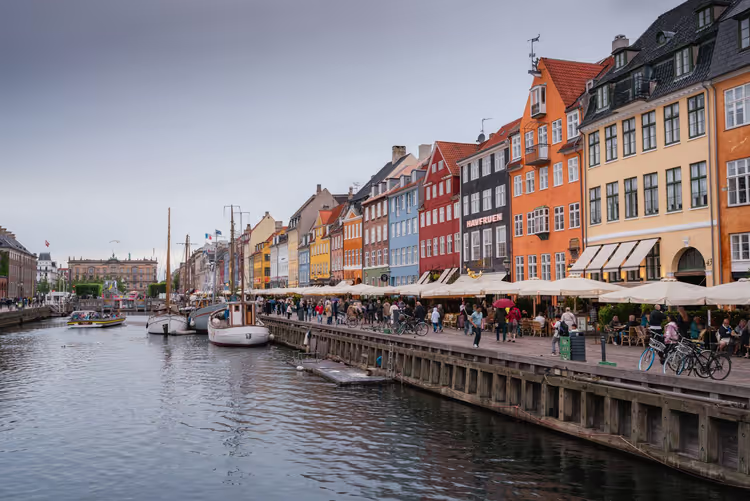
What to see in Copenhagen: 30 places with prices and opening hours
Copenhagen is compact: the city center can be walked in a single day. But there are so many places here that it's easy to get overwhelmed and spend time in lines instead of seeing the city itself. We've put together 30 Copenhagen attractions: from royal palaces to the city beach and the freetown of Christiania.
For each place you'll find what makes it different from its neighbors on the list, how much admission costs, and how to get there. The first price reference point: a ticket to the Amalienborg Museum costs 135 DKK, and it's cheaper if you buy online (as of 09/2026, on the Royal Collection website). Further in the text you'll find prices for Tivoli, the zoo, and the Round Tower, as well as free spots in the city.
Ad: this article contains affiliate links, we earn a commission if you book through them, at no extra cost to you.
How much time you need in Copenhagen
💡 In short:
- Plan for 2-3 days in the city: in one day you can comfortably cover several major sights.
- Stick to the center: most places on the list are within walking distance of each other.
- Prices, opening hours, and tickets: 09/2026, verified on the official tourist office website.
The order in the list is not a ranking, but a convenient logic. First come the palaces and museums around Slotsholmen, then parks and entertainment, and at the end churches, the waterfront, and a practical map. This order helps you build a route by neighborhood instead of darting across the whole city.
Denmark is often called an expensive country, and in Copenhagen you notice it right away. Plan your budget around one or two paid museums per day, and give the rest of your time to free spots. The Little Mermaid, the Gefion Fountain, Kastellet fortress, and a walk along Nyhavn cost nothing.
In summer the city stays light almost until midnight, so evening walks are especially popular here. In winter it gets dark early, but the holiday lights come on and Tivoli opens its Christmas season. In both seasons the same rule applies: book popular museums and attractions in advance so you don't stand in line.
1. Amalienborg Palace
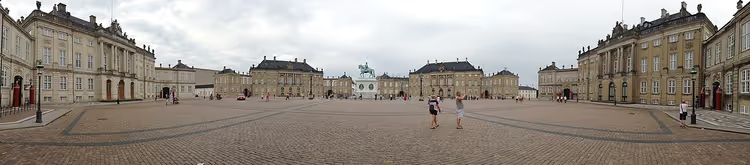
Amalienborg Palace has served as the official residence of the Danish royal family for more than two centuries. The complex consists of four similar rococo palaces standing at the corners of an octagonal square. In the center rises an equestrian statue of Frederick V, considered one of the best such sculptures in the world.
 © Janeway666 · CC BY-SAPhoto: Janeway666, CC BY-SA (https://creativecommons.org/licenses/by-sa/3.0), Wikimedia Commons
The best time to visit is in the morning, when the changing of the royal guard takes place. The guards march onto the square from their barracks, and you can watch the ceremony for free. The exact time depends on the royal family's schedule, so arrive early and claim a spot by the curb.
One of the palaces houses the Amalienborg Museum. Inside you'll see furniture, clothing, and household items of the royal family, as well as restored interiors of the chambers. The museum is open Tuesday through Sunday from 10:00 to 16:00, closed on Mondays (as of 09/2026, tickets and hours).
- How to get there: buses 1A, 15, 26, 83N, and 85N, or a 10-minute walk from Nyhavn.
- Cost: 135 DKK per adult, 125 DKK online (as of 09/2026, official website).
- Not for: if you came only for the changing of the guard, you can skip the museum, admission is paid.
2. Christiansborg Palace
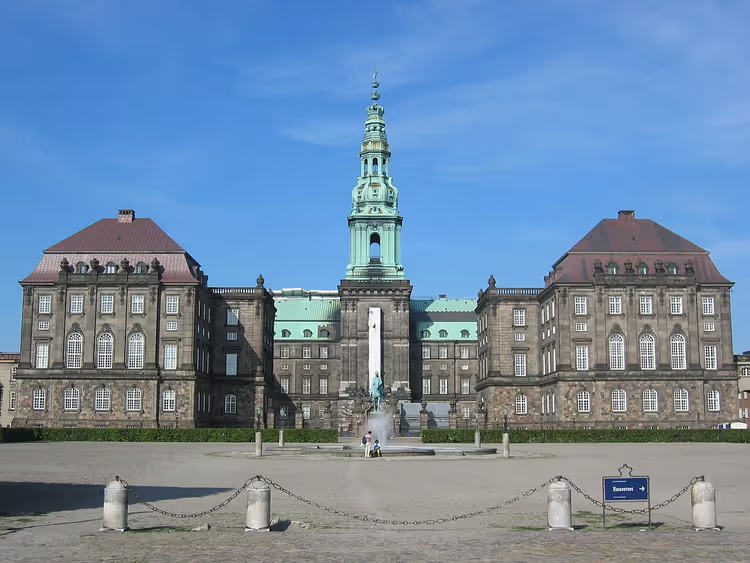
Christiansborg Palace stands on the island of Slotsholmen, where the history of Copenhagen began. The granite residence has survived fires and repeated reconstructions, and today the parliament, the Supreme Court, and the royal state rooms all operate under one roof. In the basement, ruins about eight centuries old survive from the castle of Bishop Absalon, the city's founder.
 © eimoberg from Changwon, South Korea · CC BYPhoto: eimoberg from Changwon, South Korea, CC BY (https://creativecommons.org/licenses/by/2.0), Wikimedia Commons
The island is connected to the city by eight bridges, so you can walk here from the center in about ten minutes. Inside, it's worth looking into the Throne Room with its painted ceiling and the Great Hall with tapestries depicting historical scenes. A separate draw is the balcony from which the Danish monarch addresses the people.
Tours of the palace chambers run from May through September, and on select days of the week the rest of the year. The schedule changes, so check it on site before your visit. Nearby, in the same area, are several other places from this list.
- How to get there: buses 1, 2, 5, and 10, or on foot from City Hall Square.
- Who it's for: for those who want to see a working seat of power, not just museum halls.
3. Thorvaldsen Museum
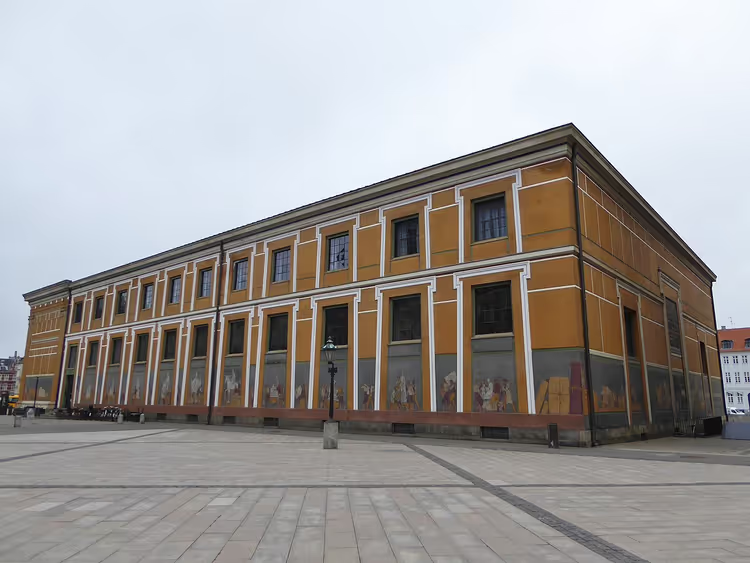
Not far from Christiansborg stands the museum of sculptor Bertel Thorvaldsen. He created the monuments to Copernicus in Warsaw and Byron in Cambridge, as well as dozens of sculptures around the world. The low square neoclassical building was constructed during the master's lifetime to house his collection, and after the sculptor's death it also became his mausoleum.
 © Leif Jørgensen · CC BY-SAPhoto: Leif Jørgensen, CC BY-SA (https://creativecommons.org/licenses/by-sa/4.0), Wikimedia Commons
The first floor displays Thorvaldsen's works and personal belongings, while the second floor holds numerous paintings, books, and antiques. The collection includes tens of thousands of items, so plan on spending a couple of hours. A free English-language audio guide is available, and it will help you understand the stories behind the sculptures.
The museum is open daily except Mondays, and admission is free on Wednesdays. Check the official website for ticket prices and exact hours, as the schedule changes by season.
- How to get there: buses 1A, 2A, 15, 26, and 29 to the Børsen stop, or metro to Kongens Nytorv.
- The catch: tour groups arrive in the afternoon, so go in the morning for a quiet visit.
4. The Royal Library
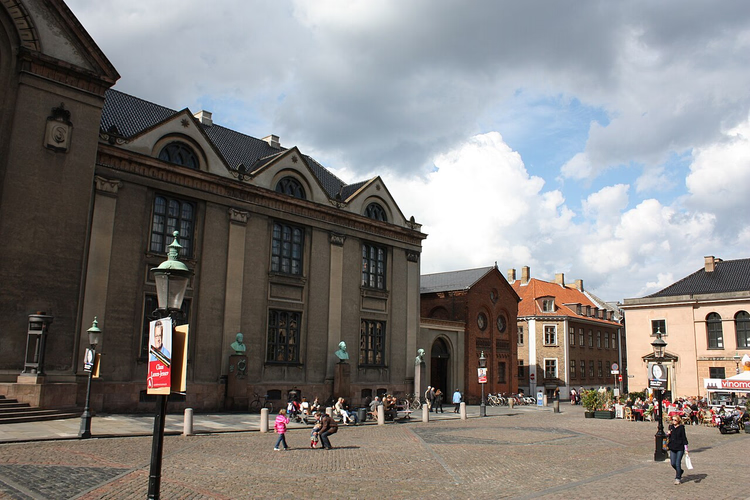
The Royal Danish Library holds one of the largest book collections in the world. It includes ancient manuscripts from the UNESCO heritage list as well as recent Danish publications, brochures, and newspapers. The library is worth visiting not only for book lovers: it is also a striking example of modern architecture.
 © Dornum72 · CC BY-SAPhoto: Dornum72, CC BY-SA (https://creativecommons.org/licenses/by-sa/3.0), Wikimedia Commons
On the canal bank stands an asymmetrical structure of glass and dark granite known as the "Black Diamond." In the evening, light fills the panoramic windows and the building changes its silhouette. A wide staircase leads to the roof, which offers a view of the harbor, and access is free.
Inside, there are reading rooms, electronic catalogs, and exhibition spaces. People also stop by just to have coffee and look out at the waterfront.
- How to get there: metro to Islands Brygge, or bus 9A to the Det Kongelige Bibliotek stop.
- Who it's for: those who are tired of museums and want a quiet place with a view of the water.
5. City Hall
City Hall is one of the most popular tourist spots in the center. The building was constructed of red brick in the early 20th century, and architect Martin Nyrop worked to fit it into the city's style. Above the main entrance stands a gilded figure of Bishop Absalon, and the clock tower rises nearly a hundred meters.
If you manage the tower's spiral staircase, you will be rewarded with one of the best views of the city. Below, in a separate room, stands an astronomical clock made of thousands of parts. The huge dial under a glass dome shows the time to the second, the date, the day of the week, and the positions of celestial bodies.
Admission to the building itself is free. There is a small fee to climb the tower and see the clock. Access may be restricted during city events, so check the schedule in advance.
- How to get there: buses 10, 12, 26, and 33, or on foot from Central Station.
- Who it's for: those who love observation decks and engineering curiosities.
6. National Gallery of Denmark
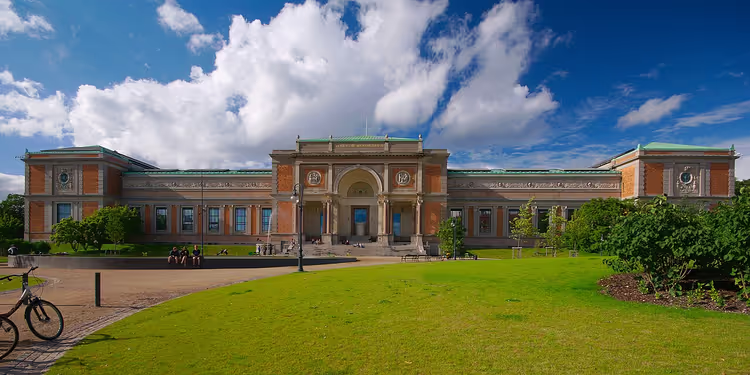
The National Gallery of Denmark (SMK) is the country's main art museum. It stands in the scenic Østre Anlæg park right by the city center, surrounded by lush flower beds and old trees. The collection focuses on Danish art, but you'll also find works by Picasso, Matisse, Rubens, and Titian nearby.
 © Jiří Komárek · CC BY-SAPhoto: Jiří Komárek, CC BY-SA (https://creativecommons.org/licenses/by-sa/4.0), Wikimedia Commons
The paintings are hung in chronological order: works by the old masters are in the historic building, while contemporary pieces are in the new wing. This lets you trace how painting evolved over several centuries in a single visit.
The museum is also great for kids: in the Children's Museum, exhibits are placed at a child's eye level. On weekends, drawing and sculpting workshops are held here. The museum is closed on Mondays, and on Wednesdays it stays open later than usual.
- How to get there: walk from Nørreport metro station, enter from the park side.
- Who it's for: families with kids ready for a museum day, and lovers of classical art.
7. Tivoli Gardens
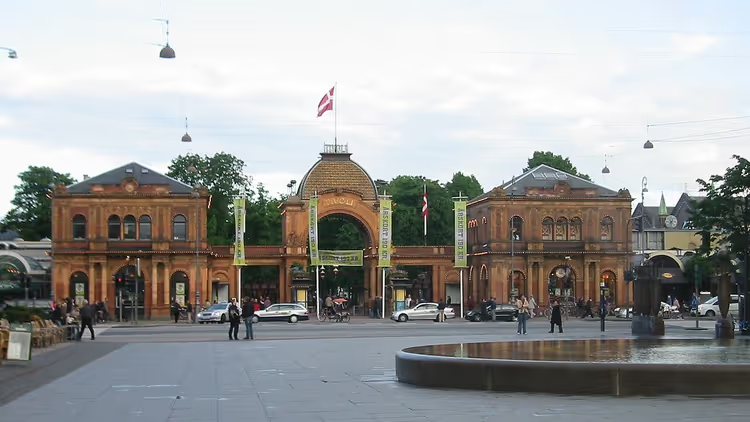
Tivoli is the oldest operating amusement park and Copenhagen's top destination for families. Across eight hectares in the very center of the city, you'll find promenades, a lake, a theater, and a concert venue. Since opening, the park has developed within its own traditions and has barely changed its character.
 © Elgaard · CC BY-SAPhoto: Elgaard, CC BY-SA (http://creativecommons.org/licenses/by-sa/3.0/), Wikimedia Commons
The park has more than twenty rides, including an old wooden roller coaster. In the evening, Tivoli transforms in the glow of colorful lights, and that's the time to have dinner at one of its restaurants. The eateries here regularly make the city's best-of lists.
Admission starts at around 170 DKK for adults and 85 DKK for children, with prices depending on the date and entry time (as of 09/2026, Tivoli tickets). Rides are paid for separately, so an unlimited ride pass is the better value. The park is open roughly from mid-April to late September, plus during Halloween season and at Christmas.
Tivoli sits right across from Central Station, so you can walk from the platform in a couple of minutes. Some roller coasters and carousels have height restrictions for children. The best time to visit is a weekday evening, when there are fewer school groups.
- How to get there: København H station, or buses 1A, 2A, 5A, 9A, 11A, and 40.
- The catch: on weekends and holidays, lines for popular rides are long, so get tickets online.
8. Ripley's believe it or not! museum
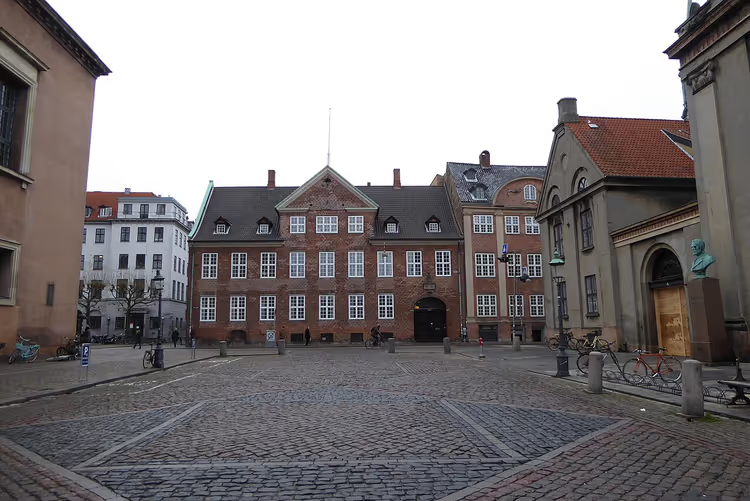
"Believe it or not!" is the literal translation of the Ripley's museum name. It houses astonishing objects, stories about unusual people, and events from around the world. You'll not only see all kinds of phenomena but also have fun: in the horror room, visitors get spooked, and you can also measure your "love radiation" level.
 © John Lord from Edinburgh, Scotland · CC BYPhoto: John Lord from Edinburgh, Scotland, CC BY (https://creativecommons.org/licenses/by/2.0), Wikimedia Commons
The collection was started by American journalist and artist Robert Ripley, and in Copenhagen the museum is combined with the Guinness World Records exhibition and the Hans Christian Andersen Experience. The exhibition operates in one building on City Hall Square, so you can conveniently visit all three museums in one go.
In summer, the museum is open late; at other times it closes earlier, and ticket sales stop an hour before closing. Admission is paid, and a combined ticket for several museums in the complex works out cheaper than a single one.
- How to get there: a two-minute walk from City Hall Square and city bus stops.
- Who it's for: families with children and anyone who enjoys interactive exhibits.
9. Hans Christian Andersen experience
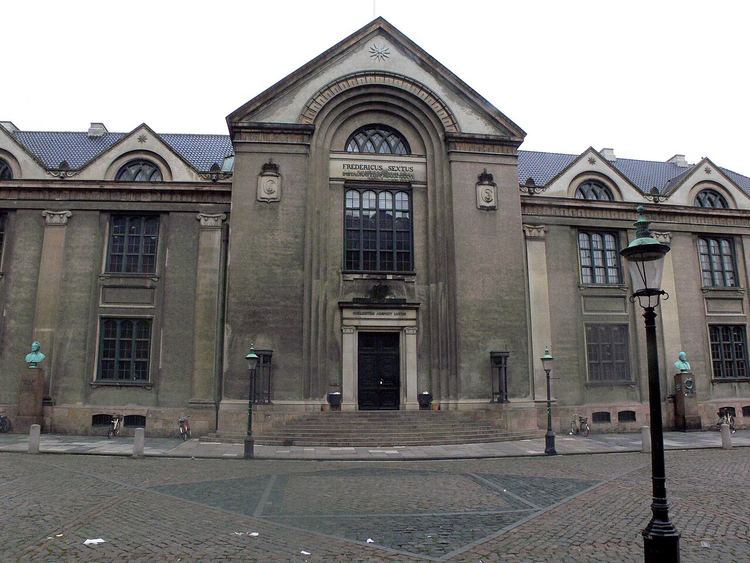
In Denmark, Andersen is revered as the country's greatest national classic. The Hans Christian Andersen Experience is an interactive museum where children meet the heroes of beloved fairy tales. Adults won't be bored either: instead of the usual display cases, there are animations and attractions.
 © Christian Bickel · CC BY-SAPhoto: Christian Bickel, CC BY-SA (https://creativecommons.org/licenses/by-sa/2.0/de/deed.en), Wikimedia Commons
Visitors are greeted by a statue of the writer, and inside, 3D animation shows him at work in his study. Famous characters are presented through drawings, sculptures, and large moving figures. The interactive part of the exhibition can easily keep you and your kids occupied for half a day.
The museum shares an address with Ripley's museum, so you can see both exhibitions back to back. In summer it stays open late into the evening; in winter it closes earlier. Buy your ticket at the complex, where combined offers are available.
- How to get there: City Hall Square, a two-block walk from Central Station.
- Not for: those expecting a serious history museum; the format here leans more toward entertainment.
10. The Little Mermaid
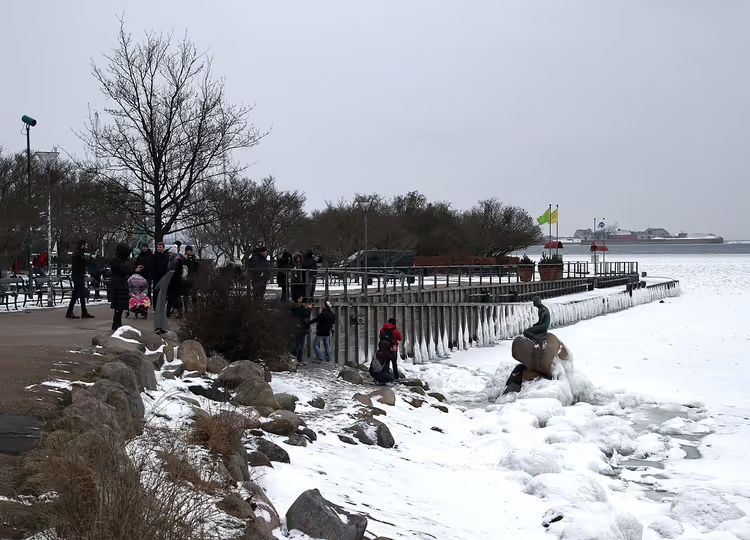
The Little Mermaid statue is a tribute to Andersen and Denmark's main symbol. A graceful, pensive young woman sits on a granite rock, greeting ships entering the harbor. Travelers come to the Langelinie promenade to take photos and make a wish.
 © Guillaume Baviere from Uppsala, Sweden · CC BY-SAPhoto: Guillaume Baviere from Uppsala, Sweden, CC BY-SA (https://creativecommons.org/licenses/by-sa/2.0), Wikimedia Commons
The statue was gifted to the city by Carlsberg brewery owner and patron of the arts Carl Jacobsen in 1913. He was passionate about art and was impressed by a ballet based on the fairy tale, with a prima ballerina of the Royal Theatre serving as the model. The figure has suffered from vandalism multiple times, and each time it has been restored using the sculptor's cast.
The landmark to look for is the sign "Lille Havfrue" on the promenade. Access to the statue is free and open around the clock. While you're there, you can also stroll along Langelinie past the old port.
- How to get there: train from Nørreport station to Østerport, then walk along the waterfront.
- The catch: there's almost always a crowd right at the statue, so come at opening time for a calm photo.
11. Christiania
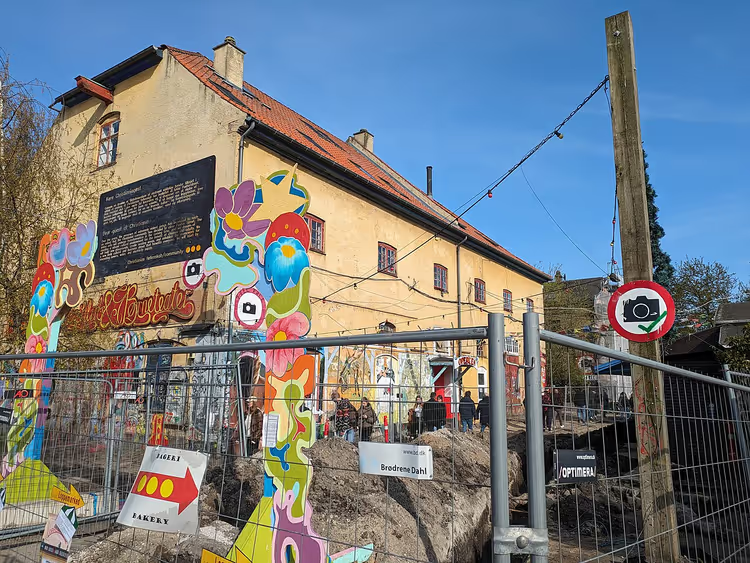
Christiania is a state within a state, or simply a way to step back into the late sixties. This small district with its main street, Pusher Street, sits not far from the city center, and its boundary is formed by houses and fences. Around a thousand "free" people live here, paying a small communal fee.
 © Penguin · CC BY-SAPhoto: Penguin, CC BY-SA (https://creativecommons.org/licenses/by-sa/4.0), Wikimedia Commons
Cars, theft, hard drugs, firearms, and bulletproof vests are banned on the grounds. Photography is also prohibited, and running is discouraged so as not to alarm residents. Respect these rules, and your walk will be peaceful.
There are small shops, bars, and eateries here, and concerts take place periodically at various venues. The district is quiet and clean; residents have separated themselves from the outside world without violence and continue to defend their right to self-governance.
Residents actively fight smoking and work to keep the area clean, so it's best to take your trash and cigarette butts with you. There are no conventional signs inside; houses are labeled by hand, which gives the area the feel of an independent little town. Behave as if you're a guest: don't photograph people and don't make noise near residential buildings.
- How to get there: bus or metro to Christianshavn station, then a ten-minute walk.
- Not for: those looking for classic museum halls; the atmosphere here is that of a self-made town.
12. Islands Brygge Beach
Scandinavia rarely brings beach vacations to mind, but in summer you can both sunbathe and swim in Copenhagen. The city has four designated swimming areas. The newest, Coral Baths, is located near Teglholmshavnen station, while the cleanest beach with a Blue Flag, Amager Strandpark, is in the Amager Strandvej area.
The most visited spot is the Islands Brygge harbor bath on the island of Amager, on the shore of the Øresund strait. Visitors have five pools at their disposal, two of them for children, and one designed for diving board jumps. Besides swimming, you can grab drinks at the local bar or grill meat at the barbecue area.
The harbor bath is on the island of Amager, by the Øresund strait, and opens only during the warm season. Danes have nicknamed the Fisketorvet harbor pool "Copencabana," and Amager Strandpark beach earned a Blue Flag for water quality. If you want sand and open space, choose Amager Strandpark; for an urban vibe, head to Islands Brygge.
Beach access is free. The season opens on June 1 and closes at the end of September; on weekdays the harbor bath is open from morning to evening. On hot days it gets crowded, so come at opening time to secure a lounger.
- How to get there: metro to Islands Brygge, then a few minutes' walk to the water.
- The catch: the harbor water is cooler than at seaside resorts and only warms up by midsummer.
13. The Round Tower
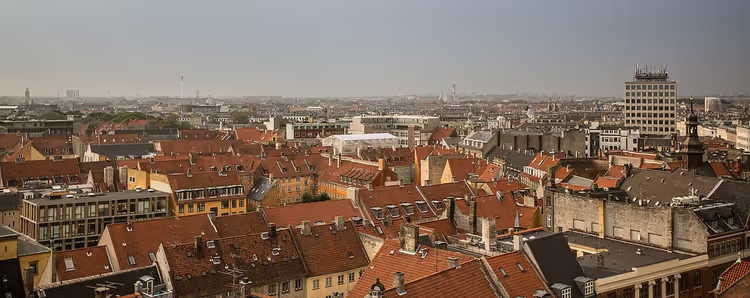
Everyone who has read Andersen's "The Tinderbox" has heard of the Round Tower: the witch mentions that one of the dogs has eyes the size of this tower. The monumental structure was built in 1642 by order of King Christian IV. From the outside, the tower looks like a military stronghold, but it was conceived as an observatory for the university.
 © Tony Webster from Portland, Oregon, United States · CC BYPhoto: Tony Webster from Portland, Oregon, United States, CC BY (https://creativecommons.org/licenses/by/2.0), Wikimedia Commons
There are no stairs inside the tower: a spiral ramp about 209 meters long leads to the top (as of 09/2026, Rundetaarn). This design was chosen so horse-drawn carts could ascend the ramp. According to legend, in 1716 Peter the Great himself rode to the upper level in a two-wheeled carriage.
Today, an amateur observatory and an observation deck with a panoramic city view operate at the top. Admission costs 40 DKK for adults, children's tickets are cheaper, and the tower is open almost all year round (as of 09/2026, Rundetaarn tickets). Once a year, a bicycle race is held here, where the winner is whoever rides up and back the fastest without falling once.
- How to get there: on foot from Nørreport and Kongens Nytorv metro stations.
- Who it's for: for those who want a view of the old town without climbing stairs.
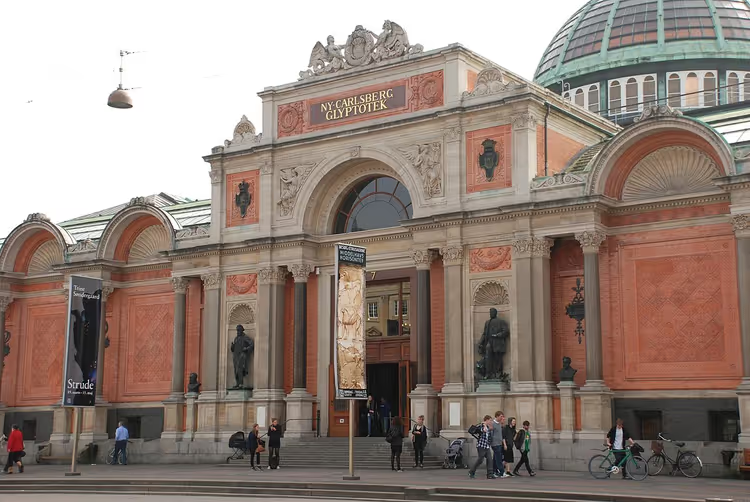
14. Ny Carlsberg Glyptotek
Ny Carlsberg Glyptotek was founded by Carl Jacobsen, son of the Carlsberg brewer. He spent his life collecting masterpieces of art, and in 1888 he donated his collection to the Danish people. When handing the gift over to the city, he set one condition: the government had to provide an exhibition building.
 © xiquinhosilva · CC BYPhoto: xiquinhosilva, CC BY (https://creativecommons.org/licenses/by/2.0), Wikimedia Commons
Visiting the exhibition is a treat for art lovers. It houses ancient masterpieces from Rome, Greece, and Egypt, a collection of Etruscan statues and bas-reliefs, as well as French painting: works by Rodin, Degas, Cézanne, Renoir, Van Gogh, and Toulouse-Lautrec. In total, the Glyptotek displays tens of thousands of objects.
The building also has a concert hall that hosts lectures, conferences, and classical music concerts. A couple of hours is enough to see the main halls, and if you want to slow down, add another hour for the inner courtyard with its winter garden.
- How to get there: on foot from City Hall Square, entrance from Dantes Plads.
- Who it's for: for those tired of contemporary art who want the classics without Louvre-style lines.
15. The Gefion Fountain
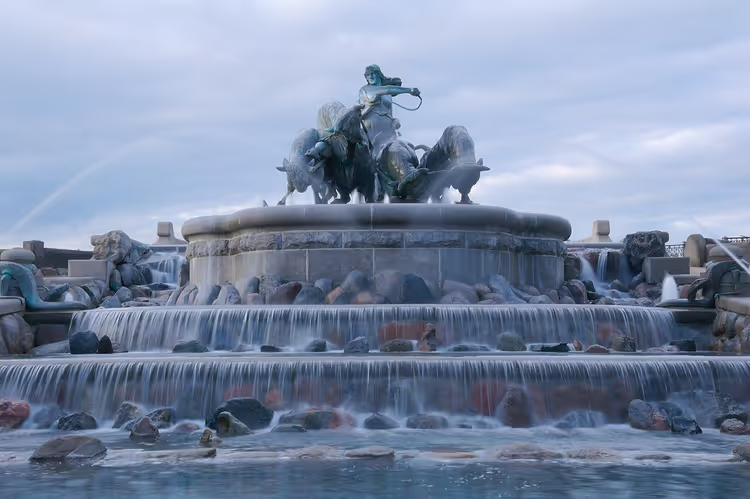
The Gefion Fountain is another gift to the city from the Carlsberg family. The brewing company presented it to Copenhagen in honor of its anniversary, and the artist Andreas Bungaard worked on the composition. He spent two years sculpting the central figures, and several more years went into the fountain itself and the basin around it.
 © Jiří Komárek · CC BY-SAPhoto: Jiří Komárek, CC BY-SA (https://creativecommons.org/licenses/by-sa/4.0), Wikimedia Commons
The composition is based on a Scandinavian legend. The fertility goddess Gefion bargained with a king for land and plowed it with oxen, into which she had transformed her own sons. A piece of land broke off from Sweden and became Zealand, and Lake Vänern spread out in its place.
The fountain is especially beautiful in the evening, when the lights come on and you can hear the melodic murmur of the water. Admission is free, and both tourists and locals come here with sandwiches.
- How to get there: a five-minute walk from Østerport station, next to the Kastellet fortress.
- Who it's for: for those strolling along the harbor who want a short stop along the way.
16. Kastellet Fortress
A small redoubt built in 1626 once stood on the site of the fortress. After the city was besieged by Swedish troops, the fortification was badly damaged, and it was decided to restore and expand it. This is how the citadel came to be, which locals quickly renamed Kastellet.
The citadel is shaped like a perfect five-pointed star. Bastions reinforced with artillery stood at the corners, and this geometry is not for beauty: under bombardment, cannonballs strike the walls at an angle and cause little damage. Almost nothing remains of the massive stone structures, but the ramparts and the cannons on them have survived.
Today the fortress belongs to the military, so access is not open everywhere: soldiers live in the barracks, and guards watch the entrance. But the area around the barracks has become a favorite recreation spot for locals. You can take a leisurely stroll or go for a morning run here.
- How to get there: on foot from Østerport station, enter through the gate from Kastelletvej.
- The catch: military facilities are closed to visitors, so there is no full tour of the interior.
17. Rosenborg Castle
Rosenborg Castle embodies Copenhagen's royal grandeur. Built in the Renaissance style and surrounded by a garden, it is considered the pride of the capital. Andersen loved to walk in the garden, and perhaps that is where he drew inspiration for his fairy tales.
The castle dates back to the early 17th century, when King Christian IV decided to build his own residence. He bought a plot of land outside the city walls, and construction stretched over many years. Today, the halls house a museum with interiors from different eras arranged in chronological order.
A separate reason to visit is the royal treasury in the basement. Here you will see crowns, regalia, jewelry, and weapons, as well as the Coronation Carpet. A visit to Copenhagen would be incomplete without seeing this attraction.
- How to get there: on foot from Nørreport metro station, through the King's Garden.
- Who it's for: for those who want to see royal regalia, not just palace facades.
18. The Zoo
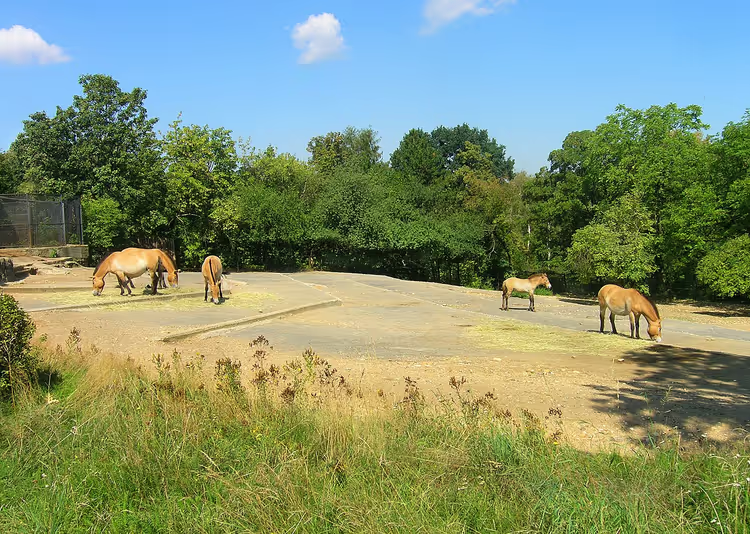
The history of the Copenhagen Zoo began in 1859, when Niels Kjærbølling opened the first menagerie. Since then, the park has grown into one of the oldest zoos in Europe. Today it houses rare animals, including the Amur leopard and the Siberian tiger.
 © Czech Wikipedia user Packa · CC BY-SAPhoto: Czech Wikipedia user Packa, CC BY-SA (https://creativecommons.org/licenses/by-sa/2.5), Wikimedia Commons
A separate draw is the "Polar Circle": a huge aquarium with a pedestrian tunnel that takes you right under the water to observe polar bears. The zoo is open every day of the year.
Admission costs 260 DKK for adults and 160 DKK for children aged three to fourteen (as of 09/2026, zoo tickets). Plan for at least half a day, the grounds are large.
- How to get there: train or metro to Frederiksberg station, or buses to Roskildevej.
- Who it's for: for families with children, there are feeding areas and petting zones.
19. The national museum of Denmark
A beautiful Rococo building called Prinsens Palæ stands by the Frederiksholm Canal. It once belonged to the crown prince, and today it is the National Museum of Denmark. The exhibits span a long historical period: from Ice Age hunters to medieval art.
Among the most interesting exhibits are Denmark's oldest coin, the Sun Chariot, and Victorian interiors. There are also unexpected items here, such as an ancient miniskirt. In addition to the permanent exhibition, temporary exhibitions are regularly opened.
The museum is easy to combine with Christiansborg Palace, as they stand close to each other on opposite sides of the canal. Allow two to three hours to see the main halls.
- How to get there: on foot from City Hall Square across the canal bridge.
- Who it's for: for those who want to understand the country's history in a single visit.
20. The Opera House
The Copenhagen Opera House cannot boast centuries of history: it opened to the public in 2005, and Plácido Domingo himself took the stage. It immediately earned its status as a must-see for tourists, and there are several reasons for that. It is one of the most expensive theaters in the world, and its construction cost enormous sums.
The total area of the building is about forty thousand square meters, and it has fourteen floors, five of which are underground. Sicilian marble, gold leaf, and calcite were used inside, the furniture is made of white maple, and the floor of the main hall is covered with oak panels. The upper level is reserved for a restaurant with a view of Amalienborg Palace.
Even if you are not attending a performance, the building is worth seeing from the outside, as it transforms the waterfront. In the evening, the lighting makes the theater even more striking.
- How to get there: bus or metro to Kongens Nytorv, then walk across the bridge to the island of Holmen.
- Who it's for: for those who appreciate modern architecture as much as historic landmarks.
21. Frederik's Church
Not far from Amalienborg stands the Lutheran Frederik's Church, known as the Marble Church. It was built in monumental Baroque style and is one of the five largest churches in Copenhagen. The building's unique feature is its enormous dome, 31 meters in diameter, the largest in Scandinavia.
 © Rüdiger Stehn from Kiel, Deutschland · CC BY-SAPhoto: Rüdiger Stehn from Kiel, Deutschland, CC BY-SA (https://creativecommons.org/licenses/by-sa/2.0), Wikimedia Commons
The dome rests on twelve columns and is visible from various points around the city. Architect Nicolai Eigtved drew inspiration from St. Peter's Basilica in Rome and wanted to build a Danish version of that masterpiece. King Frederik V laid the foundation stone, but the treasury cut the budget, and the architect's death delayed completion: the cathedral was consecrated only nearly a century and a half later.
The walls are decorated with bas-reliefs and statues, and inside you'll be struck by the rich decor and the altar gleaming with gilding. Every Friday, wedding bells ring out here, and beneath the dome there's an observation deck with city views.
- How to get there: walk from Marmorkirken metro station, five minutes from Amalienborg.
- Who it's for: those who want to see the largest dome in Northern Europe.
22. Church of Our Saviour
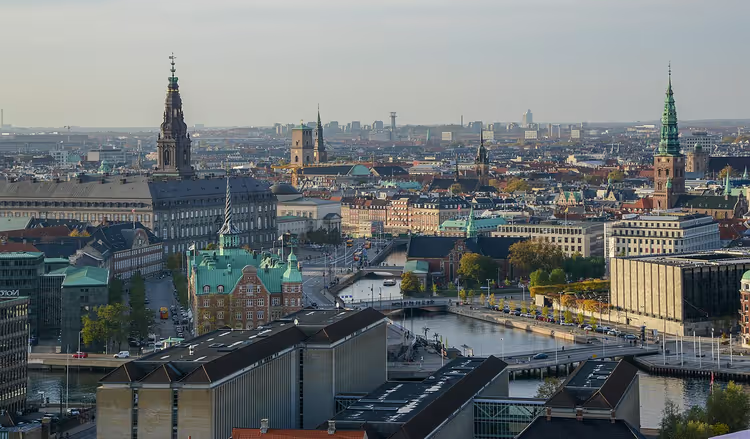
The Church of Our Saviour is one of those buildings that stays in tourists' memories for a long time. The historic Protestant church was built in Baroque style from drawings by Lambert van Haven. The main structure is complemented by a bell tower, and its unique feature is an external spiral staircase of four hundred steps leading to the top.
 © Jorge Láscar from Melbourne, Australia · CC BYPhoto: Jorge Láscar from Melbourne, Australia, CC BY (https://creativecommons.org/licenses/by/2.0), Wikimedia Commons
The church was consecrated in the late 17th century, but the bell tower was only completed by the mid-18th century. The spiral staircase winds counterclockwise and is considered a symbol of humility. There's a legend that the king disapproved of the idea, but no documents confirm it.
Inside, you'll find a marble altar, carved columns, a large organ, and a carillon of forty-eight bells. The climb up the external staircase rewards you with the best panoramic view of the city.
- How to get there: bus or metro to Christianshavn, then walk along the canal.
- Not for: those who are afraid of heights and narrow winding climbs up the tower.
23. Børsen
In the old part of the city, on the small island of Slotsholmen, stands the Børsen exchange. The building was constructed in Flemish Renaissance style: goods were stored on the ground floor, and trading took place on the second. Construction began in 1619 under the direction of the Steenwinckel brothers and stretched over twenty-one years.
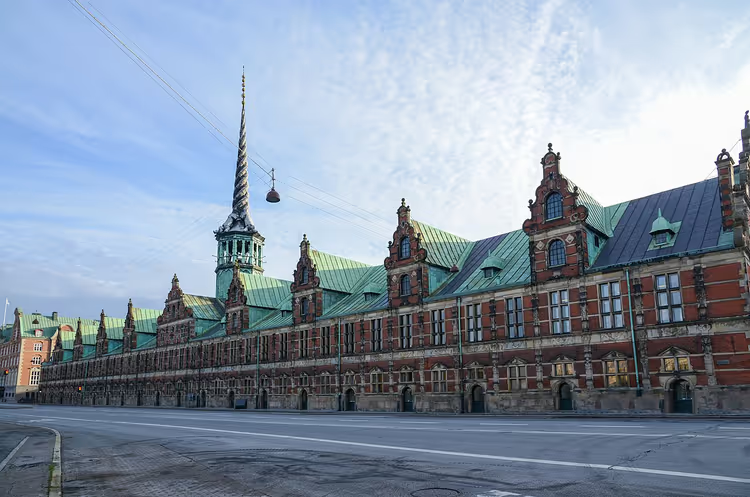 © Jorge Láscar from Melbourne, Australia · CC BYPhoto: Jorge Láscar from Melbourne, Australia, CC BY (https://creativecommons.org/licenses/by/2.0), Wikimedia Commons
The building was crowned by a unique spire with four dragons, their tails intertwined as a symbol of the union of Norway, Sweden, and Denmark. The stock exchange operated here until 1974, and later the historic rooms hosted receptions and cultural events.
Important update: in April 2024, a fire destroyed more than half of the building and brought down the dragon spire (as of 09/2026, owner Dansk Erhverv). Børsen is currently closed for reconstruction, with completion planned for 2029. The building can only be viewed from the outside; tourists are not allowed inside.
- How to get there: walk from Christiansborg across the bridge to the island of Slotsholmen.
- The catch: the building is behind scaffolding, so a full visit inside won't be possible for now.
24. Experimentarium
If you're traveling with kids, be sure to plan a visit to the Experimentarium. It's an unusual museum dedicated to science and technology. More than three hundred exhibits will capture the interest of young explorers, especially since any of them can be picked up, examined, and touched.
In addition to the permanent exhibition, the museum is known for its interactive programs. Here you can test yourself on a lie detector, create a tornado or geyser, shout into an echo tube, and make a real cloud. There's a play area for the youngest visitors, and parents can enjoy coffee with Danish pastries in the cafe.
Plan for at least three hours; children rarely leave here quickly. The museum is located in the Hellerup district, slightly away from the center.
- How to get there: buses to Tuborg Havnvej or train to Hellerup station.
- Who it's for: families with children aged three and up who need to touch everything.
25. Grundtvig's Church
Grundtvig's Church is a striking example of Scandinavian architecture. It makes a dual impression on the viewer: a somber, imposing facade and a bright, joyful interior. Construction of the famous Lutheran church began in 1921, funded entirely by money raised by the people, with no state involvement.
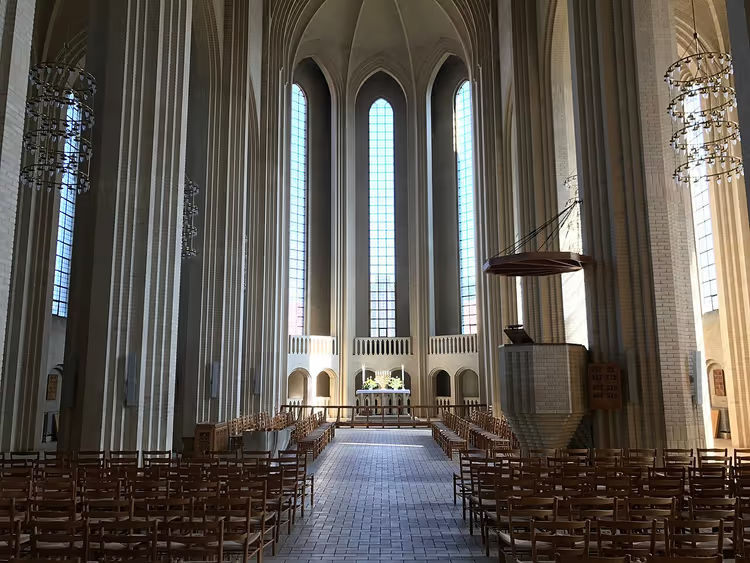 © Nortix08 · CC BY-SAPhoto: Nortix08, CC BY-SA (https://creativecommons.org/licenses/by-sa/4.0), Wikimedia Commons
The church opened to parishioners in 1940. The building looks unusual due to its combination of different styles: Gothic, impressionist, and modernist. The main facade resembles a colossal organ, and inside you'll experience a sense of light after the austere exterior.
The construction technology also deserves attention. Every brick was made by hand, and the masonry was fitted as tightly as possible, making the walls almost monolithic. Residential buildings for workers were built nearby, and all the structures form a single complex.
- How to get there: bus to the Pa Bjerget stop, or train to Bispebjerg station.
- Who it's for: those interested in 20th-century architecture, not just the classics.
26. Botanical Garden
In the city center, ten hectares are set aside for a stunning living museum. The Botanical Garden holds the country's largest plant collection: more than nine thousand species. The garden traces its history back to 1600, when the king issued a decree on preserving rare plants.
Expeditions were sent to exotic countries and returned with unique seed material. Today the garden is part of the Natural History Museum and serves as a site for studying endangered species. Special laboratories here research plant cell material and DNA.
The garden has relaxation areas, irrigation systems, and a beautiful lake with a wooden pier. Admission is free, so people stop by to escape the city noise between two museums.
- How to get there: walk from Nørreport metro station, entrance from Gothersgade.
- Who it's for: those who want a quiet stroll among greenery in the middle of the center.
27. Guinness World Records Museum
The Guinness World Records Museum operates in the same building as Ripley's Museum on City Hall Square. At the entrance, visitors are greeted by a figure of the world's tallest man. Human records are presented here through illustrations, models, and interactive exhibits.
The museum has special rooms where every visitor can try to break a world record. A documentary about record holders is shown in the cinema. The museum is compact; an hour is enough to see it, and it's easy to combine with a stroll along the shopping street.
- How to get there: City Hall Square, in the same building as Ripley's Museum.
- Not for: those looking for a serious exhibition; the format here is closer to entertainment for children.
28. Museum of Military History and Weapons
The museum occupies the Arsenal building, constructed in 1604 during the reign of King Christian IV. The exhibition covers the entire military history of the state. Various types of military equipment are displayed here: tanks, trucks, jeeps, and other machinery.
A separate hall is dedicated to an installation about combat operations in Afghanistan. There's also a section for medieval weaponry, as well as a rich collection of military uniforms from Danish soldiers and foreign armies. The museum vividly shows what the "last arguments of kings" looked like.
- How to get there: walk from Christiansborg Palace; the museum stands right next to it.
- Who it's for: those interested in the history of wars and military equipment.
29. Alexander Nevsky Church
Orthodox Christians also have their own church in Copenhagen. The future Emperor of Russia Alexander III spent his entire married life with the Danish princess Dagmar, who converted to Orthodoxy after the wedding and became Maria Feodorovna. The emperor often visited his wife's parents, so in 1881 a plot of land was purchased next to Amalienborg Palace and construction began.
The project was designed by court architect David Grimm, who was drawn to the Russian-Byzantine style. Bright brick walls with alternating white and red stripes, a bell tower, and three gilded onion domes look festive on a Copenhagen street. The interior is decorated with works by Bronnikov, Kramskoy, and Bogolyubov.
The main shrine is an icon of the Blessed Virgin Mary, renowned for its miracles. The church also houses the empress's personal cabinet with her belongings.
- How to get there: a five-minute walk from Amalienborg and Marmorkirken metro station.
- Who it's for: those interested in Orthodox architecture in the heart of Scandinavia.
30. Nyhavn waterfront
For most tourists, Copenhagen is associated with this very street, called the most photographed place in Denmark. Nyhavn is a canal about three hundred meters long, whose banks are lined with bright, colorful houses. It was dug in the 17th century to connect the city center with the harbor.
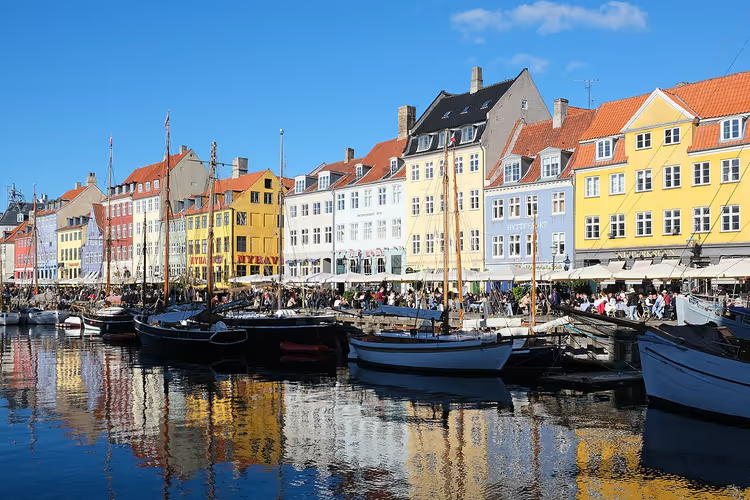 © kallerna · CC BY-SAPhoto: kallerna, CC BY-SA (https://creativecommons.org/licenses/by-sa/4.0), Wikimedia Commons
After World War II, the area fell into decline, the streets looked bleak, and restoration began in the late sixties. The buildings were renovated, historic ships were moored at the quays, and the street itself was made pedestrian-only. Now it is an open-air museum and a favorite spot for travelers.
Cafes and restaurants line the canal, and in the evening people come for the lights and reflections in the water. The best shot is from the bridge over the canal, but you'll have to wait for it, the spot is popular.
- How to get there: on foot from Kongens Nytorv, just a few minutes' walk.
- The catch: in high season, groups gather at the bridge, so come when the cafes open for photos.
Tours and tickets in Copenhagen
Guided tours, skip-the-line tickets and activities — most offers can be cancelled free of charge.
See offers on GetYourGuideThe widget loads once you give your consent.
⁉️🤔 Frequently asked questions
How many days should you set aside for Copenhagen?
Two or three days is enough for a relaxed look at the main sights. In one day you can cover the palaces near Nyhavn, the Little Mermaid, and a short walk through the center. For museums like the Glyptotek and the National Museum, add half a day each, otherwise you'll be rushing between galleries.
What can you see in Copenhagen for free?
The Little Mermaid statue, the Gefion Fountain, Kastellet fortress, a walk along Nyhavn, the Botanical Garden, and the climb up Christiansborg Tower are all free. These spots fit together well into a walking route through the center and along the harbor, so you can save your budget without missing out on the experience.
Is it worth buying tickets in advance?
Yes, if you're traveling in season. Tivoli and the zoo sell tickets online, and Tivoli admission depends on the date and time: on weekends the price is higher, and it's better to buy in advance. Popular museums also limit time slots in high season.
When is the best time to visit Copenhagen?
The most comfortable time is from May to September: it's warm, parks and the Islands Brygge beach are open, and it stays light almost until midnight. In autumn and winter, hotels are cheaper and there are fewer people, but it gets dark early. In winter, it's worth coming for the Christmas season at Tivoli.
What to see in Copenhagen with kids?
Kids will enjoy the zoo, Experimentarium, Tivoli, and the Ripley museum with Andersen's world. The zoo and Experimentarium are best split across different days, both require at least half a day. Tivoli is easy to combine with a walk along Nyhavn, they're close to each other.
Copenhagen attractions on the map
All 30 places are marked on the map so you can build a route by neighborhood and avoid wasting time traveling across the city.
Copenhagen Attractions
Places on the map
- 1Amalienborg Palace The royal family's residence of four rococo palaces, museum 135 kronor, changing of the guard free
- 2Christiansborg Palace Parliament, the Supreme Court and state rooms on Slotsholmen, ruins of Absalon's castle in the cellars
- 3Thorvaldsen's Museum The sculptor's works and his mausoleum, free entry on Wednesdays, audio guide given for free
- 4Royal Danish Library A black diamond of glass and granite on the canal, free rooftop access with harbour views
- 5City Hall Early-20th-century red brick, a tower almost a hundred metres tall and an astronomical clock, free entry
- 6National Gallery of Denmark The country's main art museum in Østre Anlæg park, with a Children's Museum
- 7Tivoli Gardens The oldest working amusement park, entry from 170 kronor, rides sold separately
- 8Ripley's Believe It or Not! Museum A collection of curiosities on the town hall square, in the same building as the Guinness records
- 9The Hans Christian Andersen World Fairy-tale heroes in animations and moving figures, same address as the Ripley's museum
- 10The Little Mermaid The symbol of Denmark on the Langelinje promenade, a gift to the city from Carl Jacobsen, free entry
- 11Christiania A free town with the main street Pusher Street, no photography allowed
- 12Islands Brygge Beach A city bathing spot with five pools on Amager, season from June to late September
- 13Round Tower A 209-metre spiral ramp instead of stairs, entry 40 kronor, an observatory at the top
- 14Ny Carlsberg Glyptotek Antiquity, Etruscans and French painting from Rodin to Van Gogh, a winter garden in the courtyard
- 15Gefion Fountain A gift to the city from the Carlsberg family, illuminated in the evening, free entry
- 16Kastellet Fortress A star-shaped citadel, ramparts and cannons open, military barracks
- 17Rosenborg Castle Christian IV's Renaissance castle with the royal treasury in the basement
- 18Copenhagen Zoo One of the oldest in Europe, entry 260 kronor, the ticket is valid for a whole year
- 19National Museum of Denmark Prinsens Palæ by the Frederiksholm canal, from the Ice Age to the Middle Ages
- 20Opera House Opened in 2005, fourteen floors and a restaurant overlooking Amalienborg
- 21Frederik's Church (Marble Church) A marble church with a 31-metre dome, Scandinavia's largest, a platform beneath the dome
- 22Church of Our Saviour An exterior spiral staircase of four hundred steps and a carillon of forty-eight bells
- 23Børsen A Flemish Renaissance exchange, closed for reconstruction until 2029 after the 2024 fire
- 24Experimentarium More than three hundred hands-on exhibits, in the Hellerup district, at least three hours
- 25Grundtvig's Church A facade shaped like a colossal organ, every brick handmade, opened in 1940
- 26Botanical Garden Ten hectares and more than nine thousand plant species in the center, free entry
- 27Guinness World Records Museum Records in models and interactive exhibits on Strøget street, about an hour to see
- 28Museum of War History and Weapons The 1604 Arsenal building next to Christiansborg, weapons and military uniforms
- 29Alexander Nevsky Church An Orthodox church in Russian-Byzantine style five minutes from Amalienborg
- 30Nyhavn Waterfront A three-hundred-metre canal with colourful houses, Denmark's most photographed spot
In short: what's worth booking
If you have one day, go for Amalienborg, Nyhavn, and the Little Mermaid. With two days, add Tivoli and the Round Tower with its view of the old town. With kids, put the zoo, Experimentarium, and the Ripley museum on your list. For a rainy day, keep the Glyptotek and the National Museum in reserve.
Tickets to popular places are cheaper to buy online: you skip the line and often pay less than at the ticket office. City tours and attraction tickets are convenient to gather in one place so you don't have to hunt for them on the spot.

A small editorial team writing guides for independent travel. We travel ourselves, but we haven’t been everywhere, so we check prices, opening hours and how to get there against official sources.