
















Vilnius, Riga and Jurmala: how to visit three cities without a car
Three cities, two transfers, and only four days. Vilnius, Riga, and Jurmala sit almost on one line, so they are easy to link into a single route without a car or extra flights. A bus runs between the capitals, and you can reach the sea from Riga by commuter train.
We put together a workable trip plan: what to see in each city, where to eat, where to leave your bags, and how much time to allow for travel. We checked all prices and opening hours against official websites in September 2026.
The route is designed for travelers who fly into Vilnius on a low-cost airline and fly out of Riga. You can reverse the order of the cities if you fly into Riga and out of Vilnius.
Ad: this article contains affiliate links; we earn a commission if you book through them, at no extra cost to you.
How to fit three cities into four days
💡 In short:
- Vilnius: a day for the Old Town, Gediminas Tower, and Uzupis (as of 09/2026, official Gediminas Tower website).
- Riga: direct bus from Vilnius (as of 09/2026, Ecolines schedule).
- Riga: a day for the Old Town, Riga Cathedral, and the Central Market.
- Jurmala: commuter train from the Central Station and half a day at the sea.
The logic is simple: the two capitals are connected by a direct bus, and Jurmala hangs on the Riga commuter train. If you only have four days, do not try to cover everything. Give each city at least half a day and do not plan museums in all the cities back to back.
Vilnius: transport and first steps
Vilnius is more compact than it looks on the map. The bus station and the railway station stand next to each other on the edge of the Old Town, so you can walk from the bus to the first square.
Buy city transport tickets from the driver or load them onto a Vilniečio kortelė card. The card itself is sold at Lietuvos Spauda and Narvesen kiosks. The Trafi app is handy for tracking schedules and bus movements, and you can also buy tickets there.
Uber and Bolt work like in any EU city. In the center it is easier to walk: distances are short, and parking in the Old Town is paid and tight.
Vilnius: where to eat
Mano guru (Vilniaus g. 22/1) operates as a salad bar in the very center. On weekdays it opens at seven in the morning, on weekends at nine. Besides salads and soups, it has fresh juices and teas, and the place stays quiet even in the middle of the day.
Cozy (Dominikonų g. 10) works well for breakfast: a croissant and coffee, an omelet, a sandwich, or porridge. It opens at eight in the morning on weekdays and at half past eight on weekends.
Nineteen18 (Dominikonų g. 11) offers a set menu of modern Lithuanian cuisine next door to Cozy. The service here is attentive, and it is best to arrive when it opens.
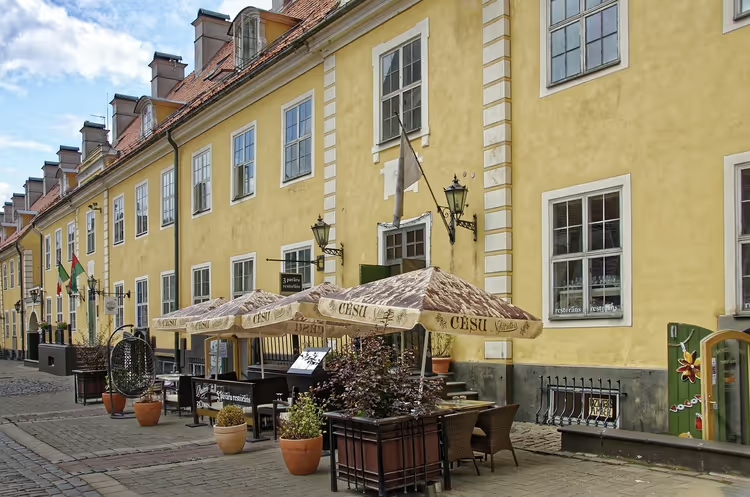
Briusly (Islandijos g. 4) cooks Asian food in the Old Town. The menu is large, and in summer they open a terrace in the courtyard.
 © Aleksandrs Timofejev… · CC BYPhoto: Aleksandrs Timofejev…, CC BY (https://creativecommons.org/licenses/by/3.0), Wikimedia Commons
Prices in central restaurants are average by EU standards, and a check for two without wine rarely goes beyond a budget dinner. If you want to save money, go for weekday lunch sets.
Vilnius: where to stay
The most convenient option is to stay in the Old Town: you can walk to the main sights, and in the evening you will not need to look for a taxi.
Panorama Hotel (Sodų g. 14) stands directly opposite the railway station, next to the bus station, and about 300 meters from the historic part (on the map). They store your bags even after checkout. The rooms are standard; the main plus is the location, especially if you are traveling without a car.
Park Hotel Vilnius (Jono Basanavičiaus g. 9) is located inside the Old Town, next to Reformatų Park. The rooms are cozy, and almost all have a kettle and cutlery.
Hotel Domus Maria (Aušros Vartų g. 12) occupies a historic building that was once a monastery of the Discalced Carmelites. The building was constructed four centuries ago next to the Gate of Dawn and the Church of St. Teresa. The rooms are bright, and the hotel has its own free parking. This is an option for those who want to stay in former monastic cells.
Hostel Jamaika (Visų Šventųjų g. 9) operates in the center, near the Town Hall and a square with a flea market on weekends. There is a bar on the ground floor, which also serves as the reception desk. The building entrance has a code lock, so it is best to confirm your late arrival time when booking.
It is easier to compare options with prices and reviews online: Hotel Domus Maria prices on Trip.com.
Vilnius: what to see
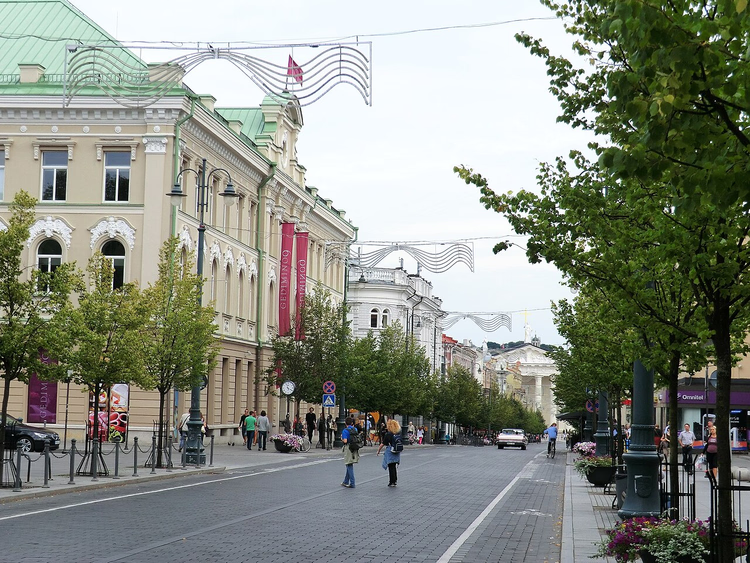
Almost everyone starts their visit with the historic center: churches, the Town Hall, narrow cobblestone streets, and Gediminas Tower on the hill. This takes a day, or two at a slow pace.
Free daily Old Town walking tours run in Vilnius, but registration is required and the group must have at least four people.
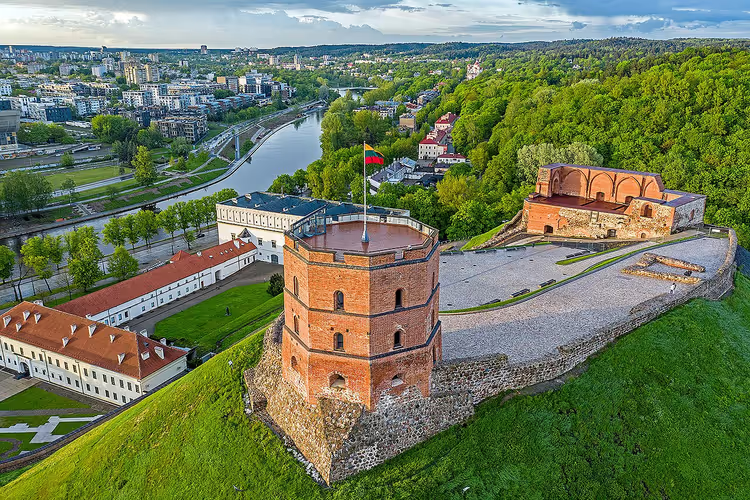
Climb Gediminas Tower: from the top you get a panorama of the whole city. The tower is open daily from ten in the morning to eight in the evening, and an adult ticket costs 8 € (as of 09/2026, official Gediminas Tower website). The funicular costs 2 € one way and 3 € round trip, while a combined ticket for the historic triangle costs 15 € (as of 09/2026, Lithuanian National Museum). Inside there is a small museum with a spiral staircase, so the tower also saves you on a rainy day.
 © BigHead · CC BY-SAPhoto: BigHead, CC BY-SA (https://creativecommons.org/licenses/by-sa/4.0), Wikimedia Commons
Next to Cathedral Square lies Bernardine Garden. It is a pleasant place for a walk and a midday break, and in summer a singing fountain operates here.
The Republic of Uzupis is a must-see. It is one of the oldest districts of Vilnius, with its own constitution, dozens of open-air art objects, and small cafe-workshops. Go there in the evening, when the tourist flow thins out.
If you want to take a ready-made guided tour, check out tours of Vilnius Old Town.
Vilnius: museums and street art
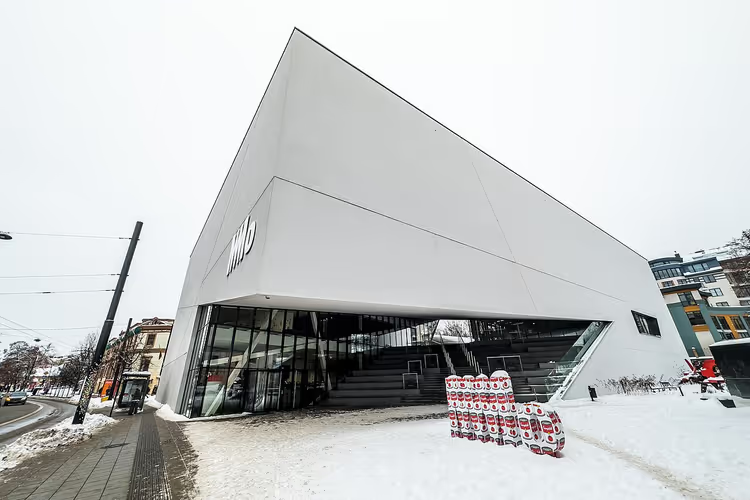
The MO Museum opened quite recently by museum standards, but it has already won European awards. Inside there are three floors of exhibitions, performances and shows are held regularly, and a restaurant operates on the lower level. It is easy to spend an extra hour in the courtyard of this futuristic building.
 © Felix Winkelnkemper · CC BYPhoto: Felix Winkelnkemper, CC BY (https://creativecommons.org/licenses/by/2.0), Wikimedia Commons
For street art lovers, there is the Open Gallery at Vytenio g. 50. It stands away from the Old Town, in an industrial district among old factories. Dozens of murals, free entry, and open around the clock. Even if you are just wandering around Vilnius without a plan, you will come across plenty of wall paintings.
If you are interested in museums, take a look at the Vilnius Pass: it covers entry to Gediminas Tower and other branches of the National Museum of Lithuania. For a short trip, the card pays off if you plan to visit at least two sites on the list.
Riga: how to get there from Vilnius
The most convenient way to travel from Vilnius to Riga is by bus. Services are operated by Ecolines, Lux Express, and FlixBus, with an average travel time of about four hours (as of 09/2026, official Ecolines website). Leave in the morning, and by lunchtime you will be walking around Latvia.
Promo fares from operators start at a few euros, so it is better to buy tickets online in advance. The bus arrives right at the Central Market, which is at the edge of the Old Town: from the platform to the first street takes just a couple of minutes on foot.
It is more convenient to compare services and buy Vilnius-Riga bus tickets in advance; in high season, seats sell out quickly.
Riga: getting around the city
The easiest way to pay for rides on Riga public transport is through the Mobilly app, available for Android and iOS. Timetables, maps, and route diagrams can be found on the Rigas satiksme operator website.
You can get a bike through the Nextbike system or rent a bike in Riga. Uber and Bolt work as usual, and Bolt also lets you order electric scooters, which are popular in the city. CityBee is available for car sharing.
You don't need transport in the Old Town: the blocks are small, and the cobblestones rattle under your wheels. Wear comfortable shoes, as you'll walk several kilometers in a day.
Riga: where to eat
Street Pizza (Meža iela 4a) serves pizza, focaccia, salads, and baked goods. A good option for any meal, service is consistent, and the interior is cozy.
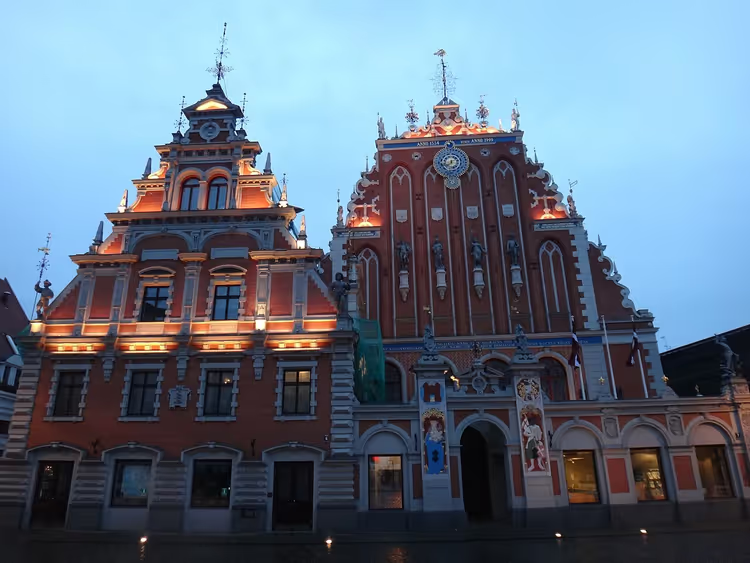 © karel291 · CC BYPhoto: karel291, CC BY (https://creativecommons.org/licenses/by/3.0), Wikimedia Commons
Andalūzijas Suns (Elizabetes iela 83) literally translates as "Andalusian Dog." The place sits between the Old Town and the train station, so you can stop by on the way. The interior is understated and Scandinavian, music plays, and the terrace opens in summer.
latte it be (Anatolijas iela 12) works well for lunch: from noon to three they offer business lunch specials. The cuisine is standard European, and the windows offer a nice view.
Riga Black Magic (Kaļķu iela 10) sells that very Riga Black Balsam, the city's must-buy souvenir. The café offers not only the balsam itself but also cocktails made with it, truffles, and pastries.
Prices in the Old Town are higher than in the neighborhoods behind the train station. If you want to eat cheaper, walk a couple of streets away from Dome Square.
Riga: where to stay
In Riga, we would look at options in the Old Town or near the train station: from there you can walk to all the main sights.
Rixwell is a four-star chain hotel, but prices here are more pleasant than at historic hotels, and breakfast is already included. Hotel Multilux near the train station offers the same basics in a simpler and cheaper package, if you are willing to walk a couple of extra minutes to the center.
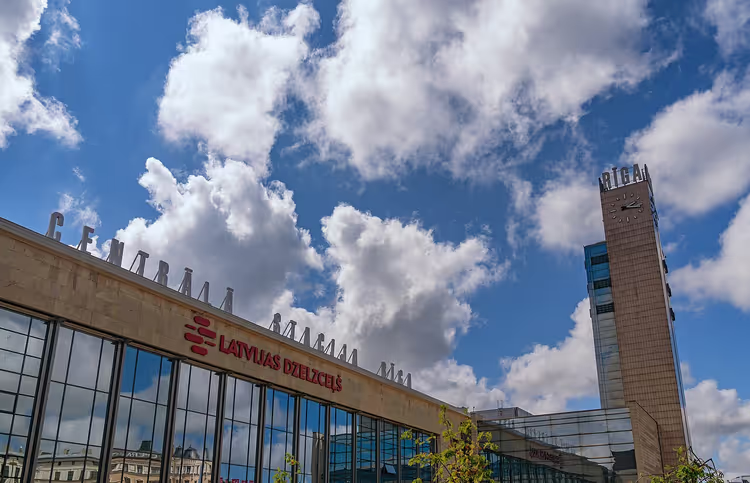 © Tony Webster · CC BYPhoto: Tony Webster, CC BY (https://creativecommons.org/licenses/by/2.0), Wikimedia Commons
Book accommodation in Riga in advance: in summer and during festival days, available rooms in the center run out quickly. You can check prices at Rixwell on Trip.com online.
Riga: what to see in the Old Town
Start with the Old Town: Riga's center combines different architectural styles, cathedrals, shops, and souvenir stalls, and getting to know it fits into one long day.
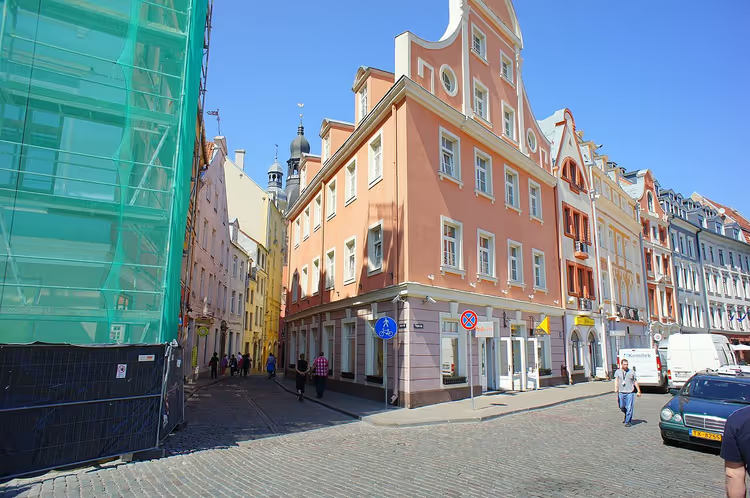 © Konrad Wąsik · CC BYPhoto: Konrad Wąsik, CC BY (https://creativecommons.org/licenses/by/3.0), Wikimedia Commons
The noses and palms of the Bremen Town Musicians monument are polished smooth. Rub them for luck if you believe in omens. Jauniela Street looks cinematic, and films really were shot here in the past.
Dome Cathedral is more than eight centuries old. Organ concerts are held inside regularly; the schedule is posted at the entrance, and tickets are sold on site and online. Take a daytime concert if your evening is already booked with a walk.
At Doma laukums you can wander without a plan: carved windows and gingerbread houses distract you at every step. Further on you will reach Riga Castle and the Presidential Palace, with several museums nearby. On the other side of the embankment stands the triangular National Library, called the "Castle of Light." The building opened just over ten years ago, but it has already become a recognizable symbol of the city.
The Great Guild and the Small Guild stand side by side: one hosts concerts, the other houses a museum. Right there is the Riga Wine Cellar, a restaurant that dates back to medieval times. If you have not eaten yet, stop there; the atmosphere transports you to the past.
In the warm season, check out Riga Central Market. Five huge hangars rise above the canal directly across from the bus station; they once housed airships. For sausages and cheeses, go to the far pavilions, where prices are lower than at the stalls near the station.
Convent Court (Konventa sēta) has preserved the layout of the castle of the Livonian Brothers of the Sword and a monastery. The Kalnciema Street quarter is interesting for its wooden houses from the century before last: on weekends there is a handmade crafts fair and concerts.
If you want to visit these places with a guide, check out tours of Riga for the second half of the day.
Jurmala: train from Riga
The easiest way to get to Jurmala is by commuter train. The resort starts about twenty kilometers from Riga, so a car is not necessary here.
At Central Station, buy a ticket to Majori station: this is the center of Jurmala, and the tourist information center is also there. A one-way ticket costs a couple of euros, and the ride takes about half an hour. Buy from a machine or a ticket agent; trains run frequently, but on weekends the cars fill up.
Jurmala: where to eat
Café 53 (Jomas iela 53) stands on Jurmala's main street. Prices are pleasant, the menu is varied, and the terrace is open in the warm season.
Zem Buram (Vidus prospekts 38) serves large portions at affordable prices, the interior is atmospheric, and it is better to book a table in the evening.
36 Line (36. līnija) has a wide selection of dishes and drinks and consistent service. Plus, seasonal beach cafés are scattered around Jurmala, so you will not go hungry even in the middle of the day.
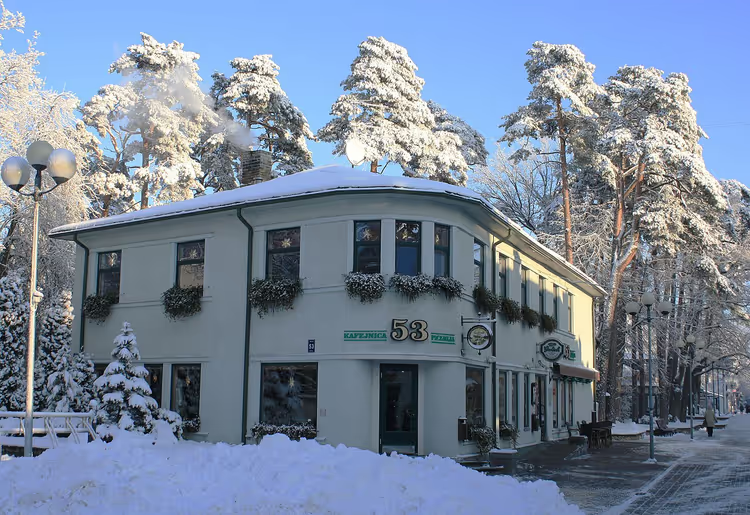 © Сергей Алексеев · CC BYPhoto: Сергей Алексеев, CC BY (https://creativecommons.org/licenses/by/3.0), Wikimedia Commons
Jurmala establishments close early; after nine in the evening it is harder to find a hot kitchen. Plan dinner before sunset, especially since you will probably want to watch the sunset over the sea.
Jurmala: where to stay
Usually half a day is set aside for Jurmala, and people spend the night in Riga. If you want to stay longer, remember a simple rule: the farther from the sea, the cheaper the accommodation.
Villa Joma (Jomas iela 90) occupies an Art Nouveau building that is more than a hundred years old. The beach is about 400 meters away (on the map), the atmosphere is calm, and the service is pleasant.
Hotel Jūrmala SPA (Jomas iela 47-49) suits those who want a spa and pool at a moderate price, and it stands on the same main street.
Besides hotels, Jurmala has apartments and houses for rent; there are dozens of summer cottage complexes. Check Jurmala hotels on Trip.com in advance: in summer, available options by the sea run out quickly.
Jurmala: beaches, parks, and the concert hall
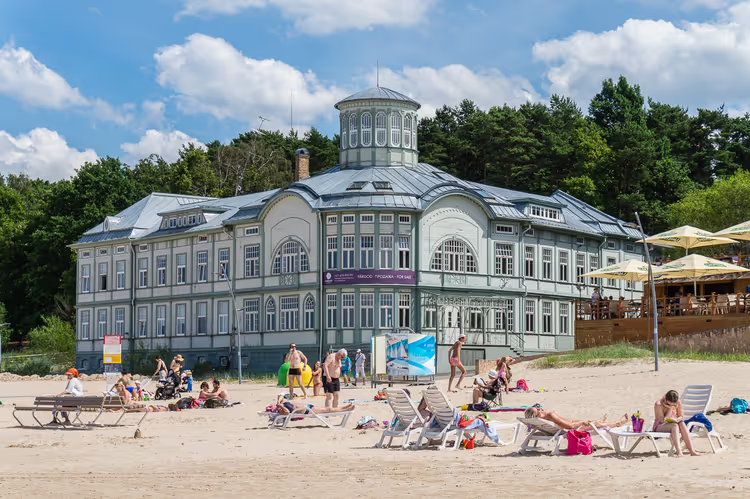
The sandy beaches of the Gulf of Riga stretch along Jurmala for almost thirty kilometers. The resort is made up of fifteen villages, the most famous being Bulduri, Majori, Dubulti, Dzintari, Vaivari, and Jaunķemeri.
 © Raul Cortez999 · CC BY-SAPhoto: Raul Cortez999, CC BY-SA (https://creativecommons.org/licenses/by-sa/4.0), Wikimedia Commons
Jurmala is pleasant to wander around or bike through without any plan. The sea air mixes with pine, the sand dunes beg for photos, and the houses change style every couple of blocks.
The Dzintari Concert Hall is hard to miss: concerts and festivals take place here in summer, and it is the city's calling card. Dzintari has preserved many wooden buildings from the century before last, built in Jugendstil, neo-Gothic, and romantic styles.
Ragakāpa Park lies on a dune up to seventeen meters high. Three-hundred-year-old pines grow on the grounds, two eco-trails are laid out, and there are observation platforms and rest areas.
The open-air museum consists of fishermen's buildings from the last century. The Morberga vasarnīca summer house complex looks like a blue castle and now belongs to the University of Latvia.
End your walk with an amber sunset over the Baltic Sea. For traveling around the Baltics with stops wherever you like, it is more convenient to rent a car: car rental in Lithuania and Latvia.
⁉️🤔 Frequently asked questions
Is four days enough for Vilnius, Riga, and Jurmala?
Four days is enough if you do not plan to visit museums in every city back to back. We allow a day for Vilnius, a day for Riga, half a day for Jurmala, and travel between them. If you like museums and want to see more, add a fifth day.
How long does it take to get from Vilnius to Riga?
The bus takes about four hours (as of 09/2026, carrier Ecolines). You leave Vilnius in the morning, are in Riga by lunchtime, and still have time for a first walk around the Old Town.
Is it worth staying overnight in Jurmala or going from Riga?
Jurmala is easy to reach by suburban train, so many people come there for half a day. If you want the sea in the morning and an evening promenade, take a night in Jurmala. The farther the hotel is from the beach, the lower the price.
What can you see in Vilnius for free?
The Old Town, the Republic of Užupis with its art objects, Bernardine Garden, and the Open Gallery at Vytenio g. 50 are free to visit. Free Old Town tours are also available, but you need to register and have a group of at least four people.
How do you get to Gediminas Tower and how much does admission cost?
On foot along the stone path or by funicular. An adult ticket costs 8 €, a one-way funicular ride costs 2 € (as of 09/2026, Lithuanian National Museum website).
Where can you eat in Jurmala on a budget?
Take a look at Café 53 on Jomas iela and 36 Line: they have a wide selection of dishes and moderate prices. Zem Buram serves large portions. In season, cafes near the beaches join them, but look for hot food before nine in the evening.
Find hotels in Riga
Compare prices across booking sites and filter for rooms with free cancellation.
Compare prices on Trip.comThe widget loads once you give your consent.
In short: what to book
Four days in the Baltics are easy to put together like this: Vilnius with its Old Town and Užupis, a bus to Riga, a day for Riga's Old Town and the Dome Cathedral, half a day for Jūrmala. Choose accommodation in the center of each city, so you don't waste time on travel.
If you're short on time: book a hotel in Vilnius Old Town and Riga, and leave Jūrmala as a half-day trip. If you're traveling with kids: plan for Jūrmala with its beaches and Ragakāpa Park. If you want to see more: rent a car and add transfers at a relaxed pace.
You can put the trip together in advance: Vilnius Old Town tours, Vilnius-Riga bus tickets, and Jūrmala hotels on Trip.com.

A small editorial team writing guides for independent travel. We travel ourselves, but we haven’t been everywhere, so we check prices, opening hours and how to get there against official sources.