
















 AIIllustrative image: AI-generated
Porto in two days: a walking route from the center to the ocean
Porto is more compact than guidebooks make it seem. In two days you can walk the historic core, climb up to the cathedral, cross the Dom Luís I Bridge, and take the tram out to the ocean. The route points run in a straight line: from the pedestrian Rua de Santa Catarina to the Foz waterfront.
Day one ends in the port wine cellars on the other side of the Douro. Day two is for the parks, the Clérigos Tower, Livraria Lello, and the Atlantic. You can walk between most points, and the metro and historic tram cover the longer stretches.
Ad: this article contains affiliate links. We earn a commission if you book through them, at no extra cost to you.
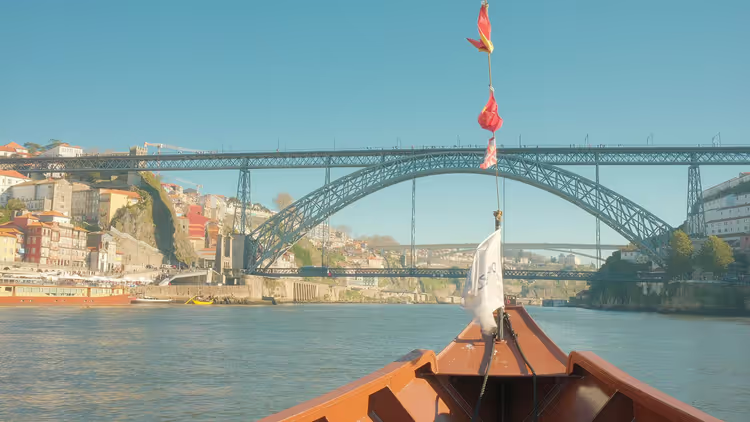
How to plan a weekend in Porto
💡 In short: Two days in Porto split into the historic center with the cellars, and a day of parks and the ocean.
- Day 1: Rua de Santa Catarina, São Bento Station, Palácio da Bolsa, Cais da Ribeira, and the Vila Nova de Gaia cellars.
- Day 2: parks, the Clérigos Tower, Livraria Lello, the historic tram, and the Foz waterfront.
- Wear comfortable shoes: most of the route is on cobblestones and stairs.
- Prices and opening hours: 09/2026, verified on the official website.
Day one is longer. You walk through the historic center and head down to the water in the evening. Day two is calmer and easy to build around the sunset by the ocean. Start in the morning, and you'll reach the Clérigos Tower and Livraria Lello without rushing.
Day | Main focus | Book ahead | On foot |
|---|---|---|---|
Day 1 | historic center, Cais da Ribeira, port wine cellars | port wine cellars, six bridges cruise, Palácio da Bolsa (guided tours) | about six kilometers |
Day 2 | parks, Clérigos Tower, Livraria Lello, Foz waterfront | Clérigos Tower and Livraria Lello | about five kilometers |
Day 1: from Rua de Santa Catarina to Cais da Ribeira
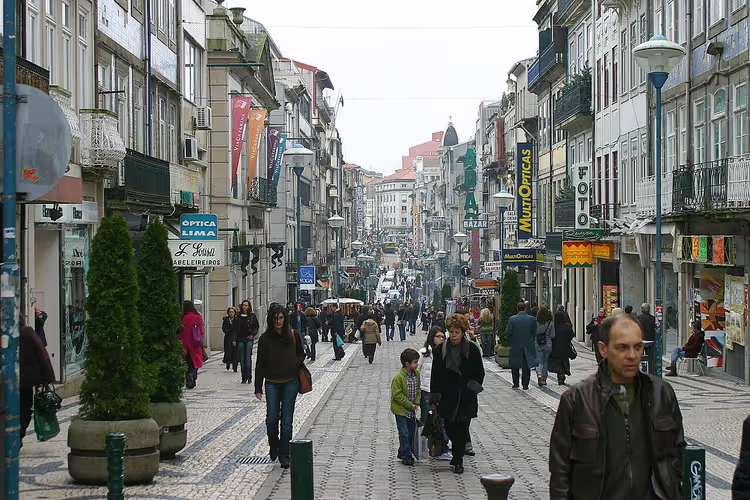
1. Rua de Santa Catarina
Rua de Santa Catarina is the city's main shopping street. The pedestrian street runs through the center for almost one and a half kilometers, lined on both sides with fashion brand storefronts, souvenir shops, and pastry shops. Street musicians play here almost every day.
Starting your weekend on this street works well: you land right in the lively center and get a feel for the city. The first café on your way is a good spot for breakfast.
- Getting there: the street opens right onto Bolhão metro station.
- Entry: the street is open around the clock, no fee.
 © António M.L. Cabral · CC BYPhoto: António M.L. Cabral, CC BY (https://creativecommons.org/licenses/by/2.5), Wikimedia Commons
2. Capela das Almas
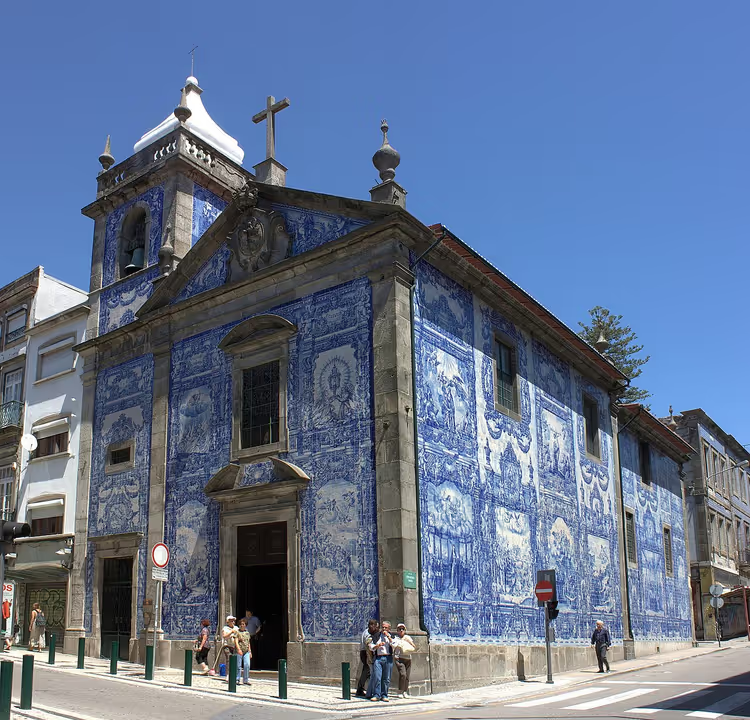
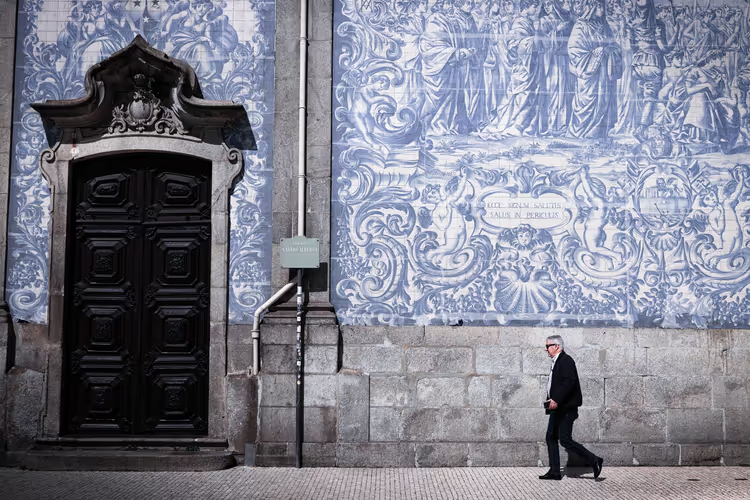
The façade of Capela das Almas on the same street is covered in azulejos from the ground to the roof: roughly sixteen thousand blue-and-white tiles (according to the Porto tourism office website). Scenes from the lives of Saint Francis and Saint Catherine continue inside, and until the 18th century the church looked modest: a wooden church without this decoration.
- Entry: free, it is an active church.
- When to go: in the morning, before tour groups gather at the façade.
 © Nelson Rocha from Portugal · CC BYPhoto: Nelson Rocha from Portugal, CC BY (https://creativecommons.org/licenses/by/2.0), Wikimedia Commons
3. Café Majestic
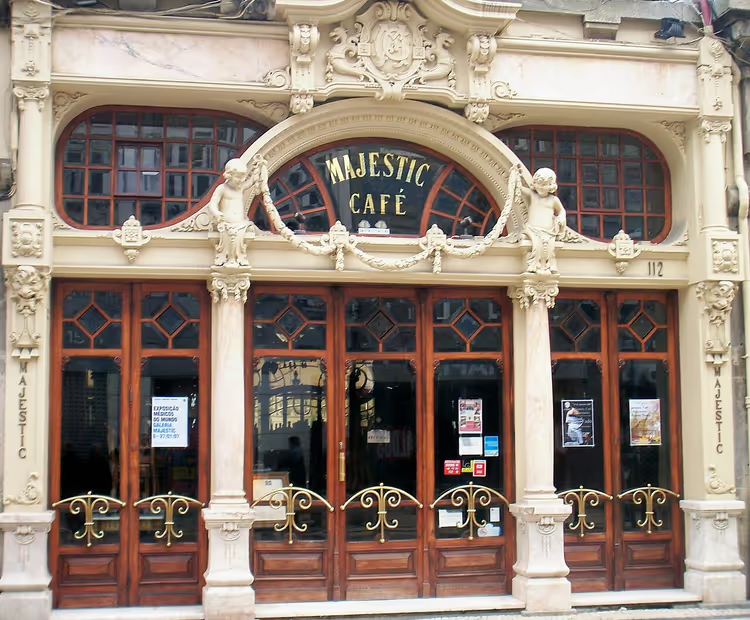
Café Majestic occupies an Art Nouveau space: a marble façade, carved wood, and brass. Even if you're indifferent to coffee, step inside for the interior. Tables in the main room don't free up quickly, so there's usually a line at the entrance.
- The catch: there is a line at the entrance, and you have to wait for a table.
- Where it is: on the same street, next to Capela das Almas.
4. Avenida dos Aliados
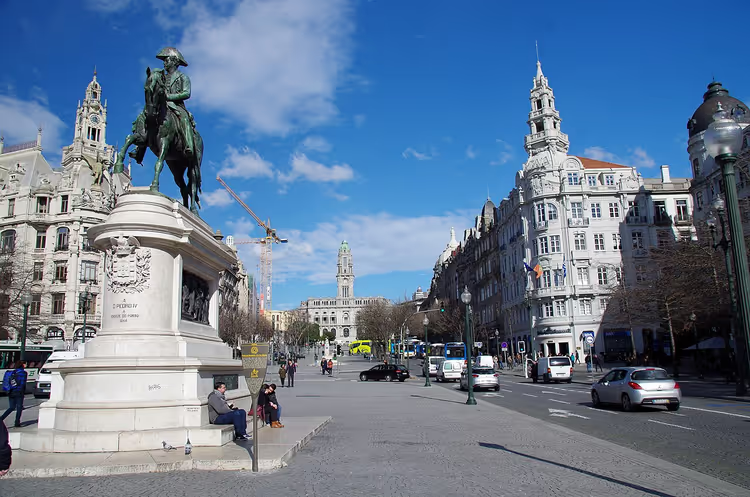
Avenida dos Aliados looks unusual for Portugal: a wide avenue with arches, columns, and statues. The boulevard ends at the city hall, whose clock tower rises seventy meters (according to the city tourism office). You can only enter the administrative building on official business, but the installation with the city name at the entrance is accessible at any time.
- How to get there: from Rua de Santa Catarina you can walk here in ten minutes.
 © Balou46 · CC BY-SAPhoto: Balou46, CC BY-SA (https://creativecommons.org/licenses/by-sa/4.0), Wikimedia Commons
5. São Bento Station
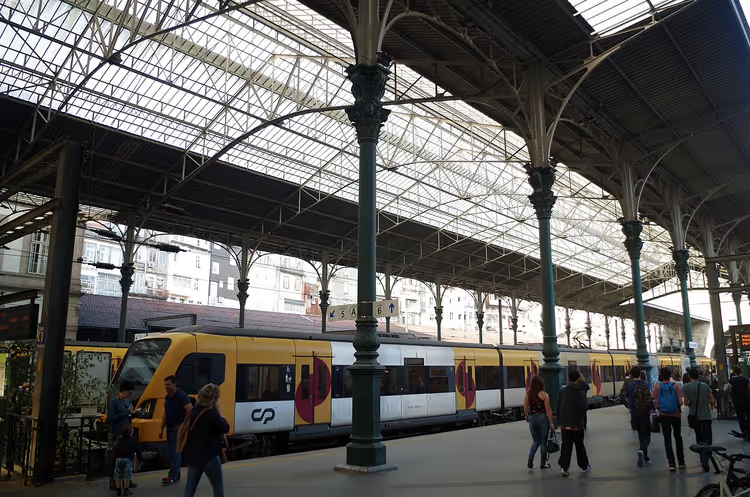
The city's main train station is worth stepping inside. The walls of the hall are covered with about twenty thousand handmade azulejo tiles depicting episodes of Portuguese history (according to the Visit Porto portal). The building was constructed in the late nineteenth century, and the station opened in the following century.
- Admission: free, the station operates on its regular schedule.
- How to get there: you come out here directly from the metro, the station is in the same building.
 © David Perez · CC BYPhoto: David Perez, CC BY (https://creativecommons.org/licenses/by/4.0), Wikimedia Commons
6. Rua das Flores
Until the sixteenth century, the site of Rua das Flores was the bishop's gardens, which is why the street was named Flower Street. The former garden was developed under strict rules for the time: the aristocracy got a good view of facades that could be richly decorated. Today it is a pedestrian zone with small shops, cafes, and murals on the ends of buildings.
- Admission: free, the street is always open.
- Nearby: you reach it from São Bento Station.
 © Nicolás Boullosa from Fontainebleau, France · CC BYPhoto: Nicolás Boullosa from Fontainebleau, France, CC BY (https://creativecommons.org/licenses/by/2.0), Wikimedia Commons
7. Miradouro da Vitória
The Miradouro da Vitória viewpoint opens up a view of the rooftops, the cathedral, the Dom Luís I Bridge, and the Douro. The climb from the waterfront takes a few minutes. The viewing area is small, but it is a convenient spot to take in the entire first-day route.
- Cost: free around the clock.
- How to get there: walk up from Cais da Ribeira along the narrow streets.
 © WASD42 · CC BYPhoto: WASD42, CC BY (https://creativecommons.org/licenses/by/2.0), Wikimedia Commons
8. Mercado Ferreira Borges
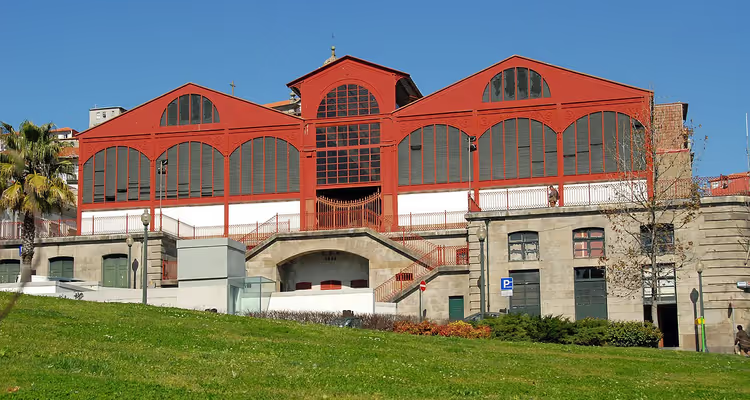
Mercado Ferreira Borges bears the name of a market, although it was never a market. The building was constructed in the late nineteenth century for merchants from the old waterfront, but they refused to move. The hall was used for fairs and exhibitions, and now it houses a nightclub with a concert venue and a restaurant.
- Cost: viewing the facade is free.
- Where it is: between Palácio da Bolsa and the waterfront.
 © António Amen · CC BY-SAPhoto: António Amen, CC BY-SA (https://creativecommons.org/licenses/by-sa/3.0), Wikimedia Commons
9. Palácio da Bolsa
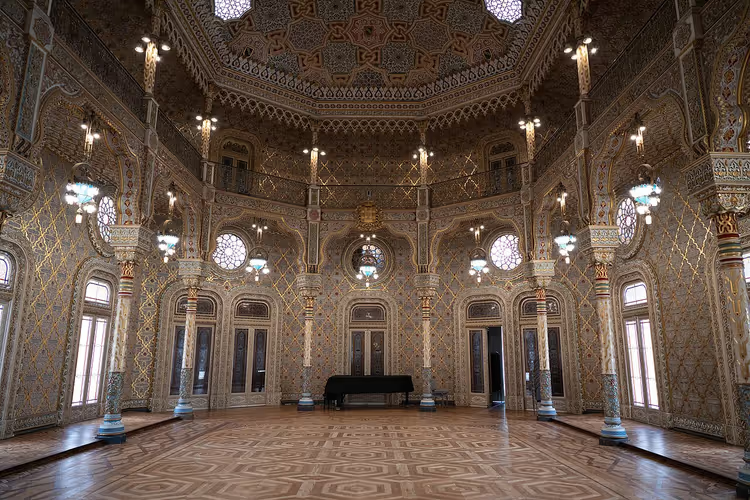
Palácio da Bolsa was built in the nineteenth century for the Porto trade association. The merchants were competing with Lisbon and wanted to show the city's strength. The neoclassical facade looks austere, but the halls inside are lavishly decorated, and that luxury has been well preserved to this day.
- Tickets: the visit is guided, with timed entry slots (official website).
- The catch: you can't go inside without a guide.
 © Nan Palmero from San Antonio, TX, USA · CC BYPhoto: Nan Palmero from San Antonio, TX, USA, CC BY (https://creativecommons.org/licenses/by/2.0), Wikimedia Commons
10. Cais da Ribeira
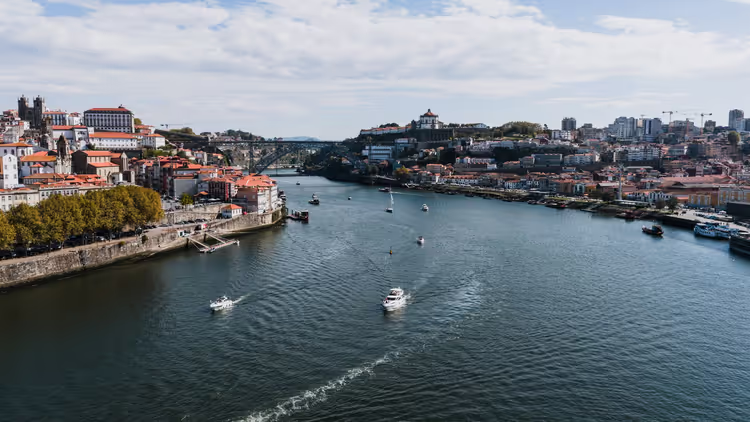
The city began on the Cais da Ribeira waterfront. The colorful fishermen's houses, narrow cobbled streets, stairways, and artisan shops define the look of the Ribeira district. Hour-long cruises under the six bridges and day or two-day trips to the Douro Valley depart from the pier.
- Tickets: book the six bridges cruise on GetYourGuide in advance for weekends.
- Cost: tickets are sold at the pier, check the price on site.
 © Ken & Nyetta · CC BYPhoto: Ken & Nyetta, CC BY (https://creativecommons.org/licenses/by/2.0), Wikimedia Commons
11. Luís I Bridge (Ponte Luís I)
The Luís I Bridge was built in the late 19th century, designed by a student of Eiffel. The lower level carries road traffic, the upper level is used by the metro, and both levels have pedestrian walkways. From the waterfront you can see how the arch holds the two banks together.
- Getting there: you reach the upper level from the cathedral, then continue on foot.
- Cost: crossing the bridge is free.
 © Diego Delso · CC BY-SAPhoto: Diego Delso, CC BY-SA (https://creativecommons.org/licenses/by-sa/4.0), Wikimedia Commons
Day 1, second half: the cathedral and the Gaia cellars
12. Porto Cathedral (Sé do Porto)
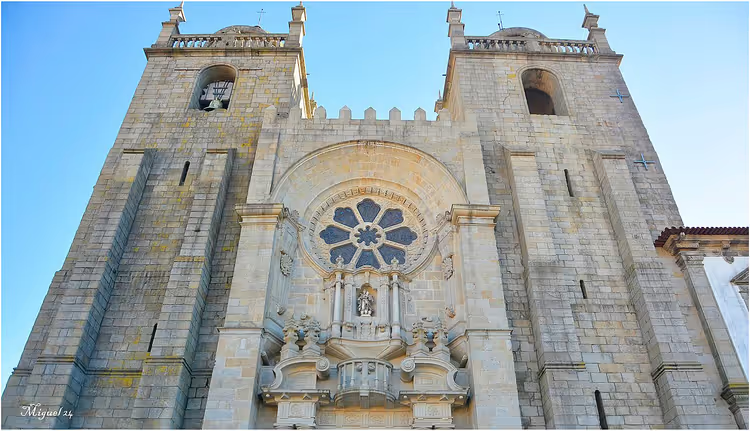
Porto Cathedral stands in the highest part of the old town. The austere gray Romanesque building was erected in the 12th century and later rebuilt. There is little light and decoration inside, so the cathedral looks severe.
 © @Miguel A. García.🎈 from Ólvega., España · CC BYPhoto: @Miguel A. García.🎈 from Ólvega., España, CC BY (https://creativecommons.org/licenses/by/2.0), Wikimedia Commons
From the cathedral courtyard you enter the cloister with its galleries and azulejos, and from the viewpoint you can see the entire historic center. From here it is convenient to head to the upper level of the Luís I Bridge, which is where you are going after lunch.
- Admission: the cathedral itself is free; the cloister and viewpoint have a separate fee (city tourism office).
- The catch: the interior is austere, so fans of lavish baroque may not love everything here.
- Getting there: from Cais da Ribeira you climb up the stairs.
13. Miradouro da Ribeira and Serra do Pilar viewpoints
From the Luís I Bridge you cross to the other bank, to Vila Nova de Gaia. The Miradouro da Ribeira viewpoint gives you a view of Porto and its waterfront. A little higher up, on the other side of the road, stands Serra do Pilar: from there you can see the entire Luís I Bridge, with both arches.
- Cost: both viewpoints are free.
- Getting there: from the upper level of the bridge it is a five-minute walk.
 © Jakub Hałun · CC BYPhoto: Jakub Hałun, CC BY (https://creativecommons.org/licenses/by/4.0), Wikimedia Commons
You have already been on your feet for half a day, so only make the climb to Serra do Pilar if you still have energy to spare.
14. Cais da Ribeira de Gaia
The Vila Nova de Gaia waterfront is lined with wine lodges, restaurants, and bars. In the evening the bridge and streetlights are illuminated, so people come here at sunset. The Teleférico de Gaia cable car takes you down: the ride lasts a few minutes and saves your legs.
- Cost: you pay for the ride at the entrance; the ticket is one-way.
- Getting there: the cable car connects the viewpoints with the waterfront.
 © Dale Cruse - 10M views from San Francisco, CA, USA · CC BYPhoto: Dale Cruse - 10M views from San Francisco, CA, USA, CC BY (https://creativecommons.org/licenses/by/4.0), Wikimedia Commons
Plan your waterfront stroll for the evening: the city lights come on before you head back.
15. Half Rabbit
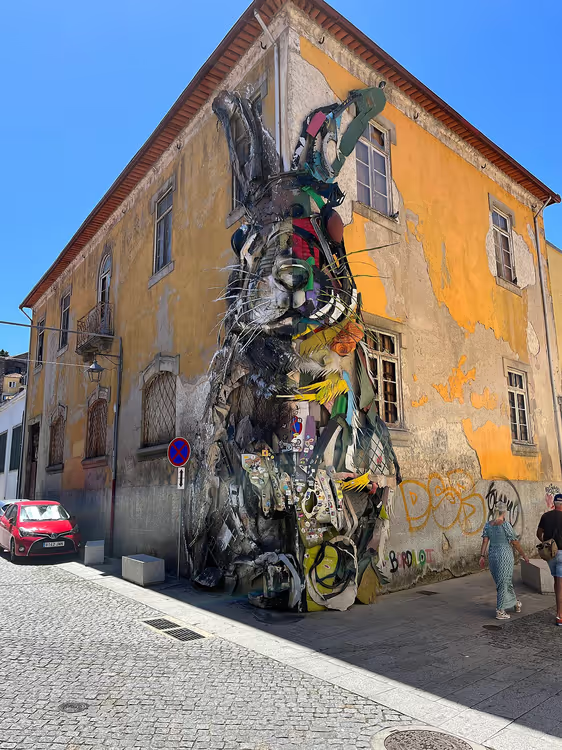
Half Rabbit appeared on the corner of a building on the way from Taylor's Port to the pier. Half of the figure is made from recycled trash collected in the city. The sculpture speaks to the sensible use of materials, and you definitely will not miss it.
- Cost: free; it is the facade of a residential building.
- Getting there: on the way from the cellars to the waterfront.
16. Port wine cellars in Vila Nova de Gaia
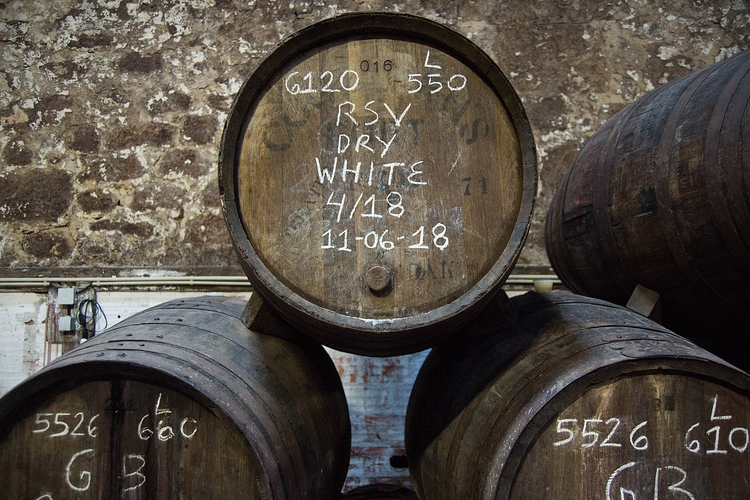
The main producers keep their port wine cellars on this bank: Taylor's Port, Caves Ferreira, Caves Cálem, and Sandeman. On the tour you learn the history of the drink, the types of port, and the stages of production; an audio guide is included in the ticket. Taylor's Port has a restaurant with a view of the Luís I Bridge.
 © reivax from Washington, DC, USA · CC BY-SAPhoto: reivax from Washington, DC, USA, CC BY-SA (https://creativecommons.org/licenses/by-sa/2.0), Wikimedia Commons
- Tickets: book cellar tours and tastings in advance; evening slots sell out first.
- Cost: a ticket with a tasting is sold at the winery's ticket office.
Day 2: parks, Clérigos Tower, and Livraria Lello
17. Jardins do Palácio de Cristal
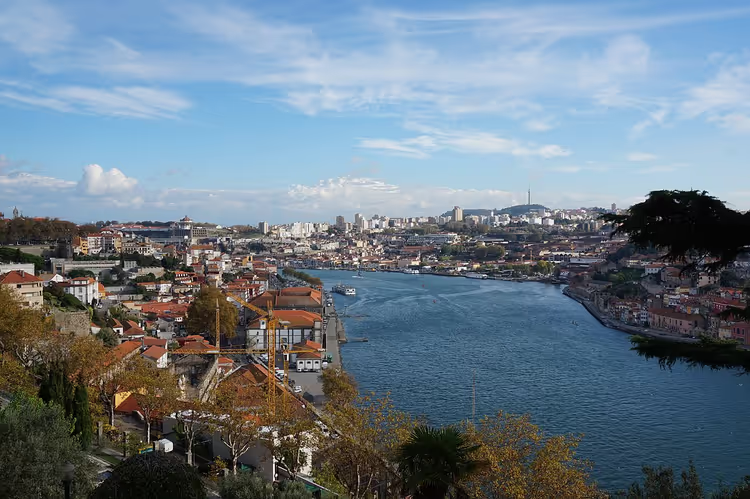
Jardins do Palácio de Cristal lies two kilometers from the center. To save your energy, take a bus or a taxi. All that remains of the Crystal Palace is the name: the mansion site is now a stadium with a concert venue. The park itself was laid out in the mid-19th century and has almost kept its original look: paths, ponds, fountains, sculptures, and a view of the river.
- Admission: free; the park is open until evening.
- Getting there: by bus or taxi from the center.
 © Matt Kieffer from London, United Kingdom · CC BY-SAPhoto: Matt Kieffer from London, United Kingdom, CC BY-SA (https://creativecommons.org/licenses/by-sa/2.0), Wikimedia Commons
18. Jardim da Cordoaria
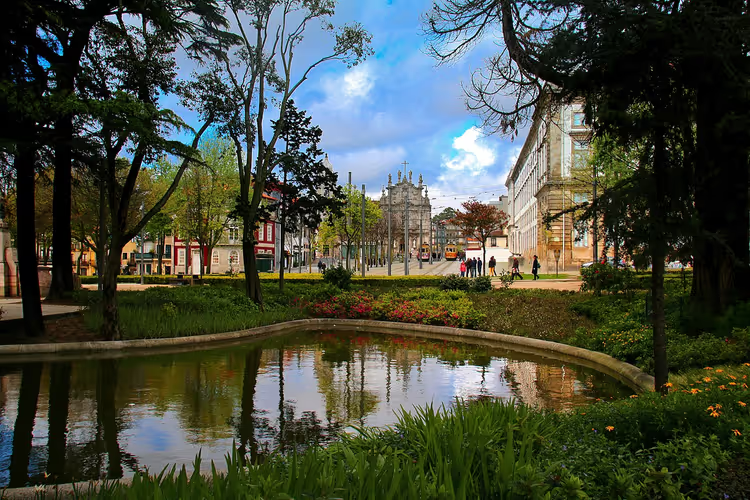
Jardim da Cordoaria occupies a small triangle in the historic center. Plane trees with unusual bottle-shaped trunks grow here, and there are sculptures. The most memorable is the series "Thirteen People Laughing at Each Other."
- Admission: free.
- The catch: the area is small, so it will not fill half a day on its own.
 © Alain Rouiller · CC BY-SAPhoto: Alain Rouiller, CC BY-SA (https://creativecommons.org/licenses/by-sa/2.0), Wikimedia Commons
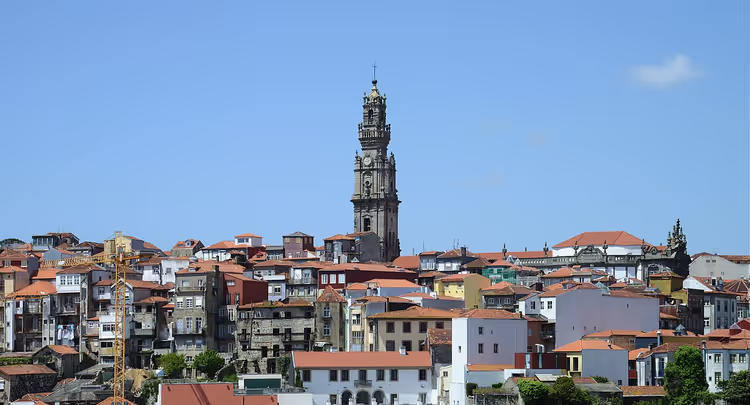
19. Clérigos Tower
The Torre dos Clérigos bell tower rises seventy-six meters and is visible from almost anywhere in the city. It once served as a landmark for ships arriving in Porto. The tower was built in the 18th century, and the adjoining church is baroque in style, with reliefs and statues.
- Tickets: €10 for Tower + Museum, €7 for students, free for children under 10 (as of 09/2026, tower ticket office).
- The catch: the climb goes up a narrow spiral staircase of 240 steps (according to the official website).
- Getting there: the tower is a five-minute walk from Jardim da Cordoaria.
 © Alvesgaspar · CC BY-SAPhoto: Alvesgaspar, CC BY-SA (https://creativecommons.org/licenses/by-sa/4.0), Wikimedia Commons
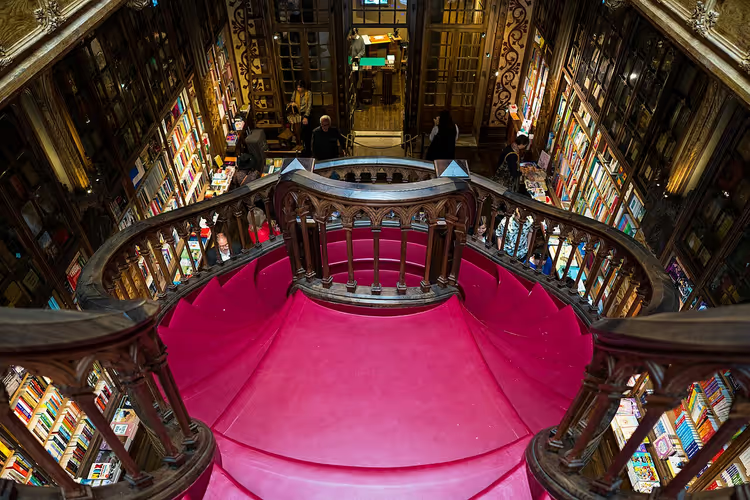
20. Livraria Lello
Livraria Lello has been in business for over a hundred years. You will see the line at the entrance from afar, so buy a ticket online with a fixed entry time: the ticket price is credited toward a book purchase (official website). Inside, you will find a curved staircase, wood carvings, and a stained-glass skylight.
The story goes that J.K. Rowling used to stop by when she taught English in Porto. Harry Potter fans turned the store into a pilgrimage site, and thanks to them, Lello became known around the world.
- Tickets: time-slot only, sold online.
- The catch: it is cramped inside, and the hall with the staircase is almost always crowded.
 © Nan Palmero from San Antonio, TX, USA · CC BYPhoto: Nan Palmero from San Antonio, TX, USA, CC BY (https://creativecommons.org/licenses/by/2.0), Wikimedia Commons
If you are an architecture fan, come at opening time: that way you can see the staircase hall almost without people.
21. Igreja do Carmo and Igreja dos Carmelitas
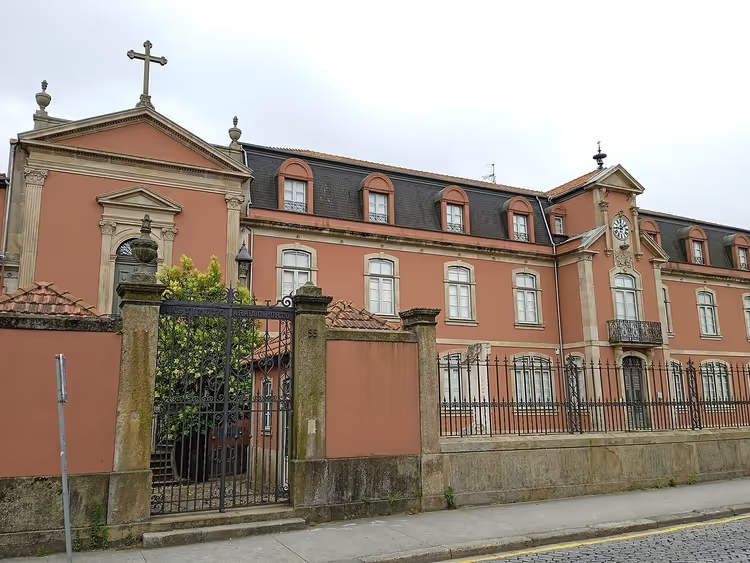
Igreja do Carmo and Igreja dos Carmelitas stand across the street from the Lions Fountain, which supplied this part of the city with water in the late 19th century. These are two separate churches connected by the narrowest house: it is only one meter wide. The first part of the complex appeared in the 17th century, and the second was built in the 18th.
- Admission: entry to the churches is free; a fee is charged only for certain sections.
- Getting there: walk around the University of Porto and you will see the fountain.
22. Historic tram to Foz
A retro tram on line 18 departs from the square with the churches. Trams like these have been running through the city since the 19th century. Inside, the yellow cars are finished with wooden panels, the decor features plenty of brass, and the seats are upholstered in leather. Line 1 runs to Foz from the Infante stop, so you need to transfer along the way. You buy the ticket from the driver.
- Tickets: sold on board, no reservation needed.
- The catch: the schedule gets thrown off at rush hour, and the car arrives full.
 © Estevoaei · CC BY-SAPhoto: Estevoaei, CC BY-SA (https://creativecommons.org/licenses/by-sa/4.0), Wikimedia Commons
Day 2, second half: tram, Foz, and the ocean
23. Jardim do Passeio Alegre
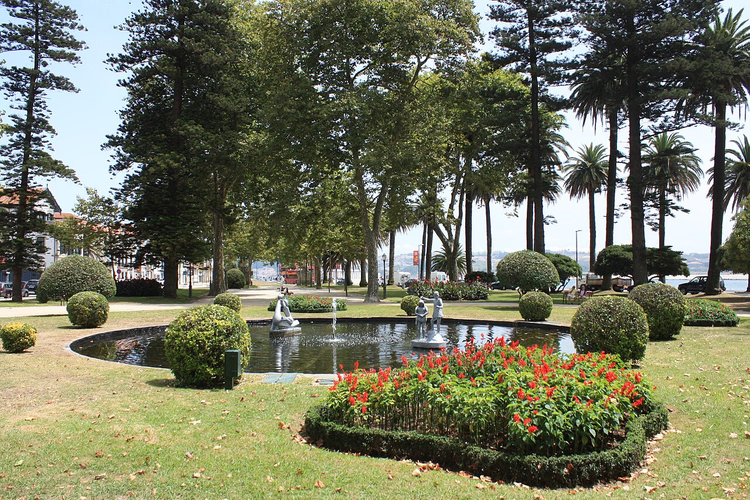
You walk to the ocean through Jardim do Passeio Alegre. Besides Canary palms and Norfolk pines, the interesting thing here is a public restroom from 1910, decorated with tiles and Art Nouveau fixtures.
 © Reis Quarteu · CC BY-SAPhoto: Reis Quarteu, CC BY-SA (https://creativecommons.org/licenses/by-sa/4.0), Wikimedia Commons
- Admission: free.
- Getting there: the historic tram terminus is right nearby.
24. Farolim da Barra do Douro
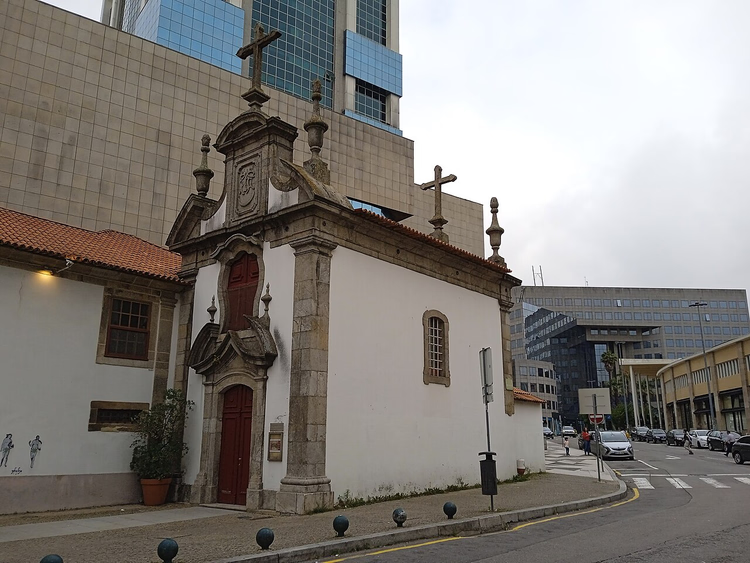
The Farolim da Barra do Douro lighthouse was built in the late 18th century and is no longer in operation. On one side, Atlantic waves crash against the rocks; on the other, the water is calm: this is where the ocean and the Douro meet. The promenade by the lighthouse is paved with small pebbles.
- Cost: free.
- Getting there: on foot from the park along the shore.
 © Estevoaei · CC BY-SAPhoto: Estevoaei, CC BY-SA (https://creativecommons.org/licenses/by-sa/4.0), Wikimedia Commons
If the weather allows, you can swim in the cool ocean. In Porto it alternates between rain and sun, so keep a jacket handy.
25. Pérgola da Foz
On the promenade you will come across Pérgola da Foz, a pergola with a balustrade. It was built in the 1930s, and during renovation the walls were coated with a special paint: graffiti is washed off with a jet of water and a broom. This is a good place to end the route and watch the sun sink into the ocean.
- Cost: free.
- Getting there: along the promenade from the lighthouse.
 © Vitor Oliveira from Torres Vedras, PORTUGAL · CC BY-SAPhoto: Vitor Oliveira from Torres Vedras, PORTUGAL, CC BY-SA (https://creativecommons.org/licenses/by-sa/2.0), Wikimedia Commons
26. Parque da Cidade do Porto
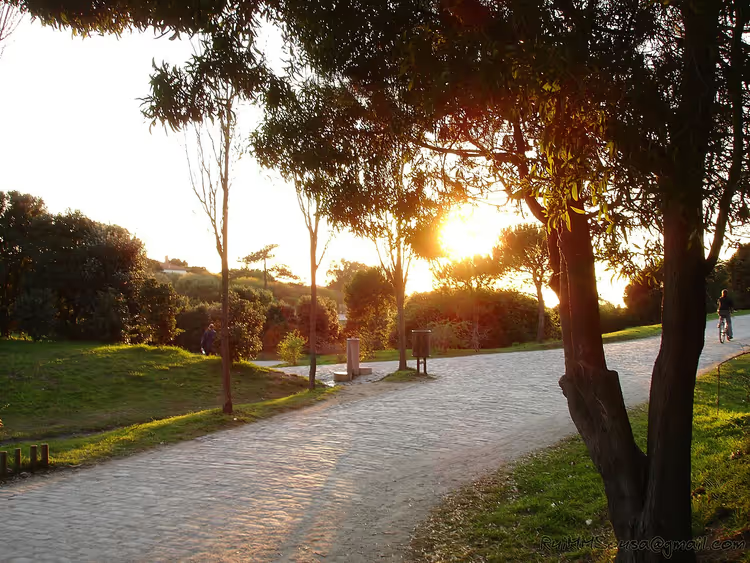
If sunset is still far off, walk along the waterfront to Parque da Cidade do Porto, just over two kilometers away. At the entrance you will find an oceanarium, which is also worth a visit. Beyond it lies the city's largest green area: 83 hectares of lawns, trees, and ponds with ten kilometers of walking paths (according to the Visit Porto catalog).
- Admission: free, the oceanarium has a separate ticket.
- The catch: from the tram's final stop to the park you walk for more than half an hour.
 © RuiMMSousa · CC BY-SAPhoto: RuiMMSousa, CC BY-SA (https://creativecommons.org/licenses/by-sa/4.0), Wikimedia Commons
Tickets, hours and transport
Site | Ticket and hours | Source |
|---|---|---|
Clérigos Tower | €10 for Tower + Museum, €7 for students, free for children under 10, ticket office from 09:00 to 19:00 | (as of 09/2026, Clérigos tickets) |
Livraria Lello | online ticket with a fixed entry time, the amount is credited toward a book purchase | |
Palácio da Bolsa | guided tours only, by timed sessions | |
Porto Cathedral | free entry, cloister and viewpoint cost extra | |
port wine cellars | ticket with tasting sold at the winery ticket office |
Getting around Porto is easy by metro: the line from the airport runs through the center. You walk around the historic center on foot. Taxis and Uber and Bolt rideshares operate throughout the city and come in handy in the evening when your legs are tired.
Book timed tickets for museums and viewpoints in advance: tickets on Tiqets get you in without waiting in line. Save the trip to the ocean for the tram: it runs along the river and becomes part of the outing itself.
Where to stay in Porto for a weekend
For two nights, pick the area between Avenida dos Aliados and Cais da Ribeira: from there you can walk to every stop on the route. Look for quieter options closer to Jardins do Palácio de Cristal, while evening spots with river views cost more. Hotels in Porto on Trip.com make it easy to compare by price and location.
⁉️🤔 Frequently asked questions
How many days do you need to see Porto?
Two full days are enough for the historic center, the port wine cellars, and the ocean promenade. In one day you will only manage the center: Rua de Santa Catarina, São Bento Station, Palácio da Bolsa, and Cais da Ribeira. If you have three days, add a trip to the Douro Valley.
How much does it cost to climb Clérigos Tower?
A Tower + Museum ticket costs €10, €7 for students, free for children under 10 (as of 09/2026, ticket office). Porto Card holders get a discount on the day ticket. You will have to climb a narrow spiral staircase, so allow extra time.
Is it worth standing in line at Livraria Lello?
Yes, if you are interested in architecture or Harry Potter. Buy your ticket online with a fixed entry time: it gets you in faster, and the amount is credited toward a book purchase. It gets crowded inside, so arrive at opening time.
When is the best time to visit Porto?
Mild weather lasts from late spring to early fall, but rain is possible in any month. Porto swings between sun and rain, so bring a hooded jacket and do not schedule the ocean part for the morning. In summer, lines at Livraria Lello and Clérigos Tower are longer.
What should you try in Porto besides port wine?
Francesinha, a local sandwich with meat, cheese, and sauce. The portion is large, one dish is enough for two. Order it at a cafe in the old town and save room for dessert.
For evening plans, check ahead which tours and tastings are available on your dates.
Tours and tickets in Porto
Guided tours, skip-the-line tickets and activities — most offers can be cancelled free of charge.
See offers on GetYourGuideThe widget loads once you give your consent.
In short: what to book
If you have two days, follow the order above: first the center and the cellars, on the second day the parks and the ocean. With kids, build the route around the tram and Parque da Cidade do Porto. If you only have one day, take the first half and finish at the Luís I Bridge.
Before your trip, compare hotel prices in Porto and tickets with time slots. Cellar tours and trips to the Douro Valley are easy to book in advance: tours and tastings on GetYourGuide.

A small editorial team writing guides for independent travel. We travel ourselves, but we haven’t been everywhere, so we check prices, opening hours and how to get there against official sources.