
















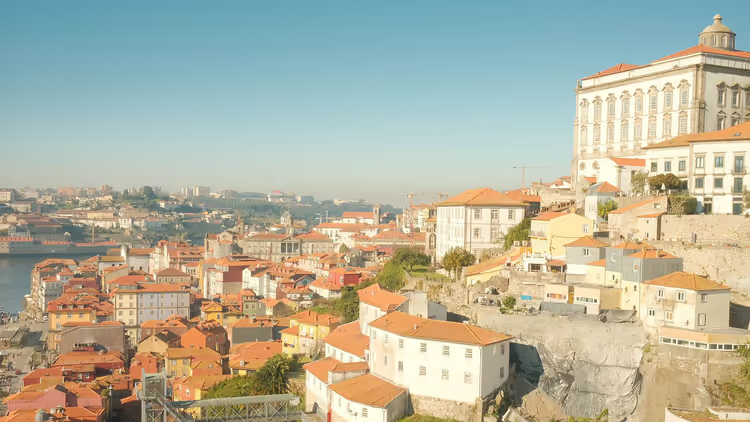
Porto in one day: 20 stops, prices and opening hours 2026
You can realistically see twenty places in Porto in one day. We arranged them into a single walking route: from the Arrabida Bridge and the parks in the west to the Clerigos Tower, then down to the Douro River and across the Luis I Bridge to Vila Nova de Gaia. On the map it is about 7 km and 6-8 hours with stops. The main rule for the day is simple: book tickets for the Clerigos Tower and the Palacio da Bolsa in advance, otherwise you will lose an hour in line.
The historic center of Porto is a UNESCO World Heritage Site. But even in a full day you will not cover everything worth seeing nearby. That is why the order of stops below is arranged so you never backtrack and barely use transport.
What is ahead: a short description of each place, a photo, the entrance price, and a tip on how to get there. Start in the morning and save the sunset for the Morro Garden.
Ad: this article contains affiliate links, we earn a commission if you book through them, at no extra cost to you.
Porto in one day: route plan
💡 In short:
- Get to the Clerigos Tower before 10:00, while there is no line for the viewpoint.
- Head down to the river via Lello, Sao Bento Station, and the Se Cathedral.
- Cross the Douro on the Luis I Bridge and finish at the Morro Garden at sunset.
- Tickets and opening hours: 09/2026, verified on the official Clerigos Tower website
The first stops sit on the hill, the rest descend to the river and continue to the other bank. The whole route is one long descent and one climb. On foot you will cover about 7 km on the map. If you are short on time, skip the parks at the start of the list and begin right at the Clerigos Tower. After that, take the places in order: each one takes 20-40 minutes, and buy tickets online.
Arrabida Bridge
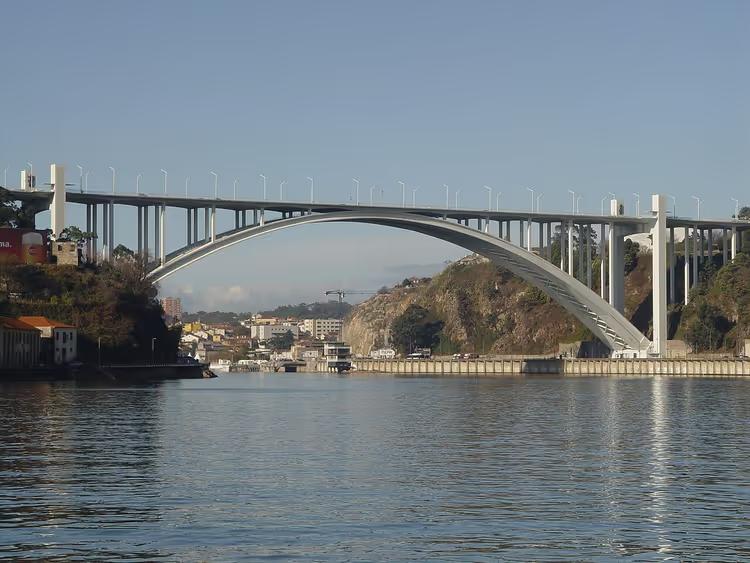
The Arrabida Bridge spans the Douro on the western edge of Porto. It opened in 1963, and the entire structure is supported by a single concrete arch span 270 meters long (according to the Porto City Council, 09/2026). Four lanes are given to cars, with walkways left for pedestrians. If you arrive with luggage, it is more convenient to get to a hotel in the center by airport transfer.
The main reason to come here: climbing the arch. In a group you will ascend 65 meters above the water and tackle 262 steps. Participation is allowed from age 12, so with younger children this option is not for everyone.
- The catch: the bridge stands away from the center, so include it at the start or end of the day, not in the middle.
Crystal Palace Gardens
 © John Samuel · CC BY-SAPhoto: John Samuel, CC BY-SA (https://creativecommons.org/licenses/by-sa/4.0), Wikimedia Commons
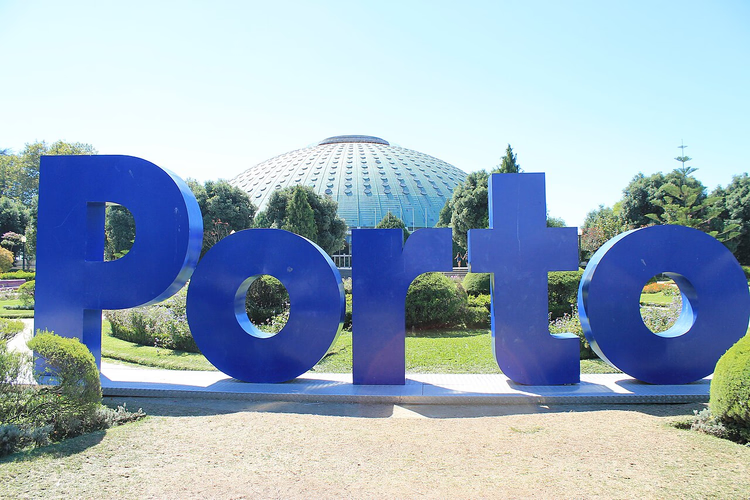
The Crystal Palace Gardens are laid out on the high bank of the Douro west of the center. The city garden opened in 1851, and where the palace itself once stood there is now a pavilion for concerts and exhibitions (according to the Porto City Hall, 09/2026). From here you get one of the best views of the river.
Stroll along the paths past ponds, fountains, and flower beds. Peacocks wander across the lawns, and camellias and rhododendrons bloom nearby. For children this is a convenient stop where you can swap museums for movement. Entry is free, come at any time of day.
- The catch: the park sits above the city, and you climb up a steep street to reach it.
Cordoaria Garden
 © jad99 from Graz, Austria · CC BY-SAPhoto: jad99 from Graz, Austria, CC BY-SA (https://creativecommons.org/licenses/by-sa/2.0), Wikimedia Commons
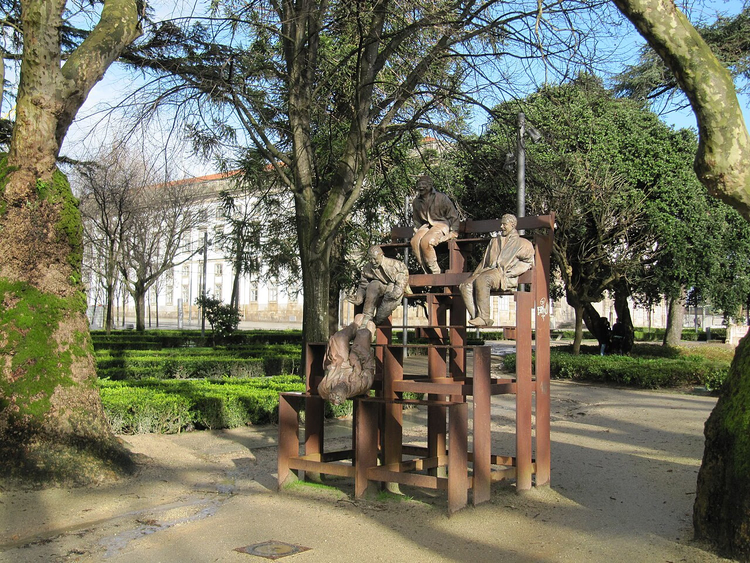
The Cordoaria Garden is in the historic quarter next to the Clerigos Tower. Ropes used to be dried on this spot, and the garden was laid out here in the mid-19th century (according to the Porto City Hall, 09/2026). The square is triangular in shape and small in size.
Come here for the centuries-old plane trees. Their massive trunks widen at the base, and in the heat you will find shade under their crowns. Sculptures line the avenue, including a series by the Spaniard Juan Munoz with figures on stands.
The square serves as a short passage between the Clerigos Tower and Miguel Bombarda Street. Through it you cut the path to the next point and also rest in the shade. Classical statues stand at the entrance from the street side, while the bronze figures on stands hide deeper along the avenue.
- The catch: the garden is small, ten minutes is enough to see it.
Clerigos Tower
 © Tom Page from London, UK · CC BY-SAPhoto: Tom Page from London, UK, CC BY-SA (https://creativecommons.org/licenses/by-sa/2.0), Wikimedia Commons
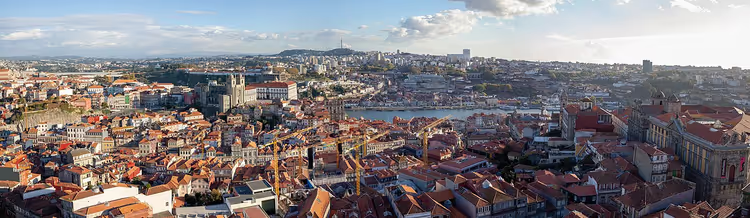
The Clerigos Tower rose above the city in the mid-18th century. It is the bell tower of the Clerigos Church in the late Baroque style, standing 76 meters tall (according to the parish, 09/2026). It once served as a landmark for ships entering the mouth of the Douro.
Buy your ticket online and climb in the morning. Inside, a narrow spiral staircase of 225 steps awaits you. In summer the tower is open until 23:00, in winter it closes earlier (as of 09/2026, official website). From the platform you can see tiled roofs, squares, and the Luis I Bridge.
The facade is clad in granite slabs and decorated with cornices, sculptures, and relief carving. A small dome with a cross crowns the tower, and at its foot stands the Clerigos Church itself. Down below is usually quieter than up top, so take a look at the church too.
- The catch: the steps are steep, and on the narrow staircase it is hard to pass people coming the other way.
Lello Bookshop
 © Nan Palmero from San Antonio, TX, USA · CC BYPhoto: Nan Palmero from San Antonio, TX, USA, CC BY (https://creativecommons.org/licenses/by/2.0), Wikimedia Commons
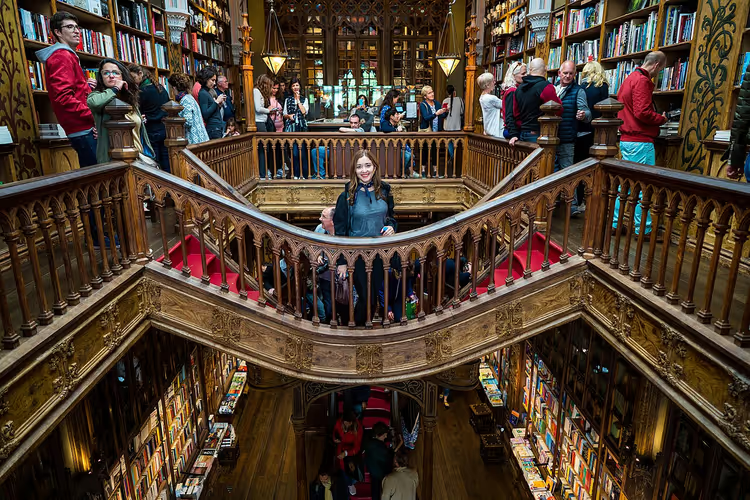
The Lello Bookshop has operated in Porto since the late 19th century. Its neo-Gothic facade is decorated with figures of two women symbolizing science and art (according to the bookshop, 09/2026). Inside you will find a carved wooden vault, a stained-glass ceiling, and a curved red staircase.
The ticket costs 15.95 € and is credited toward a book purchase, so in effect you buy a book and entry comes as a bonus (as of 09/2026, official ticket sales). The line is shorter in the morning and near closing time. A cafe is open on the second floor.
A Harry Potter story is linked to the shop: J.K. Rowling lived in Porto for several years and taught English (according to the bookshop, 09/2026). There is no direct confirmation of this connection, but the lines do not get any shorter because of it.
- The catch: there are a lot of people in the rooms at the same time, so for a calm shot of the staircase come at opening.
Porto City Hall
 © Julien Chatelain from Paris, France · CC BY-SAPhoto: Julien Chatelain from Paris, France, CC BY-SA (https://creativecommons.org/licenses/by-sa/2.0), Wikimedia Commons
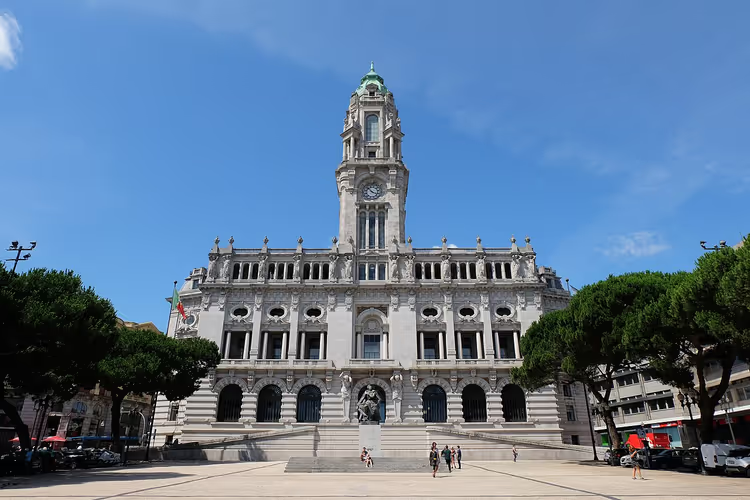
Porto City Hall stands on Liberty Square in the very center of the city. The granite and marble building was started in 1920 and took almost a quarter of a century to build (according to the Porto city council, 09/2026). The facade is decorated with sculptures, arches, and coats of arms, and it is topped by a tall clock tower.
You will only be allowed into the main hall. It is worth lingering there for the ceiling paintings. The other halls are closed to visitors, so a visit takes about 15 minutes. The best place to take photos is from the south side of the square, where the entire facade is visible.
- The catch: city services operate in the building, and only the hall is open to tourists.
São Bento Station
 © Diego Delso · CC BY-SAPhoto: Diego Delso, CC BY-SA (https://creativecommons.org/licenses/by-sa/4.0), Wikimedia Commons
São Bento Station is in the center of Porto, a stone's throw from the city hall. The French neoclassical building was constructed in the late 19th century on the site of an old monastery (according to the railway operator, 09/2026). Today, suburban trains depart from here.
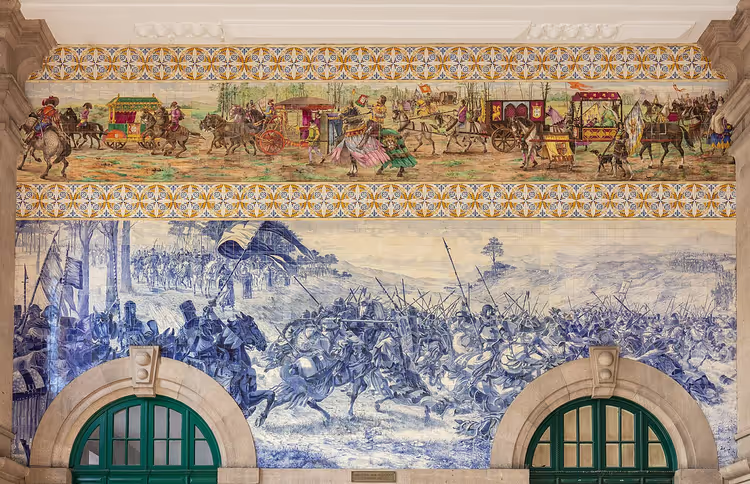
Go inside for the azulejos. The entrance hall is lined with blue-and-white tiles depicting scenes from the history of Portugal: battle scenes, navigators, peasant life. You do not need a train, and the whole visit takes 10 to 15 minutes. Admission is free, and the station is open from early morning.
The hall ceiling is decorated with stucco, the floor is laid with marble, and light comes through large stained-glass windows. The building has a mansard roof, so the station is easy to recognize by its silhouette from the square.
- The catch: the hall is small, and in the middle of the day it fills up with guided tour groups.
Bishop's Palace
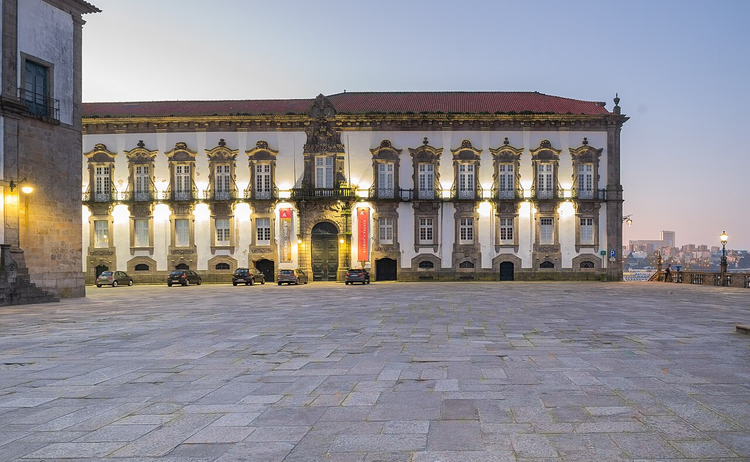
The Bishop's Palace is one of the oldest buildings in Porto. Construction began as early as the 12th and 13th centuries, and the residence acquired its current appearance after an 18th-century reconstruction (according to the Porto city council, 09/2026). Today the building belongs to the state and is no longer used as a residence.
 © Krzysztof Golik · CC BY-SAPhoto: Krzysztof Golik, CC BY-SA (https://creativecommons.org/licenses/by-sa/4.0), Wikimedia Commons
The facade forms an inner courtyard, and the windows are framed by stone casings and wrought-iron balconies. Inside, take a look at the foyer with its stucco work and frescoes, the grand staircase, and the halls. They display Flemish tapestries, carved furniture, and a collection of paintings. The throne room recalls the bishop's inaugurations.
- The catch: some halls are opened seasonally, so check access before your visit.
Sé Cathedral
 © @Miguel A. García.🎈 from Ólvega., España · CC BYPhoto: @Miguel A. García.🎈 from Ólvega., España, CC BY (https://creativecommons.org/licenses/by/2.0), Wikimedia Commons
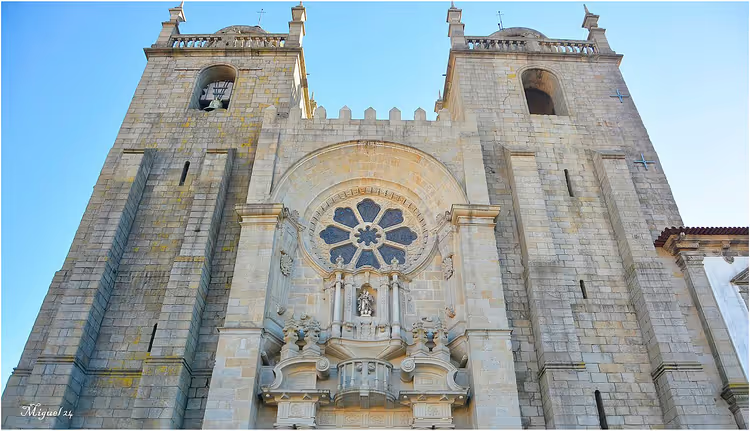
Sé Cathedral stands on top of Pena Ventosa hill and is considered a national treasure of Portugal. The Romanesque church was built in the 12th century, and its walls resemble a fortress with battlements and arrow slits (according to the Diocese of Porto, 09/2026). Portuguese kings were married here, and Prince Henry the Navigator was baptized here.
The facade is flanked by two square towers, with a rose window visible in the center. Entry to the interior and to the cloister is paid separately, and tickets are sold on site. The north gallery of the cloister is lined with azulejos depicting scenes from the life of the Virgin Mary. The main hall of the church itself is restrained: gray columns, statues of saints, and paintings in gilded frames.
Take a separate look at the cathedral's altar: about 800 kg of silver went into making it. Inside, the vaults are high and the walls are built of gray stone, so even at noon it is dim and cool here.
- The catch: the climb to the cathedral is uphill, which is noticeable in the heat. An easier option: ride part of the way on the Guindais funicular or take a taxi.
Bairro da Sé
 © Pedro Paulo Palazzo · CC BY-SAPhoto: Pedro Paulo Palazzo, CC BY-SA (https://creativecommons.org/licenses/by-sa/2.0), Wikimedia Commons
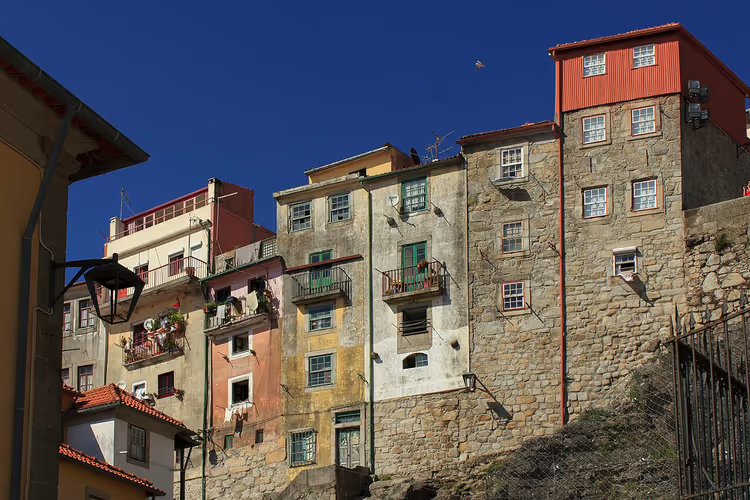
Right below the cathedral walls begins Bairro da Sé, the oldest residential quarter of Porto. It is a labyrinth of narrow streets on a steep slope, where native city residents still live (according to the Porto City Hall, 09/2026). The houses here stand right up against each other.
Walk slowly and look around. Laundry dries on clotheslines, children play on the stairways, voices come from the windows. There are fewer shops and cafes here than in the center, but more residential buildings. Small taverns where locals eat lunch stand nearby.
- The catch: the streets are steep and uneven, so it is inconvenient here with a suitcase or a stroller.
Ribeira
 © Ken & Nyetta · CC BYPhoto: Ken & Nyetta, CC BY (https://creativecommons.org/licenses/by/2.0), Wikimedia Commons
The Ribeira quarter descends to the Douro along a steep bank and is part of the UNESCO list. Houses with colorful facades cling to each other and climb up the hill (according to the Porto City Hall, 09/2026). Under the foundations of some buildings, stones of Roman masonry can be discerned.
Stroll along the cobbled streets and look at the houses with azulejos. Closer to the river, you will come out onto the embankment with cafes and taverns. Here you should see the bronze sculpture of John the Baptist and the cube-shaped fountain. In the evening, the quarter is illuminated and looks completely different.
- The catch: the narrow streets have many steps, so it is more comfortable here in the morning.
House of the Prince
 © londonexpat · CC BY-SAPhoto: londonexpat, CC BY-SA (https://creativecommons.org/licenses/by-sa/2.0), Wikimedia Commons
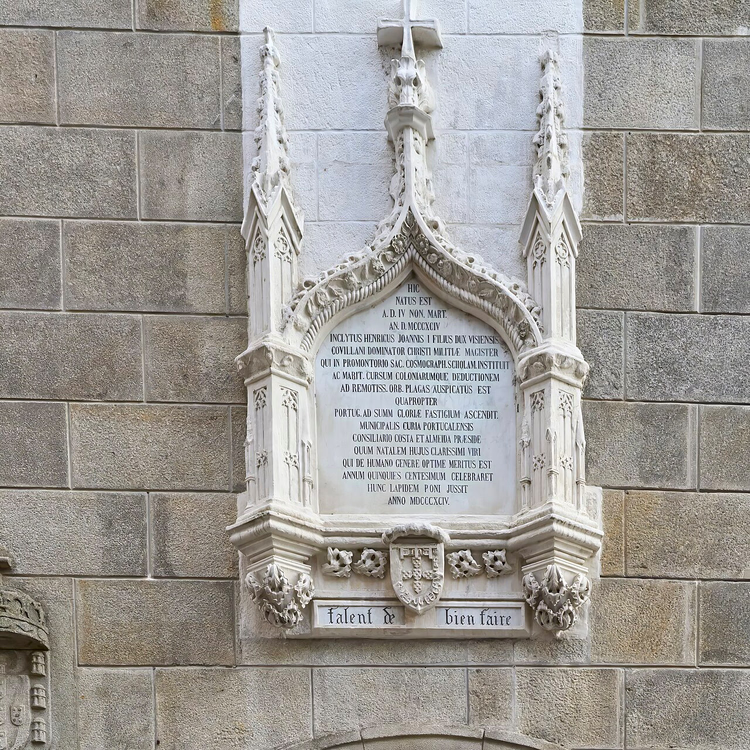
The House of the Prince stands where Infante Henry, the future organizer of maritime expeditions, was born. The 14th-century building served as a customs house, a mint, and housing for workers, and it got its current appearance after the restoration of 1677 (according to the Porto City Hall, 09/2026).
Today a museum operates inside. You will see ceramic tiles, Roman mosaics, dioramas of the medieval city, coins, and old tableware. The exhibition is small, so half an hour is enough for a visit. The building stands right by the Ribeira embankment, so you will pass by it anyway.
- The catch: the museum has a day off, so check the opening hours before your visit.
Church of Saint Francis
 © xiquinhosilva from Cacau · CC BYPhoto: xiquinhosilva from Cacau, CC BY (https://creativecommons.org/licenses/by/2.0), Wikimedia Commons
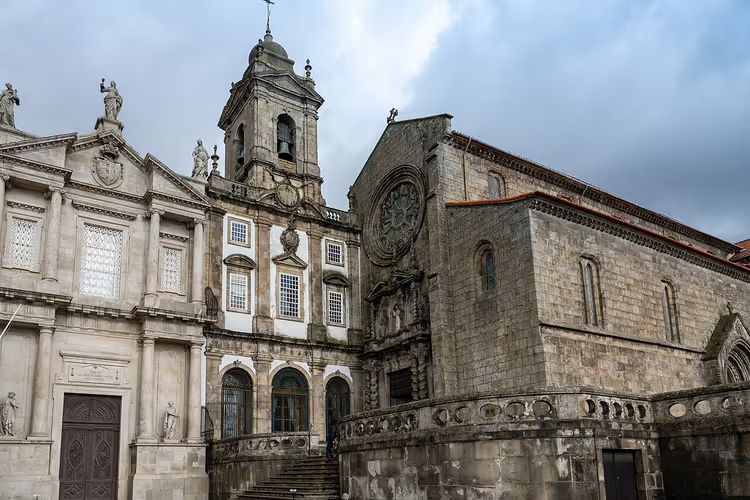
The Church of Saint Francis stands in the historic center next to the Stock Exchange Palace. Construction began in 1233 and was only finished by 1425 due to disputes between religious communities (according to the parish, 09/2026). From the outside, it is a strict Gothic facade with a huge rose window.
Inside, the decor is completely different. The walls, columns, and altars are covered with wood carvings with gold leaf. Take a separate look at the "Tree of Jesse" made of multicolored wood with figures of kings. Entry is paid, and the ticket includes the catacombs and a small museum; plan 30-40 minutes for the visit.
- The catch: the ticket is paid, and the church is active, so visits are limited during service hours.
Fernandine Fortress
 © Globetrotteur17... Ici, là-bas ou ailleurs... from La Rochelle, FRANCE · CC BY-SAPhoto: Globetrotteur17... Ici, là-bas ou ailleurs... from La Rochelle, FRANCE, CC BY-SA (https://creativecommons.org/licenses/by-sa/2.0), Wikimedia Commons
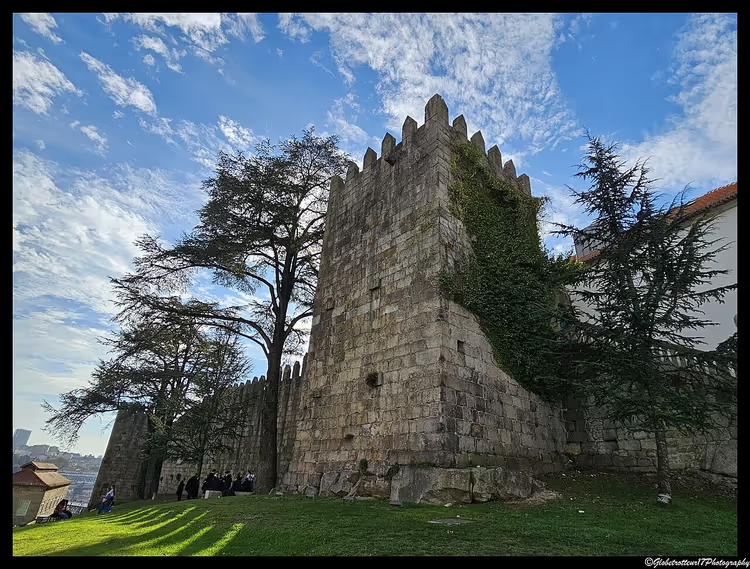
The Fernandine Fortress survives as a chain of remnants of the medieval wall that once protected Porto. The defensive line included about 30 towers, and its length exceeded 3 km (according to the Porto City Hall, 09/2026). In the 18th century, the fortifications lost their importance and gradually fell into ruin.
Today, sections of the walls with battlements and arrow slits remain. Walk along them down the slope toward the river. The entrance to the inner side is hidden in a courtyard among a garden with orange trees. From the wall, there is a view of both banks of the Douro and the Luís I Bridge. The funicular line runs nearby.
- The catch: there are few signs, and the entrance to the courtyard is easy to miss.
Stock Exchange Palace
 © Ray Swi-hymn from Sijhih-Taipei, Taiwan · CC BY-SAPhoto: Ray Swi-hymn from Sijhih-Taipei, Taiwan, CC BY-SA (https://creativecommons.org/licenses/by-sa/2.0), Wikimedia Commons
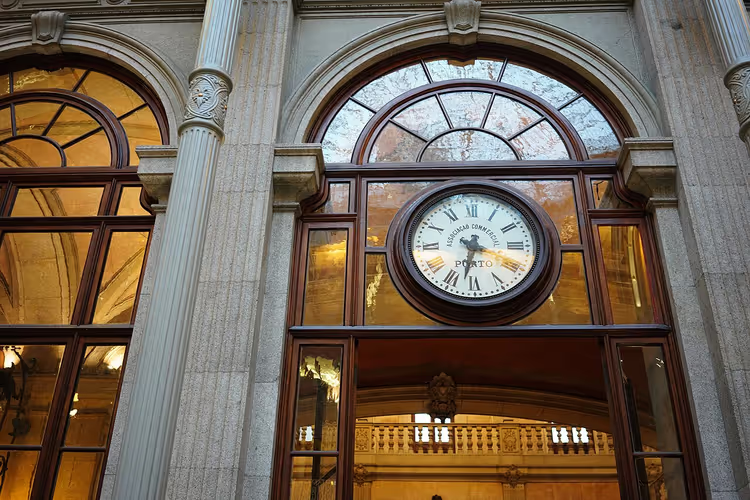
The Stock Exchange Palace was built in the 19th century for the trading elite of Porto. Economic matters were decided and negotiations were held in the neoclassical building, and monarchs and ministers visited it (according to the Porto Trade Association, 09/2026). The facade is decorated with a portico and a clock tower.
Entry is only with a guided tour, about €14 for 30 minutes (as of 09/2026, official ticket sales). The main highlight here is the Hall of Nations with an octagonal glass dome and coats of arms of different countries. The guide will then lead you up the marble staircase to halls with frescoes and mosaics. The tour language is assigned on a first-come basis, so arrive early.
- The catch: you cannot get inside without a tour, and groups gather at scheduled times.
Cais da Ribeira Embankment
 © Michael Gaylard from Horsham, UK · CC BYPhoto: Michael Gaylard from Horsham, UK, CC BY (https://creativecommons.org/licenses/by/4.0), Wikimedia Commons
The Cais da Ribeira embankment runs along the north bank of the Douro. It is the liveliest place in the city (according to the Porto City Hall, 09/2026). Restaurants with terraces line the area here.
Old rabelo boats that once carried port wine are moored at the quay. Today these vessels take you on a river cruise under the bridges. Book a Douro River cruise in advance, evening departures sell out quickly. Dining here is convenient, but check menu prices before ordering.
- The catch: the waterfront is crowded with tourists, and waterside tables need to be reserved in advance.
Guindais Funicular
 © Tom Page from London, UK · CC BY-SAPhoto: Tom Page from London, UK, CC BY-SA (https://creativecommons.org/licenses/by-sa/2.0), Wikimedia Commons
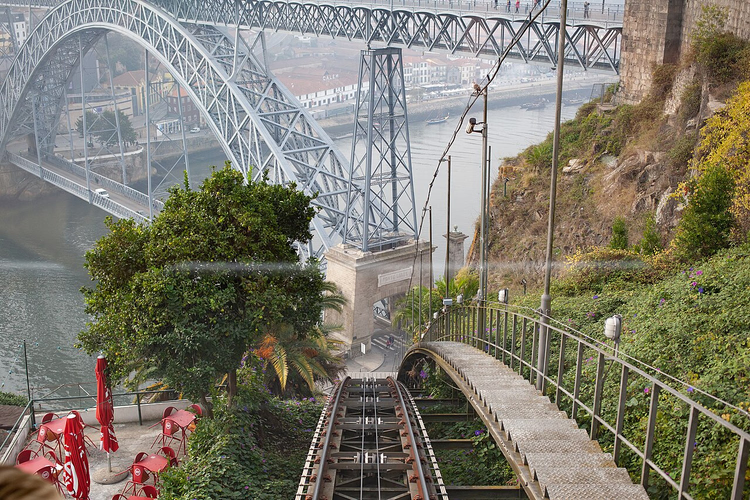
The Guindais Funicular connects the upper part of the city with the Ribeira waterfront. The first line was laid in the late 19th century, closed after an accident, and only reopened in 2004 (according to the operator, 09/2026). Today it is an easy way to save your energy on the climb.
The elevation difference reaches 60 meters, and the ride takes about 3 minutes. The car with transparent walls runs at a 45° angle on a single track, with part of the route passing through a tunnel. From the window you can see the river and the Dom Luís I Bridge. The lower station sits under the bridge, and at the top you exit near the Batalha district.
- The catch: the car holds about 25 people, so at peak times you may have to wait.
Dom Luís I Bridge
 © Diego Delso · CC BY-SAPhoto: Diego Delso, CC BY-SA (https://creativecommons.org/licenses/by-sa/4.0), Wikimedia Commons
The Dom Luís I Bridge is considered the main symbol of Porto. The two-level structure with its huge steel arch was built in 1886 to a design by engineer Théophile Seyrig, a student of Eiffel (according to the Porto city council, 09/2026). The lower level is for cars, and the upper level serves the light rail.
Walk across the bridge to see the city from a height of 45 meters. From above you get tiled roofs, waterfronts, and rocky slopes on both banks. The lower level links Ribeira with the wine warehouses of Vila Nova de Gaia. The crossing takes 15 to 20 minutes.
- The catch: the bridge has no high barriers, so keep children away from the roadway.
Serra do Pilar Monastery
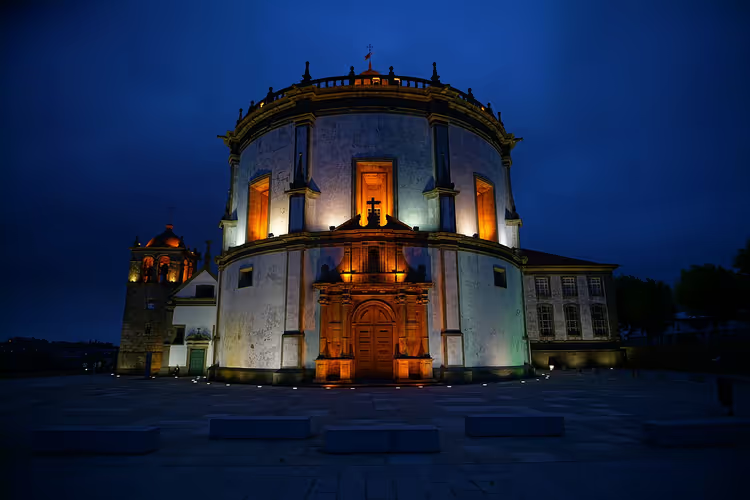 © Redeemer · CC BY-SAPhoto: Redeemer, CC BY-SA (https://creativecommons.org/licenses/by-sa/4.0), Wikimedia Commons
Serra do Pilar Monastery stands on a high hill in Vila Nova de Gaia. The former monastery of the Order of Saint Augustine was built in the 16th century by order of King John III and is a UNESCO World Heritage Site (according to the Gaia city council, 09/2026). From here you get a panorama of all of Porto.
The complex is known for its round church and covered gallery. In the early 19th century the monastery was turned into a military fortification with barracks, and it was here that Wellington prepared his campaign plan against Napoleon. Inside, see the altar with carvings and twisted columns. You can get there on foot across the Dom Luís I Bridge.
- The catch: the climb up the hill takes time, and part of the grounds is closed to visitors.
Jardim do Morro
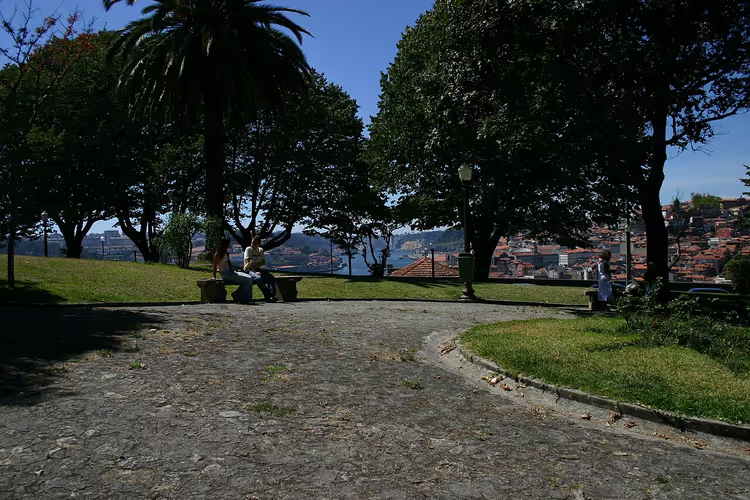 © Barao78 · CC BYPhoto: Barao78, CC BY (https://creativecommons.org/licenses/by/2.5), Wikimedia Commons
Jardim do Morro sits on a hill in Vila Nova de Gaia, at the foot of the Serra do Pilar Monastery. It is a popular spot for watching the sunset over Porto. From here you can see the historic quarters, the banks of the Douro, and the Dom Luís I Bridge.
The multi-level garden is planted with tall palms and broadleaf trees. The slope is terraced with amphitheater-style parapets. You can have a picnic on the lawn or grab a bite at a food truck. Large boulders are used here as dividers and decorations, and they have been arranged into small improvised grottoes.
Admission to the garden is free, and it stays open until late in the evening, so you can catch both the sunset and the bridge lighting. Musicians often perform nearby.
- The catch: at sunset it gets crowded, so arrive early to claim a spot.
Tours and tickets in Porto
Guided tours, skip-the-line tickets and activities — most offers can be cancelled free of charge.
See offers on TiqetsThe widget loads once you give your consent.
One-day Porto itinerary on the map
Put the whole day into a single route so you don't have to backtrack. The points on the map follow the same order as the sections above: from the Arrábida Bridge and the parks to the Clérigos Tower, through the center to the river, and then across to the other bank. Open the map on your phone and check off what you have covered. Save the points in advance so the map opens even without mobile data in the old quarters.
What to see in Porto in 1 day
Places on the map
- 1Arrábida Bridge 270-metre concrete arch, guided climb
- 2Crystal Palace Gardens Ponds, fountains and peacocks on the high bank of the Douro
- 3Cordoaria Garden Century-old plane trees and sculptures by Juan Muñoz
- 4Clérigos Tower 76-metre bell tower, 225 steps
- 5Lello Bookstore Neo-Gothic facade and red staircase
- 6Porto City Hall Granite building with a tower and chiming clock
- 7São Bento Station Entrance hall with azulejo tile panels
- 8Bishop's Palace 12th-13th century residence with Flemish tapestries
- 9Sé Cathedral Romanesque church where Portuguese kings were crowned
- 10Bairro da Sé Oldest residential quarter on a steep slope
- 11Ribeira Colourful facades and waterfront, a UNESCO site
- 12Prince's House Museum at the birthplace of Prince Henry the Navigator
- 13Church of São Francisco Gothic facade and a carved wooden "Tree of Jesse"
- 14Fernandine Walls Remains of a medieval wall with views of both riverbanks
- 15Palácio da Bolsa Hall of Nations with a glass dome and countries' coats of arms
- 16Cais da Ribeira Waterfront Rabelo boats and river cruises on the Douro
- 17Guindais Funicular 60-metre ascent in three minutes
- 18Dom Luís I Bridge Porto's main symbol, view from 45 metres
- 19Serra do Pilar Monastery Round church and panoramic view of all Porto
- 20Jardim do Morro Garden Multi-level garden for watching the sunset
⁉️🤔 Frequently asked questions
How much money do you need for a day in Porto?
Tickets add up to a noticeable amount: Livraria Lello is €15.95 (as of 09/2026, official ticket sales), Palácio da Bolsa is around €14 (as of 09/2026, official ticket sales), and the Clérigos Tower and Church of Saint Francis are also paid. Add lunch, coffee, and a river cruise. Budget for a weekend-day level of spending per person, and check exact prices on the venues' websites (as of 09/2026).
Can you walk the whole route?
Yes, the entire route is about 7 km on the map. There are no long stretches between points, but there are hills and stairs. If you get tired, shorten the route with the Guindais Funicular or the tram. Wear comfortable shoes; the cobblestones on the hills get slippery after rain.
What should you see if you only have half a day?
Stick to the center: the Clérigos Tower, Livraria Lello, São Bento Station, and Sé Cathedral. Then walk down to Ribeira and cross the Dom Luís I Bridge. Move the parks at the start of the list to another day, otherwise you won't have time (based on the map).
Do you need to buy tickets in advance?
For the Clérigos Tower, Livraria Lello, and Palácio da Bolsa, it is better to book online. In summer, lines form by midday, and Palácio da Bolsa tours are assigned to specific time slots. For Sé Cathedral and the Church of Saint Francis, tickets are usually available on site (as of 09/2026).
Is Vila Nova de Gaia worth visiting?
Yes, for the Serra do Pilar Monastery and Jardim do Morro. Cross the Douro on the upper deck of the Dom Luís I Bridge; it takes about 15 minutes on foot. The sunset at Jardim do Morro is considered one of the best views of Porto, so plan your visit for the evening.
In short: what to book
If you have one day, start at the Clérigos Tower and finish with the sunset at Jardim do Morro. If you enjoy history, don't miss Sé Cathedral, Palácio da Bolsa, and the Church of Saint Francis. If you are traveling with children, leave time for the Crystal Palace Gardens and the Guindais Funicular.
It is worth booking tickets to the Clérigos Tower and Palácio da Bolsa and a Douro river cruise in advance.
If you are looking for a place to stay, compare hotels in central Porto. This way you will save time in lines and avoid overpaying on the spot.

A small editorial team writing guides for independent travel. We travel ourselves, but we haven’t been everywhere, so we check prices, opening hours and how to get there against official sources.