







Maldives on a budget: 15 money-saving tips for local islands
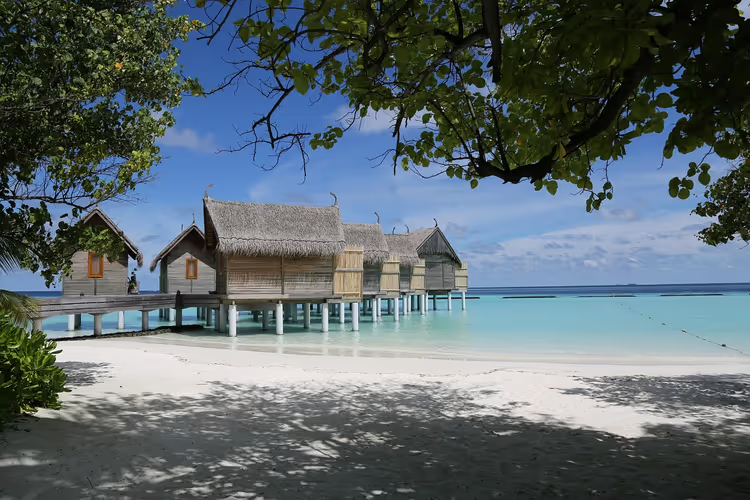
Maldives seems like a story about a price of several thousand euros per week. Photos of overwater bungalows have done their job, and many people are convinced that the archipelago is not for an ordinary budget.
That has not been true for a long time. Accommodation is not only available inside resorts: on inhabited islands there are guesthouses owned by local families. You pay several times less, while the beach and reef nearby are the same.
Add the off-season. The wet season with the southwest monsoon lasts from June to October (as of 09/2026, Maldives climate), and these are exactly the months with the lowest prices for accommodation and flights. Below are 15 ways to save: season, guesthouses, ferries, food, excursions, and what to pack.
Ad: this article contains affiliate links, we earn a commission if you book through them, at no extra cost to you.
Is a cheap Maldives trip possible
💡 In short:
- Stay in guesthouses on local islands instead of a resort.
- Travel by public ferry or speedboat instead of a seaplane.
- Go in the off-season from June to October: accommodation and tickets get cheaper.
A resort in the Maldives occupies an entire island and sells privacy. A local island sells something else: the everyday life of a Maldivian village, where you have breakfast in the same places as locals and buy fruit at a small market.
What to choose depends on your budget and your expectations.
Criterion | Resort | Local island |
|---|---|---|
Accommodation | overwater bungalow or villa, all inclusive | guesthouse in a village, breakfast |
Beach | private, swimwear allowed everywhere | public and a separate Bikini Beach zone |
Food | hotel restaurants | local cafes and canteens |
Transfer | seaplane or hotel boat | public ferry or speedboat |
Price | high | several times lower |
Experience | isolation from local life | everyday life of islanders |
Guesthouses appeared on inhabited islands more than ten years ago. Since then, the infrastructure has grown: shops, pharmacies, ATMs, and equipment rental are available even on small islands. Tourists are allowed into villages under one condition, which we will cover separately: respect for local rules.
The reefs and lagoons near guesthouses are the same as those near expensive resorts. The only difference is that you will not be allowed to swim in a swimsuit everywhere: for that, local islands have a designated Bikini Beach zone.
When the Maldives costs the least
The lowest prices fall in the wet season, which is called Green Season here. The dry season with the northeast monsoon lasts from December to March (as of 09/2026, Maldives climate and monsoons) and costs the most.
Period | Season | What happens to prices |
|---|---|---|
December to March | dry season | maximum prices, peak in February and during holidays |
April and November | transitional months | average prices, mixed weather |
June to October | wet season | minimum prices, short downpours |
The trip costs the most from December to March. In the off-season, rain comes in short downpours, the sun shines in between, and the water stays warm, often even warmer than in the dry season. June and October give the best balance of price and weather.
Tip 1: choose the off-season
If you want to save the most, choose dates outside the high season. From December to March, prices for accommodation and flights are at their maximum, especially during European winter holidays and the New Year weeks.
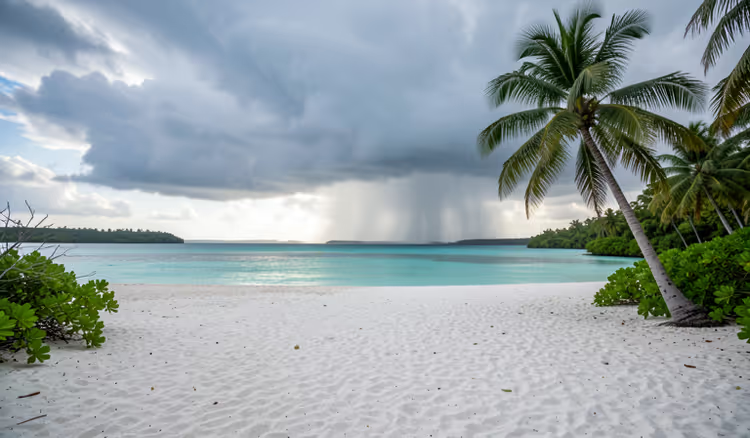
The myth about rain in Green Season is easy to check. Rain in the tropics falls in short but intense downpours. Half an hour after such a downpour, you are swimming again, and the humidity and greenery make the islands look more vibrant. We verified this fact against Maldives meteorological service data.
 AIIllustrative image: AI-generated
What the off-season gives you:
- accommodation and tickets get noticeably cheaper;
- fewer tourists, calmer beaches;
- vegetation covers the islands in green;
- better chances of seeing a whale shark and manta rays;
- good sunny weather holds between downpours.
Plan your trip for late June or October. June is convenient for vacationers, and October often gives the lowest prices before the start of the high season.
Tip 2: stay in guesthouses on local islands
A guesthouse is the main lever for saving. A night there costs tens of euros, not hundreds, and air conditioning, breakfast, and internet are almost always included in the basic package. You will eat not in a hotel restaurant but in a cafe where the islanders themselves eat.
When booking, look at four details:
- whether breakfast is included in the price;
- whether there is air conditioning, it is essential in the tropics;
- how many meters from the house to Bikini Beach;
- what excursions the house offers and at what price.
Islands worth starting with:
- Maafushi: the most developed infrastructure and the best choice of accommodation;
- Dhigurah: a long sand spit, chances of seeing a whale shark, a calm pace;
- Ukulhas: a house reef right off the shore and clean beaches;
- Fulidhoo: a small island with a population of about two hundred people;
- Thoddoo: plantations, fresh fruit, and few tourists.
You can book on platforms or write to owners directly. In the second case, you can sometimes negotiate a price lower than in the listing: see guesthouse prices on Trip.com.
The catch of local islands is clear in advance: the infrastructure is more modest than at a resort. But you see the real country, not just its showcase.
Another detail worth checking before booking: some guesthouses do not accept cards and ask for cash payment. Bring dollars in small bills, so you do not lose money on exchange.
The beach on a local island is divided into two zones. Bikini Beach is the area where you swim in a swimsuit, while on the rest of the shore people sunbathe clothed. Many guesthouses are a five-minute walk from this zone, and that is more convenient than it seems: you do not need to walk through the whole village with bags.
A separate plus of a guesthouse is the hosts. They will tell you the ferry schedule, arrange a boat for a morning trip, and warn you where the current is stronger on the reef. Such advice saves both money and time.
Tip 3: buy tickets in advance and with a layover
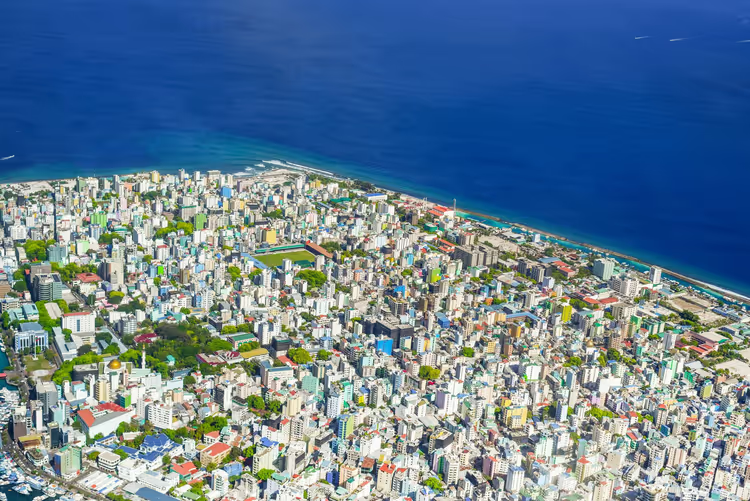
The plane ticket remains the largest expense item on such a trip. Saving on it is realistic if you look at dates and layover schedules.
What helps:
- Book several months before departure;
- Compare offers across several search engines at once, for example compare flight prices;
- Choose a weekday departure;
- Look at connections through Dubai, Doha, or Colombo;
- Combine the Maldives with a trip around Asia: AirAsia flies to Male from Bangkok, Kuala Lumpur, and Singapore.
A direct flight is more convenient but noticeably more expensive. A layover sometimes saves you a third of the ticket price. Flexible dates work better than any promo sale: shifting your departure by a couple of days changes the price more than a sale does.
Tip 4: ferry or speedboat instead of a seaplane
Getting between islands eats up your budget faster than anything else. A seaplane costs several hundred euros per person, and for a budget trip it is the most expensive option.
 © Hansueli Krapf · CC BY-SAPhoto: Hansueli Krapf, CC BY-SA (https://creativecommons.org/licenses/by-sa/3.0), Wikimedia Commons
Your alternatives:
- Public ferries: the cheapest option, a ticket costs a few dollars. The catch is that ferries do not run every day and do not go to every island. Check schedules and routes on the MTCC website (as of 09/2026).
- Speedboats: a compromise between price and time, often a guesthouse puts together a group for one boat.
- Shared transfers: several guests split the same boat, and the price drops.
- Overnight ferries: they run to distant atolls and save you one night of accommodation.
Plan your route within a single atoll. Moving between islands in the same atoll costs pennies, while traveling between atolls is a completely different price. The classic combination for a first trip: Maafushi, Gulhi, and Guraidhoo in South Male Atoll.
Schedules change, so keep them handy. A tourist SIM card is sold at the airport (Dhiraagu rates, as of 09/2026), and with it you can check ferries and book accommodation right on the spot.
Tip 5: Eat at local cafes and canteens
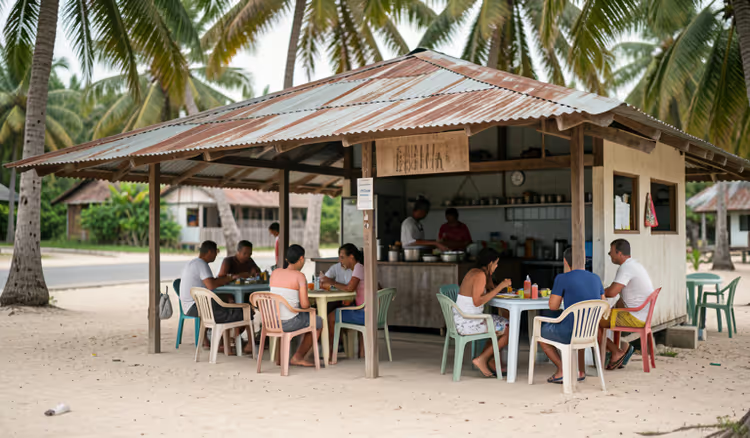
Meals at a resort are included in the room price, and you can't opt out. On a local island, things work differently: you choose where to eat and pay several times less than at a hotel.
 AIIllustrative image: AI-generated
How to keep food costs down:
- Book accommodation with breakfast included and don't skip it. Many guesthouses serve a hearty breakfast that will keep you going until lunch.
- Eat where locals eat. Lunch at an ordinary cafe costs noticeably less than at a place aimed at tourists.
- Try Maldivian dishes instead of the usual European cuisine.
- Stop by small supermarkets on larger islands: water, fruit, and snacks are cheaper there.
- Buy water in large bottles and refill your own bottle. You save a noticeable amount and create less waste.
Tip 6: Find free activities
A vacation in the Maldives doesn't require paid excursions every day. Some of the best experiences cost you nothing.
What to do without paying extra:
- Snorkeling at the house reef. On many local islands, the reef starts right from the shore.
- Beach walks at sunset. Sunsets here are long and almost always spectacular.
- Walking around the entire island. Stroll through the village, see local crafts and how islanders live.
- Beach days. The most obvious option, and also the best one.
- Watching marine life in the shallows. At dusk, small sharks and rays come close to shore to feed in the seagrass beds.
The best time to enter the water at the reef is at dawn or an hour before sunset: the water is calmer and the fish are more active. Bring a mask from home and you won't have to pay for rental gear.
Tip 7: Book excursions in a group and on site
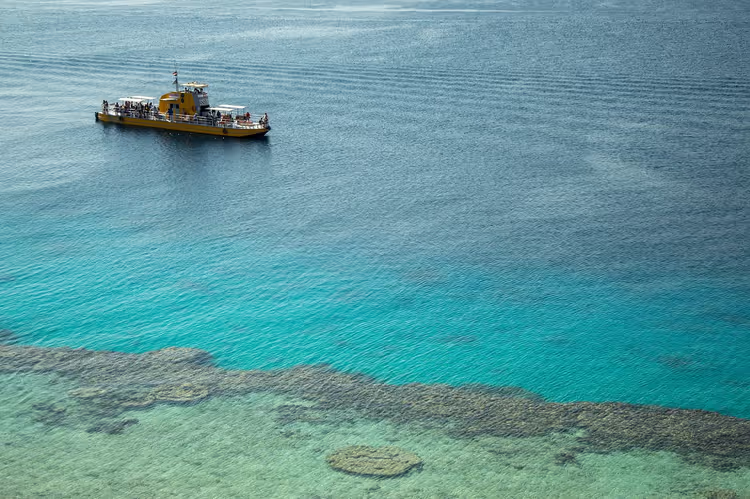
Some experiences in the Maldives are only available through tour operators: reefs, whale sharks, and sandbanks are far from shore, and you can't reach them on your own.
What lowers the price:
- Compare offers on your island. Prices vary between operators, and you'll only see the difference once you're there.
- Going as a group is cheaper than booking a private boat.
- Book several trips with the same operator, which makes it easier to get a discount.
- Discuss the price calmly. In the low season and when booking multiple tours, almost everyone is willing to negotiate.
Popular budget options with local operators: a trip to a sandbank, a snorkeling safari with several stops in one day, dolphin watching at sunset, and night fishing. Maafushi works well as a base: operators there put together combined day programs that include snorkeling, a sandbank, and dolphins. For current offers, check Maafushi excursions on GetYourGuide.
If you're coming in high season, reserve your trip in advance. In the low season, you can easily arrange things on site and save by cutting out middlemen.
Tip 8: Snorkeling instead of paid diving
Diving in the Maldives is expensive: a single dive costs tens of euros, and a certification course costs even more. The good news is that the underwater world is also accessible with just a mask.
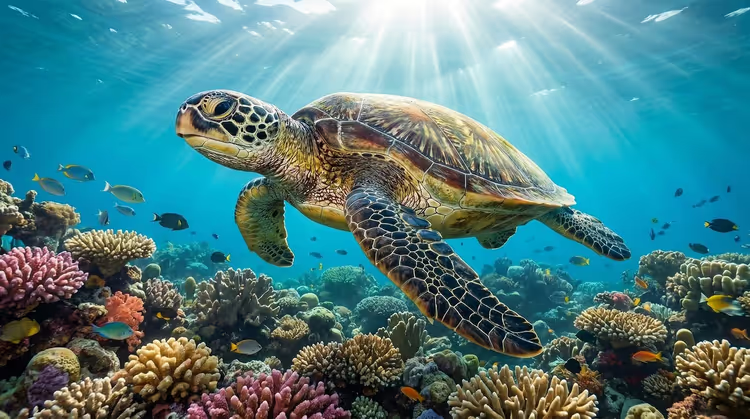
Snorkeling gives you almost the same experience: turtles, rays, reef sharks, and colorful corals. This only works with your own gear, because rentals on the islands are expensive and mask quality is unpredictable. A set of mask, snorkel, and fins pays for itself in one trip and lasts for years.
The best spots locals know about:
- Digurah's house reef, where turtles and young sharks are common;
- Turtle Point near Maafushi;
- Ukulhas reef with dense coral gardens.
The rules of behavior in the water are simple. Don't stand on corals or touch them with your fins. Keep several meters away from any animal. Don't take anything out of the sea except photos. Use mineral sunscreen without oxybenzone and octinoxate, because regular filters destroy corals.
Visibility in the lagoon reaches several dozen meters, and house reefs lie at shallow depths. That means you don't need a boat or a guide to see the main sights. Just walk into the water from the shore in the morning.
If you've never snorkeled before, spend your first hour in the shallows near the shore. There you'll get used to breathing through the snorkel and feel the current. After that, you can head toward the outer side of the reef, where there are noticeably more fish.
Choose gear by fit, not by price. A mask with no gaps and fins that fit matter more than an expensive model, because water will leak into the mask through any gap on every wave. Test your gear in a pool before the trip so you don't have to figure it out on your first excursion.
The current at the outer edge of the reef is stronger than in the lagoon. If it pulls you sideways, don't fight it: swim along the reef and return to shore at an angle. Children are better off going to the outer reef with a guide.
Another argument for snorkeling is time. A dive takes half a day with preparation and the boat ride, while you can head out to the house reef at any moment. And the money stays in your pocket.
Tip 9: Pack your suitcase from a list
Packing affects your budget more than it seems. What you bring with you, you won't have to buy on the island at local prices.
What to pack:
- snorkeling gear: mask, snorkel, and fins;
- reef-safe sunscreen and after-sun lotion, plus sunglasses;
- a waterproof bag for valuables during boat trips;
- a first aid kit with medication for diarrhea, sunburn, and minor injuries;
- an adapter for British outlets;
- mosquito repellent, especially needed in the rainy season;
- a reusable water bottle;
- a waterproof camera if you want to shoot underwater.
What to leave at home:
- a hair dryer, almost every guesthouse has one;
- beach towels, they're provided on site;
- warm and heavy clothing, you won't need it;
- extra shoes, evenings here are spent in sandals.
A separate note about clothing for the village. The Maldives is a Muslim country, so cover your shoulders and knees outside the beach. Swimwear is only appropriate in the Bikini Beach zone; on other stretches of shore, people swim in a T-shirt and shorts.
Bring medications with you. On small islands, there's either one pharmacy or none at all, and the selection of medicines is limited. Painkillers, cold remedies, band-aids, and sunburn cream take up little space in your suitcase and solve half your problems.
Buy an adapter for British outlets before you fly: at Male airport it will cost more. The outlets here are three-pronged, like in the UK, so without an adapter you won't be able to charge your phone or camera.
Dark, heavy clothing for walks is best left at home. Light linen clothes dry quickly, don't stick to your body, and are suitable for the village. But do pack a swimsuit and a second T-shirt: on the beach they dry within an hour, and you save on laundry.
Tip 10: Try the local cuisine
Maldivian food costs less than European food and is more memorable than yet another burger by the beach.
 AIIllustrative image: AI-generated
What to try:
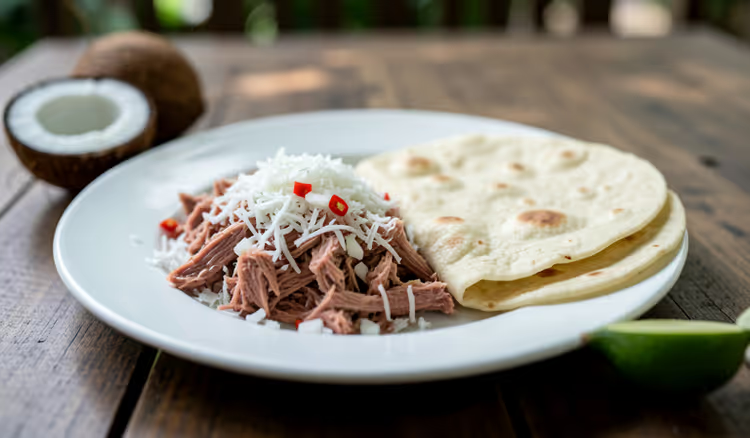
- Mas Huni, a breakfast of tuna with grated coconut, onion, and chili, served with a thin flatbread called Roshi;
- Garudhiya, a clear fish soup eaten with rice, lime, and chili;
- Rihaakuru, a thick paste made from reduced tuna, used here instead of sauce;
- Hedhikaa, a selection of snacks like stuffed Bajiya and Mas Roshi with tuna.
Where to find cheap food:
- small local cafes away from tourist streets;
- street stalls selling Hedhikaa on larger islands, such as Maafushi;
- Hotaa, simple canteens with home-style dishes;
- the fish market in Male if you're staying in the capital for a while.
Ask your guesthouse owner where he himself eats. He'll name a place that has no pages in any guidebook, and it will be the cheapest lunch of your trip.
Tip 11: plan affordable island hopping
Why limit yourself to one island when you can see several? The main rule here is simple: stay within one atoll.
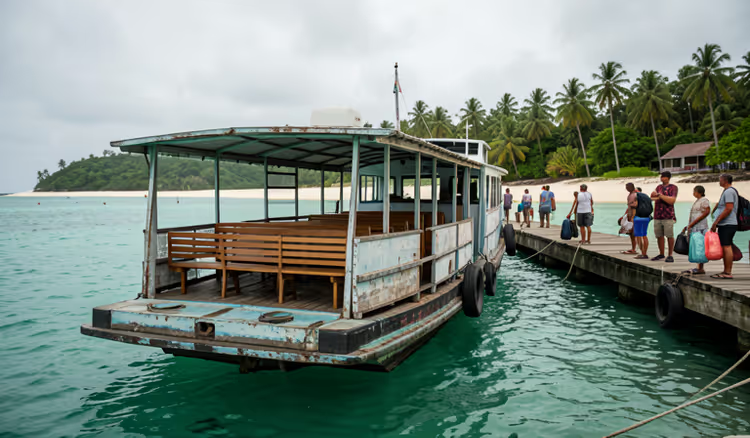 AIIllustrative image: AI-generated
How to make transfers cheaper:
- Build your route around islands in the same atoll; moving within an atoll costs very little.
- Plan your route along public ferry lines; the schedule is available in the ferry timetable.
- Ask about a long-stay discount if you are staying on an island for more than a few nights.
- Allow at least two or three nights per island, otherwise you will spend your vacation in transit.
Ready-made combinations that work:
- South Male Atoll: Maafushi, Gulhi, and Guraidhoo.
- North Ari Atoll: Ukulhas, Mathiveri, and Rasdhoo, a good choice for snorkeling and whale sharks.
- Vaavu Atoll: Fulidhoo and nearby islands, with fewer tourists and more authentic island life.
Keep in mind that ferries are canceled in bad weather. If you have a flight home, leave a one-day buffer for returning to Male.
Transfer costs are easy to calculate. Moving within an atoll costs noticeably less than any trip to another atoll, so a route covering three islands in one atoll will cost you less than a trip to a single distant island.
Another trick is a route with no backtracking. If you start on Maafushi and finish on Guraidhoo in the same South Male Atoll, you do not need to return across the whole archipelago, and the way back to the airport stays short.
Tip 12: plan the trip yourself
Planning on your own gives you control over the budget and flexibility that a package tour cannot offer.
What to compare:
- Independent booking: you manage every item and pay only for what you need, but you spend time.
- Package tour: more convenient and faster, and sometimes good last-minute deals come up.
Useful planning tools:
- accommodation: booking platforms and date searches, for example find a hotel or guesthouse;
- flights: ticket search engines and price drop alerts;
- transfers: ferry schedules and the Island Ferry app;
- navigation: offline maps and a map of the Maldives for orientation.
A practical order of steps is this: first the ticket, then the first accommodation, and you figure out the rest on the spot. In the low season this scenario works almost always, because rooms are available even at the last moment.
Tip 13: respect the local culture
Respecting local rules is not just about politeness. It directly affects how much you spend and how you are received on the island.
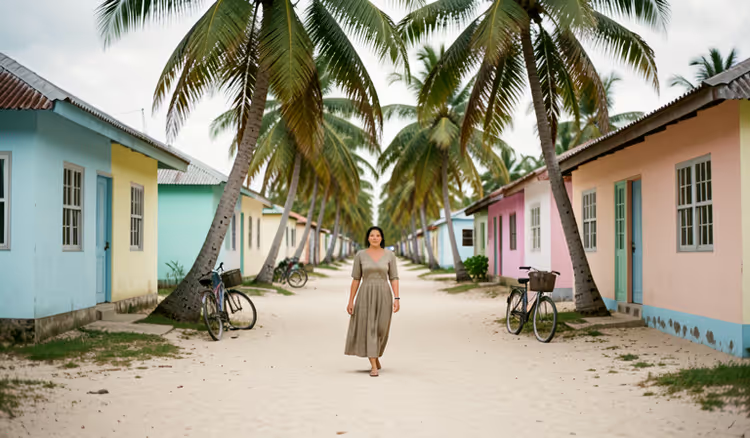 AIIllustrative image: AI-generated
What is important to know about the Maldives:
- Clothing. Outside Bikini Beach, cover your shoulders and knees, especially in the village.
- Ramadan. During the month of fasting, many cafes are closed during the day, and opening hours change. If you are not ready to adjust to it, choose different dates.
- Local customs. Pork and public displays of affection are not accepted on local islands.
- Photos. Ask permission before photographing people.
How this saves you money:
- You eat at local cafes rather than tourist restaurants.
- Guesthouse owners are more willing to give advice and discounts to those who behave respectfully.
- Reasonable tips at the start of the trip improve service, but they do not replace a discount.
Simple logic: the less you stand out, the less you pay for the same thing.
Tip 14: choose souvenirs wisely
Souvenir shops near the beach charge tourist prices. You can find good gifts in the Maldives for less, and they can be more meaningful.
Inexpensive ideas:
- shells and stones found during walks. Taking coral off the island is prohibited, and you can be fined for it;
- items made by local artisans, if you buy directly from them rather than from a shop;
- spices and tea, which are light for travel and always make a good gift;
- coconut products: tableware, oils, jewelry;
- dried fish, a staple of Maldivian cuisine;
- woven mats made from palm leaves;
- miniature wooden dhonis, traditional fishing boats.
The most budget-friendly gift to yourself is photos. Shooting the trip in detail and then putting together a photo book is cheaper than buying a pile of souvenirs, and the memories feel personal.
Tip 15: watch for last-minute deals
If your dates are flexible, the last moment can work in your favor.
How to search:
- start looking at offers two to three weeks before the trip;
- be ready to compromise on dates and accommodation category;
- subscribe to airline newsletters, as they announce sales first;
- check the last-minute deal sections on major portals.
What to keep in mind: you may not make it to every island if ferries do not run daily. In the high season, cheap options are almost gone, and entry documents still need to be prepared in advance. A visa is issued on arrival, but passport requirements, a return ticket, and proof of accommodation always apply (entry rules, as of 09/2026).
Five best budget islands
Below are the islands where a budget trip usually starts. All of them are connected to Male by ferries and speedboats, and accommodation here is geared toward a regular budget.
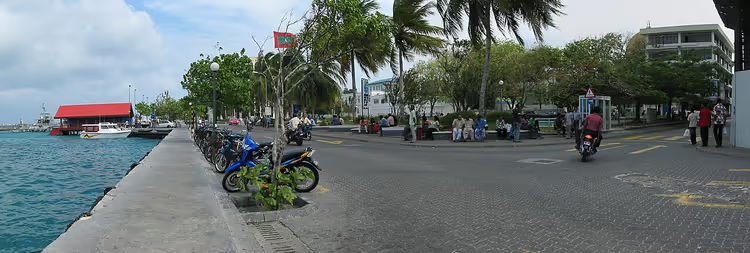 © Hansueli Krapf · CC BY-SAPhoto: Hansueli Krapf, CC BY-SA (https://creativecommons.org/licenses/by-sa/3.0), Wikimedia Commons
Island | Atoll | What makes it interesting | Who it suits |
|---|---|---|---|
Maafushi | South Male | the most accommodation and excursions | beginners |
Dhigurah | South Ari | long beach and whale sharks | nature lovers |
Ukulhas | North Ari | house reef right off the shore | snorkelers |
Fulidhoo | Vaavu | small island, quiet | those seeking peace |
Thoddoo | North Ari | fruit plantations | fans of rural life |
1. Maafushi
The pioneer of budget tourism in the Maldives. It has the largest selection of guesthouses, cafes, and excursion organizers, plus shops, ATMs, and pharmacies. From Male you get there by ferry in about an hour and a half according to the MTCC schedule. The catch: the island remains the most touristy, and you will not get quiet evenings. Guesthouse prices on Maafushi.
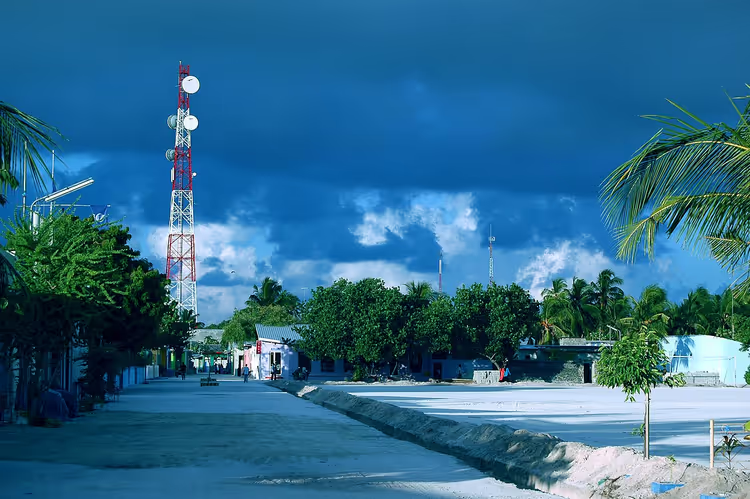 © Nattu from Male', Maldives · CC BYPhoto: Nattu from Male', Maldives, CC BY (https://creativecommons.org/licenses/by/2.0), Wikimedia Commons
2. Dhigurah
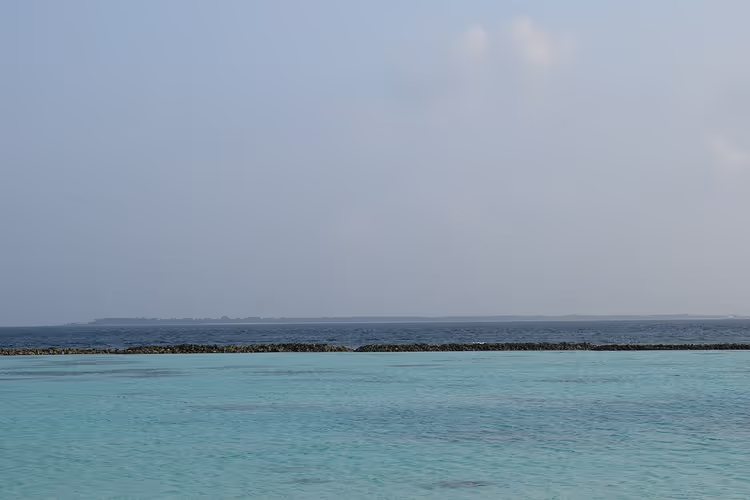
A long, narrow island with one of the most beautiful sand spits in the archipelago. From May to November, your chances of spotting a whale shark here are high, and in the village you will see everyday island life without the crowds. The house reef is good for snorkeling, and a bicycle is a convenient way to get around the island. Places to stay on Dhigurah.
 © Syced · CC BY-SAPhoto: Syced, CC BY-SA (https://creativecommons.org/licenses/by-sa/3.0), Wikimedia Commons
3. Ukulhas
A small island in North Ari Atoll known for its environmental stewardship and clean beach. The house reef starts right at the shore, so you do not need a boat for snorkeling. Around a thousand people live here, and ferries from Malé run on a schedule. The catch: there is almost no evening entertainment. Accommodation options on Ukulhas.
4. Fulidhoo
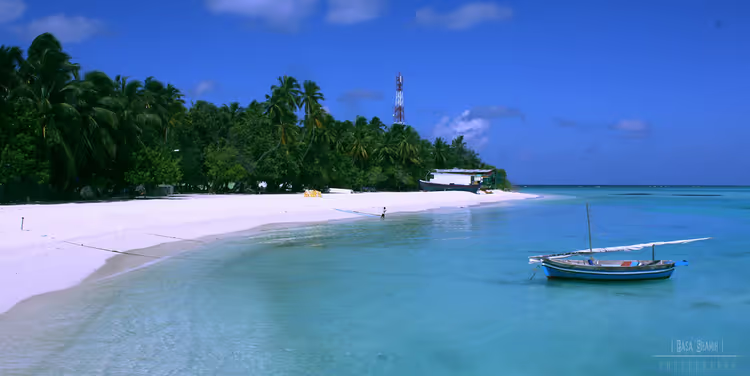
A tiny island in Vaavu Atoll with a population of around two hundred. It has calm beaches, good snorkeling and diving spots, and in the evenings locals sometimes put on the traditional boduberu dance. The main evening highlight is the shoreline lit up by plankton: in the dark, the sand and water start to glow. Guesthouses on Fulidhoo.
 © Easa Shamih (iZZo) | P.h.o.t.o.g.r.a.p.h.y · CC BYPhoto: Easa Shamih (iZZo) | P.h.o.t.o.g.r.a.p.h.y, CC BY (https://creativecommons.org/licenses/by/2.0/), Flickr
5. Thoddoo
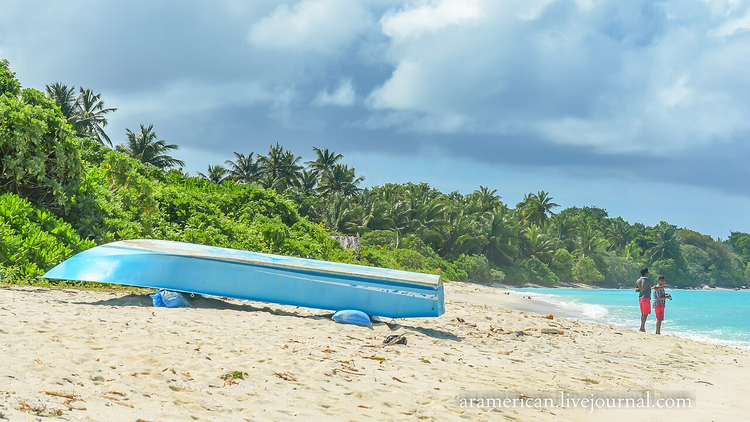
An agricultural island, which is rare in the archipelago. Fruit is grown here, so fresh mangoes, papayas, and watermelons cost less than anywhere else. The beaches are scattered across the island, and there are noticeably fewer tourists than on Maafushi. Rooms on Thoddoo.
 © Alx R · CC BYPhoto: Alx R, CC BY (https://creativecommons.org/licenses/by/3.0), Wikimedia Commons
What a budget trip to the Maldives gives you
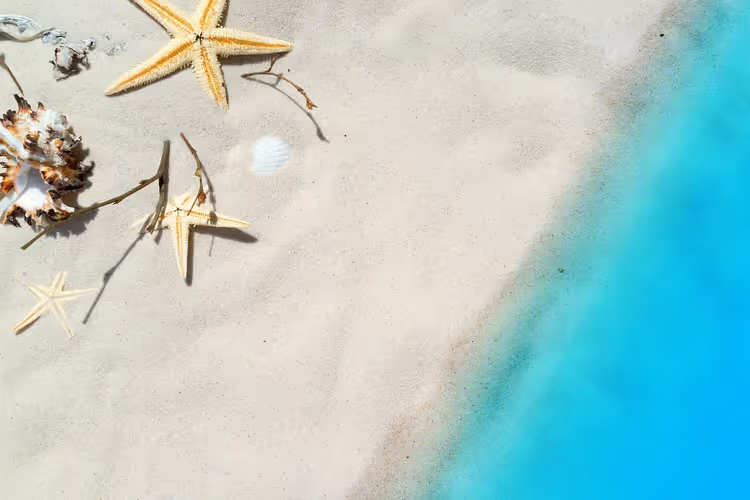
The money you save doesn't take away the main thing. You get the same white-sand beaches, the same turquoise water, and the same underwater world as resort guests.
What you get:
- beaches and lagoons without restrictions;
- a chance to meet islanders and see their daily life;
- house reefs and the same underwater fauna;
- the freedom to change your route as you go;
- a weekly bill you can actually pay.
What you'll have to give up:
- overwater bungalows and privacy;
- the all-inclusive format;
- five-star resort status;
- a daily menu from a hotel restaurant.
It's an honest trade. Budget islands offer less comfort and more of the real Republic of Maldives: you eat with locals, ride public ferries, and see how the islands live beyond the tourist showcase. For many travelers, this is the kind of trip that actually stays with them.
Budget travel is a different daily rhythm, not a cut-down vacation. You start the morning on the beach, head to a reef or a sandbank in the afternoon, and have dinner at a cafe with rice and tuna in the evening. That pace costs less and shows you the country better than the enclosed grounds of a resort.
Socializing works differently here. At a resort you talk to staff; on a local island you talk to people who were born and raised there. One conversation about fishing replaces an entire guidebook.
You should prepare for the inconveniences in advance. The public ferry doesn't run every half hour, cafe menus are shorter than at a hotel, and evenings on the island are quiet. If those things don't bother you, the savings feel like a fair choice rather than a forced one.
What to have on hand for the trip
Save these before you fly so you don't have to search from memory.
- MTCC ferry schedules for getting between islands.
- Entry rules and visa from the Maldives immigration service.
- Dhiraagu tourist SIM card for mobile data.
- Maldives map for offline navigation, download it in advance.
Offline maps are especially useful here: mobile coverage works on small islands, but street signs are almost nonexistent. If you have a layover, check the transit requirements for your connecting country, as they vary by carrier.
Before leaving Malé, do two things: withdraw cash from an ATM and buy water at a large supermarket. Prices are higher on local islands, and not every island has an ATM.
⁉️🤔 Frequently asked questions
How much does a week in the Maldives cost on a budget?
Think of three main categories: flights, accommodation, and food. In the off-season, tickets cost less than in high season, a guesthouse runs tens of euros per night, and lunch at a local cafe costs a few euros. Ferries between islands add very little. The final amount depends on your departure point and how many transfers you make, so compare tickets early on search engines.
Are the Maldives right for everyone?
No, not for everyone. You come here for quiet, beaches, and the underwater world. If you need nightclubs, shopping, and museums, other destinations will give you more. Budget islands suit calm travelers, couples, and families who are fine with simple living and an early dinner.
What currency is used in the Maldives?
The official currency is the Maldivian rufiyaa. In tourist areas, dollars are gladly accepted. Bank cards aren't accepted everywhere: some guesthouses ask for cash payment. Small cash comes in handy for ferries, street food, and tips, so keep a small amount in dollars on you.
How safe are local islands?
The Maldives is considered one of the safest destinations in the world, and the crime rate here is low. On local islands, tourists feel at ease both during the day and in the evening. Standard precautions are still needed: don't leave valuables on the beach and keep your documents in the guesthouse safe.
Do I need vaccinations for a trip to the Maldives?
No special vaccinations are required for entry, but standard immunizations should be kept up to date. Check with your doctor before the trip.
Is there alcohol on local islands?
No, alcohol is prohibited on inhabited islands under Islamic law. You can buy and drink it only at resorts, on safari boats, and on special excursion boats. If an evening glass matters to you, plan one day at a resort or choose a different type of accommodation for part of the trip.
What is the internet like in the Maldives?
Connectivity works better than tourists expect. Guesthouses almost always have free Wi-Fi, and speed depends on load and weather. For navigation and schedules, a local SIM card with a data package is more convenient.
Do I need English in the Maldives?
English is widespread here, especially in the tourism sector. A basic level is enough to arrange accommodation, excursions, and food. In villages, the older generation speaks less, but people will help with gestures or call over someone younger. Phone translators also work offline.
Can vegetarians eat well in the Maldives?
Yes, in tourist areas vegetarian dishes are available almost everywhere: rice, vegetable curries, flatbreads, and fruit. Vegans have it a bit harder because local cuisine often adds fish or coconut milk with tuna. If you don't eat fish, ask about the ingredients in advance; cafes are relaxed about it.
Do I need a visa for a trip to the Maldives?
You don't apply for a visa in advance: it's issued on arrival free of charge for thirty days. To enter, you need a valid passport, a return or transit ticket, confirmed accommodation, and sufficient funds for the trip. Check current requirements on the entry rules page before you fly.
When is the best time to book a trip to the Maldives?
The most affordable time to book is the off-season from June to October. Tickets and accommodation get cheaper, and rain comes in short downpours. If you're traveling in high season, book several months ahead: in December and around New Year, prices peak and availability nearly runs out.
What's the cheapest way to get to the islands?
First fly to Malé, then get to your island by ferry or speedboat. The public ferry costs a few dollars but doesn't run every day, so plan your route around the MTCC schedule. Save the seaplane for a last resort: it's the most expensive option and only makes sense for remote atolls.
What's an affordable alternative to the Maldives?
If the budget doesn't work out, look at Sri Lanka, Zanzibar, the Philippines, or Thailand: similar beaches at lower prices. That said, the Maldives remains accessible on local islands, and that's exactly the option that gives you the lagoon view people come here for.
Find hotels in Maafushi
Compare prices across booking sites and filter for rooms with free cancellation.
Compare prices on Trip.comThe widget loads once you give your consent.
In short: what to book
A budget trip comes down to three decisions: dates, accommodation, and how to get to the island. Once you've settled those, everything else can be figured out on the ground.
The selection matrix looks like this.
- Want a first trip without risk: go with Maafushi, it has the most accommodation and excursions.
- Coming for whale sharks and a long beach: look at Dhigurah.
- Need a reef right off the shore: choose Ukulhas.
- Looking for quiet: head to Fulidhoo.
- Love fruit and village life: Thoddoo is your pick.
It's easier to book accommodation in advance so you can compare prices and pick the area: browse guesthouses on Trip.com. Look for flights in the off-season and with a layover, that's the cheapest way: compare flight options.

A small editorial team writing guides for independent travel. We travel ourselves, but we haven’t been everywhere, so we check prices, opening hours and how to get there against official sources.