








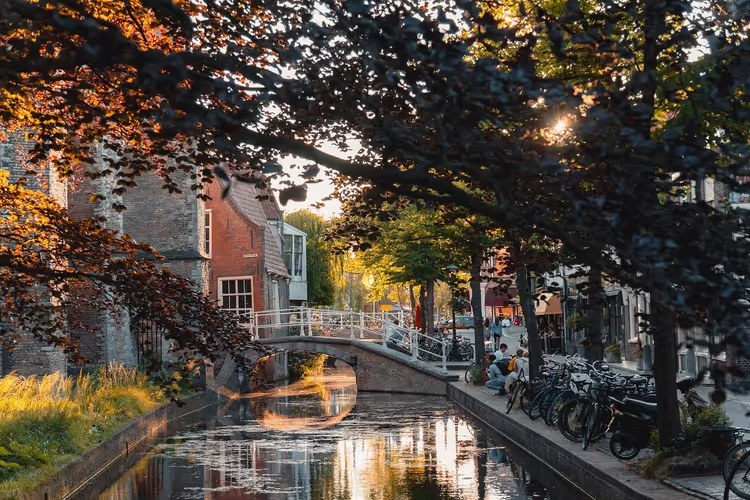
9 Cities in the Netherlands: where to go for a weekend in 2026
The Netherlands fits on the map within a couple of hours by train. In that time you can swap noisy Amsterdam for quiet Helmond. We picked nine cities that deserve their own trip and sorted them by character, main sights, and transport accessibility.
Amsterdam remains the first and obvious stop, but the list only gets better from there. The Van Gogh Museum here is open daily from 9:00 (as of 09/2026, museum's official website). That means you can get into the galleries before the tour groups.
Below you'll find a comparison of all nine cities and practical sections for each one. You'll pick a destination in a couple of minutes instead of spending an evening searching.
Ad: this article contains affiliate links, we earn a commission if you book through them, at no extra cost to you.
Comparison: which city to choose
💡 In short:
- The country is easy to cover by train: Amsterdam, The Hague, Utrecht, and Rotterdam are connected by frequent services.
- For a first trip, go with Amsterdam; for modern architecture and museums, head to Rotterdam.
- For quiet canals, an old center, and cube houses, go to Helmond and Leeuwarden.
- Opening hours and tickets: 09/2026, verified on the Van Gogh Museum's official website.
City | What makes it special | Who it suits |
|---|---|---|
Amsterdam | Canals, museums, Jordaan district | For a first trip to the country |
Rotterdam | Modern architecture, port | Those who like the new |
The Hague | Royal center, Mauritshuis | Museum and sea lovers |
Groningen | University atmosphere | Young groups |
Utrecht | Medieval center, canals | Those looking for coziness |
Maastricht | Vrijthof square, cuisine | Foodies and those who like a calm pace |
Leeuwarden | Frisian culture, old center | Families and history lovers |
Helmond | Canals without tourists, cube houses | Photographers and architects |
Eindhoven | Design and the Philips Museum | Design lovers |
Amsterdam and Rotterdam hold most of the tourists; the other cities are far quieter. The difference is noticeable right at the train station, so it's worth planning your route in advance.
1. Amsterdam
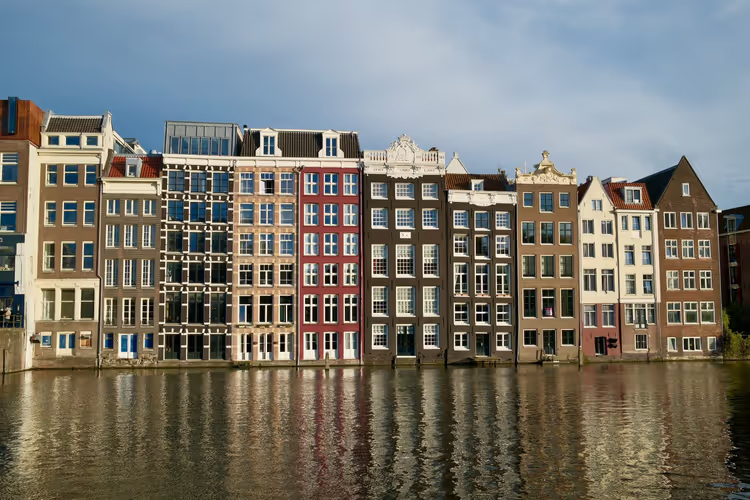
Amsterdam holds its title as the country's showcase for a reason. Old houses with tall roofs line the canals, and the Jordaan and De Pijp districts hide between them. Rijksmuseum, the Van Gogh Museum, and the Anne Frank House are all here too, so you get three major sights in one walk.
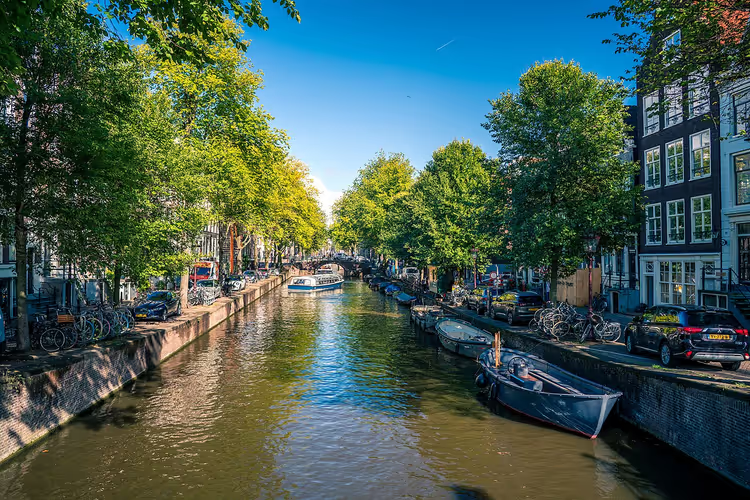 © Nan Palmero from San Antonio, TX, USA · CC BYPhoto: Nan Palmero from San Antonio, TX, USA, CC BY (https://creativecommons.org/licenses/by/2.0), Wikimedia Commons
The Van Gogh Museum covers everything you want to know about the artist. Book tickets online in advance and you'll skip the line at the entrance (as of 09/2026, museum tickets). In high season, get a morning entry.
The center is compact, so you can realistically walk it in one day without rushing or taking taxis. From Central Station to the main canals is an easy stroll, and trams connect the museums. You'll recognize the Jordaan district by its narrow streets and small galleries, while De Pijp is known for its market and lively cafes.
If you want to see the city from the water, take a one-hour canal cruise. The route starts at Central Station and passes neighborhoods with tall facades. In the evening, lights reflect in the dark water, and that's the calmest view of the city.
- What not to miss: Van Gogh Museum, Rijksmuseum, Anne Frank House, Jordaan district.
- How to get there: by train to Central Station, then on foot through the center.
- Who it's for: for a first trip to the Netherlands.
- Not for: those looking for quiet.
- The catch: in summer the center is very crowded, and accommodation costs more than anywhere else in the country.
Hotels in Amsterdam can be found on Trip.com.
2. Rotterdam
Rotterdam is the second largest city in the country, and its center was rebuilt from scratch after World War II. That's why there is little historic architecture here and a lot of bold modern design. It's the best choice for those who find Amsterdam too touristy.
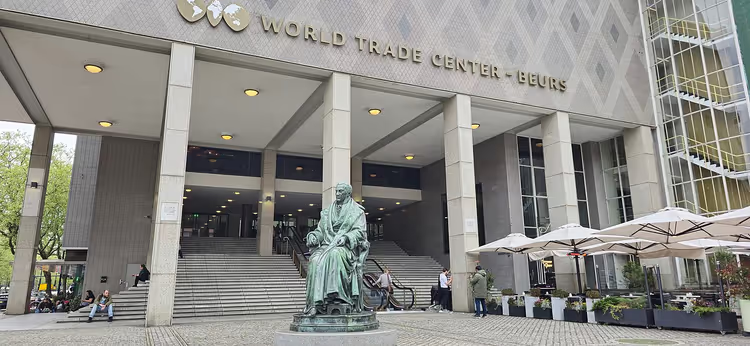 © Qwertzu111111 · CC BY-SAPhoto: Qwertzu111111, CC BY-SA (https://creativecommons.org/licenses/by-sa/4.0), Wikimedia Commons
Start with Markthal, a covered market with a huge ceiling mural. Nearby are the Kubuswoningen, yellow cube houses designed by architect Piet Blom and built starting in 1984 (as of 09/2026, visit Rotterdam). One of them is open as a museum apartment, and you can go inside.
Also worth seeing are the new Rotterdam Centraal, the old Grote of Sint-Laurenskerk church, and Museum Boijmans Van Beuningen. The port stretches from the center all the way to Hoek van Holland, so a harbor boat tour is almost mandatory here.
During the day the city feels young and businesslike, and in the evening life moves to the bars near Blaak station. You can easily combine the observation deck, the market, and the museum in one day if you start in the morning. Next to Markthal stands Witte Huis, one of the first high-rise buildings in Europe.
After walking around the harbor, head down to Oude Haven: cafes there are right by the boats, and you can see the new towers. That way you'll see both the old port and the modern city in a single evening.
- What not to miss: Markthal, Kubuswoningen, Museum Boijmans Van Beuningen.
- How to get there: by train to Rotterdam Centraal, then metro to Blaak station.
- Who it's for: lovers of modern architecture and museums.
- Not for: those looking for old narrow streets.
- The catch: the historic buildings were almost completely destroyed in the war, so you won't find an old town center here.
Hotels in Rotterdam can be found on Trip.com.
3. The Hague
The Hague is the third largest city in the country and also the seat of the royal family. In the center stands the Binnenhof complex with the Ridderzaal (Hall of Knights) and the Hofvijver pond. Binnenhof is currently under renovation, and parliament is temporarily meeting in another building. The view of the complex from the pond remains the city's most recognizable panorama.
At Mauritshuis you'll see Vermeer's "Girl with a Pearl Earring" and Rembrandt's "The Anatomy Lesson" (as of 09/2026, museum website). A combo ticket to the museum and the Prince William V Gallery costs €24 (as of 09/2026, tickets).
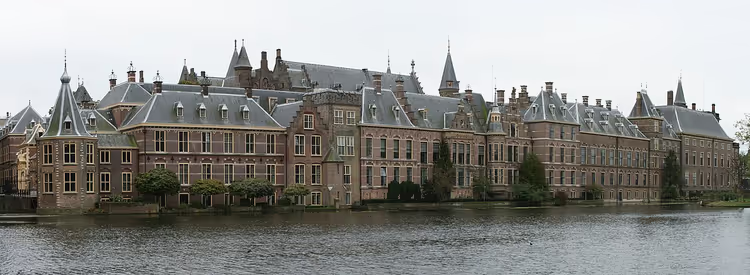 © Jesterhat84 · CC BY-SAPhoto: Jesterhat84, CC BY-SA (https://creativecommons.org/licenses/by-sa/3.0/nl/deed.en), Wikimedia Commons
In summer, Scheveningen beach is right next to the city, so you can combine the museum and the sea in one day. The tram from the center takes you to the shore in just a few stops, and in the evening you can return to the terraces near Binnenhof.
If you have time left, check out the Peace Palace (Vredespaleis), where the International Court of Justice operates. The Noordeinde royal palace and the park around it are also worth a short walk. The city itself feels calmer than Amsterdam, and that's its main advantage for families.
- What not to miss: Binnenhof, Mauritshuis, Scheveningen beach.
- How to get there: by train to Den Haag Centraal, the tram goes to the beach.
- Who it's for: lovers of museums and the sea.
- The catch: nightlife is quieter than in Amsterdam and Rotterdam.
Hotels in The Hague can be found on Trip.com.
4. Groningen
Groningen is located in the north of the country, surrounded by quiet fields and canals. It's a university city, and the student population gives it a lively character. The bicycle is the main form of transport here, as in most Dutch cities.
 © Henk Monster · CC BYPhoto: Henk Monster, CC BY (https://creativecommons.org/licenses/by/3.0), Wikimedia Commons
The symbol of the city has long been the Martinitoren tower, 97 meters tall (as of 09/2026, visit Groningen). From the observation deck you can see the whole city, and the climb goes up a narrow spiral staircase to the first gallery.
It's also worth visiting the Groninger Museum and walking around Grote Markt square. In the evening the city comes alive with bars, concerts, and student venues, so you won't be bored here.
The north of the country differs from the Randstad in its calm pace and the wide fields surrounding the city. If you have an extra day, rent a bike and head beyond the city limits: paths stretch along canals and farms. That way you'll see the part of the Netherlands that tourists skip.
- What not to miss: Martinitoren tower, Groninger Museum, Grote Markt.
- How to get there: by train from Amsterdam and Utrecht, the city has direct connections.
- Who it's for: young groups of friends and cycling enthusiasts.
- The catch: the city is far from the Randstad, so getting there takes more time.
Look for hotels in Groningen on Trip.com.
5. Utrecht
Utrecht feels smaller than it actually is. The medieval center and pedestrian quarters are made for long walks. The canals here have two-level werfkelders wharves, and that sets the city apart from Amsterdam.
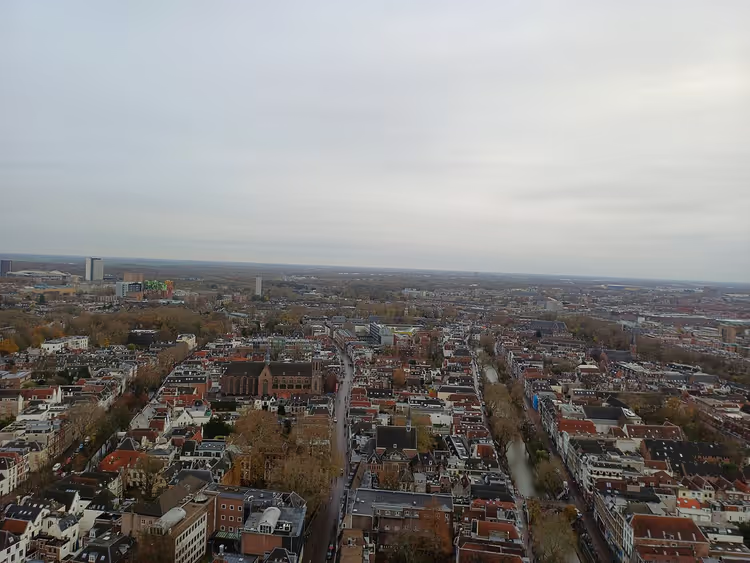 © Quahadi · CC BY-SAPhoto: Quahadi, CC BY-SA (https://creativecommons.org/licenses/by-sa/4.0), Wikimedia Commons
In the center stands the Domkerk cathedral with the Domtoren tower (as of 09/2026, Domkerk). Under Domplein square, DOMunder operates, where you descend into excavations and see 2,000 years of the city's history (as of 09/2026, DOMunder). Canal cruises also depart from here.
The best way to explore is along the canals, going down to the water by stone staircases. The lower level used to store goods, and now it houses cafes and small shops. That is exactly why Utrecht feels cozier and quieter than the capital.
If you are after museums, add Museum Speelklok, Centraal Museum, and the Spoorwegmuseum railway museum. Each one is small, and you can cover all three in a day without rushing.
- What not to miss: Domkerk, Domtoren tower, DOMunder.
- How to get there: by train to Utrecht Centraal, then walk from the station to the center.
- Who it's for: for those who love coziness and unhurried walks.
- The catch: fewer sights than in Amsterdam, the city wins you over with its atmosphere.
Look for hotels in Utrecht on Trip.com.
6. Maastricht
Maastricht lies in the far south, on the banks of the Meuse River. The Romans established a crossing here, so the city's history goes back centuries. The place is popular both with Germans from neighboring North Rhine-Westphalia and with the Dutch themselves.
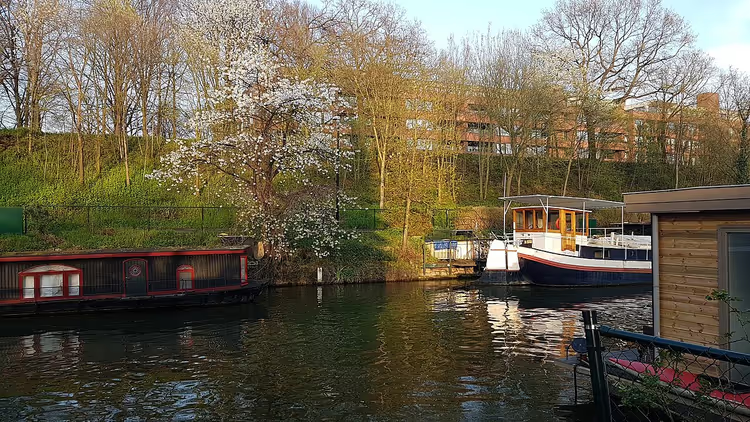 © Kleon3 · CC BY-SAPhoto: Kleon3, CC BY-SA (https://creativecommons.org/licenses/by-sa/4.0), Wikimedia Commons
Start at Vrijthof square, where the Sint Servaasbasiliek basilica and old houses stand (as of 09/2026, visit Maastricht). From the station to the square is about 1 km, or a ten-minute walk (per the map).
The gastronomy here is closer to French than anywhere else in the country, and it shows in the menus of local restaurants. End the day at Stadsbrouwerij Maastricht, where they brew local beer and hold tastings.
Near the square, the stone Sint Servaasbrug bridge survives, one of the oldest in the Netherlands. It is a pleasant walk across to the river and a view of the other bank.
- What not to miss: Vrijthof, Sint Servaasbasiliek, Stadsbrouwerij Maastricht.
- How to get there: by train to Maastricht Centraal, the center is next to the station.
- Who it's for: for foodies and lovers of a relaxed pace.
- The catch: the city sits away from the Randstad and the other spots on this list.
Look for hotels in Maastricht on Trip.com.
7. Leeuwarden
Leeuwarden is the capital of Friesland, and locals call it Ljouwert. It is a small student city with parks, canals, and historic buildings.
In the center stands the De Waag building by Waagplein square and the old Oldehove tower, which you can climb. Museum lovers should check out Keramiekmuseum Princessehof and the modern Fries Museum.
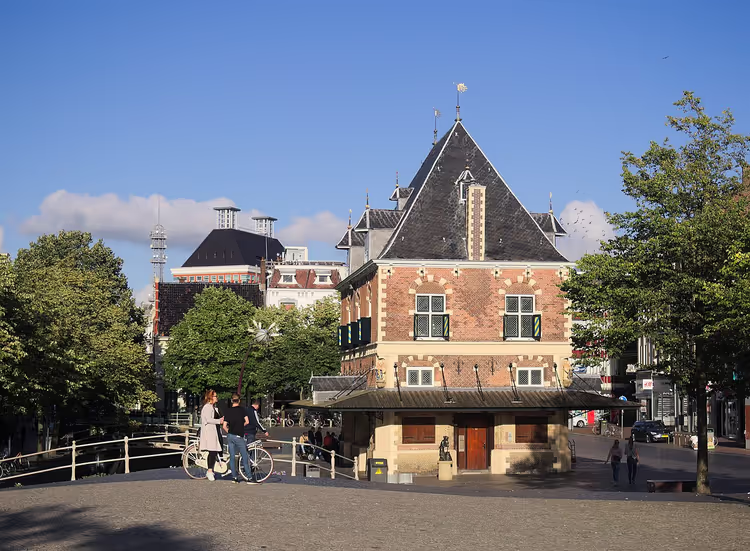 © C messier · CC BY-SAPhoto: C messier, CC BY-SA (https://creativecommons.org/licenses/by-sa/4.0), Wikimedia Commons
During the day you can cover the pedestrian center, and in the evening it is worth stopping by the waterside terraces. The pace here is noticeably calmer than in the country's larger cities.
From here it is convenient to head to the Frisian Islands, which stretch along the northern coast. The local culture differs from the rest of the country: the Frisians have their own language, their own holidays, and their own cuisine. If you want to understand the Netherlands more deeply, set aside a full day for the city.
- What not to miss: De Waag, Oldehove tower, Fries Museum.
- How to get there: by train from Amsterdam, and direct trains run from Groningen.
- Who it's for: for families and history lovers.
- The catch: the city is small, and a full day is more than enough.
Look for hotels in Leeuwarden on Trip.com.
8. Helmond
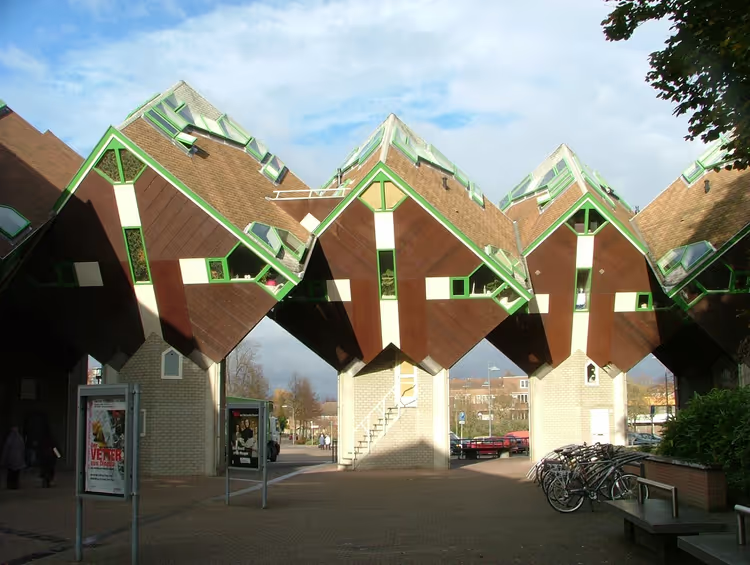
Helmond lies in the province of North Brabant and remains a rarity on the country's tourist lists. A canal runs through the center, lined with cafe terraces and old houses. There are almost no tourists here, so you feel like a guest rather than part of a crowd.
 © Geert C. Smulders at nl.wikipedia · CC BY-SAPhoto: Geert C. Smulders at nl.wikipedia, CC BY-SA (http://creativecommons.org/licenses/by-sa/3.0/), Wikimedia Commons
Start with Kasteel Helmond, a historic moated castle with towers and a drawbridge. The city also has its own Kubuswoningen, the same cube houses you find in Rotterdam.
The best way to explore the city is by bike: that way you can cover the canal, the castle, and the center in a single ride. If you want a quiet Dutch landscape without the crowds, this is the place.
Green fields and small farms surround the city, so the trip easily turns into a relaxed day in the countryside. In the evening, the center stays lively thanks to locals rather than tourists. That rhythm is rare in the country's popular cities.
- What not to miss: Kasteel Helmond, the cube houses, the canal in the center.
- How to get there: by train from Eindhoven and Rotterdam, then walk from the station to the center.
- Who it's for: architects and photographers.
- The catch: the city is small, half a day is enough to see it.
Find hotels in Helmond on Trip.com.
9. Eindhoven
Eindhoven grew rich on the Philips factory, founded in the late 19th century. It went from a village to the country's industrial and design hub. Today it's a city with a strong museum and design scene.
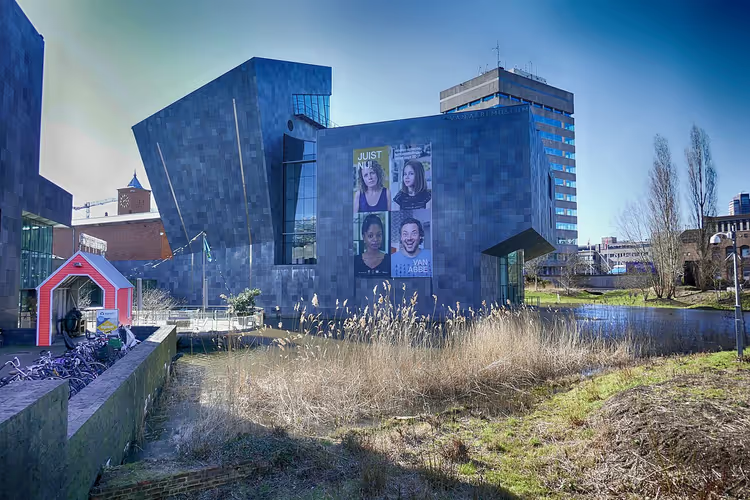
The Philips Museum shows the company's journey from incandescent lamps to radio and television. At the Van Abbemuseum you'll see works by Picasso and other modern art masters.
 © Jan Geerling · CC BY-SAPhoto: Jan Geerling, CC BY-SA (https://creativecommons.org/licenses/by-sa/4.0), Wikimedia Commons
Visit the Strijp-S design district in the evening, when the former factory buildings light up. It's the best way to end the trip if contemporary culture is your thing.
The city still lives its engineering history: design exhibitions and urban festivals take place here. One day is enough for a short stop, but if you want to do the museums properly, leave two.
- What not to miss: the Philips Museum, Van Abbemuseum, the Strijp-S district.
- How to get there: by train from Amsterdam and Rotterdam, the station is next to the center.
- Who it's for: design lovers and industrial history fans.
- The catch: it's not a classic tourist city, in the evening life revolves around the design districts.
Find hotels in Eindhoven on Trip.com.
⁉️🤔 Frequently asked questions
How many days do you need for each city?
Allow two days for Amsterdam and Rotterdam: the museums and neighborhoods take time. The Hague, Utrecht, and Maastricht each need one full day with some room for the evening. Groningen, Leeuwarden, Helmond, and Eindhoven can be seen in a day if you start in the morning. That way you don't rush and you cover the main sights.
Where should I go if I've already been to Amsterdam?
Go for Rotterdam or The Hague without hesitation. Rotterdam shows you modern architecture and the port, The Hague gives you the royal center, the Mauritshuis, and the seaside beach at Scheveningen. For a quiet evening, Utrecht and Helmond work well: fewer tourists and calmer canals. Each option deserves its own trip.
How do you get between cities?
The train remains the most convenient way to travel. Amsterdam, Utrecht, The Hague, and Rotterdam are connected by frequent services, so transfers between them are short. Groningen and Leeuwarden are farther away, so getting there takes longer. It's worth buying tickets in advance, especially for weekends.
What time of year is best to go?
Late spring and early fall offer mild weather and fewer people. In summer the cities are full of tourists, but the beach, terraces, and evening canal walks are all open. In winter you get quiet streets and holiday lights. For a first trip, choose May or September.
Where should I stay for a few days?
Amsterdam or Utrecht make a convenient base: from there you can easily reach most cities on the list. For a quieter stay, The Hague and Maastricht are good options. In Helmond and Leeuwarden accommodation is cheaper, but getting to the other places takes longer. Compare options in advance so you don't overpay.
In short: what to book
Nine cities in the Netherlands cover different interests: museums, port architecture, canals, and quiet old centers. For a first trip, choose Amsterdam; for a modern perspective, add Rotterdam; and for peace and quiet, head to Helmond and Leeuwarden. If you only have two or three days, build your route around Amsterdam and Utrecht. Eindhoven and Helmond are fine for a short stop, while Amsterdam and Rotterdam each deserve two days. Book in advance, and the trip will go smoothly.

A small editorial team writing guides for independent travel. We travel ourselves, but we haven’t been everywhere, so we check prices, opening hours and how to get there against official sources.