




King's Day in the Netherlands: why the whole country wears orange on April 27
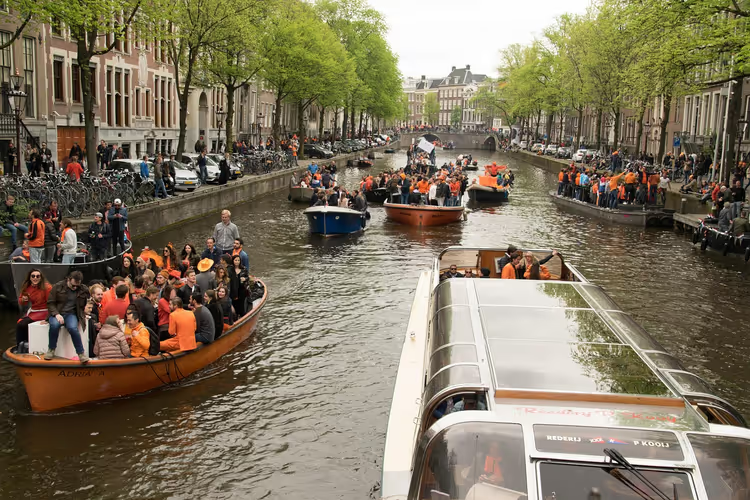
On April 27, the Netherlands turns orange for one day. The royal family travels to a new city, city centers are closed to cars, and everyone from schoolchildren to retirees sells things on the streets. The celebration lasts two days, and the main parties kick off the evening before, on Koningsnacht.
King's Day (Koningsdag) is a national public holiday honoring the birthday of King Willem-Alexander. He was born on April 27, 1967, and since 2014 the holiday has been fixed to that date. The only exception: if April 27 falls on a Sunday, the celebration moves one day earlier, to the 26th (according to the Royal House of the Netherlands, 09/2026).
Ad: this article contains affiliate links, we earn a commission if you book through them, at no extra cost to you.
 © Mariia Khristosenko · CC BY-SAPhoto: Mariia Khristosenko, CC BY-SA (https://creativecommons.org/licenses/by-sa/4.0), Wikimedia Commons
What King's Day is
💡 In short:
- The date is tied to the king's birthday and shifts only when it falls on a Sunday.
- Wear orange. It is the color of the House of Orange, not a random party dress code.
- Flea markets, concerts, and fairground rides take over city centers.
- Parties start the evening before, on Koningsnacht.
- In 2027, the royal family will visit Lelystad (according to the official website of the Royal House, 09/2026).
 © KimonBerlin · CC BY-SAPhoto: KimonBerlin, CC BY-SA (https://creativecommons.org/licenses/by-sa/2.0), Wikimedia Commons
Until 2014, the holiday was called Queen's Day and took place on April 30, Queen Beatrix's birthday. Willem-Alexander ascended the throne in 2013 and moved the date to his own birthday. Since then, April 27 has been an official public holiday across the country (according to the royal family's website, 09/2026).
A public holiday means banks, offices, and some shops are closed. Cafes, kiosks, and, importantly, public transport keep running.
Why everyone wears orange
Orange in the Netherlands has long stopped being just a color. It comes from the House of Orange (Huis van Oranje), the dynasty from which the Dutch kings descend.
 © Nan Palmero from San Antonio, TX, USA · CC BYPhoto: Nan Palmero from San Antonio, TX, USA, CC BY (https://creativecommons.org/licenses/by/2.0), Wikimedia Commons
William of Orange led the revolt against Spanish rule and is considered the founding father of the independent Netherlands. Orange flags and ribbons became the mark of his supporters. Later, the color became established as a symbol of national unity and pride.
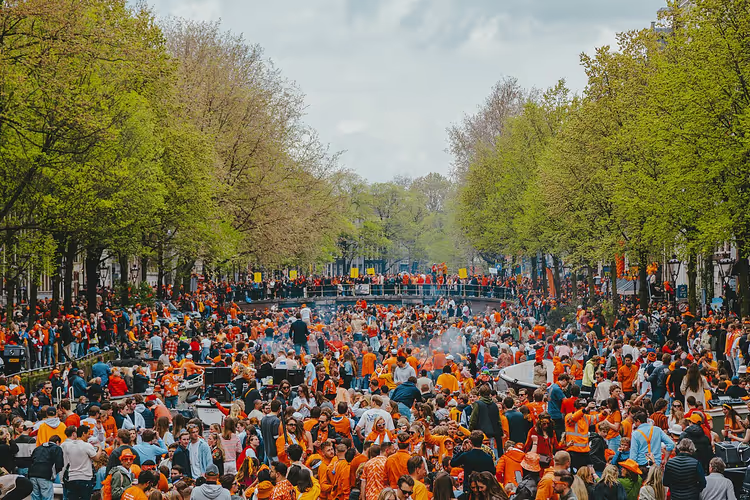
Today, orange is worn by everyone, everywhere. You will see it on wigs, glasses, costumes, and strollers. Many people paint their cheeks, tie flags around their shoulders, and put on orange T-shirts.
How the country celebrates
The holiday's main tradition is called vrijmarkt, a free flea market. On this day, anyone can sell on the street, and no permit is needed. Children sell old toys, adults bring out dishes and books, and nearby people make homemade waffles and donuts.
Flea markets open in most cities and villages. Sellers set their own prices, so haggling is appropriate and even expected. Fairground rides, shooting galleries, and areas with Dutch games operate separately. If you want to see the classic picture of the holiday, head to the center at opening time.
The classic weekend route leads to Utrecht. First you walk through the local vrijmarkt, then you go down to the canals and watch the decorated boats. In the evening, musicians play on Domplein, Lucasbolwerk, Mariaplaats, Neude, and Janskerkhof squares. Go in the morning: before noon the market is noticeably less crowded than at one in the afternoon.
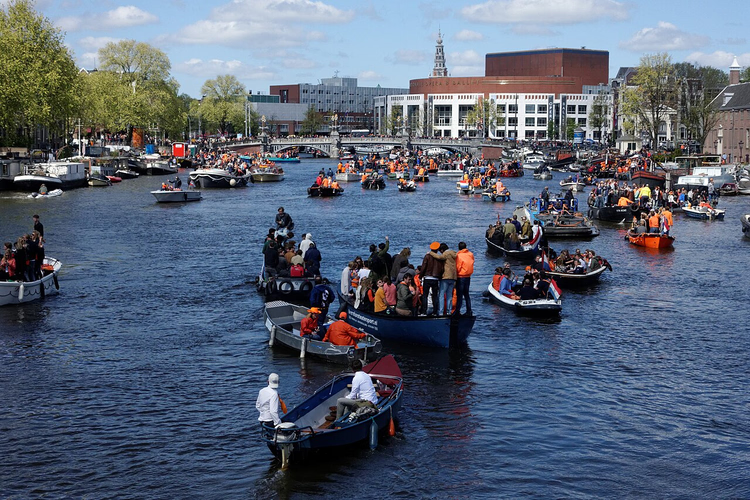
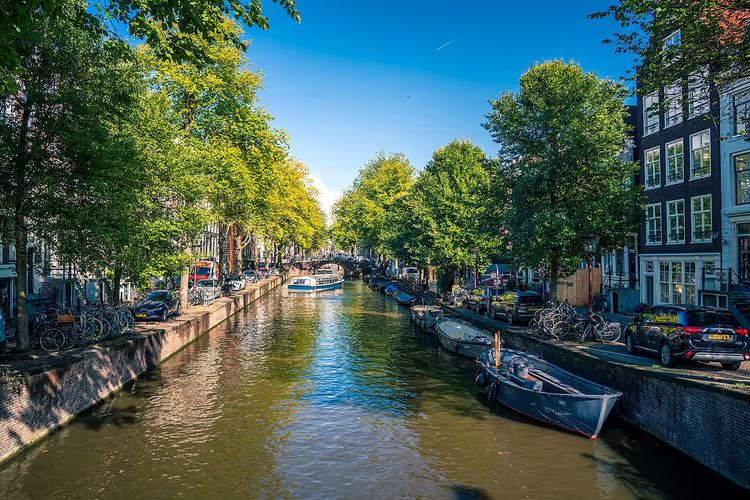
In Amsterdam, boat parades along the canals add to the markets. If you prefer a guide, check out Amsterdam tours on GetYourGuide.
Koningsnacht: the night before the holiday
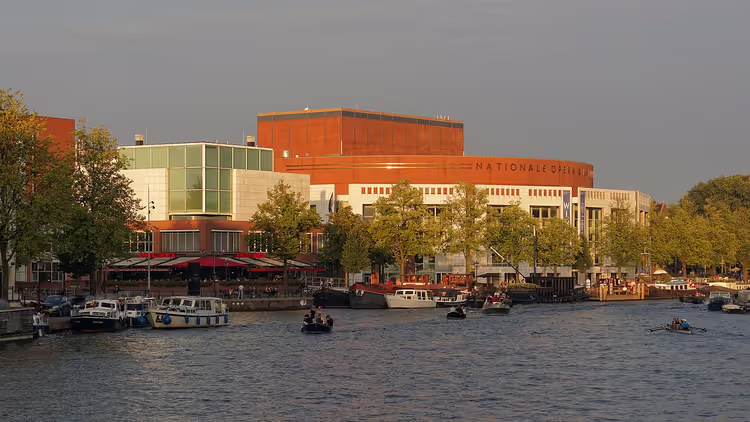
The celebration starts the evening before and is called Koningsnacht, the night before King's Day. Bars and clubs open their doors, live bands play on the streets, and DJs perform in the squares.
 © C messier · CC BY-SAPhoto: C messier, CC BY-SA (https://creativecommons.org/licenses/by-sa/4.0), Wikimedia Commons
Some of the festivals on the streets are free, and that is the main bonus of the evening. In The Hague The Life I Live takes place, in Deventer Koningsfestival Deventer plays on De Brink square, in Eindhoven Royal Dutch performs on Stadhuisplein, and in Arnhem people gather for Foute Oranjefeest. Entry to most street venues is free.
If you prefer a quiet evening, stop by a corner bar or stroll through the center. By midnight the streets turn into one big party anyway, and finding a free spot in a cafe becomes difficult.
Where the royal family goes
Every year the royal family chooses a new city with regional significance. The official program takes place there: a parade, performances, and a meet-and-greet with residents along the route. The city prepares in advance and shows guests its main sights.
In 2027 the family will travel to Lelystad, in 2026 they visited Dokkum (Friesland), in 2025 Doetinchem, and before that Emmen, Rotterdam, and Maastricht (according to koninklijkhuis.nl, 09/2026).
The city visit is broadcast by the NOS television channel, so you can watch the program from anywhere in the country. If you happen to be near the host city, arrive at the route early, because spots along the barriers are taken from the morning.
Transport and getting around
All the main events take place in city centers. Because of markets, parades, and festivals, streets are closed off, and large cities get very crowded. That is why on King's Day it is more convenient to get around by train and metro, and it is better to leave your car outside the center.
The national carrier NS introduces an orange timetable: trains run more often and become longer (according to NS, 09/2026). The busiest routes are those toward Amsterdam, Arnhem, Breda, Eindhoven, Rotterdam, Utrecht, and Zwolle. Plan your return trip in advance, because evening trains fill up quickly.
Tickets for train travel across Europe are convenient to book in advance: check schedules and prices on Trip.com.
⁉️🤔 Frequently asked questions
When is King's Day celebrated?
The holiday is tied to April 27, the birthday of King Willem-Alexander. If that date falls on a Sunday, the celebration takes place a day earlier. In 2027 King's Day will take place on Tuesday, April 27 (according to Koninklijk Huis, 09/2026).
Why does everyone wear orange on this day?
Orange comes from the House of Orange (Huis van Oranje), the dynasty of Dutch kings. Today it is a symbol of national unity.
Do I need to buy tickets for King's Day?
Entry to most street venues is free. Flea markets, parades, concerts in squares, and attractions are open to everyone. You only have to pay for individual club parties, food, and drinks.
What is Koningsnacht?
That is the name for the night before King's Day. On the evening before, parties start in bars, clubs, and on the streets.
How do you get around the country on King's Day?
City centers are closed to cars, so the train is more convenient than driving. The carrier ns.nl runs trains more frequently on this day.
In short: what to book
King's Day takes place on the streets, but the trip is worth planning. If you have one day, head to the center of Amsterdam: markets, canals, and boat parades are all nearby. If you have two days, add Utrecht with its canals and squares.
If you are traveling with children, attractions and the vrijmarkt will suit you. If quiet matters, choose a small town and arrive when the market opens, while the streets are still empty.
Book accommodation in central Amsterdam and Utrecht in advance on Trip.com.

A small editorial team writing guides for independent travel. We travel ourselves, but we haven’t been everywhere, so we check prices, opening hours and how to get there against official sources.