
















11 Places in Malaysia: from Petronas Towers to the jungles of Borneo
Malaysia packs two different trips into one country. On the peninsula, you get the skyscrapers of Kuala Lumpur, the tea plantations of the highlands, and the colonial quarters of Malacca. Across the South China Sea, the rainforests of Borneo begin, with orangutans and the reefs of Sipadan.
Planning a trip like this is trickier than it looks. Malaysia Airlines and AirAsia fly between Kuala Lumpur and Kota Kinabalu. You can cover the peninsula by train and bus.
Below are 11 places worth putting on your itinerary. The information was checked in September 2026 against official sources (as of 09/2026, Tourism Malaysia portal).
Ad: this article contains affiliate links, we earn a commission if you book through them, at no extra cost to you.
What to see in Malaysia
💡 In short:
- 11 places: Kuala Lumpur, the Petronas Towers, Batu Caves, Langkawi, Penang, the Cameron Highlands, Borneo, Taman Negara, the Perhentian Islands, Tioman, and Malacca.
- Route: the peninsula by train and bus, Borneo by plane from Kuala Lumpur.
- Season: the west coast from December to February, the east coast from March to October.
- Prices, opening hours, and travel times: 09/2026, checked on the country's official tourism portal.
Peninsular Malaysia is more compact than it looks on the map. From Kuala Lumpur you can reach the Batu Caves in half an hour and Malacca in a couple of hours.
1. Kuala Lumpur: skyscrapers and street food
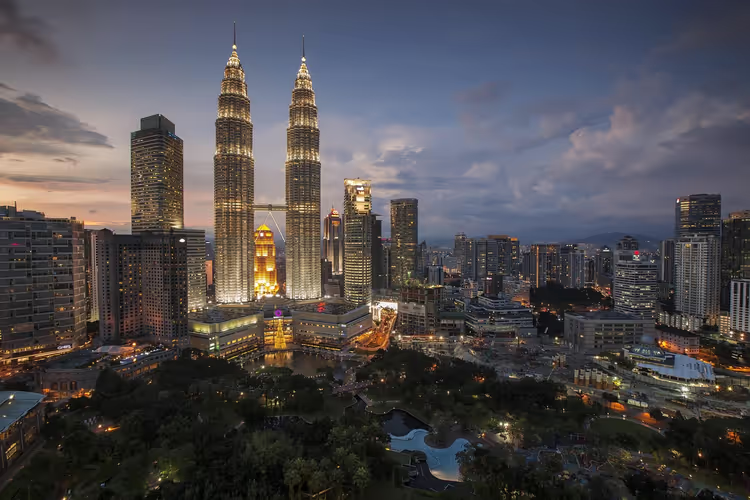
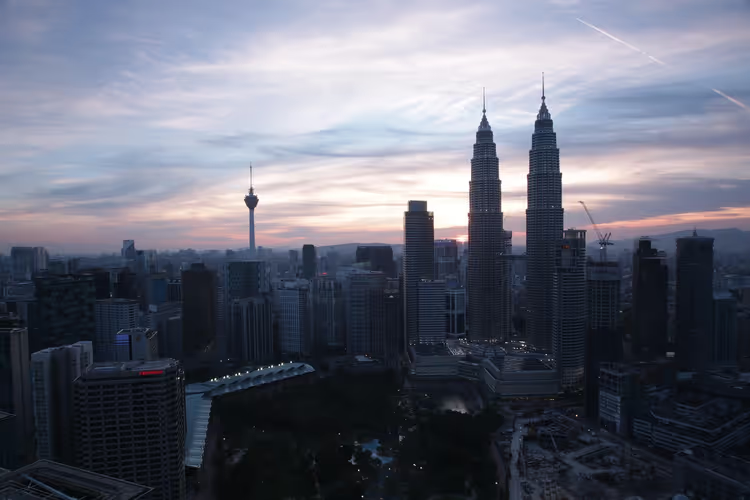
The capital brings together skyscrapers, markets, and mosques in one city. Two main landmarks are visible from anywhere in the center: the Petronas Towers, 452 meters tall, and the KL Tower, 421 meters tall (according to the country's tourism office).
 © *angys* · CC BY-SAPhoto: *angys*, CC BY-SA (https://creativecommons.org/licenses/by-sa/4.0), Wikimedia Commons
In the evening, head to Jalan Alor. The street turns into a long open-air kitchen where satay, noodles, and seafood are grilled. For shopping, go to Bukit Bintang and Pavilion, and for tea and artisan goods, to Jalan Petaling in Chinatown.
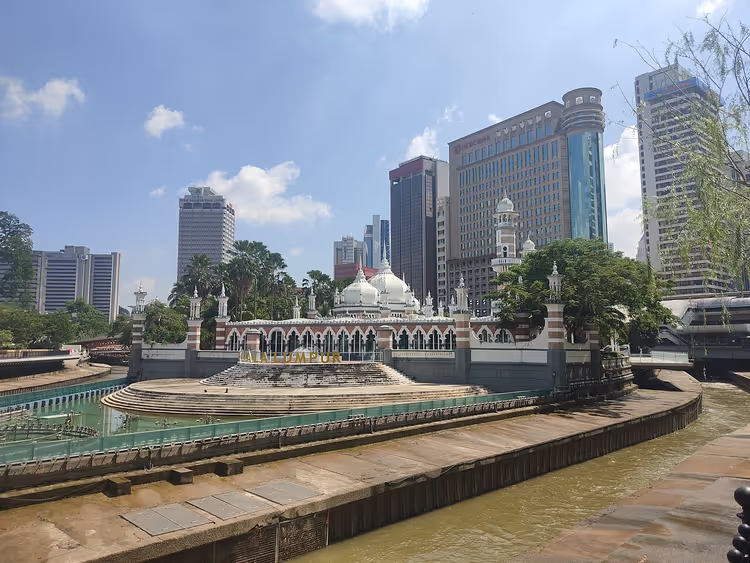
In the morning, take a look at Masjid Jamek and Merdeka Square, where the country's independence was proclaimed. A pedestrian route runs along the river between them, and you can walk it in an hour without rushing.
For families with kids, Genting Highlands with its high-altitude amusement park is a good fit. For panorama lovers, an evening loop around KLCC Park at the foot of the towers is enough, where the lights and fountain come on.
Places in the capital worth checking out:
KLCC Park for an evening walk around the towers.
Chow Kit for a market where locals shop.
Dataran Merdeka and the colonial buildings around the square.
Genting Highlands for an amusement park an hour's drive away.
The catch: during the day the center is hot and humid, so the city is more comfortable to explore in the morning.
Hotels in the capital are easy to compare on Trip.com. The center is compact, and from Bukit Bintang you can walk to the towers in 20 minutes.
2. The Petronas Towers and the observation deck
The Petronas Towers opened in 1999 and remained the tallest building in the world until 2004 (according to Malaysia's official tourism website). The project was commissioned by the Petronas oil company, which still occupies part of the floors today. From anywhere in KLCC you'll see the two spires connected by a sky bridge.
 © Smuconlaw · CC BY-SAPhoto: Smuconlaw, CC BY-SA (https://creativecommons.org/licenses/by-sa/4.0), Wikimedia Commons
Inside, each tower has 39 elevators, plus a science museum, a philharmonic concert hall, and an art gallery. Visitors are allowed up to the Sky Bridge between the 41st and 42nd floors and to the observation deck on the 86th floor. The 60-meter bridge hangs 172 meters above the street (as of 09/2026, Petronas Towers guide).
Access to the top is by time slots, and the daily limit is 1,600 tickets. Evening sessions sell out first, so buy your ticket in advance. The panorama from the 86th floor outdoes anything you've seen from the ground and is worth the time.
- Address: KLCC, Jalan P. Ramlee, Kuala Lumpur.
- Hours: daily, entry by time slot; you pick the exact time when purchasing.
- Price: around 80 MYR for an adult ticket (as of 09/2026, tickets and prices on the Malaysia portal).
- The catch: available slots run out fast, and you can't move your booking to another day.
Petronas Towers tickets with a time slot are sold on GetYourGuide. You choose your time in advance and skip the ticket office line.
3. Batu Caves near Kuala Lumpur
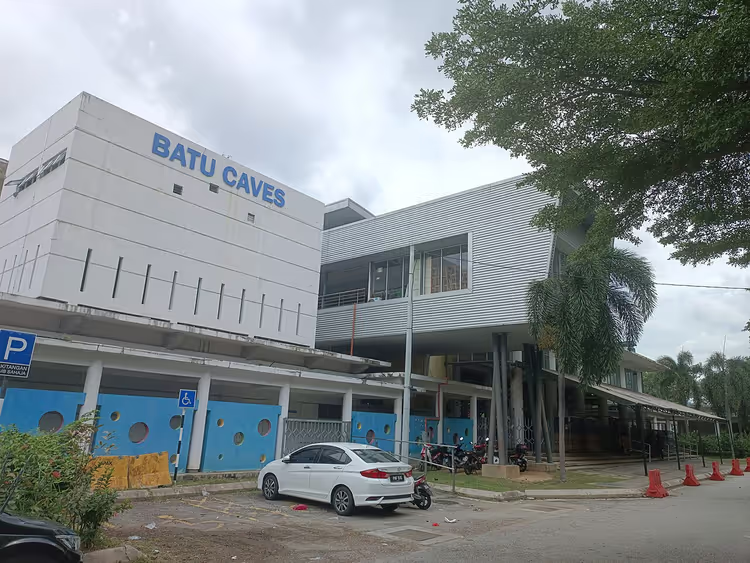
The Batu Caves are in Gombak, 13 km from the city center. The KTM Komuter train takes about 30 minutes from KL Sentral, and you get off right at the foot of the stairs (according to Malaysia's tourism portal).
 © *angys* · CC BY-SAPhoto: *angys*, CC BY-SA (https://creativecommons.org/licenses/by-sa/4.0), Wikimedia Commons
272 steps lead up to the main temple cave. At the entrance stands a 42-meter golden statue of Lord Murugan, visible from the road long before you start climbing. Entry to the main cave is free; the side caves charge a separate fee.
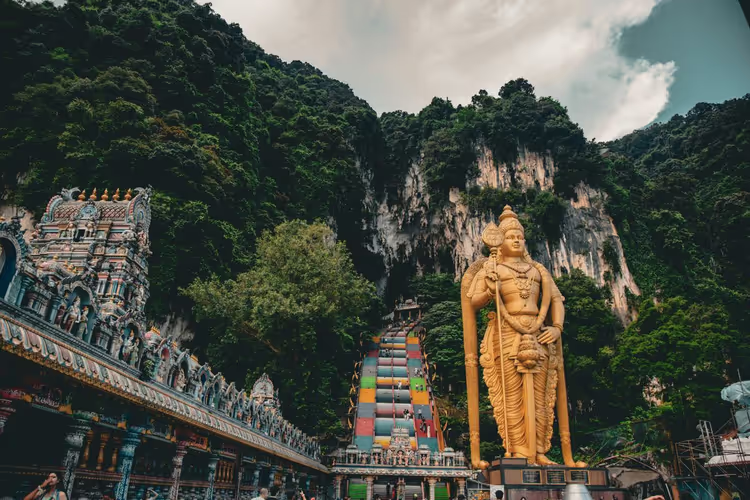
The caves are still an active temple, so cover your shoulders and knees. Leave short shorts and skirts at the hotel. It's damp and slippery inside, so choose shoes with non-slip soles.
The busiest time is during the Thaipusam festival in late January or early February. Hundreds of thousands of pilgrims walk to the caves carrying decorated structures on their shoulders. If you want to see the ritual, come on those days, but be prepared for crowds.
- How to get there: KTM Komuter train from KL Sentral, about half an hour.
- Cost: main cave free, side caves for a separate fee.
- Clothing: covered shoulders and knees, non-slip shoes.
- The catch: the climb in the heat is tough, and during Thaipusam it's extremely crowded.
You can book a guided tour with transfer from Kuala Lumpur on GetYourGuide. The group leaves in the morning and returns to the city by lunchtime.
4. Langkawi Island: cable car and beaches
Langkawi lies in the far north of Malaysia, near the border with Thailand. The island is well suited to a beach vacation: warm water, sand, and mangroves in the eastern part. The best swimming is at Cenang, Pasir Tengkorak, and Tengah Beach.
 © CEphoto, Uwe Aranas · CC BY-SAPhoto: CEphoto, Uwe Aranas, CC BY-SA (https://creativecommons.org/licenses/by-sa/3.0), Wikimedia Commons
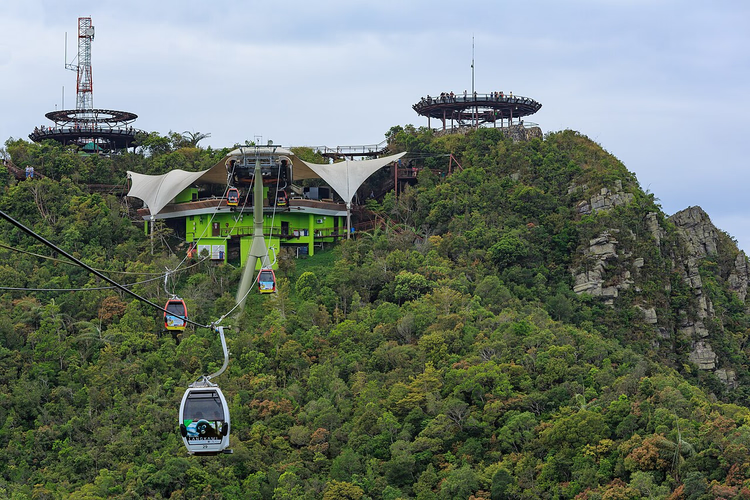
The 687-meter Mount Mat Cincang is reached by cable car. The ride takes about 15 minutes, and at the top you'll find the Sky Bridge, a suspension bridge over the jungle (according to Panorama Langkawi).
On the west side of the island there's Pasir Hitam beach with black sand. This sand comes from minerals, not volcanic lava. People come here for photos in the morning, while the light is soft and there's no wind.
Mangrove forest tours are done by boat: the boat goes through channels between tree roots, and you see sea eagles, monkeys, and monitor lizards. The route takes two to four hours, and some boats stop at a floating fish farm.
- How to get there: fly to Langkawi or take a ferry from Kuala Perlis.
- What to see: cable car, Sky Bridge, mangrove forests, Pasir Hitam.
- Who it's for: those who want to combine beach and nature.
- The catch: there's no railway on the island, so you get to Langkawi by plane or ferry.
Book your cable car and Sky Bridge tickets in advance on GetYourGuide. That way you get on the first ride up without waiting in line at the ticket office.
5. Penang Island and Georgetown
Penang lies off the west coast of the peninsula, and the easiest way to get there is by train. The KTM ETS train takes you from Kuala Lumpur to Butterworth, and from there the Rapid Ferry goes to the pier in Georgetown (as of 09/2026, ferry guide). The old crossing over the strait is running again, so the transfer takes less time than the bus.
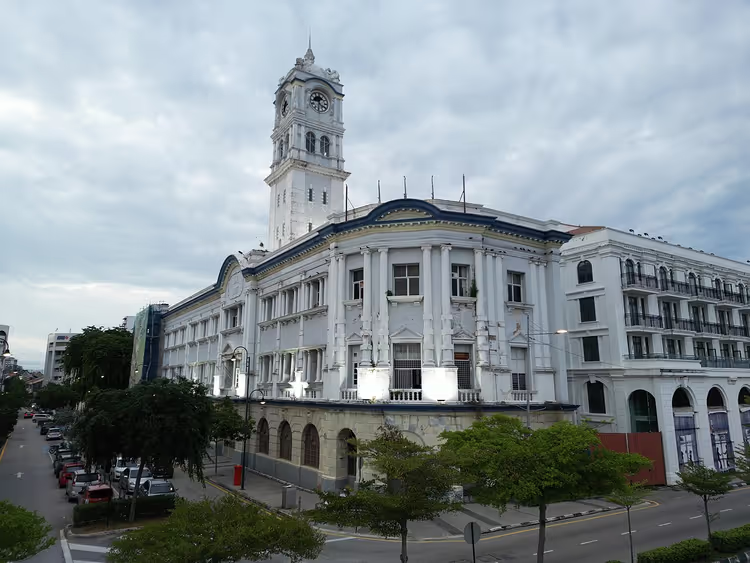
Georgetown blends Malay, Chinese, and Indian cultures. Mosques, Hindu temples, churches, and colonial mansions stand within a few steps of each other. Love Lane, Chulia Street, Armenian Street, and the Little India quarter show this mix better than any museum.
Penang's cuisine is considered the best in the country. Try laksa, Indian naan, and dim sum, and in the evening head to the street hawker centers. Portions are small, so you can sample several dishes in one evening.
 © HundenvonPenang · CC BY-SAPhoto: HundenvonPenang, CC BY-SA (https://creativecommons.org/licenses/by-sa/4.0), Wikimedia Commons
Photographers should set aside a separate day for street art. Murals and installations are scattered throughout Georgetown, and some of them are hidden in courtyards. The Street Art Penang project publishes two walking routes of the works, and you can cover them in a couple of hours.
Penang Hill rises above the city. The funicular takes you to the top in a few minutes, to the viewing platforms and cooler air. There are forest trails at the top, and you can walk back down if you still have the energy.
Penang Hill and the funicular ride up.
Kek Lok Si Temple, one of the largest in Malaysia.
Penang National Park with tropical rainforest.
Monkey Beach and Turtle Beach.
Moongate 5 and jungle trekking.
Komtar with The Top observation deck.
Camera Museum in Georgetown.
Who it's for: those coming for food, street art, and colonial architecture.
Guided tours of Georgetown can be found on GetYourGuide. With a guide you'll get into alleys that are easy to miss on your own.
6. Cameron Highlands: tea plantations
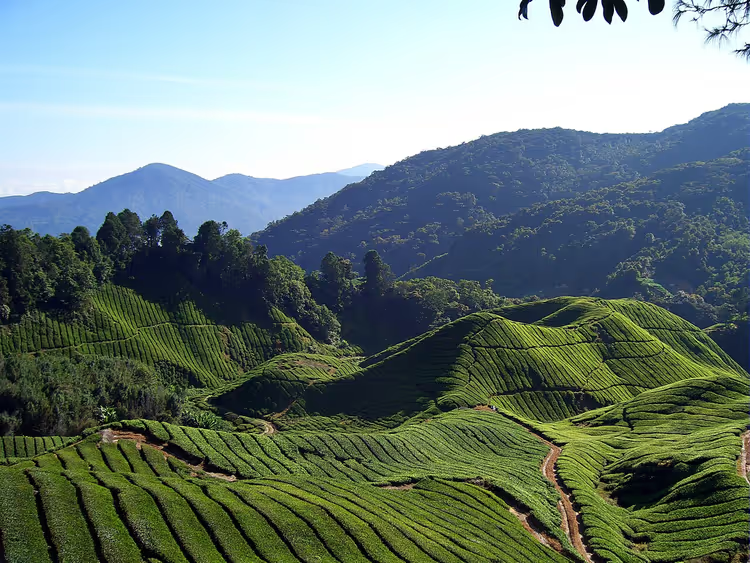
The Cameron Highlands lie 3 to 4 hours north of Kuala Lumpur, at an altitude of about 1,800 meters (as of 09/2026, Easybook). People come here for the cool air, tea plantations, and waterfalls. The road winds in switchbacks, and some bus passengers doze off to avoid watching the turns.
 © Will Ellis from Reading, England · CC BYPhoto: Will Ellis from Reading, England, CC BY (https://creativecommons.org/licenses/by/2.0), Wikimedia Commons
Buses from the capital run several times a day, and it's convenient to buy tickets in advance. You'll spend those three and a half hours on the road, but you'll arrive on a plateau where you need a jacket in the evening.
Most tourists come to the BOH plantations. Here they show the entire journey of the leaf, from picking to packing, and let you taste the fresh harvest in the tea house. Nearby there are strawberry farms, vegetable gardens, and viewpoints over the valleys.
Look for accommodation in Brinchang or Tanah Rata. Both towns sit close together and work well as a base for walks, and it's easy to get between them by local taxi. You can book a bus seat and check the schedule on Easybook.
- What to see: BOH plantations, waterfalls, strawberry farms, viewpoints.
- Who it's for: those who want cool air after the heat of Kuala Lumpur.
- The catch: the winding road, and it often rains on the plateau.
A day trip from Kuala Lumpur with lunch can be booked on GetYourGuide. The guide takes the group through plantations, waterfalls, and a market, and brings you back in the evening.
7. Borneo: orangutans and jungle
Borneo is one of the three largest islands in the world, and three countries share it. The Malaysian part includes two states: Sabah with its capital Kota Kinabalu, and Sarawak with Kuching. Both territories are worth treating as separate destinations and setting aside several days for each.
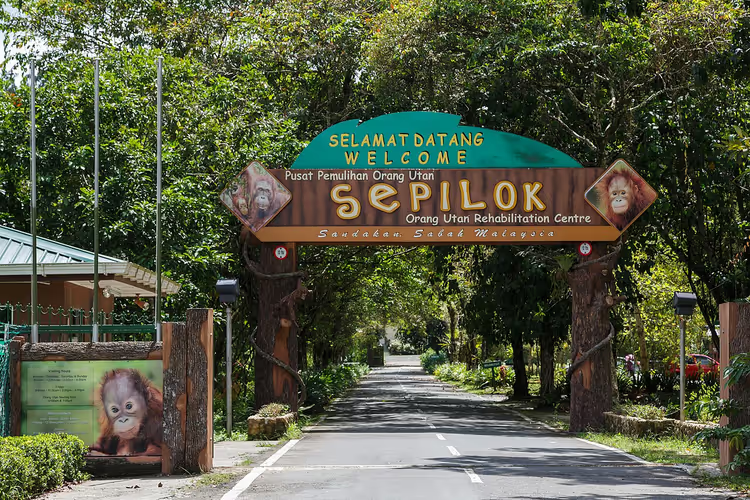 © CEphoto, Uwe Aranas · CC BY-SAPhoto: CEphoto, Uwe Aranas, CC BY-SA (https://creativecommons.org/licenses/by-sa/3.0), Wikimedia Commons
In Sabah, you'll find Mount Kinabalu at 4,095 meters and the underwater world of Sipadan Island. The Sepilok reserve here also prepares orangutans for life in the wild (according to the official country guide). In Sarawak, people visit the caves of Mulu National Park, proboscis monkeys in Bako National Park, orangutans in Semenggoh, and Iban villages with longhouses.
The island is only reachable by plane. Flights from Kuala Lumpur are operated by Malaysia Airlines, AirAsia, and Batik Air, and the flight takes about two and a half hours. Domestic flight tickets are usually cheap, so you can easily fit Borneo into a peninsula itinerary.
The jungles of Borneo are older than the Amazon, and they're home to species found nowhere else. If you're going for wildlife, plan at least four days: without overnight stays in the parks, you'll only see the edges of the forest.
Bako National Park for proboscis monkeys.
Mulu National Park with its enormous caves.
Kota Kinabalu as a base for Sabah.
Kuching and its historic center.
Mount Kinabalu and the climb to its summit.
Sipadan Island for diving.
Sepilok and Semenggoh for meeting orangutans.
Danum Valley for real jungle.
Sarawak Cultural Village near Kuching.
The catch: flying to Borneo adds to your costs.
A beginner diving tour with two dives can be booked on GetYourGuide. An instructor works with a group near Sapi Island off Kota Kinabalu, and no experience is required.
8. Taman Negara national park
The oldest forest on the planet grows in the center of the peninsula: the Taman Negara jungle is about 130 million years old (according to the tourism office guidebook). People go there for trekking, overnight stays in the forest, and walks across canopy suspension bridges.
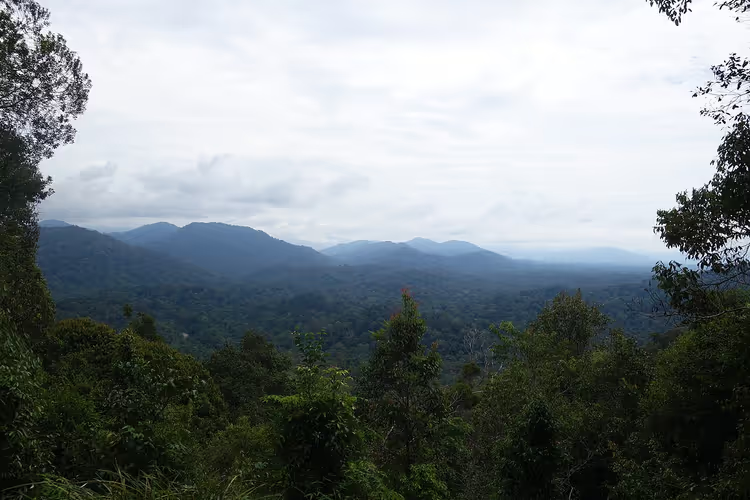 © Danielt. · CC BY-SAPhoto: Danielt., CC BY-SA (https://creativecommons.org/licenses/by-sa/4.0), Wikimedia Commons
Most routes start in the village of Kuala Tahan by the river. From here, multi-day trails, river trips, and hikes to viewpoints set off. You'll encounter macaques and birds on the trails, and tigers and bears live deeper in the park.
- Where to stay: Kuala Tahan at the park entrance.
- What to see: canopy suspension bridges, waterfalls, caves.
- Who it's for: those ready for humidity and early starts.
- The catch: without an overnight stay in the park, you'll only see the entrance area, so you need at least two nights.
A tour from Kuala Lumpur with an overnight stay in the jungle and meals is available on GetYourGuide. The group leaves the capital in the morning and returns the next day.
9. Perhentian Islands
The Perhentians consist of two islands off the east coast: Besar and Kecil. Besar is larger and quieter, attracting families and those looking for comfort. Kecil has a nightlife scene, and Long Beach is considered the main beach for budget travelers.
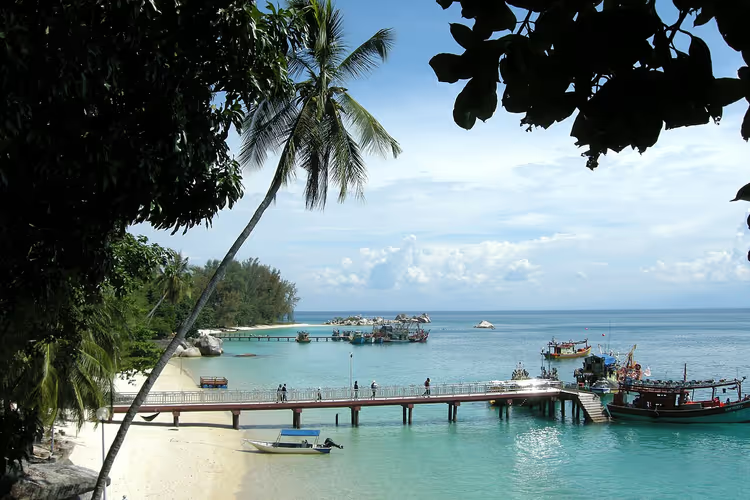 © Vyacheslav Argenberg · CC BYPhoto: Vyacheslav Argenberg, CC BY (https://creativecommons.org/licenses/by/4.0), Wikimedia Commons
During the day, you dive, snorkel, or head into the jungle for trekking. In the evening, beachfront restaurants open with fish and seafood, and dinner here costs less than in Kuala Lumpur.
Boats depart from Kuala Besut, and the trip across the water takes 30 to 45 minutes. A round-trip ticket costs 70-80 MYR (as of 09/2026, besutferry). The jetty is small, and in high season boats leave as they fill up.
Book accommodation in advance: the choice of hotels on both islands is limited, and in July and August there are almost no available rooms.
- Who it's for: Besar for families, Kecil for young people and budget trips.
- How to get there: boat from Kuala Besut, 30 to 45 minutes.
- Season: March through October.
- The catch: in winter, boats are often canceled, and some hotels close until spring.
For Perhentian hotels, check Trip.com. This way you can compare options on both islands and see the price difference.
10. Tioman Island
Tioman lies off the east coast in the state of Pahang and is considered one of Malaysia's best dive destinations. The Tiger Reef, Renggis, and Chebeh reefs attract divers, while Salang, ABC, and Juara beaches are suited to a quiet getaway.
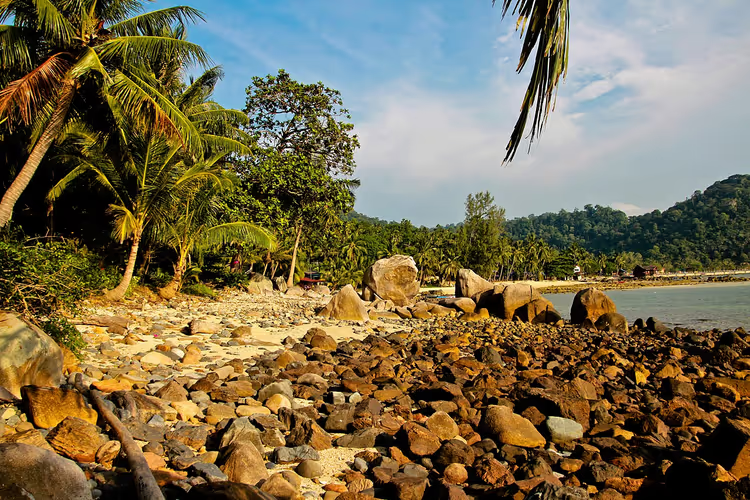 © Arne Müseler · CC BY-SAPhoto: Arne Müseler, CC BY-SA (https://creativecommons.org/licenses/by-sa/3.0/de/deed.en), Wikimedia Commons
The island stretches 39 kilometers long and 12 kilometers wide (according to the Malaysia tourism office). Roads run along the coast, and the main village of Tekek remains the administrative center. In the villages to the west and south, you'll see how fishermen live and can catch the morning market.
Ferries to Tioman depart from Mersing, which takes four to six hours to reach from Kuala Lumpur or Singapore. The crossing takes one and a half to two hours, and the schedule depends on the tides (as of 09/2026, tourism office page).
- How to get there: ferry from Mersing, one and a half to two hours.
- What to see: Salang, ABC, and Juara beaches, Tekek village, Tioman Marine Park.
- Who it's for: divers and those looking for peace and quiet.
- The catch: the ferry schedule depends on the tides, and you should book your spot in advance.
Look for accommodation on Tioman on Trip.com. Salang and ABC beaches are at opposite ends of the island, so choose based on your route.
11. Malacca: colonial history
Malacca sits on the west coast and is a UNESCO World Heritage Site. The Portuguese, Dutch, and British ruled here in turn, and the old center has preserved traces of all three eras.
In the center you'll see the red Christ Church, the remains of A Famosa fortress, and the Stadthuys. A walk along Jonker Street takes a couple of hours, and on weekends a night market with street food sets up here. Be sure to try nasi lemak, the local rice with coconut and spicy sambal sauce.
A Famosa fortress was built by the Portuguese, and only the gate and part of the wall remain. Nearby stands the Stadthuys, the former residence of the Dutch governor. The red color of the buildings on the square has become the city's calling card, and tourists come here for photos against the facades.
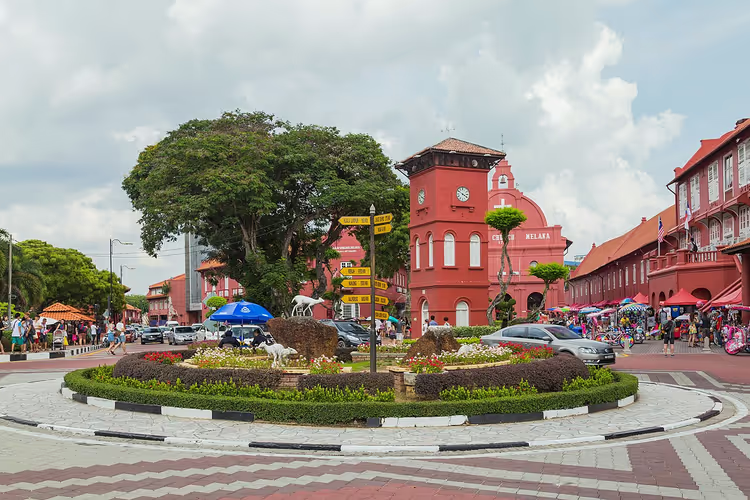 © Marcin Konsek · CC BY-SAPhoto: Marcin Konsek, CC BY-SA (https://creativecommons.org/licenses/by-sa/4.0), Wikimedia Commons
A separate pleasure awaits you on a walk along the Malacca River. From the water you can see colorful houses and murals, and boats depart from the pier in the center. Cheng Hoon Teng Temple is considered the country's oldest Chinese temple, and it's an easy walk from Jonker Street.
The old center can be covered on foot in half a day, and a direct street leads to Jonker Street. Buses run from Kuala Lumpur to Malacca, and staying overnight in the city makes sense if you want to catch the evening market.
- What to see: Christ Church, A Famosa, Stadthuys, Cheng Hoon Teng, Malacca River.
- Food: the night market on Jonker Street on weekends.
- Who it's for: those who care about history and architecture.
- The catch: the trip from Kuala Lumpur and back is tiring, so staying overnight in the city is more comfortable.
A day trip from the capital with lunch and a guide can be booked on GetYourGuide. In one day the group covers the old center, a river cruise, and the market.
If you'd rather put together an itinerary from ready-made tours around the country, check out the selection below.
Tours and tickets
Guided tours, skip-the-line tickets and activities — most offers can be cancelled free of charge.
See offers on GetYourGuideThe widget loads once you give your consent.
⁉️🤔 Frequently asked questions
When is the best time to visit Malaysia?
The season depends on the coast. In the west, including Kuala Lumpur, Penang, Langkawi, and Malacca, the dry period runs from December to February. The east coast with the Perhentian Islands and Tioman welcomes visitors from March to October. Plan your route by this rule, and rain won't ruin your trip.
How much time do you need for Malaysia?
For the peninsula, allow at least ten days: Kuala Lumpur, Batu Caves, Penang, Malacca, Cameron Highlands. Add Borneo as a separate block of four days or more. In two weeks you can cover both the cities and the jungle if you don't rush around the country.
What currency is used in Malaysia, and do you need cash?
Malaysia uses the Malaysian ringgit, abbreviated as MYR. Cards are accepted in hotels, shopping malls, and cafes in major cities. At markets, small cafes, and when paying for boat rides, keep cash on hand: terminals are often unavailable there. Check the exchange rate with your bank before you fly.
Do you need an eSIM for Malaysia?
Yes, an eSIM is convenient: you get connectivity right after landing, and you don't have to hunt for a local SIM card. Compare Malaysia plans in advance, before departure; installation takes a couple of minutes. Choose a package based on data volume and coverage area.
What should you try from Malaysian cuisine?
Start with nasi lemak, laksa, and satay. In George Town, look for hawker centers; in Malacca, the night market on Jonker Street; and in Kuala Lumpur, Jalan Alor street.
Which islands are worth adding to your itinerary?
Besides the Perhentians and Tioman, check out Rawa Island near the Perhentians and Mantanani off the coast of Sabah. Before booking, check the season on the east coast. On Borneo, Sipadan and the turtle islands can be added, but they require a separate flight from Kota Kinabalu.
How much money should you budget for the trip?
Street food and public transport in Malaysia are inexpensive, and the main expenses are flights and accommodation on the islands. Prices rise in high season: this applies to Langkawi, the Perhentians, and Cameron Highlands. Domestic flights to Borneo are usually cheap, so you can add them to your plan without major costs.
In short: what's worth booking
If you have ten days, take Kuala Lumpur, Penang, and Malacca, and leave Borneo for next time. If you have two weeks, add Langkawi or the Perhentians and Sabah. If you're traveling for nature, Taman Negara and Cameron Highlands will give you jungle and cool air without a flight.
A rough two-week plan looks like this: three days in Kuala Lumpur with a trip to Batu Caves, two days in Malacca, three days in Penang, two days in Cameron Highlands, and four days in Borneo. The Perhentian Islands and Tioman are better saved for a separate trip from March to October, when the sea is calm.
Accommodation across cities and islands is easy to compare on Trip.com. The service shows the price upfront, and you can book before you fly.

A small editorial team writing guides for independent travel. We travel ourselves, but we haven’t been everywhere, so we check prices, opening hours and how to get there against official sources.