
















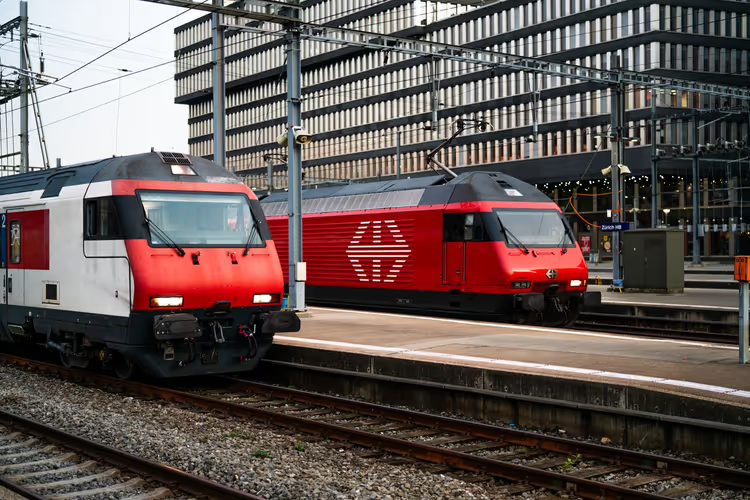
How to travel cheaply around Europe by train: tickets and passes
Europe is small, and the train connects its cities better than a plane. You board in the center of one city and step off in the center of another: no taxi to the airport, no security screening, and no baggage fees.
Traveling around Europe by train gets cheaper if you buy tickets in advance, understand the train types, and use rail passes. German railways offer discount fares starting at €6.99 (as of 09/2026, verified on bahn.de). Below we break down which trains run between countries, where to buy tickets, and how to pay less without sacrificing comfort.
Ad: this article contains affiliate links, we earn a commission if you book through them, at no extra cost to you.
Train types: which one to choose
💡 In short:
- Suburban and regional trains are cheaper, while high-speed ICE and TGV trains save time.
- Buy tickets in advance on the carrier's website: the earlier you buy, the lower the price.
Trains between European cities are more comfortable than people tend to think. Ticket prices vary widely, while the level of comfort almost always remains high.
By speed and coverage, rail transport is divided into four groups: suburban, regional, express, and high-speed. The group name tells you how far and how fast you can travel.
Suburban trains run within a single metropolitan area. They come in handy when the attraction you want is outside the city. A classic example: suburban lines from Paris to Versailles, with schedules available on SNCF Connect.
Regional trains will take you to any point in the country. The catch is that they stop often, so the journey takes longer. On the plus side, tickets are noticeably cheaper, and the view from the window can be better than on a high-speed line.
If you are short on time, get a ticket for an express train of the IC or EC class. It stops only in major cities and travels several times faster than a regional train. This way you can get from Berlin to Amsterdam in a single day.
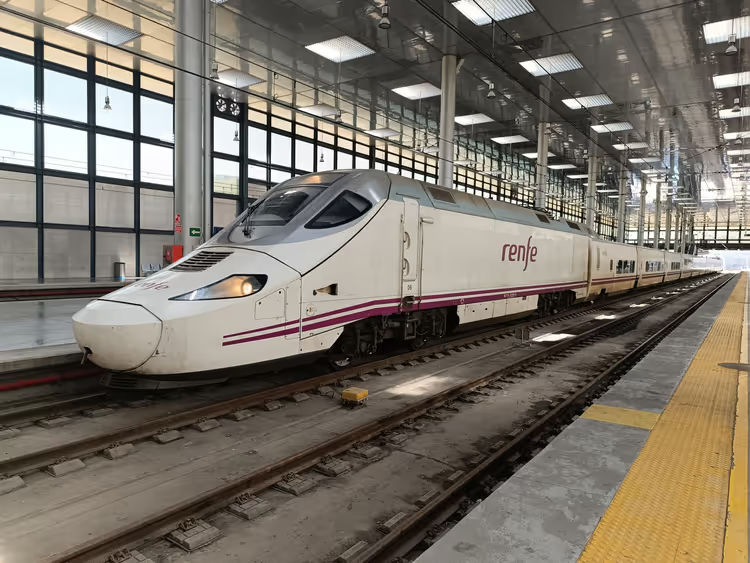
High-speed trains (ICE, TGV, Frecciarossa, AVE) are designed for long distances and maintain speeds unattainable for regional trains. Comfort is excellent, but you pay extra for speed. The popularity of these lines is growing, and they are gradually displacing their slower neighbors.
A separate group: night trains. They run during the dark hours, when the railways are less busy. This way you save on a hotel and do not spend a daylight day on travel. It is convenient if the route is long and you have little time in the city.
The ticket price also depends on the seat. If you are not picky, take a regular seat. If you have room in your budget, take a sleeper berth or a first-class compartment.
How to save on tickets
The simplest way to save is to buy tickets in advance. A couple of months before the trip, the discount can be substantial, and by departure time the cheap fares are already gone.
Deutsche Bahn tickets are sold on bahn.de, and Austrian railways on ÖBB. There you can see departure and arrival times, intermediate stations, and the fare. The interface switches between several languages.
For Spain, France, and Italy, schedules and tickets are available on the websites of Renfe, SNCF, and Trenitalia.
The carrier's website is also useful for its promotions section. It lists discounts by age, promo codes, and seasonal offers. Some cheap fares are tied to a specific train, so you cannot change the travel time afterward.
If you want to compare route options in advance, check train tickets in Europe on Trip.com.
Before the trip, it is worth getting in the mood for the route: 10 movies to watch before traveling to Europe will help you choose cities.
Rail passes: Interrail and one country pass
For frequent travel, a rail pass pays off. The Interrail Global Pass gives you access to 33 countries (as of 09/2026, Interrail). The One Country Pass is valid within a single country and costs less.
A rail pass costs more than a single ticket, but it pays for itself over several trips. Compare the pass price with the total cost of individual tickets for your route before buying.
The catch with a rail pass is that it does not reserve a specific seat for you. If you do not want to stand the whole way, book a seat in advance. On high-speed lines, reservations cost extra; on regional trains, they are usually not needed.
For mobile internet while traveling across several countries, a eSIM for Europe works well.
 © Phil Richards from London, UK · CC BY-SAPhoto: Phil Richards from London, UK, CC BY-SA (https://creativecommons.org/licenses/by-sa/2.0), Wikimedia Commons
⁉️🤔 Frequently asked questions
Can you travel around Europe by train without overpaying?
Yes, if you book in advance and choose regional routes. In high season and on weekends prices are higher, so check neighboring dates and morning departures.
What is better: individual tickets or an Interrail pass?
It depends on the number of trips. For a route with several long legs, the Interrail Global Pass is often the better deal. For travel within one country, get a One Country Pass.
Do you need to reserve a seat separately?
On regional trains, seat reservation is usually not required. On high-speed TGV and Frecciarossa lines, reservations are paid and mandatory on some routes. A rail pass does not guarantee a seat, so on long legs book it in advance.
How many days in advance should you buy tickets?
The earlier, the cheaper. DB opens sales for discount fares several months before the trip, and the lowest prices go first. If your plans are flexible, check weekdays and departures before noon.
What do you do with luggage on the train?
On most European trains, luggage is carried free of charge, unlike on a plane. Rules on size and number of items vary by carrier. Large bags go on the rack near the carriage entrance. Keep valuables with you and do not leave them unattended at intermediate stations.
In short: what to book
For a short trip, individual tickets bought in advance on the carrier's website are enough. For a packed multi-country itinerary, the Interrail Global Pass is the better deal, and for a single country, the One Country Pass.
- If you are traveling within one country: buy tickets on the local carrier's website.
- If you are visiting several countries: compare the Interrail Global Pass.
- If the route is long and overnight: choose a night train instead of a hotel.
Plan your trip in advance and book seats on high-speed segments: compare train tickets in Europe.

A small editorial team writing guides for independent travel. We travel ourselves, but we haven’t been everywhere, so we check prices, opening hours and how to get there against official sources.