










Spain on rails: AVE prices, Renfe discounts and heritage trains
Spain has the world's second-longest high-speed rail network, and the train here is often faster than flying. Madrid and Barcelona are connected by lines with travel times from 2:30, and the cheapest Básico fare goes to those who book two to three months in advance (as of 09/2026, Renfe schedules). Below is a practical overview: the network, operators, fares, and tickets.
Ad: this article contains affiliate links, we earn a commission if you book through them, at no extra cost to you.
Trains in Spain: how the system works
Passenger service is run by the state-owned company Renfe (Red Nacional de los Ferrocarriles Españoles). Its network is considered one of the most modern in Europe, and since 2021 two more operators have been running on high-speed lines: IRYO and OUIGO (according to the Renfe portal, 09/2026).
💡 In short:
- On AVE, the Básico fare is the cheapest, but its quota is only available in early sales and sells out first.
- High-speed lines converge in Madrid, so you'll travel part of some routes with a transfer in the capital.
- Book seats on the Al Andalus and El Transcantábrico heritage trains at least six months in advance.
- Schedules, fares, and tickets: 09/2026, verified on the company's official website.
Let's start with how the network is structured and where its main hubs are. We'll cover tickets, discounts, and unusual trains separately.
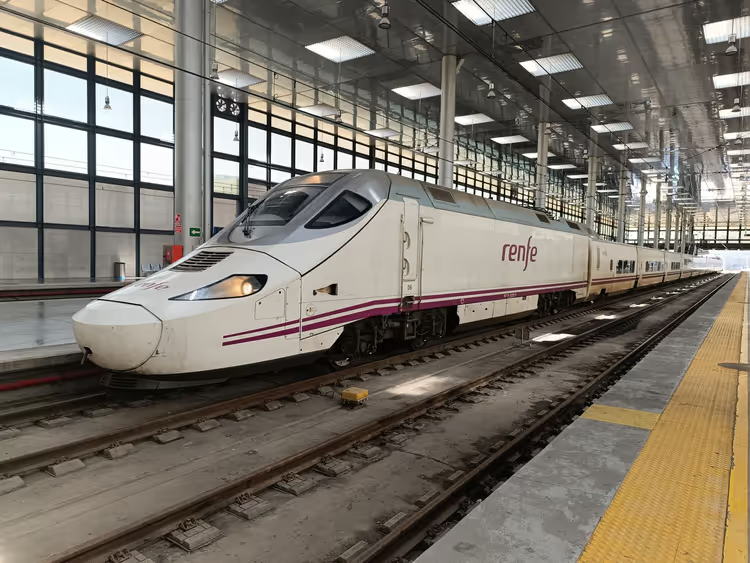
Spain's rail network
High-speed lines are built in a star pattern: almost all of them converge in Madrid. From there you can travel without transfers to Barcelona, Valencia, Seville, Malaga, and the Basque Country. Cross-regional connections are less common, and sometimes you'll have to change trains along the way.
In terms of high-speed track length, the country is second only to China: the network exceeds 3,700 km (according to the official Renfe website, 09/2026). Four levels of infrastructure serve this length of track.
- High-speed lines (Alta Velocidad): AVE and Avlo trains, as well as IRYO and OUIGO trains, run on dedicated tracks between major cities.
- Long and medium distance routes (Larga y Media Distancia): conventional trains connect smaller cities, often on regular tracks.
- Commuter networks (Cercanías): suburban trains within metropolitan areas, covered below.
- Narrow-gauge network in the north: meter-gauge track along the Atlantic and Cantabrian coasts, formerly FEVE.
In rural regions, trains are still scarce. On the Costa de la Luz in Andalusia, you can only reach some towns by bus or car, so it's worth calculating a rental in advance.
Popular routes and hub stations
The most passengers travel on lines connecting the capital with major cities: Madrid-Barcelona, Madrid-Valencia, Madrid-Seville, Madrid-Malaga, Madrid-Granada, Madrid-Alicante, and Barcelona-Valencia (according to the Renfe route map, 09/2026).
In Madrid, long-distance trains depart from Puerta de Atocha station. If you're traveling to Barcelona or Seville, check the station name on your ticket: the city has several stations, and commuter trains leave from different platforms.
In Barcelona, high-speed trains arrive at Barcelona Sants station. From there it's easy to reach the center by metro, and you can transfer to commuter trains on the same level.
AVE high-speed trains
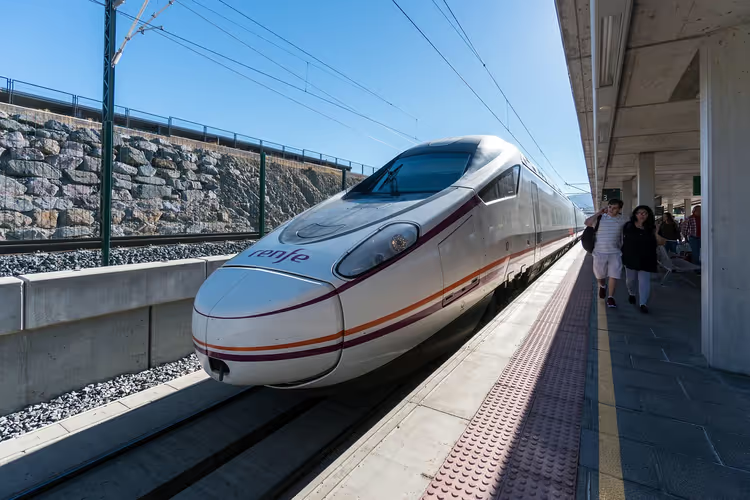
AVE (Alta Velocidad Española) trains run at speeds up to 310 km/h, and the transport ministry has announced a plan to raise the bar to 350 km/h (as of 09/2026, El Economista). The network is regularly expanded, so it's worth rechecking the schedule for the next season.
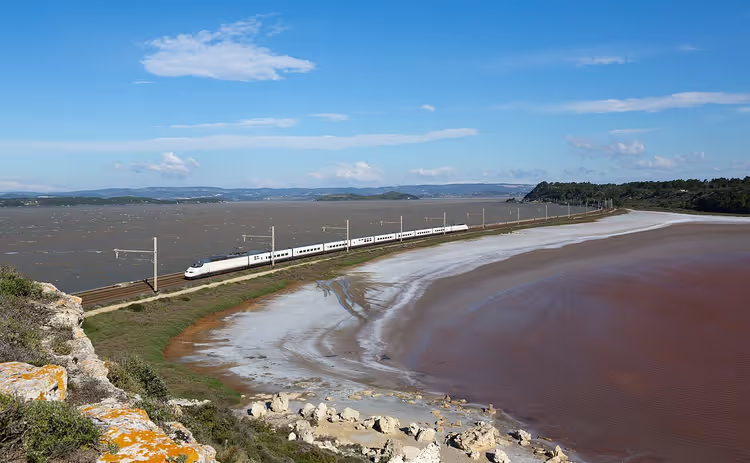 © Kabelleger / David Gubler · CC BY-SAPhoto: Kabelleger / David Gubler, CC BY-SA (https://creativecommons.org/licenses/by-sa/4.0), Wikimedia Commons
Main AVE destinations and minimum travel times.
Route | Key stops | Travel time |
|---|---|---|
Madrid - Seville | Ciudad Real, Puertollano, Cordoba | 2:20 |
Madrid - Barcelona | Zaragoza, Lleida, Camp de Tarragona | 2:30 |
Madrid - Valencia | Cuenca, Requena | 1:55 |
Madrid - Huesca | Guadalajara, Calatayud, Zaragoza | 2:30 |
Madrid - Malaga | Cordoba, Puente Genil, Antequera | 2:20 |
Madrid - Valladolid | Segovia | 0:55 |
Madrid - Granada | Antequera | 3:05 |
Madrid - Galicia | Ourense | 2:15 |
Madrid - Basque Country | Burgos | 1:40 |
Schedules and minimum travel times: 09/2026, AVE schedule. Travel time depends on the number of stops, so the same route can take 10-20 minutes longer.
You choose your seat on AVE when buying a ticket. If you want to enjoy the scenery, take a window seat and check which side of the train it's on: in hot weather, the sunny side heats up more.
High-speed train prices
Ticket prices depend on the day, occupancy, and when you buy. Route benchmarks are collected in the table.
Route | Fastest | Price level | Trains per day |
|---|---|---|---|
Madrid - Barcelona | from 2:30 | lowest with early booking | more than 30 |
Madrid - Seville | from 2:20 | lowest with early booking | more than 20 |
Madrid - Malaga | from 2:20 | lowest with early booking | about 15 |
Madrid - Valencia | from 1:55 | one of the most affordable AVE routes | more than 20 |
Malaga - Seville | from 1:55 | lower than on long-distance AVE | 8-20 |
Malaga - Granada | from 1:15 | lower than on long-distance AVE | about 6 |
Seville - Cadiz | from 1:35 | the lowest on this list | hourly |
Barcelona - Valencia | from 2:35 | lowest with early booking | several times a day |
Carriers change exact fares every day, so check them for your date on the fares and schedules page (as of 09/2026). Low prices apply only when you book early: on the day of travel you will pay several times more, especially in the morning and evening.
It is easier to compare prices for a specific date on an international platform: schedules and prices for trains in Spain on Trip.com.
Other Renfe train types
Besides AVE, the country is served by trains that are often cheaper and more convenient for short legs (according to the Renfe website, 09/2026).
- Avlo: a low-cost version of AVE with one class and no dining car. Seat selection and a large baggage allowance cost extra.
- Alvia: also runs on conventional tracks, so it reaches cities outside the high-speed lines. Usually cheaper than AVE.
- Avant: a high-speed train for medium distances, for example Seville - Cordoba - Malaga.
- Euromed: runs along the Mediterranean coast and connects Barcelona, Valencia, and Alicante.
- Media Distancia: regional trains with frequent stops, convenient for trips within a region.
For day trips to a neighboring city, take Avant or Media Distancia: the price difference is significant, and you will be traveling for only an hour or an hour and a half.
How to buy train tickets in Spain
Tickets are sold by Renfe itself on its website and app, as well as by international platforms. The official website is not the most user-friendly, but it has no fees, and schedules and fares there are always up to date (according to the Renfe ticket sales section, 09/2026).
- Choose your route and date. In major cities, check which station you need: in Madrid, long-distance trains depart from Puerta de Atocha.
- Compare carriers. Renfe, IRYO, and OUIGO compete on popular routes, and the price difference can be twofold.
- Choose your fare. From the cheapest non-refundable option to a fully flexible one, details below.
- Pay and save your ticket on your phone. A digital ticket is enough for boarding, and there is no separate check-in.
Ticket offices at stations are open, but the lines are long. If you have no internet access, buy a ticket from a machine: the menu switches to English, and cards are accepted.
Renfe fares and discounts
Renfe has three fare tiers for long-distance trains, and they differ only in refund conditions (according to the Renfe fares page, 09/2026).
- Básico and Promo: the cheapest option, no refunds.
- Elige and Promo+: more expensive, but exchanges and refunds are possible with restrictions.
- Prémium and Flexible: full flexibility at the highest price.
Discount programs work well for regular passengers. Travelers under 30 get the Jóvenes discount, passengers over 60 can use the Tarjeta Dorada card with up to 40% off, and groups of four or more traveling together qualify for a group fare (according to the Renfe discounts page, 09/2026). The Tarjeta Dorada card is paid, so it only makes sense if you plan several trips a year.
Abono Único pass
If you live in Spain or spend a month in one region, do the math on the Abono Único pass. It costs a two-digit euro amount for 30 days, half price for passengers under 26, and gives unlimited travel on Cercanías, Rodalies, regular Media Distancia trains, and state-run intercity buses. Check the current fare on the Abono Único terms page (as of 09/2026).
One important limitation: the pass does not work on AVE and long-distance high-speed trains. The free commuter pass that operated in 2022-2024 has been discontinued, and Abono Único replaced it. It pays off at roughly 30 trips per month, so for a short visit a single ticket or a ticket booklet is a better deal.
Service and comfort on board
On AVE trains you get free Wi-Fi, a power outlet at every seat, and a laptop charging port (according to the Renfe website, 09/2026). There are three classes: Estándar, Confort, and Prémium.
Baggage rules are simple: up to three items per passenger, each up to 25 kg, plus two pieces of hand luggage up to 10 kg (as of 09/2026, Renfe baggage policy). Baggage storage is free in Confort and Prémium; Avlo has stricter rules.
High-speed lines run on green electricity, and a Madrid-Barcelona trip produces only a fraction of the emissions of a flight (according to the Renfe website, 09/2026).
Other operators: IRYO and OUIGO
IRYO is owned by the ILSA consortium, which includes Air Nostrum and Trenitalia. Its Frecciarossa trains reach 360 km/h, and routes cover Madrid, Barcelona, Valencia, Seville, Malaga, and Cordoba. There are four classes: Inicial, Singular, Singular Only YOU, and Infinita (as of 09/2026, iryo.eu). IRYO uses green electricity, and tickets are often cheaper than Renfe.
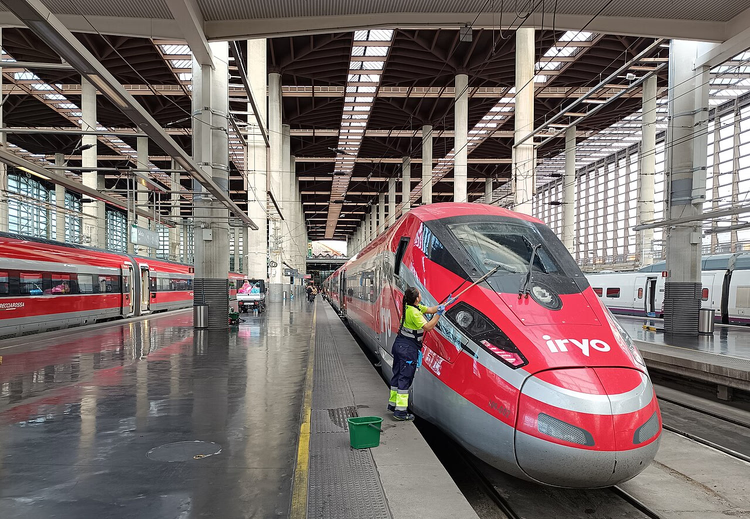 © CARLOS TEIXIDOR CADENAS · CC BY-SAPhoto: CARLOS TEIXIDOR CADENAS, CC BY-SA (https://creativecommons.org/licenses/by-sa/4.0), Wikimedia Commons
OUIGO España operates under the French SNCF brand and bets on low prices: promotional tickets on select dates start at €9 (as of 09/2026, OUIGO). There are only two classes, extra baggage and seat selection cost extra, and there is no dining car.
Parameter | Renfe AVE | IRYO | OUIGO |
|---|---|---|---|
Price | widest range | often cheaper than Renfe | lowest promotions |
Speed | up to 310 km/h | up to 360 km/h | up to 320 km/h |
Classes | 3 | 4 | 2 |
Wi-Fi | free | free | paid |
Baggage | generous rules | standard | extra charge |
Class fares and promotions: 09/2026, IRYO fares and OUIGO tickets. Specific prices for all three carriers fluctuate by date, so compare them on the day you buy. On a route where all three companies operate, you can do this in a couple of minutes and save money on the same leg.
Schedules for all carriers are collected on one page: train tickets for Spain on Trip.com.
Cercanías: commuter trains
The Cercanías networks form the backbone of urban transport in metropolitan areas. Madrid has the most lines (13), followed by Barcelona (8, where they are called Rodalies), Valencia with 6, Seville with 5, Bilbao with 3, and Malaga with 2 (according to the Cercanías network, 09/2026).
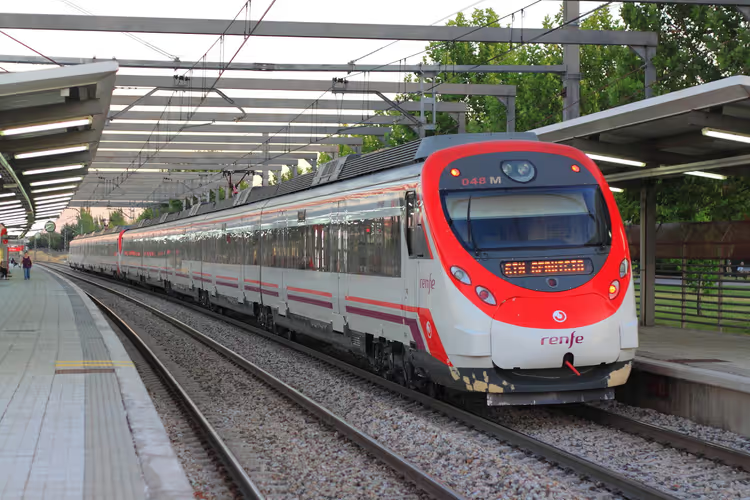 © Andrés Gómez - Club Ferroviario 241 · CC BY-SAPhoto: Andrés Gómez - Club Ferroviario 241, CC BY-SA (https://creativecommons.org/licenses/by-sa/2.0), Wikimedia Commons
Trains run from early morning until late at night with intervals of 10-30 minutes, and the frequency increases during peak hours. Tickets are inexpensive, ranging from single-ride to monthly passes. A useful bonus: with an AVE ticket, you can ride local Cercanías trains for free through the Combinados Cercanías program, but only on the day of travel.
If you have just landed and are heading to the city center, the commuter train is usually cheaper than a taxi or bus. Check whether there is a Cercanías station right in the airport terminal.
Media Distancia and Regionales
Media Distancia trains connect medium-sized and small towns within a region. They are also called Regionales or Regional Exprés, and they have more stops than high-speed trains, but the ticket is cheaper (according to the Renfe website, 09/2026). Popular routes: Barcelona - Girona, Madrid - Ávila, Seville - Cádiz, and Valencia - Xàtiva.
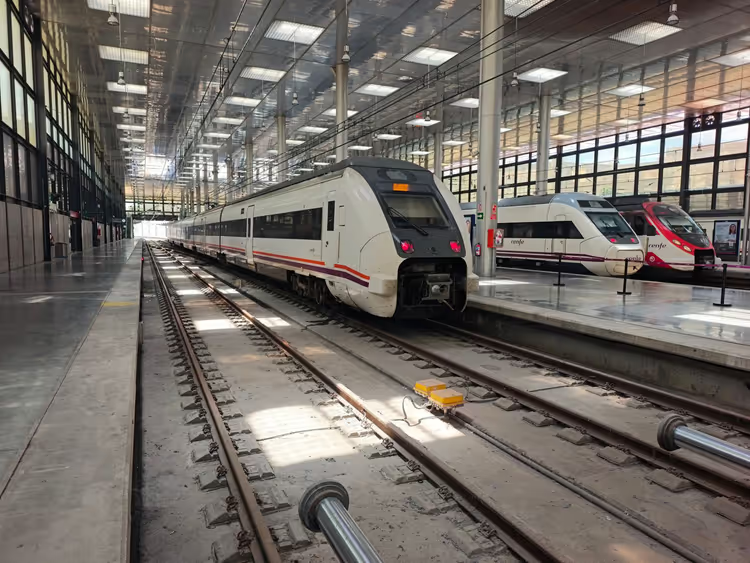
This kind of train will take you to towns that AVE does not reach. You will spend 30-60 minutes longer on the journey, but you will see outskirts and fields rather than tunnels on the high-speed line.
Narrow-gauge railways of the north
The narrow-gauge lines along the northern coast deserve special attention. For many years they operated under the FEVE brand (Ferrocarriles de Vía Estrecha), and since 2013 they have been part of Renfe and are called Renfe Cercanías AM (Ancho Métrico) (according to the Renfe website, 09/2026). You will still see the old FEVE name on signs in small towns today.
The main line runs along the Atlantic and Cantabrian coast from Bilbao through Santander and Oviedo to Ferrol. A second, equally scenic branch heads inland from Bilbao to León. Here you will see a different Spain: green mountains, ocean bays, and nearly empty carriages.
Tickets are sold at the ticket office, from the conductor, or on the Renfe website. On long sections, the ticket sometimes has to be split into several segments, so allow time for transfers. The northern coast is more convenient to explore by car: compare car rental prices.
Historic trains of Spain
High-speed lines solve the "get there fast" problem, but Spain also has trains where the journey itself is the main event. Some carry passengers in Belle Époque-era carriages, others run on narrow-gauge tracks through lakes and mountains. The season is short for all of them, usually from spring to fall, and tickets sell out well in advance.
Below are five routes that differ in price, duration, and comfort level. For each one, you'll find the schedule, cost, and how to buy tickets.
Al Andalus heritage train
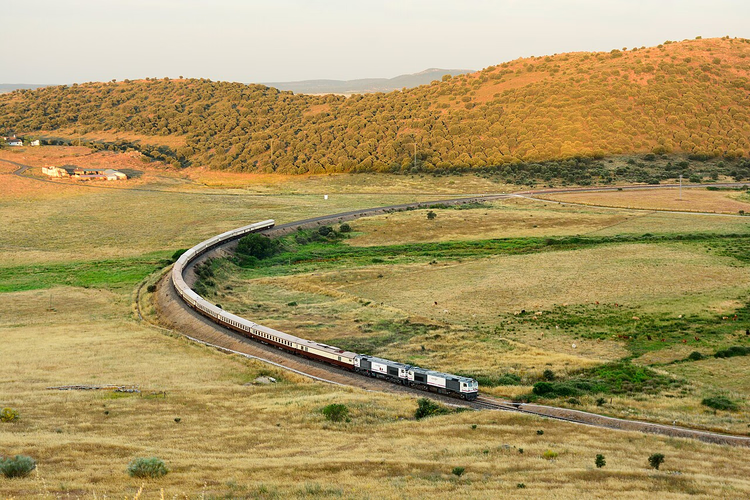
Al Andalus is called a palace on rails. It's a hotel train whose history is tied to the British royal family: these carriages once carried passengers to the French Riviera. Today the train runs through Andalusia, connecting its major cities (according to official Al Andalus fares, 09/2026).
The route starts in Seville, where you'll see the Moorish Alcázar and the Giralda tower. The train then continues through Jerez de la Frontera, the birthplace of sherry, on to Granada with the Alhambra, and ends in Córdoba at the Mezquita.
Inside, you'll find Gran Clase compartments and Deluxe Suites in Belle Époque style, lounge cars, and chef-prepared dinners. In the evening, a piano plays in the lounge car while the olive groves of Andalusia drift past the window.
- Season: March to October, trains run on a fixed schedule.
- Price: from €6,600 per person in a double Gran Clase compartment for the full program, including accommodation, all meals, and guided excursions (as of 09/2026, Al Andalus 2026 fares).
- Who it's for: those who want to see Andalusia without lugging suitcases and switching buses.
- The catch: you need to book at least six months ahead, demand exceeds supply.
Tickets are sold through the tour operator Ameropa, and select dates also appear with other agents. If you're planning a high-season trip, start looking 10-12 months in advance.
 © Nelso Silva · CC BY-SAPhoto: Nelso Silva, CC BY-SA (https://creativecommons.org/licenses/by-sa/2.0), Wikimedia Commons
El Transcantábrico Gran Lujo
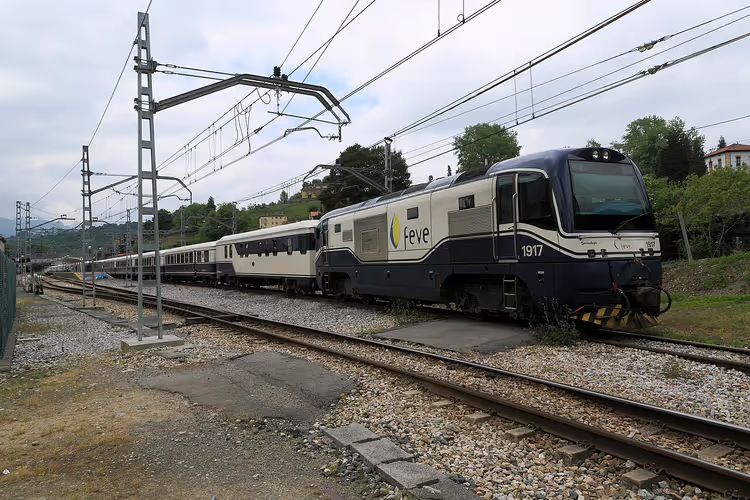
El Transcantábrico Gran Lujo is considered the country's most luxurious train. Over eight days and seven nights, it travels along the northern coast between Santiago de Compostela and San Sebastián, carrying no more than 28 passengers (as of 09/2026, Transcantábrico fares).
 © Falk2 · CC BY-SAPhoto: Falk2, CC BY-SA (https://creativecommons.org/licenses/by-sa/4.0), Wikimedia Commons
The route passes through four regions: Galicia, Asturias, Cantabria, and the Basque Country. The program includes the Cathedral of Santiago de Compostela, the Altamira Cave with its prehistoric paintings, the Guggenheim Museum in Bilbao, and the peaks of the Picos de Europa.
Compartments are over 10 m²: a private lounge, a double bed or two singles, and a bathroom with a whirlpool tub and steam shower. Panoramic windows run from floor to ceiling, so you can take in the scenery right from your bed.
- Season: April to October, both directions.
- Price: the highest among Spanish trains, the program is sold as an eight-day all-inclusive package, and the operator quotes the current price at booking.
- What's included: meals and drinks, excursions and entrance tickets, transfers from the airport or train station.
- The catch: only 28 seats, so you need to book at least six months ahead.
Tren de Cervantes: a day in Alcalá de Henares
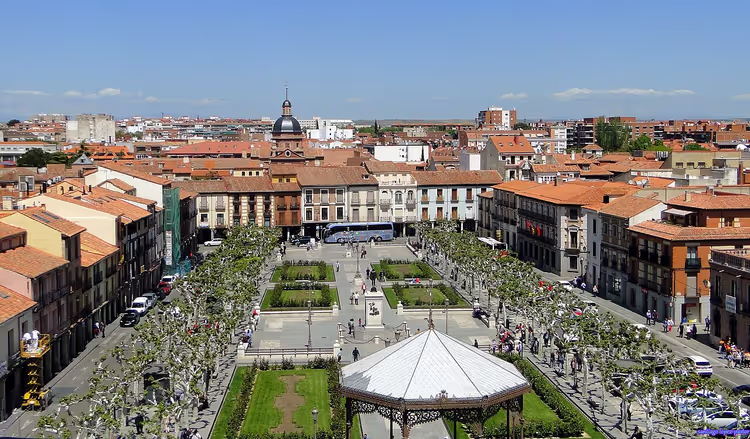
Tren de Cervantes is a good fit if you only have one day to spare. The train departs Madrid from Atocha station, and 35 minutes later you step off in Alcalá de Henares, the hometown of Miguel de Cervantes (as of 09/2026, Renfe page about the train).
 © santiago lopez-pastor · CC BY-SAPhoto: santiago lopez-pastor, CC BY-SA (https://creativecommons.org/licenses/by-sa/2.0), Wikimedia Commons
Actors in historical costumes perform in the cars: they act out scenes from Don Quixote and talk about the golden age of Spanish literature. In the city, a guide leads you through the historic center and the house where the writer was born. Alcalá de Henares is a UNESCO World Heritage Site.
- Season: Saturdays, in spring and fall. In 2026, trips run from April 11 to June 27 and from September 19.
- Price: €22 for adults and €16 for children 7-11, free for children under 6 (as of 09/2026, Madrid tourist office).
- What's included: transportation, a guided tour, and a traditional Castilian-style lunch.
- The catch: departure is early in the morning, but you can return to Madrid on any commuter train until midnight.
Tickets are sold online on the Renfe website, at least two weeks before the date. This is the cheapest trip among Spain's historic trains.
Tren dels Llacs: the lakes of Catalonia
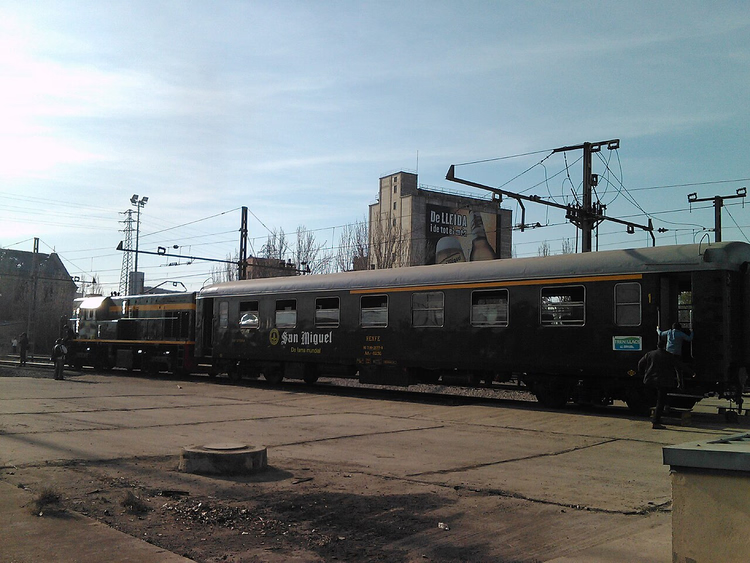
Tren dels Llacs, the "train of lakes," runs on a narrow-gauge line from Lleida to La Pobla de Segur. The restored 1960s diesel train covers 89 km, 75 bridges, and 40 tunnels, and it got its name from the reservoirs along the route (as of 09/2026, Barcelona Secreta).
 © Arnaucc · CC BY-SAPhoto: Arnaucc, CC BY-SA (https://creativecommons.org/licenses/by-sa/3.0), Wikimedia Commons
Along the way, you get off at intermediate stops: the salt works in Gerri de la Sal, the medieval Castell de Mur, or a hiking route in Aigüestortes i Estany de Sant Maurici National Park.
- Season: select Saturdays in spring and fall.
- Price: around €35 for adults and €17 for children (as of 09/2026, Turistren).
- Who it's for: parents with children and anyone who loves mountain scenery and short walks.
- The catch: seats are limited, so book at least two weeks ahead. Combo tickets with excursions cost more.
Expreso de La Robla: the pilgrims' route
Expreso de La Robla follows the pilgrim route to Santiago and connects Bilbao in the Basque Country with León in Castile. The train is designed for several days, and the cars serve as your hotel: you sleep right on the journey (as of 09/2026, official Expreso de La Robla website).
The program includes the Ojo Guareña cave complex, the Romanesque churches on the Románico Palentino route, and the town of Frómista with its architecture. The trip ends in León: you climb up to the Gothic cathedral with its stained glass windows and visit Casa Botines, designed by Antoni Gaudí.
The train has sleeping cars, a dining car with regional cuisine, and climate-controlled lounge cars for socializing with fellow travelers.
- Season: spring to fall, several departures per month.
- Price: from €800 per person in a double compartment. The package includes two nights on the train, full board, excursions, and entrance tickets.
- Who it's for: those interested in the history of northern Spain rather than the beach.
- The catch: the train moves slowly, you cover few kilometers per day, and you spend most of the time on excursions.
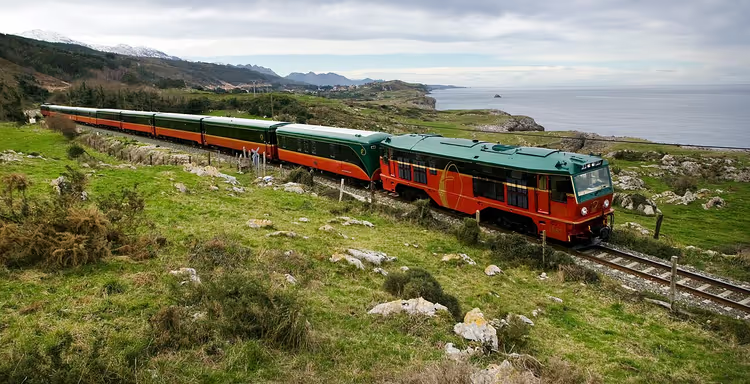 © Luxury Train Club · CC BY-SAPhoto: Luxury Train Club, CC BY-SA (https://creativecommons.org/licenses/by-sa/2.0), Wikimedia Commons
What to consider when choosing a heritage train
All historic trains have a short season, and schedules are published in advance. Before buying, check a few things: what's included in the price, where the route starts, how many days you spend traveling, and whether the ticket is refundable.
- What's included in the price. On Al Andalus and El Transcantábrico, meals, excursions, and transfers are already included. On Tren de Cervantes, the ticket covers transportation, lunch, and a tour, while on Tren dels Llacs you pay separately for some of the routes at the stops.
- Where the route starts. Al Andalus starts in Seville, El Transcantábrico runs between Santiago de Compostela and San Sebastián, Tren de Cervantes departs from Madrid, Tren dels Llacs from Lleida, and Expreso de La Robla connects Bilbao and León. You plan the trip to the starting point yourself.
- How many days you're traveling. Tren de Cervantes and Tren dels Llacs work for a day trip, Expreso de La Robla is designed for two to three days, and Al Andalus and El Transcantábrico are for a full vacation.
- Refund policy. The expensive trains have strict rules: canceling a few weeks before departure often means losing part of the amount. Read them before paying.
Tickets are sold by the operators themselves and by tour operators. For Renfe, it's the company website; for Tren dels Llacs, the official Turistren portal; for Al Andalus and El Transcantábrico, tour operators like Ameropa handle bookings. Check the date and price on the official page: agents have different terms, and available compartments on the expensive trains sell out first.
A separate note about sleeping on the train. The compartments on Al Andalus and El Transcantábrico have their own bathroom and luggage space, while the cars on Expreso de La Robla are more modest in size. If you sleep poorly in motion, start with a short route and only then book the eight-day program.
When choosing between two trains, compare the season calendar and seat availability for your dates. The easiest approach is to check the operators' official pages, and you can verify regular train schedules in one place: current train schedules on Trip.com.
Practical tips
The cheapest tickets for long-distance trains appear two to three months before the travel date. Early morning departures and the last evening ones cost less than daytime trains, and Friday and Sunday are considered the most expensive days of the week (according to the Renfe website, 09/2026).
When to book | What you get |
|---|---|
2-3 months ahead | Básico fare on AVE at the lowest price |
2-4 weeks ahead | Avlo and OUIGO deals on weekdays |
2 weeks ahead | Seats on Tren de Cervantes and Tren dels Llacs |
6-12 months ahead | Compartments on Al Andalus and El Transcantábrico |
If your train is delayed, you can get a partial refund under the carrier's punctuality guarantee (according to the Renfe website, 09/2026). You file a claim on the website, and the amount depends on the length of the delay.
Arrive at the station at least 30 minutes before departure: on AVE trains you go through baggage screening. On Cercanías commuter networks there is no security check, so 10 minutes is enough.
In summer, pick a seat on the shaded side of the car. The air conditioning works, but by windows on the sunny side the temperature is noticeably higher, especially in Andalusia.
Another way to save: combine tickets from different operators for separate legs of your trip. It's easier to compare options across multiple carriers at once: cheap train tickets in Spain.
What will change on Spain's railways
Competition between Renfe, IRYO and OUIGO has already brought prices down on popular routes, and the process continues. Carriers are expanding their networks and adding regions where there used to be almost no trains.
Carriers are also working on a unified booking platform where you can compare offers from all operators in one place (according to the Renfe website, 09/2026). For now, third-party services handle such comparisons, but this will eventually become part of the official systems.
⁉️🤔 Frequently asked questions
What is the Spanish railway called?
The state-owned company is called Renfe (Red Nacional de los Ferrocarriles Españoles). It operates most of the network: from high-speed AVE to commuter Cercanías. Since 2021, IRYO and OUIGO also run on high-speed lines, so you buy your ticket from whichever carrier's terms suit you best (according to the Renfe website, 09/2026).
How do I buy a train ticket in Spain?
The easiest way is on the Renfe website or app: the interface switches to English and there are no fees. An alternative is international platforms that aggregate schedules from all operators. From there you pick your route and date, compare carriers, choose a fare and save the ticket on your phone. There is no separate check-in at the station; a digital ticket is enough for boarding.
When should I buy tickets to avoid overpaying?
The optimal window is two to three months before your trip. Early Básico fares cost several times less than tickets bought on the day of departure. Travel is most expensive on Friday and Sunday, and the cheapest departures are the first ones in the morning and the last ones in the evening (according to the Renfe website, 09/2026).
How much does a train trip in Spain cost?
The price depends on the route, the carrier and when you buy. On the Madrid-Barcelona line, a Básico fare booked early costs several times less than a ticket bought on the day of travel (as of 09/2026, pricing page). Budget carrier OUIGO offers promotional tickets from €9 (as of 09/2026, OUIGO deals).
How fast do trains go in Spain?
AVE trains run at up to 310 km/h, IRYO trains reach 360 km/h, and OUIGO up to 320 km/h (as of 09/2026, IRYO classes). The Ministry of Transport plans to raise the limit to 350 km/h on high-speed lines (as of 09/2026, speed increase).
Is there a security check at the station?
Yes, all AVE trains and other long-distance routes have baggage screening, so arrive at least 30 minutes before departure. There is no screening on Cercanías commuter trains, where you can get to the platform a couple of minutes before departure. Keep this in mind if you are heading to the station at rush hour (according to the Renfe website, 09/2026).
Is the Abono Único pass worth buying?
The pass costs a two-digit amount in euros for 30 days, and passengers under 26 pay half price. It gives unlimited travel on Cercanías, Media Distancia and state-run buses. Check the fare on the pass page (as of 09/2026). It is not valid on AVE. It pays off after roughly 30 trips per month, so for a short trip buy single tickets.
In short: what to book
If you have two or three days and one city, Cercanías commuter trains and Media Distancia trains will be enough: a ticket costs a few euros, and services run every 10-30 minutes. If you are traveling on the Madrid-Barcelona line, compare Renfe's Básico with Avlo, IRYO and OUIGO offers, the price difference can be up to twofold.
If you want experiences rather than speed, look at the historic trains. Tren de Cervantes and Tren dels Llacs should be booked at least two weeks in advance, Al Andalus and El Transcantábrico six months or more in advance. If you are spending a month in Spain, do the math on the Abono Único pass: it pays off after roughly 30 trips.
The easiest way to compare schedules and prices for high-speed trains in one place is AVE and Spain train tickets on Trip.com.

A small editorial team writing guides for independent travel. We travel ourselves, but we haven’t been everywhere, so we check prices, opening hours and how to get there against official sources.