
















Barcelona for digital nomads: housing, transport and visa
Moving to Barcelona with a laptop looks like a long vacation. In reality, three things matter most: rent, transport, and a visa.
Spain issues a dedicated visa for remote workers under its startup law. That is why Barcelona long ago stopped being just a one-week destination.
Below is practical, on-the-ground information about the city: how much a month costs, how the metro and commuter trains work, what is happening with rooms and apartments, where to find Wi-Fi, and what paperwork to prepare for the visa.
Ad: this article contains affiliate links, we earn a commission if you book through them, at no extra cost to you.
Why Barcelona works for remote workers
💡 In short:
- Start looking for housing three to four weeks before you move: in high season, available rooms are scarce.
- Get a ten-ride pass: each trip costs less than a single ticket.
- Metro, airport, and pass fares: 09/2026, verified on the official TMB website
The sun is out almost all year, the sea is close, and the work infrastructure has been road-tested by tens of thousands of newcomers.
It will not be cheap: housing eats up more than half of a monthly budget. More on that below.
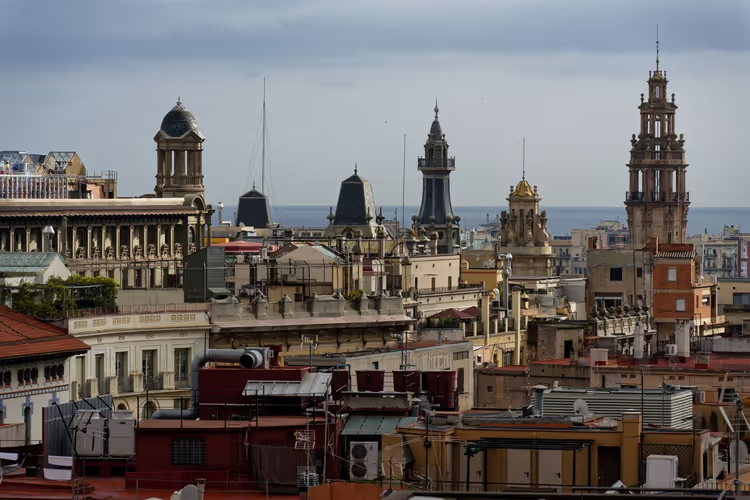
 © Till Niermann · CC BY-SAPhoto: Till Niermann, CC BY-SA (https://creativecommons.org/licenses/by-sa/3.0), Wikimedia Commons
How much a month costs in Barcelona
Housing takes the biggest share of your money. According to an Idealista report, the average room in Barcelona costs about €570 per month (as of 09/2026, room price report), and prices are rising faster than new listings appear.
A separate apartment costs several times more, so decide in advance what matters more: the center or the price. Housing by the sea and in Eixample costs more than in neighborhoods two or three stops from the center.
Food, transport, and mobile service together usually cost less than rent. A set lunch in working-class neighborhoods is cheaper than in the tourist center, and groceries at city markets are a better deal than supermarkets.
Public transport and the airport
The city has a metro, buses, trams, commuter trains, and two cable cars. A single metro ticket costs less than three euros (as of 09/2026, TMB fares), and it is valid only in zone one.
From El Prat airport to the center, you can take a train or metro line L9 Sud. An airport ticket on this line costs €5.90 (as of 09/2026, TMB ticket prices).
A pass is cheaper. The T-casual card covers ten trips and lowers the per-trip price, while T-mobilitat lets you top up from your phone. Tickets are sold at machines in every metro station.
Trains run every two to five minutes. Bus route markings are even painted on the pavement, and the easiest way to plan a route is on the AMB Mobilitat website. A couple of days is enough to stop checking the map.
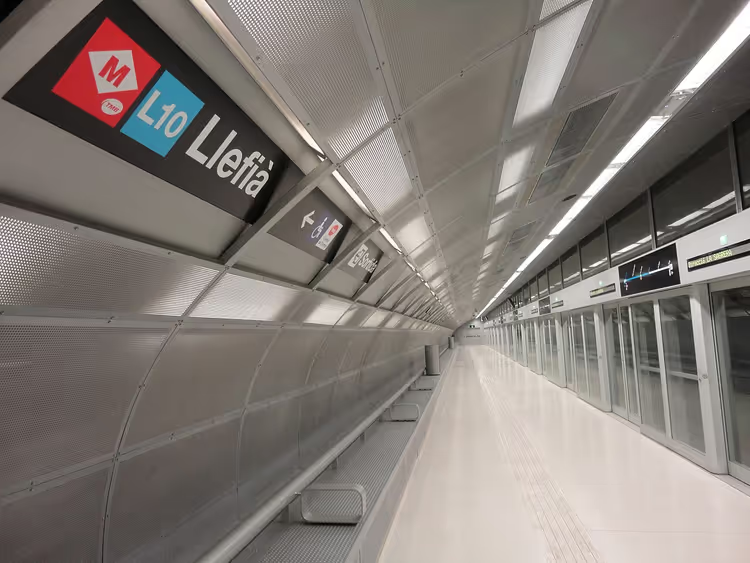 © Javierito92 · CC BYPhoto: Javierito92, CC BY (https://creativecommons.org/licenses/by/3.0), Wikimedia Commons
Housing: room, apartment, neighborhoods
Look for housing in advance, ideally a month before you move. In high season there are almost no rooms available, and prices go up every week.
Rooms are rented for a month or longer; apartments usually require a deposit and proof of income. Look at Eixample, Gracia, and Poblenou: these neighborhoods are convenient for work and well connected to the center.
You can actually negotiate a discount with the owner for a longer stay. Do not transfer a deposit before viewing the apartment: that way you won't lose money.
If you're coming on a scouting trip, the easiest option for the first few days is a hotel: browse Barcelona accommodation on Trip.com.
 © Mikani · CC BY-SAPhoto: Mikani, CC BY-SA (https://creativecommons.org/licenses/by-sa/4.0), Wikimedia Commons
Food: lunch and groceries
Food prices depend on the neighborhood. In tourist areas the bill is higher, while a couple of streets away it's already cheaper.
A set lunch from the menu of the day covers the middle of the day and is reasonably priced.
Groceries are cheaper at city markets, and you can cook at home. Seafood is fresh here, and you won't have to pay the restaurant markup.
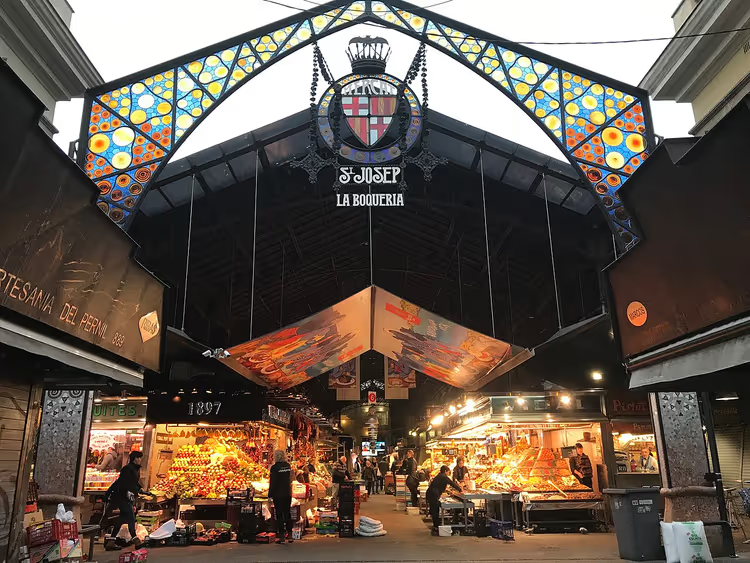 © Thingstodoinbarcelona · CC BY-SAPhoto: Thingstodoinbarcelona, CC BY-SA (https://creativecommons.org/licenses/by-sa/4.0), Wikimedia Commons
Siesta and business hours
The Spanish day is shifted toward the evening. Small shops close in the middle of the day, while large chains and shopping malls stay open without a break.
Dinner starts late, often after nine. If you're used to eating at six, keep something at home for a snack during the first few days.
Clinics, banks, and government offices mostly see visitors before lunch. Plan your visits for the morning, otherwise you'll lose a day.

Safety and pickpockets
For everyday life, Barcelona is a calm city. But pickpockets operate wherever there are lots of tourists, and these are mostly thefts rather than assaults.
Keep your phone in an inside pocket and your bag in front of you. On the metro line from the airport and on La Rambla, pay closer attention: thieves there work in groups.
The police do respond to reports, so report lost documents right away.
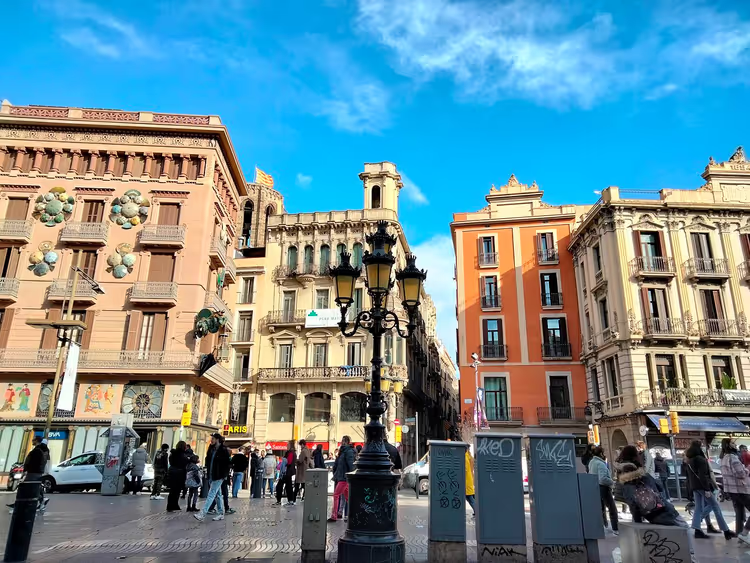 © Enric · CC BY-SAPhoto: Enric, CC BY-SA (https://creativecommons.org/licenses/by-sa/4.0), Wikimedia Commons
Internet, SIM cards, and coworking spaces
There are no problems with internet in Barcelona. Wi-Fi is available in almost every bar and cafe: the password is usually printed on the receipt, and you can ask the waiter for it.
Libraries also offer open access, but you'll need a passport. The city has plenty of coworking spaces, and during the day you can work from a cafe or a library.
Mobile service is provided by Orange, Movistar, Vodafone, Yoigo, and Lebara. Prepaid plans with large data packages are common here, and you can get a SIM card the same day. If you need internet right after landing, compare eSIM plans for Spain.
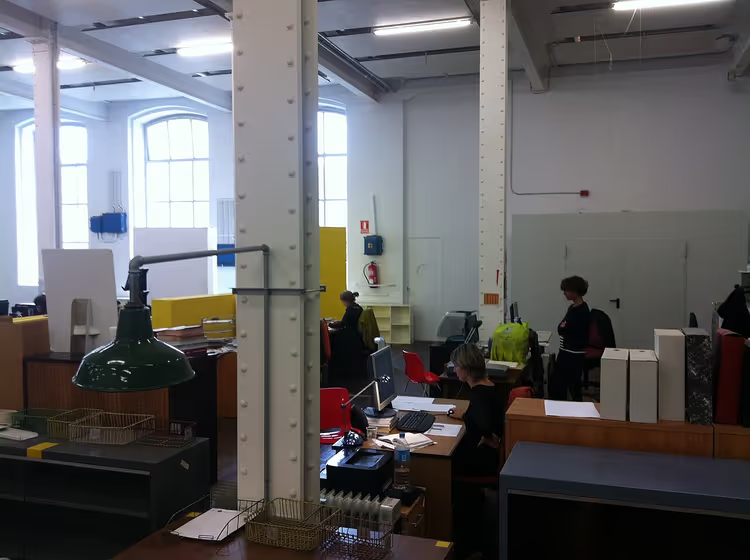 © Kippelboy · CC BY-SAPhoto: Kippelboy, CC BY-SA (https://creativecommons.org/licenses/by-sa/3.0), Wikimedia Commons
Visa and legalization for remote workers
Citizens of the EU, EEA, and Switzerland do not need a visa: they only need to obtain an NIE and register. Everyone else needs a visa. Spain issues a separate visa for remote employees under the startup law, and the income threshold is tied to the minimum wage.
As of 2026, the minimum wage in Spain is €1,221 per month across 14 payments (as of 09/2026, SEPE on SMI 2026). You're expected to show roughly double that income, so calculate from this threshold rather than from older publications.
Standard document package:
- Criminal record certificate.
- Contract or proof of autónomo status with a note confirming remote work.
- Bank statement and proof of taxable income.
- Diploma or proof of work experience.
- Health insurance covering the entire stay.
The application is submitted at a Spanish consulate or at the authority that handles such matters in Spain. Processing usually takes about a month. Get insurance with coverage for the entire period: compare insurance options.
⁉️🤔 Frequently asked questions
How much money do you need for the first month in Barcelona?
Budget for a room rental, groceries, transport, and phone service. Housing takes up most of the budget, so plan for it first, not as whatever is left over. A separate apartment in the center is noticeably more expensive, while neighborhoods two or three stops from the center are cheaper. Current room prices are in the report above.
When is the best time to arrive if you are looking for long-term housing?
Avoid high season and the first weeks after the academic year starts. During those months there are few options, and landlords raise prices. Come for a scouting trip in advance, book a hotel for a few days, and go to viewings in person. That way you will get to know the neighborhood faster and avoid overpaying middlemen.
Do you need a car in Barcelona?
No. The metro, buses, trams, and commuter trains cover almost the entire city, and parking in the center is expensive. A car is only useful for trips outside the city. For everyday life, get a transit pass and do not spend money on a car rental.
Where can you work if it is noisy at home?
Coworking spaces, libraries, and cafes work well. Check the internet speed before signing a housing contract: in old buildings the walls are thick, and the signal in a back room can be weak.
What should you do about the visa if you are already in Spain?
First check whether you meet the conditions of the startup law: you need a remote contract and income above the threshold from the visa section. Gather the documents in advance, including insurance and proof of experience. Confirm the exact application procedure at a Spanish consulate or at the authority that handles such matters.
Find hotels in Barcelona
Compare prices across booking sites and filter for rooms with free cancellation.
Compare prices on Trip.comThe widget loads once you give your consent.
In short: what to book
Barcelona rewards those who prepare in advance. Accommodation, visa documents, and a transit pass are sorted out before the flight, not in the first days on the ground.
- If you have a week for scouting: a hotel in the center and a ten-ride transit pass.
- If you are moving for a month: a room in Eixample or Poblenou and a prepaid SIM card.
- If you work from home: check the internet in the apartment before signing the contract.
Start with a hotel for the first days: see hotels in Barcelona on Trip.com. And on weekends, do not stay home: find tours on GetYourGuide.

A small editorial team writing guides for independent travel. We travel ourselves, but we haven’t been everywhere, so we check prices, opening hours and how to get there against official sources.