






Almabtrieb in Austria 2026: where to see the decorated cow descent
The last herds leave the high mountain pastures in early October. Before that, one Austrian village after another celebrates Almabtrieb: cows wearing bells are brought down into the valley and welcomed like heroes. The dates depend on snow up top, so the calendar shifts every year. The 2026 season started on September 5 and will end on October 10 (as of 09/2026, Österreich Werbung).
We gathered dates across six states, broke down the history of the custom, and added tips for the road. You will see where the descent is a big production and where it stays quietly village-like, and you will have time to plan your trip for the right weekend.
Ad: this article contains affiliate links, we earn a commission if you book through them, at no extra cost to you.
How Almabtrieb works
For the herders, Almabtrieb is a workday, not a show for tourists. From early morning, cows and sheep are gathered on the alpine pasture, and wreaths, ribbons, and heavy bells are put on them. Only an animal that made it through the summer without losses gets the rich decoration. Then the herd walks down the mountain road, and at the edge of the village residents, a brass band, and a market are waiting. Two hours is enough to see the procession itself and walk around the festival. The cows move slowly, so you will have time to film them from the roadside without pushing through the crowd.
💡 In short:
- The descent runs from early September to mid-October, most often on Saturdays and Sundays.
- A wreath and bells on a cow mean the summer on the alpine pasture passed without incident.
- After the herd arrives, a market, brass band, and food stalls operate in the village.
Almabtrieb in Carinthia
In Carinthia there are few public descents. The main festival is hosted by Bad Kleinkirchheim: here the cattle are driven from Wolitzenalm straight through the village. Some of the other alpine pastures in this state are closed to spectators. You should come on the announced date, not just any weekend (as of 09/2026, Austria's tourism portal).
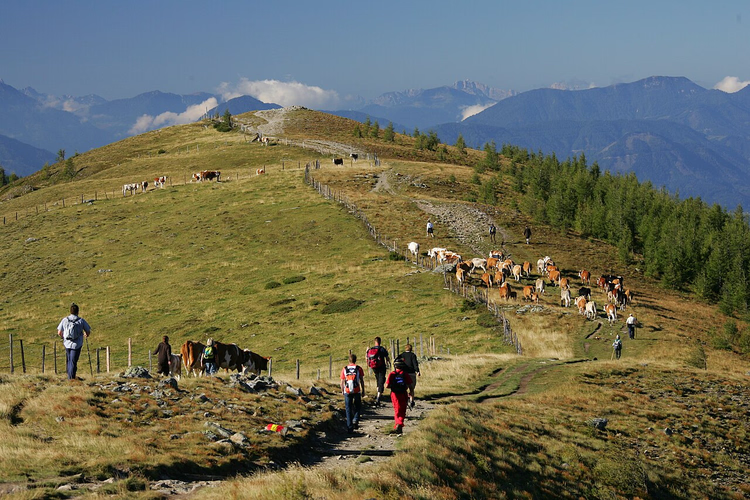 © Bad Kleinkirchheim · CC BYPhoto: Bad Kleinkirchheim, CC BY (https://creativecommons.org/licenses/by/2.0), Wikimedia Commons
Date | Location |
|---|---|
September 12, 2026 | Bad Kleinkirchheim, Wolitzenalm |
Almabtrieb in Tyrol
Tyrol offers the most dates: descents take place almost every weekend in September. Among the major festivals, Söll near the Wilder Kaiser, Wildschönau with 500 cows, and Tannheim with six alpine pastures at once stand out. In Imst they drive sheep, and in Ebbs they welcome Haflingers from Fohlenhof. You will have plenty to choose from even in the middle of the season (as of 09/2026, Tyrol's website).
Date | Location |
|---|---|
October 10, 2026 | Ebbs |
September 12, 2026 | Jungholz |
September 12, 2026 | Grän |
September 13, 2026 | Nesselwängle |
September 19, 2026 | Schattwald |
September 21, 2026 | Tannheim |
September 12, 2026 | Telfes |
September 13, 2026 | Ferienregion Imst (Tarrenz) |
September 18, 2026 | Achensee (Pertisau) |
September 19, 2026 | Lechtal (Bach en Steeg) |
September 12, 2026 | Pfunds |
September 19, 2026 | Brixen im Thale |
September 19, 2026 | Westendorf |
September 26, 2026 | Itter |
September 12 and 19, 2026 | Fügen |
September 19, 2026 | Thiersee |
September 26, 2026 | Hopfgarten |
September 19 and 26, 2026 | Kirchberg |
September 19, 2026 | Wildschönau, Auffach |
September 19, 2026 | Söll |
September 26, 2026 | Hintertux |
September 26, 2026 | Gerlos |
September 19 and 26, 2026 | Alpbachtal, Reith |
September 19, 2026 | Stumm im Zillertal |
October 3, 2026 | Hart im Zillertal |
September 12, 2026 | Jerzens (Pitztal) |
September 26, 2026 | Zell am Ziller |
Almabtrieb in Salzburg state
In Salzburg state, the descents are tied to Pinzgau and Pongau. In Wald im Pinzgau and Krimml the herds pass by waterfalls, and in Wagrain the festival coincides with the village fair. Here you will find not only cows but also markets with cheese and speck. Dates and locations are gathered from Austria's tourism office (09/2026).
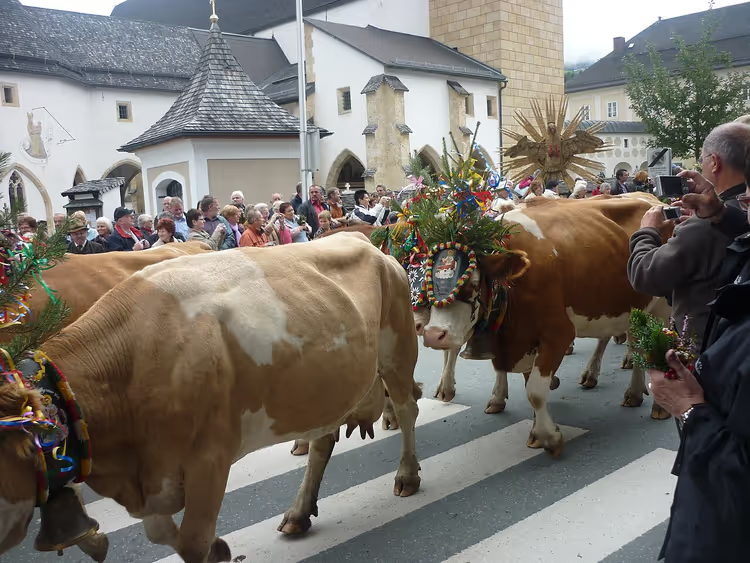 © salzburger.land · CC BY-SAPhoto: salzburger.land, CC BY-SA (https://creativecommons.org/licenses/by-sa/2.0), Wikimedia Commons
Date | Location |
|---|---|
September 12, 2026 | Wald im Pinzgau |
September 19, 2026 | Gruberalm-Hintersee |
September 12, 2026 | Gastein |
September 5, 2026 | Bruck Fusch/Großglockner |
September 19, 2026 | Maishofen |
September 19, 2026 | Krimml |
September 19, 2026 | Wagrain |
September 14, 2026 | Filzmoos |
September 11, 2026 | Radstadt |
Almabtrieb in Vorarlberg
Here the descent is called Alpabtrieb and is held mostly in Montafon. In Riezlern the festival takes place in Kleinwalsertal, which you can reach by bus from Oberstdorf. The remaining dates fall on September 12-22 (as of 09/2026, official tourism portal).
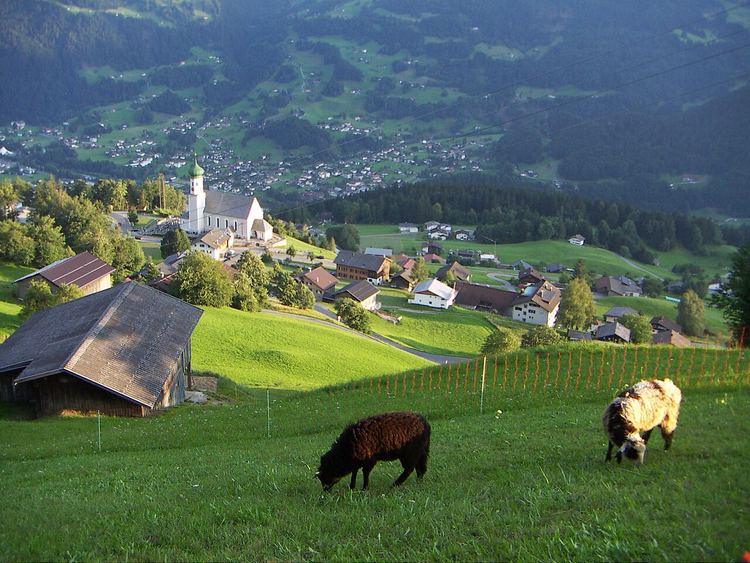
Date | Location |
|---|---|
September 12, 2026 | Montafon |
September 12, 2026 | Silbertal |
September 19, 2026 | Riezlern (Kleinwalsertal) |
September 22, 2026 | Au-Schoppernau |
September 12, 2026 | Schwarzenberg |
Almabtrieb in Styria
Styria takes its time: three festivals are spread across September. In Köflach the cattle are brought to the town center, and in Ramsau am Dachstein you watch the descent against the backdrop of a glacier. This region suits you if you prefer a calm format without thousands of spectators. Check dates closer to the event (as of 09/2026, Austrian tourist office).
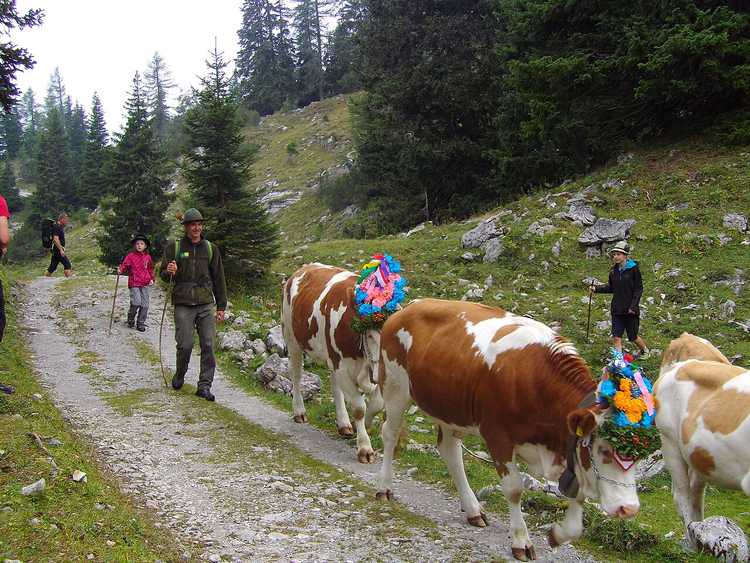 © holding graz · CC BYPhoto: holding graz, CC BY (https://creativecommons.org/licenses/by/2.0), Wikimedia Commons
Date | Location |
|---|---|
September 12, 2026 | Köflach |
September 26, 2026 | Lachtal, Hochegg |
September 25 and 26, 2026 | Ramsau am Dachstein |
Almabtrieb in Upper Austria
In Upper Austria there is only one public descent. It takes place near Moosalm below Gosau, in the Dachstein area. It is convenient to stop here on the way from Salzburg or from Styria. Confirm the date closer to the event (according to the Austrian tourism portal, 09/2026).
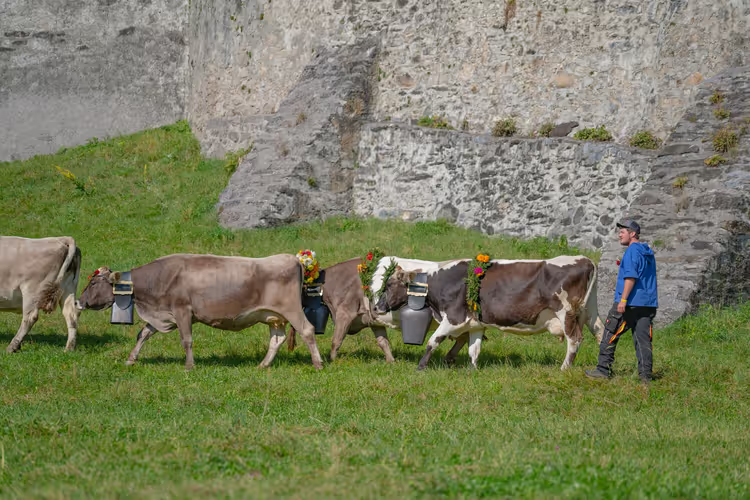
Date | Location |
|---|---|
September 19, 2026 | Moosalm/Gosau |
Where the tradition comes from
The custom is older than Austrian statehood. In spring the cattle were taken up to high mountain pastures, in summer they produced milk and cheese, and in autumn they returned to the valley before the snow. The way down took a whole day and was considered dangerous: the paths were narrow and the animals easily spooked. If the herd made it down without losses, it was attributed to protection from above. In gratitude, the cattle were decorated with wreaths, branches, ribbons, and bells. The decoration was believed to ward off evil spirits and protect the animals on the way. Over time the ritual grew into a public festival that today draws tourists and locals (according to the Austrian tourism organization, 09/2026).
What Almabtrieb means today
Today Almabtrieb remains part of Austria's cultural heritage. It connects faith, craft, and village community. Each valley has added its own touch: in some places the descent is paired with a market, in others with a concert and local food. The festival keeps the rhythm of rural life and reminds the city of its connection to the mountains. For tourists it is also a reason to visit the Alps in the shoulder season, when prices are lower than in summer and there are fewer lines. Many villages earn from this influx of guests throughout September.
How to get to the Alpine valleys
You can reach most valleys by train to a hub station, then by bus or along a mountain road. Tyrol is easy to enter via Innsbruck, Wörgl, or Kufstein, and the Salzburg region via Salzburg. Tickets for Austrian trains are cheaper to buy in advance, a few weeks ahead, rather than on the day of departure. You can check schedules here: trains across Austria on Trip.com.
Driving on mountain roads
If you want to catch two descents in one weekend, a car saves time. Some mountain roads in Tyrol and Vorarlberg have tolls, and fresh snow can settle on the passes as early as September. Go with a compact model: narrow hairpin turns don't take kindly to large vans. Compare car rental options in Austria ahead of time, before the selection narrows down to inconvenient dates.
Where to stay near the event
It's best to spend the night in the village itself. By Friday evening, guesthouses and hotels within a couple of kilometers are booked up, so reserve a month in advance. During the day, a hotel in a neighboring town costs less, but in the morning you'll have to drive over the pass. Once you have a date, open hotels in Austria on Trip.com and look at options near the descent site.
⁉️🤔 Frequently asked questions
When does the Almabtrieb take place in Austria?
The season runs from early September to mid-October. Each village confirms its exact date closer to the event, because weather and snow up high shift the schedule. Plan your trip for a Saturday or Sunday.
Do you need tickets for the Almabtrieb?
Most village festivals are free to attend. You only pay for food, drinks, and parking. There is a rare exception: some alpine pastures sell a ticket for the lift or for access to the grounds. There is nothing to book in advance, just arrive by 9 or 10 am and grab a spot along the road.
Where is the biggest cattle drive in Tyrol?
The largest crowds gather in Söll near the Wilder Kaiser, Wildschönau, and Tannheim. Head to Tarrenz if you want to see a sheep drive, and to Ebbs for Haflinger horses.
How is Almabtrieb different from Alpabtrieb?
It is the same tradition under different names. In Vorarlberg they say Alpabtrieb, in Switzerland Désalpe, in Bavaria Viehscheid. The meaning is the same: the herd returns from summer pastures, and the village welcomes it with a festival. The word changes from region to region, but the ritual itself is nearly identical.
What should you bring to the cattle drive?
Bring waterproof shoes and a warm jacket: it is cold in the mountains in the morning, and rain in September is not uncommon. Cash will come in handy for the market, as cards are not accepted everywhere. Stay near the edge of the road and do not approach the animals, cows have horns and heavy bells.
Can you come with children?
Yes, the drive is usually calm and easy to see from the roadside. Kids love the decorated cows, the music, and the market. Hold your child's hand as the herd passes and do not feed the animals. For the busiest festivals like Söll, it is better to watch from the less crowded side of the village.
In short: what to book
If you have one free weekend, pick dates in Tyrol: drives take place there almost every Saturday. If you want a quiet festival, choose Carinthia or Upper Austria. If you plan to cover several valleys in one trip, look at Tyrol and Vorarlberg and book your accommodation in advance.
Lodging in the village sells out first, so hotels in Austria on Trip.com are worth checking right after you pick your dates.

A small editorial team writing guides for independent travel. We travel ourselves, but we haven’t been everywhere, so we check prices, opening hours and how to get there against official sources.