





Split or Dubrovnik: which city to choose for a 2026 vacation
You're choosing where to spend your vacation in Croatia and you're stuck between two cities. Split or Dubrovnik: both sit on the Adriatic, both have UNESCO-protected Old Towns, but they offer different experiences. Below we've broken down the comparison by the factors that actually influence your decision: food, prices, beaches, accommodation, transportation, and the route between the cities. This will make it easier to choose based on your budget and travel style.
Split or Dubrovnik: the choice in short
💡 In short:
- Split is cheaper, bigger, and livelier. It's the better base for island hopping and visiting Krka National Park.
- Dubrovnik is more compact and more striking. It wins for a short but packed trip and for history lovers.
- Food, accommodation, and transportation in Split cost less than in Dubrovnik.
- The cities are about 250 km apart. There's no direct train; you travel by bus, car, or ferry.
- Prices and schedules: as of 09/2026, verified using data from Krka National Park and ferry operators.
Ad: this article contains affiliate links, we earn a commission if you book through them, at no extra cost to you.
Both cities matter for the Croatian coast, and each has its own strength. Dubrovnik wins with medieval walls and dense history. Split wins with size, prices, and access to the islands. If you're short on time, pick one city and don't spread yourself thin. Below we compare them point by point and name the winner in each category.
Where it's cheaper to eat in Split and Dubrovnik
If you love good, affordable food, the price of eating out heavily influences your choice of city. And here the gap is noticeable.
In Dubrovnik, food is more expensive. Groceries and restaurants in the old center are considered noticeably pricier than the Croatian average, especially right by the walls. Finding an inexpensive authentic dish inside the city isn't easy. The cheap option in the center usually comes down to burgers and pizza.
The situation changes once you get away from the center. In the outskirts of Dubrovnik, the cuisine is better and the prices are more reasonable. So you can eat on a budget here, but you'll have to leave the tourist core.
In Split, it's easier. Restaurants serving local Dalmatian cuisine are scattered throughout the city, and the average check is lower. The food is cheaper, but it's made from fresh local ingredients, so quality doesn't suffer.
Winner in the "cheap food" category: Split. For an affordable trip with good food, it's the more convenient option.
Where to find authentic Dalmatian cuisine
Both cities offer authentic cuisine. But thanks to its size, Split has a wider selection and lower prices. That doesn't mean Dubrovnik is bad: outside the old center, there are excellent places.
The best restaurants in Dubrovnik are often in the suburbs. Konoba Arka in the village of Štikovica and Konoba Bonaca in Sustjepan serve seasonal Dalmatian dishes with views of the Adriatic. Konoba Bonaca even makes its own olive oil and runs a mussel farm. Both places get high ratings in guest reviews.
In the Old Town itself, Trattoria Carmen on Ul. kneza Damjana Jude stands out. It's one of the highest-rated spots in the area, serving fresh fish and local wines. You should book a table in advance; seats go fast. The general rule for Dubrovnik is simple: the farther from the main walls, the fairer the price and sometimes the better the food.
Split is literally packed with restaurants for every budget. One of the most popular spots, Bokeria Kitchen & Wine on Domaldova Street, is best booked in advance. Villa Spiza on Ul. Petra Kružića is also a guest favorite. It's a restaurant in the center with a cozy, homey atmosphere and a short seasonal menu.
Winner in the "authentic food" category: Split. Dubrovnik feeds you well, but Split wins on the number of places and the fact that authentic restaurants exist for every wallet.
Which Old Town is more beautiful
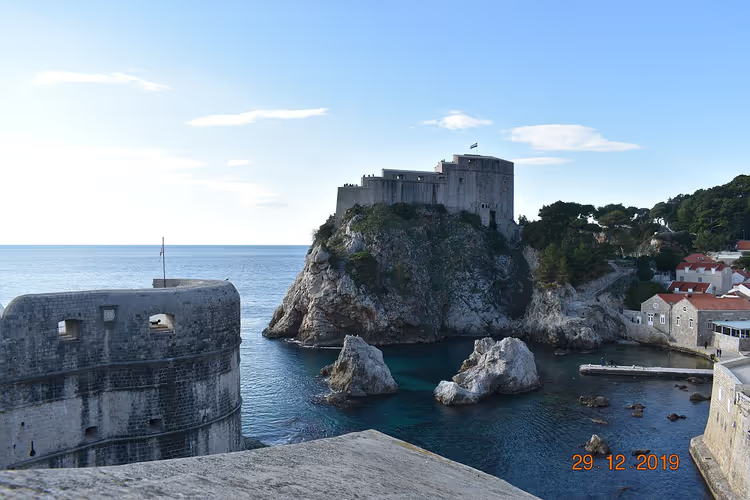
Both Old Towns are beautiful, and both are UNESCO-listed. But their character is different.
 © Sokka-the-meat-and-sarcasm-guy · CC BY-SAPhoto: Sokka-the-meat-and-sarcasm-guy, CC BY-SA (https://creativecommons.org/licenses/by-sa/4.0), Wikimedia Commons
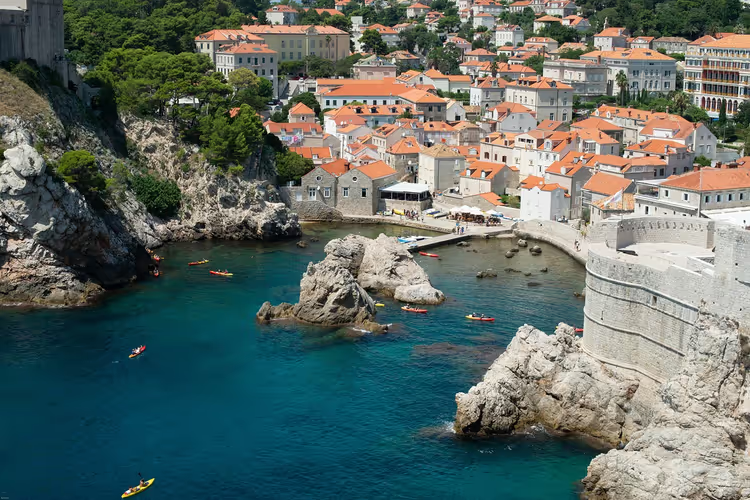
Dubrovnik's Old Town is surrounded by a fortress wall that protected the republic for centuries. Inside, ancient forts, medieval churches, and a cathedral stand densely packed together. You can see it all in different ways: walk along the massive walls up top or circle the city from the water by kayak along the fortifications.
Split's Old Town is also worth a visit. Its core, Diocletian's Palace, is woven into a living city: cafes, shops, and homes operate inside the ancient walls. The atmosphere here is different, less museum-like and more everyday. Still, in terms of the integrity of its medieval appearance, Split falls short of Dubrovnik.
Winner in the "best Old Town" category: Dubrovnik. It has the most extensive and impressive historic center.
Where the nightlife is livelier
Both cities have nightlife, but it's structured differently. In Dubrovnik, trendy clubs and bars are concentrated mainly in the Old Town. The bar selection is large, but there aren't many dance clubs.
Split is more diverse when it comes to nightlife. Clubs operate both near the Old Town and on the beaches. Want to dance on Bačvice beach, check out Central the Club, a two-story club in a former cinema building, or spend an evening with cocktails at Hemingway Bar: Split has plenty of such places.
If you prefer a leisurely bar crawl over dancing until dawn, choose Dubrovnik. For everything else in the evening scene, Split is ahead.
Winner in the "nightlife" category: Split. It has more clubs and bars for different tastes.
Where the overall trip is cheaper
Split is generally cheaper than Dubrovnik. The biggest gap is in accommodation. In high season, Dubrovnik is packed with tourists, and prices for lodging in the center skyrocket. If you're looking for a budget option in Dubrovnik, look for accommodation outside the old center.
The difference is felt in the small things too. An apartment with a view of the city walls in Dubrovnik costs noticeably more than comparable lodging near the beach in Split. On a longer trip, that adds up to a decent amount.
Split also wins on public transportation: it's cheaper and more varied. Though Dubrovnik is more compact and better suited for walking, so you may hardly need transport there.
Taxis and Uber operate in both cities; the price depends on the route and demand. For reference: a short ride from Gruž port in Dubrovnik to the Old Town is inexpensive and takes about ten minutes.
Winner in the "cheaper overall" category: Split. It's more affordable for both accommodation and food.
Which is better for a one-day trip
Both cities have so much to offer that one day isn't enough for a full visit. Still, the choice depends on your budget.
If money isn't the main factor, Split is more convenient for a one-day outing. The key sights of the center can realistically be covered in a day, without island trips. Dubrovnik, on the other hand, deserves three to four days to cover the essentials.
If your budget is tight, it makes more sense to come to Dubrovnik for just one day. That way you'll see the city without overpaying for expensive lodging in high season. In that case, it's cheaper to stay overnight elsewhere.
Winner in the "one-day trip" category: tie. If high lodging prices in Dubrovnik scare you, go there for a single day. If budget isn't a priority, take Split and see it in a day.
The best beaches in Split and Dubrovnik
The Croatian coast is beautiful, and both cities have beaches. The best ones are usually outside the center: some are a twenty-minute walk away, others about the same by car.
Split has several excellent beaches. The pebble beach Kašjuni lies on the Marjan peninsula west of the center. It takes 20-30 minutes to walk there, and it is arguably one of the best beaches in the area. It is quieter than the busy Bačvice near the port. If you want to avoid crowds, it is best to steer clear of Bačvice in high season.
Dubrovnik's beaches, in our view, are not as scenic or spacious. Sveti Jakov is just a 20-minute walk from the Old Town and is popular with locals. But for truly beautiful beaches, you have to travel farther out.
Some of the most striking beaches in the Dubrovnik area are in the town of Cavtat, about 30 minutes away by car. The shore here is more rocky than sandy, but the water is bright blue, there are fewer people, and the views are excellent.
Keep the season in mind. In July and August, even the more remote beaches fill up by midday. Arrive in the morning or closer to the evening, and you will catch both a spot on the shore and softer sun. For families with children, a sandy entry into the water is more convenient, and by that criterion the Split area beats Dubrovnik's rocky coastline. If you prefer intimate coves without crowds, on the other hand, look toward Cavtat and the small villages to the south.
Winner in the "beaches" category: tie. Split has more options and sandy beaches that Dubrovnik lacks, but they can get overcrowded. Near Dubrovnik there are scenic rocky coves. In both cases, the best beaches lie slightly outside the city.
Which city has more sights
Split and Dubrovnik are both cities with deep history. Split grew up around an ancient palace, while Dubrovnik was a separate maritime republic for centuries. With that kind of history, both have plenty of monuments and attractions.
Here Dubrovnik pulls ahead. The city is rich in history and offers a great many sites: the city walls, forts, the cathedral, and the nearby island of Lokrum, which is easy to reach by boat. All of this is concentrated compactly and can be explored on foot.
In Split, the centerpiece is Diocletian's Palace. Inside the ancient walls are hidden courtyards, underground chambers, and the cathedral bell tower, while the quarter itself remains a living city with cafes and homes. There are plenty of individual historic sites here too. But in terms of density and cohesion, Dubrovnik still wins.
Winner in the "sights" category: Dubrovnik. It has more monuments within walking distance, including the walls and old forts.
Which city is a better base for exploring the region
Each city opens up its own routes around the surrounding area. Dubrovnik lies close to Bosnia and Herzegovina and Montenegro. There is a bus to Montenegro, but the journey takes several hours, so renting a car is more convenient. Alternatively, you can take an organized day trip to Montenegro from Dubrovnik.
 © Yamen · CC BY-SAPhoto: Yamen, CC BY-SA (https://creativecommons.org/licenses/by-sa/4.0), Wikimedia Commons
Split stands close to Krka National Park with its waterfalls and offers easy access to the islands of Hvar, Brač, and Vis. From Split you can check out island and Krka National Park tours on GetYourGuide if you do not want to plan the logistics yourself.
The convenient way to reach Krka National Park is via the town of Skradin, about an hour away. From there, a scenic boat takes you to the heart of the park, and this transfer is already included in the ticket. Adult admission costs €40 in June-September, €20 in April, May, and October, and €7 in winter (as of 09/2026, official park website). In summer, a reduced rate applies after 3:00 PM.
Ferries run from Split to the islands, with the journey taking from an hour to an hour and a half depending on the island. Each island is realistic to see in one day.
Winner in the "base for day trips" category: Split. Nearby are Krka National Park, one of Croatia's main natural attractions, and convenient access to the islands of Hvar, Brač, and Vis.
Game of Thrones filming locations
Croatia is popular as a filming location. Star Wars and the BBC series The Musketeers were filmed here, but the country is best known as a shooting location for Game of Thrones.
There are locations in both Dubrovnik and Split, but Dubrovnik wins by sheer number. It played the role of King's Landing. The Trsteno Arboretum, an old park outside the city, and the staircase on Svetog Dominika Street are familiar to fans from scenes in the series. Split also had individual scenes filmed there, with the underground chambers of Diocletian's Palace serving as sets. But in terms of recognizable spots, Dubrovnik is clearly ahead.
If you want to walk through the filming locations with a guide, it is convenient to take a themed tour of the series' locations: the route is designed to cover the main spots in a couple of hours.
Winner in the "Game of Thrones" category: Dubrovnik. It has the most filming locations from the series.
Which city is bigger: Split or Dubrovnik
Split is noticeably larger. It is the second-largest city in Croatia after Zagreb, with a population of about 152,000 (as of 2026, World Population Review). The city is big, lively, and genuinely alive year-round.
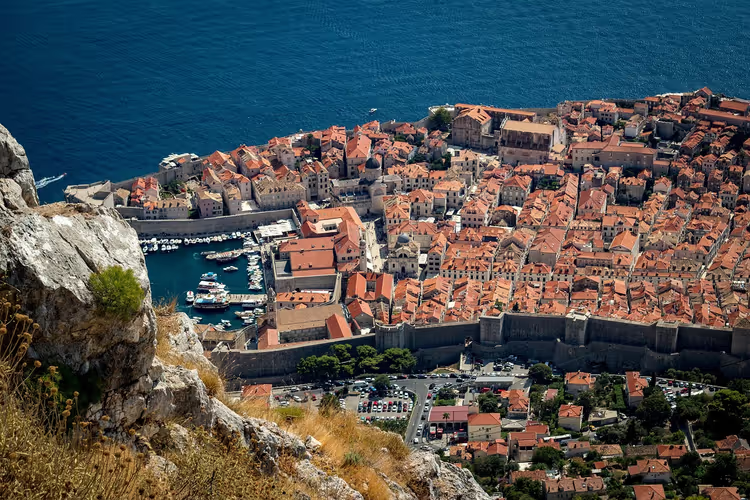
Dubrovnik is smaller: about 41,000 residents (as of 2026, World Population Review). But its compactness works in its favor. A small historic city is ideal for exploring on foot. Start with a walk along the fortress wall, take a look at the city gates that protected the city from invasions for centuries, and walk through the square with the Loggia to the Church of St. Blaise.
Winner in the "size" category: Split. It is bigger than Dubrovnik both in area and population.
Which is warmer: Split or Dubrovnik
Both cities sit on the Adriatic, and it is warm here almost year-round. In summer, the air regularly warms above twenty-five degrees, with July and August being the hottest months.
In Dubrovnik, daytime summer heat is moderate, and nights are mild: the sea and dense buildings smooth out temperature swings. Swimming is comfortable from June through September, and the water holds its warmth well even into early autumn.
In Split, it is slightly hotter during the day, with temperatures reaching thirty degrees or higher at the peak of summer. But nights here are cooler than in Dubrovnik, with temperatures dropping more sharply. In the shoulder season, in May and September, both cities are more pleasant for walking: the heat subsides, and the sea is still warm.
Winner in the "warmer" category: Split. The values are close, but Split heats up slightly more during the day.
Which is better for a vacation with children
For families, in our view, Split is more convenient. Its beaches are well suited for a vacation with children: you can relax, read, build sandcastles, and swim in the sea. If the beaches seem too crowded, take a ferry ticket and spend the day on one of the islands away from the crowds.
Dubrovnik is picturesque and great for walking around the city. But the constant flow of tourists interferes with a relaxed vacation more than in Split. Dubrovnik is not a bad choice. Still, for a family with children, Split offers more.
Winner in the "with children" category: Split. It is slightly more convenient for a family vacation.
Which city is easier to get around
In both Split and Dubrovnik, getting to where you need to go is not difficult. Both have decent public transport that is inexpensive and reasonably fast.
Split has more options: buses, trains, and even bicycle rentals. That way you can combine sightseeing with active movement around the city.
Dubrovnik's network is more modest. Buses run reliably and cover the city, but there is not the same variety as in Split.
Winner in the "getting around" category: Split. It has a more developed transport network.
Where to stay
Hotels in Split are noticeably cheaper than in Dubrovnik for a comparable star rating. In both cities, you should book well in advance for July and August.
Both destinations offer a wide range of options, from three-star properties to four- and five-star hotels and resorts. But for the same money, you usually get more in Split, and the spread of locations is wider. Before booking, compare current prices: Split hotels on Trip.com are easy to browse by your travel dates.
If you plan to base yourself in Dubrovnik, budget higher and book earlier. Here, too, it helps to check Dubrovnik accommodation options in advance and catch a reasonable price before peak demand hits.
Find hotels in Split
Compare prices across booking sites and filter for rooms with free cancellation.
Compare prices on Trip.comThe widget loads once you give your consent.
Winner in the accommodation category: Split. You get more for your money here.
Where the vacation is more luxurious
For a luxury vacation, Dubrovnik is unrivaled. It has more four- and five-star hotels than Split, and Michelin-starred restaurants let you dine well and relax at a high level.
Many tour operators offer premium packages specifically for Dubrovnik, which can be tailored to your needs. The city's entire tourist character is geared toward high-end travel.
Split can also be luxurious, especially if you add a trip to the islands. Private coves and secluded villas on Hvar and Brač offer a premium escape close to the city. Still, in terms of the concentration of five-star city hotels and fine dining, Dubrovnik is ahead.
Winner in the luxury category: Dubrovnik. It has more five-star hotels and Michelin-starred restaurants.
What to choose on a tight budget
For a budget trip, Split is the better fit. It is cheaper than Dubrovnik in almost every respect: accommodation, food, and entertainment are all easier on the wallet. This makes it more budget-friendly from the start.
Dubrovnik can also be done on a modest budget, but Split as a city is noticeably more affordable.
Winner in the budget category: Split. Hotels and restaurants here are cheaper than in Dubrovnik.
Where flights are cheaper: Split or Dubrovnik
Flights to both cities can be inexpensive, especially outside peak season. Low-cost carriers sometimes offer tickets to Dubrovnik from a few dozen euros, but in the height of summer the price often climbs past a hundred per seat.
Flights to Split are cheaper on average. Starting fares are usually slightly lower than to Dubrovnik, although in season the price here, too, easily goes above a hundred. If you want to save, compare dates and don't wait to buy.
There is also a clever workaround. You can fly into Split, where tickets are cheaper, and then get to Dubrovnik by ferry. The journey takes a couple of hours longer, but you'll have more money left for the vacation. We'll cover ferries between the cities below. It's convenient to compare flight prices for your dates in advance.
Flexibility with dates and airports noticeably lowers the price. A midweek departure is usually cheaper than a weekend one, and booking a couple of months out saves you from peak summer fares. If you're starting from a major European hub, several carriers offer direct flights to both cities in summer. Outside the season, flight options shrink, so in fall and winter it's often better to fly through Split and continue from there.
Winner in the flights category: Split. Flights to and from Split are usually cheaper than to Dubrovnik.
How to get from Split to Dubrovnik
If you have the chance to see two UNESCO sites in one trip, don't pass it up. The two cities are quite realistic to combine.
There are several ways to get between Split and Dubrovnik. Below we'll break down each one so you can choose the option that fits your budget and route.
How many kilometers between Split and Dubrovnik
Split and Dubrovnik are separated by about 250 km. There is no direct rail connection between them, so the options are: bus, car, or ferry.
 © Jos. · CC BYPhoto: Jos., CC BY (https://creativecommons.org/licenses/by/3.0), Wikimedia Commons
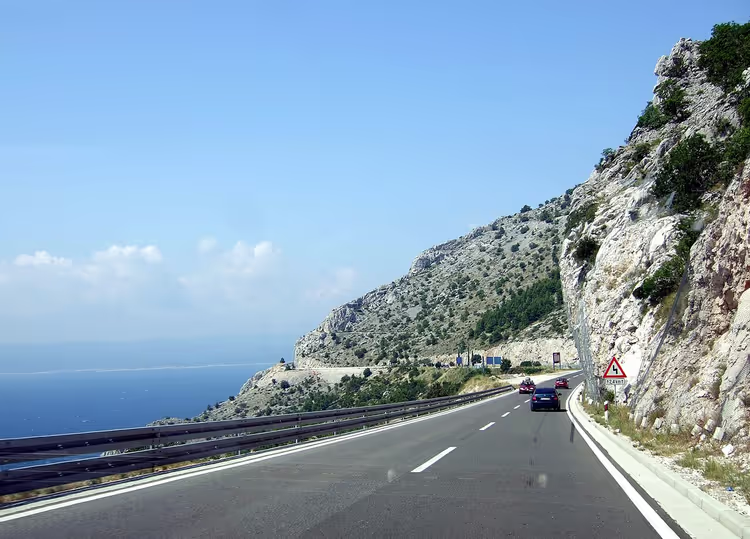
The bus is the cheapest way, but also the slowest. The journey takes from four to five and a half hours depending on the carrier and route. A car, on the other hand, is the fastest option: via the motorway the trip takes about three hours. The drive along the scenic D8 coastal road is more beautiful, but noticeably longer.
Below we'll look at each option in more detail.
Good to know: the fastest way to travel between the cities is by car. You can actually pick up a car in one city and drop it off in the other, which is convenient. Just check with the rental company in advance whether this service is available and how much it costs.
Split and Dubrovnik by bus
Buses between Split and Dubrovnik are cheap but not fast. Services depart several times a day and arrive in Gruž, Dubrovnik's port district. Gruž lies on the outskirts, so from the bus station you'll need to switch to a city bus to reach the Old Town.
The journey itself takes from four to five and a half hours depending on the route you choose. If time isn't critical and budget is the priority, the bus is a sensible choice. Tickets are easy to buy online in advance; in season, seats sell out quickly.
Split and Dubrovnik by car
Driving is far faster than the bus and takes about three hours, not counting stops. The exact time depends on the route and traffic.
There are two main routes: the coastal road and the A1 motorway. The coastal road is undoubtedly the most scenic, but in summer it slows down due to heavy traffic.
The A1 motorway is a fast road from Dugopolje near Split to the town of Ploče, where it rejoins the coastal road. The A1 is tolled for cars; check current rates with the road operator before your trip.
Split and Dubrovnik by ferry
In summer, a ferry runs between the cities, and it's a beautiful way to travel. The company Kapetan Luka Krilo operates the route from Split to Dubrovnik roughly from April to October, usually with one departure per day in each direction (as of 09/2026, Ferryhopper).
The journey takes about 4.5-5 hours, and along the way the catamaran calls at islands including Brač, Hvar, and Korčula. Tickets start at around €20 per person, but the exact price depends on the date and demand (as of 09/2026, Krilo).
Schedules and prices change from season to season, and in winter there may be no sailings at all. So always check current dates and times with the operator before buying. Tickets are sold online, and in high season you should book them in advance.
How many days to spend in Split and Dubrovnik
To see Dubrovnik without rushing, allow several days. If you're not planning excursions to Bosnia and Herzegovina or Montenegro, three to four days is optimal.
Split, with its islands, port, and active nightlife, needs more time. In our view, it deserves about a week, so you can fit in both the city and trips around it.
If time allows, combine both cities in one itinerary. The classic option: fly into Split, spend about a week there with the islands and Krka National Park, then move to Dubrovnik for a few days and fly out from there. That way you'll see two different faces of the coast without rushing or unnecessary transfers. Plan the journey between the cities in advance, especially if you're taking the ferry in high season: in summer, tickets sell out quickly, and the island route is worth securing a window seat for.
⁉️🤔 Frequently asked questions
What should I choose if I'm visiting for the first time and only have three or four days?
Go with Dubrovnik. It's compact, and in three or four days you can cover the walls, forts, the cathedral, and Lokrum Island without rushing. Split, on the other hand, needs more time to explore properly because of its size and the trips to the surrounding islands.
Is Split or Dubrovnik cheaper for a vacation?
Split. It's more affordable for accommodation, food, and transport, and there are more budget-friendly restaurants. In Dubrovnik, prices in high season are noticeably higher, especially for lodging in the old center. To save money, look for accommodation outside the historic core.
How many days do you need for each city?
Allow three to four days for Dubrovnik if you're not heading to Montenegro or Bosnia. For Split, with its islands, port, and nightlife, it's better to set aside about a week. That way you can cover both the city itself and day trips to the surrounding area.
How do you get from Split to Dubrovnik without a car?
By bus or ferry. The bus is cheaper, but it takes four to five and a half hours and arrives at Gruž Port on the outskirts. In summer, the Kapetan Luka Krilo ferry runs the route, taking about 4.5 to 5 hours with stops at the islands.
Which city has better beaches?
Split wins on beaches: there's the sandy Bačvice near the port and the pebbly Kašjuni on Marjan. Near Dubrovnik, beaches are more often rocky, but the water is very clean, especially around the town of Cavtat, half an hour away. In both cases, the best beaches are slightly outside the center.
In short: what to choose and what to book
Split and Dubrovnik, two strong cities on the Adriatic coast, and each has its own case. Dubrovnik is more striking, more historic, and better for a short, packed trip. Split is cheaper, livelier, and more convenient as a base for the islands and Krka National Park. If time allows, include both in your itinerary, that gives you the fullest impression of Croatia.
- If you're on a tight budget: go with Split, where accommodation, food, and transport are cheaper.
- If you have a short trip of three to four days: go with Dubrovnik, you can realistically see it without rushing.
- If you're traveling with kids or planning island trips: go with Split and its beaches.
- If you're looking for luxury: go with Dubrovnik and its five-star hotels.
Once you've picked your city, compare current prices and book your accommodation in advance: browse hotels on Trip.com conveniently by your exact travel dates.

A small editorial team writing guides for independent travel. We travel ourselves, but we haven’t been everywhere, so we check prices, opening hours and how to get there against official sources.