
















Amsterdam: how much a trip costs and where you can really save
A hotel in central Amsterdam sometimes costs more than the entire trip to the city. Museum tickets are sold only online and often with a time slot, and the train gets cheaper if you book it in advance. To keep the trip from becoming a financial surprise, we broke down every expense category and added a way to save on each one.
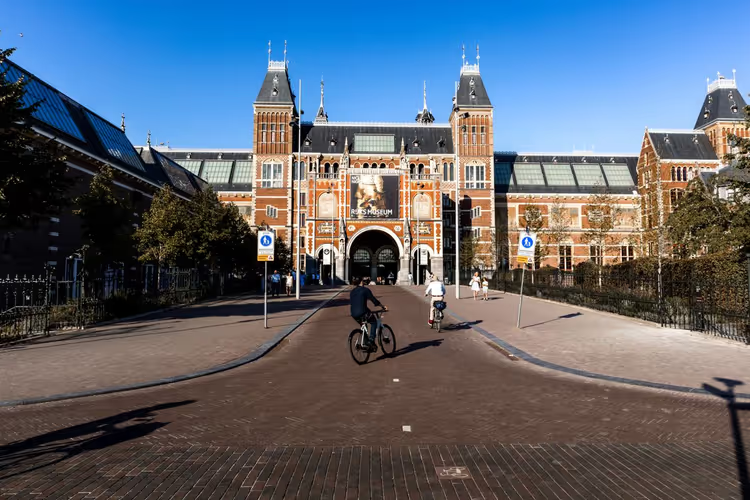
Let's start with a reference point. An adult ticket to the Rijksmuseum costs 25 €, and visitors under 19 get in free (as of 09/2026, Rijksmuseum). For a couple spending a week there, the total bill runs into four figures, and more than half of that goes to lodging. Below you'll find prices for each category and a clear savings plan.
Ad: this article contains affiliate links, we earn a commission if you book through them, at no extra cost to you.
Trip budget: what the expenses consist of
💡 In short:
- Lodging takes up the biggest part of the budget, so choose your travel dates based on hotel prices.
- Museums, the train, and transfers are cheaper to book online and in advance.
Amsterdam expenses break down into six clear blocks. The list includes travel, lodging, food and drinks, museum tickets, city transport, and small expenses like postcards or laundry. The order of amounts is almost always the same, and lodging sits at the top.
Lodging shapes the budget more than anything else, because the nightly price in the center varies by season and day of the week. We calculate expenses for a couple, since the hotel and train are split between two people, while some tickets are listed per person. In practice, this means it's easier to plan the trip around hotel nights: set your lodging budget, add museums and transport, and fit food into what's left.
That way you'll see in advance where the bill grows and can change your travel dates instead of cutting an expense category.
Cash, ATMs, and pickpockets in the center
In Amsterdam you can pay by card almost everywhere, so you only need cash at markets, small cafes, and for souvenirs. There are also ATMs in the center. For a card in euros there's no conversion, but your bank may charge a withdrawal fee.
The second reason to carry little cash has to do with pickpockets. Organized groups operate in the city center and on trams, targeting tourists in crowds. Keep your wallet in an inside pocket, take off your backpack on public transport and hold it close, and don't leave your phone in your back pocket.
Before the trip, check your bank's terms and the foreign withdrawal fee. If you withdraw money several times over a week, the fees will exceed the cost of a lunch. Finding a card with free withdrawals once is easier than arguing with the bank later about every charge.
How to get there: train, plane, and early booking
Getting to Amsterdam rarely becomes the heaviest expense if you buy tickets in advance. From Berlin and other German cities, the train is more convenient: the train arrives right at Amsterdam Centraal, and tickets go on sale several months before the trip (NS International).
Flying pays off on long routes, but add the transfer from Schiphol to the ticket price. The train from the airport to the central station takes about 15 minutes and runs around the clock, while a taxi at night costs several times more (NS train schedules).
Option | When it pays off | What to book in advance |
|---|---|---|
Train | Traveling from Germany or Belgium | Ticket from the carrier, two to three months ahead |
Plane | Long route and flexible dates | Flight plus train from Schiphol |
Bus | Minimum travel budget | Ticket online, window seats |
Early booking works best for trains and for weekend trips, when demand is highest. Check train schedules to Amsterdam on Trip.com if you want to compare travel times and prices for your dates.
Lodging: where the main expense category sits
Lodging in Amsterdam costs more than in most German cities, and it's what determines the budget for the whole trip. The difference between the center and a neighborhood a couple of kilometers away amounts to tens of euros per night. If you're willing to take the tram to the museums, the weekly bill becomes noticeably lower.
Even a simple hotel near the center like Hotel Library Amsterdam goes for the price of a good hotel in Berlin. A hostel is cheaper, but you pay for the discount with a shared room, noise, and a line for the shower. An apartment or room on Airbnb pays off when there are two or more of you and the place has a kitchen.
Compare not just the price, but also the location. A hotel two stops from Amsterdam Centraal saves you a transit pass and time, and that difference sometimes completely cancels out the savings from a cheap neighborhood. Check hotel prices in Amsterdam on Trip.com to see the spread across neighborhoods for your dates.
A tourist tax is added to the hotel price, charged for each night. It's calculated from the cost of the stay, so it's more noticeable at an expensive hotel and almost invisible at a hostel. Confirm the final total at the booking stage so you don't get a surprise at the front desk.
Food: supermarket, cafe, and markets
Food in Amsterdam costs less than lodging, but more than you're used to at home. Prices in supermarkets and cafes are higher than in Germany, and a glass of beer at a canal-side bar costs noticeably more than a German one. One evening at a bar rarely comes out cheaper than dinner at an ordinary cafe.
The simplest way to cut expenses is breakfast. If your lodging has a kitchen, make breakfast yourself and brew coffee at home, and go to a cafe once a day. Breakfast on the canal is beautiful, but you pay as much for it as for a full lunch.
During the day, markets are a good deal. Albert Cuyp Markt in the De Pijp neighborhood feeds you cheaper than the center, and they also sell cheese, nuts, and street food there. Groceries at the market cost less than at shops near the canals, and portions are bigger.
Think in weekly terms, not one-off prices. A couple of lunches in the center and a dinner with wine take as much money as three days of normal eating if you spread the budget across days. You lose nothing in quality, but you keep expenses under control.
Museums and tickets: what to book in advance
Amsterdam sells almost all museum tickets only online and often with a time slot. Showing up at the ticket office is pointless, because there may be no open windows left for the hour you want, and the line at the entrance won't save you.
Ticket | Price | How to buy |
|---|---|---|
Rijksmuseum | €25 for adults, visitors under 19 free (as of 09/2026, official website) | Online only, with a time slot |
Van Gogh Museum | €25 for adults (as of 09/2026, official website) | Online only, 15-minute slot |
Anne Frank House | about €16.50 (as of 09/2026, official website) | Online, slots open on Tuesdays |
Anne Frank House tickets open every Tuesday for the week that starts six weeks later, and they sell out within hours. Plan your trip so that on Tuesday you have internet access and known dates. Without a slot you will not get into this museum, because tickets are not sold at the door.
The I amsterdam City Card is valid for 24 to 120 hours and includes GVB transport and most city museums. It pays off only with a packed schedule, when you visit two museums a day and travel a lot. The Van Gogh Museum is not included in the card, so buy a separate ticket for it (as of 09/2026, Van Gogh Museum).
If you want to cover all tickets in one payment, compare Amsterdam tickets and tours on GetYourGuide and check the slot schedule for your dates.
Tours and tickets in Amsterdam
Guided tours, skip-the-line tickets and activities — most offers can be cancelled free of charge.
See offers on TiqetsThe widget loads once you give your consent.
Getting around the city: GVB, travel card, and bike
Amsterdam's public transport is convenient and affordable if you use it regularly. A GVB day ticket costs 10 € and takes care of payment for the whole day, while individual trips cost more for less time (as of 09/2026, GVB).
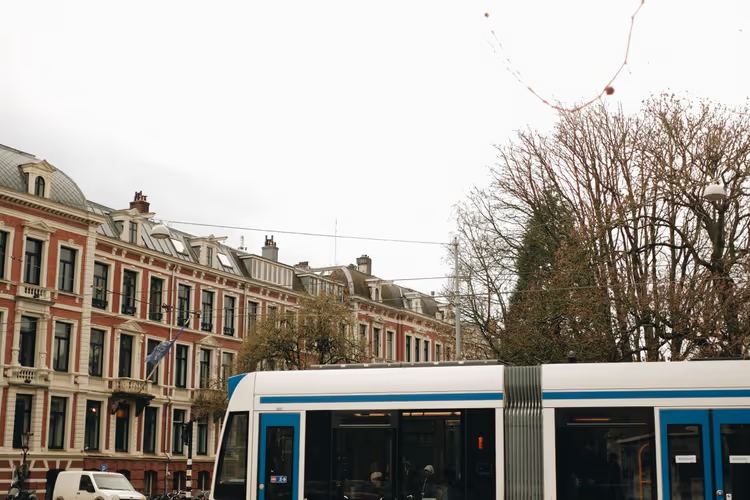
With a packed itinerary, transport is already included in the I amsterdam City Card, and for several consecutive days a multi-day pass is a better deal. Paying by card at the validator also works, but each tap is charged separately, and by evening the total ends up higher than expected.
Option | Price | When to choose it |
|---|---|---|
GVB day ticket | 10 € (as of 09/2026, official GVB website) | Three or four trips in a day |
Multi-day pass | Depends on validity period | Several consecutive days |
I amsterdam City Card | Transport included | Packed itinerary with museums |
Bike rental | Depends on area and season | Short trips around the center |
A bike in Amsterdam is cheaper than the tram over short distances and faster on narrow streets. The rules are simple: keep to the right, don't leave your bike by a canal, and always lock it. The fine for improper parking is higher than a day's rental.
Other expenses people forget about
Small purchases rarely make it into the plan, but over a week they add up to a noticeable amount. These include postcards and stamps, souvenirs for family, laundry, a locker padlock at the hostel, and water on the go. Luggage storage at the station and paid toilets in the center are a separate line item.
Set aside a small reserve for these expenses. That way you won't have to skip dinner because of an unplanned laundry run or a forgotten padlock. It's easier to keep the reserve in a separate wallet so it doesn't dissolve into everyday spending.
How to save money in Amsterdam
Accommodation outside the center
If you're willing to spend twenty minutes getting to the museums, a quiet neighborhood awaits you in the evening instead of tourist crowds.
A room instead of a hotel
A room on Airbnb or in a guesthouse saves more than just money. The host often suggests places tourists don't reach. Read the house rules in advance so you don't pay more for cleaning than for a night.
Markets instead of cafes
On weekdays the market in De Pijp has fewer tourists. Buy seasonal fruit and get your coffee at a regular bakery nearby. One trip to the market replaces two lunches in the center.
Weekdays instead of weekends
In summer Amsterdam welcomes the most visitors, and hotels raise prices on weekends. If your dates are flexible, plan your trip for weekdays in the off-season. October offers the same museums and canals without the lines, and hotels cost noticeably less.
⁉️🤔 Frequently asked questions
How much money do you need for a week in Amsterdam?
An exact figure is impossible to give because accommodation affects it the most. Accommodation takes more than half the budget; add museum tickets, a transit pass, and food on top. For a couple the total runs into four figures, and it's higher on weekends and in summer.
Do you need cash in Amsterdam?
Cards are accepted almost everywhere, so cash is only needed for markets, small cafes, and souvenirs. Don't carry much cash because of pickpockets.
How much do tickets to the Rijksmuseum and Van Gogh Museum cost?
An adult ticket to each museum costs 25 €, and visitors under 19 enter the Rijksmuseum for free. Tickets are sold online only and with a time slot.
Is the I amsterdam City Card worth it?
The card pays off with a packed itinerary, when you visit museums every day and use transport a lot. If you plan to see two museums and take long walks during your trip, buying individual tickets is cheaper.
When to visit Amsterdam to save money?
The most expensive time comes in summer and on weekends, when people arrive from neighboring countries for a couple of days. April is also high season because of tulips and King's Day. Weekdays in October are cheaper, lines are shorter, and museums run on their regular schedule. In winter prices are lowest, but days are short and it often rains.
In short: what to book
If you have a week and a mid-range budget, book a hotel outside the center and a GVB day pass. If you're going for the museums, buy time slots for the Rijksmuseum and Van Gogh Museum first, and look for accommodation near Museumplein. If your budget is minimal, choose a hostel, Albert Cuyp Markt, and the train instead of a flight.
Compare prices for your dates in advance: Amsterdam hotels on Trip.com and tickets with tours on GetYourGuide. This way you'll see the real amounts before booking and cut unnecessary expenses at the planning stage.

A small editorial team writing guides for independent travel. We travel ourselves, but we haven’t been everywhere, so we check prices, opening hours and how to get there against official sources.