
















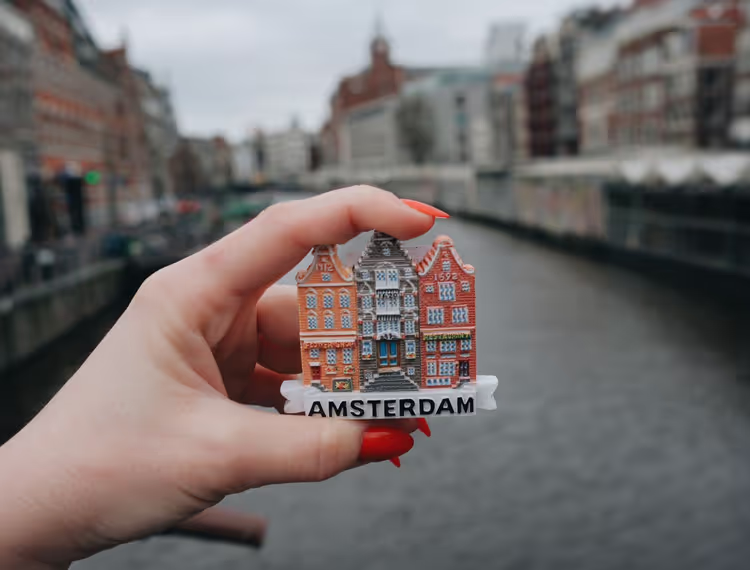
Souvenirs from Amsterdam: 9 purchases that won't end up in the closet
Buying souvenirs in Amsterdam is easy, but getting them home in one piece is harder. Tulips need packaging, cheese doesn't like heat, and ceramics break easily in a suitcase. So it's better to choose gifts in advance, not in the last hour before your flight.
You're coming for a few days and want to bring back things that won't end up forgotten in a closet. Below are nine ideas: from clogs and Delftware to cheese, waffles, and jenever.
Here's a quick rundown of each idea: where to buy it, who the gift suits, and what the catch is.
Where to buy souvenirs in Amsterdam
💡 In short:
- Cheese, waffles, and small souvenirs are easiest to buy at Albert Cuyp Markt in the De Pijp neighborhood.
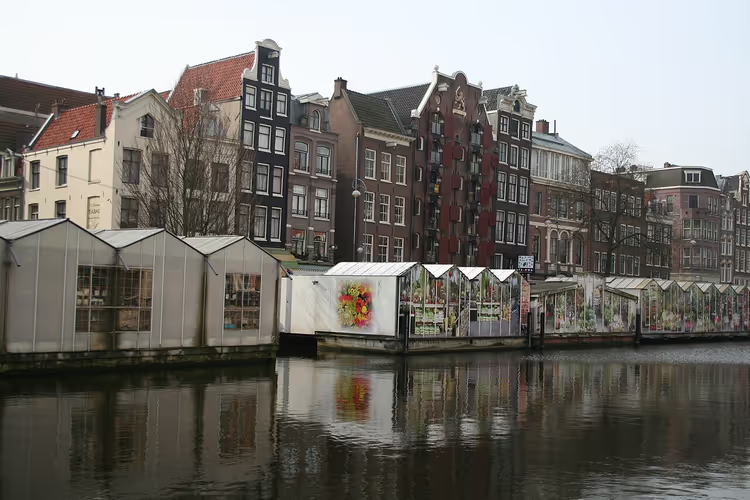
- Flowers and tulip bulbs are sold at the floating Bloemenmarkt on the Singel canal.
- Opening hours: 09/2026, verified on the official Albert Cuyp Markt website.
Below is a general list: what to bring, who the gift is for, and where to find it.
Souvenir | Who it's for | Where to buy |
|---|---|---|
Tulips | garden, balcony, windowsill | Bloemenmarkt |
Clogs | fans of folk souvenirs | souvenir shops |
Windmills | decor and collections | Zaanse Schans, shops |
Delftware | gifts for loved ones | Royal Delft, shops |
18+ souvenirs | adults | De Wallen district |
Orange souvenirs | lighthearted gifts | market and central streets |
Dutch cheese | edible gifts | Albert Cuyp Markt |
Waffle cookies | sweet gifts | market, supermarkets |
Jenever | alcohol lovers | House of Bols, shops |
Albert Cuyp Markt is open Monday through Saturday, from 9:30 AM to 5:00 PM, closed on Sunday (as of 09/2026, market website). The stalls run along Albert Cuypstraat in the De Pijp neighborhood. Here you'll find cheese, warm waffles, nuts, and inexpensive souvenirs.
The floating Bloemenmarkt sits on the Singel canal. It's open year-round, and flowers are sold from barges. Bloemenmarkt is called the only floating flower market in the world, and it has been operating since 1862 (Amsterdam.net).
Shops in the center stay open later than the market. Stores on Kalverstraat and Nieuwendijk are open into the evening, with a wider selection of ceramics and clogs.
1. Tulips
 © Massimo Catarinella · CC BY-SAPhoto: Massimo Catarinella, CC BY-SA (https://creativecommons.org/licenses/by-sa/3.0), Wikimedia Commons
The most recognizable souvenir from the Netherlands: tulip bulbs. At Bloemenmarkt they're sold in packs by variety, and each pack has a photo of the future flower. Take several different varieties, it makes the gift look more generous.
For transport, take only bulbs in sealed factory packaging. Cut flowers are harder to bring across the border, and they won't survive in a vase until you get home anyway. Sellers at the market know airline requirements and will tell you how to pack your purchase so it arrives without losses.
If you don't have a garden or balcony, take potted indoor bulbs. With normal care, they'll bloom on the windowsill by spring.
- Who it's for: people with a garden, balcony, or wide windowsill.
- The catch: cut tulips won't survive the trip, only bulbs work as a gift.
2. Clogs
 © Dietmar Rabich · CC BY-SAPhoto: Dietmar Rabich, CC BY-SA (https://creativecommons.org/licenses/by-sa/4.0), Wikimedia Commons
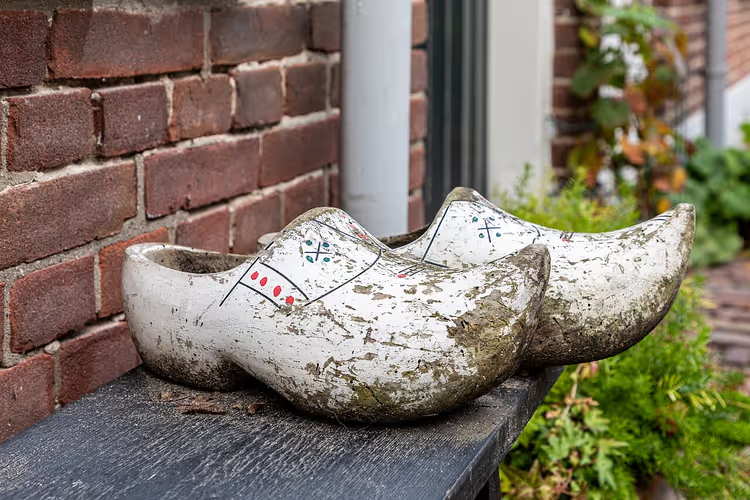
One of the national symbols of the Netherlands: wooden clogs (klompen). They're carved from a single piece of wood, most often poplar or willow. People used to wear this footwear every day, but today you'll see it on farmers in villages and in open-air museums.
Authentic handmade clogs cost noticeably more than souvenir keychains. They're uncomfortable compared to sneakers, so large pairs are usually bought as decor. You can get a small painted clog keychain: it fits in the palm of your hand and costs the same as a regular souvenir.
- Where to buy: souvenir shops in the center and Albert Cuyp Markt.
- Who it's for: people who collect folk souvenirs.
- The catch: heavy pairs take up a lot of suitcase space.
3. Windmills
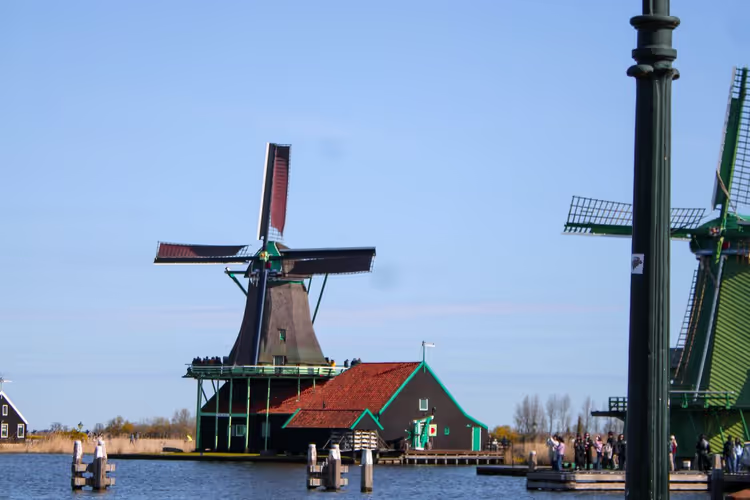
Windmills pumped water out of polders and ground grain. They still stand in villages, and miniature replicas are sold in any souvenir shop.
You can see real windmills just outside the city, in Zaanse Schans. Take the train from Central Station to Zaandijk Zaanse Schans station, then walk across the bridge (as of 09/2026, dezaanseschans.nl). A demonstration cheese dairy and a clog workshop operate there as well.
Walk along the waterfront in the morning: by afternoon, tour groups fill the dock and bridge. For souvenir windmills, choose wooden or metal ones, they travel home intact.
- How to get there: train from Amsterdam Central to Zaandijk Zaanse Schans station.
- The catch: the dock gets crowded with tour groups in the afternoon.
4. Ceramics
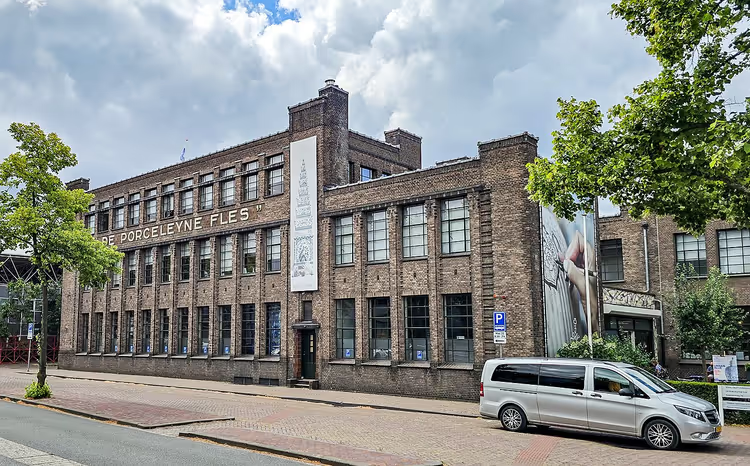 © Szilas · CC BYPhoto: Szilas, CC BY (https://creativecommons.org/licenses/by/4.0), Wikimedia Commons
Delftware (Delfts Blauw) is recognizable by its white background and cobalt blue decoration. The oldest factory, Royal Delft, has operated in the city of Delft since 1653 (as of 09/2026, royaldelft.com). Turn a piece over and look at the maker's mark.
A classic gift for friends and family: decorated plates. They feature windmills, landscapes, and biblical scenes. If you need many gifts, a set of plates is a better value than individual pieces.
Carry ceramics in your hand luggage and cushion them with paper. That way you'll get a plate home without chips.
- What to buy: plates, small vases, and decorated tiles.
- The catch: ceramics break and take up space in your luggage.
5. 18+ Souvenirs
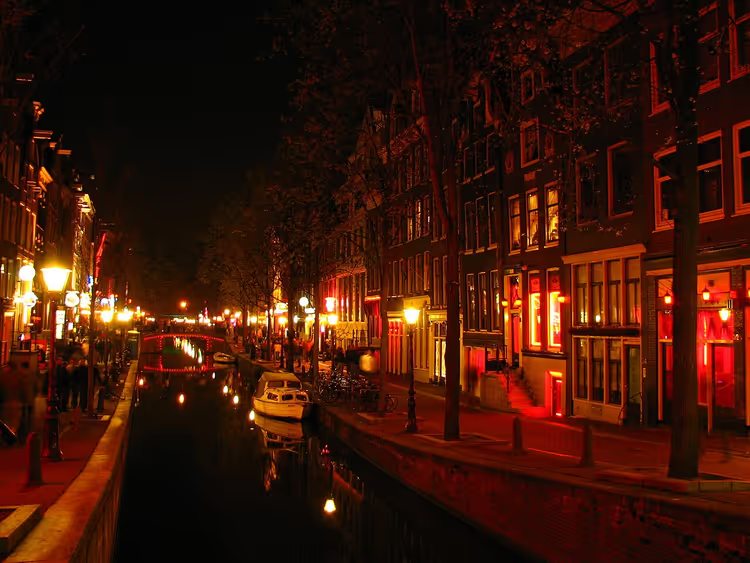 © Rungbachduong · CC BY-SAPhoto: Rungbachduong, CC BY-SA (https://creativecommons.org/licenses/by-sa/3.0), Wikimedia Commons
Amsterdam is known for the De Wallen red-light district and its liberal attitudes. Erotic souvenirs are sold everywhere here, often with humor. These purchases are best kept in your suitcase, away from curious children.
A separate topic: cannabis products, chocolate, and drinks. Selling cannabis is allowed only in coffeeshops and only for personal use, under the tolerance policy (as of 09/2026, government.nl). You won't get such a souvenir across the border, and the same applies in neighboring countries.
- Important: possession and sale of drugs in the Netherlands remain illegal; coffeeshops operate as an exception.
- The catch: any "herbal" souvenir will have to stay in Amsterdam.
6. Orange souvenirs
Orange became the country's symbol because of the House of Orange. Before King's Day (Koningsdag) in April, the city is flooded with orange. Bring something orange with you or buy it on the spot.
The cheapest options: a keychain, pen, lighter, or a T-shirt with a lion. All these small items fit easily into a packed suitcase. Choose something with the flag or the word Amsterdam on it, so the gift is instantly recognizable.
- Who it's for: people who like eye-catching but lighthearted gifts.
- The catch: small items are easy to lose among other purchases.
7. Dutch cheese
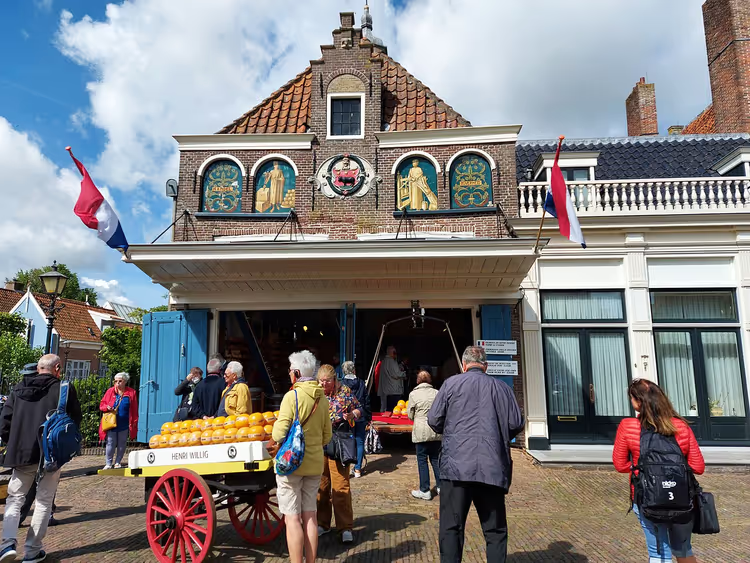 © Bybbisch94, Christian Gebhardt · CC BY-SAPhoto: Bybbisch94, Christian Gebhardt, CC BY-SA (https://creativecommons.org/licenses/by-sa/4.0), Wikimedia Commons
When it comes to food from the Netherlands, cheese is the first thing people recommend. Sellers offer tourist-packaged wheels of Edam and Gouda. It's best not to stop there.
At the market, farmers sell homemade cheeses from cow's and goat's milk. Their ingredient lists are simpler, and the flavor depends on the aging. Ask the seller which cheese suits you better, mild or aged, and try it before buying.
Soft cheese doesn't handle heat well and spoils quickly in transit without packaging. Ask the seller to vacuum-seal your purchase and keep it in your hand luggage.
- Where to buy: Albert Cuyp Markt and cheese shops in the center.
- The catch: cheese adds weight and needs to stay cool in transit.
8. Waffle cookies
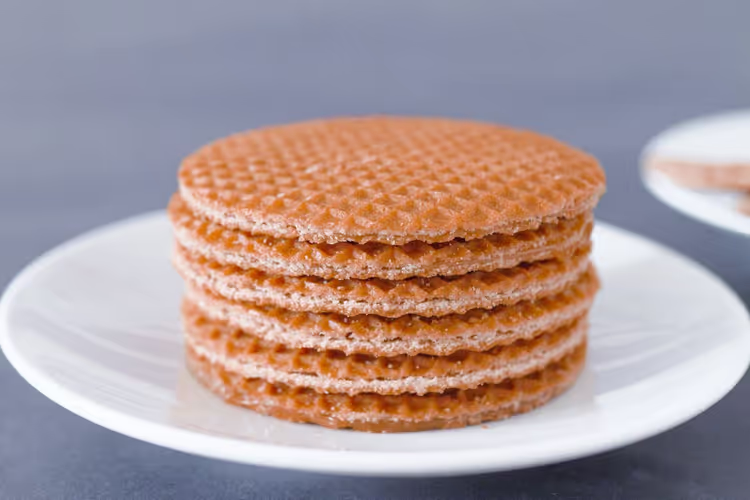
The Dutch stroopwafel consists of two thin layers with syrup in between. Fresh waffles are made right at the market and served warm, when the syrup stretches.
The classic way to eat them is with coffee: place the waffle on top of a cup of hot drink and wait until the syrup softens. You'll be surprised how different a warm waffle tastes.
For home, buy packaged waffles: they're cheaper in the supermarket than at stalls along the canals.
- Where to try them: Albert Cuyp Markt, where waffles are made on the spot.
- The catch: fresh waffles won't survive the trip; only packaged ones are suitable for taking home.
9. Jenever
The national drink of the Netherlands: jenever. It's a relative of gin, only softer and grain-based. Pick up a couple of bottles to try, but keep in mind the alcohol limits for luggage.
You can get acquainted with the drink at the House of Bols at Paulus Potterstraat 14. Admission to the tasting tour costs €19.50 (as of 09/2026, houseofbols.com). The Bols brand has been producing drinks since 1575, making it the world's oldest liqueur house (as of 09/2026, bols.com).
- Cost: House of Bols admission €19.50 (as of 09/2026, official website).
- Who it's for: those who try local alcohol and enjoy cocktails.
- The catch: alcohol is restricted by weight and transport rules.
⁉️🤔 Frequently asked questions
Can you take cannabis out of Amsterdam?
No. In the Netherlands, coffeeshops sell cannabis under a policy of tolerance and only for personal use (as of 09/2026, Dutch government website). Taking it across the border is prohibited, and you can face legal consequences in neighboring countries. Only buy cannabis if you're staying in the country.
What should I bring as gifts for colleagues?
Go for small items that don't take up space: packaged stroopwafels, magnets, clog keychains, and orange souvenirs. These gifts are inexpensive and work for almost everyone. Save cheese, porcelain, and alcohol for close friends and family: they're heavier and require care in transit.
Where can I buy souvenirs cheaper?
The cheapest options are at Albert Cuyp Markt and in supermarkets; the most expensive are at canal-side stalls and on Bloemenmarkt. Compare a couple of prices before buying. Packaged waffles and cheese at the supermarket will cost less than at tourist shops in the center.
How do I get Delftware home in one piece?
Wrap the pieces in paper or clothing and put them in your carry-on. It's better not to check ceramics in luggage, where they can easily break. Tiles and small figurines can be placed between layers of clothing. That way your porcelain will arrive home without chips.
How much time do I need for souvenirs?
One or two days is enough: the market, Bloemenmarkt, and a couple of shops in the center. In one day you can buy food and small items, while porcelain and cheese are better chosen without rushing. Check the market's opening hours before your trip, as they change on holidays.
In short: what to bring from Amsterdam
If you have a garden or balcony: get tulip bulbs. If you need edible gifts: cheese from the market and packaged stroopwafels. If you want a keepsake: a clog keychain and a Delft plate. If you're traveling for experiences: a ticket to the House of Bols and a day in Zaanse Schans.
One last tip: arrive at the market when it opens, before the stalls get picked over and while vendors are free. Check opening hours before your trip; the market is closed on holidays.

A small editorial team writing guides for independent travel. We travel ourselves, but we haven’t been everywhere, so we check prices, opening hours and how to get there against official sources.