
















What to try in Amsterdam: 9 Dutch dishes and where to eat them in 2026
You're heading to Amsterdam and want to eat like a local? Here's your list.
Dutch cuisine is simple, but it has iconic foods you won't find anywhere else. Bitterballen, fries with thick sauce, fresh herring, warm apple pie, stroopwafels with caramel inside. The Albert Cuyp market is called the largest daytime market in Europe, and almost all of this is sold right there.
Below are nine dishes and specific addresses where Amsterdammers themselves get them. We checked hours and prices in September 2026 on the official websites of the establishments.
Ad: this article contains affiliate links, we earn a commission if you book through them, at no extra cost to you.
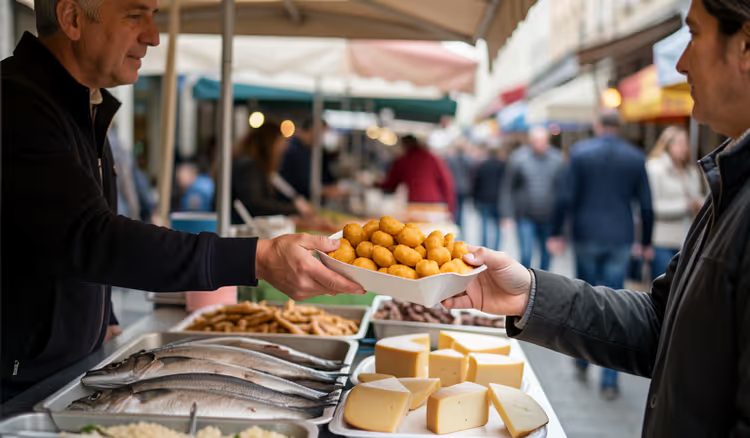 AIIllustrative image: AI-generated
Dutch cuisine: what to expect in Amsterdam
💡 In short:
- Dutch food is street snacks: bitterballen, fries, herring, croquettes, waffles.
- The cheapest and tastiest way is to get them from stalls and at the Albert Cuyp market in the De Pijp neighborhood.
- Get appeltaart at Winkel 43 on Noordermarkt, fries at Vleminckx on Voetboogstraat.
- Sample cheese at Kaasbar, and FEBO vending machines are open almost around the clock.
- Hours and addresses of establishments: 09/2026, verified on the official websites of Winkel 43 and Vleminckx.
When was the last time you heard the phrase "let's go eat Dutch"? Exactly. The Netherlands is known for many things, but refined cuisine is definitely not one of them. In this Calvinist country, work always came before pleasure, so food was prepared quickly and without fuss.
That leads to the main feature: Dutch cuisine is small one-bite snacks, eaten on the go and often straight from your hand. Lunch is traditionally not cooked at all. The classic office lunch is a slice of white bread with chocolate sprinkles called "hagelslag", and that's not a joke.
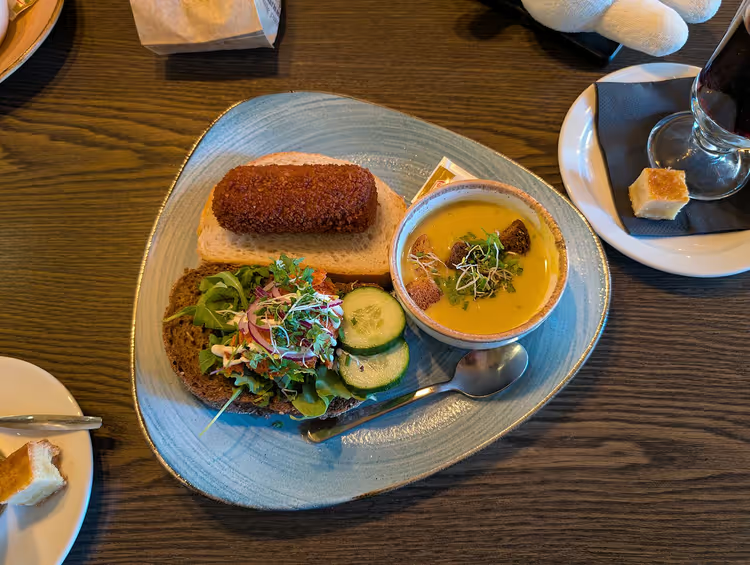
The good news is that Amsterdam has become very multicultural today. Alongside local snacks you'll find cuisines from around the world: from Italy to Indonesia, from Turkey to Thailand. A separate legacy of colonial history is Indonesian cuisine. The famous rijsttafel, a set of a dozen small dishes served with rice, has long been a local staple in Amsterdam. But you should still start with what you came here for: Dutch classics.
One more practical point. Many Dutch snacks are eaten with your hands and on the go, so this is street food in its purest form. Stalls, vending machines, and snack bars almost everywhere accept cards and contactless payment, so you can mostly skip cash. Grab napkins right away: fries, bitterballen, and herring leave marks on your fingers.
Next we go through nine dishes. For each one I'll tell you what it is and name a specific spot where locals try it. All the places are collected on a map at the end of the article.
1. Bitterballen
Ask an Amsterdammer about the typical food of their city, and they'll almost certainly say "bitterballen." And when you ask what these brown balls are made of, you'll hear "you're better off not knowing."
There's actually no secret. Inside is a ragout of veal and beef, outside is a coarse breading, all deep-fried in hot oil. Crunchy on the outside, soft and almost liquid inside. Be careful with the first bite: the filling is hot.
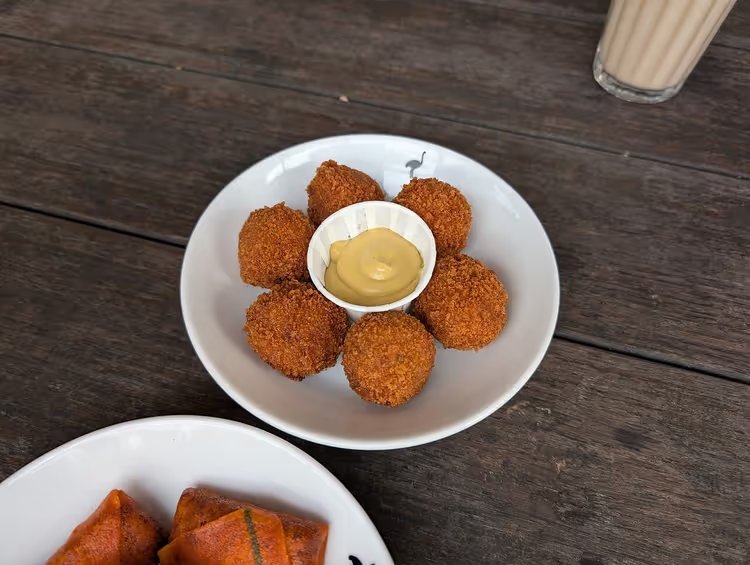
Don't be scared by the name: they're not bitter. They got the name because they used to be served with a bitter stomach liqueur. Today it's a popular snack that bars serve with beer, tapas-style.
Bitterballen are almost always served the same way: a pile of balls with spicy mustard on the side for dipping. A standard portion is six or eight pieces. You eat them with a toothpick or your hands, but always hot, straight from the pan. Essentially it's a smaller version of the croquette, another Dutch favorite: same principle, just an oblong shape.
Where to try them. Bitterballen are served in any bar, any snack bar, and any fast food spot in the city. If you want to eat them in comfort rather than on the go, head to Brouwerij de Prael brewery: there they serve the balls with different dips and good craft beer.
- The catch: it's deep-fried food, so you can't call it light.
2. Pannenkoeken
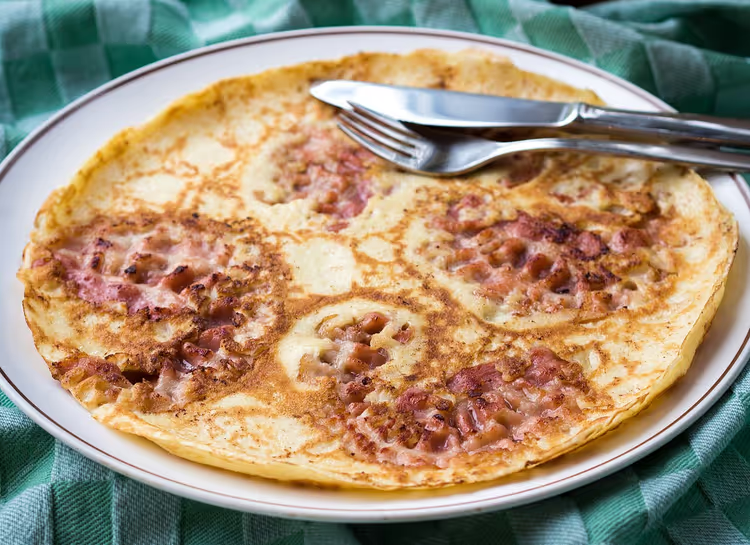
After hearty bitterballen, we move on to Amsterdammers' favorite dish, the legendary pannenkoek. It's a Dutch pancake.
 © Takeaway · CC BY-SAPhoto: Takeaway, CC BY-SA (https://creativecommons.org/licenses/by-sa/4.0), Wikimedia Commons
Pancakes exist in many cuisines around the world, but here they have cult status, with their own cafes called pannenkoekenhuisjes. There's even a half-joking holiday, Sint Pannekoek Dag, celebrated on November 29 across the country.
Fun fact: the pannenkoek even made it to the Moon. There's a crater called Pannekoek, though it's named not after the pancake but after the Dutch astronomer Anton Pannekoek. And in Amsterdam there's a canal cruise where pannenkoeken are baked right on board the boat. More on that below, in the section about food tours.
The batter is simple: flour, eggs, and milk. A finished pannenkoek is thicker than a French crepe but thinner than an American pancake. In the morning it's eaten sweet, with apple, banana, or strawberries. Toward evening people go for the hearty version, with cheese, ham, and bacon.
Where to try them. Pannenkoeken are best eaten at one of the pannenkoekenhuisjes scattered around the city. My favorite spot is The Pancake Club: it sits in a cozy garden by a small canal, and the setting is very idyllic.
- The catch: portions are big, and one pannenkoek is sometimes more than enough for two.
3. Kibbeling
For the next dish we go back to the deep fryer. The Netherlands is a seafaring nation, so fish is one of the staple foods here.
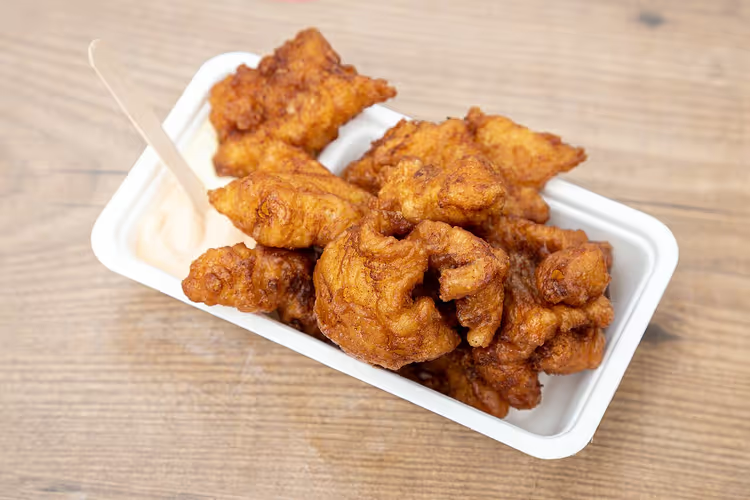
Kibbeling is fresh haddock, cod, or hake. The fish is cut into small one-bite pieces, coated in batter, and fried. A classic of Dutch street food.
Kibbeling differs from British fish and chips in shape and presentation. Here it's not a large battered fillet but small pieces that are easy to eat with a skewer from a paper cup. Fish stalls in the Netherlands are called "viskraam," and they're literally on every corner. It used to be food for poorer city dwellers; today everyone eats it.
 © Superbass · CC BY-SAPhoto: Superbass, CC BY-SA (https://creativecommons.org/licenses/by-sa/4.0), Wikimedia Commons
Kibbeling is served with one or more sauces: knoflook (garlic aioli), ravigote (vinegar-based), or plain remoulade. It goes well with a small beer, which locals call "pilsje."
Where to try it. Kibbeling is sold at many markets, for example at Albert Cuyp. The tastiest one I found was at Frens Hering, one of the fish stalls in the city. Get a portion and eat it on a bench with a canal view.
- The catch: it's fried fish to go, so it's only convenient to eat on the move or sitting by the water.
4. Frietjes
Almost any Dutch dish calls for a side, and that side is, of course, French fries. Here they are ordered as patat friet or simply frietjes.
Strictly speaking, fries were not invented by the Dutch but by their Belgian neighbors, more precisely the Flemish. But it is in pointed paper cones that fries define the street look of Amsterdam.
 AIIllustrative image: AI-generated
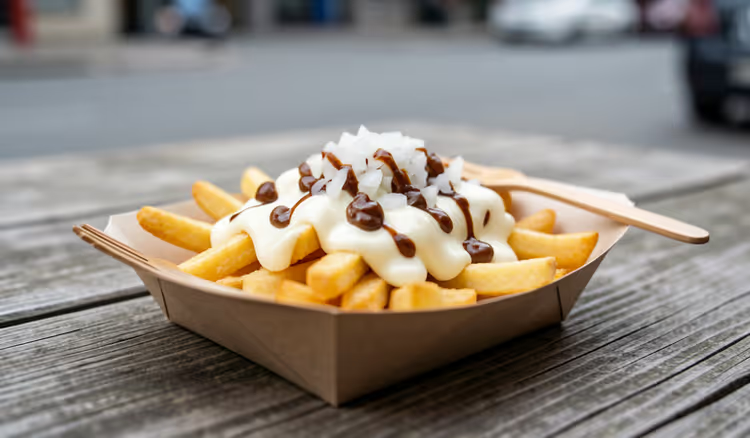
Fried potatoes are served in every country in the world today. But only here are they topped with the best sauces. Forget boring ketchup and go for the local classics. My favorite is oorlog sauce: mayonnaise, onions, and satay sauce on top. Be sure to try the legendary joppie too, made with mayonnaise, onions, and curry.
Fries are served in a pointed paper cone, with a small fork so you do not get your hands dirty. The process is simple: pick a size (small, medium, or large), then a sauce. The Dutch like thick-cut fries, crispy on the outside and soft on the inside. There are usually dozens of sauces on display, so it is easy to get overwhelmed, but oorlog and joppie are always a safe bet.
Where to try them. The Belgian origin of fries is even reflected in the names of the city's best fry shops. Vlaams Friteshuis Vleminckx at Voetboogstraat 33 has cult status and has been frying here since 1957: open daily from 11:00 to 19:00, until 20:00 on Thursdays, with more than twenty sauces (as of 09/2026, official Vleminckx website). A second option is Manneken Pis on Damrak.
- The catch: Vleminckx has no seating, so you eat standing on the street, and the line can take a while.
5. Appeltaart
If you get a craving for coffee and something sweet during an afternoon walk, it's time for the next typical dish: appeltaart. This is the Dutch apple pie.
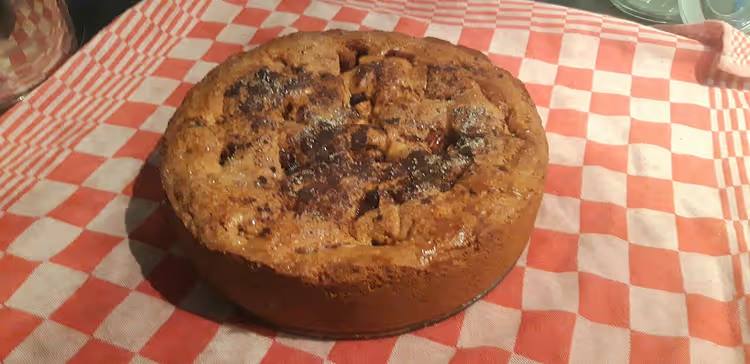
It's on the dessert menu of almost every cafe. The recipe is very simple: shortcrust pastry and lots of apples, a little cinnamon and lemon. That's it. It's eaten warm, generously topped with whipped cream or vanilla ice cream, and always with a large cup of strong coffee.
 © Daan0416 · CC BY-SAPhoto: Daan0416, CC BY-SA (https://creativecommons.org/licenses/by-sa/4.0), Wikimedia Commons
The Dutch didn't invent apple pie, but they seem to have perfected it. A slice here is tall and dense, not airy. Inside are large apple slices, sometimes raisins, and on top a lattice of pastry.
Winkel 43 sits right on Noordermarkt square, in the very heart of the Jordaan neighborhood. On Monday and Saturday mornings, a market unfolds around it: on Saturdays it's a farmers' market with cheese and vegetables. Combine the two: first a stroll through the market, then a slice of pie with coffee on the terrace. That's how you'll catch the true Jordaan vibe.
Where to try it. There's essentially one address: Winkel 43 at Noordermarkt 43, in the picturesque Jordaan neighborhood (as of 09/2026, cafe's official website). A slice costs around 5.3 € and is served warm with fresh cream (as of 09/2026, Winkel 43 menu). Be prepared to wait: it's a cult spot, always crowded. In good weather, the terrace with beer benches opens up, so the crowd thins out a bit.
- The catch: you can't reserve a table, and at peak hours the line stretches right out onto the street.
6. Hollandse Nieuwe
The next dish, I'll be honest, isn't my personal taste. But it belongs in an article about typical Amsterdam food without question.
 © Takeaway · CC BY-SAPhoto: Takeaway, CC BY-SA (https://creativecommons.org/licenses/by-sa/3.0), Wikimedia Commons
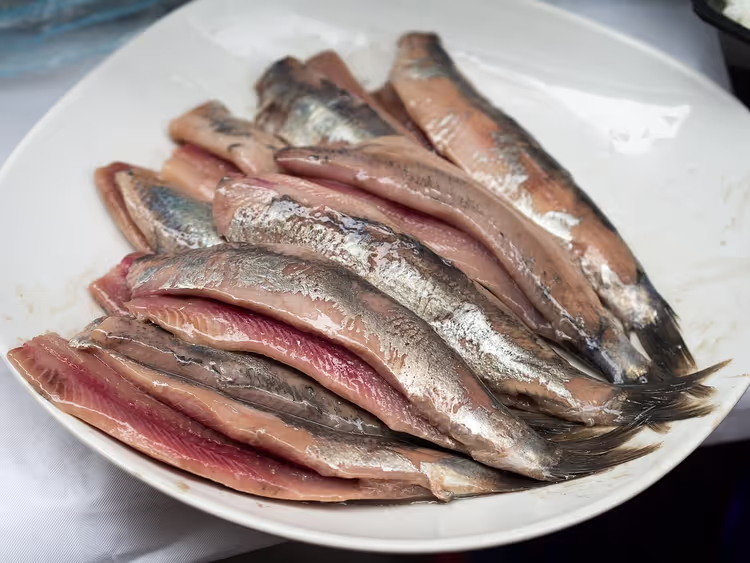
Herring here, the local "haring," is traditionally eaten raw, with chopped raw onion and pickled cucumber. It's especially loved by those who want to recover after a wild night.
Raw fish is often sold under the "Hollandse Nieuwe" label. This name can only be used for herring caught from May to August, when its fat content is especially high, and salted in the traditional Dutch way.
There's also a ritual side to it. In Amsterdam, herring is usually served cut into pieces that you spear with a small skewer, while in Rotterdam you hold it by the tail and lower it into your mouth whole, with your head tilted back. Onion and cucumber come with it almost always. The first barrel of the season, the so-called Hollandse Nieuwe, is still auctioned off in the country, and the money goes to charity.
Where to try it. Get real Hollandse Nieuwe at one of the fish stalls in the city. I can't give a personal recommendation here, but locals praise "Stubbe Haring" and "Henks Haring."
- The catch: it's raw fish with onion, the taste is distinctive and not for everyone.
7. Stroopwafels
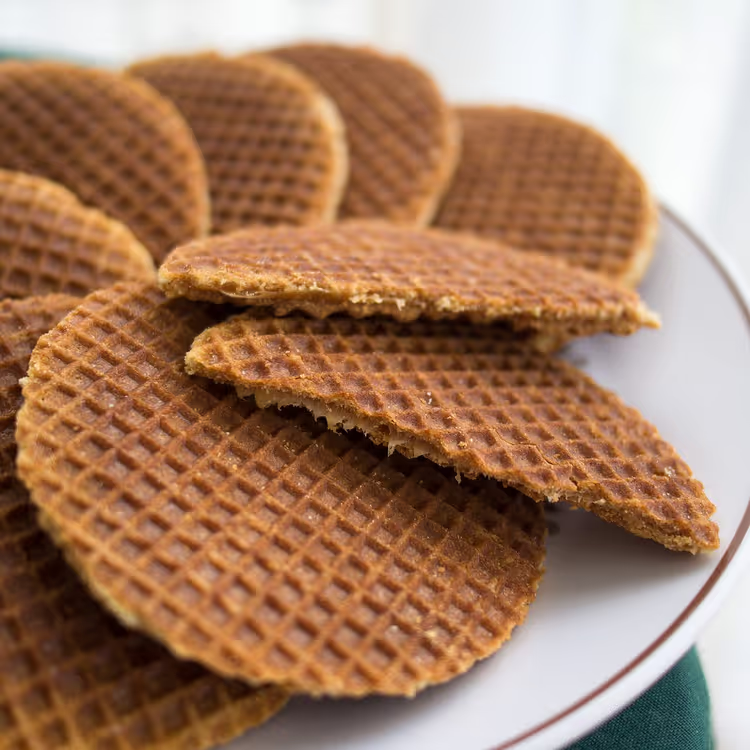
Now a dish that's closer to my taste again. A stroopwafel ("stroop" means syrup in Dutch) is two thin crispy waffles glued together with a sticky layer of caramel syrup.
 © Takeaway · CC BY-SAPhoto: Takeaway, CC BY-SA (https://creativecommons.org/licenses/by-sa/3.0), Wikimedia Commons
It's seriously addictive: stopping after one is hard. The waffles long ago made their way to European supermarkets, but they're best fresh, straight from the stall.
The birthplace of the stroopwafel is the city of Gouda, the same one that gave its name to the cheese. According to legend, in the early 19th century a local baker gathered leftover dough and crumbs, glued them together with syrup, and created a waffle for the city's less wealthy residents. Today it's one of the country's main gastronomic symbols, and a fresh, still-warm waffle simply can't be compared to a store-bought one.
Eat them the local way. Order a hot coffee or cocoa with your waffle and place it on top of the cup: it fits perfectly. Hold it there until the caramel inside melts from the steam.
Where to try it. Stalls with fresh waffles are all over the city. "Melly's Stroopwafels" gets especially high praise (the name, by the way, doesn't belong to a Dutch grandmother but to an Argentine immigrant, Guillermo Mellicovski). And you can bake your own waffle at a stroopwafel workshop on GetYourGuide.
- The catch: very sweet and sticky, by the end of the waffle your hands will be covered in caramel.
8. Kaas
Ask anyone outside the country what food they associate with Holland, and you'll almost certainly hear cheese.
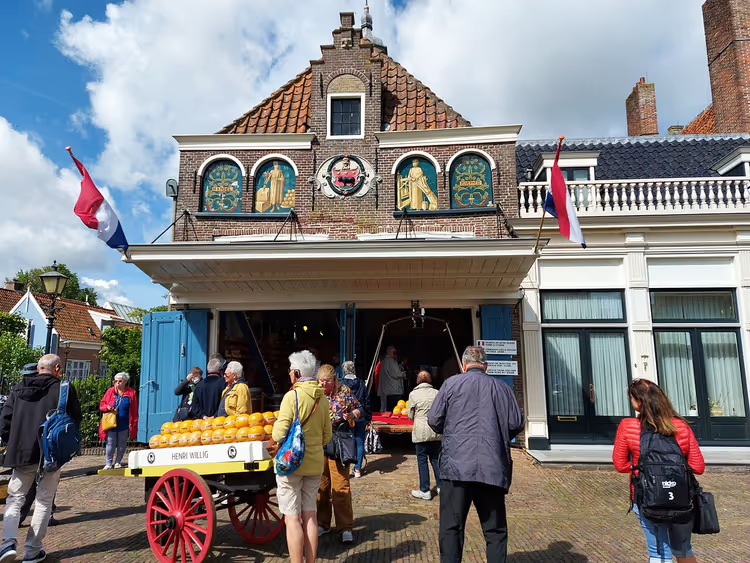
Cheese really is deeply embedded in the local culture, and there are more varieties here than almost anywhere else. They're usually named after their place of origin: hence Edam and Gouda, plus Leidse Kaas, Komijnekaas, Maasdammer, and Nagelkaas.
Gouda and Edam are real small towns near Amsterdam where cheese was traded for centuries. Young cheese is soft and creamy, while aged cheese, "oude kaas," is hard, with salty crystals and a bold flavor. Leidse and Komijnekaas contain cumin, which gives them a spicy taste. Round Edam wheels are traditionally coated in red wax, making the cheese easy to spot at the counter.
 © Bybbisch94, Christian Gebhardt · CC BY-SAPhoto: Bybbisch94, Christian Gebhardt, CC BY-SA (https://creativecommons.org/licenses/by-sa/4.0), Wikimedia Commons
Large cheese shops line the entire city center. Yes, they're geared toward tourists, but go in anyway: nobody stops you from sampling free pieces of cheese from different regions.
Where to try it. If you're bringing cheese home as a souvenir, buy it at markets, for example at Albert Cuyp. And for the experience, go to Kaasbar at Ferdinand Bolstraat 10 in the De Pijp neighborhood: cheese plates travel to you on a conveyor belt, like at a sushi bar. The menu features about 24 Dutch varieties, with plates costing 6-11 € (as of 09/2026, Kaasbar).
- The catch: without a reservation, seats at the conveyor belt are almost never available, so arrive early.
9. Frikandel
The last dish brings us full circle back to the first recommendation, bitterballen. About frikandel, people also say: you're better off not knowing exactly what's in it.
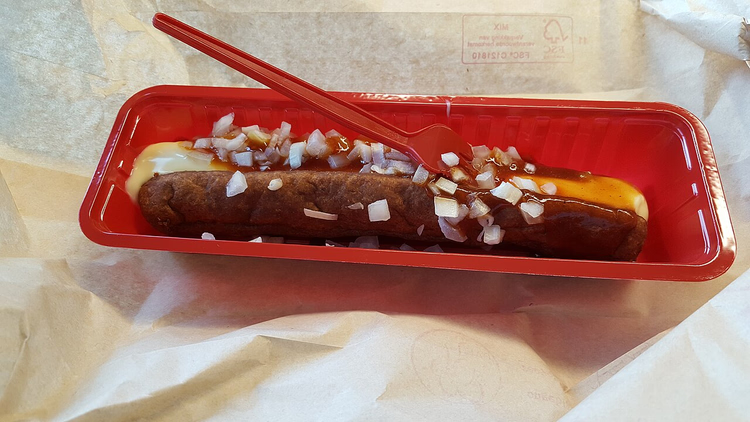
It's essentially a deep-fried sausage made from inexpensive pork, beef, or poultry, bound together with flour. Under Dutch regulations, a little horsemeat is also allowed, so the urban legend isn't entirely baseless.
 © www.snack-nieuws.nl · CC BYPhoto: www.snack-nieuws.nl, CC BY (https://creativecommons.org/licenses/by/2.0), Wikimedia Commons
Don't be quick to cringe. As a "frikandel speciaal," meaning with mayonnaise, ketchup, and chopped raw onion, it turns out surprisingly tasty.
Where to try it. Frikandel is ordered at the same snack bars as bitterballen and fries. I especially enjoyed the frikandel speciaal at "House of Fries" with its huge selection of sauces for the fries.
- The catch: better not to examine the ingredients too closely; it's fast food, not a diet dish.
Albert Cuyp Market: everything in one place
The most beautiful market in Amsterdam, in my opinion, is Albert Cuyp in the De Pijp neighborhood. Trading has been going on here for over a century, since 1905.
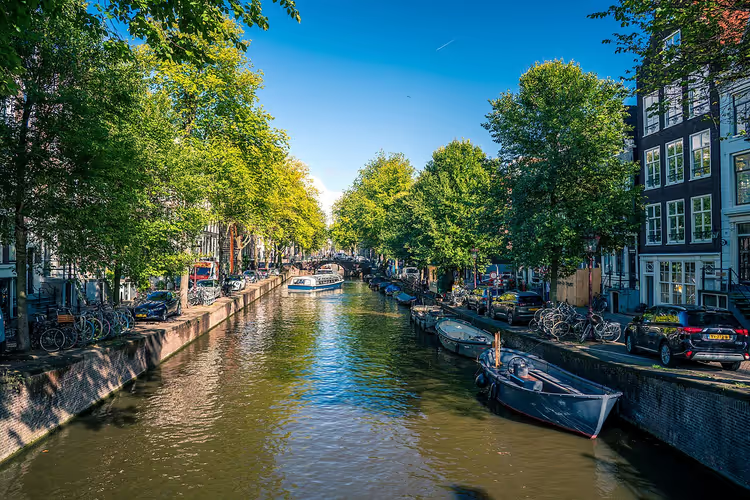 © Nan Palmero from San Antonio, TX, USA · CC BYPhoto: Nan Palmero from San Antonio, TX, USA, CC BY (https://creativecommons.org/licenses/by/2.0), Wikimedia Commons
The market is open Monday through Saturday from 9:30 AM to 5:00 PM and closed on Sundays. Its 260 stalls have everything your heart desires: fruits and vegetables, fish and cheese, sausages and meat, sweets and flowers. It is called the largest daytime market in Europe (as of 09/2026, the market's official website).
Almost all the Amsterdam classics from this article are sold here too: kibbeling, cheese, fresh stroopwafels. My advice is simple. Come in the morning: the fresh produce stalls often pack up by the afternoon once their goods are sold out.
Food from a vending machine: FEBO
Another local quirk: establishments that look like giant cigarette vending machines. Food sits behind small glass windows, and you take it straight out of the wall.
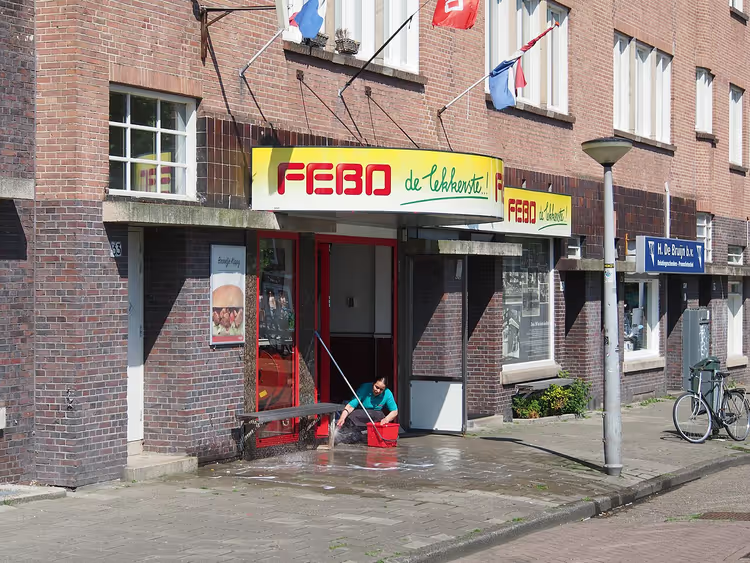
FEBO vending machines are all over Amsterdam and run almost around the clock. Even if hunger hits you at three in the morning, you can pull fresh bitterballen, frikandel, or croquettes out of a window. Contrary to urban myths, the food here is fresh: unsold items are quickly removed from the slots.
Your survival instinct may whisper that you shouldn't eat something that has been sitting behind a glass door for who knows how long. But trying vending machine food at least once is worth it. You can pay with coins or Apple Pay.
Food tours in Amsterdam
If you want to dig deeper into the topic, there is a whole range of food tours here. They save you time and take the problem of choosing a place off your plate.
A popular format is a walk with a local guide named Roman. He leads you through several tastings and talks about Amsterdam cuisine along the way. You can book the food tour with a local guide on GetYourGuide.
A very atmospheric option is a canal cruise with hot poffertjes baked right on board the boat.
A good overview of all options with dates is here: all Amsterdam food tours on GetYourGuide. It's also convenient for picking a day right away.
Tours and tickets in Amsterdam
Guided tours, skip-the-line tickets and activities — most offers can be cancelled free of charge.
See offers on GetYourGuideThe widget loads once you give your consent.
Where to stay in Amsterdam
The city has plenty of hotels for every budget. But accommodation here is not cheap, and good options get booked up quickly during school holidays and long weekends. Three reliable addresses.
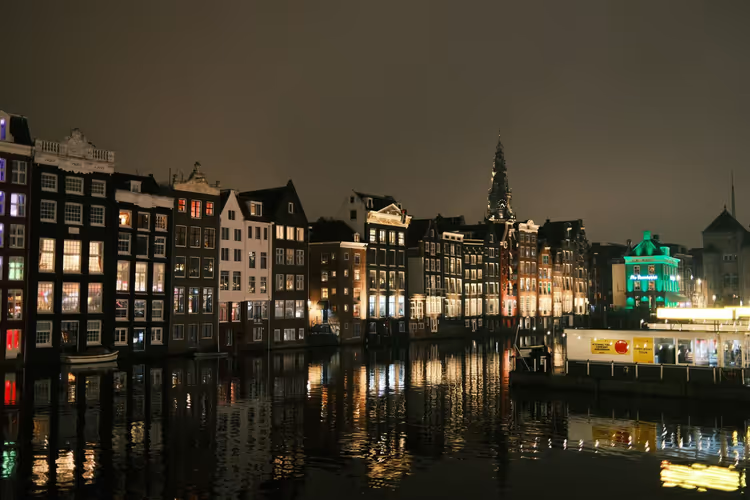
If you are traveling by train, go for the A-Train Hotel. It is within walking distance of Centraal station, nicely decorated in a railway style, and offers good value for money. A-Train Hotel prices on Trip.com.
A budget-friendly and unconventional option, De Bedste Boutique Capsules, is a mix of a Dutch B&B and a Japanese-style capsule hotel. Great for spending a night in the center without spending much. Rooms at De Bedste on Trip.com.
If you want to treat yourself, go for Pulitzer Amsterdam on Prinsengracht, a five-star hotel set in a complex of 17th-century canal houses. A fine blend of history and modern comfort. Pulitzer Amsterdam prices.
⁉️🤔 Frequently asked questions
What food should you definitely try in Amsterdam?
Start with bitterballen and fries with oorlog or joppie sauce, that is the local classic. Add a fresh stroopwafel from a market stall and a slice of appeltaart at Winkel 43. If you like fish, get some kibbeling, and for cheese head to Kaasbar.
Where can you get real fries in Amsterdam?
The iconic spot is Vlaams Friteshuis Vleminckx on Voetboogstraat. The second option is Manneken Pis on Damrak. Go for the oorlog or joppie sauce.
What should you get at Albert Cuyp market and when should you go?
Albert Cuyp has cheese, fish, kibbeling, and fresh stroopwafels. The market is closed on Sundays. Come in the morning, before the fresh food stalls pack up.
Is Hollandse Nieuwe herring worth trying?
If you are generally into raw fish, yes. It is eaten with raw onion and pickled cucumber at fish stalls, and locals rate Stubbe Haring and Henks Haring. True Hollandse Nieuwe is caught from May through August. The taste is an acquired one.
Where can you try Dutch cheese with a tasting?
Head to Kaasbar in the De Pijp neighborhood: cheese boards travel to you on a conveyor belt. The place is popular, so it is best to book a table in advance.
I have put all the places from this article, including the markets, on one map:
What to try in Amsterdam
Places on the map
- Brouwerij De Prael Bitterballen with various dips and craft beer
- The Pancake Club Pancakes in a cosy garden by a small canal
- Frens Haring One of the best fish stalls, kibbeling
- Vlaams Friteshuis Vleminckx An iconic fry stand since 1957, more than 20 sauces
- Manneken Pis Damrak A second fries location on Damrak
- Winkel 43 An iconic apple pie on Noordermarkt square
- Stubbe's Haring A fish stall, locals praise the fresh herring
- Henk's Herring Another stall with Hollandse Nieuwe herring
- Melly's Stroopwafels Fresh stroopwafels straight from the stall
- Kaasbar Amsterdam Cheese plates ride on a conveyor belt, around 24 Dutch varieties
- House Of Fries Frikandel speciaal with a huge choice of sauces
- Albert Cuyp Markt Europe's largest daytime market, 260 stalls
- FEBO Amsterdam - Leidsestraat A food vending wall, open almost around the clock
- FEBO Amsterdam - Oudezijds Voorburgwal A FEBO machine in the old centre
- FEBO Amsterdam - Reguliersbreestraat A FEBO machine near Rembrandtplein square
- A-Train Hotel Walking distance from Centraal station, railway style
- De Bedstee Boutique Capsules A Japanese-style capsule hotel, budget centre
- Hotel Pulitzer Amsterdam A five-star hotel in 17th-century canal houses
In short: what to book
Dutch cuisine is not about refinement, it is about honest street snacks. In one day you can realistically try bitterballen, fries, a stroopwafel, and a slice of appeltaart. And at Albert Cuyp market you can tick off almost the entire list at once.
If you have one day: Albert Cuyp market in the morning plus appeltaart at Winkel 43.
If you love fish: kibbeling at Frens Hering and herring at Henks Haring.
If you want to go deeper: take this route with a local on a food tour of Amsterdam.

A small editorial team writing guides for independent travel. We travel ourselves, but we haven’t been everywhere, so we check prices, opening hours and how to get there against official sources.