
















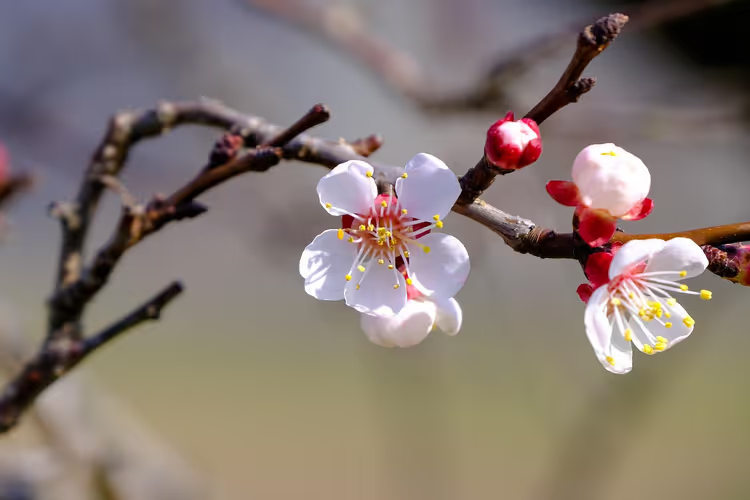
Apricot blossom in Wachau 2026: dates, boats and routes
Every year in late March, Wachau changes color. More than 100,000 apricot trees open their buds, and the Danube valley turns white for anywhere from 10 days to 3 weeks. The window is short: miss a week, and instead of blossoms you will see green fruit sets.
We have gathered everything you need to know about the 2026 bloom: timing by area, transport, boats, and walking routes through the orchards. All figures below include the date checked and a link to the region's tourist office.
Ad: this article contains affiliate links, we earn a commission if you book through them, at no extra cost to you.
When apricots bloom in Wachau
💡 In short:
- Blooming usually runs from late March to early April, with the peak itself lasting from 10 days to 3 weeks.
- The orchards near Krems bloom first; Spitzer Graben opens last of all.
- You can see the bloom on foot, by bike, or from a DDSG boat.
- Bloom status, schedules, and prices: 09/2026, checked on the official Wachau tourist office page.
The timing shifts every year with the weather. According to the Donau Niederösterreich tourist office, blooming in Wachau lasts from 10 days to 3 weeks and most often falls in the last weeks of March and the first weeks of April.
The wave moves from east to west. The orchards near Krems turn white first, then blooming spreads to Aggsbach Markt and Spitzer Graben, where the apricot opens last of all. If you missed the peak near Krems, shift west: there you still have a few more days.
It is best to check the exact date of your trip against reality. The tourist office maintains a webcam in the orchards and updates the bloom status, so you make the decision to go today or on the weekend based on the picture, not the calendar.
Where to see the bloom: from Krems to Aggsbach Markt
The main orchard areas stand on both banks of the Danube. On the south bank, trees grow near Rossatz and Arnsdorf; on the north bank, between Spitz and Willendorf. Coming from Melk, you will see the first white trees already between Aggsbach and Aggstein Castle.
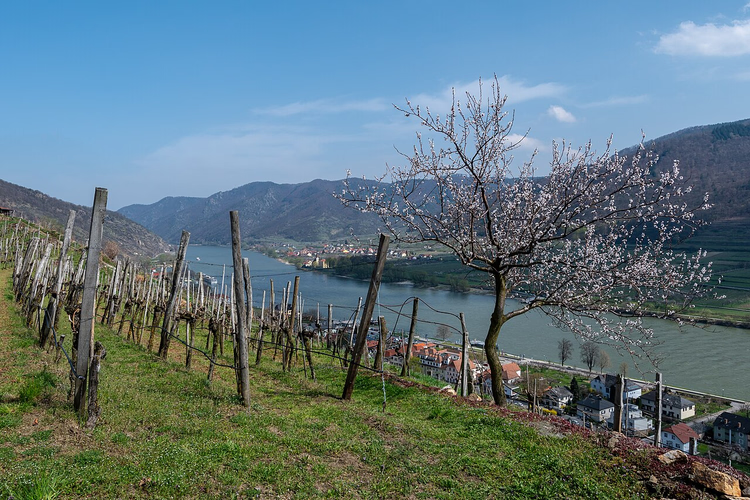 © Isiwal · CC BY-SAPhoto: Isiwal, CC BY-SA (https://creativecommons.org/licenses/by-sa/4.0), Wikimedia Commons
The orchards are densest in Rossatz-Arnsdorf. According to the region's tourist office, this is the largest orchard community in Wachau, and this is where the Marillen-Tankstellen with farm addresses are marked. You do not need to search for a farm: signs lead straight to the gates where apricots from the current harvest are sold.
How to get there and how to travel around Wachau
The valley is narrow, and getting around without a car is easy. You have a choice between a single ticket and a day pass. The tourist office sells a spring ticket: according to Donau Niederösterreich, the Frühlingsticket is valid from March 13 to April 26, 2026 and gives one day of unlimited travel on buses, ferries, and the Wachaubahn for €14 for adults and €7 for children.
Ticket | What it covers | Price (09/2026) |
|---|---|---|
Frühlingsticket Wachau | 1 day: buses, ferries, Wachaubahn | €14 / €7 |
Tageskarte Wachau | 1 day: buses and ferries | €13 / €6.50 |
Keep the schedule handy. The Wachaubahn runs from March 13 to April 23 on Fridays, Saturdays, Sundays, and public holidays, and from April 24 to November 1 it runs daily (as of: 09/2026, Wachau tourist office). Bus 715 goes along the north bank through Weißenkirchen and Spitz, and bus 720 along the south bank through Rossatz.
Keep one seasonal adjustment in mind. On the south bank, a construction schedule is in effect until April 3, 2026 due to roadwork on the B33, so bus 720 may run differently than usual. Do not have your own bike? Take nextbike: the network operates 127 bikes at 13 stations across the valley.
How the apricot came to Wachau
The apricot did not come to the valley from Austria. Its homeland is China, where the fruit was cultivated several millennia ago. Alexander the Great brought the tree to Greece and Italy, and from the Roman Empire it reached the banks of the Danube.
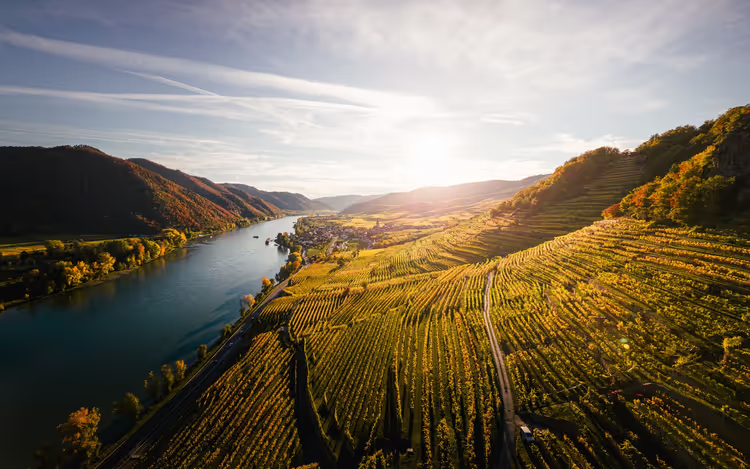
Apricots have been grown in Wachau for about two millennia. Botanically, it is Prunus armeniaca from the rose family, the same tree that produces the fruit for the local apricot schnapps.
Original Wachauer Marille: what the seal guarantees
In the past, apricots in Wachau were grown for personal use. Only in the 19th century did the orchards begin working for sale, and since 2003 the Original Wachauer Marille association has been responsible for the variety.
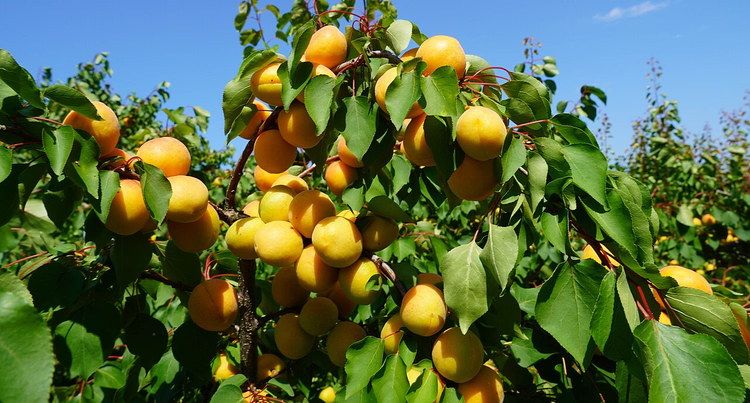 © Naturpuur · CC BY-SAPhoto: Naturpuur, CC BY-SA (https://creativecommons.org/licenses/by-sa/4.0), Wikimedia Commons
The association seal is only awarded to farms that grow local varieties older than 100 years. For you, this is a simple check: the mark on the jar means the apricot grew in the Wachau valley rather than being brought in from another region.
Bloom from the water: DDSG and Brandner boats
The second way to see the orchards is from the Danube. DDSG Blue Danube liners start their Wachau service on March 28, and during bloom season they add dedicated sailings (as of 09/2026, Donau Niederösterreich). Food and drinks are served on board, so the cruise becomes lunch with a view of the terraces.
From the deck you see more than just orchards. Along the way, the blue tower of Dürnstein comes into view, along with the vineyard terraces that draw visitors here even after bloom season. If you want to combine lunch with orchard views, choose a daytime sailing. Alternative: Brandner Schiffahrt liners, with dates published on the carrier's website.
Compare cruises and spring tours of the valley on GetYourGuide.
Bloom by bike along the Danube route
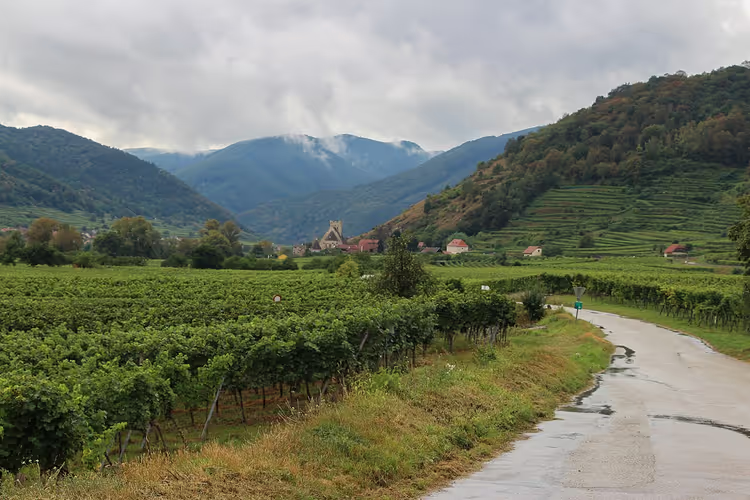
The Donauradweg cycle route runs straight through the Wachau, and bloom season is easy to enjoy from the saddle.
 © Michal Klajban · CC BY-SAPhoto: Michal Klajban, CC BY-SA (https://creativecommons.org/licenses/by-sa/4.0), Wikimedia Commons
A relaxed ride from Aggsbach to Aggstein takes about three hours. A convenient setup: leave the car in Krems or Mautern, head upstream, and return by ferry. Ferries run frequently and take bicycles.
Best walking routes through the apricot orchards
On foot, the bloom feels closest: you walk among the trees, not past them. Below are four routes worth keeping in your trip plan.
 © Wolfgang Silbermayr · CC BY-SAPhoto: Wolfgang Silbermayr, CC BY-SA (https://creativecommons.org/licenses/by-sa/3.0), Wikimedia Commons
Wachauer Marillen Erlebnisweg
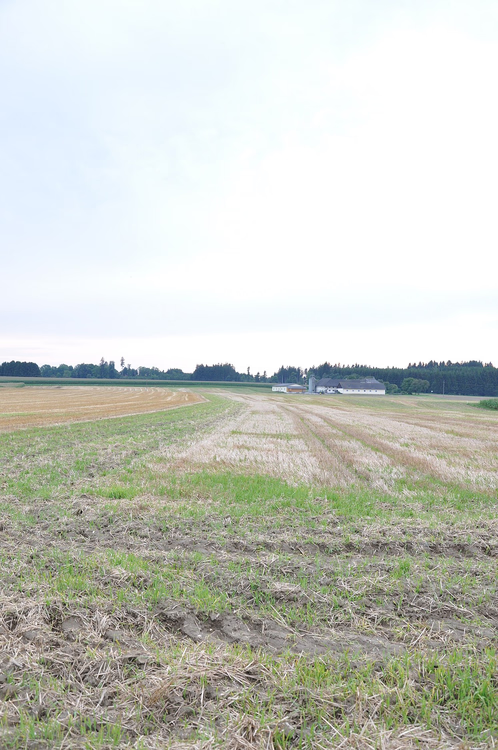
A 4.5 km loop leads through old orchards and five information stations. It starts and ends at Weinhof Aufreiter in Angern (Dorfstraße 34, 3506): the family's farm shop sells apricot jam, juice, and schnapps. The route is flat, so it works well for a walk with children.
Rossatzer Marillenmeile
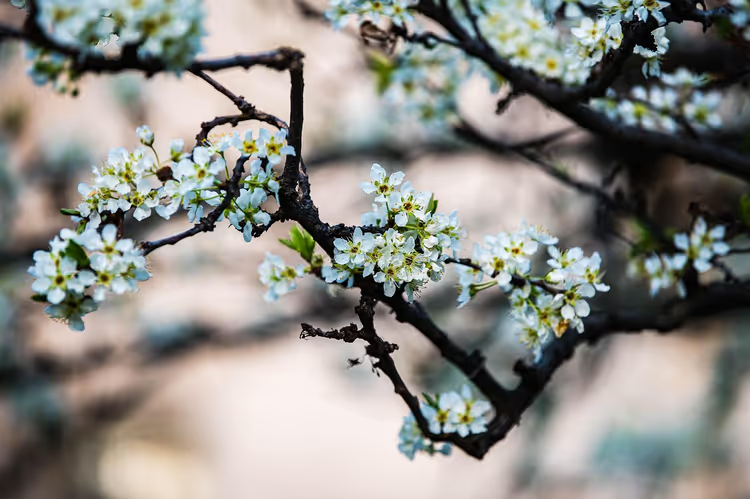
The trail network in Rossatz-Arnsdorf is divided into seven stages ranging from 2 to 6 km (as of 09/2026, orchard and stage map). Along the way, Marillen-Tankstellen point you to farms where fruit is sold right at the orchard. The eastern section runs through Rührsdorf, Rossatz, and Rossatzbach; the western section through St. Johann, Oberarnsdorf, Hofarnsdorf, Mitterarnsdorf, and Bacharnsdorf.
Marillengarten im Stift Göttweig
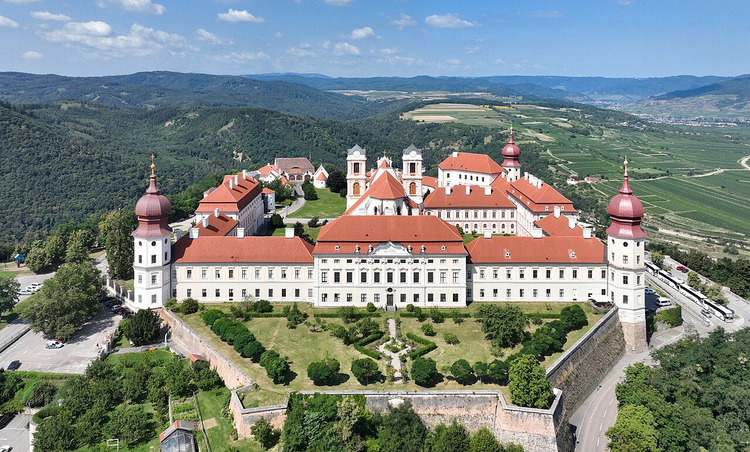
The working garden at Stift Göttweig grows about 50 trees of twelve local varieties. In the glass greenhouse, which they call the apricot nursery, one-year-old saplings are raised. Address: Stift Göttweig 1, 3511 Furth bei Göttweig.
 © C.Stadler/Bwag · CC BY-SAPhoto: C.Stadler/Bwag, CC BY-SA (https://creativecommons.org/licenses/by-sa/4.0), Wikimedia Commons
Welterbesteig Wachau: Hofarnsdorf-Rossatz
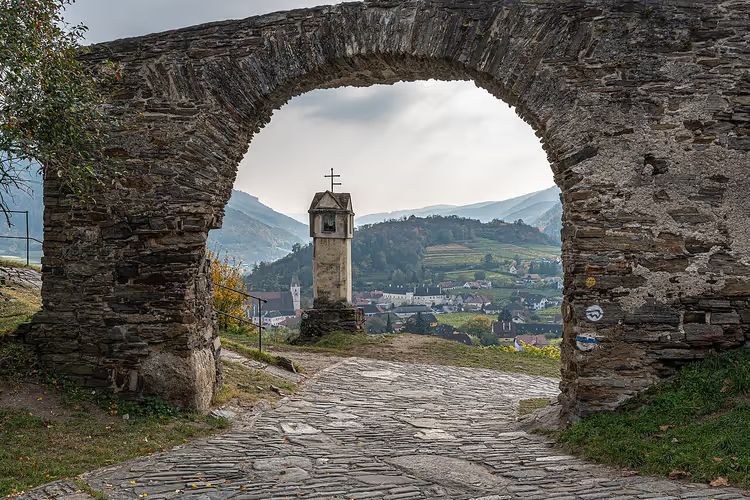
The longest option: a 17 km stage of the Welterbesteig Wachau from Hofarnsdorf to Rossatz. This one takes in wine villages, Roman paths, ruins, and a nature reserve with oak and hornbeam forests. The best views open up from Seekopf and Hirschwand. If you only have half a day, save this stage for next time and take a short loop instead.
 © Isiwal · CC BY-SAPhoto: Isiwal, CC BY-SA (https://creativecommons.org/licenses/by-sa/4.0), Wikimedia Commons
⁉️🤔 Frequently asked questions
When is the best time to see the apricot blossoms in the Wachau?
The optimal window is late March and the first half of April, but the exact date depends on the weather each year. The Krems area blooms first, and Spitzer Graben blooms last. Check the tourist office webcam and head out within the first two to three days after the bloom start is announced.
How much does it cost to get around the Wachau in spring?
The Frühlingsticket costs €14 for adults and €7 for children (as of 09/2026). It is valid from March 13 to April 26, 2026 and covers buses, ferries, and the Wachaubahn for one day. A regular Tageskarte without the train is cheaper: €13 for adults and €6.50 for children.
Can you see the blossoms from a boat?
Yes. DDSG Blue Danube cruise ships start running to the Wachau on March 28, and during blossom season they add dedicated departures. Food and drinks are served on board, and from the deck you can see the orchards, vineyards, and the Dürnstein tower. Check dates and prices in the operator's schedule.
Why does the Wachauer Marille have a seal?
The Original Wachauer Marille label is only allowed for farms with local varieties over 100 years old, and the association itself has been monitoring quality since 2003. For buyers, the seal means the apricot was grown in the Wachau valley, not brought in from another region.
Where should you stay during blossom season?
Krems, Melk, and Dürnstein have hotels and guesthouses, but places fill up quickly at peak bloom. Book in advance and keep a backup option in nearby towns: from there you can easily reach the orchards by Wachaubahn or bus.
In short: what to book
The blossom in the Wachau lasts from 10 days to 3 weeks, and that window cannot be shifted. Plan your trip around the tourist office dates rather than around weekends, and you will have a chance to catch the white orchards.
- If you are going for one day from Vienna: get the Frühlingsticket and plan your route on the Wachaubahn.
- If you want to see the blossoms from the water: choose a DDSG Blue Danube departure.
- If you are traveling with a bike: use nextbike and switch banks on the ferries.
- If you plan to stay overnight: find a hotel in the Wachau on Trip.com.

A small editorial team writing guides for independent travel. We travel ourselves, but we haven’t been everywhere, so we check prices, opening hours and how to get there against official sources.