
















19 Day trips from Vienna: castles, the Danube and neighboring capitals
Vienna works well as a base for day trips. Trains, buses, and trams take you to castles, vineyards, and the capitals of neighboring countries in one to two hours. We've put together 19 destinations you can reach from Vienna in a day and return by evening, with directions, main sights, and honest catches for each. Distances are shown as the crow flies; prices and opening hours were checked on official websites in September 2026.
💡 In short:
- You can realistically take a day trip from Vienna to 19 different places: from the castles of Lower Austria to Budapest and Brno.
- Pick one place per day, or at most two that are close together: travel time eats up anywhere from half an hour to three hours.
Ad: this article contains affiliate links, we earn a commission if you book through them, at no extra cost to you.
1. Franzensburg Castle
 © Hendric Stattmann · CC BY-SAPhoto: Hendric Stattmann, CC BY-SA (https://creativecommons.org/licenses/by-sa/3.0), Wikimedia Commons
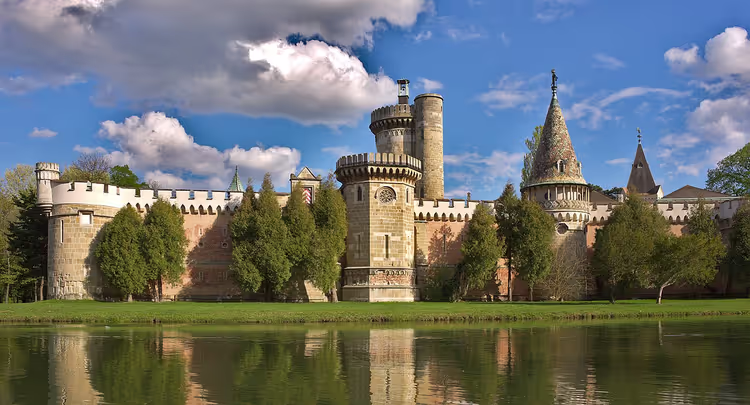
Franzensburg stands on an island in the middle of the ponds of Laxenburg Park. It's not a medieval fortress but a romantic stage set: Emperor Francis II built it between 1798 and 1836 as a "knight's castle" in memory of his ancestors. Outside, you're greeted by Gothic stained glass, spires, and marble sculptures. Inside, there's a collection of medieval applied art.
The surrounding park is open daily from 07:00 to 20:00 (as of 09/2026, official website). It has canals, little bridges, pavilions, and a boat rental. In summer, a ferry crosses the pond to the island.
Bring water and comfortable shoes: the walk through the park is long and leisurely.
- How to get there: about 20 km from central Vienna, under an hour each way.
- Who it's for: for a relaxed day in nature, since the whole route is flat with no climbs.
2. Kreuzenstein Castle
 © C.Stadler/Bwag · CC BY-SAPhoto: C.Stadler/Bwag, CC BY-SA (https://creativecommons.org/licenses/by-sa/4.0), Wikimedia Commons
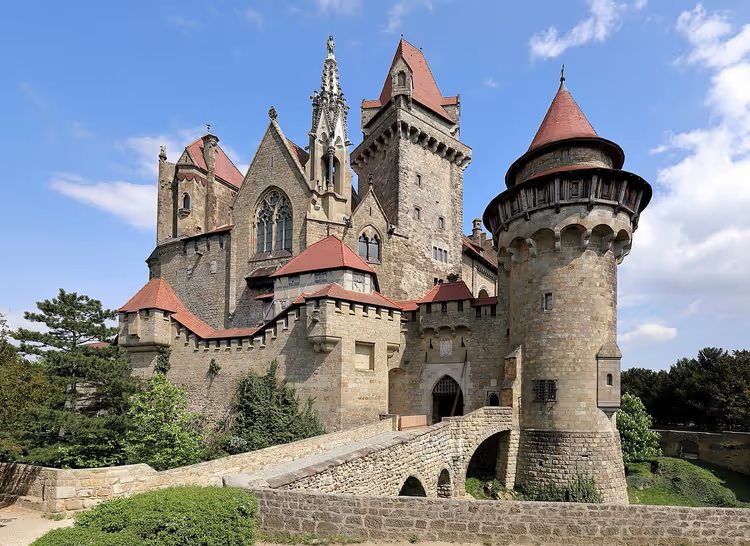
You'd think Kreuzenstein has stood here since the days of knights. In fact, it's a reconstruction: the original 13th-century castle was blown up by the Swedes in the 17th century, and Count Wilczek reassembled it in the 19th century. Gothic turrets, crenellated walls, and a chain bridge create a full medieval atmosphere.
You can only go inside with a guide, on the hour. The tour lasts 45-60 minutes (as of 09/2026, official website) and covers the armory, knight's armor, and ghost legends. The collection includes a huge wooden table that once served as a bridge over a river.
- How to get there: by train toward Korneuburg, then uphill on foot.
- The catch: without the tour, you'll only see the courtyard and the walls.
Kreuzenstein Castle tour on GetYourGuide
3. Klosterneuburg
 © C.Stadler/Bwag · CC BY-SAPhoto: C.Stadler/Bwag, CC BY-SA (https://creativecommons.org/licenses/by-sa/3.0), Wikimedia Commons
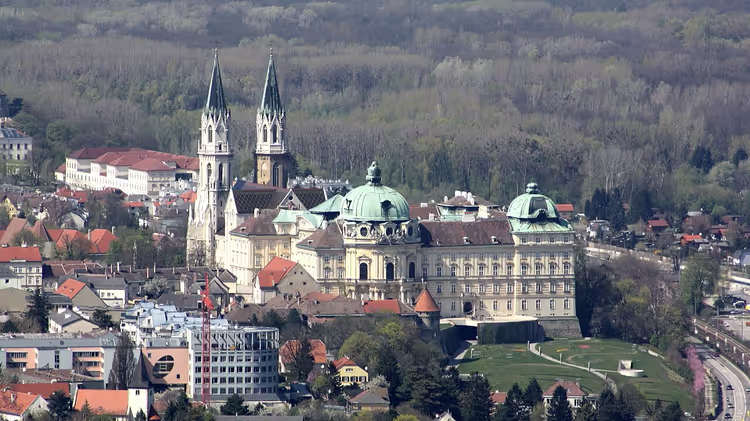
Klosterneuburg sits on the right bank of the Danube in Lower Austria. The town is more than nine centuries old, and its center looks like an open-air medieval museum. The main sight here is the Augustinian monastery with its Romanesque basilica and historic organ.
You'll be taken through the baroque halls and shown the treasury with the famous Verdun Altar. In summer the monastery is open from 09:00 to 18:00, in winter from 10:00 to 16:00 (as of 09/2026, official website). It's about half an hour from Vienna, so Klosterneuburg is easy to see in half a day.
- How to get there: by suburban train or bus from Vienna, about half an hour.
- Who it's for: for those interested in baroque architecture and the monastery's winery.
4. Grafenegg Castle
 © C.Stadler/Bwag · CC BY-SAPhoto: C.Stadler/Bwag, CC BY-SA (https://creativecommons.org/licenses/by-sa/4.0), Wikimedia Commons
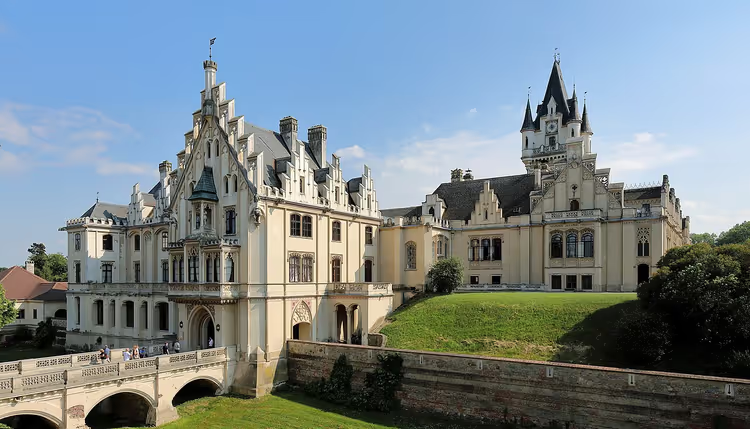
Grafenegg is tucked away in a park among old trees in Lower Austria. The 14th-century castle was rebuilt by the Breuner counts between 1840 and 1872, combining late Gothic, Biedermeier, Renaissance, and neo-Gothic in a single appearance. Coffered ceilings, carved panels, and wall paintings inside create a rare unity of styles.
In summer, concerts and the Grafenegg music festival take place here. The park is open for walks, and the castle itself is visited on a guided tour. You can easily combine it with nearby Krems in one day.
- How to get there: by train to Krems or Tulln, then by bus.
5. Liechtenstein Castle
 © C.Stadler/Bwag · CC BY-SAPhoto: C.Stadler/Bwag, CC BY-SA (https://creativecommons.org/licenses/by-sa/4.0), Wikimedia Commons
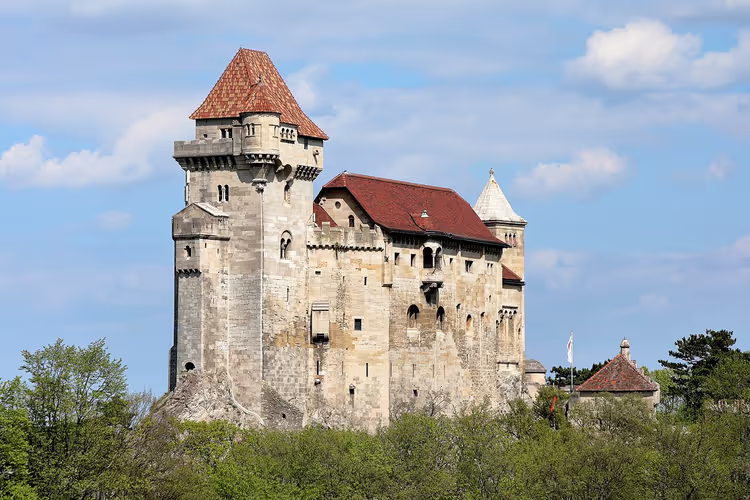
Liechtenstein Castle rises on a rocky hill above Maria Enzersdorf, on the edge of the Vienna Woods. The Liechtenstein family began building it in 1135, but wars repeatedly turned the castle into ruins. It was restored in the 19th century and rebuilt again after World War II.
The tour covers the history of the Liechtenstein dynasty and its role in shaping Austria. You can only go inside as part of a guided group, but the interiors are recreated from authentic sketches and drawings. The halls display antique armor, weapons, and household items of the noble family.
The road to the castle winds through green hills, and from the hilltop there is a view of the valley and the Vienna Woods. It is worth climbing up here for the view and the quiet.
- How to get there: by suburban train to Maria Enzersdorf, then uphill on foot.
- The catch: independent visits are not possible, only with a group on a schedule.
6. Grinzing Village
 © eugrus · CC BY-SAPhoto: eugrus, CC BY-SA (https://creativecommons.org/licenses/by-sa/3.0), Wikimedia Commons
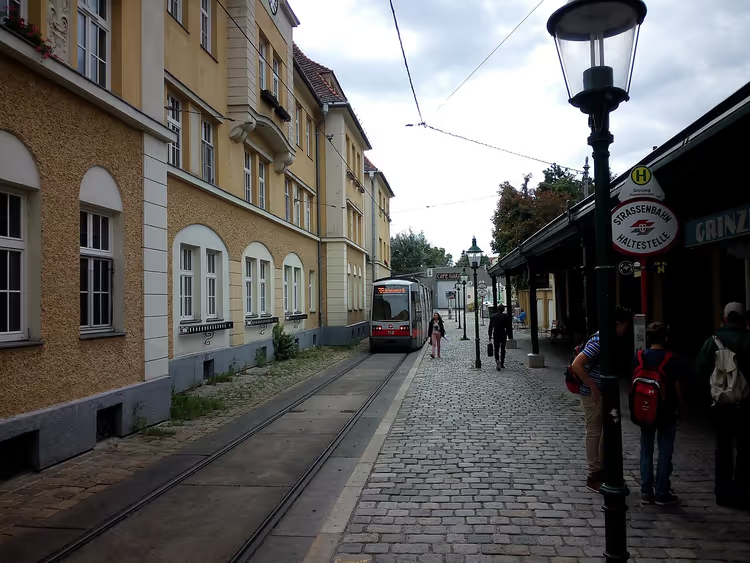
Grinzing was once a separate wine-growing village, and today it is a district of Vienna at the foot of the Vienna Woods. Narrow streets, tiled-roof houses, and grape-covered arches have preserved the spirit of the old village. Winegrowers live here, and in autumn the air smells of grape must.
The main reason to come here: heurigers. That is what the local wine taverns are called, where they pour young wine from their own harvest and serve simple food. You can sit at a wooden table with a glass just as Schubert and Beethoven once did.
- How to get there: by tram line 38 from central Vienna, about half an hour.
- Who it's for: for an evening with wine and city views, because heurigers open around lunchtime.
7. Wachau Valley
 © Uoaei1 · CC BY-SAPhoto: Uoaei1, CC BY-SA (https://creativecommons.org/licenses/by-sa/4.0), Wikimedia Commons
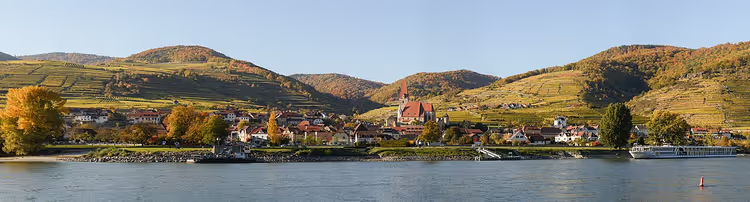
The Wachau stretches along the Danube between Melk and Krems. It is a wine valley with terraces, old monasteries, and castle ruins. Since 2000 it has been a UNESCO World Heritage Site. Grapes and apricots grow here, and the apricots are used to make local liqueurs.
You should climb up to Dürnstein Castle and visit Göttweig Abbey with its library and panoramic views. The most pleasant way to see the valley is by boat on the Danube. From the window you can see the terraces, the monasteries on the hills, and the old towns by the water.
The vineyards here have been cultivated since the Neolithic period, and the local wines are known far beyond Austria. Take a tasting in one of the wine cellars in Krems or Dürnstein. The valley is especially beautiful in autumn: the grapes are being harvested, and the air is filled with the smell of must.
- How to get there: by train to Krems or Melk, then by boat or bus.
- Who it's for: for wine lovers and leisurely walks.
8. Vienna Woods
 © by myself in june 2005 · CC BY-SAPhoto: by myself in june 2005, CC BY-SA (http://creativecommons.org/licenses/by-sa/3.0/), Wikimedia Commons
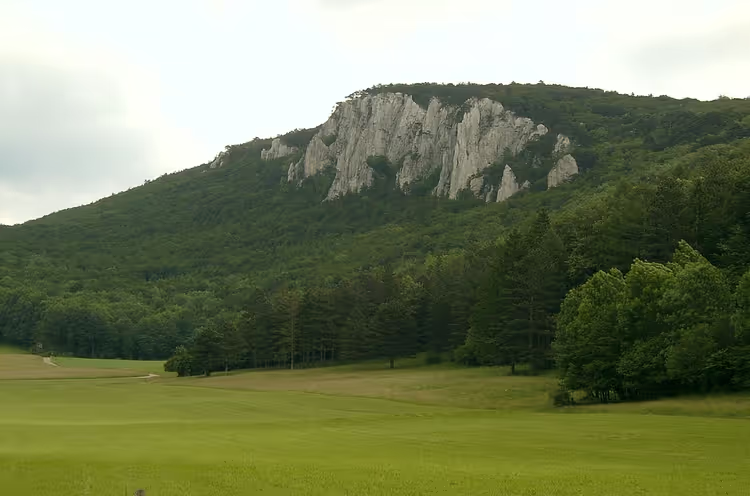
The Vienna Woods begin right outside the city. It is a large forest area of oaks and beeches, called the "green lungs" of Vienna. Locals come here to walk, ride bikes, and breathe fresh air after the city heat.
Along marked trails you can reach Schubert's house, the fortress ruins on Leopoldsberg, and viewpoints with a panorama of the Alps. The route is easy to combine with Liechtenstein Castle or Baden.
- How to get there: by tram or bus to the outskirts of the city, then on foot.
- Who it's for: for hiking, because the trails here come in different lengths.
9. Melk Abbey
 © Thomas Ledl · CC BY-SAPhoto: Thomas Ledl, CC BY-SA (https://creativecommons.org/licenses/by-sa/4.0), Wikimedia Commons
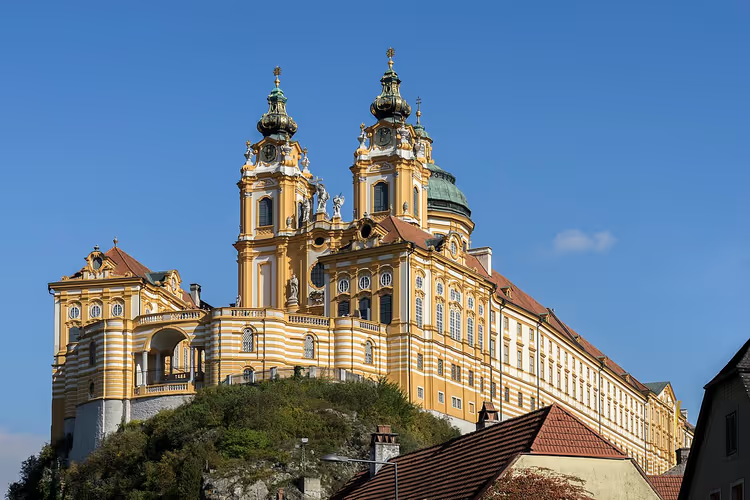
Melk sits at the western edge of the Wachau valley. The town is small, but its Benedictine abbey is known far beyond Austria. The monastery was founded in 1089, and monks still live here today.
You'll be guided through the Marble Hall, the imperial staircase, and the Church of Saints Peter and Paul. The abbey library, with its manuscripts and folios, leaves a separate impression. After the tour, you can explore the church on your own.
- How to get there: by train to Melk, the station is a few minutes from the abbey.
10. Krems
 © Bauer Karl at German Wikipedia · CC BY-SAPhoto: Bauer Karl at German Wikipedia, CC BY-SA (http://creativecommons.org/licenses/by-sa/3.0/), Wikimedia Commons
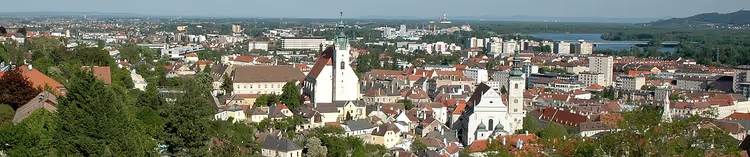
Krems spreads out at the confluence of the Krems River and the Danube. In the Middle Ages it was an important trading town where the first Austrian pfennigs were minted, and they were named Kremser pfennigs after the town. Today its center is part of the Wachau heritage and draws visitors with wine bars and galleries.
Take note of the Piarist church with its late Gothic facade, the parish church of St. Veit, and the Powder Tower. From the tower's observation deck you can see all of Lower Austria around you. The Old Town Hall and the Gozzoburg palace recall the Renaissance era.
- How to get there: about an hour by train from Vienna, the station is in the center.
- Who it's for: for strolling through old streets and tasting local wines.
11. Bratislava
 © Rob Hurson from Kentstown, Ireland · CC BY-SAPhoto: Rob Hurson from Kentstown, Ireland, CC BY-SA (https://creativecommons.org/licenses/by-sa/2.0), Wikimedia Commons
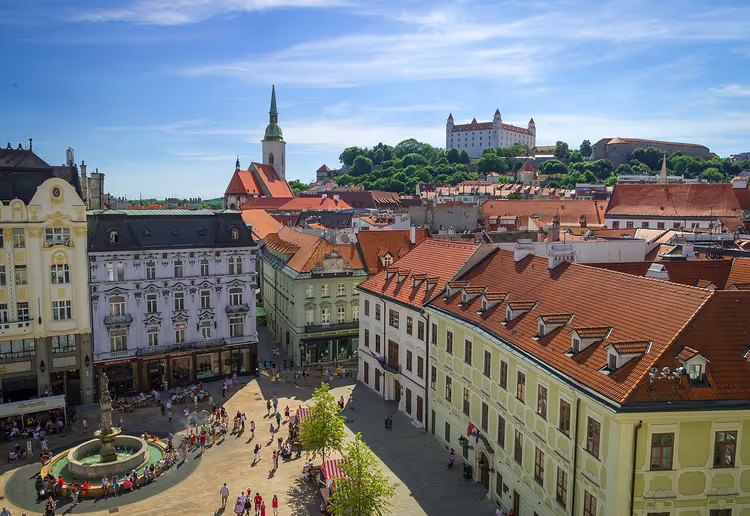
Bratislava lies just an hour away from Vienna. The capital of Slovakia is compact: the old town, the Danube embankment, and the castle on the hill all fit into a single route. Habsburg history sits side by side with modern cafes and galleries here.
Start with Bratislava Castle. Then stop by St. Michael's Gate and walk to Devin Castle at the confluence of the Danube and the Morava. Take a look at the new bridge with its single pylon. In the evening, return to the embankment: the lights on the Danube are worth it.
- How to get there: about an hour by train from Vienna's main station.
- Who it's for: for a first introduction to Slovakia, because the city is small.
12. Puchberg am Schneeberg
 © C.Stadler/Bwag · CC BY-SAPhoto: C.Stadler/Bwag, CC BY-SA (https://creativecommons.org/licenses/by-sa/4.0), Wikimedia Commons
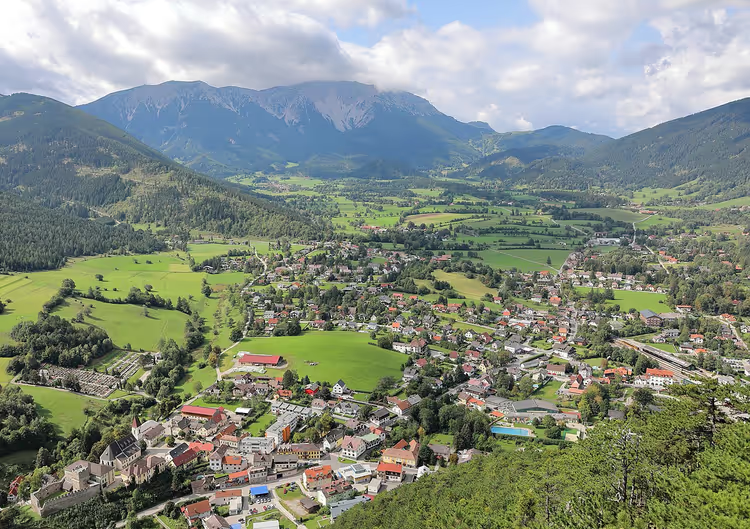
Puchberg am Schneeberg lies at the foot of the Schneeberg, the highest mountain in Lower Austria. It's a typical Alpine village with neat facades and ivy-covered houses. People come here from Vienna for the mountain rack railway.
The historic Salamander train takes you almost to the summit, where a panorama of the Alps opens up. Down below, a pond with black swans and local bakeries with warm bread await you. Nearby stands the pilgrimage church of Maria Schutz.
Puchberg is known as a market town, and seasonal fairs are held here. The way up runs along the rack railway through forests and meadows, and that is a pleasure in itself. Bring a jacket: it's always cooler and windier at the top than in the valley.
- How to get there: by train to Puchberg, then by train up the Schneeberg.
- Who it's for: for a day trip to the mountains without long climbs.
13. Baden
 © C.Stadler/Bwag · CC BY-SAPhoto: C.Stadler/Bwag, CC BY-SA (https://creativecommons.org/licenses/by-sa/4.0), Wikimedia Commons
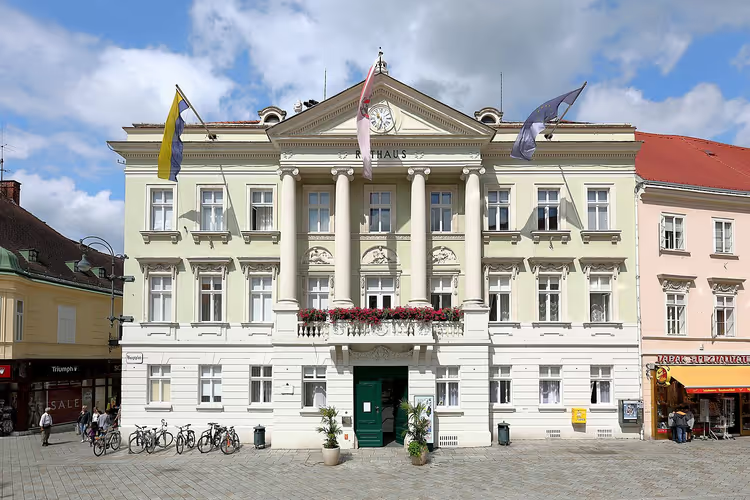
Baden has been known for its thermal springs since the 15th century. In the first half of the 19th century the town was the emperor's summer residence, and all of European nobility flocked here. Today it's a quiet spa town with Biedermeier villas and cozy cafes.
The Kurpark with daily concerts, the Beethoven house museum, and the church where Mozart performed await you. In the evening, stop by a local Heuriger and try wine from the surrounding vineyards.
- How to get there: about an hour by tram from Vienna on the Badner Bahn line.
- Who it's for: for a leisurely day with thermal baths and music.
14. Linz
 © Kani · CC BY-SAPhoto: Kani, CC BY-SA (https://creativecommons.org/licenses/by-sa/4.0), Wikimedia Commons
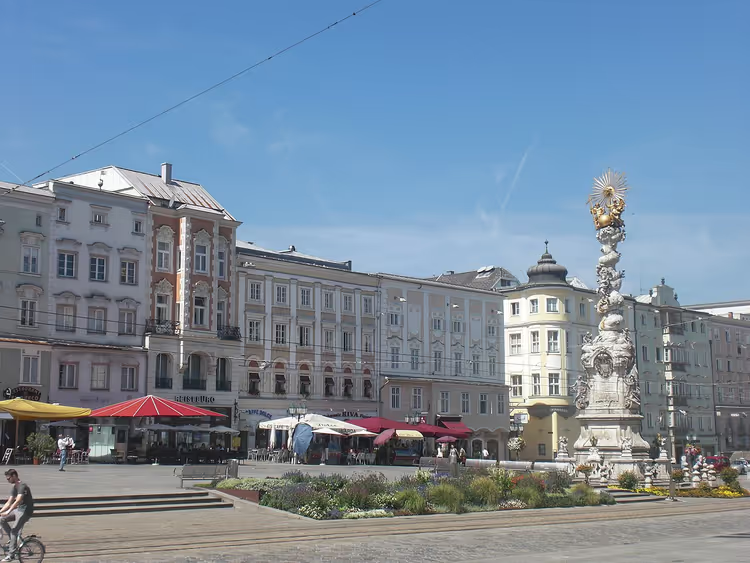
Linz is Austria's third largest city and the capital of Upper Austria. It sits on the Danube between Vienna and Salzburg. The old town combines baroque buildings with modern museums, and the waterfront is perfect for an evening stroll.
In the center you'll find the main square with the town hall, the Landhaus building, and the Cathedral of the Immaculate Conception with its frescoes and stained glass. The futuristic Ars Electronica Center museum and the tram up to Pöstlingberg deserve special attention.
Near Linz lie the ancient abbeys of Wilhering and St. Florian with their baroque interiors. The city also has modern theaters and concert halls that draw visitors to Linz for a weekend.
- Getting there: under an hour and a half by train, with frequent departures.
- The catch: you'll only skim the surface in one day, so it's better to stay overnight.
15. Hallstatt
 © C.Stadler/Bwag · CC BY-SAPhoto: C.Stadler/Bwag, CC BY-SA (https://creativecommons.org/licenses/by-sa/4.0), Wikimedia Commons
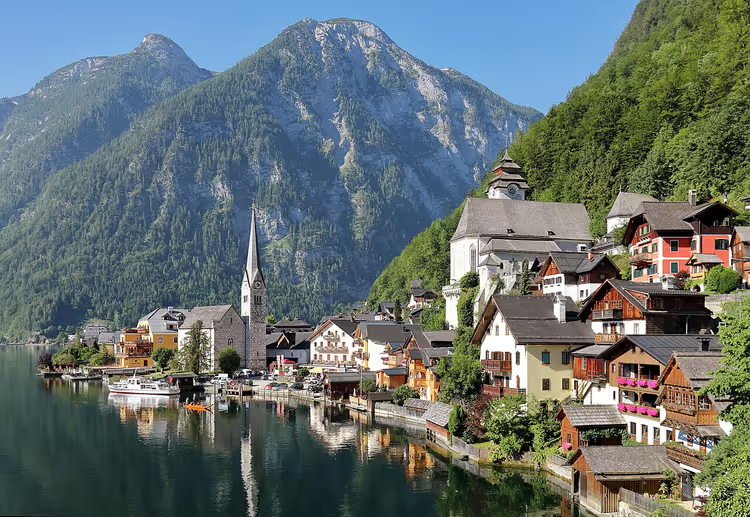
Hallstatt clings to the lake in the Salzkammergut, squeezed between the water and the steep slopes of the Alps. It's one of Europe's oldest settlements: salt has been mined here for thousands of years. This is where the Hallstatt culture of the Iron Age was discovered.
Visit the salt mine with its underground slides and the Skywalk viewing platform above the lake. In the town, the bone house is worth seeing: according to an old tradition, bones were removed from graves after ten years, bleached, and the skulls were painted with names and patterns. The roads here are cut into the rock, and cars are left in underground parking garages.
Space in the town is tight: about a thousand people live between the lake and the cliffs, and Hallstatt has nowhere to grow. Boats and ferries replace streets here. The easiest way to get here is by train and ferry rather than by car: the center is closed to through traffic.
- Getting there: by train to Hallstatt, then by ferry across the lake.
- The catch: the train takes 3.5 to 4 hours each way, so it makes for a long day.
16. Graz
 © Ralf Roletschek · CC BY-SAPhoto: Ralf Roletschek, CC BY-SA (https://creativecommons.org/licenses/by-sa/3.0/at/deed.en), Wikimedia Commons
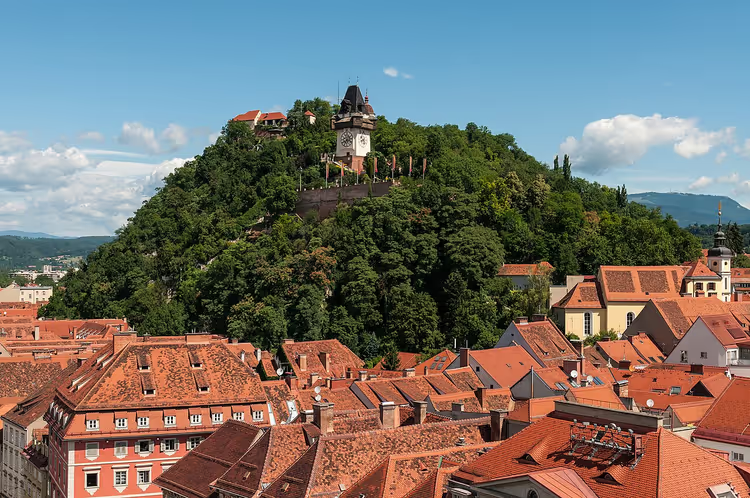
Graz is the capital of Styria and Austria's second largest city. Its appearance blends Renaissance, baroque, and modern styles. The historic center is a UNESCO World Heritage site, and the town hall awaits you on the main square, Hauptplatz.
Climb the Schlossberg hill to the clock tower and enjoy the view over the city. Then walk to the Kunsthaus art museum in its futuristic building and to the Landhaus with its arcaded courtyard. With kids, it's worth visiting the park on the hillside.
- Getting there: about two and a half hours by train, with direct connections available.
- The catch: a day trip will be long, so it's better to stay overnight in Graz.
17. Salzburg
 © Photo: Andreas Praefcke · CC BYPhoto: Photo: Andreas Praefcke, CC BY (https://creativecommons.org/licenses/by/3.0), Wikimedia Commons
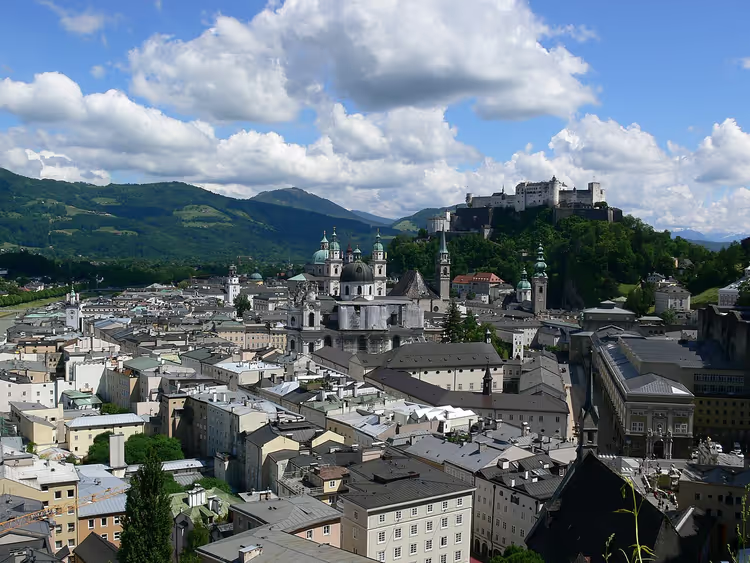
Salzburg is famous as Mozart's birthplace, and it shows at every turn. The old town is a UNESCO World Heritage site, densely packed with baroque squares and churches. A tram or bus will take you from the station to the center.
You'll find the cathedral, St. Peter's Abbey, and the house where Mozart was born. The Hohensalzburg fortress towers over the city, reached by funicular. In the evening, return to Getreidegasse and try some Mozartkugeln.
- Getting there: about two and a half hours by train, with many direct connections.
- The catch: you'll see the city quickly in one day, but the fortress and museums need more time.
18. Budapest
 © Thomas Depenbusch (Depi) from Cologne, Germany · CC BYPhoto: Thomas Depenbusch (Depi) from Cologne, Germany, CC BY (https://creativecommons.org/licenses/by/2.0), Wikimedia Commons
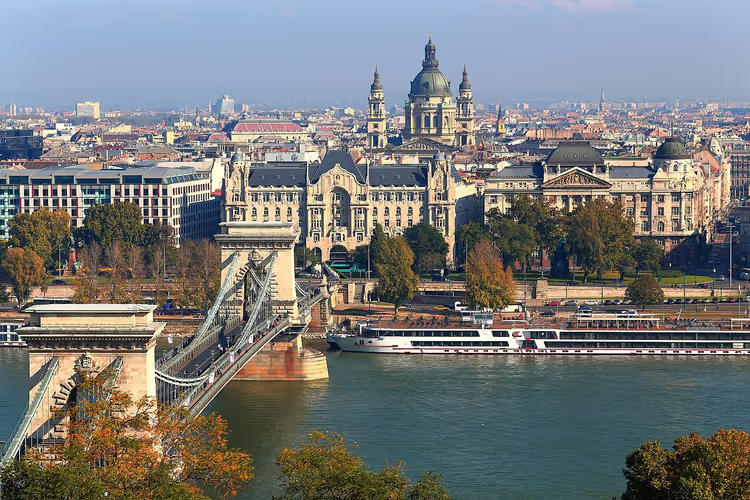
Budapest sits on both sides of the Danube, and that makes it one of the most beautiful cities in Europe. Buda and Pest are connected by bridges, and the embankments are perfect for long walks. Direct trains run from Vienna to the Hungarian capital.
Start at Heroes' Square, where the colonnade and the Millennium Monument stand. Then walk to the Széchenyi Baths, Vajdahunyad Castle, and the Parliament building. In the evening, admire the Chain Bridge from the Pest embankment.
- How to get there: by train, about two and a half hours to Keleti station.
- Who it's for: for a packed day of architecture and thermal baths.
19. Brno
 © Harold · CC BY-SAPhoto: Harold, CC BY-SA (https://creativecommons.org/licenses/by-sa/3.0), Wikimedia Commons
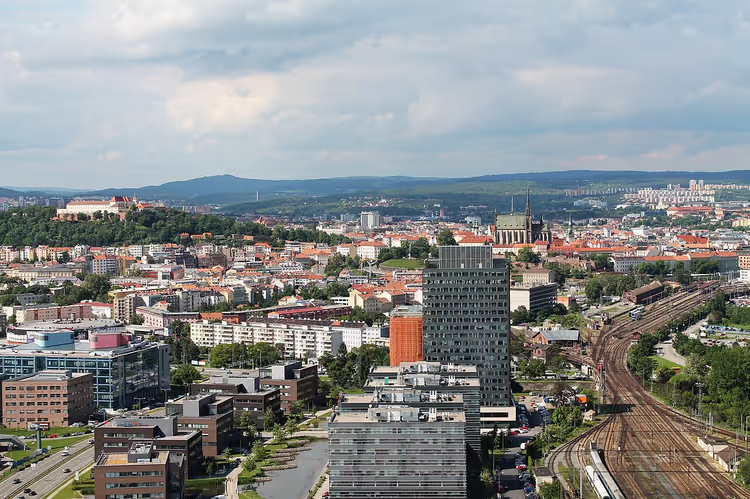
Brno lies on the Moravian Plain at the confluence of the Svitava and Svratka rivers. It is the second-largest city in the Czech Republic and a major industrial center that hosts international trade fairs. At the same time, the old part of the city has preserved Baroque churches and a fortress.
Climb Špilberk Hill, where the castle of the same name stands. Nearby, two Gothic chapels and the Capuchin Monastery with its famous crypt await you. Don't miss the Copernicus Observatory.
- How to get there: by train, about two hours from Vienna's main station.
- Who it's for: for a short trip to the Czech Republic, because the city is compact.
One-day route from Vienna on the map
Day trips from Vienna
Places on the map
- 1Franzensburg Castle Romantic 'knight's castle' from 1798-1836 on an island in Laxenburg park
- 2Kreuzenstein Castle 19th-century reconstruction of a medieval castle, tours every hour
- 3Klosterneuburg Augustinian monastery with the Verdun Altar on the Danube
- 4Grafenegg Castle 14th-century castle with a summer music festival
- 5Liechtenstein Castle Liechtenstein family castle on a hill by the Vienna Woods, guided tours only
- 6Grinzing Vienna's wine district with heurigen taverns
- 7Wachau Valley Danube wine valley, UNESCO site with Dürnstein castle
- 8Vienna Woods Forest area outside the city, Schubert's house and viewpoints
- 9Melk Abbey Benedictine monastery founded 1089, with the Marble Hall and library
- 10Krems Town at the confluence of the Krems and the Danube, Piarist church and Powder Tower
- 11Bratislava Capital of Slovakia, castle and Devín Castle, an hour from Vienna
- 12Puchberg am Schneeberg Alpine village with a cog railway up the Schneeberg
- 13Baden Thermal spa town with Biedermeier villas and Beethoven's house-museum
- 14Linz Austria's third city, Ars Electronica museum and the tram to Pöstlingberg
- 15Graz Capital of Styria, Schlossberg hill and the Kunsthaus
- 16Budapest Capital of Hungary, Széchenyi baths and the Parliament building
- 17Brno Second city of Czechia, Špilberk Castle and the Capuchin crypt
We've marked all 19 points on the map. Open it and pick one: the distance from central Vienna rarely exceeds a couple hundred kilometers. If you have just one free day, go for Bratislava, Krems, or Baden, they're the closest.
⁉️🤔 Frequently asked questions
Where can you go from Vienna for a day without a car?
The railway covers almost every destination on our list. Direct trains run to Bratislava, Krems, Linz, Graz, Salzburg, and Brno, and Klosterneuburg and Baden are easy to reach by suburban rail. You only need a car for the remote Wachau vineyards and some of the Vienna Woods trails.
How long does it take to get there from Vienna?
It all depends on the destination. The closest places near Vienna take under an hour, Bratislava takes about an hour, Linz under an hour and a half, Brno about two hours, and Graz, Salzburg, and Budapest about two and a half. Hallstatt takes 3.5 to 4 hours by train. Check the schedule in advance: intervals are longer in the evening.
What should you see if it's your first time in Vienna and you only have one day?
Go with Bratislava or Krems: they're close, and you can explore the old town in a day without rushing. Melk and the Wachau are a good fit if you want nature and a monastery. The Kreuzenstein and Liechtenstein castles are better saved for a day with a car or a guided tour.
Do you need to buy tickets in advance?
For popular castles and the Hallstatt salt mines, it's better to buy tickets in advance, especially in summer. For trains within Austria, prices are lower when you book a few weeks ahead. At Melk and Klosterneuburg monasteries, tours run on a schedule, so check the times on the official websites.
Can you leave Vienna for a day to visit another country?
Yes, and it's easier than it seems. The train to Bratislava takes about an hour, to Brno about two hours, to Budapest about two and a half. Schengen rules apply everywhere, so there's usually no passport control at the border, but keep your documents with you anyway.
In short: what's worth booking
If you have one day and don't want to rush: go with Bratislava or Krems. If you want nature and a monastery: head to Melk and the Wachau valley. If you want Alpine views: take the train to Schneeberg. The Kreuzenstein and Liechtenstein castles can only be visited in season and only with a guided tour.
If you only have a couple of hours: Baden with its Kurpark. If you're up for a long trip: Salzburg, Graz, and Budapest will give you the most impressions in a day. Plan your travel in advance and buy train tickets for Austria and Europe: booking early gets you lower prices. If you decide to stay overnight in Graz or Budapest, compare hotels on Trip.com.

A small editorial team writing guides for independent travel. We travel ourselves, but we haven’t been everywhere, so we check prices, opening hours and how to get there against official sources.