
















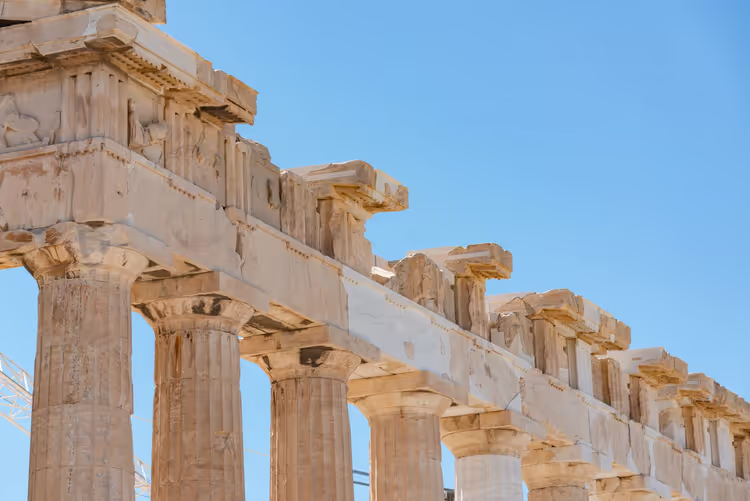
What to see in Athens: 8 places from the Acropolis to Panathinaiko
Athens packs half of the ancient itinerary of Greece onto a single hill. The Acropolis, the Agora, the Temple of Zeus, and the marble stadium all stand within a couple of kilometers of each other. In one day you will see both the ancient temples and the stadium of the first Olympic Games.
Tickets from resellers cost more, and in summer the line at the gate stretches for about an hour. Below is the order for seeing the sights and the opening hours.
Ad: this article contains affiliate links, we earn a commission if you book through them, at no extra cost to you.
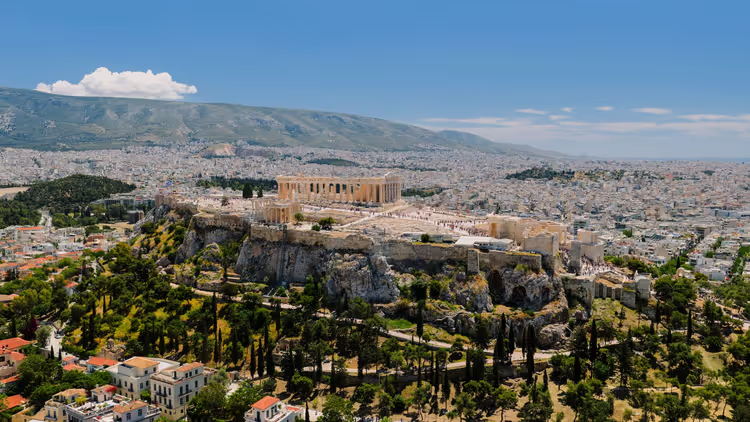
1. Acropolis
💡 In short:
- Get a ticket for the first morning slot: by 8:00 there is still no line at the entrance.
- Allow 2-3 hours for the hill and another hour for the Acropolis Museum.
- Prices and opening hours: 09/2026, verified on the official website
The Acropolis rises above the city like Greece's main open-air museum. A standard ticket costs 30 EUR, reduced 15 EUR (as of: 09/2026, Ministry of Culture). It covers the hill itself and its slopes.
Opening hours change by season. In summer the gates open early in the morning, in winter the day is shorter. Check the exact hours for your date on the official website before your trip.
The climb up the hill is not for everyone. In July and August the bare rock is already hot by ten in the morning, so bring water, a hat, and comfortable shoes. At the viewpoints, keep your bag in front of you: pickpockets work precisely in the crowd near the Parthenon.
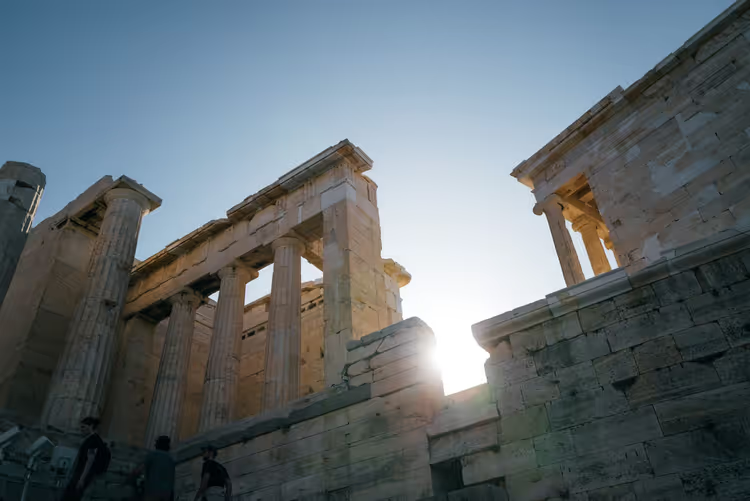
Propylaea
The Propylaea served as the ceremonial entrance to the Acropolis. The Ottomans once stored gunpowder here, and an accidental explosion destroyed the building. The surviving part was restored, and today you enter the hill through these columns.
Parthenon
The Parthenon was built in 447-438 BC in honor of the goddess Athena (as of: Wikipedia). It is the main symbol of the city and the most recognizable building in Greece.
A legend is tied to the birth of Athena. Her father Zeus swallowed her pregnant mother because he feared a future rival. Then he developed an unbearable headache, and Hephaestus split his head open with an axe. Out of Zeus's head came a fully grown Athena in a helmet and with a spear.
The goddess taught people crafts and became the patron of the city. A temple unlike anything the world had seen was built for her. You walk around the columns in a circle, and from every corner the proportions look different.
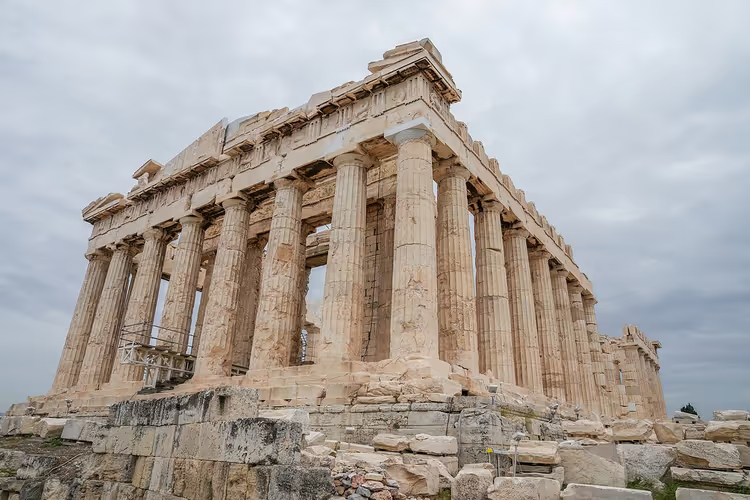 © Giles Laurent · CC BY-SAPhoto: Giles Laurent, CC BY-SA (https://creativecommons.org/licenses/by-sa/4.0), Wikimedia Commons
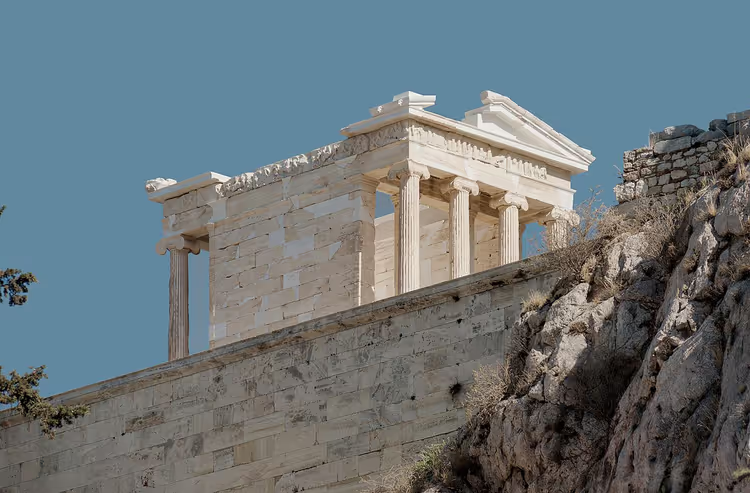
Temple of Athena Nike
The Temple of Athena Nike remains the smallest building on the hill. It is dedicated to the goddess of victory, and a statue of her once stood inside. You will see the white-stone temple from anywhere in the center, and in the evening the lighting comes on.
Erechtheion temple
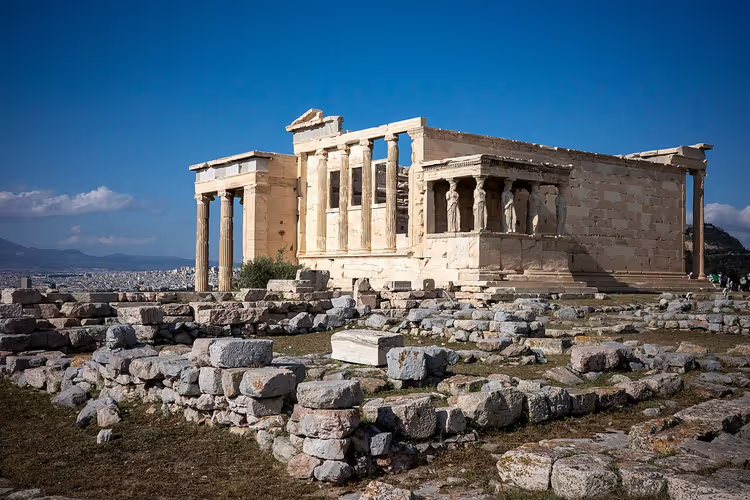
The Erechtheion was the last temple built on the Acropolis. It was dedicated to Athena, Poseidon, and King Erechtheus at the same time. Because of the uneven rock, the building turned out asymmetrical, which is a rare case for Greek architecture.
The most recognizable part of the temple is called the Porch of the Caryatids. The roof is supported by statues of maidens, and the ones standing in place are copies. Five originals are kept in the Acropolis Museum, and one is in the British Museum.
 © Chepry 💬 ( Andrzej Barabasz ) 📷 🇵🇱 · CC BY-SAPhoto: Chepry 💬 ( Andrzej Barabasz ) 📷 🇵🇱, CC BY-SA (https://creativecommons.org/licenses/by-sa/4.0), Wikimedia Commons
2. Theater of Dionysus
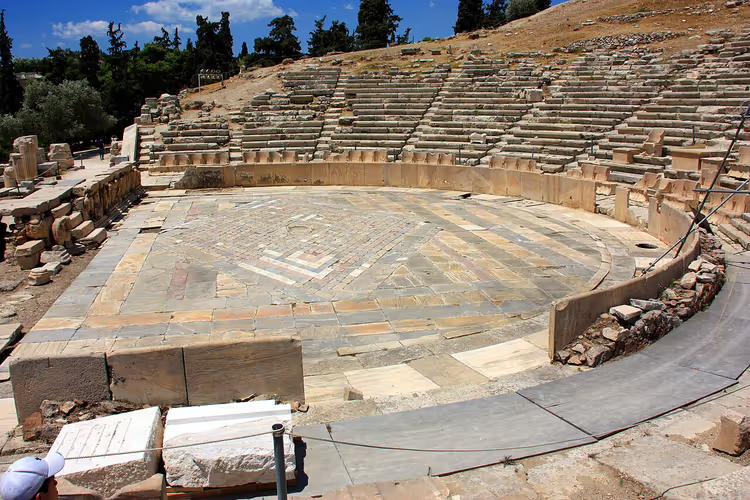
On the southern slope of the Acropolis lies the Theater of Dionysus. The tragedies of Sophocles and Aeschylus were first performed here, and the comedies of Aristophanes and Menander rang out for thousands of spectators. It is one of the oldest open-air theaters in the world.
 © Rrburke · CC BY-SAPhoto: Rrburke, CC BY-SA (https://creativecommons.org/licenses/by-sa/3.0), Wikimedia Commons
3. Acropolis Museum
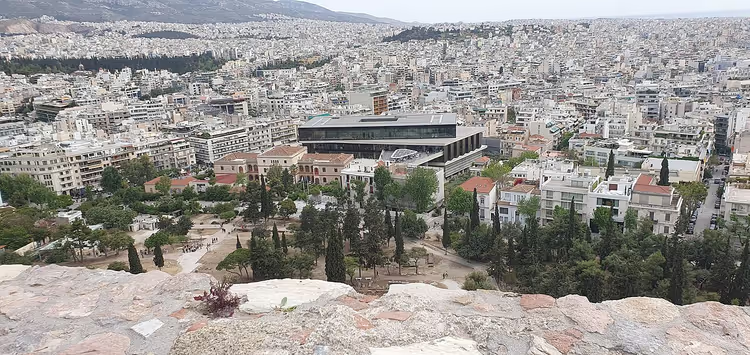
The Acropolis Museum stands 300 meters from the hill (on the map). The glass building opened in 2009 (as of: Wikipedia), and it literally floats above the excavations. Through the glass floor you look down at ancient houses, while the halls with finds unfold above you.
The museum's main hall is called the Parthenon Gallery. Here, originals of sculptures are displayed alongside copies, including the Caryatids from the Erechtheion. On the top floor there is an observation deck with a view of the hill and a cafe serving Greek coffee.
The ticket costs €20, reduced €10 (as of: 09/2026, official museum website). In summer the museum opens at 9 am, on Fridays until 10:00 pm, closed on January 1, May 1, and December 25-26. The metro will take you to the entrance, to Akropoli station.
Many people recommend visiting the museum first and then going up the hill. That way you get a better grasp of the history before seeing the ruins in person. Acropolis and museum tickets on Tiqets save you time at the entrance.
 © Yair-haklai · CC BY-SAPhoto: Yair-haklai, CC BY-SA (https://creativecommons.org/licenses/by-sa/4.0), Wikimedia Commons
4. Ancient Agora of Athens
To the northwest of the Acropolis lies the Ancient Agora of Athens. It was once the marketplace and the heart of the city: competitions were held here, plays were performed, and trading went on all day. The Temple of Hephaestus, the ruins of the Stoa of Attalos, and the foundations of ancient buildings have survived to this day.
The ticket costs €20, reduced €10 (as of: 09/2026, Greek Ministry of Culture).

Temple of Hephaestus
On the edge of the Agora stands the Temple of Hephaestus, the best-preserved ancient temple in Greece. It is often compared to the Parthenon: same style and same proportions. With the arrival of Christianity, the building served as an Orthodox church, and later it was recognized as a national monument.
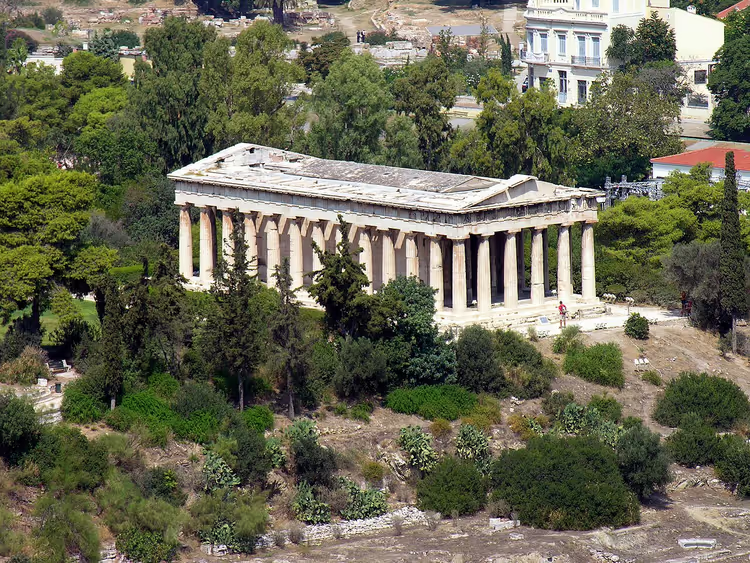 © Dennis G. Jarvis · CC BY-SAPhoto: Dennis G. Jarvis, CC BY-SA (https://creativecommons.org/licenses/by-sa/2.0), Wikimedia Commons
Museum of the Ancient Agora
The Agora Museum occupies the open colonnade of the Stoa of Attalos. The exhibits are arranged chronologically, from the birth of Athens to the 19th century. You can walk through this hall in half an hour, and before entering, sit on the marble steps.
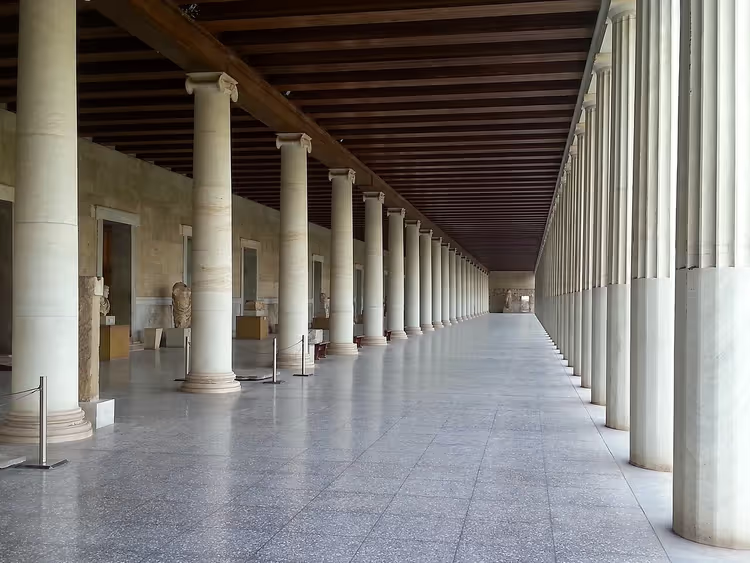 © w:Massimo Pigliucci · CC BYPhoto: w:Massimo Pigliucci, CC BY (https://creativecommons.org/licenses/by/4.0), Wikimedia Commons
5. Areopagus Hill
Between the Agora and the Acropolis rises the low rock of the Areopagus. The rock is open, and entry here is free. This place is more interesting for its history than for the view.
According to legend, Ares, the god of war, was tried here, and later Orestes from ancient Greek myths. Some sources call this trial the first criminal trial in the world. The trial of Socrates for his bold statements is also linked to this hill. Climb the steps of Paul and look down at the Agora from above.
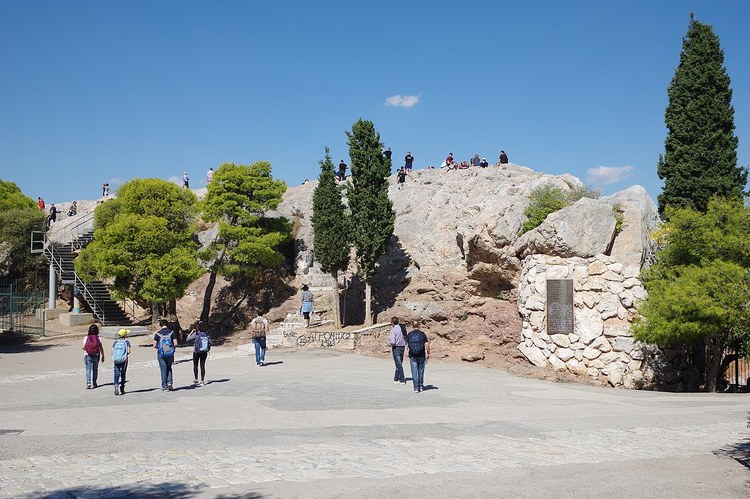 © Berthold Werner · CC BY-SAPhoto: Berthold Werner, CC BY-SA (https://creativecommons.org/licenses/by-sa/3.0), Wikimedia Commons
6. Temple of Olympian Zeus
The Temple of Olympian Zeus (Olympieion) began construction back in the 6th century BC, but was only completed under the Roman emperor Hadrian. Of the gigantic structure, 15 columns remain, each as tall as a five-story building (as of: Wikipedia).
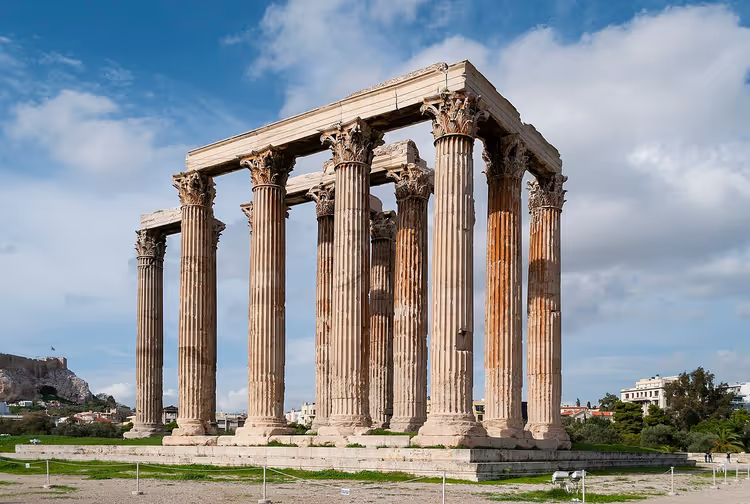 © Ava Βabili · CC BY-SAPhoto: Ava Βabili, CC BY-SA (https://creativecommons.org/licenses/by-sa/4.0), Wikimedia Commons
Do not confuse this temple with the statue of Zeus in Olympia, which was considered one of the seven wonders of the world. The Athenian temple was not a wonder, but it survived the centuries and remains in the city center.
7. Syntagma Square
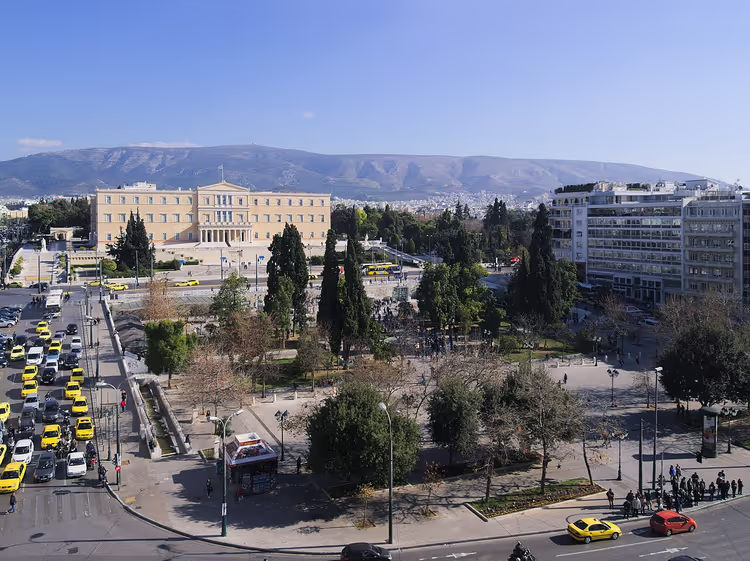
Syntagma Square has become the heart of the modern city. The parliament building, which was once the royal palace, stands on the square. Rallies take place here, and before Christmas a festive market opens.
Be sure to catch the changing of the guard at the Tomb of the Unknown Soldier. It repeats every hour, and the spectacle is memorable because of the guards' uniform: skirts, white tights, and shoes with pompoms. Underground there is a metro hub from which you can get to any point in the center.
 © C messier · CC BY-SAPhoto: C messier, CC BY-SA (https://creativecommons.org/licenses/by-sa/4.0), Wikimedia Commons
8. Panathenaic Stadium
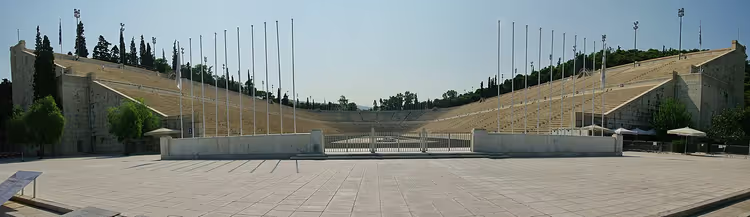
The Panathenaic Stadium (Kallimarmaro) is built entirely of marble. In 1896, the first modern Olympic Games were held here (as of: Wikipedia). All these years the stadium has remained in use: you can run on the track.
A ticket costs 12 €, reduced 6 € (as of: 09/2026, official stadium website). From March to October the stadium is open from 8:00 to 19:00, from November to February from 8:00 to 17:00. The price includes an audio guide in 11 languages. It is about a kilometer on foot from Syntagma and Akropoli stations.
 © Bgabel · CC BY-SAPhoto: Bgabel, CC BY-SA (https://creativecommons.org/licenses/by-sa/3.0), Wikimedia Commons
All eight places are in the center, so it is convenient to split the sightseeing into two days. On the first day, start with the Acropolis Museum, then go up to the Acropolis and walk through the Agora. On the second day, leave the Areopagus and the Temple of Zeus. Add the stadium and Syntagma along the way.
Tours and tickets in Athens
Guided tours, skip-the-line tickets and activities — most offers can be cancelled free of charge.
See offers on TiqetsThe widget loads once you give your consent.
⁉️🤔 Frequently asked questions
How much does a ticket to the Acropolis cost in 2026?
A full ticket costs 30 €, a reduced ticket 15 € (as of 09/2026, rates on the Ministry of Culture website). Resellers charge more, so buy online or at the ticket office on site.
Do I need a separate ticket for the Acropolis Museum?
Yes, the museum sells tickets separately from the hill. Admission costs 20 €, reduced 10 € (as of 09/2026, the museum's visit page). There is no combined ticket for the museum and the hill, each ticket is bought separately.
How much time should I allow for sightseeing?
The Agora takes about two hours, the stadium and Syntagma Square together less than an hour. Two full days are enough for the entire eight-site itinerary.
When is the Acropolis least crowded?
Early morning and the last two hours before closing. In July and August, between 11:00 and 16:00, the rock is simply too hot.
Can I walk to all the sites?
Yes, all eight sites are in the center within three kilometers of each other. It is easiest to walk from the Acropolis to the Agora, then to the Areopagus and the Temple of Zeus. The metro will take you to the stadium and Syntagma in one stop.
In short: what is worth booking
Athens rewards those who start the morning early and buy tickets in advance. A morning slot at the Acropolis saves you an hour in line, and the museum gives you context before you climb the hill.
- If you have one day: Acropolis Museum in the morning, then the Acropolis, then the Agora in the afternoon.
- If you have two days: add the Areopagus, the Temple of Zeus, Syntagma Square, and the Panathenaic Stadium.
- If you are traveling with children: start at the stadium, where you can run out onto the marble track.
Compare tickets for the ancient sites on Tiqets or find tours on GetYourGuide.
A night in the center is easy to book through Trip.com, which puts you close to the Acropolis.

A small editorial team writing guides for independent travel. We travel ourselves, but we haven’t been everywhere, so we check prices, opening hours and how to get there against official sources.