
















Day of the Dead 2026: altars, cemeteries and parade in Mexico City
The souls of the departed return home once a year. In Mexico, the whole country prepares for this visit: they bake bread, build altars, and light candles in cemeteries.
Day of the Dead (El Día de Muertos) is celebrated on November 1 and 2 (as of 09/2026, in the UNESCO registry). It is not a mournful wake, but a lively family celebration with music, food, and a parade.
Below you will find the history of the tradition, a breakdown of the altar by its elements, and the main places where the celebration is at its most vibrant.
Ad: this article contains affiliate links, we earn a commission if you book through them, at no extra cost to you.
What is Day of the Dead
💡 In short:
Dates: November 1 and 2.
The main symbol of the holiday is the home altar, or ofrenda.
The celebration is at its most vibrant in Mexico City, Oaxaca, and the state of Michoacán.
The holiday lives in homes, not on stage. It belongs to families, not tourists. Your task is simple: arrive on the right dates and behave respectfully. Below we will break down exactly what you will see in Mexico.
A bit of history
The cult of death and remembrance rituals have existed in the Americas for several thousand years. The roots of Day of the Dead go back to the beliefs of the peoples of Mesoamerica. For the Aztecs and Maya, death was a continuation of life, not its end.
Spanish conquistadors tried to convert the local population to Catholicism. They also imposed their own holidays. Thus, November 1 on the Catholic calendar became All Saints' Day, and November 2 became All Souls' Day.
But the indigenous people reshaped this framework to suit themselves. Now on November 1, they celebrate Day of the Little Angels, when deceased children are remembered. On the second day comes Day of the Dead itself, dedicated to adults.
Offerings are not taken to church. They are placed on the home altar or brought directly to the grave. The holiday does not resemble a mourning ceremony. Deceased relatives are invited over as guests, as if they were alive.
Important: in 2003, UNESCO recognized the holiday as an intangible cultural heritage of humanity (as of 09/2026, confirmation on the organization's website).
By the twentieth century, the tradition had nearly faded away. In big cities it turned into folklore and survived only in the provinces. But with the growing popularity of American Halloween, or rather as a counterweight to it, Day of the Dead came back with all its customs.
Important: in Mexico's school calendar, Day of the Dead is marked as a holiday, so classes are canceled. For working people, it is not a day off. Employers are not required to let employees leave or pay them double.
Throughout the celebration period, homes are decorated with altars. On them are placed things that were dear to the deceased during their lifetime. All of this is complemented with flowers and treats.
What goes on the altar
 © Karla Andrew · CC BY-SAPhoto: Karla Andrew, CC BY-SA (https://creativecommons.org/licenses/by-sa/3.0), Wikimedia Commons
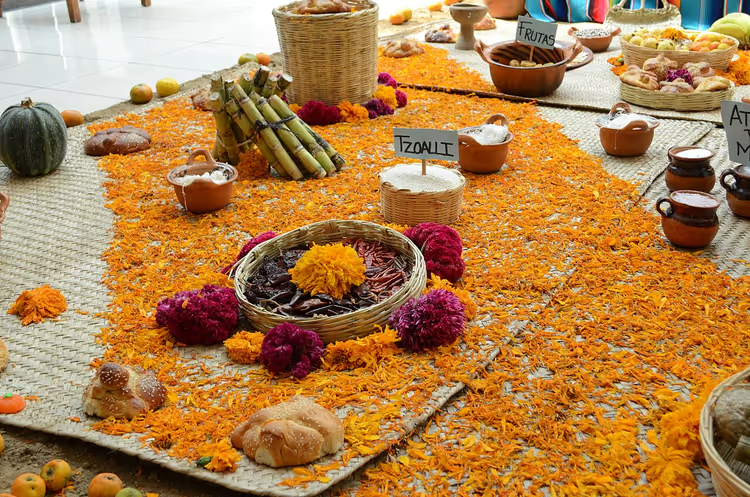
Traditions vary by region, but the main elements of the altar repeat. Here is what you will most often see.
- Photographs of the deceased, if the altar is dedicated to several people.
- A cross as part of the Catholic influence.
- Marigolds. Their scent is supposed to lead the deceased to the altar.
- Candles. Purple ones signify mourning, while white ones show the way.
- Bread of the dead. It is sold from early October, it is tasty and suitable for the living.
- Hot chocolate, served with the bread.
- Sugar skulls.
- Garlands of tissue paper above the altar. If the cut-paper sheets sway in the wind, it is believed that the deceased has already arrived.
- The deceased's favorite food.
- Water, so the dead can drink after the journey. Sometimes soap and a towel are placed nearby for washing.
- Incense and resin to purify the space.
- A figurine of an itzcuintli dog, if the altar is dedicated to a child.
- A flower arch as a portal from the world of the dead.
- Alcohol. Most often it is tequila, mezcal, or pulque.
A rich altar can consume several months of a family's budget. You will encounter both modest ofrendas and very lavish ones.
A panel of sugar skulls earned Mexico an entry in the Guinness Book of World Records.
What happens in cemeteries
 © Isaacvp · CC BY-SAPhoto: Isaacvp, CC BY-SA (https://creativecommons.org/licenses/by-sa/4.0), Wikimedia Commons
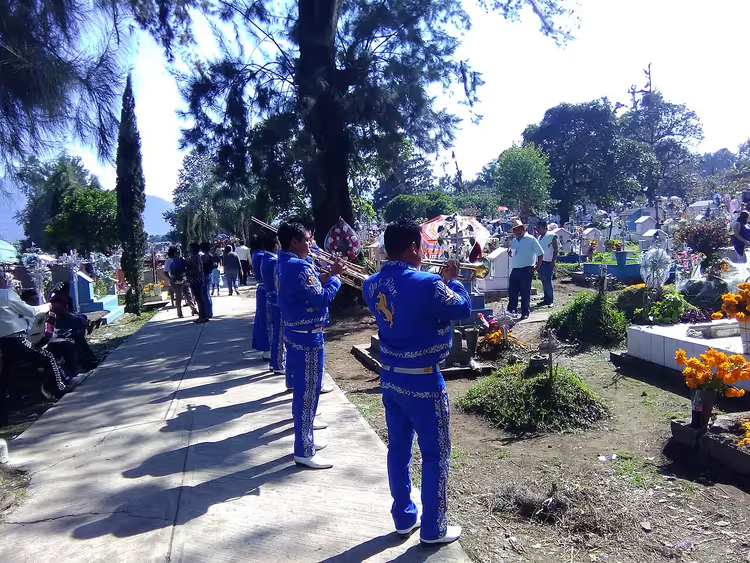
During the holiday days, cemeteries are not empty. Graves are decorated with marigolds and ribbons, offerings are brought, candles and incense are placed everywhere. Even the road to the cemetery is lined with lit candles. According to legend, this light helps the dead find their way home faster.
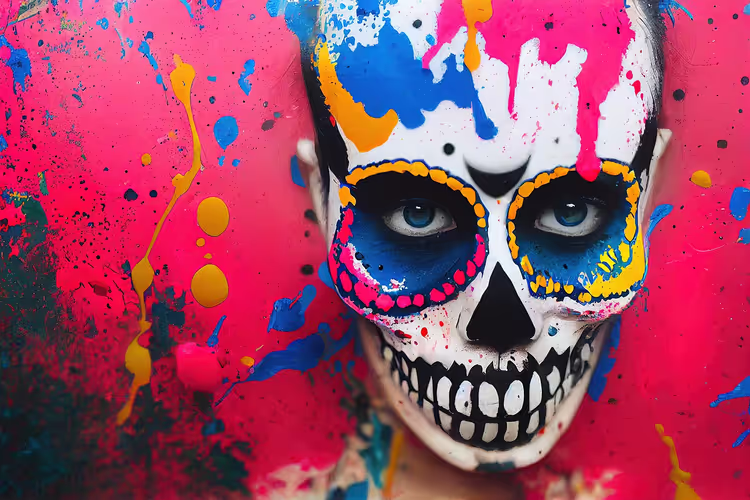
The holiday also has its own calling card. It is La Calavera Catrina, an image known far beyond Mexico. Mexican women paint their faces like a tattooed skull and adorn their heads with flowers.
The style of dress is believed to have been influenced by the engraving "La Calavera Catrina" by artist José Guadalupe Posada. Here calavera means skull, and catrina means a well-dressed dandy. The engraving depicts the skull of a girl in a fashionable hat with flowers. The meaning is simple: behind rich clothing there are often people who are dead in spirit, and before death everyone is equal.
There is another version. The prototype of Catrina is considered to be the ancient goddess of death, Mictecacihuatl.
Important: the image of La Catrina is popular not only in Mexico. Painted skulls are used in clothing, on gadget cases, in tattoos, and in photo shoots.
In some regions, it is customary to wear the clothing of the deceased and cover the face with white paint. According to belief, this way the spirit of the deceased who comes will feel at home.
Where the celebration takes place
Attitudes toward the holiday vary greatly from state to state. This directly changes your plans.
In Yucatán, you will hear the old name of the holiday, Hanal Pixán. It translates as "food for the soul." In the eastern part of the peninsula, in the state of Quintana Roo, Day of the Dead is barely celebrated and is not considered their own.
The state of Oaxaca, however, loves the holiday with all its heart. In the state capital, dozens of altars are erected, each more beautiful than the last. Be sure to visit the San Felipe and Xoxocotlán cemeteries. On the night of November 1 to 2, music plays there, candles burn, and the air smells of hot chocolate (as of 09/2026, Oaxaca guide). The most colorful parades take place in the town of San Agustín Etla, about 20 km from Oaxaca.
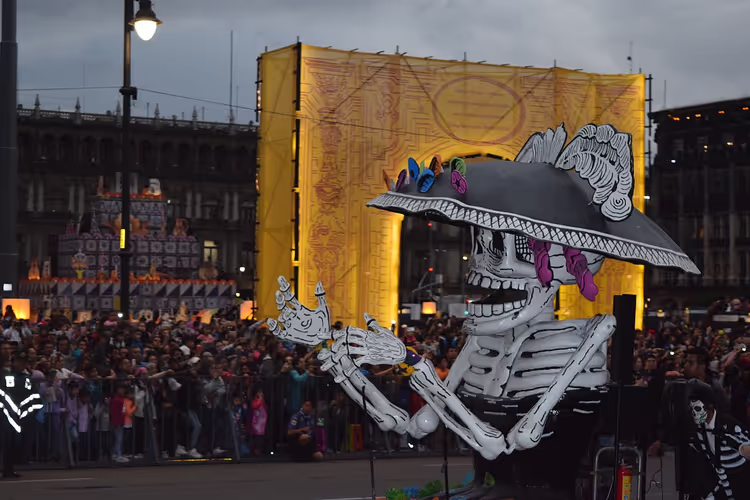
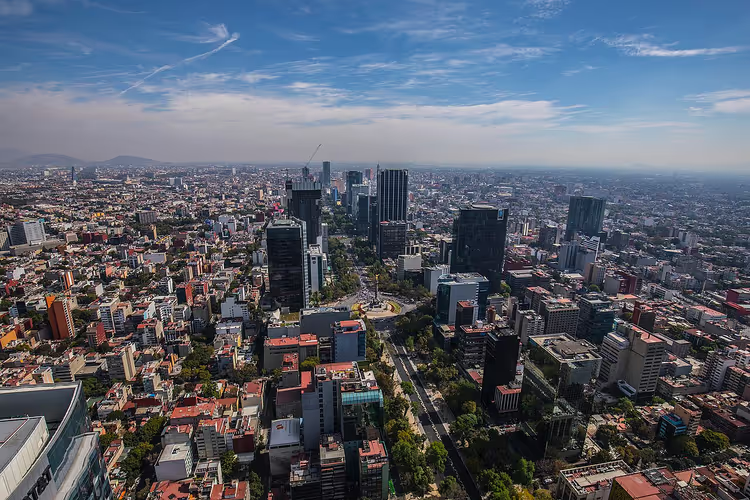
In Mexico City, activities start as early as late October. Parades of fantastic creatures called "alebrijes" and "great Catrinas" march through the streets. The main event of 2026 is scheduled for October 31. The Gran Desfile moves through the historic center toward the Zócalo (as of 09/2026, Tribuna de México). Arrive early and claim a spot by the curb, otherwise you will only see people's backs.
Important: the tradition of holding a carnival appeared thanks to a James Bond blockbuster. The holiday itself is very old, but the decorative parade was first held for the filming of "007: Spectre." Mexicans liked the idea, and the carnival became an annual event. Now it is a costume show with music and dancing that draws thousands of tourists to the capital.
If your trip does not fall on the holiday dates but you want to experience the tradition, go to the Coyoacán neighborhood. This is the bohemian part of Mexico City and the creative workshop of Frida Kahlo. The Day of the Dead atmosphere is maintained here year-round. You will stroll through picturesque streets and feel like part of Mexican culture.
The state of Michoacán preserves the tradition most strongly. The main celebration site is in the middle of Lake Pátzcuaro. It is the island of Janitzio, where boats travel all night from November 1 to 2 (as of 09/2026, Michoacán guide). The island has a beautiful cemetery covered in flowers, candles, and treats for the dead.
The catch: during the holiday days, there are too many tourists on the island of Janitzio. Around Lake Pátzcuaro there are also more intimate places. On the island of Jarácuaro you can see the traditional dance of the old men. In Arocutín and Tzintzuntzan, cemeteries are impressively decorated.
Important: residents of the town of Pomuch in the state of Campeche have an unusual custom. They wash the bones of their deceased relatives, quite literally. On Day of the Dead, crypts are opened, remains are cleaned, washed, and carefully placed back until the next year.
Where else Day of the Dead is celebrated
Besides Mexico, the holiday is celebrated in Guatemala, Nicaragua, Honduras, and El Salvador. Everywhere it takes place in its own way.
In Guatemala, the influence of the Catholic Church is strong. On November 1, they celebrate All Saints' Day, and on the second day they remember deceased believers.
In Honduras, on November 2, relatives and friends gather, music plays, and everyone remembers the dead. At the end, by tradition, a prayer is read.
 © Bernal Rodríguez Ramírez · CC BY-SAPhoto: Bernal Rodríguez Ramírez, CC BY-SA (https://creativecommons.org/licenses/by-sa/4.0), Wikimedia Commons
A few final tips
1. Book accommodation in advance. Many tourists flock to cities where Day of the Dead is especially festive. The best value for money goes to those who book several months ahead.
2. Be respectful. Many cemeteries are open to everyone, but they remain a place of family privacy. Behave with restraint and ask permission before taking photos. That way you will not disturb someone's grief and celebration at the same time.
3. Plan your time. If you are driving, be prepared for traffic jams. Make flexible plans and leave early so you can make it everywhere.
4. Try the treats. The holiday food is delicious and authentic. Do not fill up before heading out, so you can try everything and not regret what you missed.
⁉️🤔 Frequently asked questions
When is Day of the Dead celebrated?
The holiday falls on November 1 and 2 (as of 09/2026, UNESCO calendar). For which day is dedicated to whom, see the "A bit of history" section. Preparations begin earlier: altars and markets come alive in late October. If you are planning a trip, allow at least three or four days to see both the altars and the cemeteries.
What is an ofrenda?
An ofrenda is a home altar in honor of the deceased. For what it is made of, see the "What goes on the altar" section. It is believed that the spirit returns home and rests after a long journey. In some regions, the ofrenda is set up at the cemetery right by the grave.
Can a tourist visit a cemetery?
Yes, many cemeteries are open to visitors (as of 09/2026, Oaxaca guide). But it is not an attraction, it is a place of remembrance. Keep your distance, do not disturb families, and ask permission before taking photos. In Oaxaca and on the island of Janitzio, there are huge crowds on holiday nights, so arrive early.
Where is the celebration at its most vibrant?
Three main destinations: Mexico City with the Gran Desfile, Oaxaca with altars and cemeteries, and the state of Michoacán with the night on the island of Janitzio. Mexico City has the most events and tourists, Oaxaca has a warmer atmosphere, Michoacán has a stronger tradition. Choose a place based on your travel dates.
What holiday food should I try?
Bread of the dead (pan de muerto) with sugar topping, sugar skulls, and hot chocolate. In Oaxaca, try the local cuisine; in Michoacán, they cook purépecha dishes. Remember that food on altars is meant for the dead, so do not take it without an invitation.
In short: what to book
The main days of the holiday are November 1 and 2, and the first events start in late October. If you want to see the big parade, choose Mexico City and dates from late October. For an authentic atmosphere, go to Oaxaca or Lake Pátzcuaro.
- If you want a big city and a show, choose Mexico City and the Gran Desfile.
- If tradition and cemeteries matter more, choose Oaxaca.
- If you want something intimate and crowd-free, choose the island of Jarácuaro and the villages around Pátzcuaro.
Plan your accommodation in advance and leave extra time for travel. For a trip around the country, check out tours to Mexico City on GetYourGuide.

A small editorial team writing guides for independent travel. We travel ourselves, but we haven’t been everywhere, so we check prices, opening hours and how to get there against official sources.