
















14 Places in central Stockholm you can walk around in one day
Stockholm's center is genuinely walkable in one day. The distances between the main sights are short, and you barely spend any time on the metro. The challenge is different: 14 sights are spread across three districts, from Norrmalm to Östermalm. We connected them into one route with opening hours, prices, and distances. You can only enter Stockholm City Hall with a guided tour (as of 09/2026, official website). From there you'll walk from City Hall through old Norrmalm to the museums of Östermalm and figure out where it's worth lingering longer.
Ad: this article contains affiliate links, we earn a commission if you book through them, at no extra cost to you.
1. Stockholm City Hall
💡 In short:
- The route runs west to east, from City Hall through Norrmalm to Östermalm.
- The whole walk takes half a day without long stops in museums.
- City Hall and Historiska museet charge admission. You'll see the churches and streets for free.
- Tickets and opening hours: 09/2026, verified on the City Hall official website.
 © Jorge Láscar from Melbourne, Australia · CC BYPhoto: Jorge Láscar from Melbourne, Australia, CC BY (https://creativecommons.org/licenses/by/2.0), Wikimedia Commons
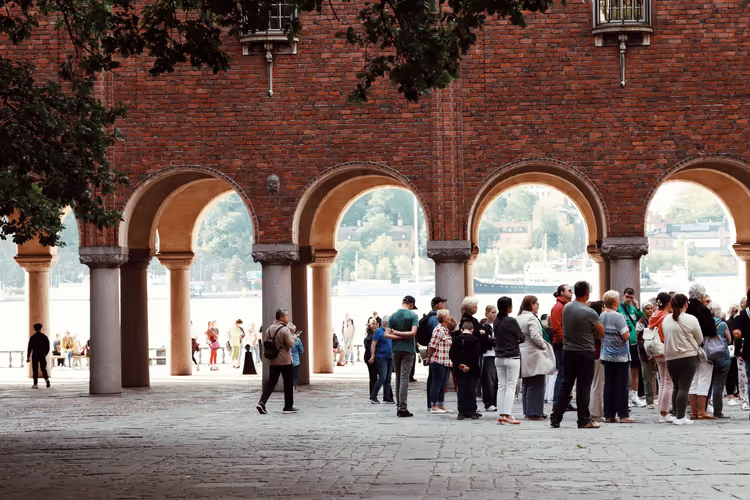
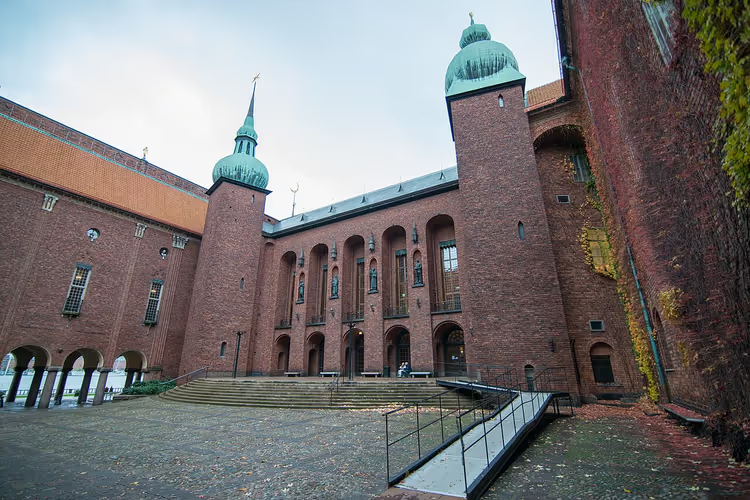
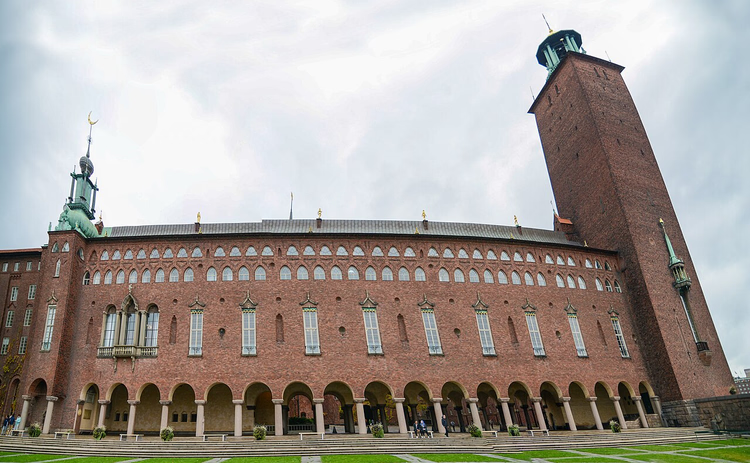
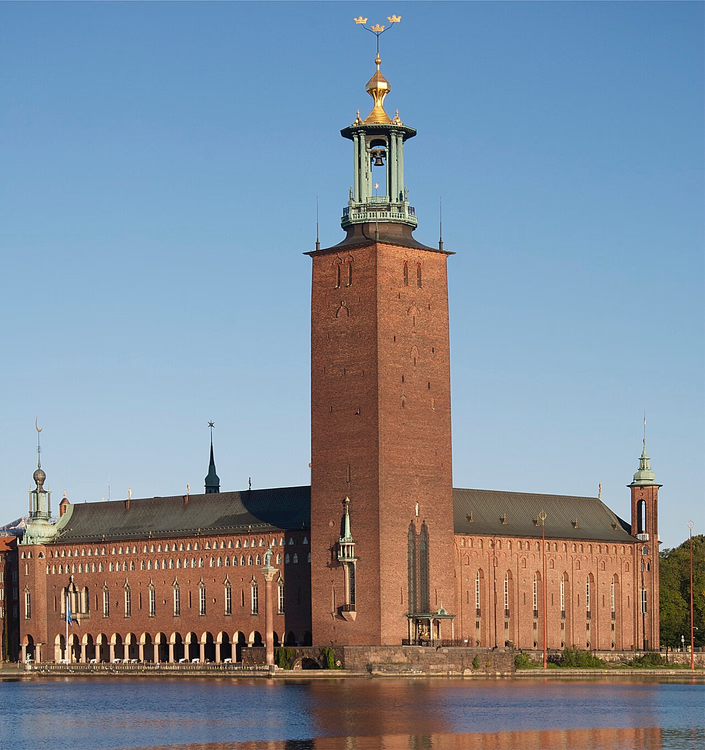
Stockholm City Hall (Stockholms stadshus) stands on the eastern tip of Kungsholmen, right by the water. The building was designed by architect Ragnar Östberg and opened in 1923 (as of 09/2026, City Hall tour schedule). Construction took 8 million bricks, made at a factory south of the city. Every December, Nobel laureates are honored here.
You can only go inside with a guide. The tour lasts 45 minutes and covers the Blue Hall, the Golden Hall, the Council Chamber, and the Prince's Gallery. English tours start from 10:00 to 15:00, Swedish ones at 12:00 and 14:00. On Saturdays the Prince's Gallery is closed for weddings. Without a guide you can access the courtyard, the arcades, and the tower viewing gallery. The tower ticket is sold separately. The catch: on reception days some halls are closed, the schedule changes every week, so check it on the website.
2. St. Clara Church
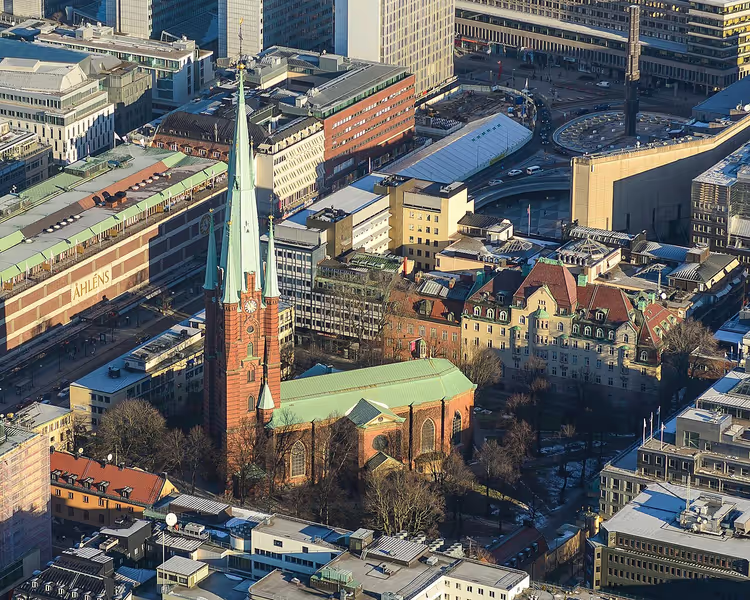
St. Clara Church (S:ta Clara kyrka) is a stone's throw from Central Station, about a 5-minute walk (on the map). Its spire is visible from anywhere in Norrmalm, and you'll easily find the church by it.
 © Arild Vågen · CC BY-SAPhoto: Arild Vågen, CC BY-SA (https://creativecommons.org/licenses/by-sa/3.0), Wikimedia Commons
The parish dates back to the 13th century: Magnus Ladulås founded a monastery here. The building survived a major fire and several reconstructions, and by the late 19th century its tower became the tallest structure in the city center. Inside, look for the stained glass, the marble floor, the carved pulpit, and the working organ. You'll see all of this only during opening hours, not according to the service schedule.
Admission is free. During the day the doors are opened by parish volunteers, and on Saturdays the church hosts music and a café (as of 09/2026, S:ta Clara parish). The church's history and its restoration after fires are described on the parish page. Come on a weekday morning: there's almost no one by the altar. The catch: in the evening the church is often closed, and the schedule depends on services and concerts.
3. Stockholm Central Station
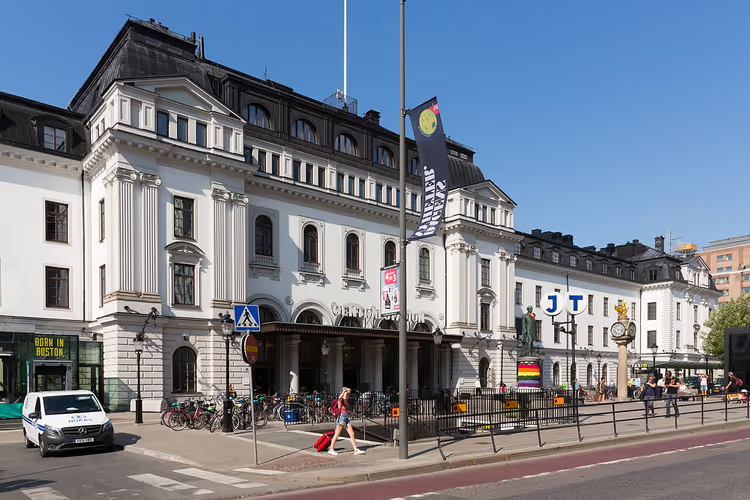
Stockholm Central Station receives trains from all over Sweden. It has been operating since the last quarter of the 19th century and is considered the largest railway hub on the Scandinavian Peninsula. If you include metro passengers at T-Centralen station, the station ranks first in daily passenger flow. You arrive here by metro or the Arlanda Express and start your route right from the exit.
 © Liberaler Humanist · CC BY-SAPhoto: Liberaler Humanist, CC BY-SA (https://creativecommons.org/licenses/by-sa/3.0), Wikimedia Commons
The station is a convenient starting point for a walk. From here it is a five-minute walk to St. Clara Church, and even less to Drottninggatan. Inside there are luggage lockers, a pharmacy, grocery stores, and cafes. You can leave your bags and walk light. The catch: at rush hour the halls are packed, and the platform number is announced at the last moment.
4. Drottninggatan street
Drottninggatan translates as "Queen Street." It is one of the longest pedestrian streets in the city, about 1.5 km long (on the map). Along it you will walk from the station toward the Observatory and see half of the city center on foot.
 © Jorge Láscar from Melbourne, Australia · CC BYPhoto: Jorge Láscar from Melbourne, Australia, CC BY (https://creativecommons.org/licenses/by/2.0), Wikimedia Commons
The start of the street is marked by a sculpture of a beggar fox by Laura Ford. It was installed to draw attention to homeless animals. At the other end stands the observatory, with a park around it. Between them there are shops, bookstores, and coffee shops, so there are always plenty of people here.
One local detail to remember is the Owl pharmacy. It is the oldest pharmacy in the city, opened in the second half of the 18th century and has not changed its address since. The writer Johan August Strindberg also lived on this street, and his house is now a museum.
Walking the entire street takes about half an hour (on the map), and you move in one direction the whole time. From here it is easy to turn off toward the Riksdag, the Royal Swedish Opera, or St. Jacob's Church. The catch: by evening the street is noisy, and in summer it is hard to walk against the flow on the narrow sections.
5. Royal academy of fine arts
The Royal Academy of Fine Arts was founded in the first half of the 18th century on the initiative of Carl Gustaf Tessin. The charter was modeled on the documents of the Paris Academy. Over time, drawing lessons were supplemented by drafting, architecture courses, and lectures on art.
 © Arild Vågen · CC BY-SAPhoto: Arild Vågen, CC BY-SA (https://creativecommons.org/licenses/by-sa/3.0), Wikimedia Commons
The building stands in Norrmalm, about 200 m from Gustav Adolfs torg (on the map), and is visible from Fredsgatan. It is worth seeing the facade and the courtyard, and check the exhibition schedule in advance on the academy's website. You cannot get inside on any day, because the academy operates as an educational institution.
6. Rosenbad complex
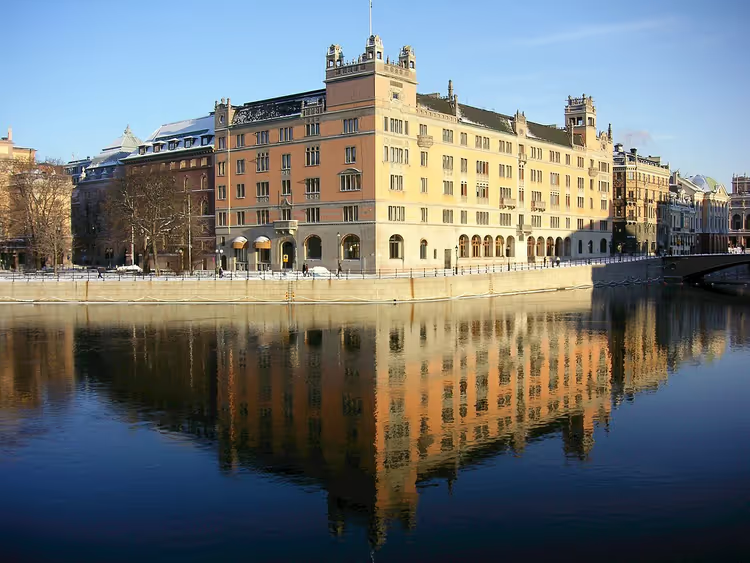
The Rosenbad complex stands by the water, opposite the island of Helgeandsholmen. The office of the Prime Minister of Sweden is located here.
 © Holger.Ellgaard · CC BY-SAPhoto: Holger.Ellgaard, CC BY-SA (https://creativecommons.org/licenses/by-sa/3.0), Wikimedia Commons
Every day the offices host press conferences, political meetings, and official briefings, so tourists are not allowed inside. The building was constructed in 1902-1904 to a design by architect Boberg.
You walk past it over the bridge or along the embankment, and viewing it takes a couple of minutes. The best angle opens up from the other side of the water, from the Riksdag facade. The catch: you can only see it from the outside, entry is closed to the public.
7. The Riksdag on Helgeandsholmen
The Riksdag, Sweden's parliament, operates in a building on the island of Helgeandsholmen. It has a single chamber with 349 members, and elections are held every four years (as of 09/2026, official website).
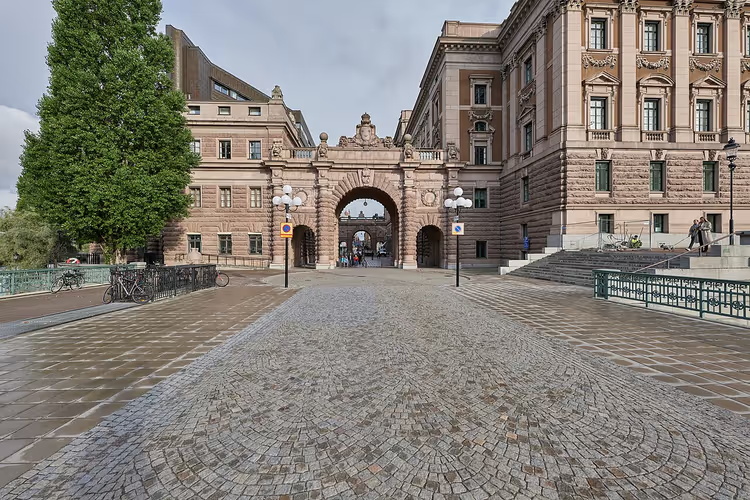
You can get inside for free. The tour lasts about 55 minutes and starts at the visitor entrance at Riksgatan 3. Each group takes 28 people. Tickets are not booked in advance: you just show up and take a place, and bags are checked at the entrance. Arrive 15 minutes before the start to get through security without rushing.
If time is tight, view the facade and the bridge from outside. From the north you see Rosenbad, from the south the Old Town. The catch: on session days tours are canceled, so check the calendar on the website.
8. Museum of Medieval Stockholm
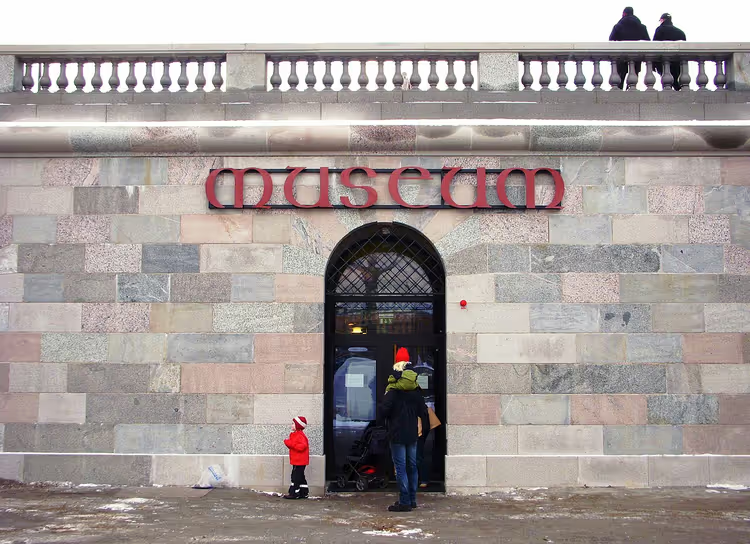
The Museum of Medieval Stockholm (Medeltidsmuseet) came about after archaeological excavations in the 1980s. At that time, fragments of a 16th-century wall and an old cemetery were found on Helgeandsholmen. The main exhibition was located underground, directly under the Norrbro bridge.
 © User:Holger.Ellgaard · CC BY-SAPhoto: User:Holger.Ellgaard, CC BY-SA (https://creativecommons.org/licenses/by-sa/3.0), Wikimedia Commons
The underground halls are now closed, and the museum operates as a pop-up in the Old Town (as of 09/2026, official website). Check the address, hours, and admission there as well: the venue is seasonal. The catch: there is no longer any point in going for the full exhibition under Norrbro, you will only see the temporary part.
9. Royal Swedish Opera
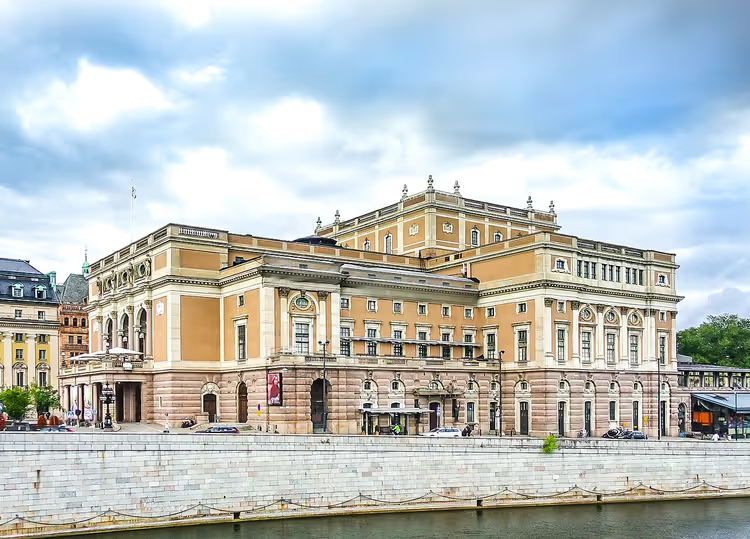
The Royal Swedish Opera (Kungliga Operan) stands between Gustav Adolfs torg and the palace, right by the bridge. The theater was founded in the second half of the 18th century, and the first company was formed under Gustav III. He also ordered a separate building to be constructed for it.
 © Frankie Fouganthin · CC BY-SAPhoto: Frankie Fouganthin, CC BY-SA (https://creativecommons.org/licenses/by-sa/4.0), Wikimedia Commons
Today the stage hosts opera and ballet productions, and the theater has its own symphony orchestra with separate concerts.
Buy tickets in advance: popular productions sell out, and the cheap seats in the upper tiers go first. If a performance is sold out, check the foyer and the square in front of the entrance. See the schedule and box office hours on the theater's website.
10. St. Jacob's Church
Most tourists walk right past St. Jacob's Church (Sankt Jacobs kyrka). From the outside it doesn't impress next to the palace and the opera house, although it is one of the oldest surviving buildings in the city.
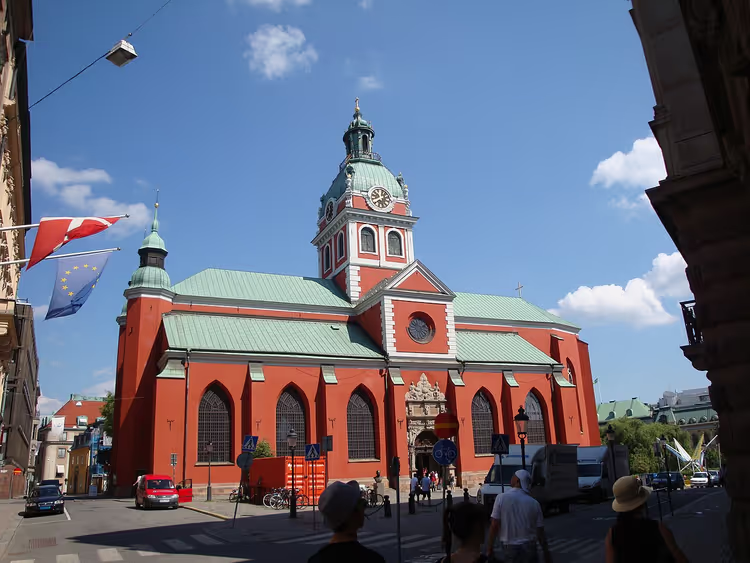
The church was dedicated to the patron saint of seafarers and built in the late 16th century on the site of an older church that had stood there for three centuries. Inside, a baptismal font from the early 18th century and several old relics have been preserved. You can take them in within a couple of minutes, and you don't need a guide here.
The church stands by Kungsträdgården, next to the Royal Swedish Opera. The Royal Dramatic Theatre is further away, on Nybroplan square. Opening hours are irregular: the schedule depends on services and concerts. Walk past on your way from the opera and step in if the church is open.
11. Royal Dramatic Theatre
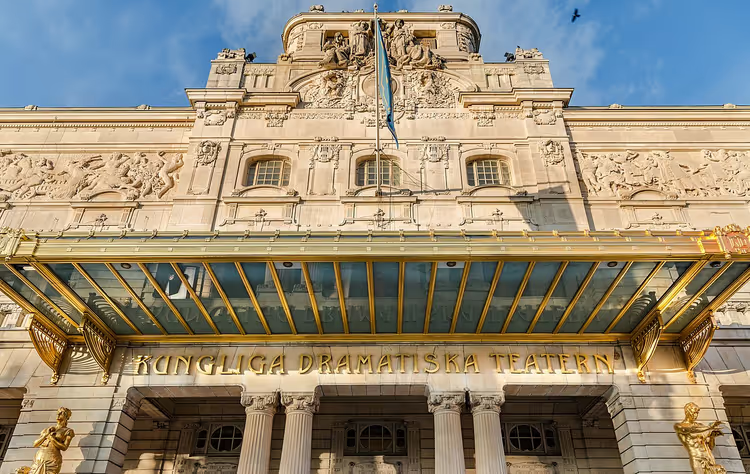
The Royal Dramatic Theatre (Dramaten) dates back to the late 18th century, and got its current look in the early 20th century thanks to architect Fredrik Lilljekvist. The first play performed here was Master Olof, in the early 20th century.
 © Tony Webster from San Francisco, California · CC BY-SAPhoto: Tony Webster from San Francisco, California, CC BY-SA (https://creativecommons.org/licenses/by-sa/2.0), Wikimedia Commons
The theatre is home to a drama school. Its graduates are well known both in Swedish film and on stage. The facade looks austere, so many people walk past without realizing there's a performance going on behind the doors.
On the facade facing the square there's a poster with upcoming productions. For tickets, go to the theatre's website. Performances are in Swedish, so check in advance whether subtitles are available.
12. Scenkonstmuseet, formerly the Music Museum
Scenkonstmuseet, formerly the Music Museum, now covers music, theatre and dance. It occupies a building at Sibyllegatan 2. The instrument collection is considered one of the best in the world: it brings together instruments from different eras and cultures.
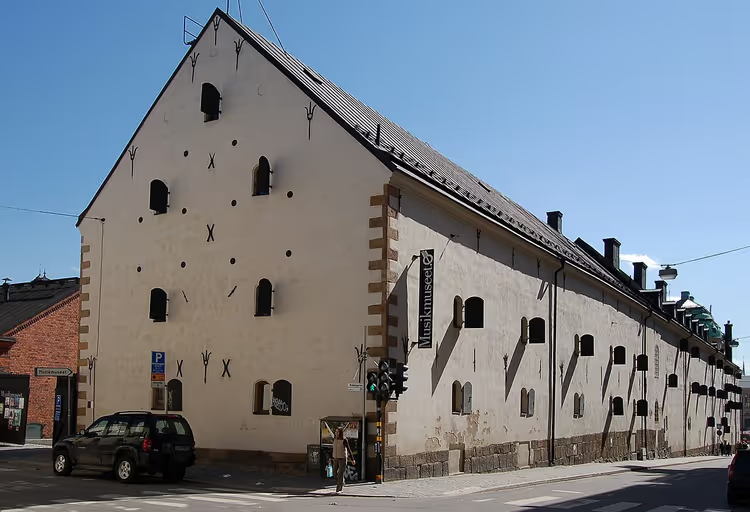 © FriskoKry · CC BY-SAPhoto: FriskoKry, CC BY-SA (http://creativecommons.org/licenses/by-sa/3.0/), Wikimedia Commons
The building was constructed in the 17th century and previously housed the royal bakery. Much of what's in the galleries can be touched and tried. Green squares mean the instrument is available, red circles mean don't touch. Fragile exhibits are behind glass, and you listen to their sound through nearby headphones.
A standout exhibit is a globe-shaped sound archive with national music from different countries. There's also an installation where you play drums while wearing headphones. A short 20-minute program runs every day and is included in the ticket. The museum is open Tuesday through Sunday, 11:00 to 17:00 (as of 09/2026, official website). The catch: closed on Mondays.
13. Armémuseum, the Army Museum
Armémuseum, the Army Museum, presents the history of the Swedish armed forces from the Vikings to the present day. Right at the entrance stands a monument to those who fell in the battles of Poltava.
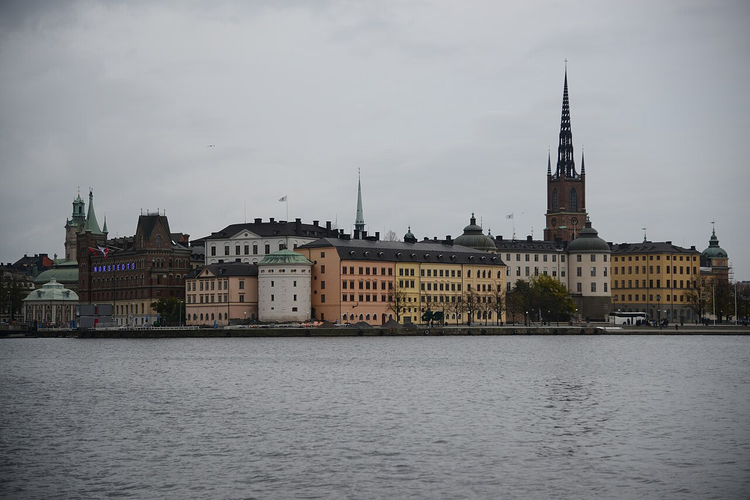 © Jorge Láscar from Melbourne, Australia · CC BYPhoto: Jorge Láscar from Melbourne, Australia, CC BY (https://creativecommons.org/licenses/by/2.0), Wikimedia Commons
Beyond that is a collection of historical weapons. The museum differs from most military collections: social context matters more than parades here, and the exhibitions show what war means for ordinary people.
An adult ticket costs 140 kronor, seniors and students pay 95 kronor, and visitors under 19 enter free (as of 09/2026, official website). On Tuesdays from 17:00 to 19:00 there's a 50% discount (as of 09/2026, official website). The museum is cashless, so bring a card or Swish. The catch: visitors under 13 are only admitted with an adult, and some galleries deal with heavy subject matter.
14. Historiska museet in Östermalm
Historiska museet, the Swedish History Museum, stands in Östermalm at Narvavägen 17. The building was constructed in the first half of the 20th century and is noticeably newer than the other stops on this route.
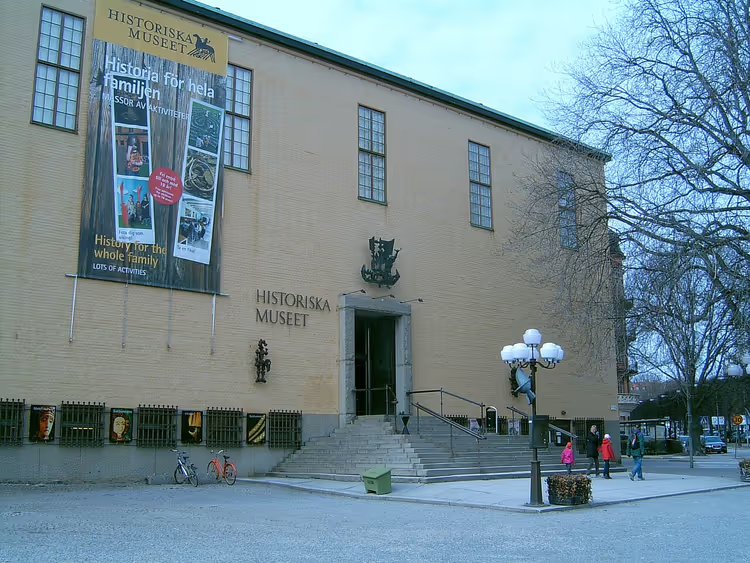 © Mr Bullitt · CC BY-SAPhoto: Mr Bullitt, CC BY-SA (https://creativecommons.org/licenses/by-sa/3.0), Wikimedia Commons
The exhibition covers Swedish history and culture from the Stone Age to the 16th century. The main reason people come here is the Gold Room: it houses gold jewelry and hoards. The catch: the galleries are large, and a thorough visit takes at least two hours.
Adult admission costs 180 kronor, children and teens under 18 enter free, and from 16:00 to 17:00 the ticket is half price (as of 09/2026, official website). The ticket also covers the Museum of Economics in the same building. No advance booking is needed, just buy at the entrance. The museum sits away from City Hall, so save it for the end of the route or take the metro to Karlaplan.
If you want to get museum tickets in advance, check out the Stockholm selection. The cards are updated regularly, and prices are visible right away.
Tours and tickets in Stockholm
Guided tours, skip-the-line tickets and activities — most offers can be cancelled free of charge.
See offers on TiqetsThe widget loads once you give your consent.
⁉️🤔 Frequently asked questions
Can you enter Stockholm City Hall without a tour?
No. The inside of City Hall is accessible only with a guide, and the tour takes about 45 minutes. Without a ticket you can still see the courtyard, the arcades, and climb the tower for a separate fee. The schedule changes every week, so check it on the official website.
How much does it cost to see the museums on this route?
You will have to pay at the main museums. At Historiska museet an adult ticket costs 180 kronor, at Armémuseum 140 kronor, and the price at Scenkonstmuseet should be checked on the website (as of 09/2026, official website). Visitors under 18 or 19 enter free. St. Clare's Church, St. Jacob's Church, and Drottninggatan are free to visit.
Is the Museum of Medieval Stockholm open?
The underground halls under Norrbro are closed, and the museum currently operates as a pop-up in the Old Town. The venue is seasonal, so check the address, hours, and admission on the museum's website. If you want a permanent exhibition on medieval Stockholm, go by the current program.
How long does the whole route take?
Without going into museums, the entire walk takes half a day. The distances between stops are short, and you walk in one direction, from west to east. With two museums, add a few more hours. If you want to cover everything in one go, start at City Hall before 10:00 and take the English tour.
What to see in the center for free?
St. Clare's Church, St. Jacob's Church, and a walk along Drottninggatan are free. You can view City Hall and the Riksdag from the outside, and the Riksdag tour is free, just without advance booking. The other museums on the list charge admission, but at Historiska museet children under 18 enter free.
In short: what to book
If you have one day, start at City Hall at 10:00 and take the English tour. Then walk east: St. Clare's Church, Drottninggatan, Rosenbad, the Riksdag, and the Royal Opera line up in a single stretch. If you like museums, save Armémuseum or Historiska museet for the end. If you are traveling with kids, put Scenkonstmuseet first: there you can touch exhibits and play instruments.
If you want to get museum tickets in advance, check the options on Tiqets. Guided city tours are listed on GetYourGuide.

A small editorial team writing guides for independent travel. We travel ourselves, but we haven’t been everywhere, so we check prices, opening hours and how to get there against official sources.