
















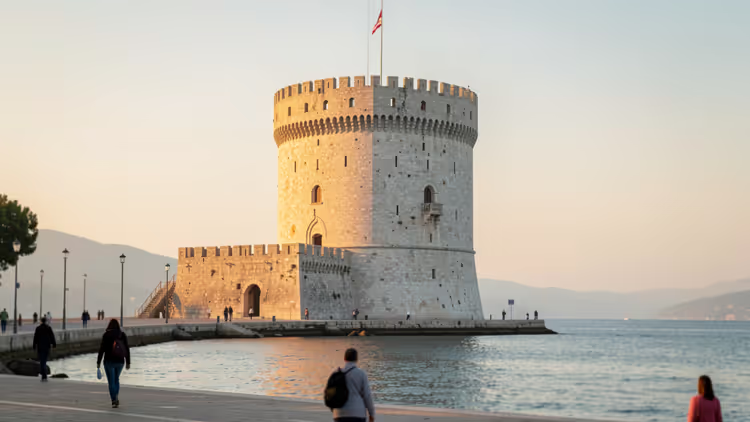
 AIIllustrative image: AI-generated
Thessaloniki sights: 9 places for a first visit
Thessaloniki is easy to explore on foot: nine major sights in the center are clustered close together. Half of them are free, and for the rest you pay a few euros. We put together the places worth seeing on a first trip and checked the numbers against official sources.
For each sight below you will find hours, price, and an honest catch. Let's start with the waterfront: that's where the White Tower and the Alexander the Great monument stand, and a full ticket to the tower costs about €6 (as of 09/2026, Thessaloniki guide).
Ad: this article contains affiliate links, we earn a commission if you book through them, at no extra cost to you.
1. White Tower
💡 In short:
- Five of the nine sights are free to visit, the rest cost a few euros.
- Museums close earlier than churches, so plan them for the first half of the day.
- You can walk the entire center in one day at a relaxed pace.
- Prices and opening hours: 09/2026, verified on the official website of the Archaeological Museum.
 © Nikolai Karaneschev · CC BYPhoto: Nikolai Karaneschev, CC BY (https://creativecommons.org/licenses/by/3.0), Wikimedia Commons
The White Tower stands right on the Nikis waterfront and serves as the city's calling card. Ottoman builders erected it as part of the city wall, and prisoners were held in its dungeons before trial. The garrison executions gave the tower its second name, the Bloody Tower.
Today the tower houses a museum of the Byzantine collection, and an observation deck is open on the upper level. In summer the tower welcomes visitors from 8:00 to 20:00, and a full ticket costs about €6 (as of 09/2026, city guide). Come at opening time: that way you can go up without the crowds and catch the soft morning light.
- How to get there: Nikis waterfront, next to Aristotelous Square (see map).
- Cost: paid entry, about €6 per adult (as of 09/2026, White Tower prices and hours).
2. Aristotelous Square
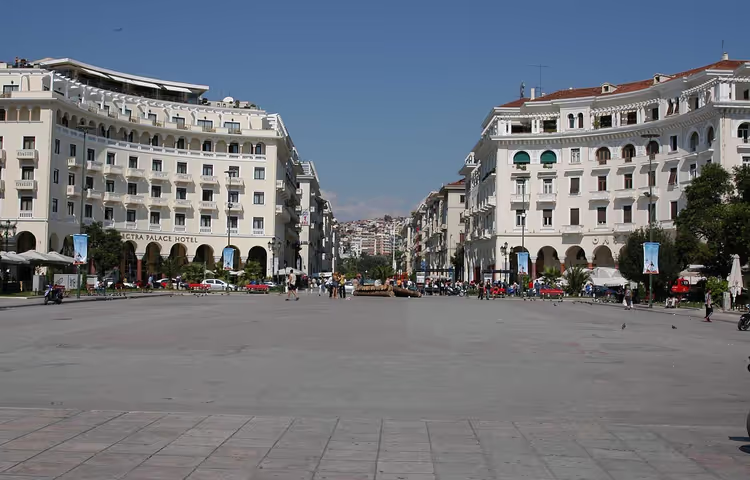
Aristotelous Square opens directly onto the waterfront and is considered the city's main square. It was laid out after the great fire, based on a design by the French architect Ernest Hébrard. Today locals meet here, and in the evening the space fills with cafes and street musicians. The square is seen as the starting point for walks around the center: both Egnatia Street and the way to the sea begin here.
In the center stands a large statue of Aristotle, with a line of people waiting to take a photo. Stroll among the carved balconies and arches, and by the flowerbed with the floral clock you can conveniently check the time. Entry is free, and the square is open around the clock, so people come here even late in the evening.
- Cost: free entry, the square is open around the clock.
- Where it is: between the waterfront and Egnatia Street (see map).
3. Basilica of Saint Demetrius
 © Ymblanter · CC BY-SAPhoto: Ymblanter, CC BY-SA (https://creativecommons.org/licenses/by-sa/4.0), Wikimedia Commons
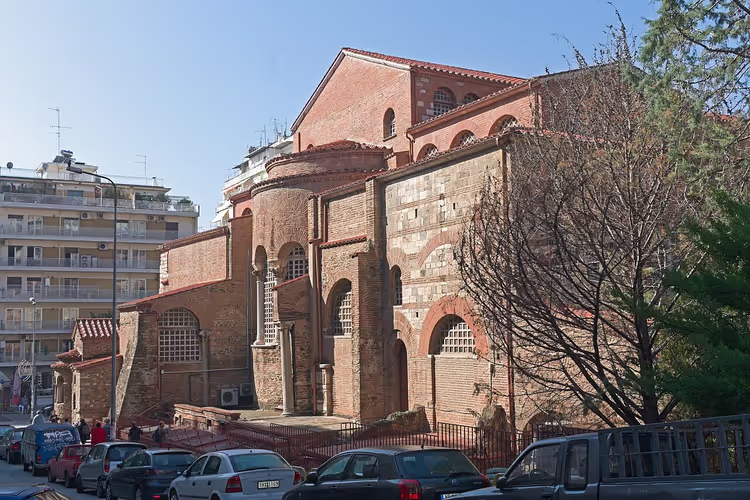
The Basilica of Saint Demetrius is dedicated to the city's patron saint. The first church on this site appeared in early Christian times, and the current building was erected in the seventh century on the ruins of Roman baths. In the crypt beneath the altar, traces of that early structure survive: capitals, sculptures, and vessels.
The church got its current look after restoration, so the ancient mosaics here sit side by side with reconstruction work. The church is open daily from 6:00 to 22:00, admission is free (as of 09/2026, church overview). You can attend a service, but during those hours visitors are asked not to photograph worshippers and to keep quiet.
- Hours: daily from 6:00 to 22:00, admission is free (as of 09/2026, basilica hours).
4. Arch and tomb of Galerius
 © Falk2 · CC BY-SAPhoto: Falk2, CC BY-SA (https://creativecommons.org/licenses/by-sa/4.0), Wikimedia Commons
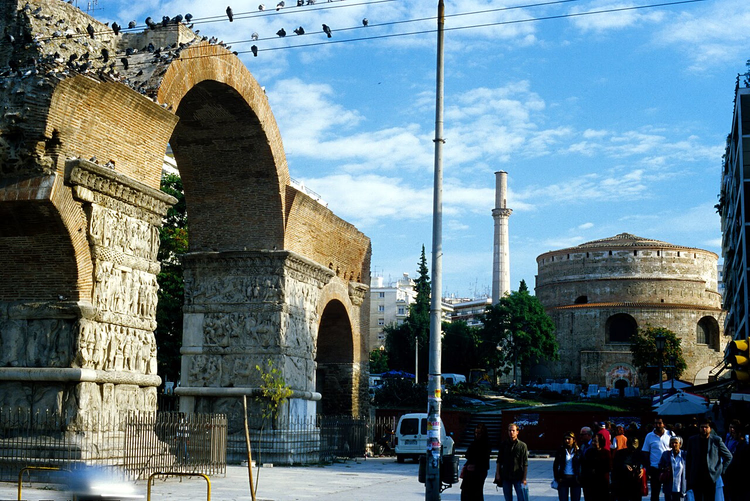
The Arch of Galerius was built to commemorate a victory over the Persian army, and a mausoleum for the emperor himself was constructed next to it. Later the complex served as a church, then as a mosque, and a minaret survives from that period. The arch stands on Egnatia Street, a few blocks from Aristotelous Square (see map).
The arch is only partially preserved, so some of the reliefs have been lost. The surviving images tell the story of Galerius's campaign: a sacrifice, the reception of envoys, the victor's mercy. Seeing it costs nothing, since the arch stands right on the street and is open to passersby around the clock. Spend ten minutes here on your way to the Rotunda, and you will see the city's finest Roman monument.
- Cost: viewing the arch is free, there is no separate ticket.
- Where it is: Egnatia Street, near Aristotelous Square (see map).
5. Monument to Alexander the Great
 © Nikolai Karaneschev · CC BYPhoto: Nikolai Karaneschev, CC BY (https://creativecommons.org/licenses/by/3.0), Wikimedia Commons
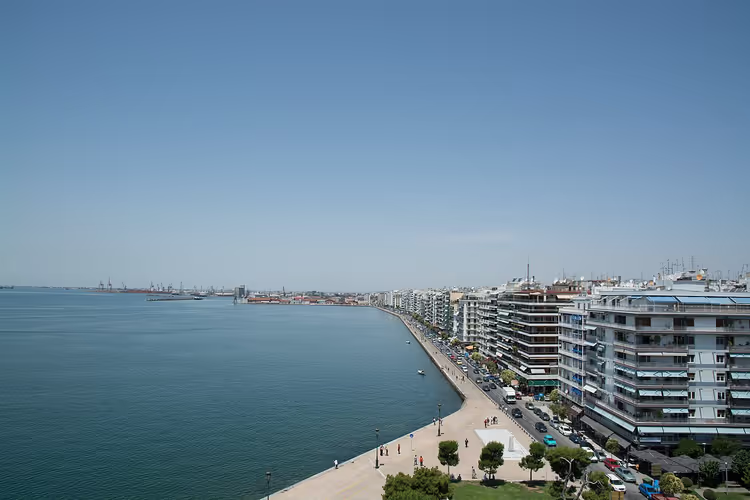
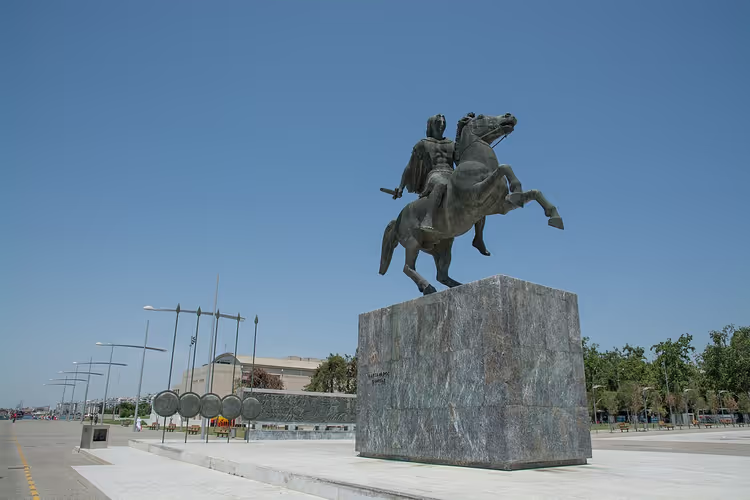
The monument to Alexander the Great stands on the waterfront next to the White Tower. The six-meter horseman sits on his horse Bucephalus, and behind him rise shields and spears with symbols.
Every image in the composition has a meaning: the snake represents wisdom, the lion courage, and the falcon the gift of foresight. The site is open around the clock, so it is easy to stop by on your way to the tower. In the evening it is cool by the monument, and people stroll here until well after dark.
- Cost: free access around the clock.
- Where it is: the waterfront, next to the White Tower (see map).
6. Archaeological Museum
 © Elymperis · CC BYPhoto: Elymperis, CC BY (https://creativecommons.org/licenses/by/4.0), Wikimedia Commons
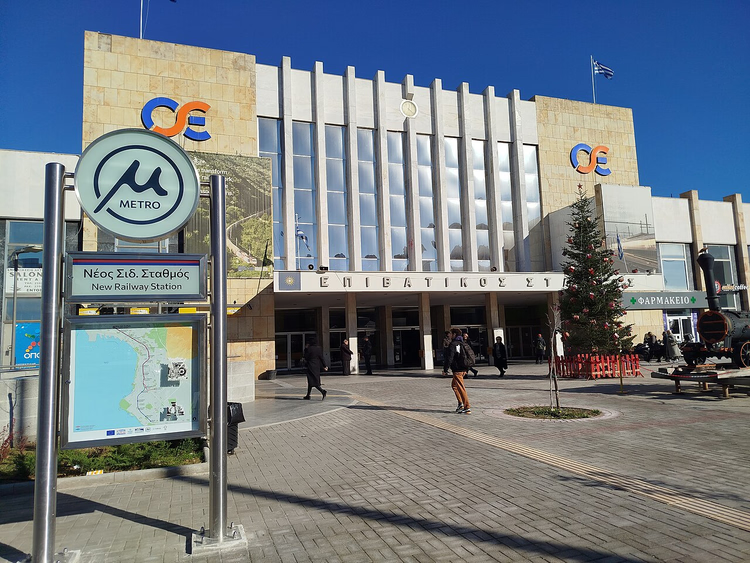
The Archaeological Museum of Thessaloniki remains the main museum of northern Greece. The exhibition runs from the prehistory of Macedonia to late antiquity and spans more than ten thematic galleries (as of 09/2026, catalog of Greek museums).
It houses finds from prehistoric times to late antiquity: gold masks, bronze helmets, and diadems. Separate galleries are devoted to royal burials and finds from the Sindos cemetery. Allow at least two hours for your visit, otherwise you will rush through the strongest section.
The museum is closed on December 25 and 26, January 1, March 25, and May 1, and last admission is twenty minutes before closing (as of 09/2026, official museum website). Hours change by season, so it is best to check the schedule in advance. Tickets are paid, with discounts for students and children.
- Hours: the schedule is seasonal, check the museum's official website (as of 09/2026).
- Cost: paid admission, discounts for students and children.
- The catch: weekend and summer hours differ, so a spontaneous visit may not work out.
7. War Museum
 © G.Garitan · CC BY-SAPhoto: G.Garitan, CC BY-SA (https://creativecommons.org/licenses/by-sa/4.0), Wikimedia Commons
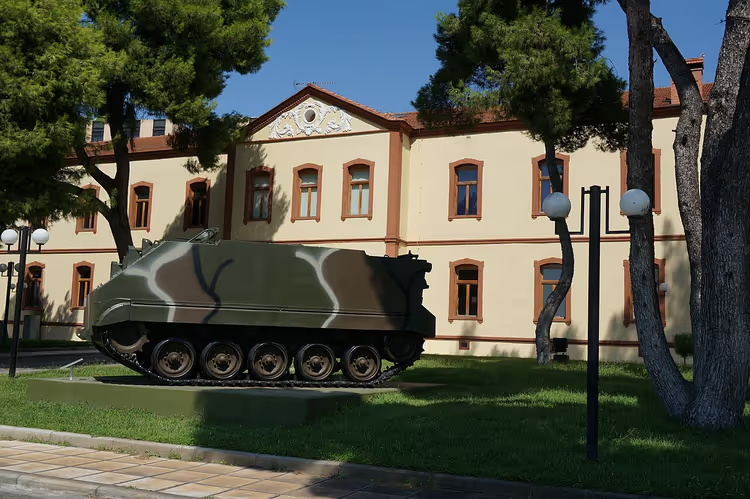
The War Museum covers the wars of Greece and Macedonia. The Thessaloniki branch opened in 1993 and has been open to the public since 2000 (as of 09/2026, museum's official website).
In the galleries you will find ship models, uniforms from different branches of the military, and weapons, while the open-air courtyard displays aircraft and armored vehicles. The exhibition covers the First and Second World Wars and the periods of occupation. A full ticket costs 4 €, a reduced ticket 2 € (as of 09/2026, museum's official website).
- Hours: in winter from 9:00 to 19:00, summer hours differ (as of 09/2026, museum's official website).
- Cost: full ticket 4 €, reduced ticket 2 € (as of 09/2026, War Museum tickets).
8. Museum of the Macedonian Struggle
 © Petros Papakyriakou · CC BY-SAPhoto: Petros Papakyriakou, CC BY-SA (https://creativecommons.org/licenses/by-sa/4.0), Wikimedia Commons
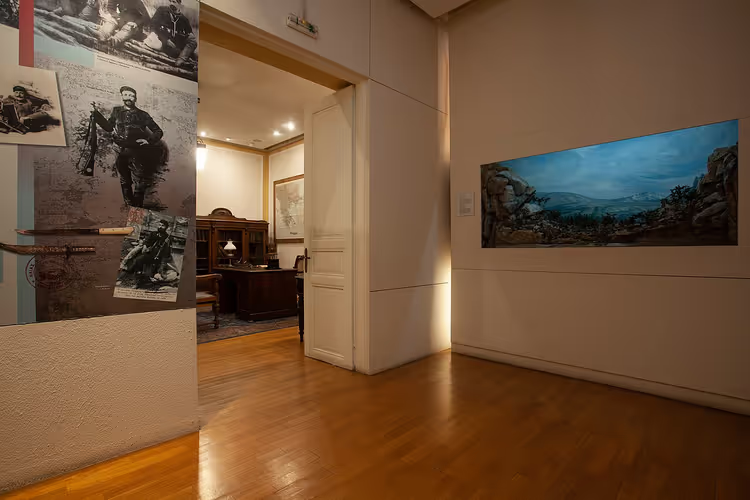
The Museum of the Macedonian Struggle occupies a neoclassical building from 1893 designed by architect Ernst Ziller (as of 09/2026, museum reference). In the early twentieth century this building housed the center of the Greek struggle for Macedonia. The exhibition is spread across six rooms on the ground floor and features rare documents, weapons, costumes, and personal belongings of participants.
Most of the collection is kept in storage and displayed only from time to time, so each visit reveals something different. The building stands in the center, next to the Roman Agora. The ticket is inexpensive, but check the hours before visiting: the museum is open to visitors for limited periods (as of 09/2026, city tourist office).
- Where: center, next to the Roman Agora (on the map).
- Cost: admission is inexpensive, tickets are purchased on site.
9. Panagia Chalkeon
 © Konstantinos Stampoulis ( el:User:Geraki ) · CC BY-SAPhoto: Konstantinos Stampoulis ( el:User:Geraki ), CC BY-SA (https://creativecommons.org/licenses/by-sa/2.5), Wikimedia Commons
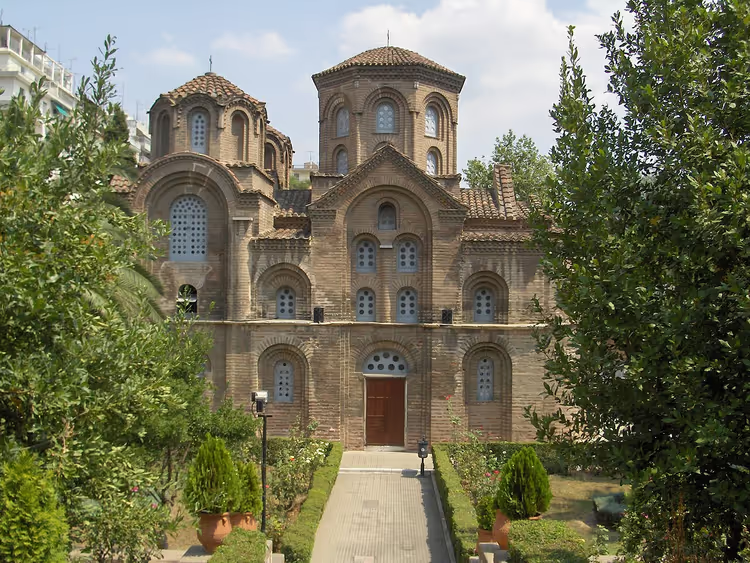
Panagia Chalkeon stands in the very center of the city, near the Roman Agora, at the intersection of Aristotle and Egnatia streets (as of 09/2026, Thessaloniki tourist office). This small cross-in-square church was built in the eleventh century and is part of the UNESCO World Heritage list along with other Byzantine monuments of Thessaloniki. The church got its name from the coppersmiths whose workshops still operate nearby today.
The frescoes have not been fully preserved, but you can still make out images of Christ and the apostles. The church was commissioned by a man named Christopher, who was later buried near its northern wall. When the Ottomans ruled the city, the church served as a mosque, and that also left its mark on its appearance.
Admission is free (as of 09/2026, Thessaloniki guide). There is one limitation: the opening hours are short, usually only in the morning, so plan your visit before noon or check the times on site.
- Cost: free admission (as of 09/2026, admission information).
- The catch: not open all day, usually only in the morning (as of 09/2026, Panagia Chalkeon opening hours).
- Where it is: city center, near the Roman Agora (on the map).
Tours and tickets in Thessaloniki
Guided tours, skip-the-line tickets and activities — most offers can be cancelled free of charge.
See offers on GetYourGuideThe widget loads once you give your consent.
⁉️🤔 Frequently asked questions
How much time do you need for the main attractions of Thessaloniki?
Set aside one full day. The waterfront, Aristotle Square, and the Arch of Galerius will take a couple of hours, and two museums will take another two hours each. If you are really short on time, leave the War Museum and the Museum of the Macedonian Struggle for a second visit and explore the center at a relaxed pace.
Can you see Thessaloniki for free?
Yes, most of the list requires no ticket. Aristotle Square, the Arch of Galerius, the Alexander the Great monument, and both churches are open free of charge. You will have to pay to go up the White Tower and to enter the museums, but even there you can get discounts for students, children, and seniors.
What should you do if you only have one day?
Start with the White Tower at opening time, before the line forms. Then walk down to the Alexander the Great monument and Aristotle Square. After that, still before lunch, pick one museum, either the Archaeological or the War Museum. Finish at the Arch of Galerius and Panagia Chalkeon. That way you will see six of the nine sights without rushing.
Do you need a car in Thessaloniki?
Not for this route. All nine sights are in the center, you can walk between them, and the distances are measured in city blocks. A car is only useful for trips outside the city, and in the center parking is paid and finding a free spot is difficult.
What time of day should you go to the museums?
Museums close earlier than churches, so put them in the first half of the day. We recommend visiting the Archaeological Museum before lunch, when the halls are not packed with tour groups. The churches stay open longer, and you will have time to stop by in the evening.
In short: what is worth booking
If you have one day and you are on foot, go to the White Tower at opening time and the Archaeological Museum before lunch. If you are traveling for history, add the Basilica of Saint Demetrius and Panagia Chalkeon, admission to both is free. If you are with kids, start with the White Tower and the Alexander the Great monument. You can walk around the monument without a ticket, while going up the tower is paid.
If you do not want to plan the route yourself, take a ready-made walking tour of the center: Thessaloniki walking tours on GetYourGuide.

A small editorial team writing guides for independent travel. We travel ourselves, but we haven’t been everywhere, so we check prices, opening hours and how to get there against official sources.