
















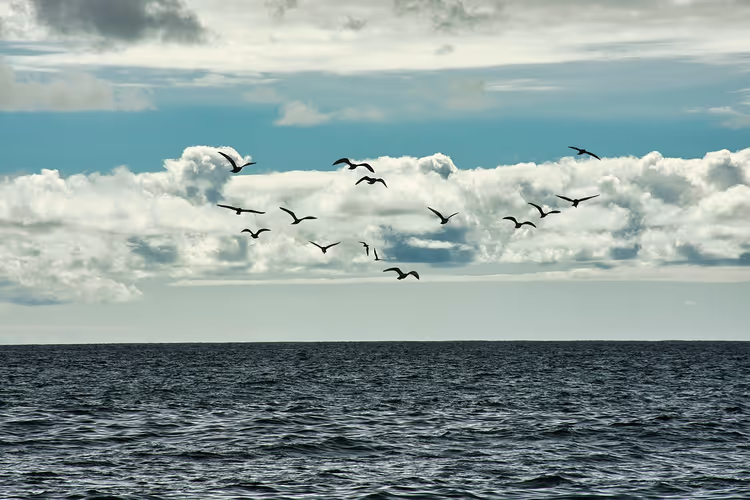
Azores: what to see on Sao Miguel and how much it costs
The Azores lie in the middle of the Atlantic, and São Miguel is built entirely from volcanoes. Steam rises from the ground right by the roadside, lakes sit in craters, and tea plantations slope down toward the ocean. We put together the places worth flying to this island for, with prices, opening hours, and honest catches.
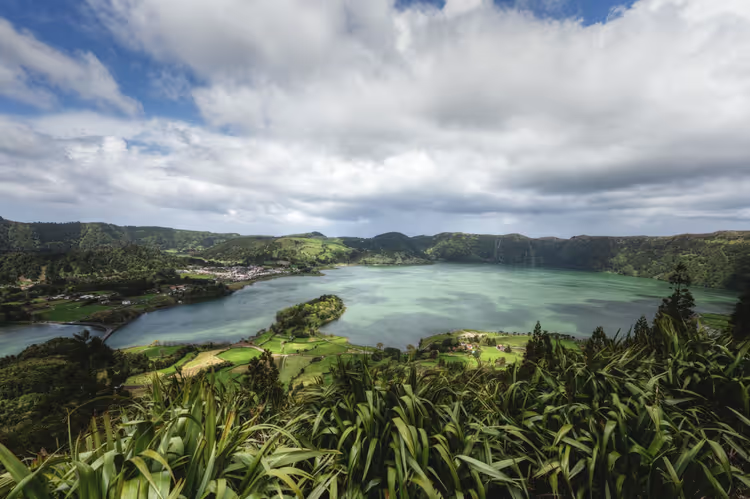
The weather on the island changes within half an hour: a clear sky clouds over with rain, then the sun comes out again. A rain jacket in your backpack won't hurt in any month.
Ad: this article contains affiliate links, we earn a commission through them, at no extra cost to you.
Furnas thermal springs
💡 In short:
- It's better to bathe at Poça da Dona Beija in the evening, when the lighting comes on.
- At Parque Terra Nostra, take a morning slot: fewer people by the water.
- Prices and opening hours: 09/2026, verified on the official Poça da Dona Beija website
Furnas lies in the crater of an ancient volcano, and the ground here still works like an oven. Steam escapes from cracks right by the road, the air smells of sulfur, and water boils in clay pits. You won't see anything like this at any European spa.
Furnas's signature dish also comes from underground. Cozido das Furnas is slow-cooked in hot pits until the meat and vegetables turn tender, then the pots are pulled out in front of guests. Restaurants around the caldeira cook it on a schedule, usually by lunchtime.
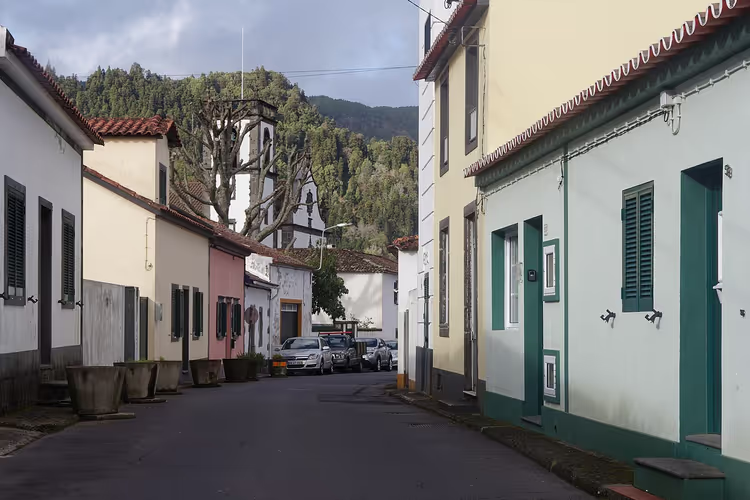 © E-W · CC BY-SAPhoto: E-W, CC BY-SA (https://creativecommons.org/licenses/by-sa/4.0), Wikimedia Commons
Furnas has two bathing areas, and the first is Parque Terra Nostra, with a large botanical garden and a warm lake. The water is rich in iron, and it stains light swimsuits a rusty color. Bring a dark swimsuit you don't mind ruining.
Park tickets are sold in time slots from 10:30 to 16:30 (as of 09/2026, official park website), and access to the pools and jacuzzis is already included in the price. Your ticket will land in the lower double-digit range. Take the earliest slot: by midday a line forms by the water.
The second bathing area, Poça da Dona Beija, is within walking distance of the park. The complex has five pools with water around 39 °C (according to the Azores tourism board, 09/2026). In one you lie as if in a bathtub, in another a jet massages your shoulders, in a third you warm up on hot stones.
Tickets here are also sold online only, with the last entry at 21:30 (as of 09/2026, official website). In the evening the lighting comes on, and the steam over the water looks especially dramatic.
- The catch: evening slots get booked up in advance, and you don't need more than an hour and a half in hot water.
Volcanic cliffs and the Arnel lighthouse
In the east of the island, the road leads to the village of Nordeste and cliffs that drop almost vertically into the ocean. From here you can see the Farol do Arnel lighthouse, the first in the archipelago, built in the 19th century. The viewpoint near the village gives you the big picture, but it's worth going down to the lighthouse itself.
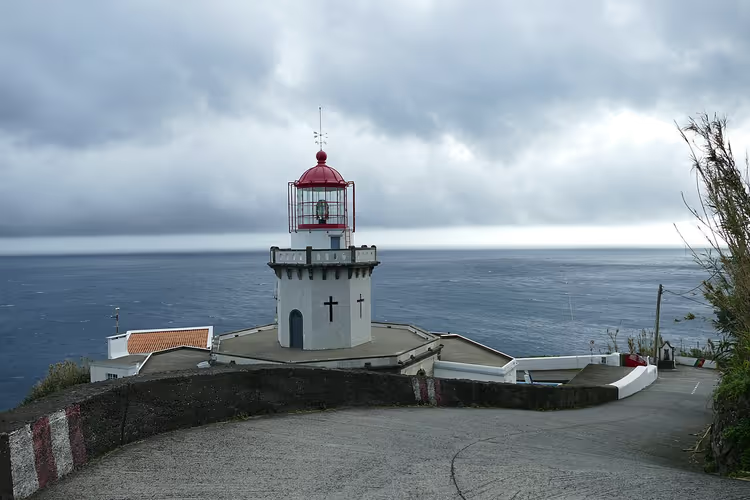 © Kritzolina · CC BY-SAPhoto: Kritzolina, CC BY-SA (https://creativecommons.org/licenses/by-sa/4.0), Wikimedia Commons
The descent is steep, and you'll need shoes with good tread. At the bottom you'll find a waterfall, fishing cottages, a pier with boats, and black rocks of solidified lava. You can touch the lava layers with your hands here, and against the volcanic sand the ocean looks especially blue.
Colored lakes in volcanic craters
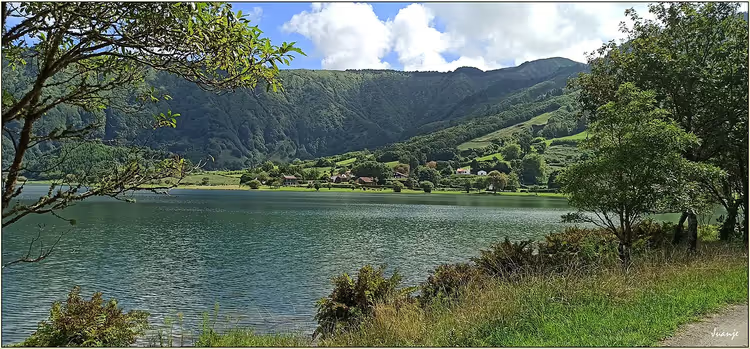
The island's most famous pair of lakes lies in a crater near the village of Sete Cidades. One lake is green, the other blue, and they sit side by side in the same bowl. According to legend, they are the tears of lovers: the princess had blue eyes, the shepherd had green eyes, and the king forbade them to meet.
 © Juanje Orío from Logroño, España (Europa) · CC BY-SAPhoto: Juanje Orío from Logroño, España (Europa), CC BY-SA (https://creativecommons.org/licenses/by-sa/4.0), Wikimedia Commons
The best way to see them is from the viewpoints in the mountains, and there are several. We recommend Miradouro do Cerrado das Freiras: from there you can see both halves of the lake in full. In spring, hydrangeas bloom along the road, and in winter the views are harsher but no less beautiful.
Further along the route, stop at Miradouro da Lagoa de Santiago. From there you can see Lake Santiago in a green bowl of slopes, and it's one of the calmest spots on the island. The asphalt is narrow, so on steep sections yield to oncoming traffic.
In the center of the island lies another crater lake, Lagoa do Fogo. It sits higher than the others, and hiking trails lead to it. The upper viewpoints are often closed in by fog, but go down to a couple of lower viewpoints and the haze may clear. From there you'll see both the lake and the ocean from two sides at once.
Near Furnas there's a fourth lake, Lagoa das Furnas, with bright green water. Hot springs bubble near the shore, and the water color stays vivid. It's better to walk along the shore in the morning, before the buses arrive.
The bathing areas, lakes, and tea plantations are easy to cover in a day with a guide, so you don't have to hunt for parking or push through hairpin turns. For São Miguel tours, check GetYourGuide.
Tours and tickets in Ponta Delgada
Guided tours, skip-the-line tickets and activities — most offers can be cancelled free of charge.
See offers on GetYourGuideThe widget loads once you give your consent.
Gorreana and Porto Formoso tea plantations
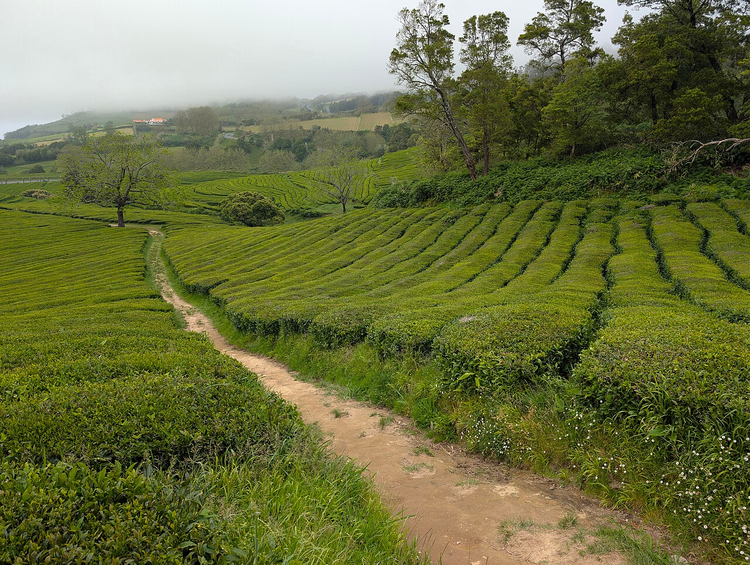
Two tea factories operate on the island, and both are open to visitors. The older one, Fábrica de Chá Gorreana, has been producing tea since the 19th century and is considered one of the oldest tea plantations in Europe. The leaves here are picked by hand and dried on antique machines.
 © Krzysztof Ziarnek, Kenraiz · CC BYPhoto: Krzysztof Ziarnek, Kenraiz, CC BY (https://creativecommons.org/licenses/by/4.0), Wikimedia Commons
Visiting the factory and tea tasting are free, and no advance booking is needed (verified 13.09.2026 on the official Gorreana website). You walk through the production halls on your own, then drink tea on the terrace overlooking the plantations and the ocean.
The second factory, Fábrica de Chá de Porto Formoso, sits lower along the coast, on the same road. Here you'll also be served tea on the terrace and shown a small museum of Azorean tea history. Grab a pack to take home: outside the island the selection is more limited.
Azorean pineapple plantations
Pineapples were brought to the Azores from another continent, and the local climate is foreign to them. That's why the fruit is grown in greenhouses, where the right temperature and humidity are maintained. The most accessible plantation, Plantação de Ananás dos Açores, sits almost in the center of Ponta Delgada.
 © Jules Verne Times Two · CC BY-SAPhoto: Jules Verne Times Two, CC BY-SA (https://creativecommons.org/licenses/by-sa/4.0), Wikimedia Commons
Entry to the greenhouses is free, and no tour booking is needed. You'll be shown how pineapples ripen and served a shot of pineapple liqueur with jam. Pineapples, jam, and souvenirs are sold right there, in the plantation shop.
⁉️🤔 Frequently asked questions
How many days do you need on São Miguel?
For the bathing areas, lakes, and tea plantations, three days is enough without rushing. In a week you can circle the whole island, add the lighthouse in the east, see whales, and visit a couple of beaches. And keep a spare day: distances here are short, but hairpin turns eat up time.
When is the best time to go to the Azores?
You can bathe in the thermal springs year-round, but the ocean only warms up by the end of summer. In summer there's more sun and hydrangeas, in winter fewer tourists and softer accommodation prices.
Do you need to book tickets in advance?
Yes, if you're talking about the Furnas thermal baths: tickets are sold online only, and evening slots go first (as of 09/2026, Poça da Dona Beija ticket page). The tea factories and the pineapple plantation can be visited freely, no booking needed there.
What to see on São Miguel in one day?
In the morning, Parque Terra Nostra in Furnas; in the afternoon, Lagoa do Fogo and Lagoa das Furnas; toward evening, the Sete Cidades viewpoints. You'll end up with a lot of driving and few breaks, so it's better not to plan this route for your arrival day.
Are there beaches on the island?
Yes, but the sand here is volcanic and dark, and the water is brisk even in August. The warm baths in the volcanic crater usually beat the ocean, especially in the evening. The sun on the island is strong, so sunscreen will come in handy even on a cloudy day.
In short: what's worth booking
Furnas should be planned around the two bathing areas: Parque Terra Nostra in the morning, Poça da Dona Beija in the evening. Everything else on the island is free or nearly free, but requires a car and patience with the weather.
- If you're traveling with kids: start with the pineapple plantation and the thermal pools.
Choose a guided island tour on GetYourGuide in advance: in high season, spots get booked up.

A small editorial team writing guides for independent travel. We travel ourselves, but we haven’t been everywhere, so we check prices, opening hours and how to get there against official sources.