
















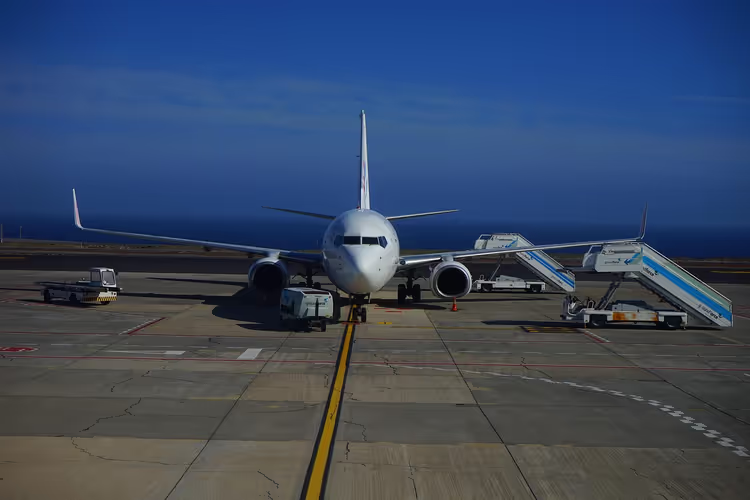
First flight: a step-by-step guide from ticket to baggage claim
A first flight is scary not because of the altitude, but because of the unknown. It is unclear where to go, what to take out of your bag, and when to show your passport.
For an international flight, it is recommended to arrive about three hours before departure (as of 09/2026, Skyscanner). This gives you enough time for check-in, security, and calmly finding your gate.
Let's walk through the entire journey step by step: from buying a ticket to picking up your suitcase at the arrival airport. At every point, you will know what to do and how much time to allow.
Ad: this article contains affiliate links, we earn a commission if you book through them, at no extra cost to you.
What awaits you at the airport: the steps in order
💡 In short:
- Buy your ticket in advance and check the baggage allowance with the airline.
- Arrive at the airport early so you can get through all the steps without rushing.
- Keep your passport and boarding pass handy until you actually board.
- Fill an empty bottle with water only after security: liquids in carry-on luggage are restricted by volume.
- Allow about three hours for an international flight (as of 09/2026, according to a Skyscanner review).
The journey from the terminal entrance to your seat on the plane consists of several steps. Below we break down each one in order, with details and tips for your first time.
Buying and booking tickets
The easiest way to buy a ticket is online. Comparison services show prices from different airlines for the same day, and the difference can be significant. Pick your options in advance: compare flights on Kiwi.com.
If you are flying with a suitcase, select the baggage option when purchasing. Cheap fares often include only carry-on luggage, and paying extra at the counter will cost more. Check the weight allowance with your airline before you travel.
Seat selection can also cost extra. With budget carriers, a window or aisle seat costs additional money. Some airlines give you a seat for free during online check-in.
Print your ticket or save it on your phone. In most cases, only a passport is needed for check-in, but there are exceptions. Check the carrier's rules in advance.
What exactly do you need to bring?
First of all, bring your passport with a visa, if one is required for your trip. Take care of visas in advance: processing can take several weeks. Without valid documents, you may simply not be allowed on the flight.
If you are flying with a child, bring their passport and birth certificate. Sometimes the counter asks you to prove the relationship, even when the last names match. When a child is flying with a grandparent or another adult, arrange a notarized consent for travel in advance.
Some countries ask to see a return ticket, hotel reservation, and proof of funds for the trip. Check the entry requirements in advance on the embassy or foreign ministry website of your destination country.
Be sure to get travel insurance and compare insurance options before your trip. Medical care abroad is expensive, and a policy covers those costs. Check whether active recreation and chronic conditions are included in the coverage.
Checking in for your flight
Arrive at the airport with time to spare. Check-in, security, and passport control take time, especially in summer and during holidays. Do not leave the trip to the terminal until the last moment.
First, find the check-in counters. They usually occupy a separate hall or floor. Look for signs that say Check-in or Registration and the line next to them. Above each counter there is a board with flight numbers.
While you are standing in line, you can wrap your suitcase in plastic film. This makes it harder to damage during loading, although handlers still stack baggage. After wrapping, suitcases look alike, so tie a bright ribbon or keychain to the handle.
If the seat does not matter to you, step aside and wait until the line gets shorter. For a first flight, we suggest asking for a window seat. During the day you will see the ground from above, and at night you can sleep.
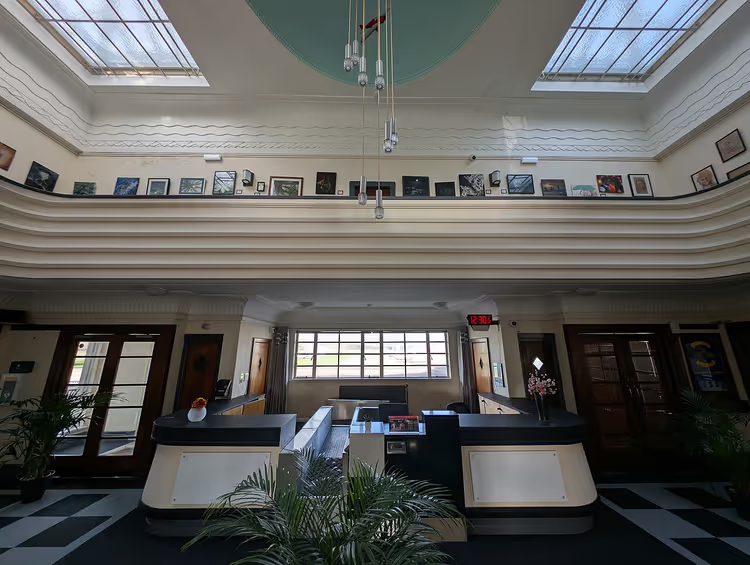
Before the counter, have your passport and ticket ready, and place your suitcase on the belt. You keep your carry-on luggage with you. The agent checks the booking details and accepts your baggage.
Watch the weight of your suitcase. Allowances depend on the airline and fare, so weigh your baggage at home or at the airport in advance. The exact limit is stated in the carrier's rules, and it is easy to check before you travel.
What we compare | Carry-on luggage | Checked baggage |
|---|---|---|
Where it is | in the cabin with you | checked at the counter |
Liquids | up to 100 ml, in a 1 L bag | carried without restrictions |
Weight and dimensions | according to airline rules | according to fare rules |
When you get it | immediately, in the cabin | at the baggage carousel |
Extra charge | usually included | depends on the fare |
After the check, you will receive a boarding pass with a baggage tag. Your suitcase will go off on the belt, and you will not see it until arrival. Keep the boarding pass in your passport and do not put it far away.
The counter is the easiest place to change your seat. Politely tell the agent your preferences, and they will often accommodate you.
Getting through security and customs
 © Politikaner · CC BY-SAPhoto: Politikaner, CC BY-SA (https://creativecommons.org/licenses/by-sa/3.0), Wikimedia Commons
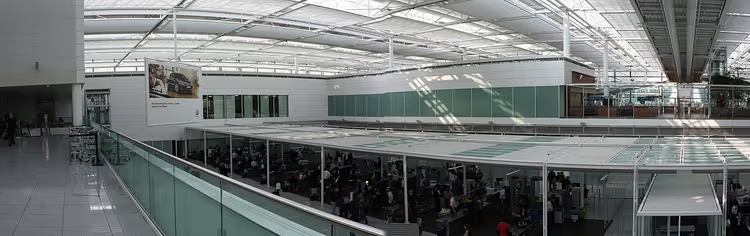
Next comes pre-flight security screening. You stand in line, walk through the metal detector, and sometimes take off your shoes. Carry-on luggage goes on the belt, and small items from your pockets go into a plastic bin.
This is where passports and boarding passes most often get lost. Keep your documents in one hand while you gather your things, and do not rush. That way you will get through security faster and more calmly.
Liquids are restricted in carry-on luggage. In the EU, each container must be no more than 100 ml, and all of them together must fit in a clear 1 L bag. Large bottles of water and drinks will have to be left behind, as will sharp objects: scissors and nail files. Check the unified rules with your airline before departure.
The restriction does not apply to empty containers. Bring an empty bottle and fill it with water after security. The same rule works for a travel mug, as long as it is empty.
If your flight goes outside the Schengen area, you then go through passport control. Hand your passport and boarding pass at the window, and answer questions truthfully. When flying within Schengen, this step does not exist, and you go straight to the waiting area.
Departure area and boarding
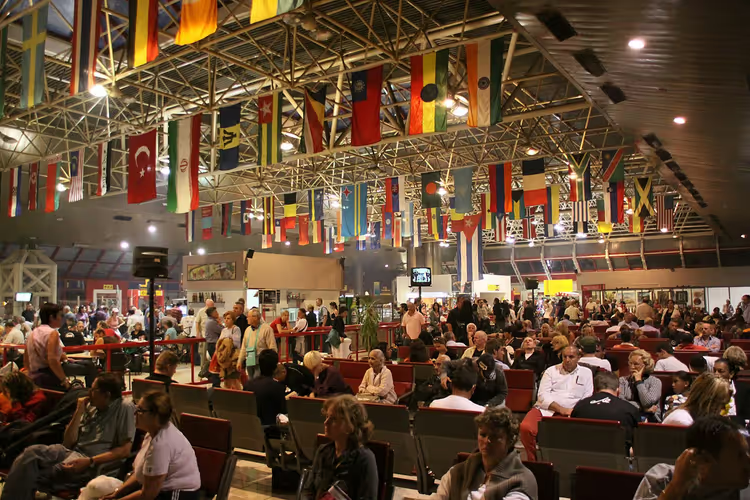
In the departure area, you can relax. Walk through the duty-free shops, have a coffee, and rest after security. Just keep an eye on the clock so you do not miss your flight.
Find your boarding gate right away. Remember the gate number and the way to it, so you do not have to search in a hurry later. When boarding is announced over the loudspeaker, head to the right gate.
 © Tony Hisgett from Birmingham, UK · CC BYPhoto: Tony Hisgett from Birmingham, UK, CC BY (https://creativecommons.org/licenses/by/2.0), Wikimedia Commons
Before you enter the plane, a flight attendant will greet you and ask for your boarding pass. They will tear off part of the pass, and you keep the stub with your baggage tag. Make sure you got the right half.
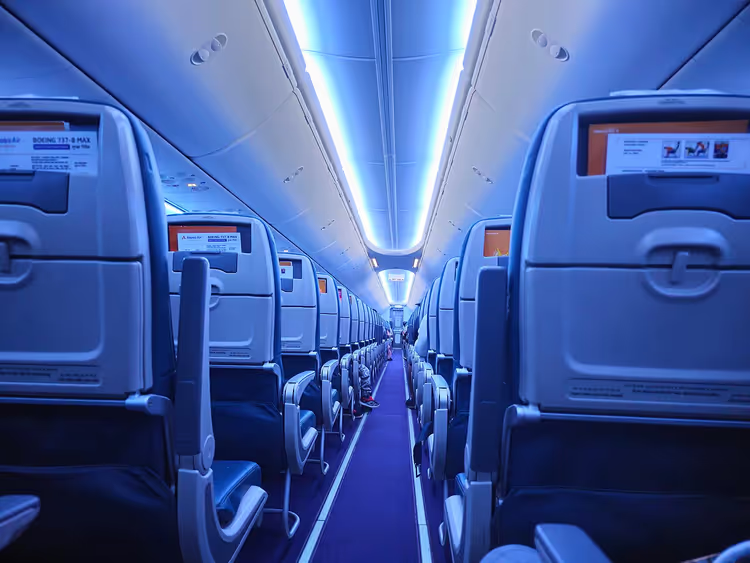
At your seat, put your things in the overhead bins, and place what you need in the seat pocket in front of you. Do not block the aisle, so you do not hold up other passengers.
What to do during the flight
First, get ready. Turn on airplane mode on your phone, listen to the flight attendant's briefing, and fasten your seatbelt. Do not unfasten it without a reason: that way you will be ready for turbulence or an air pocket.
The most exciting moment is takeoff. As the plane gains speed, you are pressed into your seat. If you are scared, rest your forehead against the seatback in front of you, and you will barely notice leaving the ground.
Breathing also helps. Inhale slowly, hold your breath briefly, and exhale smoothly. If your ears get blocked, open your mouth or take a few sips of water.
During the flight, keep yourself occupied. Download movies or series to your tablet in advance, bring a book or headphones. Some passengers sleep, others talk to their neighbors.
 © Ganesh Mohan T · CC BY-SAPhoto: Ganesh Mohan T, CC BY-SA (https://creativecommons.org/licenses/by-sa/4.0), Wikimedia Commons
In-flight meals depend on the airline and flight length. On short flights, often only drinks are served; on medium flights, a light snack is added; and on long-haul flights, a hot meal is provided. The exact details are stated when you buy the ticket.
Some carriers offer special meals: children's, sports, or vegetarian. Order them in advance, when booking the ticket, and confirm with the flight attendant on board.
What to do on arrival?
At the arrival airport, several steps await you: passport control, baggage claim, and customs. If you have studied the country's entry rules in advance, there is nothing to worry about.
Move along with everyone else, but slightly faster. That way you will reach passport control at the front of the line and save time. At the window, hand over your passport and the completed migration card, if one is required.
Migration cards are not always handed out on the plane. Look for forms on the tables before passport control and fill them out in advance. Samples for different countries are easy to find online before your trip.
If you do not have a hotel reservation yet, make one in advance: book a hotel on Trip.com. At the border, they sometimes ask to see your address of stay and proof of reservation.
Next, find the baggage carousel. This is the belt on which suitcases travel in a circle. Find your baggage, check the tag, and do not take someone else's.
At the end, you go through customs control. If you have nothing to declare, take the green channel; if you do, take the red one. After that, you are in the country, and you can head to your hotel.
⁉️🤔 Frequently asked questions
How much time should I allow for the airport?
Domestic flights usually require less buffer time than international ones. Follow your airline's recommendations.
What cannot be brought in carry-on luggage?
Liquids in containers larger than 100 ml, sharp objects such as scissors and nail files, and tools are prohibited. Exact restrictions differ by airline and country, so check the carrier's rules before departure.
How can I get through security faster?
Take out your laptop in advance, empty your pockets, and remove your belt. Keep your passport and boarding pass in one hand so you do not have to search for them in a rush. Calm, prepared passengers get through the scanner faster. Do not rearrange your things right at the belt; step aside and sort yourself out there.
What should I do if my ears get blocked?
Blocked ears happen because of pressure changes during climb and descent. Chewing gum, yawning, and gently pinching your nose while trying to exhale help. The unpleasant feeling usually passes a few minutes after takeoff.
Do I need to print my ticket?
Printing your ticket is not necessary. Your phone may run out of battery on the road, so a paper copy sometimes comes in handy.
In short: what is worth booking
A first flight becomes simple when everything is prepared in advance. Gather your documents and check the baggage allowances.
- If you need a ticket with baggage: compare fares and choose flights on Kiwi.com.
- If you are going to a new country: get insurance and a hotel reservation in advance.
- If you have not chosen accommodation yet: book a hotel on Trip.com.
Keep your passport handy and do not rush. That way your first flight will go smoothly.

A small editorial team writing guides for independent travel. We travel ourselves, but we haven’t been everywhere, so we check prices, opening hours and how to get there against official sources.