
















Schwarzwald: waterfalls, lakes and main points of the Black Forest
The Black Forest covers the southwest of Germany, in the state of Baden-Württemberg.
People come here for the dark spruce trees, lakes, and the country's highest waterfall. The region is long. Without a plan, you will spend half a day driving between points. We have gathered verified information about the main sights, the best time to visit, and points on the map.
Ad: this article contains affiliate links. We earn a commission if you book through them, at no extra cost to you.
Where the Black Forest is located
💡 In short:
- The Black Forest lies in southwestern Germany, along the border with France and Switzerland.
- The main points of the region: Feldberg, Lake Titisee and Lake Schluchsee, Triberg Waterfall.
The Black Forest (Schwarzwald) stretches from Karlsruhe in the north to the Swiss border in the south (as of 09/2026, Wikipedia). From the west, the massif descends to the Rhine Valley; from the east, it is bounded by the Neckar and the upper Danube. The Danube begins right here. Near Donaueschingen, the rivers Brigach and Breg merge, and from there the river flows east (as of 09/2026, Donaueschingen tourist office).
The forest got this name because of the spruce trees with very dark bark. They grow so densely that the crowns barely let light through. The Romans, who first found themselves beneath them, believed the forest was filled with spirits (as of 09/2026, Wikipedia).
The largest cities near the edges of the massif: Freiburg, Baden-Baden, and Offenburg. The forest itself is sparsely populated, so you choose your base in the valleys and make day trips to the lakes and peaks.
Soldiers of the Eighth Augustan Legion came to the lands of the Germanic tribes. They found thermal springs here and turned them into baths (as of 09/2026, Wikipedia). Later, the resorts of Baden-Baden and Badenweiler grew up around these waters.
 © Stefan Karl · CC BY-SAPhoto: Stefan Karl, CC BY-SA (https://creativecommons.org/licenses/by-sa/3.0), Wikimedia Commons
A distinctive landscape
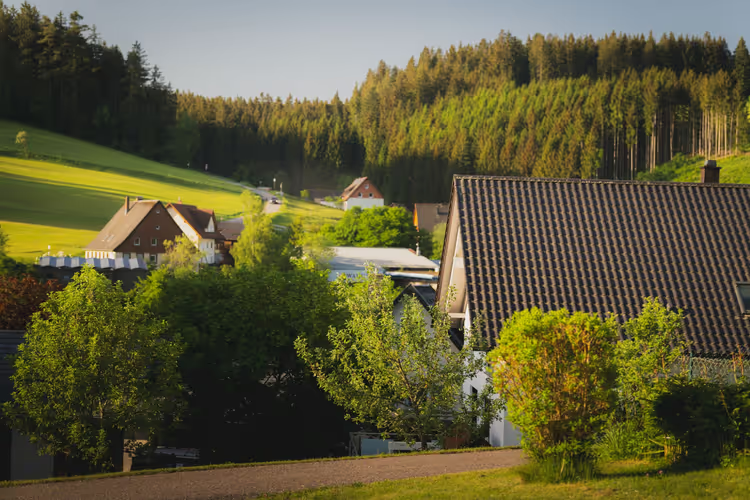
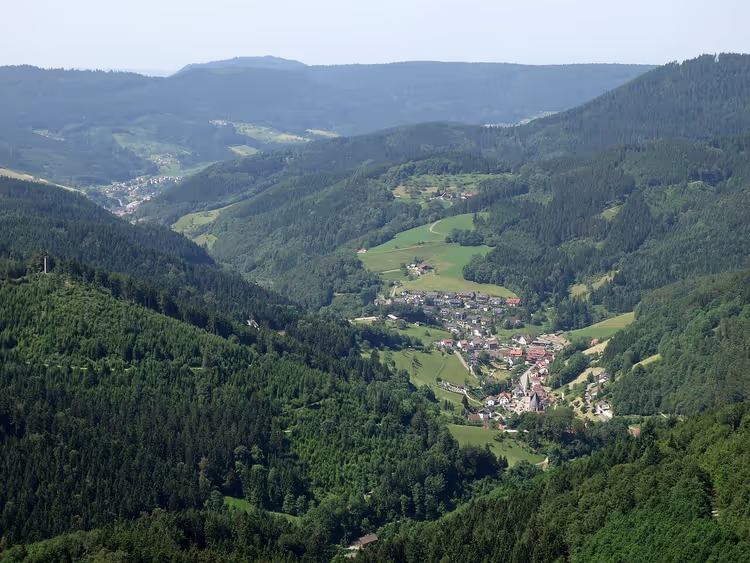
Despite its gloomy name, the Black Forest is diverse. There are dense spruce-covered slopes, flowering meadows, small farm plots, lakes, and waterfalls (as of 09/2026, Wikipedia). This contrast is what creates that fairy-tale landscape.
 © H. Zell · CC BY-SAPhoto: H. Zell, CC BY-SA (https://creativecommons.org/licenses/by-sa/3.0), Wikimedia Commons
The forests are crisscrossed by marked trails. You walk between the tall trunks, and it feels as if you will meet a hero from an old fairy tale around the next bend. In summer, the coolness lingers under the canopy even in the heat.
Trails are marked by difficulty level, so you will find both an hour-long walk and a full-day hike (as of 09/2026, Schwarzwald Tourismus). Bring shoes with good tread. After rain, the rocks get slippery.
How the Black Forest inspired writers
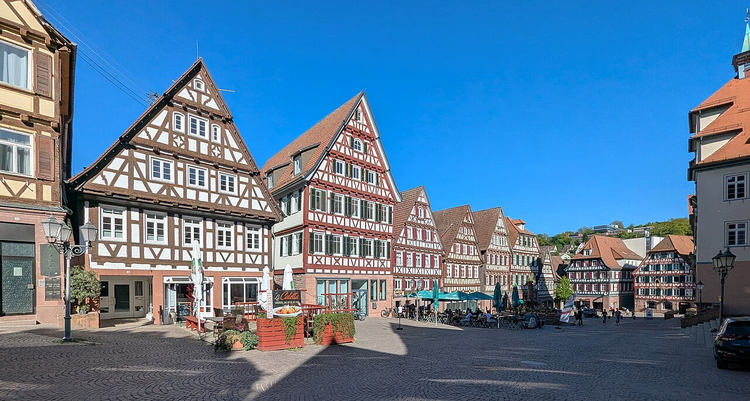
In the early 20th century, Marina Tsvetaeva lived here for extended periods. In 1904-1906, her family rented a place in Freiburg and spent vacations in the Black Forest (as of 09/2026, Wikipedia). German nature found its way into her early poems.
 © Gerd Eichmann · CC BYPhoto: Gerd Eichmann, CC BY (https://creativecommons.org/licenses/by/4.0), Wikimedia Commons
But fairy tales made the region famous more than anything else. Wilhelm Hauff wrote the story "Heart of Stone" (Das kalte Herz), which is set right here in the Black Forest (as of 09/2026, Wikipedia). The dark forest, charcoal burners, and forest spirits are described in it as a real place.
The Brothers Grimm are also associated with the Black Forest, although they collected their tales all across Germany (as of 09/2026, Wikipedia). It was these stories that turned the region into a "land of fairy tales" for travelers. You have known them since childhood.
Black Forest mountains and cable cars
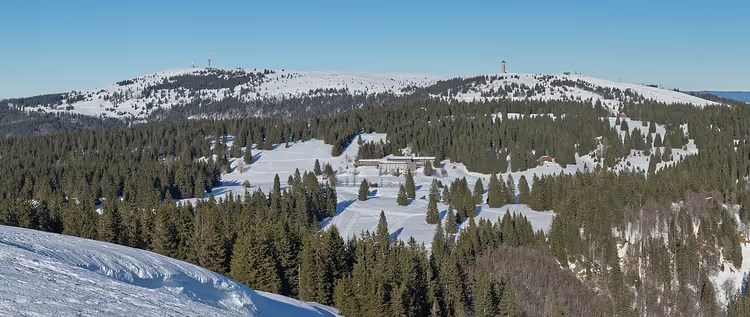
The region's highest point, Feldberg mountain, rises to 1,493 m. On a clear day, you can see the Alps and the Vosges from the summit (as of 09/2026, Wikipedia).
In summer and winter, the cable car Feldbergbahn takes you up to the neighboring peak Seebuck (as of 09/2026, Feldberg Erlebnis). You can also hike up: the trails are marked.
In winter, Feldberg becomes the largest ski area in Baden-Württemberg (as of 09/2026, Wikipedia). Lifts, marked runs, and a snow park operate here.
 © Jörg Braukmann · CC BY-SAPhoto: Jörg Braukmann, CC BY-SA (https://creativecommons.org/licenses/by-sa/4.0), Wikimedia Commons
If you are not looking for extreme sports, take the cable car up and walk along the panoramic trail near the summit. The views stretch for dozens of kilometers. A windbreaker comes in handy even in summer.
Lakes Titisee and Schluchsee
The region's two main lakes lie in the southern Black Forest. Titisee stretches 1.87 km in length and 750 m in width, with an average depth of about 20 m (as of 09/2026, Wikipedia). The water warms up by midsummer. Many people swim near the sandy shallows.
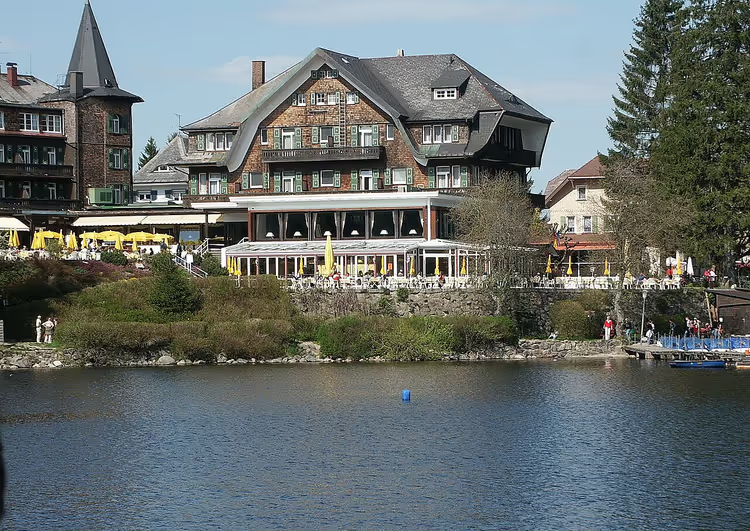 © lienyuan lee · CC BYPhoto: lienyuan lee, CC BY (https://creativecommons.org/licenses/by/3.0), Wikimedia Commons
Schluchsee is larger: an area of 5.14 km², a length of up to 7.5 km, and a depth of up to 62 m (as of 09/2026, Schwarzwald Tourismus). It is the largest body of water in the Black Forest.
Schluchsee is a natural lake. In the late 1920s its level was raised by a dam (as of 09/2026, Wikipedia). Today people sail and windsurf here.
Walking and cycling routes run around both lakes. Signposts will keep you from getting lost. You can rent a boat or catamaran right at the dock.
Triberg and Allerheiligen waterfalls
Triberg Waterfall (Triberger Wasserfälle) is considered the highest waterfall in Germany. The water of the Gutach river falls over seven cascades from a total height of 163 m (as of 09/2026, official Triberg website). Stairs and walkways lead to the viewing platforms, and the climb takes about an hour.
The second waterfall, Allerheiligen, lies near the town of Oppenau. Here the water cascades down a rocky gorge of the Lierbach river. The ruins of Allerheiligen Monastery are preserved nearby.
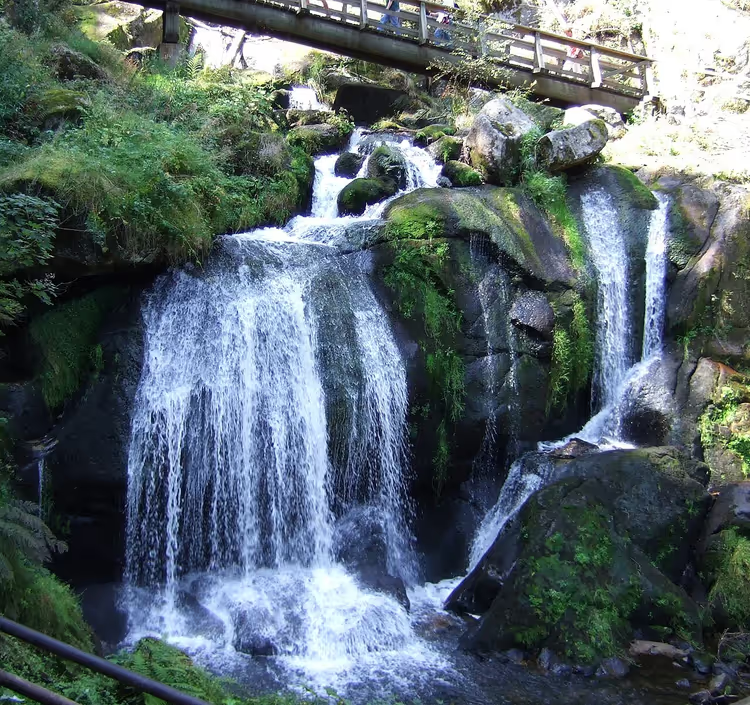 © HNH · CC BY-SAPhoto: HNH, CC BY-SA (https://creativecommons.org/licenses/by-sa/3.0), Wikimedia Commons
Even on an overcast day the waterfalls are impressive: you can hear the roar long before you reach the viewing platform. This is a place many people come to the Black Forest specifically to see.
The Black Forest on the map
The map below shows the region's main points: waterfalls, lakes, Feldberg, and the old spa towns. Open it to plan your route in advance.
Schwarzwald (Black Forest)
Places on the map
- Black Forest Mountain forest region in southwestern Germany, highest point Feldberg 1493 m
⁉️🤔 Frequently asked questions
Where is the Black Forest?
The Black Forest is located in southwestern Germany, in the state of Baden-Württemberg. It stretches from Karlsruhe in the north to the Swiss border and borders the Rhine Valley. The nearest major cities are Freiburg, Baden-Baden, and Offenburg. They are convenient starting points for trips to the lakes and waterfalls.
When is the best time to go to the Black Forest?
Peak season is in July and August, when the water in Titisee and Schluchsee warms up. In May and September there are fewer people, but it is cooler. In winter people come for skiing and Christmas markets. Keep in mind that the weather in the mountains changes quickly.
What is the highest waterfall in the Black Forest?
The highest waterfall in Germany is in Triberg (as of 09/2026, official Triberg website). The second notable waterfall, Allerheiligen, lies near the town of Oppenau. Both places are best planned for the first half of the day.
Can you swim in Titisee and Schluchsee?
Yes, both lakes are suitable for swimming. Titisee is shallower, with an average depth of about 20 m, and has sandy shores (as of 09/2026, Wikipedia). Schluchsee is deeper and colder, but larger (as of 09/2026, Schwarzwald Tourismus). The water is clean, but popular beaches get crowded in summer.
What to see in the Black Forest in winter?
In winter, the ski slopes of Feldberg, the largest ski area in Baden-Württemberg, take center stage (as of 09/2026, Wikipedia). Christmas markets also take place in the old towns. If you want peace and quiet, go on a weekday: weekends in season are busy.
In short: what to book
The Black Forest works both for a weekend trip and for a week-long route. Choose your base according to your goal.
If you are short on time: stay in Triberg, where the waterfall and trails are nearby.
If you are going for the lakes: base yourself in Titisee or Schluchsee.
If you are going for the mountains: stay in the Feldberg area.
Book transfers and accommodation in advance in high season: in summer and during ski holidays, places fill up quickly. For ready-made programs in the region, check out Black Forest tours on GetYourGuide.

A small editorial team writing guides for independent travel. We travel ourselves, but we haven’t been everywhere, so we check prices, opening hours and how to get there against official sources.