















November in Germany: fog, silence and the first Christmas markets
In November, Germany is gray, damp, and raw. And that's exactly why it's worth going.
Fog hides the cities and forests, but it also hides the crowds. Beach season is over, vacations are too, and hotels are lowering their prices. You get the North Sea almost to yourself, empty trails, and the first Christmas markets.
Ad: this article contains affiliate links, we earn a commission if you book through them, at no extra cost to you.
November in Germany: what to consider
💡 In short:
- November marks the start of the low season: lower prices, no museum lines.
- Bring a membrane jacket and boots with good tread, fog can linger until midday.
November in Germany is changeable. At night temperatures hover around freezing, daytime warming is weak, and sometimes the fog never lifts at all. But in the low season, hotels cost noticeably less, parking is easy to find, and you can walk right into museums without waiting.
Below are four destinations that look their best precisely in November. We picked them so you'd have an option for the city, the forest, the sea, and long walks.
Destination | The main draw in November | Who it's for |
|---|---|---|
East Frisian Islands | Quiet, tea, cars stay on the mainland | For a peaceful getaway |
Black Forest | Snow on the peaks, fog in the valleys | For hiking |
Eifel | Premium trails, Maria Laach, Monschau | For walking |
Dresden | Striezelmarkt, museums, Saxon Switzerland | For the city and the market |
1. East Frisian Islands
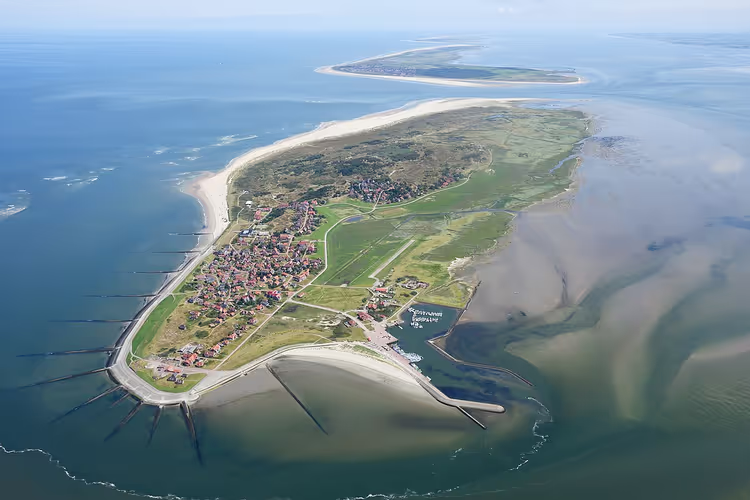 © Carsten Steger · CC BY-SAPhoto: Carsten Steger, CC BY-SA (https://creativecommons.org/licenses/by-sa/4.0), Wikimedia Commons
The off-season changes everything: beaches are empty, hotels are quiet, and you walk through the dunes almost alone.
Spiekeroog and Langeoog are car-free. Vehicles stay on the mainland, after that it's ferry only, and you get around the island on foot or by bike (according to the Langeoog tourist office, 09/2026).
The North Sea in November is fresh and salty, so after a long walk, stop into a cafe for a cup of strong tea. The sea air and silence quickly blow away the city bustle.
If you want to move, rent a bike: paths run along the beach and through the dunes. The island rhythm is slow, and that's its main appeal.
- How to get there: by train to the mainland coast, then by ferry. Check schedules and book on the Langeoog website (as of: 09/2026).
- Who it's for: couples and solo travelers who want peace, not a beach program.
- The catch: there are no cars on the island, so you carry all your luggage from the pier yourself.
Book rooms early: hotels on the East Frisian Islands on Trip.com.
2. Black Forest and Feldberg
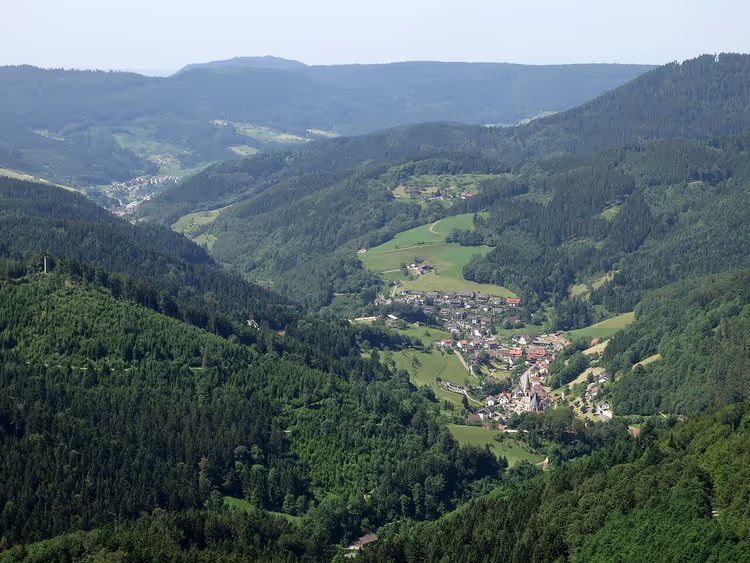 © Stefan Karl · CC BY-SAPhoto: Stefan Karl, CC BY-SA (https://creativecommons.org/licenses/by-sa/3.0), Wikimedia Commons
In November, the Black Forest shows two faces: snow already lies on the ridge, while the valleys drown in fog and the dark spruces look almost black.
The classic long-distance route is the Westweg. It connects the highest point of the Black Forest, Feldberg mountain at 1,493 m, with the Belchen lookout mountain (as of: 09/2026, Schwarzwald Tourismus).
If the full traverse is too much, take a short section along the ridge. The trails are marked, and along the way you'll find mountain huts with hot food. In the evening, you can warm up in a wellness hotel or thermal complex.
- How to get there: trains run to Freiburg, then buses into the mountains; by car it's easier to approach from the west.
- The catch: the ridge is noticeably colder and windier than the valley, and you feel the difference immediately.
To avoid freezing after your walk, book accommodation near the thermal baths: hotels in the Black Forest on Trip.com.
3. Eifel: trails and Monschau
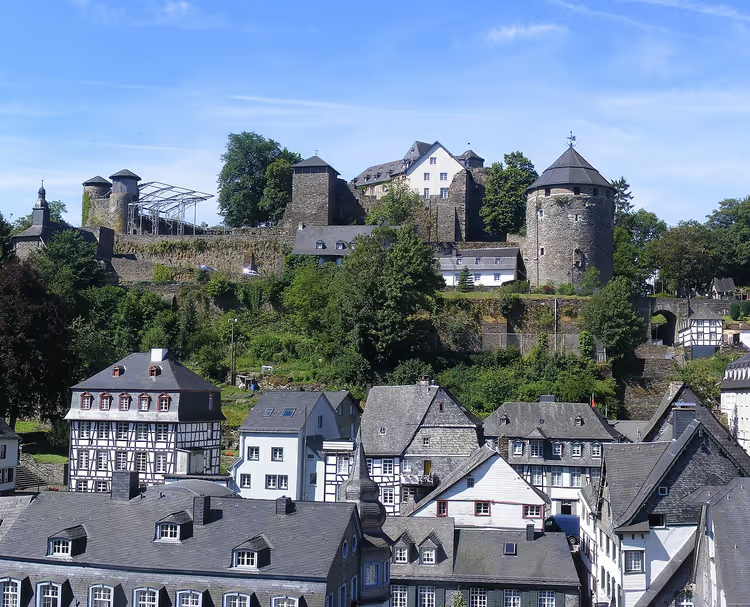 © Steffen Heinz Caronna · CC BYPhoto: Steffen Heinz Caronna, CC BY (https://creativecommons.org/licenses/by/3.0), Wikimedia Commons
The Eifel in autumn looks magical: fog hangs over the juniper heaths, the leaves have fallen, and the hills with their maar lakes are visible for miles.
People hike here on the premium circular Traumpfade routes. They're marked and designed for a full day or half day of walking (according to Traumpfade Eifel, 09/2026).
Must-sees: the Benedictine Maria Laach Abbey by the lake of the same name and the town of Monschau with its half-timbered houses. Both are open in the low season, and a hill route can easily be combined with a visit to one of these spots.
Important: the Wolfsschlucht trail is closed due to landslides, and the closure remains in effect until further notice (as of: 02.07.2026, Vulkanregion Laacher See).
- How to get there: Traumpfade starting points are scattered across the region, so a car or bike is more practical here than public transport.
- Who it's for: those who want to combine a hike and sightseeing in one day.
Starting points are easy to cover with an overnight stay in the region: hotels in the Eifel on Trip.com.
4. Dresden and Saxon Switzerland
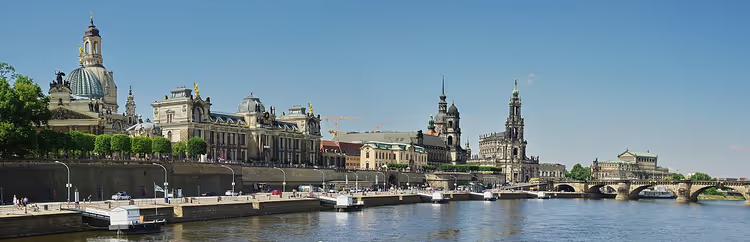 © Bgabel · CC BY-SAPhoto: Bgabel, CC BY-SA (https://creativecommons.org/licenses/by-sa/3.0), Wikimedia Commons
When the weather in Dresden turns bad, the museums and galleries of the old town come to the rescue: they're indoors, so rain and fog won't bother you.
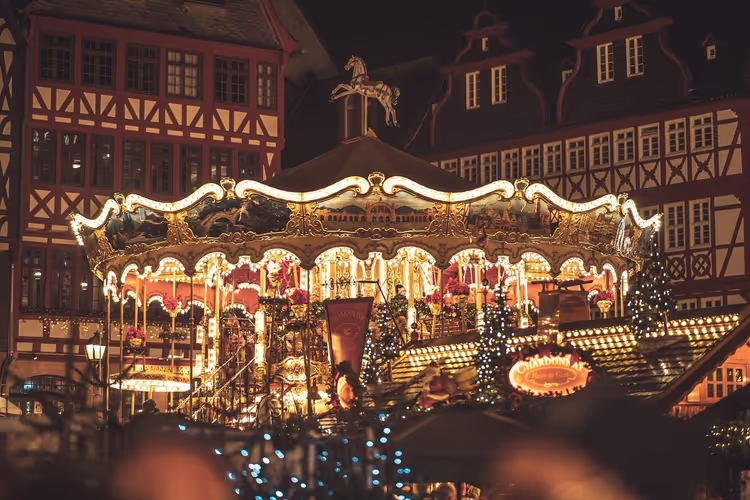
At the end of November, the city's main market opens: the Striezelmarkt on Altmarkt square. It runs from November 25 to December 24, 2026 (as of: 09/2026, market program).
The market sells Dresden stollen, Pflaumentoffel prune figures, and crafts from the Ore Mountains. For a day trip, Saxon Switzerland is right nearby: the sandstone cliffs in the fog look like a movie set, and getting there from the city is easy.
- How to get there: the old town is compact, you can walk from the main station to Altmarkt.
- Who it's for: those who want to combine city museums and an open-air market.
- The catch: on weekends Altmarkt gets very crowded, and you'll have to stand at the mulled wine tables.
Rooms in the center go fast, book early: hotels in Dresden on Trip.com.
⁉️🤔 Frequently asked questions
What's the weather like in Germany in November?
November in Germany is cool and damp. At night there can be frost, daytime warming is weak, and fog often lingers until midday. Snow is rare in the lowlands but already lies in the mountains. Bring a warm waterproof jacket, a scarf, and shoes with good tread; an umbrella is almost useless in the wind.
Where to go in November for quiet?
The East Frisian Islands. Spiekeroog and Langeoog are almost empty in autumn, there are no cars, and hotels lower their prices. You get long beach walks, sea air, and tea in cafes. If the weather turns bad, you can simply wait it out in a warm room and return to the sea by evening.
Where are there few tourists in November?
In the Black Forest and the Eifel. Forest trails in the fog are nearly deserted, parking at trailheads is easy, and mountain huts stay open in the off-season. Just check the status of a specific trail before heading out.
Is Dresden worth visiting in November?
Yes, if you want the city and the market. The Striezelmarkt runs from late November (according to the official market website, 09/2026). The museums and galleries of the old town are open even in the rain, and Saxon Switzerland is nearby for a day trip.
What to see in the Eifel in autumn?
Maria Laach Abbey by the lake and the town of Monschau with its half-timbered houses. For hiking, pick a proven circular Traumpfade route and check whether there are any restrictions on your chosen section. The Wolfsschlucht trail is currently closed due to landslides.
In short: what to book
November in Germany offers a rare combination: few people and lots of atmosphere. If you want quiet by the sea: choose the East Frisian Islands. If you want hiking and snow on the peaks: the Black Forest. If you want short premium trails: the Eifel. If you want the city, museums, and a market: Dresden.
Book accommodation early: in November prices are lower than in summer, and the choice of rooms is wider.

A small editorial team writing guides for independent travel. We travel ourselves, but we haven’t been everywhere, so we check prices, opening hours and how to get there against official sources.