
















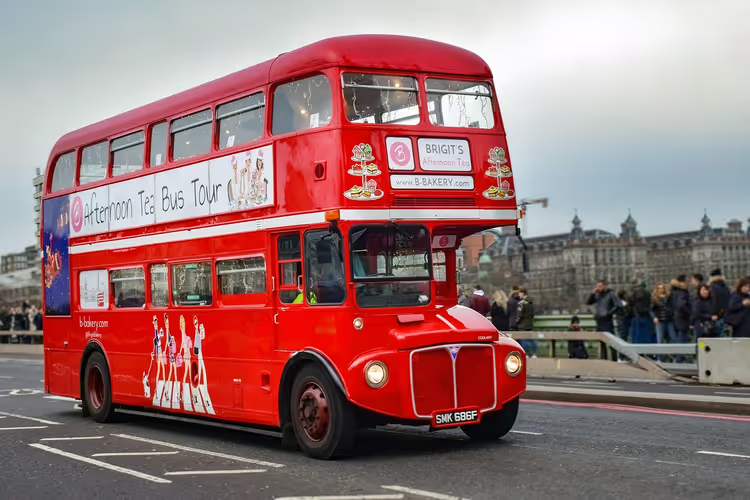
Bus tour of Europe: who it suits and how to save money
A bus tour packs five countries into two weeks for the price of a plane ticket. You pay for it with time in your seat and short stops in cities.
On regular long-distance routes in the EU, passenger rights apply. If a trip of 250 km or more is canceled or delayed by more than 120 minutes, you are entitled to a refund or rebooking (as of 09/2026, Regulation (EU) No 181/2011).
Below we break down what makes up the price of such a tour, when it is cheaper to go, and who this format suits, and when it is better to take a train or plane instead.
Ad: this article contains affiliate links. We earn a commission if you book through them, at no extra cost to you.
How a bus tour works
💡 In short:
- A bus tour connects several countries and cities in one group itinerary with overnight stays along the way.
- You spend most of the time riding, not walking around: stops in cities are short.
- Overnight stays are usually placed in suburbs so the group can leave in the morning without traffic.
In a classic bus tour, the group follows a set itinerary, and a guide leads it from city to city. You barely think about transfers, overnight stays, and tickets: the operator handles all of that.
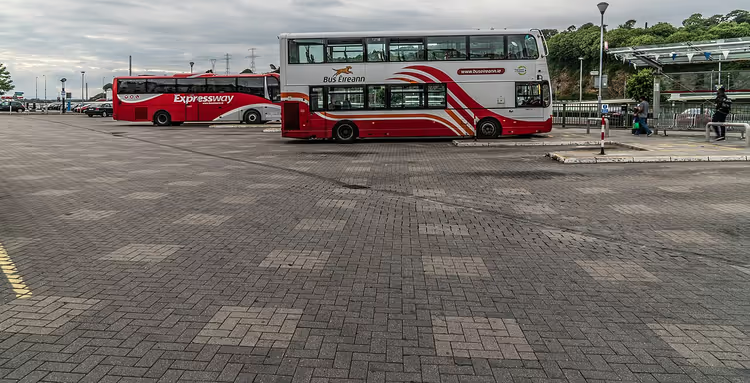 © William Murphy from Dublin, Ireland · CC BY-SAPhoto: William Murphy from Dublin, Ireland, CC BY-SA (https://creativecommons.org/licenses/by-sa/2.0), Wikimedia Commons
This kind of tourism became mainstream back in the last century. The British were the first to embrace it: they pioneered cheap trips on comfortable buses across several European countries at once.
A bus lets you switch countries quickly and save on more than just the ticket. Unlike air travel, there is usually no separate fee for bulky luggage.
There is another way to see the same places on your own, RV caravanning. It gives you freedom of route but requires a license and experience.
Where to go by bus
The geography of trips is broad: from short city routes to two-week tours across Europe.
- Short weekend tours to neighboring cities and capitals are popular.
- For a week or longer, people choose routes across several European countries at once.
The most common choices are Scandinavia, Southern Europe, the Balkans, France, and London. Operators offer different formats: a fast sprint through the main countries with a detailed excursion at the final stop, or a relaxed introduction to everything along the way.
A bus will take you both to the Mediterranean coast and to a viewing platform high in the Alps. The main advantage is that you see European road landscapes with your own eyes, not through a plane window.
If you want to add city excursions to your itinerary, it is convenient to pick them in advance: city tours in Europe on GetYourGuide.
Seasons and prices for bus tours
Bus tours are tied to the season. Demand starts in April and lasts until October, with the peak in July and August, which is vacation time.
In high season, prices are higher than in spring and autumn. Experienced travelers choose dates not only by price but also by climate and how crowded the cities are.
A budget two-week tour across several countries costs noticeably less than an independent trip with flights and hotels. Check the exact price in the operator's catalog for your dates: it depends on the country, the number of nights, and the hotel class.
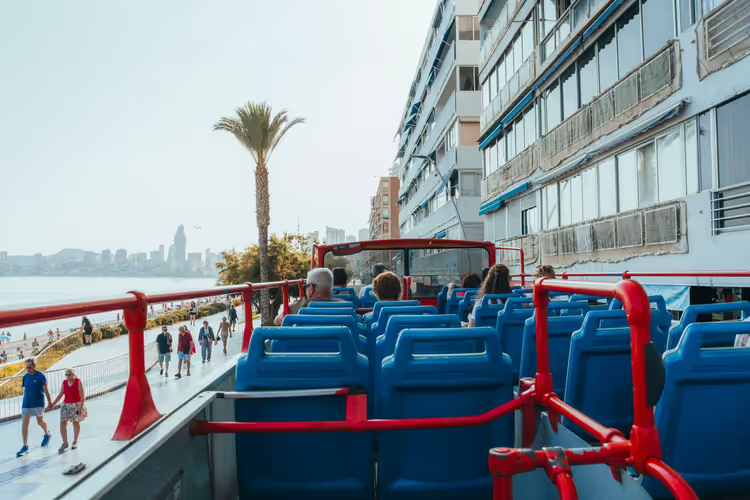
What a first-time traveler should know
If you are going for the first time, read the tour program carefully before buying. It lists transfers, overnight stays, entrance tickets, and how much time you will have in each city.
Many operators sell tours online. This way you choose your seat on the bus in advance. If you get motion sickness, it is better to take the front of the cabin and seats closer to the aisle.
Look not only at the price but also at the bus make and travel time. Overnight transfers save days but wear you out: the more nights you spend in your seat, the less energy you have left for the cities.
On the other hand, at night the bus covers the most distance, and in the same amount of time you get to see more. The choice here depends on your body and personal preferences.
For the road, take only comfortable and practical clothes and shoes. They should not restrict movement during long periods of sitting. You are hardly limited on luggage, so you can bring part of your meals with you. Canned food and products that do not spoil for a long time work well.
Bus and train tickets across Europe are convenient to compare in advance: bus and train tickets on Trip.com.
Also check the carrier's baggage rules. At FlixBus, hand luggage and one item in the luggage compartment are included in the ticket, and extra baggage costs an additional fee (as of 09/2026, verified on the FlixBus website).
Advantages of bus tours
The main advantage of a bus is mobility. You move from country to country, almost all the time on the road, and the overnight stay takes only a few hours: sleep, shower, and breakfast. Everything else happens on the road.
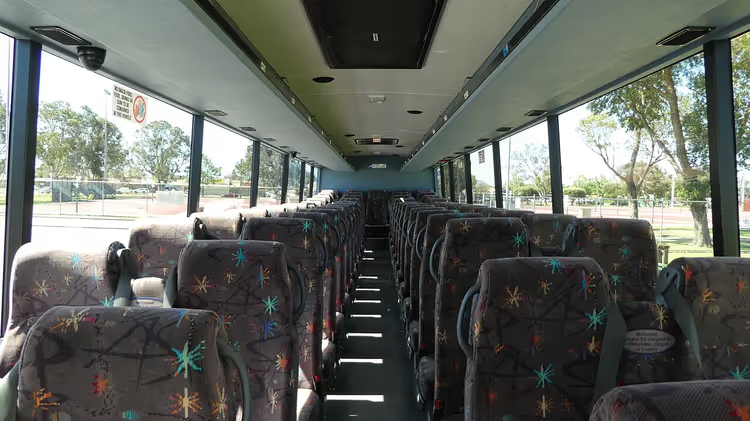 © ZidaneHartono · CC BY-SAPhoto: ZidaneHartono, CC BY-SA (https://creativecommons.org/licenses/by-sa/4.0), Wikimedia Commons
Hotels for overnight stays are modest. Why pay for four or five stars for one night if you will not have time to use them?
Overnight stays are usually placed on the outskirts of the city. This way the operator saves on accommodation, and in the morning the group leaves for the next stop without traffic.
The second advantage is price. An independent week in Paris with flights and a hotel costs several times more than a two-week bus tour across Europe with stops in Italy, the Czech Republic, and other countries.
People who love adventure and new acquaintances also take the bus. On the road, you easily meet fellow travelers, and a trip with friends goes more smoothly.
Finally, a bus tour does not require language skills. The guide speaks your language, and the operator handles everyday matters.
Disadvantages of bus tours
Despite the advantages, the format also has serious catches that are better to know about in advance.
- Food. Usually only breakfasts are included. You pay for lunch and dinner yourself.
- Stops at cafes. The bus stops at places the guide calls cheap, but the choice is often tied to a commission for the escort.
- Little time in the city. You see a lot, but superficially: an hour or two remains for the main square and a couple of photos.
- Rigid schedule. The day is planned by the hour, so there is almost no time for improvisation.
- Comfort. You have to spend the night in the suburbs, and sitting on the bus for a long time is hard, especially if you are prone to motion sickness.
⁉️🤔 Frequently asked questions
How much does a bus tour of Europe cost?
The price depends on the route length, the number of nights, and the hotel class. A two-week tour is usually cheaper than an independent trip with flights and a hotel.
When is the best time to go on a bus tour?
The peak of bookings falls on July and August, when most people are on vacation, so prices are higher. In spring and early autumn you pay less, and there are fewer tourists in the cities.
What is included in the price of a bus tour?
The base price usually includes transport, overnight stays, and breakfasts. You pay for lunches and dinner yourself, as well as entrance tickets to museums.
Can I choose my seat on the bus?
Yes, if you book online in advance. The earlier you book, the more free seats there are.
Is a bus tour suitable for a family with children?
The format suits families who travel together and do not mind long transfers. Overnight transfers and early wake-ups tire children out, so choose a route with short legs and daytime transfers. Check meals and tickets in the tour program.
In short: what to book
Choose a bus tour if you want to cover several countries in one trip and save money. Take a train or plane if you value comfort and a flexible schedule.
- Little time and budget: a short tour of one region.
- Two weeks of vacation: a route across several countries with overnight stays along the way.
- Traveling with children: short legs and daytime transfers instead of overnight ones.
Check bus and train schedules on Trip.com, and book excursions at stops on GetYourGuide.

A small editorial team writing guides for independent travel. We travel ourselves, but we haven’t been everywhere, so we check prices, opening hours and how to get there against official sources.