
















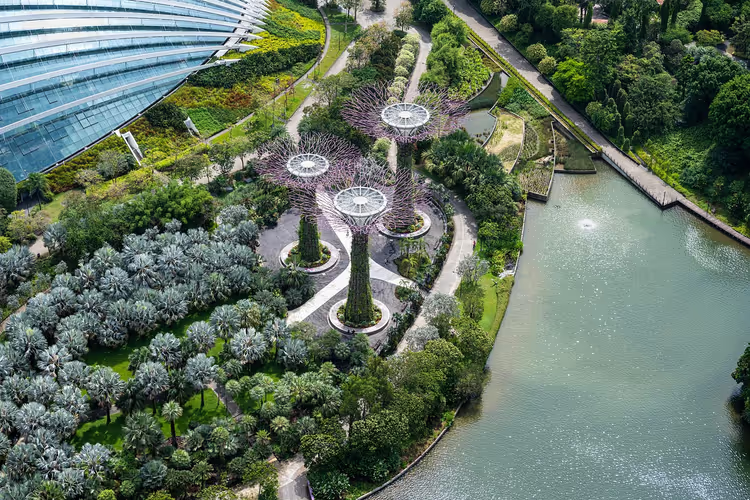
Singapore botanic gardens: what to see for free and what to pay for
Singapore Botanic Gardens is arranged differently from an ordinary city park. It is dozens of hectares of genuine tropical forest two metro stops from the center, and admission is free for everyone.
You only have to pay for the orchid garden inside. An adult ticket there costs S$15, and the park itself is open daily from 5:00 AM to midnight (according to the official website, 09/2026). Below we will break down what to see, where the entrances are, and when it is best to visit.
Ad: this text contains affiliate links; we earn a commission from them, and the price for you does not change.
What to know before your visit
💡 In short:
- Admission to the park itself is free, and it is open every day almost around the clock.
- The easiest way to get there is to the Botanic Gardens metro station at the north gate.
- A separate ticket is required only for the National Orchid Garden.
- Prices and opening hours: 09/2026, verified on the visitor page.
The Botanic Gardens lie within the city, not outside it. They stretch along Cluny Road near the Orchard area, and it is easy to walk there or ride a couple of metro stops. The grounds are large, but getting your bearings is simple: gardens run along the main entrance, lakes sit in the center, and the orchid garden is to the west.
History and description
The current park did not grow out of nothing. The first botanic garden on the island was laid out by Stamford Raffles, the founder of modern Singapore, in the early 1820s. That site lasted until 1829 and then closed due to costs (according to the Wikipedia article).
The modern garden was established in 1859, and the layout was designed by Lawrence Niven. Many of his decisions are still visible today: winding paths instead of straight avenues, open lawns, small groups of trees. Later the garden also became a scientific center.
In 1888 Henry Ridley was appointed director, and his obsession earned him the nickname "Mad." He was the first to seriously work with rubber trees, and those experiments turned the island into a major rubber supplier. It was under Ridley that the garden became known far beyond the colony.
During World War II the island was occupied by the Japanese. The park was not destroyed: the plants continued to be cultivated and protected. After the war the garden returned to British administration and remained under it until Singapore's independence.
In 2015 the garden was inscribed on the UNESCO World Heritage list. It is the only garden with this status in tropical Asia (according to the Botanic Gardens website).
 © Calvin teo · CC BY-SAPhoto: Calvin teo, CC BY-SA (http://creativecommons.org/licenses/by-sa/3.0/), Wikimedia Commons
What to see
It is hard to cover everything in one day, but these spots give a full picture of the park. Below is a note on what to see first and how much time to allow for each corner. It is most convenient to walk from the metro station toward the orchid garden.
 © Maksym Kozlenko · CC BY-SAPhoto: Maksym Kozlenko, CC BY-SA (https://creativecommons.org/licenses/by-sa/4.0), Wikimedia Commons
Rain Forest
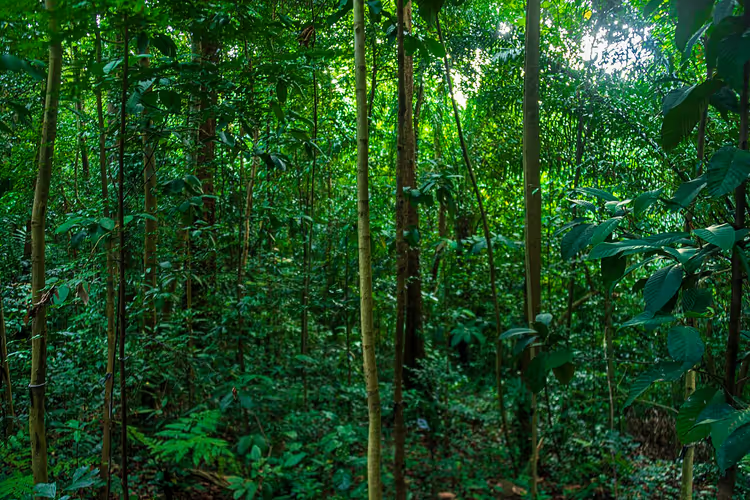
A small patch of wild tropical forest older than all the plantings around it. Botanists did not plant it; they simply preserved it as it was. It is darker and quieter here than on the lawns, the air is humid, and within a hundred meters you will forget about the city. There is only one path, so take your time.
 © Daniel Case · CC BY-SAPhoto: Daniel Case, CC BY-SA (https://creativecommons.org/licenses/by-sa/4.0), Wikimedia Commons
Botany Centre
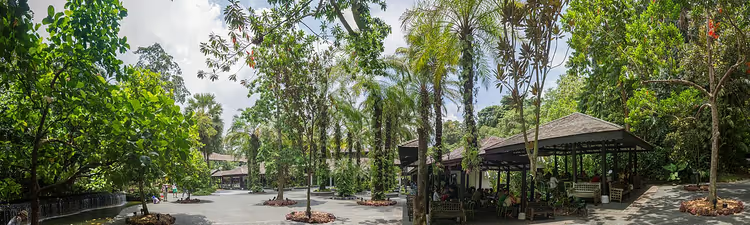
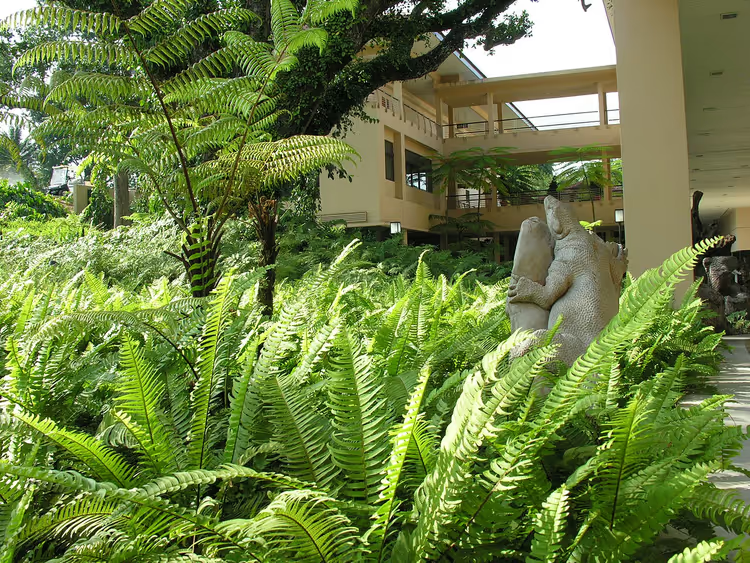
Two new buildings in the eastern part of the park. Inside there is a library, a herbarium, an information desk, and a cafe. The walls are painted with leaf patterns, and the roof of one pavilion is covered with living grass. A great place to wait out a downpour and have a coffee.
Park lakes
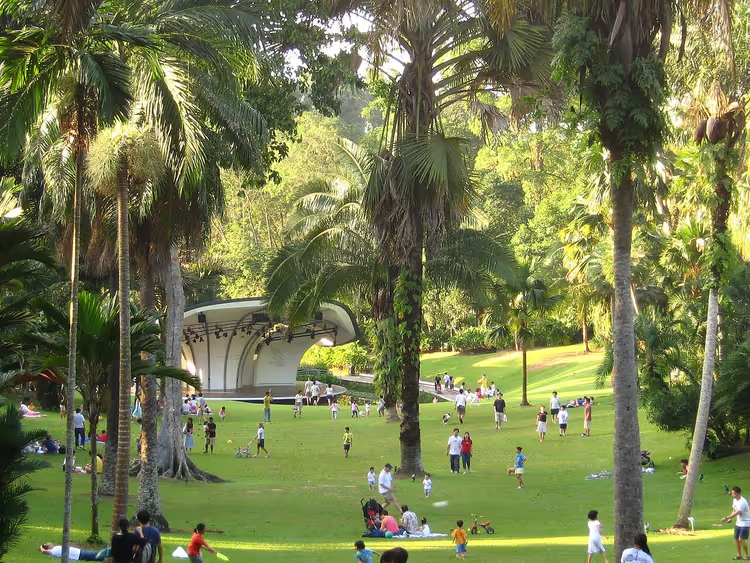
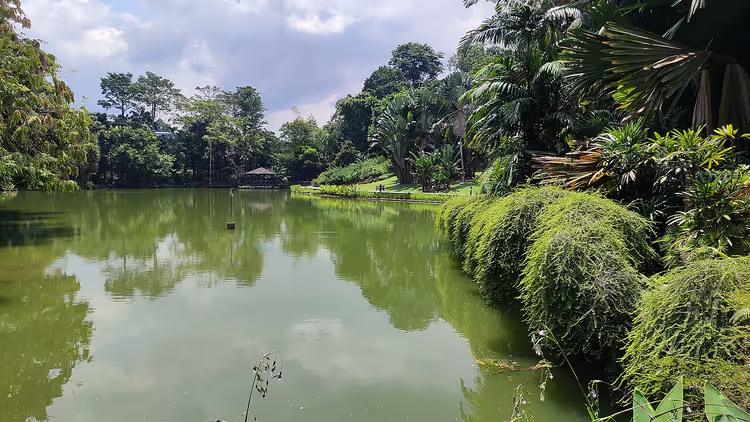
The grounds have three lakes: Symphony Lake, Swan Lake, and Eco Lake. Symphony Lake has a stage for orchestra concerts, and admission to them is free. Swan Lake has been claimed by white swans, while Eco Lake is home to ducks and herons. This is where you will get the best shots at sunset.
 © Moheen Reeyad · CC BY-SAPhoto: Moheen Reeyad, CC BY-SA (https://creativecommons.org/licenses/by-sa/4.0), Wikimedia Commons
Ginger Garden
A separate section is devoted to ginger plants: heliconias, turmeric, and ginger. A small waterfall hides among the dense growth. A restaurant with Asian and European menus operates nearby. For spice lovers, this is the most intense part of the park.
Jacob Ballas Children's Garden
A children's garden with a playground, treehouses, and interactive displays. Part of the exhibition explains how natural dyes end up in drinks and medicines. The garden is closed on Mondays, and children over 14 are not admitted (according to NParks park rules).
Spice Garden and Sundial Garden
Spice Garden showcases the spices that Singapore exports: pepper, cinnamon, and cloves. The plants are labeled, so you get a little tour of spices. Sundial Garden next door is known for its sundial in the center of four pools, and people often come here for couple photos.
 © GoAheadFan95 · CC BY-SAPhoto: GoAheadFan95, CC BY-SA (https://creativecommons.org/licenses/by-sa/4.0), Wikimedia Commons
If you want to explore the park with a guide, Singapore tours on GetYourGuide are a good option.
National Orchid Garden
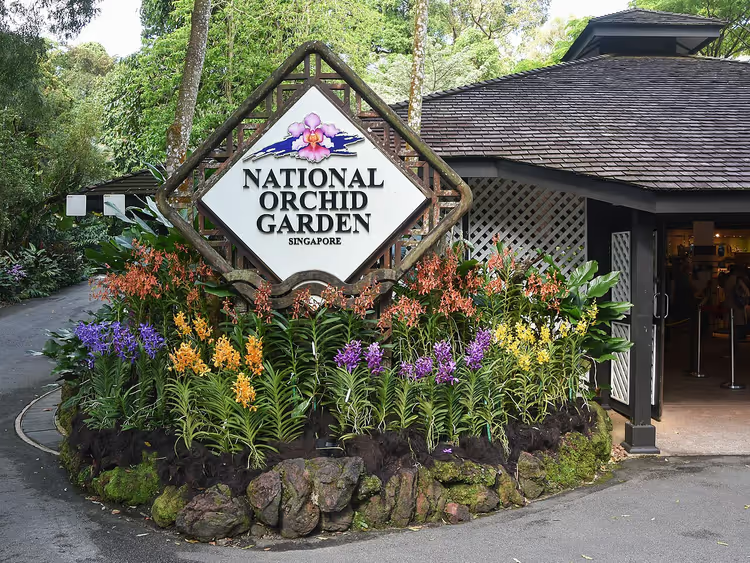
Most people come here specifically for the orchids. The National Orchid Garden occupies a separate zone and opened back in 1995. Today it has more than 1,500 species and 3,000 orchid hybrids (according to the National Orchid Garden page, 09/2026). The collection is divided into four seasons: spring, summer, autumn, and winter.
In 2021, the Tropical Montane Orchidetum was added to the garden, with the cool climate of mountain forests. Inside there are three greenhouses: Tan Hoon Siang Mist House, Yuen-Peng McNeice Bromeliad Collection, and Sembcorp Cool House. The latter is considered the main one: it houses more than a thousand species from across the tropical belt.
 © This Photo was taken by Timothy A. Gonsalves . Feel free to use my photos, but please mention me as the author. I would · CC BY-SAPhoto: This Photo was taken by Timothy A. Gonsalves . Feel free to use my photos, but please mention me as the author. I would, CC BY-SA (https://creativecommons.org/licenses/by-sa/4.0), Wikimedia Commons
There is a souvenir shop at the exit. It sells pendants and earrings with a live flower: it is dipped in gold or silver, and the petals become coated with a thin layer of metal. Prices are above average, but this is the most recognizable souvenir from here.
Tickets and opening hours
Category | Standard ticket | For Singapore residents |
|---|---|---|
Adults | S$15 | S$5 |
Seniors 60+ | S$3 | S$1 |
Students | S$3 | S$1 |
Children under 12 | free | free |
Prices are in Singapore dollars (S$). The park is open daily from 5:00 to 24:00, admission is free. National Orchid Garden is open from 8:30 to 19:00, with the last ticket sold and last entry at 18:00 (according to the opening hours on the park website, 09/2026).
Tickets are sold right at the entrance to the orchid garden, and payment is accepted by card and cash (according to the orchid garden description, 09/2026). Come at opening time: in the morning you barely wait in line, and the light in the greenhouses is soft.
Tours and tickets in Singapore
Guided tours, skip-the-line tickets and activities — most offers can be cancelled free of charge.
See offers on TiqetsThe widget loads once you give your consent.
How to get there
The easiest way to get there is by MRT. Botanic Gardens station is served by the Circle and Downtown lines, and one of the exits leads directly to the park's north gate on Bukit Timah Road (according to the directions map on the NParks website, 09/2026).
If you are traveling on the Thomson-East Coast line, Napier station is more convenient: it is closer to the Tanglin Entrance on the south side of the park. Buses 7, 75, 77, 105, 106, 123, 174, and 502 stop near Holland and Napier Road. Along Bukit Timah and Dunearn Road, buses 48, 66, 67, 153, 154, 156, and 170 run.
If you drive, you can park in several zones inside the park, but parking is paid and billed by the minute. Overnight parking is not allowed. On weekends the main gates can get crowded, so it is better to arrive at opening time.
Singapore Botanic Gardens on the map
Below is an interactive map of the park with the main entrances. You can open it on the map in a separate window and build a route from your hotel.
⁉️🤔 Frequently asked questions
How much does it cost to enter the Singapore Botanic Gardens?
The park itself is free for everyone. You only pay for the National Orchid Garden, and the ticket is bought right at the entrance. For adults it costs S$15, for seniors and students S$3, and children under 12 get in free (prices checked on the NParks portal, 09/2026).
How much time do you need to see it?
For the main loop with the lakes and the orchid garden, allow three to four hours. If you want to cover the Rain Forest, Ginger Garden, and the children's garden, plan for a full day. In summer, bring water and a hat: there is little shade on the open lawns.
When is the best time to visit?
Come at 8:00 to 9:00, right after the orchid garden opens. In the morning there are fewer people, the sun is gentler, and the ticket line is shorter. By midday it gets hot around Symphony Lake, and the lawns and stage fill up.
What should you do if it rains?
The park is open year-round, and rains in Singapore are short and frequent. You can wait out a downpour in the Botany Centre, which has a cafe and a library. Strong thunderstorms sometimes close individual areas; NParks publishes the current list on its website.
Can you come with children and a dog?
The Jacob Ballas Children's Garden with a playground is open for children, but it is closed on Mondays. Dogs are allowed in the park on a leash, but they are not allowed inside the orchid garden or museums. You must clean up after pets; this is a park rule requirement.
In short: what is worth booking
The Singapore Botanic Gardens are suited for a relaxed day without rushing. Free entry to the park and the paid orchid garden give you a choice: you can walk around for free or pay for the main collection. If you only have three hours, start with the orchid garden and the lakes, and leave the rest for a second visit.
If you love plants, do not miss the National Orchid Garden. With children, go to the Jacob Ballas Children's Garden, but not on Monday. And if you are looking for accommodation nearby, check out hotels in Singapore on Trip.com.

A small editorial team writing guides for independent travel. We travel ourselves, but we haven’t been everywhere, so we check prices, opening hours and how to get there against official sources.