
















Iceland for four days: trip budget and free waterfalls
Iceland hits your wallet harder than almost any country in Europe. A low-cost flight from Vilnius or Warsaw to Reykjavik is cheap. After that, the real costs begin: accommodation and food.
The good news is that you can genuinely see the island without spending a fortune. We have put together seven money-saving tips and a route through southern Iceland that you can cover in four days. Use the budget below as a guide and avoid overpaying for the obvious.
In short: a four-day trip fits into the budget of a typical European weekend if you fly low-cost, stay in a hostel, and cook for yourself.
Ad: this article contains affiliate links, we earn a commission if you book through them, at no extra cost to you.
Budget for a trip to Iceland per person
💡 In short:
- Book low-cost flights from Vilnius or Warsaw in advance: that way they are cheaper.
- Book the airport transfer from Keflavik in advance at a fixed price.
- Choose hostels for accommodation: a hotel in the center costs several times more.
The basic set of expenses is small: transport, lodging, food, and one or two paid attractions. Flights and accommodation eat up to two thirds of all the money, so that is where you build your savings.
Item | Estimate |
|---|---|
Round-trip flight | from €80 (as of 09/2026, on the airline website) |
Keflavik-Reykjavik transfer | from €26 one way (as of 09/2026, in the Flybus fares) |
Hallgrimskirkja observation deck | around €10 (as of 09/2026, on the church website) |
Kerid crater entrance | around €5 (as of 09/2026, on the crater website) |
You book transport and the transfer in advance at a fixed price. Accommodation and food depend only on your plan: a hostel instead of a hotel and groceries instead of cafes save the most. More on that below.
How to save money in Iceland: seven tips
Saving money in Iceland comes down to three things: a ticket bought in advance, cheap accommodation, and as few restaurants as possible. Below are seven tips that do not take away from the experience. Some of them work only on this island, the rest will serve you in any expensive country.
Look for tickets in advance
Wizz Air has restored direct service between Vilnius and Reykjavik: flights launched on March 30, 2026 and operate twice a week, on Mondays and Fridays (as of 09/2026, Wizz Air press release). Other budget options from Eastern Europe appear rarely, so watch for promotions and keep your dates flexible.
A ticket bought several months in advance costs several times less than a ticket for the nearest date. If your dates are open, shift your departure to weekdays: the difference can be tens of euros. The flight sets the base price of the trip, so fit the rest of your plan around it. Compare nearby departure cities: sometimes it is cheaper to take a bus to another airport.
Accommodation: hostels only
A hotel in Reykjavik eats your budget faster than anything else, so choose hostels for accommodation. Icelandic hostels are clean and well thought out, and some are located near the city's main points. Find a hostel or hotel in Reykjavik on Trip.com.
Prepare for roommates: in summer, school groups from all over Europe come here. It will be noisy, but cheap. If you need quiet, take a private room in the same hostel: it is still cheaper than a hotel. Having a shared kitchen and a washing machine also counts here: you cook for yourself and do laundry without extra charges.
Bring your own food
Cafes and restaurants in Iceland are expensive, and dinner out costs more than a night in a hostel. Groceries from the supermarket solve this problem. Cereals, instant soups, cookies, and tea cover breakfasts and snacks, and you free up money for excursions.
Nobody is saying skip the local cuisine. Have one or two meals out, not your entire diet: you will try Icelandic dishes without going broke. Look for the lowest prices in chain discounters, not in shops near tourist streets. When you cook in the hostel's shared kitchen, groceries are many times cheaper than ready-made meals.
Walk more
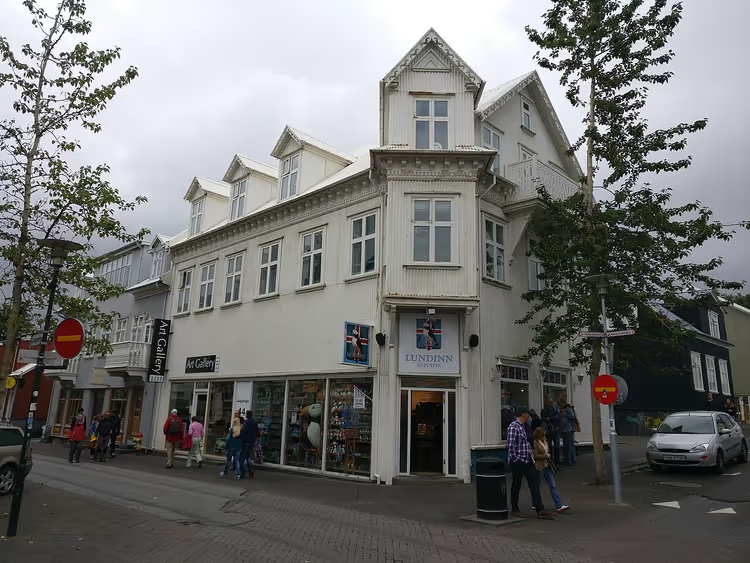
Reykjavik is compact, and you can walk the center in a day. The bus here costs more than you are used to, and tickets at kiosks are sold in packs of ten rides. For a short trip, that is wasted money.
Walking is not a punishment but part of the program: along the way you find courtyards, street art, and views that are not in guidebooks. If you cannot do without the bus, schedules and ticket rules are on the Straeto website. Walking leaves money for what you came for.
 © Vera de Kok · CC BY-SAPhoto: Vera de Kok, CC BY-SA (https://creativecommons.org/licenses/by-sa/3.0), Wikimedia Commons
Time matters more than money
Every day in Iceland costs money, and an empty day wastes it. Plan a tight itinerary: one location in the morning, a second after lunch, and the town in the evening. The fewer days you spend on the island, the less you pay for accommodation.
Shift your sleep to the plane and give the daylight hours to the island. This schedule saves you a whole night in a hostel. Another habit: check in advance what closes by evening so you don't cross town for nothing.
Take an organized Golden Circle tour
You can drive the Golden Circle on your own, but buses run on a schedule and transfers eat up hours. For a solo traveler, an organized tour is often cheaper than renting a car. Compare Golden Circle tours on GetYourGuide.
A tour covers the three main stops in one day and doesn't require a driver's license. If there are two or three of you and you like your own pace, price out a rental car separately: with a group it's sometimes cheaper per person. For a larger group with a driver, it's a different story, and you'll do the math differently.
Keep the purpose of your trip in mind
Spending creeps up on small things: candy, souvenirs, an extra coffee. Keep in mind why you flew there: geysers, waterfalls, and open-air hot springs. You can buy things at home.
This filter works better than any expense spreadsheet. Before every purchase, ask yourself whether it gets you closer to the main experiences. If not, the money stays in your pocket. That way you spend your budget on what you truly can't replicate anywhere else.
What to see in South Iceland
The south of the island concentrates almost everything people come to Iceland for. It holds the capital, a steaming valley, and the Golden Circle. The route below takes four days without rushing. This is a minimum plan that realistically fits a budget.
Reykjavik
Reykjavik translates as "smoky bay" and remains the world's northernmost capital. Fewer than 135,000 people live here, so you can walk the city in a day. Start with the main landmark on the hill, then head down toward the center.
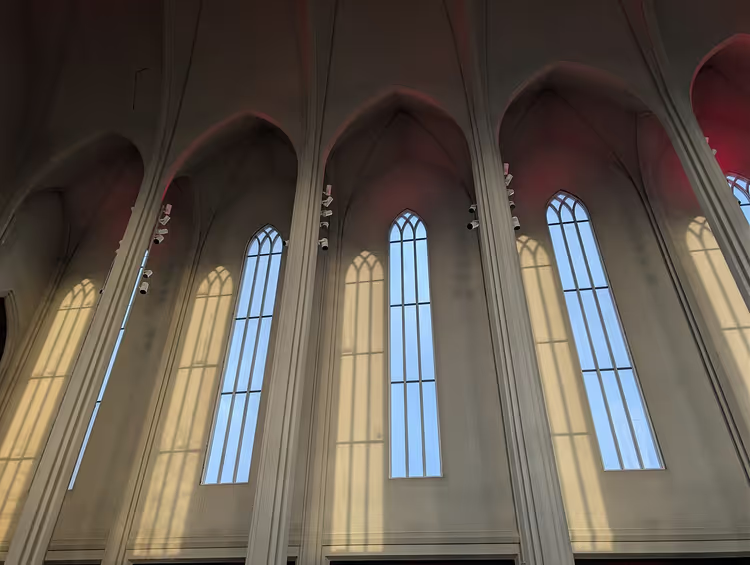
Hallgrímskirkja church is visible from anywhere in the city. This 74-meter building was constructed between 1945 and 1986 and named after the poet Hallgrímur Pétursson. Entry to the church itself is free, and the observation deck in the tower costs about €10: you need to go up before 4:45 PM (as of 09/2026, in the tower schedule). From the tower you see the whole city and the bay.
 © G. Edward Johnson · CC BYPhoto: G. Edward Johnson, CC BY (https://creativecommons.org/licenses/by/4.0), Wikimedia Commons
In front of the church stands the Leif Erikson monument. Icelanders point out that he became the first European to set foot in North America, five hundred years before Columbus. You don't need to spend long circling the sculpture, but it sets the tone for the rest of the walk.
Several very different places sit side by side in the historic center. The first is Althingi, the parliament and heart of the state. Formally it is the world's oldest parliament: it was first convened back in 930. The building looks modest, so a new home for lawmakers was built nearby.
The city's main church, Domkirkjan, was built in 1796 in the same modest Lutheran style. It stands by Tjörnin pond, so you can combine it with a walk along the water and feeding the ducks.
From here it's a five-minute walk to the city's most famous snack stand, Baejarins Beztu. They make hot dogs that draw a line. The portion is small, but it's the fastest way to grab a bite in the center, and you don't waste time on a restaurant.
On the edge of Reykjavik, where the city meets the ocean, stands the Grótta lighthouse. People come here for the views and the northern lights: the spot is far from city lights. Arrive after dark and dress warmly, because the wind is stronger near the water.
Reykjadalur valley
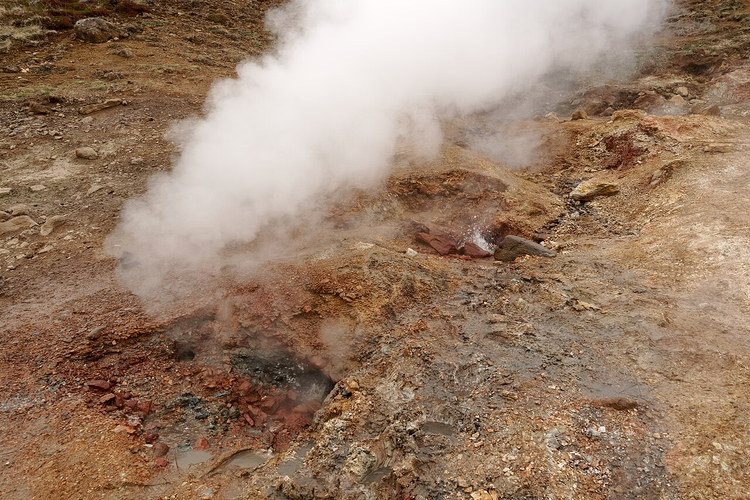
Reykjadalur serves as a free alternative to the Blue Lagoon. Visiting the lagoon costs noticeably more and requires booking in advance, while entry to the valley costs nothing. The price is paid only by your legs.
The valley lies a few kilometers from the town of Hveragerði, and the road climbs uphill the whole way. You can get there by bus from the Mjódd terminal in Reykjavik: services run regularly. Unlike city buses, on the suburban route you buy a ticket by card directly from the driver.
 © Jakub Hałun · CC BY-SAPhoto: Jakub Hałun, CC BY-SA (https://creativecommons.org/licenses/by-sa/4.0), Wikimedia Commons
The finish is worth it: hot springs bubble up in the valley, and travelers soak in a warm river under the open sky. There's a special joy in lying in hot water when it's below freezing around you. Be sure to bring flip-flops and a towel: stepping onto cold ground barefoot hurts.
Iceland's Golden Circle
The Golden Circle: a loop route of roughly 230 kilometers with three main stops (as of 09/2026, iceland.org). It brings together both the country's natural and man-made attractions. Doing it all in one day is easier with a tour than on public transport.
Both tectonic plates exposed at the surface are visible at Thingvellir (Þingvellir). The park sits in an active volcanic zone, and the plates drift apart by about two centimeters per year (as of 09/2026, tourism portal). For ancient Icelanders the cliffs formed a natural amphitheater: a national assembly was held here from 930, and independence was proclaimed in 1944.
 © Andreas Tille · CC BY-SAPhoto: Andreas Tille, CC BY-SA (https://creativecommons.org/licenses/by-sa/4.0), Wikimedia Commons
Iceland is known as the land of geysers, and that word is a proper name. It's the name of the country's most powerful hot spring, Geysir. It shoots boiling water up to 70 meters high, but it does so rarely, once every few years.
So tourists don't wait for it, but for the neighboring Strokkur: it erupts every few minutes and sends a jet 15-20 meters up (as of 09/2026, description of Strokkur). Take a spot by the edge in advance and keep your camera ready: the burst lasts seconds.
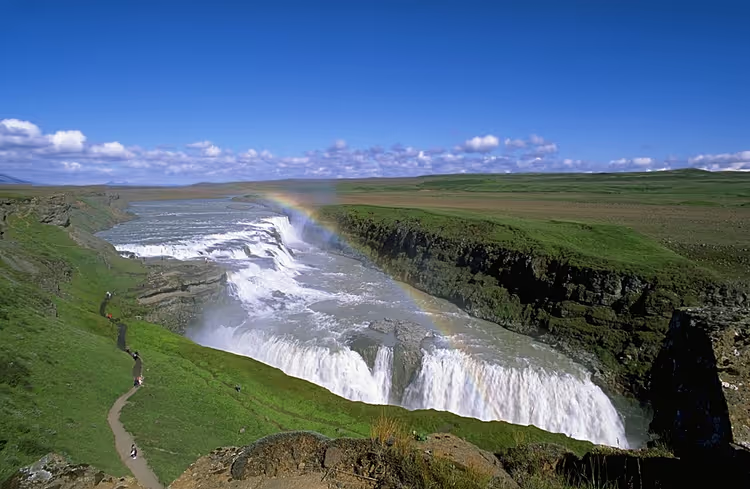
Ten minutes' drive from the geysers, the Gullfoss waterfall roars. It's called "golden" for the shades it catches in the sunlight (as of 09/2026, gullfoss.org). You can view it from three platforms, each with its own angle. In overcast weather it's no worse: the water drops into a narrow canyon in two steps, and you stand right at the edge.
The Kerið crater sits off the highway and looks different. Its caldera is filled with a turquoise-blue lake about 55 meters deep, and its walls are made of red volcanic rock. Entry is paid: about €5, and the money goes toward paths, parking, and toilets (as of 09/2026, kerid.is).
If you want to go at your own pace, get a car: car rental in Iceland gives you the freedom to stop at every waterfall.
Tickets and tours around the country are easy to compare all at once.
Tours and tickets in Iceland
Guided tours, skip-the-line tickets and activities — most offers can be cancelled free of charge.
See offers on GetYourGuideThe widget loads once you give your consent.
⁉️🤔 Frequently asked questions
How much money do you need for a four-day trip to Iceland?
Flights and transfers from Keflavík are fixed costs, with benchmarks listed in the budget table above. The biggest variables are accommodation and food: a hostel and groceries from the supermarket cut expenses the most. A budget built this way comes out to a few hundred euros.
When is the best time to go to Iceland to save money?
The most expensive time is June through August, when everyone heads to the country. In spring and fall, accommodation and tickets get cheaper, and daylight hours still allow for exploring. In winter, you spend more on tours, but you get the northern lights and low prices on lodging. For a first trip, go in late spring or early fall.
Do you need a car in Iceland?
For Reykjavík, you don't need a car: you can walk the city center, and the bus replaces taxis. For the Golden Circle and the south coast, choose between renting a car and an organized tour. How to calculate the best option for your group is covered in the section on the Golden Circle tour.
How much does entry to the main sights cost?
The three main stops on the Golden Circle are free: Þingvellir, Geysir with Strokkur, and Gullfoss don't charge an entry fee (as of 09/2026, in the Golden Circle guide). Paid sights: the Kerið crater with entry around €5 (as of 09/2026, on the official Kerið website) and the Hallgrímskirkja observation deck around €10 (as of 09/2026, Hallgrímskirkja church).
What should you bring for hot springs?
For Reykjadalur, bring flip-flops, a towel, and dry clothes in a waterproof bag. The trail into the valley goes uphill and is often wet, so you need comfortable shoes. Stepping out of hot water onto cold ground barefoot hurts, so footwear for the walk is a must.
In short: what to book
Iceland only scares you with its prices at first glance. A budget airline flight and a hostel instead of a hotel eliminate most of the costs, while the Golden Circle and Reykjadalur remain nearly free.
For lodging, look for a hostel in central Reykjavík: compare hotel and hostel prices.

A small editorial team writing guides for independent travel. We travel ourselves, but we haven’t been everywhere, so we check prices, opening hours and how to get there against official sources.