
















10 Museums of the world that are funny, creepy and a little disgusting
Museums rarely surprise you. Gilding, plaques, an audio guide in your ear. But there are places where the exhibits make you wince.
We've put together ten such museums: from Amsterdam's microbes to Kafka's nightmares in Prague. Here you'll find worms in formaldehyde, spiked collars, and mummies dried by the earth itself. Tickets to the mummy museum in Guanajuato are sold online (as of 09/2026, official website).
Below, we'll tell you what to see in each museum, how to get there, and where to check opening hours.
Ad: this article contains affiliate links, we earn a commission if you book through them, at no extra cost to you.
What's in store in this top ten
💡 In short:
- Topics covered: microbes, parasites, sanitation, espionage, mummies, dog collars, women's locks of hair, strange things, broken relationships, and Kafka.
- Prices and opening hours: 09/2026, verified on the official Micropia website and Leeds Castle.
Museum | City | What makes it surprising |
|---|---|---|
Micropia | Amsterdam | microorganisms under a microscope |
Meguro Parasitological Museum | Tokyo | parasites in formaldehyde |
Sulabh International Museum of Toilets | New Delhi | the evolution of toilets |
International Spy Museum | Washington | spy gadgets and hiding places |
Museo de las Momias de Guanajuato | Guanajuato | naturally formed mummies |
Dog Collar Museum | Broomfield | spiked collars |
Avanos Hair Museum | Avanos | a wall of women's locks of hair |
Museum of the Odd | Lawrence | a home collection of oddities |
Museum of Broken Relationships | Zagreb | objects left after breakups |
Franz Kafka Museum | Prague | the writer's grim imaginary world |
1. Micropia in Amsterdam
 © Nadine Ranger · CC BY-SAPhoto: Nadine Ranger, CC BY-SA (https://creativecommons.org/licenses/by-sa/4.0), Wikimedia Commons
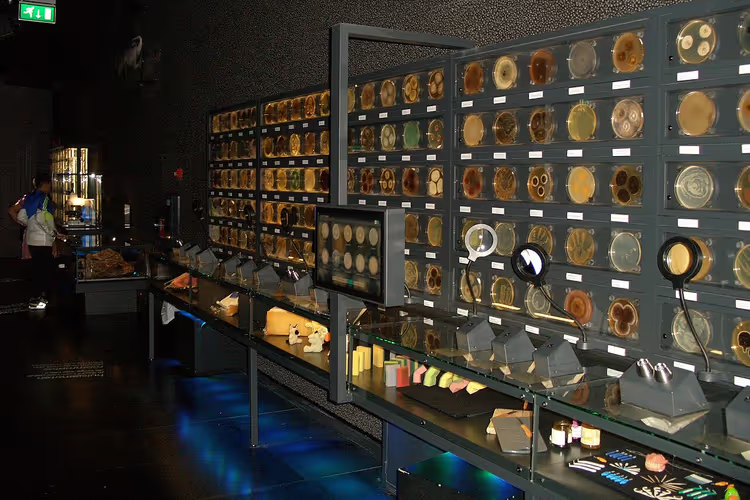
Micropia operates within the ARTIS complex in central Amsterdam. The museum is open daily from 10:00 to 17:00 (as of 09/2026, ARTIS).
The exhibition is entirely devoted to microorganisms, which are usually associated with disease. Here you're shown the other side: microbes play a role in food fermentation, are part of vaccines, and determine the flavor of cheese. You'll examine them through real microscopes.
The most memorable room is called "Mouth to Mouth." After it, kissing no longer seems quite so sweet.
- Tickets and time slots: check the price and entry time on the Micropia tickets page (as of 09/2026).
- Who it's for: adults and schoolchildren interested in biology.
- The catch: after the "Mouth to Mouth" room, some visitors leave thinking they should wash their hands more often.
2. Meguro Parasitological Museum in Tokyo
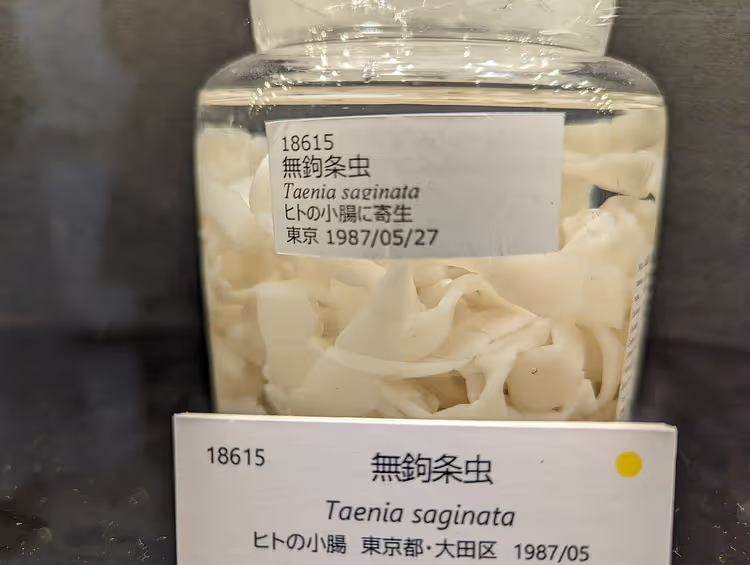
Inside, you'll see parasites and their hosts preserved in formaldehyde.
The advice is simple: eat beforehand.
The exhibition is divided into two parts. The first floor holds hundreds of glass jars with worms, parasite eggs, and malaria specimens. The second floor displays parasites that can infect humans, including those transmitted by pets.
The museum was founded by Dr. Satoru Kamegai. He traveled around Japan collecting specimens in the years when hygiene in the country left much to be desired. You can support the museum by buying a souvenir: tote bags, T-shirts, and pins.
- Tickets: admission is free, check opening hours before your visit.
- Who it's for: adults with strong nerves; schoolchildren are unlikely to enjoy the exhibition.
- The catch: after the rooms full of worms, your appetite doesn't come back right away.
3. Sulabh International Museum of Toilets in New Delhi
 © Ajay Tallam · CC BY-SAPhoto: Ajay Tallam, CC BY-SA (https://creativecommons.org/licenses/by-sa/2.0), Wikimedia Commons
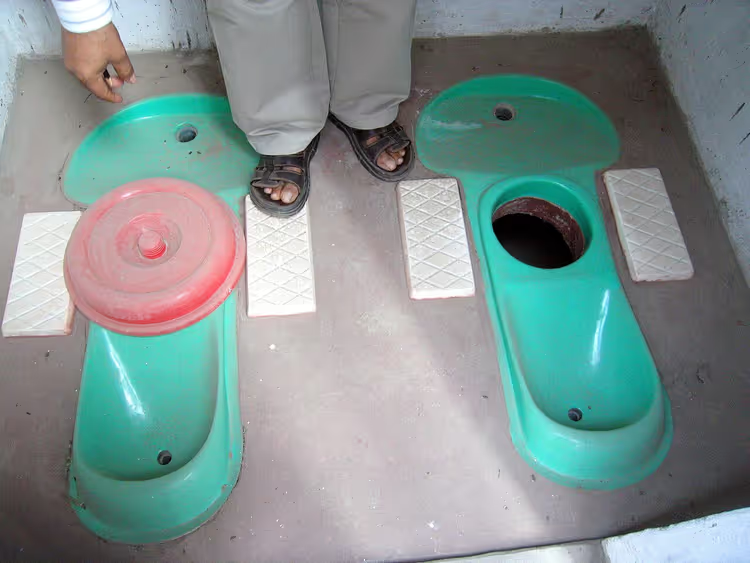
A museum of toilets sounds like a joke, but there's a serious project behind it. The exhibition is part of the Sulabh International Social Service Organization, founded by Dr. Bindeshwar Pathak.
He fought for sanitation standards and hygiene for all segments of the population. The museum shows how toilets have changed over thousands of years and what technologies were behind those changes.
Here you'll see examples of sanitary devices from ancient times to the present day. Alongside, you'll learn about local customs and laws related to sanitation.
- Tickets: admission is usually free, check opening hours before your trip.
- Who it's for: those interested in the history of everyday life, not just temples and palaces.
4. International Spy Museum in Washington
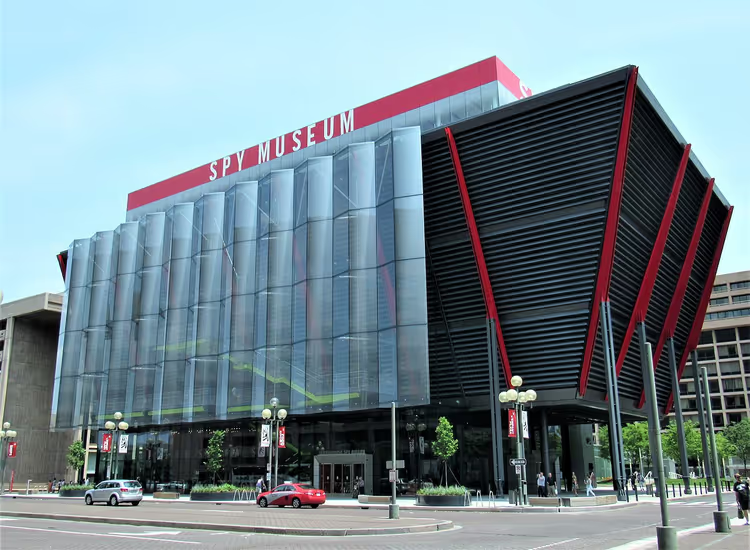 © Farragutful · CC BY-SAPhoto: Farragutful, CC BY-SA (https://creativecommons.org/licenses/by-sa/4.0), Wikimedia Commons
Here you're given the role of a secret agent and invited to take part in an interactive quest.
The artifact collection is extensive: cipher machines, counterfeit currency, disguised weapons, mini cameras, and hidden compartments.
A separate room is dedicated to pop culture. In the exhibition you'll find props from Mission: Impossible and The Avengers, a lipstick pistol, and a recreated Aston Martin DB5.
- Tickets: timed entry, slots are bought online in advance (as of 09/2026, visit plan).
- Who it's for: families with children aged ten and up and fans of spy stories.
- The catch: there are no active classified materials here, and some of the exhibits are replicas and copies.
5. Museo de las momias de Guanajuato in Mexico
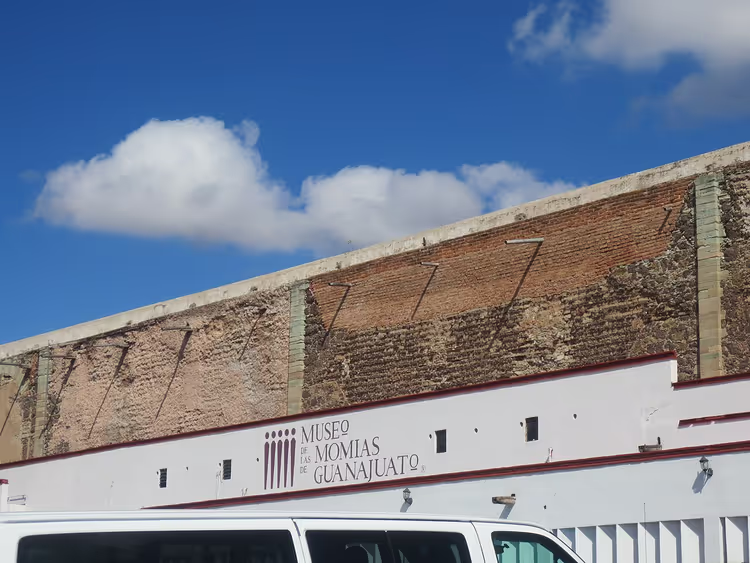 © Asenetp · CC BY-SAPhoto: Asenetp, CC BY-SA (https://creativecommons.org/licenses/by-sa/3.0), Wikimedia Commons
Mexican mummies are nothing like Egyptian ones. Here you won't see sarcophagi holding wealthy rulers. The bodies were dried by the soil of Guanajuato itself, not by the hands of embalmers.
The museum opened in 1969 and became one of the city's main attractions (according to the official website).
Most of the mummies belong to former residents of Guanajuato. The most famous of them is the smallest mummy in the world (according to the city's tourism portal).
The exhibition is grim, and that's its main feature. Visitors come here to photograph the remains, even though the bodies were once sealed inside crypts.
- Tickets: tickets are sold online on the museum's official website, check prices there as well (as of 09/2026).
- Who it's for: adults interested in history and anthropology.
- The catch: the exhibition is heavy, so young children and sensitive adults are better off skipping it.
6. Dog collar museum at Leeds Castle
 © Красимир Косев · CC BYPhoto: Красимир Косев, CC BY (https://creativecommons.org/licenses/by/3.0), Wikimedia Commons
The dog museum is tucked inside Leeds Castle in Broomfield, England. It occupies the former stables, and entry is included with the castle ticket (as of 09/2026, official website).
The exhibition was created by Gertrude Hunt in memory of her husband. Both collected unusual objects, and the collar collection turned out to be the strangest of their finds.
Here you'll see collars ranging from iron ones with sharp spikes to gilded ones. The oldest belonged to a Spanish mastiff and dates back to the late 15th century. In total, the collection holds more than a hundred rare pieces (according to Leeds Castle).
- Tickets: there is no separate ticket, entry is included with the castle ticket (as of 09/2026, buy a ticket).
- Who it's for: dog owners and families with children.
- The catch: the museum is small, so it's not worth a dedicated trip on its own; see it together with the castle.
7. Avanos hair museum in Cappadocia
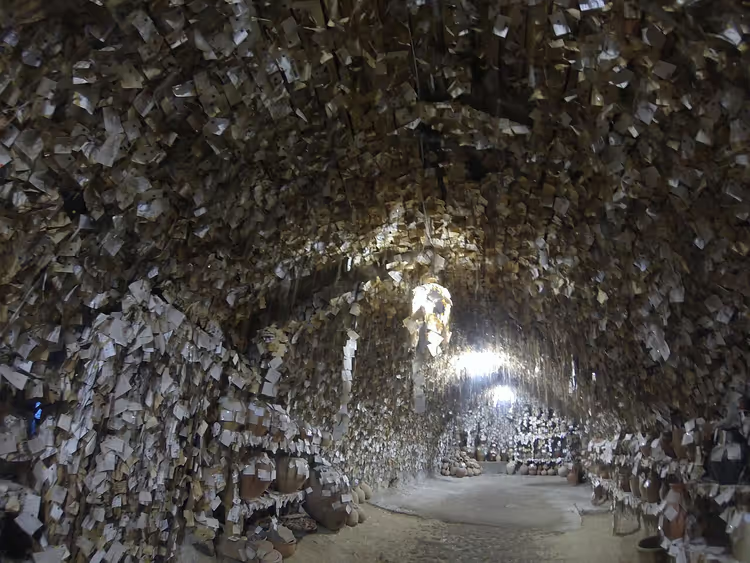 © Nevit Dilmen ( talk ) · CC BY-SAPhoto: Nevit Dilmen ( talk ), CC BY-SA (https://creativecommons.org/licenses/by-sa/3.0), Wikimedia Commons
Avanos is a major pottery center in Cappadocia. The hair museum was opened by local craftsman Galip Körükçü right in the shop beneath his Chez Galip workshop.
The walls of the room are covered from floor to ceiling with women's locks of hair in different colors and lengths. It all started with a single strand: the craftsman was saying goodbye to a friend and asked her to leave something as a keepsake. Women heard this story and brought their own hair.
Once a year, the best lock is chosen here. The winner receives an invitation to stay in the craftsman's guest house and attend his ceramics master class.
The collection has been growing for years, and today the museum wall is listed in the Guinness World Records.
- Who it's for: couples looking for an unusual spot near Göreme.
- Tickets: admission is symbolic, the museum operates within the pottery workshop, check hours on site.
8. Museum of the Odd in Lawrence
Randy Walker started collecting as a child. A few decades later, he opened a museum in his own house in Lawrence.
The main requirement for exhibits is simple: the item has to be a little strange. Here you'll find sock monkeys, figurines of people made from bottle caps, and flowers made from aluminum cans.
A separate part of the collection is celebrity-related: Bob Barker's toothbrush, Elvis Presley's hair and fingernail, Charles Manson's signature. Nearby are photographs of the dead in coffins and clumps of cow hair.
Some visitors criticize these exhibits. Walker's answer is simple: everyone has the right to express themselves however they want.
- Who it's for: those who love cabinets of curiosities and strange home collections.
- Tickets: the museum operates in the owner's house, so confirm your visit time in advance.
- The catch: some exhibits require strong nerves and a very specific sense of humor.
9. Museum of broken relationships in Zagreb
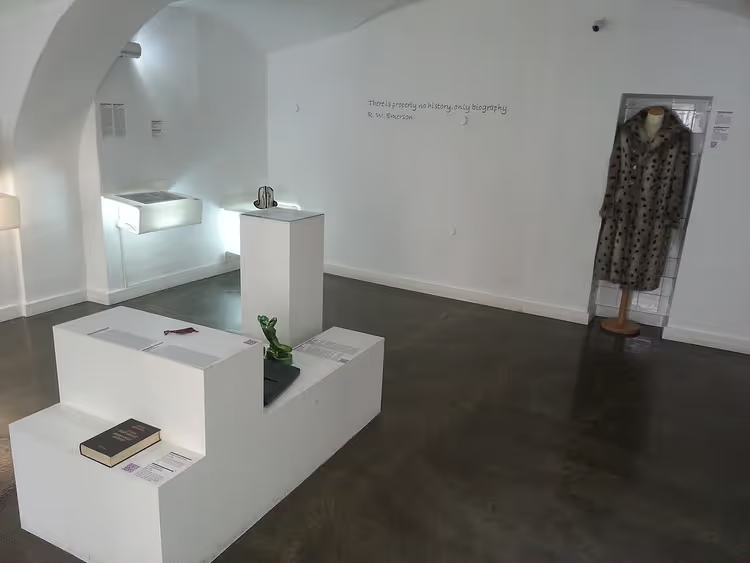 © Prosopee · CC BY-SAPhoto: Prosopee, CC BY-SA (https://creativecommons.org/licenses/by-sa/3.0), Wikimedia Commons
This museum grew out of a joke by a couple from Zagreb. After their breakup, they wanted to put their shared belongings into one box, and it turned into an archive of stories.
Today the exhibition is based in Zagreb, though it used to be a traveling one. Every item here is a gift or an object from a former partner with a short caption.
You'll walk past teddy bears, rings, letters, and even a plaster cast. The stories are funny and sad at the same time.
- Tickets: check tickets and opening hours on the official website (as of 09/2026).
- Who it's for: those who love museums with human stories.
- The catch: after the visit, it's easy to start remembering your own breakups.
10. Franz Kafka museum in Prague
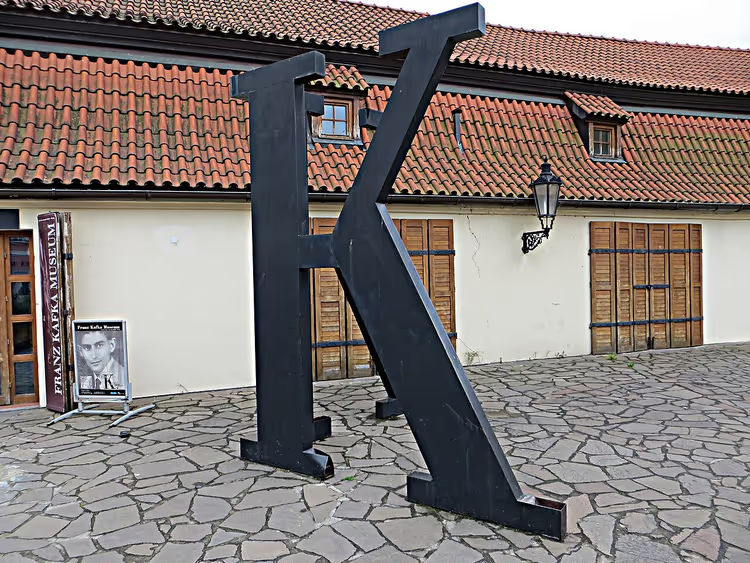 © Mister No · CC BYPhoto: Mister No, CC BY (https://creativecommons.org/licenses/by/3.0), Wikimedia Commons
The Franz Kafka Museum opened in 2005 (according to Kafka Museum).
At the entrance, you're greeted by two sculptures of men peeing into a basin shaped like the outline of the Czech Republic.
Inside, there are two exhibitions. The first shows the author's life: manuscripts, photographs, and personal belongings. The second is Kafka's imagined world with dark installations, including a replica of the torture machine from the story "In the Penal Colony."
The sound in the rooms is also part of the concept. You'll hear moans, whispers, and the scratch of a pen, as if the writer is still working on a new story.
- Tickets and hours: check prices and entry times on the official website (as of 09/2026).
- Who it's for: readers of Kafka and fans of dark installations.
- The catch: without an interest in the writer, the exhibition may feel like a series of dark rooms.
⁉️🤔 Frequently asked questions
Which of these museums is free?
Admission is free at the Meguro Parasitological Museum in Tokyo. The museum runs on donations and souvenir sales, so you can support it by buying a badge or a tote bag. Check the opening days in advance, as the schedule changes by season.
Can you visit these museums with children?
Yes, but not all of them. Micropia, the International Spy Museum, and the Dog Collar Museum are good for children and teenagers, with interactive exhibits and accessible themes. The Museo de las Momias in Guanajuato and the parasite museum in Tokyo are better left to adults, as the impressions there can be heavy.
How much time do you need for one museum?
On average, one to two hours is enough. Micropia and the International Spy Museum are larger, so they'll take half a day. The Dog Collar Museum and the Avanos Hair Museum are small, and you can see them in half an hour along with the neighboring rooms of the castle or workshop.
Do you need to buy tickets in advance?
For the International Spy Museum and Micropia, yes: entry is timed, and slots sell out in high season. The Museo de las Momias sells tickets online on its official website. For small museums like the Avanos Hair Museum, you can just walk in without a reservation and buy a ticket on the spot.
How do you get to the Museo de las Momias from central Guanajuato?
The museum sits on a hill above the city, and the walk up is long and steep. It's easier to take a taxi or a local bus, which will get you there faster. Check the exact address and directions on the museum's official website.
In short: what's worth booking
The ten museums in this selection are spread across three continents. They have one thing in common: you won't be bored.
If you're short on time: go for Micropia in Amsterdam and the International Spy Museum in Washington. If you're traveling with children: the Dog Collar Museum at Leeds Castle and, again, the International Spy Museum. If you want a scare: the Museo de las Momias in Guanajuato and the parasite museum in Tokyo. If you're into literature: the Franz Kafka Museum in Prague.
Tickets and tours for museums in Europe are easy to find on GetYourGuide.

A small editorial team writing guides for independent travel. We travel ourselves, but we haven’t been everywhere, so we check prices, opening hours and how to get there against official sources.