
















Is a bus tour of Europe worth it: a point-by-point breakdown
Bus tour promises Europe for little money. You board a bus in the evening, and by morning you are already drinking coffee in another city. It sounds convenient until you find out that you only get a couple of hours in the city itself, and you spend the night at a hotel on the outskirts.
A tour like this is built on compromise. You give up freedom and some of your time, and in return you get a ready-made route, transportation, and lodging for little money.
Below we will go through, step by step, what is included in the price, where the compromises are, and how to choose a tour that will not ruin your vacation.
Ad: this article contains affiliate links, we earn a commission if you book through them, at no extra cost to you.
How a bus tour works
💡 In short:
- An agency puts the tour together: you choose a ready-made route, and it handles transportation, overnight stays, and tickets.
- The base price includes travel and lodging; entrance tickets and lunches are often paid separately.
- In a group tour, you get a couple of hours per city; the rest of the time you are on the road.
- Passenger rights on buses and the visa fee: 09/2026, verified on the BMV website and the EU website.
An agency puts the tour together, not you. It books the bus, hotels, and entrance tickets, and you just choose the route and dates. Before the trip, you see the day-by-day program and understand how much time you will spend in each city.
The group travels with a tour escort. They communicate with hotels, handle check-in issues, keep the schedule on track, and help if something goes wrong. The bus is usually completely full, so you will have plenty of fellow travelers.
The pace of the trip is almost the same everywhere: early departure, a few hours in the city, lunch on schedule, and back on the road. This kind of schedule frees you from planning, but leaves almost no room for improvisation.
How much a bus tour costs
The price depends on the length and distance of the route. A weekend tour to a neighboring country costs tens of euros, while a week-long trip through several countries costs several hundred euros. The more cities and countries in the program, the higher the cost, because travel and lodging expenses go up.
Tour type | What is usually included | Price level |
|---|---|---|
Weekend in a neighboring country | Bus, one night in a hotel, city tour | Tens of euros |
Week through several countries | Travel, overnight stays, some entrance tickets | Several hundred euros |
Themed tour, mountains or sea | Travel, overnight stays, program | From several hundred euros |
Exact figures depend on the season and the operator, so compare several programs and check exactly what is included in the price. You can browse bus tour options by specific cities and dates.
Pros of bus tours
Savings on transportation
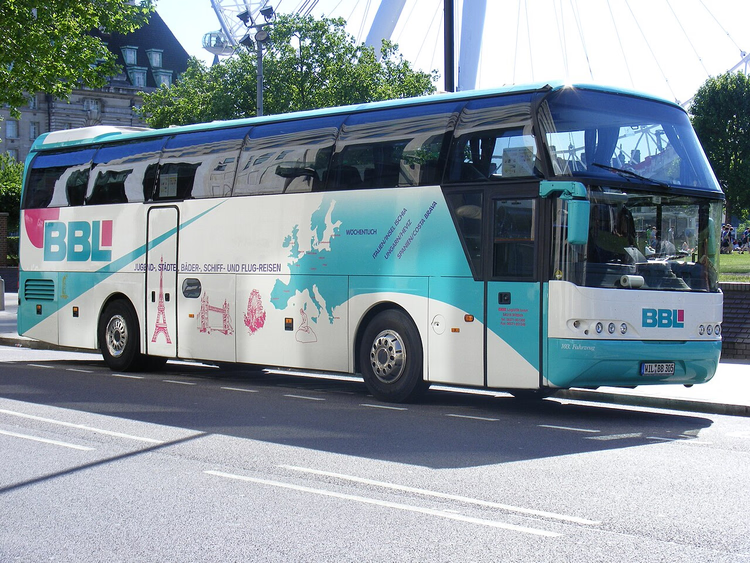
Round-trip flights often eat up half of the trip budget. When the route covers several countries, finding connecting flights is even harder, and the price goes up. A bus takes you from city to city, so transportation costs drop. It is worth comparing flight prices at least to understand the difference in money.
 © Felix O · CC BY-SAPhoto: Felix O, CC BY-SA (https://creativecommons.org/licenses/by-sa/2.0), Wikimedia Commons
Several countries in one trip
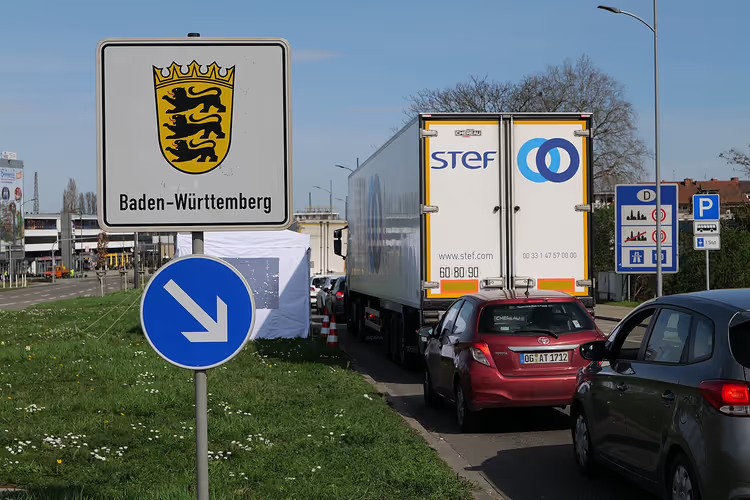
Even a short weekend tour shows you several cities. On a week-long route, you get to see different countries as you pass through them, and along the way you watch the scenery outside the window. For many people, this is the main goal: to get a general impression of a region rather than to explore one city in depth.
Excursions within the program are selected around landmark sites: museums, castles, the old town, sometimes nature and shopping centers. In one day, you can see things that on an independent trip you would have to spread across different days.
A ready-made plan with no hassle
You do not need to look for hotels, book tickets, or draw a route on a map. The agency is responsible for logistics, and the escort handles issues on the ground. If it is important for you to switch off from planning and just go, this is a real saving of energy.
Fellow travelers who help
In a group, there is always someone you can ask for a charger, medicine, or advice about the city. The upside is that you are not left alone with an unfamiliar language and public transport. The catch is the same: if you do not like noisy groups, the constant company will be exhausting.
Visa included
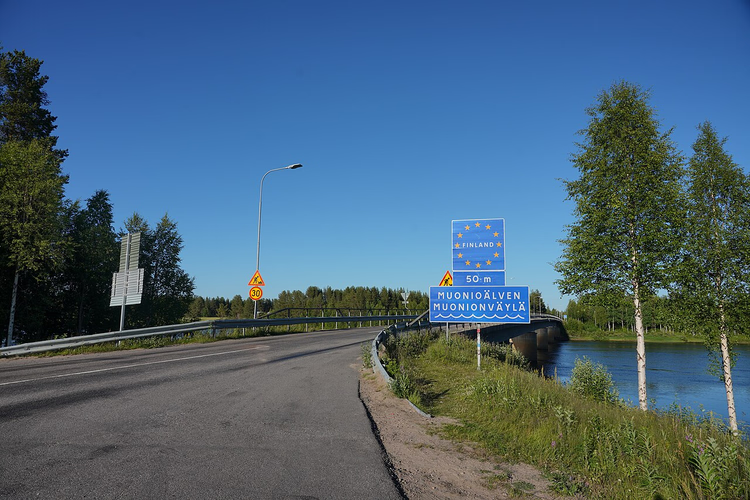
This point matters only to citizens of third countries; EU citizens do not need a visa. Some agencies arrange a Schengen visa together with the tour. This is convenient: you submit your documents through the operator and do not have to deal with the application form and appointment yourself. The application is submitted in advance, sometimes several months ahead, because without a visa the tour will not happen.
 © Lukas Beck · CC BYPhoto: Lukas Beck, CC BY (https://creativecommons.org/licenses/by/4.0), Wikimedia Commons
The decision is made by the consulate, not the agency. The visa is usually issued for the dates of the trip; a longer validity is given to those who have already traveled on a Schengen visa. The issuing country is determined by the consulate, and it does not always match the main destination of the tour.
Cons of bus tours
Little time in the city
The group gets several hours to explore the city, and part of that time goes to a guided tour. In the remaining time, you can grab a bite, buy souvenirs, and take photos, but you don't really get to know the city. Plan what to see: pick places nearby and without lines so you don't hold up the group.
The itinerary can't be changed. If a city doesn't interest you, the route won't be adjusted for you, and the bus will go there anyway. This is the most common source of disappointment for people who are used to deciding everything themselves.
Long bus rides
You cover the distances between cities on the bus. Sometimes these are overnight rides, sometimes you pass through countries during the day. Sitting in one place for several hours straight is hard: your legs go numb and your back hurts. Get out and stretch at every stop, even if it's just ten minutes at a gas station.
Boredom is also a problem. Even beautiful scenery gets old by the second hour. The guide keeps the group entertained with stories and plays movies, so choose a tour from an operator that promises a guide for the entire route.
Budget hotels
Accommodation on bus tours is usually budget-level, and that's part of the savings. Hotels are located far from the center or on the outskirts of the city, and rooms are designed for several people, meaning you'll be placed with fellow travelers. The level of cleanliness and comfort depends on the specific hotel, so read the hotel list in advance. You can book a hotel on your own, but then you'll have to coordinate your overnight stays with the group.
Eating on the go
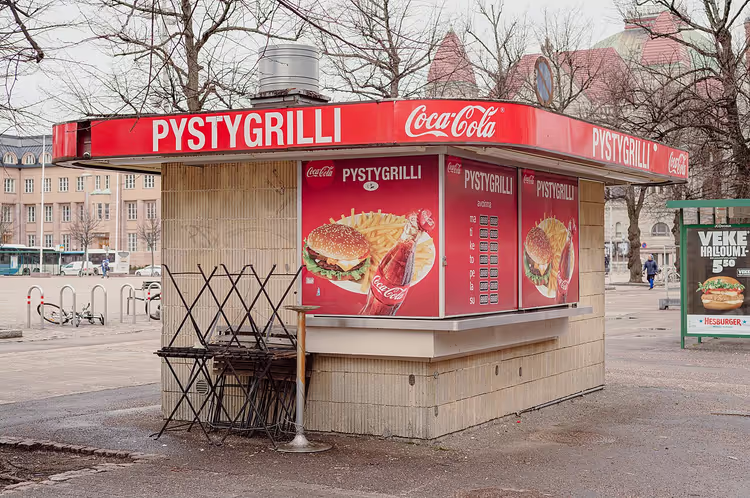
Full breakfasts, lunches, and dinners are not guaranteed on the tour. At the hotel, you might get a buffet, or you might make do with coffee and toast. During the day, there's almost no time for cafes, so snacks, fast food, and sweets become the go-to options.
 © Safa Hovinen · CC BYPhoto: Safa Hovinen, CC BY (https://creativecommons.org/licenses/by/2.0), Wikimedia Commons
Bring fruit, vegetable salads, yogurt, and water with you. Dehydration on the road leads to low energy and headaches, and in hot weather you feel it quickly.
Repetitive itineraries
There are many options, but they're similar on the inside: the same capitals, the same old towns, the same viewpoints. An experienced traveler gets tired of this repetition quickly, so compare not the tour name but the list of cities and the order of stops.
Who bus tours are right for
A bus tour is right for you if your budget is limited but you want to see a lot. It's also convenient for those who aren't ready to book hotels and tickets themselves or who are traveling alone and don't want to be without company.
Don't take this kind of tour if you value comfort and space, don't handle long rides well, or want to explore cities in depth. Families with small children and travelers with limited mobility also risk it: part of the program won't work for them.
How to choose a tour and not be disappointed
Check three things. First: what is included in the price, including breakfasts, entrance tickets, and transfers. Second: the list of hotels and the distance from the center, because in the evening you will not return to the center. Third: how much time the tour spends on the road and how much in the cities.
Calculate the balance yourself: if the itinerary includes many cities over a few days, you will spend almost all your time on the bus. If you do not have EU citizenship, find out which country issues the visa and when to submit the documents. Compare insurance terms in advance, because a policy is often required for a visa.
It is useful to know your passenger rights in advance in case of a flight delay or cancellation (as of 09/2026, BMV website).
⁉️🤔 Frequently asked questions
Is it worth taking the cheapest tour?
Not necessarily. The cost depends on the duration, season, and hotel class, not on quality. Cheap weekend tours to neighboring countries show a decent itinerary, but you spend the night in budget hotels on the outskirts. First look at what is included in the price, and only then compare options by money.
How much time do you get in one city?
Usually a few hours, and part of that is taken up by a guided tour. In the remaining time you can eat and walk around the center, but you will not see museums. Plan in advance what you want to see, and keep the places close to each other so you do not hold up the group.
Do you need a visa for a bus tour?
It depends on your citizenship. EU citizens do not need a visa; everyone else needs a Schengen visa, and the fee is €90 for adults and €45 for children aged six to twelve (as of 09/2026, European Commission press release on the visa fee). Many agencies arrange the visa together with the tour, but the decision is made by the consulate.
What should you do if the bus is delayed or the flight is canceled?
On routes of 250 km or more, EU Regulation 181/2011 applies. In the event of cancellation, rebooking, or a delay of more than two hours, the carrier must offer a refund of the ticket price or re-routing to the destination. If the carrier did not offer you this choice, you are also entitled to compensation of half the ticket price (as of 09/2026, EU Regulation 181/2011). If the tour was purchased as a package, your rights are additionally protected by the EU Package Travel Directive 2015/2302. File a complaint with the carrier, and if there is no response, with the national authority of the country of departure.
Can you skip visiting one of the cities?
You cannot change the itinerary. The tour program is designed for the whole group, and it is not changed for one participant. The only option is to agree with the guide and spend that time on your own, but then you will have to get to the next stop by yourself.
In short: what is worth booking
A bus tour is chosen by budget and by the number of cities, not by its name.
- If you are on a limited budget: a weekend tour to a neighboring country, tens of euros per trip.
- If you want to see more countries: a week-long route with several cities and overnight stops along the way.
- If you want comfort and free time: look for hotels and tickets yourself, a bus tour is not for you.
Before booking, compare what is included in the price and check the hotel list.
Find a tour of Europe by specific cities and dates.
Find a hotel along the route and compare flight prices in advance to understand your real budget and avoid overpaying.

A small editorial team writing guides for independent travel. We travel ourselves, but we haven’t been everywhere, so we check prices, opening hours and how to get there against official sources.