

















How to behave at a business meeting abroad: bows, business cards and taboos
A bow of the wrong depth costs more than it seems. At your first business meeting abroad, such details decide whether anyone will keep talking to you.
There is no universal rulebook. In Japan you bow and read the other person's business card, in Germany you use last names and arrive right on time, and in the US you switch to first names by the middle of the meeting.
Below is a practical minimum for nine countries where business meetings happen most often: greetings, forms of address, gift rules, and what a partner will read as disrespect. If your trip is already scheduled, start with the section about your country.
Ad: this article contains affiliate links. We earn a commission if you book through them, at no extra cost to you.
Three rules that work everywhere
💡 In short:
- Arrive early. In Germany, Japan, China, the US, and the UK, being late is read as disrespect toward your partner.
- Clarify the form of address before the meeting: last name and formal "you" in Germany, Japan, and China, first name in the US.
- Keep gifts modest and safe: something edible, a book, a souvenir from your city.
- Rules for Germany: 09/2026, verified on the official page on business etiquette in Germany.
Business etiquette rests on three things: time, address, and gifts. A mistake in any of them outweighs the substance of the negotiations, and fixing it later can take years.
Time. In Germany, Japan, China, the US, and the UK, being late is read as disrespect.
Address. The form is worth clarifying before the meeting. Chinese people put the last name first and add a title or the respectful "mister." In Germany and Japan, last names and formal "you" hold until you are explicitly invited to switch to first names.
Gifts. This is an easy place to stumble. In China, some symbols are off-limits for gifts, more on that in the China section. In the US, corporate gifts are often prohibited by internal company policy. According to the guide to Chinese business culture, the safest options are something edible or a souvenir tied to your city's history.
Asian countries: general negotiation rules
In Asia, hierarchy is valued and restraint is required. Each member of a delegation has their own role and clearly defined function, and the leader is identified quickly: the other partners visibly defer to them.
Emotions are not put on display during negotiations. Hugs, vigorous gesturing, and a raised voice work against you in China and Japan, even if you have known each other for a long time.
A separate topic is a direct "no." You will almost never hear it: refusals are softened with phrasing like "we need to think a lot of things over." Hold the pause and do not fill it with new arguments.
How to behave: listen more than you speak, and share your vision closer to the end of the meeting.
The catch: negotiations move in stages and can easily stretch over several visits, so plan extra time.
Japan: bowing, business cards, and pauses
The traditional greeting in Japan is a bow, and its depth signals the degree of respect. A handshake will also be accepted, and they will most likely extend a hand in return, but it is better not to take the initiative. Using first names is not acceptable: that is reserved for family and close friends.
The face of a Japanese partner will tell you almost nothing about how the meeting is going. Restraint is taught here from childhood, and the same is expected of you. There will be many questions about the documents: clarifications come on literally every point. According to the guide to Japanese business culture, a business card is received with both hands, read, and only then placed in a card holder, not in a pocket.

Greeting: a bow, handshake only in response.
Address: last name plus "mister" or "missus," no first name.
The catch: a pause in conversation does not mean agreement; you need to hold it, not fill it.
China: gifts, hierarchy, and forbidden symbols
Chinese people value order, so being late is read as unambiguously bad here. Arriving a few minutes early will be appreciated: it shows the seriousness of your intentions.
A meeting unfolds in several stages. Partners first "test the waters," identify who on your team makes decisions, and direct their attention to that person. A first trip rarely ends with a signature.
Gifts are possible, but inexpensive ones: an expensive item looks like a bribe. Clocks and white flowers are associated with funerals, and the number four sounds like the word "death." Red envelopes are appropriate around holidays.
Greeting: a slight bow; when meeting someone, a handshake is increasingly enough.
Address: last name first, plus job title.
The catch: you will not get a direct refusal; decisions are read through timelines and wording.
India: namaste, handshakes, and respect for status
Men in India usually exchange handshakes; women receive a slight bow. Touching a woman is absolutely not acceptable, and a man should wait until a hand is offered to him.
An invitation home is a sign of special favor. A guest may be greeted with a garland of fresh flowers, and refusing it is impolite. Being late as a guest is acceptable here, but at a business meeting it is better to keep your own punctuality.
At the table, restrictions are possible: some partners do not eat beef, some do not drink alcohol. When choosing a restaurant, simply clarify preferences in advance.
Address: last name and a respectful title; first name only after an invitation.
The catch: according to the guide to Indian business etiquette, norms differ from state to state; there is no universal set.
US: smiles, small talk, and no gifts
Americans dislike stiff formality, but hugs at a first meeting are also inappropriate. Start with a light handshake and a smile, and the conversation will flow more freely after that.
Within a few minutes you will most likely switch to first names and discuss the weather, sports, or the flight. Such short conversations before business are part of the protocol here.
Gifts are not customary in business relationships and are sometimes explicitly prohibited by internal policies. If you are invited to dinner, a souvenir, wine, or flowers are appropriate. Leave compliments about appearance and hand kisses at home.
Greeting: handshake, smile, first-name address.
The catch: Americans answer directly and may push things forward; a pause is read as indecision.
UK: restraint, titles, and the pub
The British do not tolerate lateness, but arriving early for dinner is also considered disrespectful. A handshake when meeting is mandatory, but do not expect warm greetings.
Memorize your partners' titles and honors right away: "Mr" plus last name holds until you are offered a first name. Invitations home are rare, but an informal meeting at a pub, restaurant, or theater is quite realistic.
In negotiations, the British are restrained and do not pressure their counterpart, but they defend their interests firmly. They respect personal space, so do not invade it unnecessarily. They do not expect categorical judgments or generalizations from you.
- The catch: restraint is easily mistaken for agreement; confirm arrangements in writing.
Germany: punctuality, formal "you," and order in documents
The foundation of German business etiquette rests on three pillars: punctuality, precision, and conservatism. Address people only with formal "you" and last names, no familiarity. Titles such as "Frau Doktor" are respected here and spoken aloud.
Topics are discussed strictly in the stated order, with no jumping around: until a topic is closed, you do not move to the next one. Germans prepare documents meticulously and expect the same from you. The dress code is followed fully, so an unbuttoned collar at a meeting with a bank reads as carelessness.
According to the guide to German business etiquette, being late here is considered a sign of unreliability, not a minor accident. If you cannot make it, it is better to reschedule the meeting than to arrive after the appointed time.
Address: last name, formal "you," title if there is one.
The catch: an unstructured presentation without numbers and deadlines will discredit you.
France: address, language, and dinner at someone's home
The French are more relaxed about punctuality than the Germans, but it is better to warn about a delay in advance. It is customary to add "monsieur" or "madame" to the other person's last name; switching to informal "tu" happens slowly and only by invitation.
If you do not speak French, start with a phrase saying so and only then switch to English. Bring an interpreter to negotiations, especially when a contract is involved.
An invitation to dinner is a sign of respect: declining is not customary, and neither is arriving empty-handed. At the table, participation in conversation is expected, not silence. According to the guide to French business culture, the gift should be non-obvious, connected to art or culture.
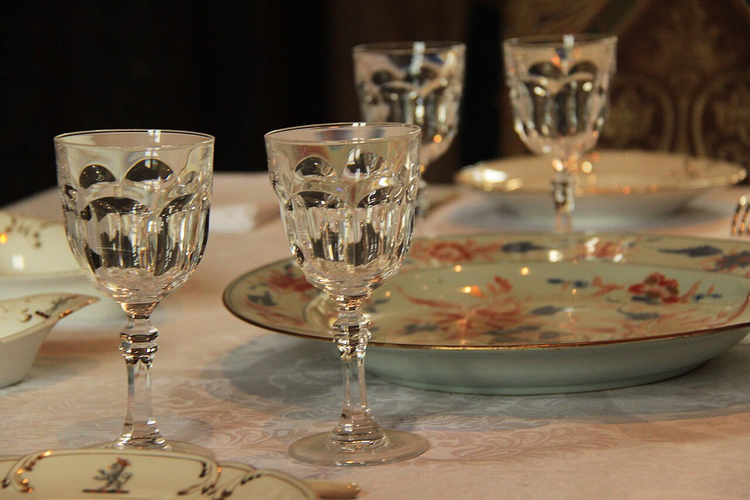 © Cristian Bortes www.eyeem.com/bortescristian from Cluj-Napoca, Romania · CC BYPhoto: Cristian Bortes www.eyeem.com/bortescristian from Cluj-Napoca, Romania, CC BY (https://creativecommons.org/licenses/by/2.0), Wikimedia Commons
Address: "monsieur" or "madame" plus last name.
The catch: rushing and talking only about business make a poor impression.
Spain: late dinners and long conversations
Spaniards are open and friendly. A first meeting starts with a handshake; acquaintances may exchange hugs and cheek kisses when meeting, especially between women.
Do not schedule meetings around lunchtime: the workday here is long, and dinner starts late. Spanish partners are often late, and here that is considered normal. Do not expect punctuality from them, but keep your own schedule.
Negotiations often drift off course. Spaniards talk a lot and jump from question to question, so a long discussion is the working norm. If you are given a gift, open it immediately and say thank you.
- The catch: without a written record, agreements easily get lost in conversation.
Italy: the restaurant instead of the boardroom
Italians communicate vividly and emotionally, gesture actively, and speak loudly. Hugging a partner at a first meeting or shaking hands for a long time is normal here.
Meetings are not scheduled around lunchtime, and when invited to someone's home, you arrive in a good suit and with something for the table. Cuisine is part of the business program: refusing Italian dishes reads as contempt. But remember that agreements made at the table mean little; legal decisions come later.
Conversation does not start with business. First general topics, family, hobbies, and only then the contract. According to the guide to Italian business culture, it is better not to criticize politics and football in conversation: that will instantly spoil the impression.
- The catch: an emotional "yes" at the table does not equal a signed contract.
⁉️🤔 Frequently asked questions
Can you give Chinese partners a clock as a gift?
Better not. Clocks in China are associated with funerals, and the number four sounds like the word "death." A safer choice is an inexpensive gift tied to your city's history.
What should you do when meeting in Japan: bow or shake hands?
Start with a bow; its depth shows respect. A handshake will also be accepted, and they will usually extend a hand in return, but you should not take the initiative. Receive a business card with both hands, read it, and put it in a card holder, not in a pocket.
How critical is being late to a meeting in Germany?
It is one of the worst mistakes: lateness is read as a sign of unreliability. If you cannot make it, it is better to reschedule the meeting in advance.
Do you need an interpreter for negotiations in France?
For discussing a contract, yes. Start with a phrase saying that you do not speak French, and only then switch to English: trying to speak English right away reads as carelessness. Add "monsieur" or "madame" to the last name.
Can you discuss football in Italy?
You can discuss it, but not criticize it. Football and politics are topics where an argument easily turns into offense, so it is better to stick to family, cuisine, and the other person's hobbies. Do not start the conversation with business; start with general topics.
In short: what to remember before your trip
If the meeting is in Japan: a bow, a business card with both hands, and unhurried pauses. If in China: punctuality, last name plus job title, and a gift without clocks. If in Germany: formal "you," last name, a set order of topics, and a complete set of documents.
For France and Italy, add time for conversation at the table. In the US, keep your wording direct; in the UK, keep a restrained tone, and put meeting outcomes in writing. A hotel near your partner's office solves half of your morning problems: searching for hotels on Trip.com will show options by area and dates.

A small editorial team writing guides for independent travel. We travel ourselves, but we haven’t been everywhere, so we check prices, opening hours and how to get there against official sources.