
















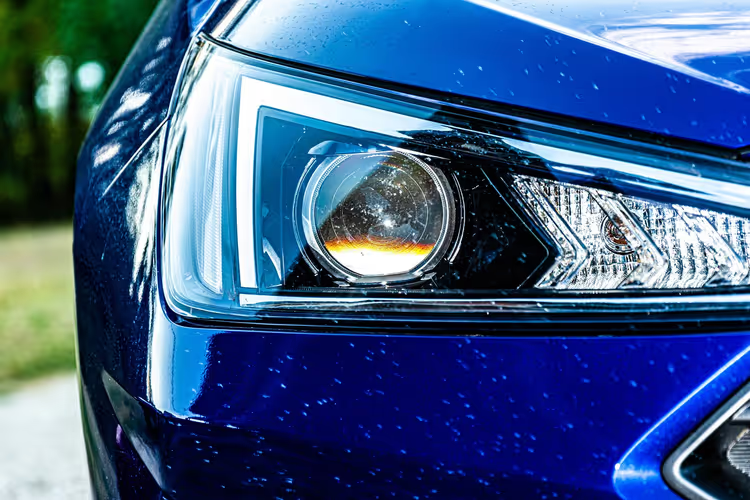
Car rental in Faro: how to pick up the car without extra charges and disputes
A rental car from Faro Airport solves half of your Algarve logistics.
Without one, you are tied to bus schedules and the beach next to your hotel. With one, you can reach ocean viewpoints, mountain villages, and quiet beaches beyond Lagos. We have put together what you need to know before booking: rates, insurance, deposits, damage-related schemes, and traffic rules.
Ad: this article contains affiliate links. We earn a commission if you book through them, at no extra cost to you.
Renting a car in Faro: what you need to know
💡 In short:
- Book in advance. In July and August, available cars are gone weeks before the date.
- Do not take anything larger than a mid-size car. On the narrow streets of old town centers and in beach parking lots, a compact car saves your nerves.
- Look for an automatic transmission early: there are fewer such cars in Portugal, and they cost more.
- Photograph every scratch at pickup and insist it is written into the inspection report. Disputes over sudden damage are the main local scheme.
- Rates and road tolls verified as of 09/2026 (sources: average rental rates and A22 toll removal).
 © Sergei Gussev · CC BYPhoto: Sergei Gussev, CC BY (https://creativecommons.org/licenses/by/2.0), Wikimedia Commons
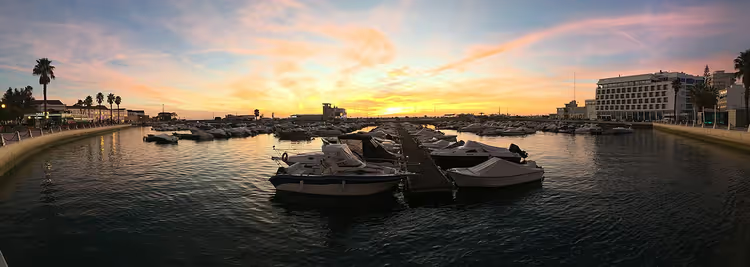
Faro Airport is the main gateway to the Algarve. Both international brands and dozens of local companies operate here. Local brands are often cheaper, but their counters are located outside the terminal: a shuttle takes you to the car. Check this before booking so you are not hunting for a bus with your suitcases at the exit.
Prices depend on the season more than on the brand. In November and January, renting a small car costs very little, while in the peak of summer the rate increases several times over. Booking early saves more than hunting for the cheapest rental company a week before the trip.
Ask separately about driving into Spain. Some rental companies allow a trip to the neighboring country for free, some charge extra, and some prohibit it entirely. The phrase "geographic restrictions" in the contract answers this question at a glance.
There is also news about road tolls. The A22 motorway along the coast has been free for passenger cars since January 1, 2025. The toll A2 toward Lisbon, however, costs about €23.80 (as of 2026, Travel Information EU). If you are only driving around the Algarve, you do not need a transponder.
When a car is essential in the Algarve
Not everyone needs a rental car. It all depends on how you want to spend your vacation.
 © Steven Fruitsmaak · CC BY-SAPhoto: Steven Fruitsmaak, CC BY-SA (https://creativecommons.org/licenses/by-sa/3.0), Wikimedia Commons
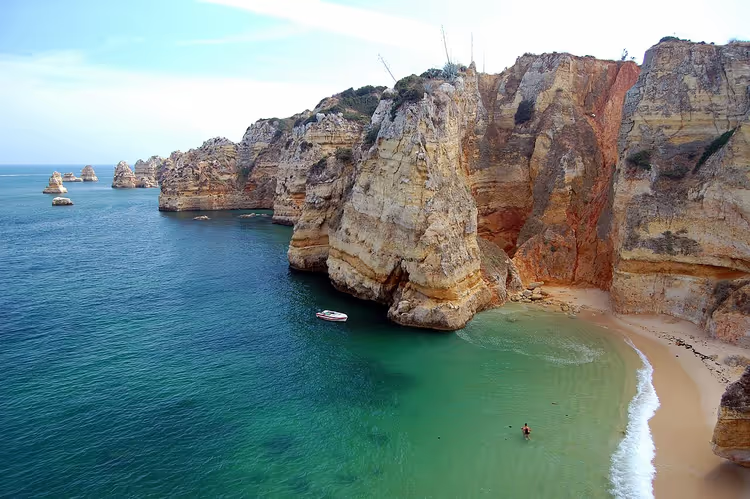
A car is useful if you plan to visit many places, get up early and leave before the bus tour groups, seek out quiet beaches away from the resorts, and stay for the sunset as long as you like. A rental also helps those who adjust their route to the tides: some Algarve beaches disappear completely at high water. Having your own car gives you freedom in the evening, when bus schedules no longer help.
If you want to lie by the sea all day and see one or two towns, a car is not necessary. In that case, book a hotel near the beach, for example in Albufeira, and use group excursions. Taxis and buses cover short trips, and you avoid parking and fuel costs.
What car to rent in Faro
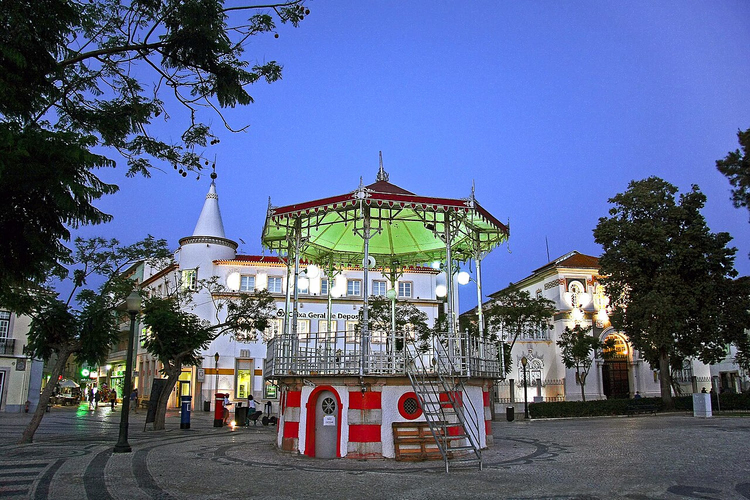
Class and power matter less in the Algarve than you might think. Even mountain villages are easy to reach in a regular compact car. Narrow streets and small beach parking lots, however, punish larger vehicles: a long sedan has to be parked right at the edge of the road, and turning around in a narrow lane takes time. The advice is simple: do not rent anything larger than a mid-size car.
 © Vitor Oliveira from Torres Vedras, PORTUGAL · CC BY-SAPhoto: Vitor Oliveira from Torres Vedras, PORTUGAL, CC BY-SA (https://creativecommons.org/licenses/by-sa/2.0), Wikimedia Commons
An automatic transmission is a different story. Manual is the norm in Portugal, while automatics are offered less often and cost more. The catch: the selection of automatic models is limited, and in high season they run out first.
Do you need all-wheel drive? No. Asphalt covers almost all roads, and the short dirt tracks are well packed. Something else matters more: rental insurance usually does not cover driving on unpaved roads. Even with all-wheel drive, the bill for damage on a dirt road will be yours (according to rental terms).
Airport or city: where to pick up the car
Most travelers fly into Faro, unless they start their route in Lisbon or Porto. We recommend picking up the car right at the airport. That way you have freedom from the first minute and do not pay twice for getting to your hotel.
Compare the two options. A taxi from the airport plus a few days of rental in the city costs about the same as renting for the entire stay at the airport. The price difference is usually small, but those who get behind the wheel right at the terminal have more flexibility.
There is also a third scenario. If you arrive by train from Lisbon, you can pick up a car at Albufeira station. Consider what is more convenient: the airport has a wider choice of rental companies, while the city has shorter lines in high season.
 © Kolforn ( Kolforn ) I'd appreciate if you could mail me (Kolforn@gmail.com) if you want to use this picture out of the W · CC BY-SAPhoto: Kolforn ( Kolforn ) I'd appreciate if you could mail me (Kolforn@gmail.com) if you want to use this picture out of the W, CC BY-SA (https://creativecommons.org/licenses/by-sa/4.0), Wikimedia Commons
How to choose a rental company at Faro Airport
There is no single best rental company in Faro. Your experience depends on the line, the condition of the car, and how busy the agent at the counter is. So look not at the brand, but at the specific location and recent reviews about it.
Almost everyone reads reviews, but few interpret them correctly. Sort by date and open the page for the specific office, not the brand as a whole: service at different locations within the same chain varies greatly. Ignore complaints about deposits and attempts to sell insurance, that is normal counter behavior. Look for recurring stories about damage and repair bills.
 AIIllustrative image: AI-generated
Every rental company in the DiscoverCars search gets a score on a ten-point scale from real customers. A score below ten is not a dealbreaker: on Tripadvisor and Google, anyone can leave a review, even someone who never rented the car. A recent story with a photo of damage matters more than the average number.
Narrow your choice down by four points before comparing prices:
Car class: whether the one you need is available, with the transmission you want.
Cancellation policy: how much you lose if your plans change.
Mileage limit: unlimited mileage or a daily cap.
Pickup location: a counter in the terminal or a lot off-site with a shuttle.
You won't get everything at once. A low price, a perfect car, no line, and great service almost never come in the same offer. The harder you push on price, the higher the chance of trouble, so decide in advance what matters more: saving money or saving time.
Faro Airport has many local companies and fewer international brands. Among them you'll find, for example, EPI rent a car near the terminal, as well as Drive4fun and Auto Rent Faro Airport, whose counters are located away from the exit. International brands usually operate right inside the building and charge more for it.
The catch: local companies often have counters outside the terminal. The price difference turns into waiting for a bus and walking to the lot with your suitcases.
The selection process is simple. First, filter offers by car class and transmission type: comparing anything else is pointless if the car you need isn't available. Then look at the cancellation policy, because a flexible rate lets you get almost all your money back, while a restricted one leaves part of the amount with the rental company. Next, check the mileage: unlimited mileage is better if you plan to drive to Lisbon or tour the whole region, while a daily limit works for those staying near the beach.
Ask separately about the pickup location. If the counter is outside the terminal, the shuttle is included in the price, but your time is not: in high season the bus runs late, and the pickup line grows.
Discounts also affect your choice. If you're renting a car for six days, check the weekly rate: sometimes a weekly block costs the same or less. And keep a simple rule in mind: a price that's too low almost always hides a gap in the terms, whether it's limited mileage or an extra fee for a second driver.
How much car rental costs in Faro
The price is determined by the car class and season, not by the rental company's name. The spread across the year looks like this:
Rental option | Average price |
|---|---|
Compact car, off-season | around €20 per day (as of 2026, average compact car rates) |
Larger models, high season | over €80 per day |
The lowest rates in the Algarve are usually in November. Closer to summer, prices rise every month unless you book a car in advance. Comparing platforms is easier online: on rental company websites, fees and taxes pop up at the end of checkout, and the real difference between offers gets lost.
Saving money isn't about one trick, it's a set of habits:
Book as early as possible, especially for July and August.
Return the car to the same place where you picked it up.
Choose a lower class if your luggage allows.
Watch the pickup and return times: rental is charged by 24-hour periods, not calendar days.
Check the weekly rate if you're renting for six days.
Review the cancellation policy and mileage limit before paying.
If a price looks too low, there's almost always a reason. Most often it's hidden fees at the counter or a limited mileage allowance that turns into a bill after your trip. You can compare rental rates in Faro on DiscoverCars, where the terms are visible before you pay.
If budget matters more than comfort, consider sleeping in the vehicle. A camper or van with sleeping space costs more than a regular car, but it replaces a hotel for several nights. In protected Natura 2000 areas, sleeping in a vehicle is prohibited. Regular campsites are found throughout the Algarve, so you can plan your route freely.
Compare the set of terms, not the price. A rate difference easily turns into an extra bill at the counter if fuel, a second driver, and a child seat are charged separately.
Damage scams: how to avoid paying for someone else's damage
The main scheme in Faro involves body damage. At pickup, the agent inspects the car with you and finds a scratch. They take a photo, promise to upload it to the system, and tell you not to worry. Two weeks later, the photo isn't in the database, and the rental company sends you a repair bill.
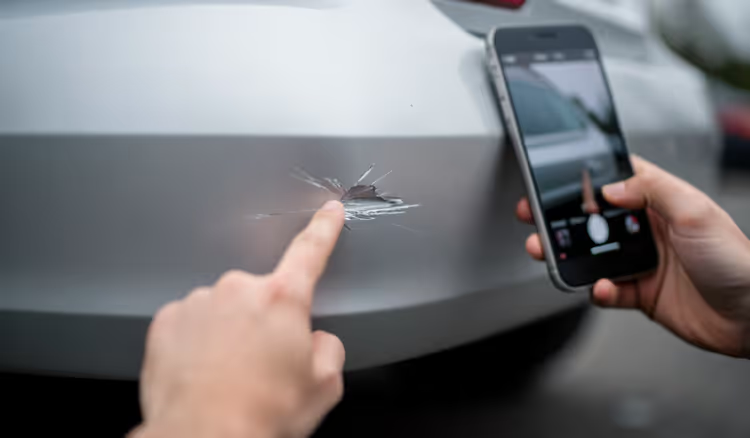 AIIllustrative image: AI-generated
The solution is simple and works in any country. Photograph all damage yourself, insist on a written note in the pickup report, and don't leave until the marks are on paper. Don't forget the bottom of the bumper and the roof: those are the least looked-at spots, but they're checked carefully at return. After that, you won't get any extra questions.
Rental rules in Portugal: license, age, deposit
The paperwork is simpler than it seems. Drivers from the EU only need their national license. For tourists from other countries, Portuguese rental companies hand over the car with a valid license, but if it's not in Latin script or in English, the counter will ask for an international driving permit (according to Driving Permit Portugal). Get it at home, not at the airport.
Age and driving experience are checked almost always. Rental companies have a minimum age and a minimum number of years holding a license, and young drivers pay a surcharge on the rate. Enter your age in the car search in advance so you can see restrictions and extra fees before choosing a specific model.
The deposit is another line item you find out about at the counter. The rental company freezes a security amount on your card in addition to the payment, and that hold stays on your account until you return the car. Debit cards aren't accepted everywhere, so bring a credit card. Ways to solve the problem:
Use a second card for the deposit.
Raise your limit with the bank in advance.
Choose a rate with full coverage and zero excess.
What they'll ask at the counter | How to prepare |
|---|---|
Driver's license | License in Latin script or an international permit |
Age and driving experience | Check the surcharge before booking |
Credit card | A separate card with spare limit |
Your license must have a photo, number, expiration date, and Latin letters, so check it at home.
The age threshold at rental companies is higher than the country's minimum driving age. Sometimes a surcharge is also applied to experienced older drivers.
The deposit amount depends on the car class and the coverage you choose: the higher the class and the less insurance, the more is frozen on your card. If your limit isn't enough, the booking won't be confirmed.
Insurance: what's mandatory and what they sell at the counter
There's only one mandatory coverage in Portugal: unlimited third-party liability. It's already included in the price of any rental, and it isn't sold separately. Everything else offered at the counter reduces the excess, meaning the maximum amount you pay in case of damage.
The wording in the contract is deliberately confusing. Some options are called insurance even though technically they're a waiver of part of the claims:
Coverage | What it does |
|---|---|
TPL, third-party liability | mandatory base, already in the price |
CDW, driver-at-fault damage | caps the amount for damage to the car |
TP, theft protection | reduces liability in case of theft |
Extended option | reduces the excess or eliminates it |
Whether to take extra options depends on your willingness to pay. One question settles everything: can you cover the bill for a wrecked car out of your own pocket? If that amount would ruin your vacation, take zero-excess coverage. If you're willing to take the risk, the basic rate is enough.
At the counter, they'll almost certainly offer you an upsell. That's a normal part of the agent's job, not a scam: they have a sales target and are required to mention the options. You can decline calmly. When booking online, full coverage is often cheaper than on-site because at the counter insurance is sold as a separate service with a markup. Comparing full coverage terms is easier on DiscoverCars, where the price is visible before you pay.
You can arrange protection in four ways. First: insurance through your credit card or your own car policy, but you'll need to read the terms carefully. Second: an add-on at booking, and this is usually the best route. Third: insurance right at the counter, the most expensive option. Fourth: travel insurance with rental coverage, offered by traditional insurance companies.
One nuance about bank coverage. Credit card insurance often requires you to decline all of the rental company's extra options, otherwise it won't apply. Call your bank before the trip and confirm the list of conditions, otherwise you'll pay twice: for the card and for the counter upsell.
Hidden fees: what to look for in the contract
You can only compare offers when the set of terms is identical. Local companies like to show a low price on their website and make up the difference at the counter. So read not the rate headline, but the list of what's included.
Check four things before paying:
Additional driver: often paid.
Fuel policy: full tank at pickup and return, or pay as you go.
Driving into Spain: free, for a fee, or prohibited.
Child seat and booster.
Fuel deserves separate attention. The "full-full" scheme means you return the car with a full tank, and that's a fair option. The "full-empty" scheme looks simple, but you're buying fuel at the rental company's price, which is higher than at a gas station. Fill up on the way out of town, not on the highway.
On Portuguese motorways, except the A22, toll gantries remain. Without a transponder, your passage is recorded by license plate, and payment is made at a CTT post office (according to Algarve Holiday Tips). If your route doesn't go to Lisbon, you simply won't encounter these sections.
The rule for children is strict. A child under 12 or under 135 cm must be transported only in a seat or booster, per Article 55 of the Portuguese highway code (according to Portuguese Driving Laws). Bringing your own seat from home is cheaper than renting one on-site, and a booster takes up little space in a suitcase.
GPS can also be a paid add-on. If you have a navigator on your phone that works offline, you don't need the extra charge. Download the Algarve map in advance, because signal drops in the mountains.
Getting the car: inspection checklist
The inspection takes ten minutes and saves you hundreds of euros. Sometimes you check the car together with an agent, sometimes you are simply handed a form describing its condition. It also happens that an employee silently hands over the keys. Either way, the inspection is on you.
Go through this list:
Body panels on all sides for dents and scratches.
The roof: it is checked least often, but it is inspected when you return the car.
The bottom of the front and rear bumpers.
Mirror housings and glass.
The interior for cuts and stains.
Tires and the condition of the fenders above the wheels.
Spare wheel and jack are in place.
Fuel level and mileage against the records in the inspection form.
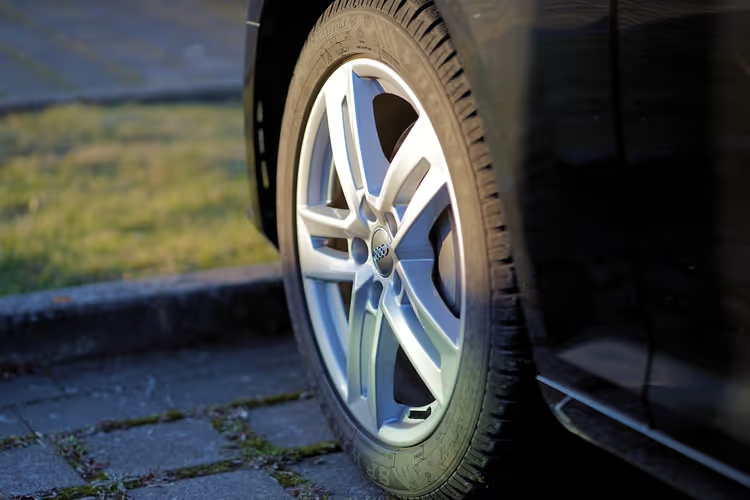
Every item on the list matters. A small scratch on a door is inexpensive, but a bill for a bumper or a wheel grows several times over. The jack and spare wheel are needed on a drive through the mountains, and a mileage discrepancy is noticed at return and presented as a shortcoming.
In Portugal, the car must carry an equipment kit: a warning triangle, a reflective vest, spare bulbs, and a spare wheel. Check that they are present before you leave, otherwise you will have to explain yourself to the police on the road.
If something goes wrong with the car: accident, fines, breakdown
In an accident with injuries, call the single emergency number. After that, the order is: call for help, wait for the police, and contact the rental company or the assistance number in your contract.
Speeding and parking fines are paid by the driver, not the rental company. The notice reaches the car owner with a delay, so the bill can catch up with you after you are home. The company adds an administrative fee to the fine amount, and arguing with it is usually pointless.
Do not throw away the rental agreement until the end of your trip. It contains the assistance number and the procedure for a breakdown. If the car stops, call that number: the rental company will arrange help or a replacement. Do not order repairs on your own; such expenses will not be reimbursed.
A useful habit for the whole vacation. Before every long drive, check the fuel level and tire pressure. In the heat, tires lose pressure, and an empty tank on a mountain road means a long wait for help.
Returning the car: how to hand it over without disputes
Return is the most nerve-wracking part of the rental, although there is usually no reason to panic. If you photographed the car at pickup and did not hit anything, the return goes smoothly. The employee's reaction depends on your attitude: a calm conversation saves time for both sides.
Prepare for the return in advance. Fill the tank to the level stated in the contract, otherwise the rental company will add the cost of fuel and a refueling fee. Return the car during office hours so that all checks happen in your presence, not after your flight. A sandy interior looks bad, but perfect cleanliness is not required.
There are also small details that reduce tension. Arrive with time to spare: the return takes about ten minutes, and in high season the return line stretches out. Take everything of yours out of the car: chargers, bottles, children's toys. Put a rented child seat back where it was, otherwise they will look for it without you.
If damage did happen, act in order. First contact the rental company and describe the situation. With basic coverage you pay up to the deductible amount, with full coverage you file a claim with the insurer, and with insurance through the booking platform you send documents and photos within the deadlines in the contract. Keep repair receipts and reports.
Get the return document. Ask for a note that the car was accepted without remarks, and keep it until the deposit is released. Then a disputed bill a month later will be based on paper, not on words. The hold on your card is usually released within a few weeks after return.
Driving in the Algarve: rules and hazards
Driving in Portugal is easy. The roads here are new and well maintained, and local drivers behave calmly. The heaviest traffic in the Algarve is because the region receives the most tourists. In July and August, traffic jams build up near beaches and on the way out of resorts.
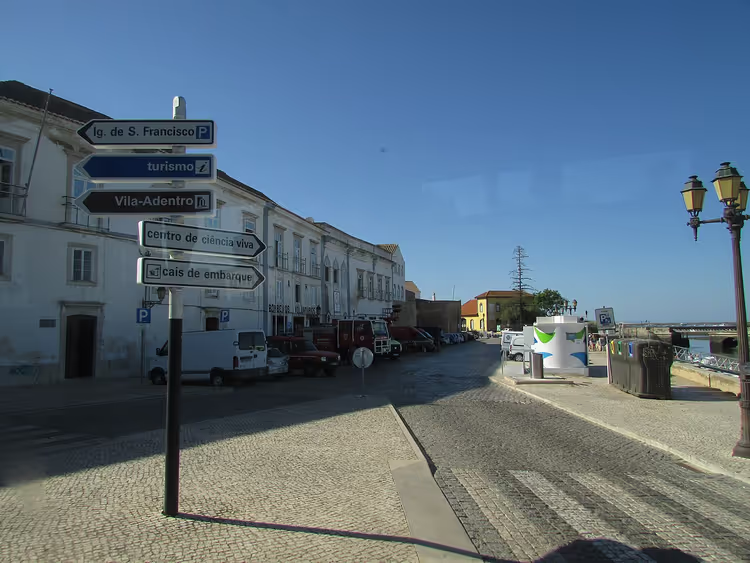 © Kolforn ( Kolforn ) I'd appreciate if you could mail me (Kolforn@gmail.com) if you want to use this picture out of the W · CC BY-SAPhoto: Kolforn ( Kolforn ) I'd appreciate if you could mail me (Kolforn@gmail.com) if you want to use this picture out of the W, CC BY-SA (https://creativecommons.org/licenses/by-sa/4.0), Wikimedia Commons
Speed limits are as follows: 50 km/h in built-up areas, 90 km/h on country roads, and 120 km/h on motorways (according to AutoviaTest). A few more rules worth remembering:
Driving is on the right, seat belts are mandatory for everyone in the car.
Phone only via a headset.
Overtaking on the right is prohibited.
The right lane when entering a roundabout means the first exit.
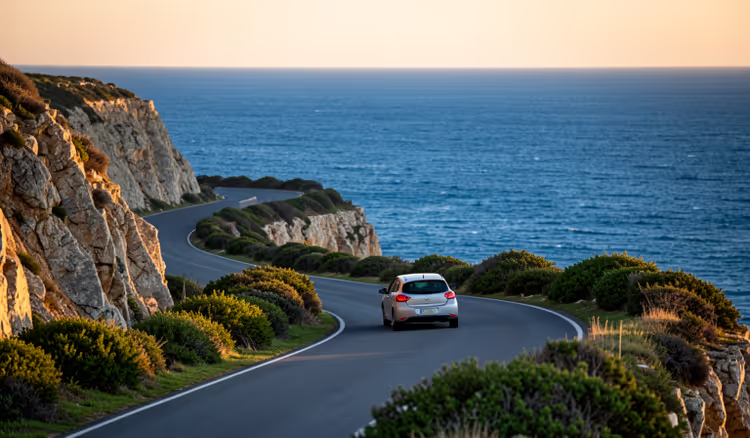 AIIllustrative image: AI-generated
From our experience of driving in Portugal: the main difficulty is not the rules, but parking. In old town centers the streets are narrow, and parking lots near popular beaches fill up by midday. Arrive at viewpoints before ten in the morning, and you will find a spot without circling the blocks.
Road hazards are predictable. First: drivers tired from the heat and traffic. Second: speed lovers, they exist in any country. Third: poor lighting outside the city, so plan nighttime drives in advance and do not rush along an unfamiliar road.
Other tips: opening hours and pickup
If you are picking up the car outside the airport, check the opening hours. In small towns, offices close earlier and may not work at all on weekends. Then you will have to extend the rental by a day, since there is no one to return the car to.
Also confirm the pickup location. Some rental companies are in the terminal, some operate on the main road away from the airport. Check in advance how to get to the counter so you do not have to look for it with suitcases after landing. On evening flights this is especially noticeable: shuttles run less often, and the line at the counter grows.
Two more tips just in case. Save the assistance number from the contract in your phone so you do not have to look for the paper on the road. And check the note about crossing the border if your route goes toward the Spanish border.
Where to go by car: places in the Algarve
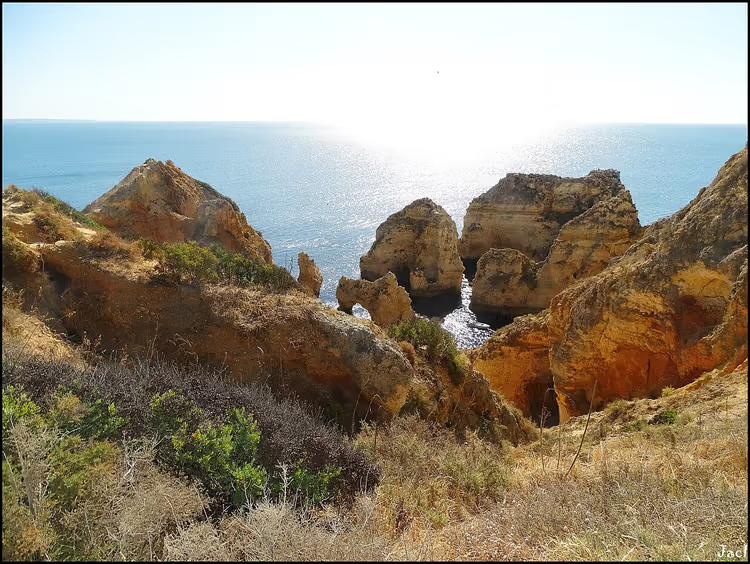
Your own car opens up the best spots in the region. Start with the Ponta da Piedade cliffs near Lagos: the viewpoint is open around the clock, and entry is free. Then head for the Benagil cave, which can only be reached by water, by boat or kayak.
 © Jose A. · CC BYPhoto: Jose A., CC BY (https://creativecommons.org/licenses/by/2.0), Wikimedia Commons
Praia da Marinha beach is on lists of the most beautiful in Europe, and getting there without a car is difficult. Nearby lies the unusual Tres Irmaos beach with two arches in the rock. We recommend visiting both places in the morning: by midday the parking lot fills up.
Another stop along the way is the orange cliffs of Praia da Falesia. The beach is long, so you can find a spot by the water even in high season. In the evening, it is worth returning to the Lagos cliffs and watching the sunset over the Atlantic.
Three days behind the wheel is enough for exploring the region. Stay away from the A22 during rush hour, use the old EN125 road for short trips between towns, and you will see villages that bus tours skip.
⁉️🤔 Frequently asked questions
Do I need a car if I'm staying in Albufeira?
For short trips to the beach, you don't need a car: the resort is compact, and taxis and buses cover the route to nearby coves. It's a different story if you want to see Lagos, the Ponta da Piedade cliffs, or the Benagil cave. In that case, a rental saves time, and in the evening you're not tied to bus schedules.
How much does a compact car rental cost in Faro?
In the off-season, a compact car costs around €20 per day, while larger models in high season cost more than €80 (as of 2026, car rental price overview for Portugal). Check prices for your specific dates in advance: in summer, cars get booked up weeks ahead.
Do I need an international driving permit?
Drivers from the EU only need their national license. Tourists from other countries can pick up a car with a valid license, but if it's not in Latin script or in English, the counter will ask for an international driving permit (source: rules for non-EU licenses). Get the document at home, it's not issued at the airport.
Is the A22 a toll road and how do I pay?
No. The A22 motorway along the coast has been free for passenger cars since January 1, 2025 (as of 09/2026, law publication in Diário da República). You only pay on other Portuguese motorways, such as the A2 toward Lisbon. There, without a transponder, your trip is recorded by license plate and payment is made at a post office.
What should I do if the rental company charges me for damage?
First, check your photos and the check-out report: if the scratch was noted before your trip, the claim is dismissed. Then write to the rental company and attach dated photos. If you purchased coverage at booking, send the same materials to the insurer. In a disputed situation, a bank statement showing the deposit hold date will help.
Find hotels
Compare prices across booking sites and filter for rooms with free cancellation.
Compare prices on Discover CarsThe widget loads once you give your consent.
In short: what's worth booking
A car in Faro pays for itself in freedom of movement. You can drive to the cliffs in the morning, have lunch in a mountain village, and stay for sunset by the ocean as long as you like. The main costs are predictable: the rate, the card deposit, and fuel.
If it's your first trip to the Algarve and you have a lot of stops planned, get a compact car with full coverage. If you're staying by the beach and not in a hurry, a car for two or three days is enough. And if your route takes you to Lisbon, upgrade the class and add a transponder for the toll A2.
Check car rental rates in Faro and Algarve tours on GetYourGuide.

A small editorial team writing guides for independent travel. We travel ourselves, but we haven’t been everywhere, so we check prices, opening hours and how to get there against official sources.