
















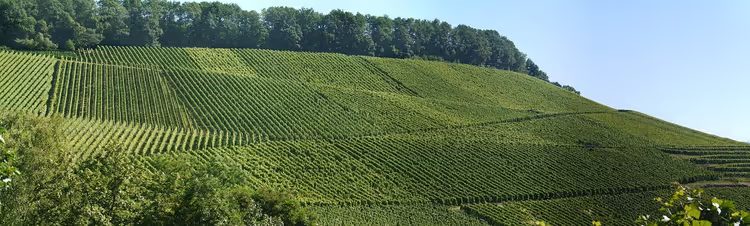
Tokaj wine region: cellars, aszu tastings and the road from Budapest
Tokaji wine is called the king of wines. The legend behind this title is told by the Hungarian tourism office: according to the story, sweet wine from Tokaj-Hegyalja was served at the French court, and Mozart and Goethe are named among its admirers (Visit Hungary). Behind the beautiful story lies a specific land and a verifiable technique.
The Tokaj-Hegyalja region lies in the northeast of Hungary, along the Bodrog River, about 190 km from Budapest (on the map). In 2002, UNESCO added the region's cultural landscape to the World Heritage List and recognized its historic vineyards along with the underground cellars (UNESCO World Heritage Centre).
Further in the text: cellars, tastings, the season, and the road from Budapest.
Ad: this article contains affiliate links, we earn a commission if you book through them, at no extra cost to you.
What Tokaj-Hegyalja is
💡 In short:
- The wine region covers the town of Tokaj and 26 surrounding villages in northeastern Hungary, along the Bodrog River (Hungarian tourism office).
- The region's main wine is sweet aszú (Tokaji Aszú) made from grapes affected by noble rot.
- The cellars in Mád, Tarcal, and Erdőbénye are carved into volcanic tuff, and some of them are open for tastings.
- Prices and opening hours: 09/2026, verified on the official Disznókő website.
The vineyard land here was shaped by volcanism. The region is surrounded by dozens of extinct volcanoes, and their ash gave the hills a highly varied mix of soils. Tuff, clay, loess, and rhyolite fragments lie intermingled, so even two neighboring plots produce dissimilar wines. UNESCO noted this geological diversity separately, along with the pattern of historic vineyards (object listing).
In fall, the valley is covered by fog from the Bodrog, and by midday it gives way to sun. The fungus Botrytis cinerea settles on the grape skins and dries out the berries: water evaporates, while sugar and aromatics become concentrated. This is how noble rot is born, and its appearance depends on the weather of a given year.
The cellars in Mád and Erdőbénye were carved out over centuries, and today they are entire underground labyrinths. Inside, the temperature stays constant and humidity is high, while the walls are covered with a dark coating of fungus that local winemakers consider part of the process.
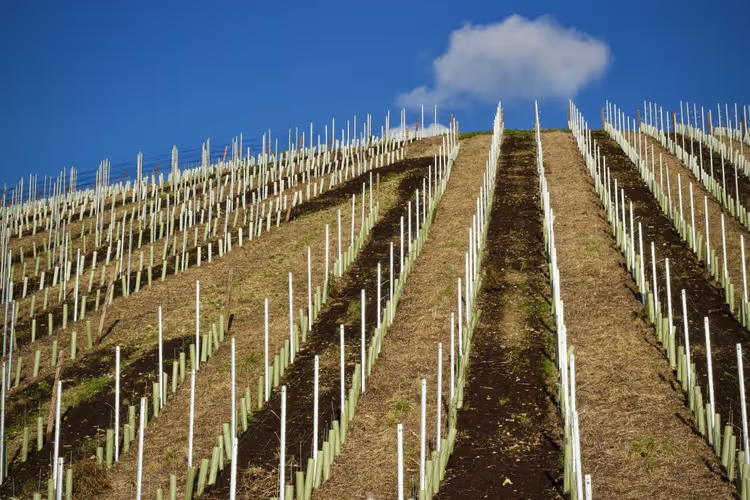
The vineyards climb the slopes of extinct volcanoes, and each hill gives its wine a distinct character.
Grapes, styles and barrels
The region's two main varieties are Furmint and Hárslevelű. They are used to make both sweet aszú and dry wines. Sárgamuskotály, Kabar, Zéta and Kövérszőlő are added to the mix, and together they give the region a broad palette of styles.
Aszú is harvested differently from regular wine. Botrytized berries are picked from the bunches separately, selected by hand, and then soaked in must or in base wine from the same vintage. After pressing and fermentation, the wine ages in barrels for several years before it reaches the bottle.
Two related styles stand alongside it. Szamorodni is made from whole bunches where healthy berries are mixed with botrytized ones, so the wine turns out dry or off-dry. Eszencia drips by gravity from selected berries: it contains so much sugar that fermentation goes on for years and produces almost no alcohol.
Style | What it is made from | Taste in the glass |
|---|---|---|
Aszú (Tokaji Aszú) | Selected berries with noble rot, soaked in must | Dense and honeyed, with high acidity |
Szamorodni | Whole bunches together with botrytized berries | Dry or off-dry, with a nutty note |
Eszencia | Free-run juice from selected berries | Syrupy, very sweet, almost no alcohol |
Dry Furmint | Healthy grapes | Dry, citrusy, with a mineral finish |
Dry Furmint wines are gradually coming to the forefront. They are leaner and lighter than aszú, and they show the character of a specific hill well.
The region's barrels are made from local oak. The oak forests in the Zemplén Mountains provide dense wood that has been used for centuries to build the barrels here, and Erdőbénye is called the valley of coopers because the craft is still alive there today (the region's page on the tourist office website).
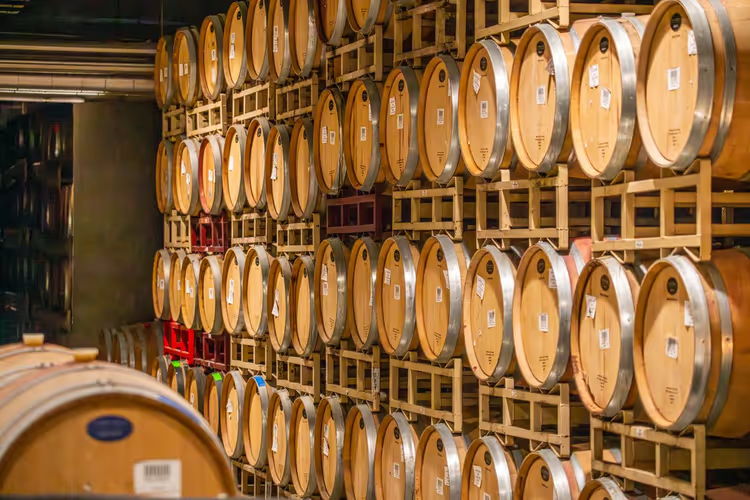
Oak barrels here are not decoration: they give the wine its structure and aging potential.
Where to go: the cellars of Mád and Erdőbénye
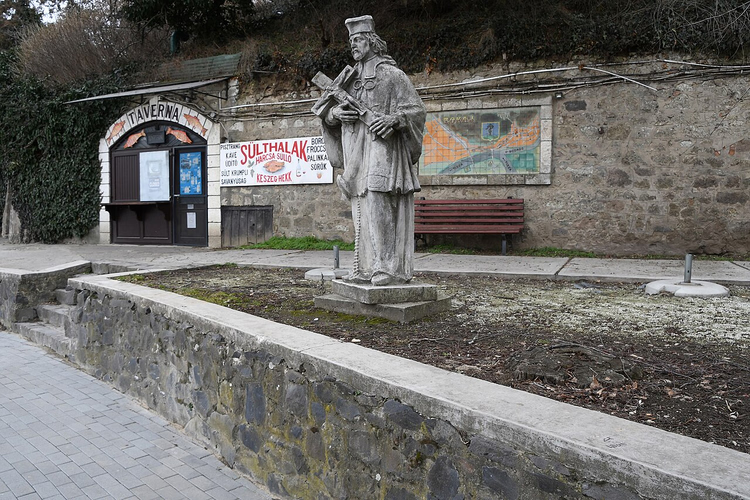 © Pasztilla aka Attila Terbócs · CC BY-SAPhoto: Pasztilla aka Attila Terbócs, CC BY-SA (https://creativecommons.org/licenses/by-sa/4.0), Wikimedia Commons
Tokaj
The town gave its name to the whole region and stands at the confluence of the Bodrog and Tisza rivers. It is a convenient place to stay overnight: cellars, tasting rooms and the riverfront are all within a short walk of each other. In the evening, you simply leave your hotel and go for dinner by the water.
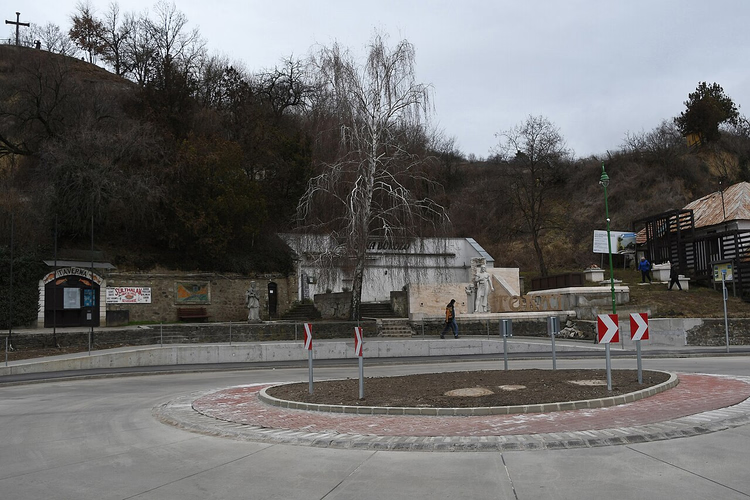 © Pasztilla aka Attila Terbócs · CC BY-SAPhoto: Pasztilla aka Attila Terbócs, CC BY-SA (https://creativecommons.org/licenses/by-sa/4.0), Wikimedia Commons
Mád
Mád is considered the town with the highest density of cellars in the region. Beneath the houses and courtyards lie cellars that are several centuries old. The Holdvölgy winery welcomes guests in an underground labyrinth 1.8 km long on three levels, with some passages over 500 years old (Holdvölgy).
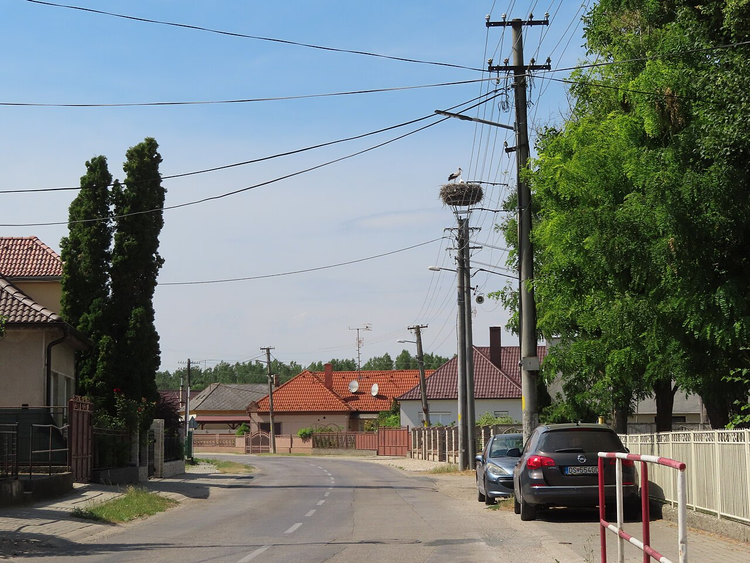 © Taz · CC BY-SAPhoto: Taz, CC BY-SA (https://creativecommons.org/licenses/by-sa/4.0), Wikimedia Commons
Tarcal
Tarcal sits on the road between Tokaj and Mád, so it is easy to add to the same day. Wineries with their own cellars operate here, and you can combine two tastings with a walk through the vineyards.
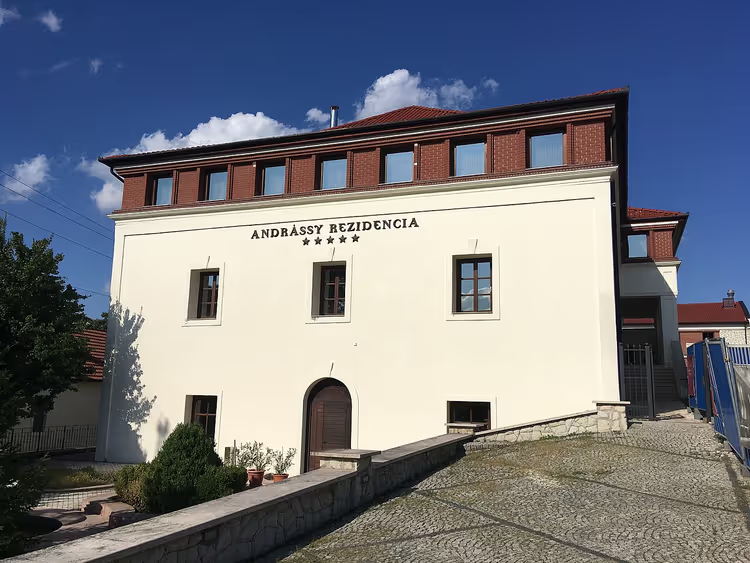 © Ssycell · CC BY-SAPhoto: Ssycell, CC BY-SA (https://creativecommons.org/licenses/by-sa/4.0), Wikimedia Commons
Erdőbénye
Erdőbénye lives by the cooper's craft and family cellars. Here it is easier to get a tasting at a small estate where the winemaker himself pours the wine. In Mád and Erdőbénye, you will be served a glass of Furmint or aszú right in the cellar and told about the winemaker's own plot.
Tastings: how they work and what they cost
At a large winery, a tasting almost always comes with a tour. At Disznókő, all options include a walk through the vineyards, a visit to the winery and cellars, and then a tasting in the historic cellar; the whole experience takes 1 to 1.5 hours (tasting options).
The boutique at this winery is open daily from June 1 to September 30 from 10:00 to 19:00, and in May and October from 10:00 to 18:00 (visit page). Groups of up to 50 people are asked to book in advance (Disznókő contacts).
The tasting price is based on the set of wines, not on entry. A basic flight of several samples costs less than a vertical of aszú, where you compare one style across different years. Check the current price when booking, because it changes every season.
In Mád, underground tastings are run by Holdvölgy: guests are given a map and invited to walk through the cellar labyrinth with a glass, finishing by comparing aszú from different years (Holdvölgy tickets).
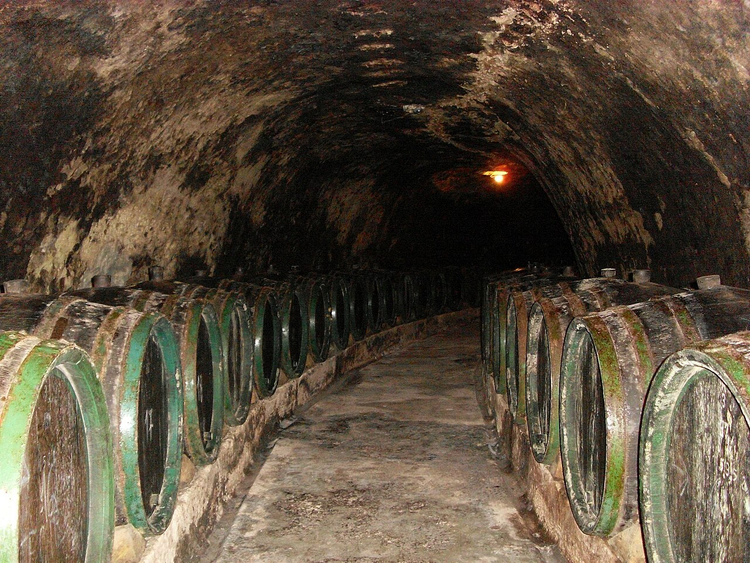
Start with dry Furmint and finish with the sweet wines: after aszú, you will no longer be able to distinguish delicate dry samples.
If you want to put together a wine day without your own car, it is easier to take a ready-made tour from Budapest with stops in Mád and Tokaj (wine region tours on GetYourGuide).
Tours and tickets in Tokaj
Guided tours, skip-the-line tickets and activities — most offers can be cancelled free of charge.
See offers on GetYourGuideThe widget loads once you give your consent.
When to go to Tokaj
The main season here is September and October, when the harvest takes place. During these weeks the cellars run at full capacity, and winemakers are more willing to open their doors to guests. The weather in September is usually mild, and driving between villages does not turn into an ordeal.
In summer the region is hot and crowded, but terraces and open-air tasting areas are open. In winter Tokaj quiets down: some estates accept visitors by appointment only, but accommodation is cheaper and the cellar is warm.
Go on a weekday. On weekends there are more groups in Mád and Tokaj, and you will have to wait for a table at a popular cellar. If you are going during harvest season, book your tasting in advance, ideally a couple of weeks ahead.
How to get there and where to stay
By train. From Budapest's Keleti station there is a direct train to Tokaj, and the journey takes about 2.5 hours (MÁV timetable). It is better to buy tickets in advance for a specific train.
By car. From Budapest to the region it is about 200 km along the M3 to the northeast, then regional roads lead toward the Bodrog (see map). A car gives you freedom: without one you will depend on infrequent buses between villages.
From the airport. First get to Keleti station, then take the same train to Tokaj. If you arrive in the evening, it makes more sense to spend the night in Budapest and leave in the morning.
Where to stay. Accommodation is available in Tokaj, Mád, and Tarcal. In Tokaj you get the riverfront and restaurants; in Mád you will be staying steps away from the wineries. Prices at small guesthouses here are around the Hungarian average (hotels in Tokaj and Mád on Trip.com).
⁉️🤔 Frequently asked questions
What is aszú?
It is the region's main sweet wine, made from botrytized berries. In the glass it has a dense honeyed flavor and high acidity.
Are all Tokaj wines sweet?
No. Besides aszú and esszencia, the region makes dry wines, primarily from Furmint. Dry Furmint is leaner and drier, with citrus and a mineral finish, and it is increasingly served as an introduction to the region. If you do not like sweet wines, start with it and ask for samples from different vineyard sites.
Do I need to book a tasting in advance?
For larger wineries, yes. During harvest season and on group tours there may be no space left in the cellar, and groups are asked to reserve ahead of time. At family cellars in Mád and Erdőbénye you will usually be welcomed without a booking, but even there it is better to call in the morning and agree on a specific time.
How many days should I allow for the region?
One full day is enough for Tokaj and Mád: vineyards in the morning, a first tasting in the afternoon, dinner by the Bodrog in the evening. If you want to add Tarcal and Erdőbénye, plan two days with an overnight stay, otherwise the drive between villages will eat up time you could have spent in a cellar.
When is the best time to visit Tokaj?
In September and October, when the region is harvesting.
In short: what to book
Tokaj-Hegyalja is a compact region: in one day you can see the vineyards, go down into an old cellar, and taste aszú from different vintages. The drive from Budapest takes half a day, so plan at least one overnight stay. If you have one day, choose Tokaj and Mád. If you want quiet family cellars, add Erdőbénye. If you are traveling during harvest season, book your tasting in advance and do not count on a free table at a popular cellar. Putting together an itinerary without your own car is easier through a ready-made tour with tastings (find a tasting tour).

A small editorial team writing guides for independent travel. We travel ourselves, but we haven’t been everywhere, so we check prices, opening hours and how to get there against official sources.