
















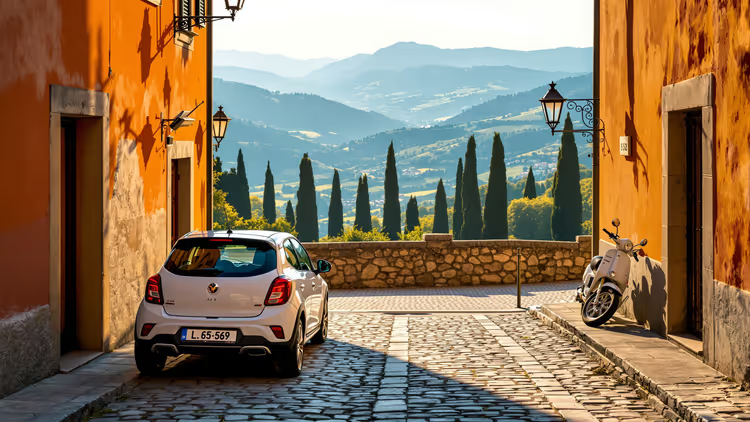
 AIIllustrative image: AI-generated
Car rental in Italy: how not to overpay for deductible and fines
A road trip through Italy in a rental car gives you complete freedom. You choose the Tuscan villages, viewpoints in the Dolomites, and beaches in Puglia that buses never reach. But that freedom comes at a price. Toll highways, fuel, paid parking, and cameras that fine you for speeding or driving into historic centers.
Below we break down what to decide before booking, which fines to avoid, and how much to budget for the road. We cover ZTL zones separately: they generate the biggest bills for tourists.
Ad: this article contains affiliate links, we earn a commission if you book through them, at no extra cost to you.
What to decide before booking: deposit, deductible, and age
💡 In short:
- Check the deductible amount and add full coverage
- Use a credit card that can hold the deposit
- Add a second driver to the contract in advance
- Traffic rules, fines, and ZTL regulations: verified 09/14/2026 against the Codice della Strada text on the ACI website
Italy has plenty of rental companies. International brands like Hertz, Avis, Europcar, and Sixt are located right in the terminals of major airports. Local companies like Locauto and Maggiore offer lower prices but don't accept every type of card. Booking in advance is cheaper: in July and August hatchbacks sell out, and the counter rate is higher than the online price.
The deductible is the amount withheld for a scratch or a broken antenna. It's often higher than the rental itself. Full coverage (zero excess) eliminates the deductible, but it doesn't cover violations. Camera fines, tolls, and fuel are paid separately.
The deposit is blocked on the booking holder's card. The amount depends on the car class and company, so check your card limit before the trip. Most Italian counters don't accept cash or debit cards.
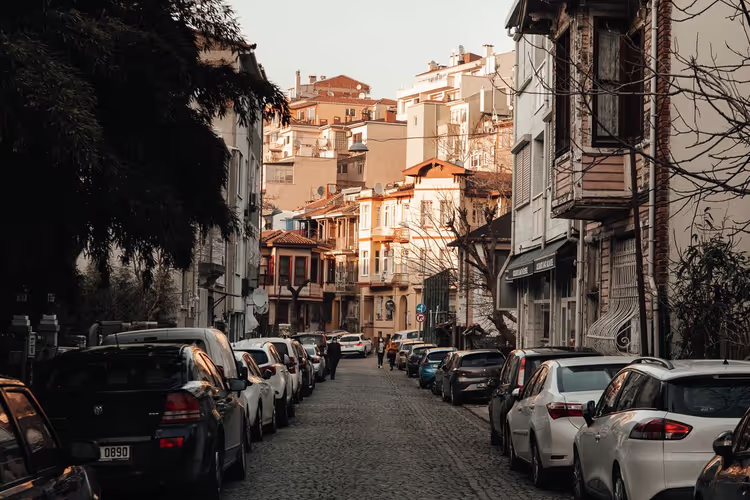
Age and driving experience matter just as much. Young drivers almost always pay a surcharge, and the minimum experience is often one year. If both you and your companion will drive, add both names to the contract. Otherwise the insurance won't apply, and fines will be issued to the booking holder's name.
How to book a car in advance
The price difference between rental companies at the same airport is often twofold. Compare three things: the total weekly price, the deductible amount, and the fuel policy. A "full tank on pickup and return" policy is more convenient than a "full-empty" scheme, where you pay a surcharge at counter rates for any missing fuel.
At the counter you'll be asked for your passport, driver's license, and the booking holder's card. EU licenses don't require an additional permit, but licenses from other countries almost always require an international driving permit. Get it at home in advance; it can't be issued on the spot.
Returning the car in a different city is possible, but there's a fee. Sometimes it's comparable to the cost of the entire rental. It's cheaper to build a loop route and return the car where you picked it up.
Comparing rental car prices on DiscoverCars is convenient with a single search: the service shows the total amount, deductible, and fuel policy. Book under your own name and keep the voucher on your phone. They'll ask for it at the counter.
Speed limits and Tutor cameras
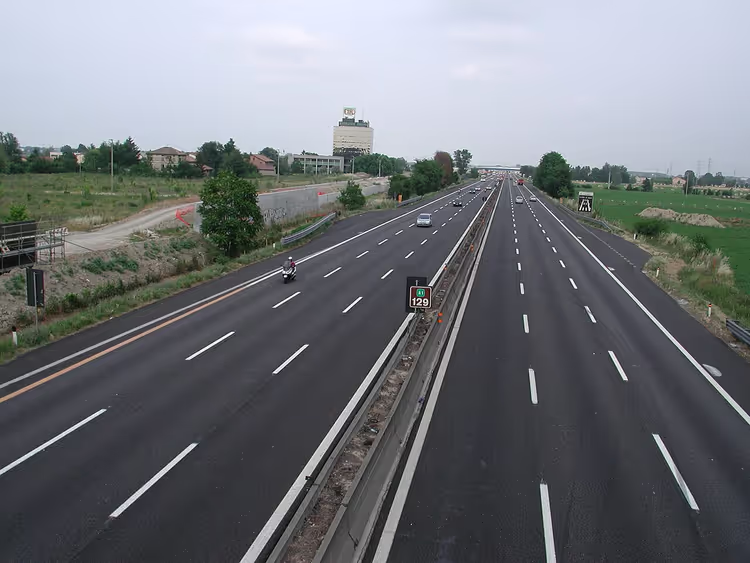
In built-up areas the limit is 50 km/h, on highways 130 km/h (as of 09/2026, article 142 of the Codice della Strada on the ACI website). Camera tolerance is small: on highways the system triggers at roughly 5% above the limit. In practice, a photo is taken from 137 km/h.
Italy has two types of cameras. Autovelox captures instantaneous speed at a single point. The Tutor system calculates average speed over a 10-25 km stretch (how average speed enforcement works, 09/2026). Tutor specifically catches drivers who accelerate to overtake and then slow down. The average speed is still above the limit.
Cameras are also placed on rural roads. The speed limit there is lower than on highways, and signs are posted in steps. Slow down in advance, otherwise a photo will arrive at your home in 6-12 months along with a rental company processing fee (rules for forwarding fines abroad, 09/2026).
During the day outside built-up areas, use low beam headlights. Keep a reflective vest and warning triangle in the trunk. Without them, an officer will issue a separate fine.
Fines and ZTL: where you get caught most often
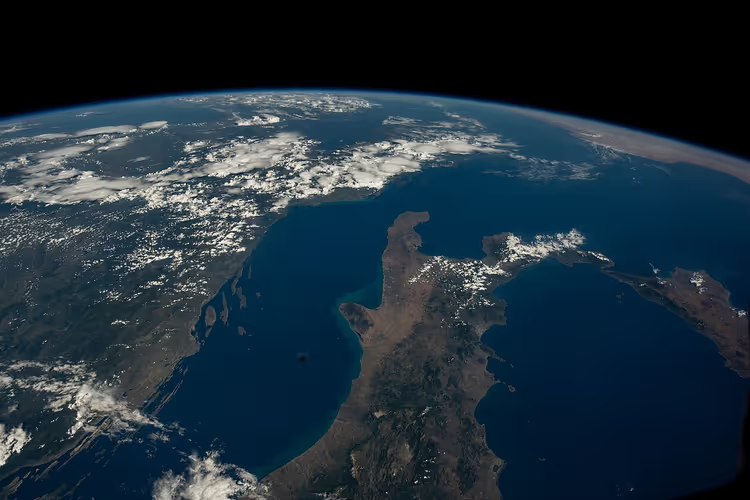
The biggest bills come not from speeding, but from driving into the city center. The Zona a Traffico Limitato zone closes off the historic parts of Rome, Florence, Milan, Verona, and Matera. Access is allowed for residents, taxis, and permit holders.
Cameras stand at every entrance and read license plates. A fine is issued for each entry separately, even if you entered the same zone twice in one day (according to the 2026 fines summary, 09/2026). With a rental car, the rental company receives the notice, forwards it to you, and charges a processing fee.
Speeding is calculated in tiers. Up to 10 km/h over costs 42-173 €, at 10-40 km/h over the fine rises to 694 €, and at 60 km/h over the limit you can be fined up to 3382 € and lose your license for 6-12 months (as of 09/2026, article 142 of the Codice della Strada on the ACI website). Holding a phone in your hand carries a separate fine and points on your license.
Italians take alcohol behind the wheel seriously. The legal limit is 0.5 per mille, and drivers with less than three years of experience cannot have any alcohol at all (as of 09/2026, article 186 of the Codice della Strada on the ACI website). A level of 0.5-0.8 per mille costs from 543 to 2170 € and results in a 3-6 month license suspension.
Talking on the phone is only allowed through a headset. A tablet resting on your lap also counts as a violation. A paid parking ticket is checked just as strictly: parking on a blue line without paying costs 42-173 € (as of 09/2026, article 157 of the Codice della Strada on the ACI website), and towing and vehicle storage are paid separately at the city's rate.
 © International Driving Authority · CC BY-SAPhoto: International Driving Authority, CC BY-SA (https://creativecommons.org/licenses/by-sa/4.0), Wikimedia Commons
Fuel: Self and Servito pumps
Gas stations in Italy come in two types. At Self pumps you pay yourself: insert a bill, take the nozzle, and get exactly the amount you paid for. At Servito pumps an attendant works, and fuel costs more per liter there. The sign at the entrance shows both prices, look for the line "fai da te".
The most expensive liters are sold on highways and near exits. In town, two blocks from the highway, the same fuel costs several tens of cents less. On a full tank the difference becomes noticeable, so plan your refueling in advance.
Rental fleets include both gasoline and diesel cars. Check the fuel type on your voucher. Putting gasoline into a diesel means paying for a tow and a tank flush.
The fuel policy dictates your budget. Returning with a full tank avoids the surcharge, which the rental company calculates at its own price, higher than retail. Keep the receipt from your last fill-up, it will settle any dispute about the fuel level.
If you don't want to start your first day with driving and parking, airport transfer is convenient to arrange in advance. You can pick up the car in the morning, with a clear head.
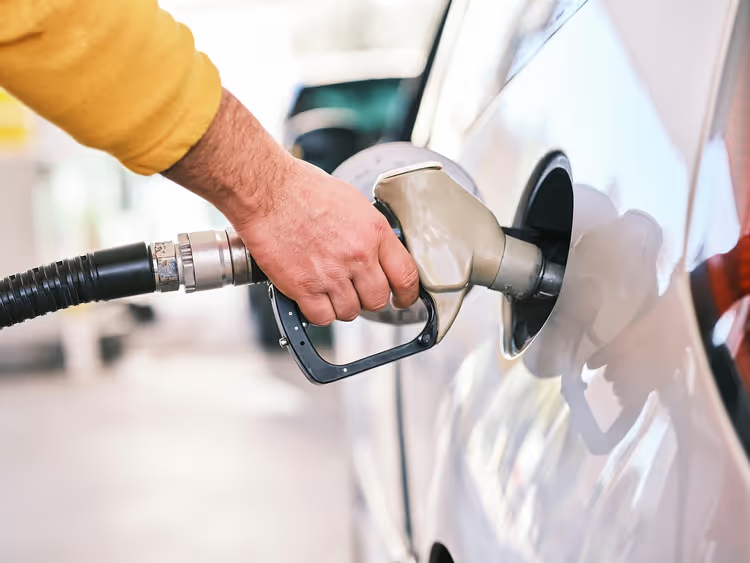
Between gas stations on the highway there can be long stretches. Refuel at half a tank, not when the warning light comes on. The next station may be far away, and a detour will eat up time.
Toll highways: calculating your route
Toll motorways cover almost all of Italy. Tolls are revised every year, and a long stretch like Milan to Rome on the A1 costs several tens of euros: the exact amount for your travel date is shown by the official Autostrade per l'Italia toll calculator. The north and west are more expensive, the south is cheaper.
Payment is simple. At the entrance you take a ticket from the machine, at the exit you hand it in at the booth or insert it into a machine. Cash and bank cards are accepted. Keep the ticket handy, losing it costs as much as the entire route.
The electronic Telepass saves time in line, but for a short trip it is not worth it. It is a subscription service with a monthly fee. Single tickets are more convenient for a tourist.
On a long-distance route, consider the alternative. Train tickets can be compared in the Trip.com Trains section. A train does not require toll roads, and you know the ticket price in advance. For a city with one stop, it is often cheaper than a car plus parking.
 © Unknown author · CC BY-SAPhoto: Unknown author, CC BY-SA (http://creativecommons.org/licenses/by-sa/3.0/), Wikimedia Commons
Parking, Italian style: white, blue, and yellow lines
Parking lot markings encode the rules.
Marking | What it means | How to pay |
|---|---|---|
White | free parking | no ticket needed |
Blue | paid zone | get a ticket from the machine, put the receipt on the dashboard |
Yellow | spaces for residents, services, and people with disabilities | do not park without a permit |
Blue zones are paid by the hour, and hours and rates vary from city to city. Check on the spot: the sign at the parking entrance matters more than the app on your phone.
When checking into a hotel even for one night, ask about parking. City hotels rarely have their own spaces, and street parking in the center is paid around the clock. When choosing accommodation, check whether a parking space is included in the price: hotels with parking on Trip.com.
Be careful with white spaces near train stations and markets. Some of these zones have time limits, and your car can be towed. Read the entire sign, including the fine print about street cleaning hours.
Where a car helps, and where it gets in the way
A car really shines in the regions. Tuscany, Puglia, the Dolomites, and Sicily without wheels turn into infrequent buses and long transfers. A car saves hours there and opens up villages that tours never reach.
In big cities, it is the opposite. In Rome, Florence, Venice, and Milan, the center is closed to outside cars, parking is expensive, and ZTL fines arrive by mail. Leave the car at a lot near a metro station or at a hotel parking outside the historic center.
A mixed schedule saves money. Rent a car for days outside the city, and spend city days without it. That way you pay less for the rental and risk a fine less often.
Planning a trip from scratch? Start by finding flights on Kiwi.com, then the car and hotel. That way the pickup location is tied to your actual flight, not to a convenient rental time.
Find hotels
Compare prices across booking sites and filter for rooms with free cancellation.
Compare prices on Discover CarsThe widget loads once you give your consent.
⁉️🤔 Frequently asked questions
Do I need an international driving permit to rent a car in Italy?
For EU licenses, no separate document is needed; your national card is enough. With licenses from other countries, rental desks almost always ask for an international driving permit along with the original.
What should I do if a camera fine arrives after I return the car?
The rental company receives the letter, forwards it to you, and charges an administrative fee. You need to pay by the stated deadline, otherwise a penalty kicks in. Keep your rental agreement and voucher: they prove who was driving and on which days. You can check a disputed ticket on the website of the Italian fines agency.
Can I drive into the center of Rome or Florence?
Not into the historic center. A Zona a Traffico Limitato is in force there, and a camera at each entrance records a separate violation, with fines ranging from 83 to 332 € (as of 09/2026, article 7 of the Codice della Strada on the ACI website). Italian city centers are compact, and a car there gets in the way of both you and your budget.
How much fuel should I budget for a trip?
Calculate consumption by route, not by time. Gas stations on highways are expensive, so fill up in the city before you leave. A compact hatchback uses about seven liters per hundred kilometers.
What is better in Italy: a car or trains?
It depends on the route. A linear trip between major cities is cheaper and faster by train: toll roads, fuel, and parking eat up the entire difference. But Tuscany, Sicily, and mountain areas are almost inaccessible without a car.
In short: what to book
A car pays off where buses do not go. If you have a loop route through Tuscany, Puglia, or Sicily, take a car for the entire trip. If you have only two city bases, rent a car for three days for excursions, and travel between cities by train.
Before booking, check two things:
- car rental prices on DiscoverCars with full coverage and no deductible
- insurance terms if you also want to cover medical expenses during the trip
Both links lead to partner services: you see the same price as on the official website, and the blog's editorial team earns a commission.

A small editorial team writing guides for independent travel. We travel ourselves, but we haven’t been everywhere, so we check prices, opening hours and how to get there against official sources.