
















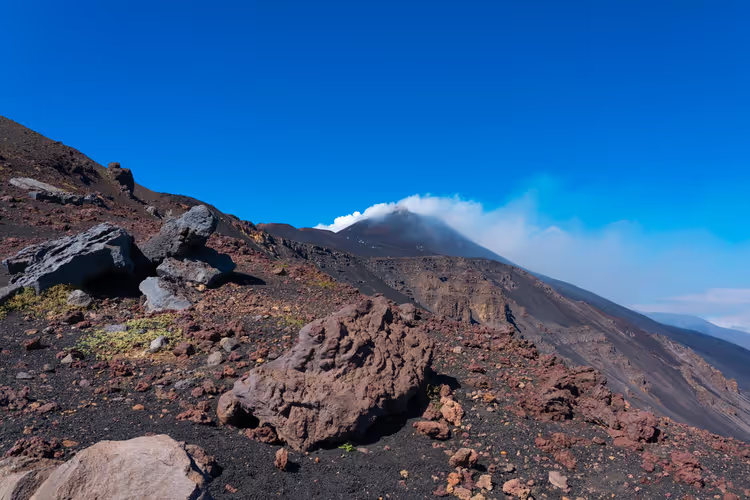
Mount Etna: how to climb to the craters and what to see at the foot
Etna remains the most active volcano in Europe. After every eruption its summit changes height, and today it exceeds 3,300 m (as of 09/2026, INGV, Etna Observatory). Reaching the craters is easier than it seems: transport covers most of the way.
Below we break down what to see on the slopes, how the routes work, and how much the ascent costs in 2026.
Ad: this article contains affiliate links, we earn a commission if you book through them, at no extra cost to you.
Why volcanologists are drawn to Etna
💡 In short:
- The summit height changes after eruptions; it is currently above 3,300 m.
- Routes, altitudes, and prices: 09/2026, verified on the official cable car website.
Usually a volcano's type is determined by its lava composition and eruption style. On Etna the eruption style changes from crater to crater, which is why volcanologists come here from all over the world.
Observations are carried out by the National Institute of Geophysics and Volcanology (INGV) with its observatory in Catania (as of 09/2026, INGV). Stations record tremors, gas emissions, and slope deformation almost in real time.
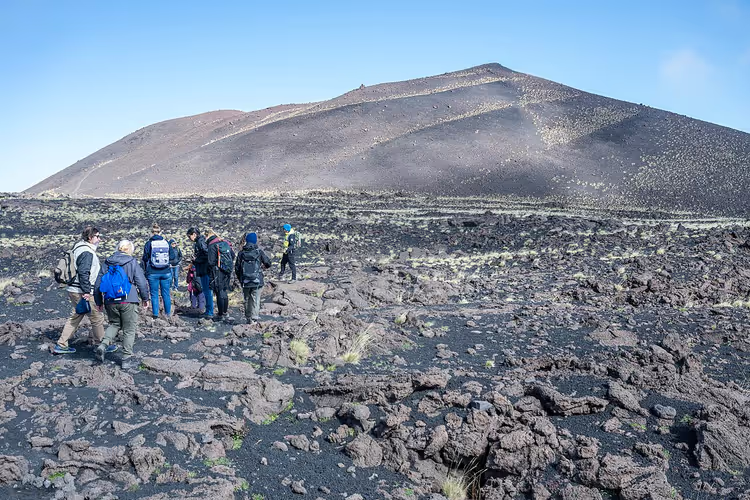 © Cayambe · CC BYPhoto: Cayambe, CC BY (https://creativecommons.org/licenses/by/4.0), Wikimedia Commons
This open-air laboratory explains the scientists' interest. You won't be bothered by the instruments: trails are marked, and dangerous areas are closed in advance.
What makes Etna unique
Etna's main feature is that it is active almost without pause. One crater throws out ash, another quietly smokes, a third pours lava over empty fields. You won't find this combination anywhere else in Europe.
 © Pierre Markuse from Hamm, Germany · CC BYPhoto: Pierre Markuse from Hamm, Germany, CC BY (https://creativecommons.org/licenses/by/2.0), Wikimedia Commons
Etna has several summit craters and hundreds of lateral cones on its slopes. Lava usually flows away from settlements, so damage is localized rather than spread across the island.
Ancient authors called Etna the forge of Hephaestus and the gateway to the underworld. Today you will hear different words: degassing, tectonics, fumaroles. The mountain's grandeur has not diminished because of that.
Interesting facts about Etna
Etna has a reputation as a killer volcano, and it is greatly exaggerated. According to historical estimates, fewer than a hundred people have died in all of its eruptions throughout history. Ordinary earthquakes take more lives.
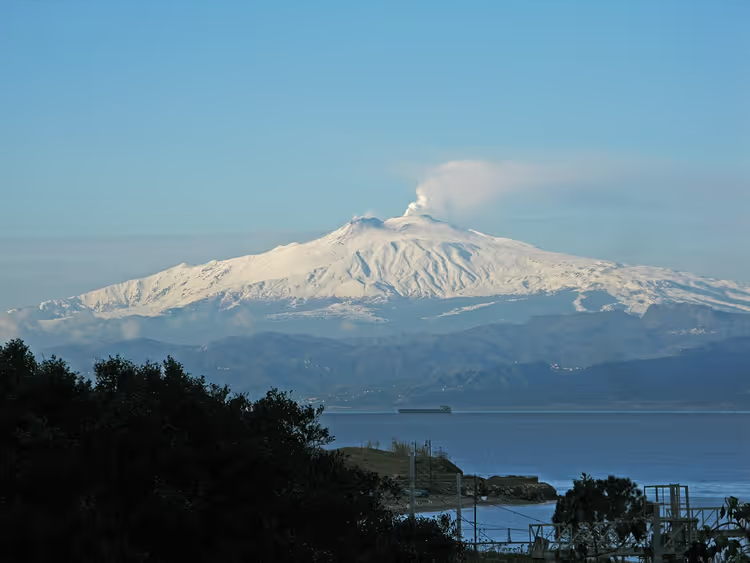 © Jacopo Werther · CC BY-SAPhoto: Jacopo Werther, CC BY-SA (https://creativecommons.org/licenses/by-sa/4.0), Wikimedia Commons
The benefits of living near the volcano, however, are many. Ash and minerals make the soil so fertile that the slopes are covered with vineyards and orchards.
The local Nerello Mascalese grape is used to make Etna DOC wines. The mineral taste is attributed specifically to the volcanic soil. They are worth trying in any of the villages on the slope.
Since 2013, Etna has been a UNESCO World Heritage site (as of 09/2026, Parco dell'Etna). This recognition highlights both the scientific and scenic value of the mountain.
Climbing Etna and prices
The ascent starts at Rifugio Sapienza, where a bus from Catania brings you. From here the route is divided into three stages, and each can be done separately or as part of a combined package. There is also a separate evening excursion, Sunsetna, for sunset at the craters, priced at 82 € (as of 09/2026, Funivia dell'Etna).
Stage | Altitude | Transport |
|---|---|---|
Rifugio Sapienza | 1,900 m | start, bus from Catania |
Cable car | 1,920-2,500 m | Funivia dell'Etna |
Ascent to the craters | 2,500-2,800 m | jeep in summer, snowcat in winter |
Trek to the summit | up to 3,000 m | on foot with a volcanologist |
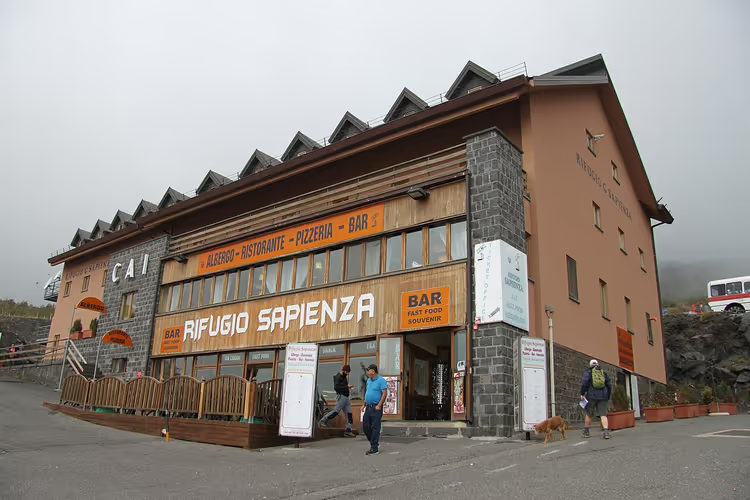 © Richard Allaway · CC BYPhoto: Richard Allaway, CC BY (https://creativecommons.org/licenses/by/2.0), Wikimedia Commons
A guide is not always required, but it helps. Etna has hundreds of lateral craters, and some of them are unpredictable. With a volcanologist you walk on permitted trails and hear explanations without dry terminology.
Dress warmer than you think. At the top it is 15-20 degrees colder than in Catania, and it is often windy. During the day the ascent takes about four hours including transport.
Guided tours with transfer from Catania are listed in the selection below.
Tours and tickets in Etna
Guided tours, skip-the-line tickets and activities — most offers can be cancelled free of charge.
See offers on GetYourGuideThe widget loads once you give your consent.
If you want to compare options in advance, open guided Etna tours.
Tourist routes on the slopes
The simplest option starts from Catania and follows the ascent scheme from the table above. The last section you walk on foot over volcanic gravel.
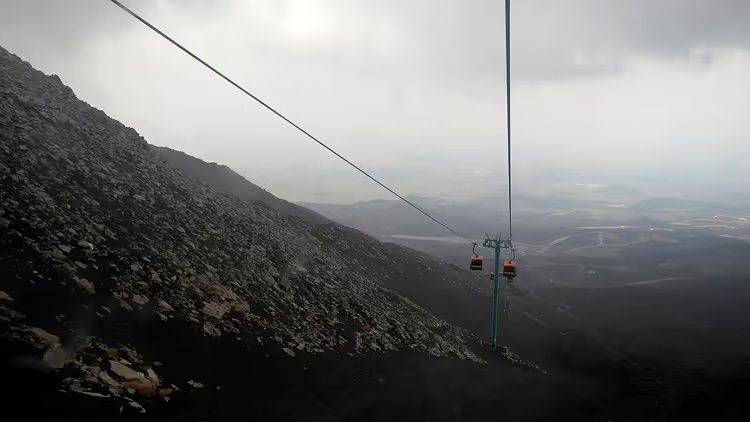 © trolvag · CC BY-SAPhoto: trolvag, CC BY-SA (https://creativecommons.org/licenses/by-sa/3.0), Wikimedia Commons
There are also two relaxed routes for those who don't want to go up. The northern slope features forests and rare plants, while the eastern one leads through the village of Zafferana Etnea with wineries and honey shops.
On the southern slope you will see mostly solidified lava and the Silvestri craters. It is a landscape without greenery, but it is the closest to the summit.
Etna on the map
The location of the summit and craters is convenient to open before the trip. The map below shows Etna relative to Catania and the eastern coast of the island.
⁉️🤔 Frequently asked questions
Can you climb Etna on your own?
Yes, but only up to a certain altitude. The cable car and the area above 2,500 m operate under volcanologists' rules. With a guide you can reach 3,000 m, while on your own you are usually limited to the viewing platforms and the Silvestri craters near Rifugio Sapienza.
How much does climbing Etna cost?
The full Tour 3000 package includes the cable car, jeep, and guide accompaniment. The price varies by season and day, so it is checked on the operator's official website. The evening sunset excursion costs noticeably more than the daytime ascent, but the views are worth it.
When is the best time to visit Etna?
In summer, jeeps run from the upper cable car station to 2,800 m. In winter, a snowcat operates instead of the jeep, and ski routes are open on the slopes. Morning is always calmer: fewer queues and better visibility before clouds rise to the craters.
Is it dangerous to be on Etna?
The volcano is constantly monitored, and dangerous zones are closed in advance. Eruptions most often do not threaten tourist routes. Listen to your guide and stay behind barriers, and the risk remains minimal.
What should you bring for the ascent?
A warm windbreaker, closed shoes, a hat, and water. The sun is strong at the top, so sunscreen and sunglasses won't hurt even on a cloudy day.
Video: Etna eruption
Below is a short video of an eruption so you understand the scale of the spectacle before your trip.
In short: what to book
Decide based on the purpose of your trip. If you have one day and want an easy ascent, take Tour 3000 with a guide. If you are with children or inexperienced, it is safer to stay at the viewing platforms near Rifugio Sapienza. For those dreaming of sunset over the craters, the evening excursion is the right choice.
Book your ascent in advance in high season so you don't have to adjust your entire itinerary around available slots.

A small editorial team writing guides for independent travel. We travel ourselves, but we haven’t been everywhere, so we check prices, opening hours and how to get there against official sources.