
















Sicily by car: 15 places and a circular route from Catania
Public transport in Sicily runs irregularly, and schedules change right before your eyes. With a rental car, you decide where to stop and how much time to spend in each town.
From Catania Airport to Syracuse it is only 65 km along the coastal road (on the map). Further on, the loop continues through Ragusa, Agrigento, Trapani, Palermo, Cefalù, and several towns in the island's interior. For each stop below you will find the distance, opening hours of the main sights, and accommodation pointers. In high season, book hotels in advance: rooms near the coast sell out quickly.
Ad: this article contains affiliate links, we earn a commission if you book through them, at no extra cost to you.
Benefits of renting a car in Sicily
💡 In short:
- Pick up your rental at Catania Airport: most major rental companies operate there.
- Plan at least a week; in a couple of days you will only see the east coast.
- Visit sights in the morning; by midday the heat intensifies.
- Prices and opening hours: 09/2026, verified on the official Valley of the Temples website.
A rental car pays for itself by the second day of the trip. Without one, getting to Syracuse and Agrigento turns into a series of transfers, while with a car you cover those same 65 km in an hour. The surface on secondary roads is uneven in places, but the difference between toll and free sections is barely noticeable.
Budget for fuel, toll sections, and parking. In the centers of Catania and Palermo, finding a free spot is difficult, so choose a hotel with a garage or paid parking nearby. Returning the car is easiest where you picked it up: at the airport, all rental companies work according to flight schedules.
Catania and the ascent of Mount Etna
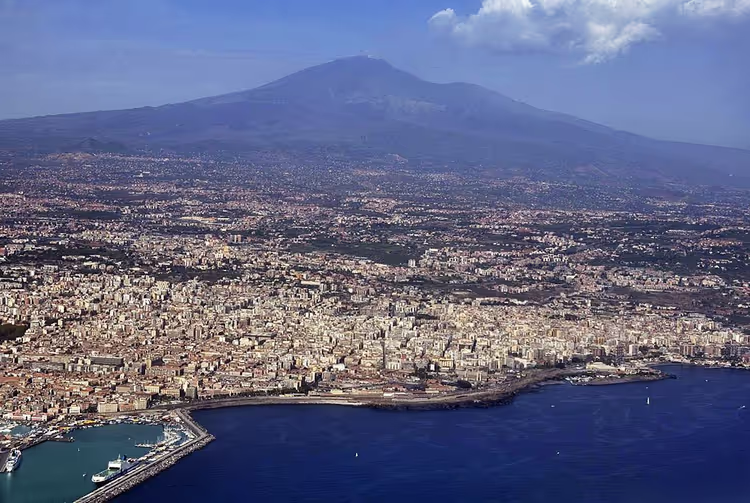
Catania greets you right after the airport, and it is a convenient place to start the route. The city is compact: one day is enough for the historic center.
The main buildings stand on Piazza del Duomo, where Via Etnea begins. It crosses the city from south to north. Step a couple of blocks away from the center and you will see the remaining monuments, and at the same time appreciate the city's baroque appearance.
From Catania it is worth going up Mount Etna: it is the highest active volcano in Europe, and from the eastern slope you get a view of the craters. Nearby, in the village of Sant'Alfio, grows the Hundred Horse Chestnut. The tree's age is estimated in millennia, which is why it is considered a natural monument.
Vineyards and fruit orchards surround Etna, and local wine is sold right by the road. If you do not feel like driving further, stay overnight at the foot of the mountain: prices depend on location and hotel category.
 © stefan_fotos from Leipzig, Germany · CC BY-SAPhoto: stefan_fotos from Leipzig, Germany, CC BY-SA (https://creativecommons.org/licenses/by-sa/2.0), Wikimedia Commons
Syracuse and the island of Ortigia
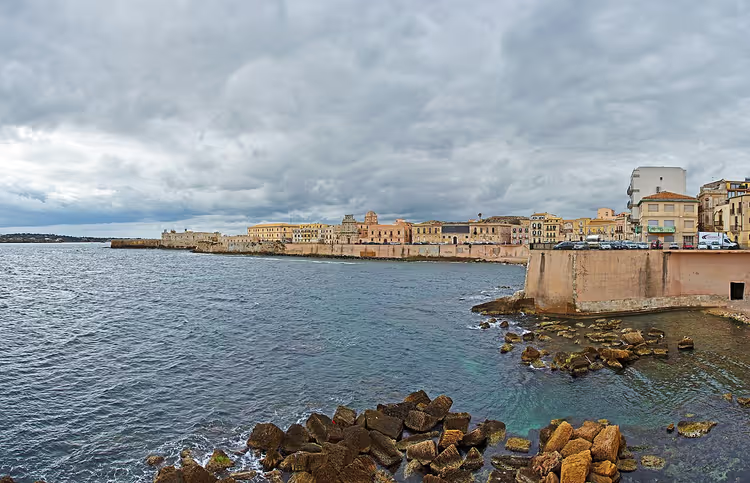
Syracuse consists of two parts: the old town stands on the island of Ortigia, the new one lies on the mainland. Ortigia is a pleasant place to stroll among cypresses and palms, and it is also home to Piazza Archimede and the Temple of Apollo.
History lovers should set aside time for the Neapolis Archaeological Park with its Greek theater, quarries, and the Ear of Dionysius cave. A full ticket costs 14 €, a reduced one 7 € (as of: 09/2026, official park website). In September the park is open from 08:30 to 19:15, with the ticket office closing at 18:30.
The swimming season runs from early May to mid-November, so you can combine sightseeing with the sea. For a few days, choose a hotel on Ortigia: in the evening the old town empties out. For guided tours of Syracuse, see GetYourGuide.
 © Ludvig14 · CC BY-SAPhoto: Ludvig14, CC BY-SA (https://creativecommons.org/licenses/by-sa/4.0), Wikimedia Commons
Castello Maniace
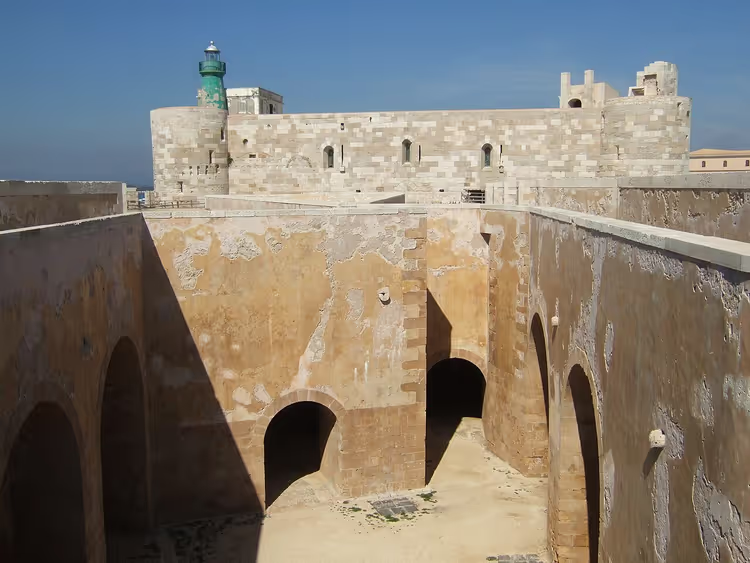
Castello Maniace stands at the southern tip of Ortigia, right by the sea. The castle is named after the Byzantine general George Maniakes, who returned Syracuse to Byzantium and built a harbor with bronze rams at the entrance.
The stone fortress was built by order of Frederick II. The walls are decorated more elegantly than is usual for a working fort, and this is noticeable even from the outside. For a long time the castle defended the city from the sea, and for a while it served as a royal residence. In the past, people entered via a drawbridge; now the moat is filled in and an ordinary road leads to the monument.
 © User: Stevage · CC BYPhoto: User: Stevage, CC BY (https://creativecommons.org/licenses/by/2.5), Wikimedia Commons
Ragusa
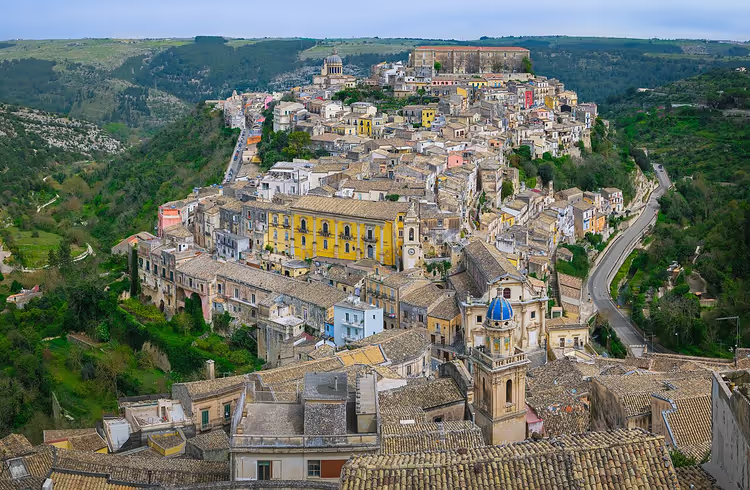
Ragusa lies in the very south of Sicily and is divided into two parts: the old Ibla and the new Superiore. A deep ravine runs between them, and three bridges connect the districts. The city's architecture is on the UNESCO list, so exploring it takes at least a day.
Ragusa has plenty of cafes and restaurants, but fewer tourists than Palermo, and it is a relaxed place to spend one or two evenings. If you want to combine the city with the sea, drive to the beaches of Marina di Ragusa: the coast is about 25 km away (on the map).
 © Chris Down · CC BYPhoto: Chris Down, CC BY (https://creativecommons.org/licenses/by/4.0), Wikimedia Commons
Agrigento
From Ragusa to Agrigento is over a hundred kilometers, and with all the hairpin turns the drive takes about three hours (on the map). The town itself is small, though it was once a wealthy trading polis. Tourists come here for the surrounding area and wrongly drive past the center.
There is a botanical garden nearby with a collection of rare plants and caves that are also worth seeing. The beaches of Agrigento are considered some of the best on the southern coast: fine sand, warm sea, and a gentle slope into the water. After storms, seaweed washes ashore, but it is cleared away quickly.
 © jschoenhofer · CC BY-SAPhoto: jschoenhofer, CC BY-SA (https://creativecommons.org/licenses/by-sa/2.0), Wikimedia Commons
Scala dei Turchi
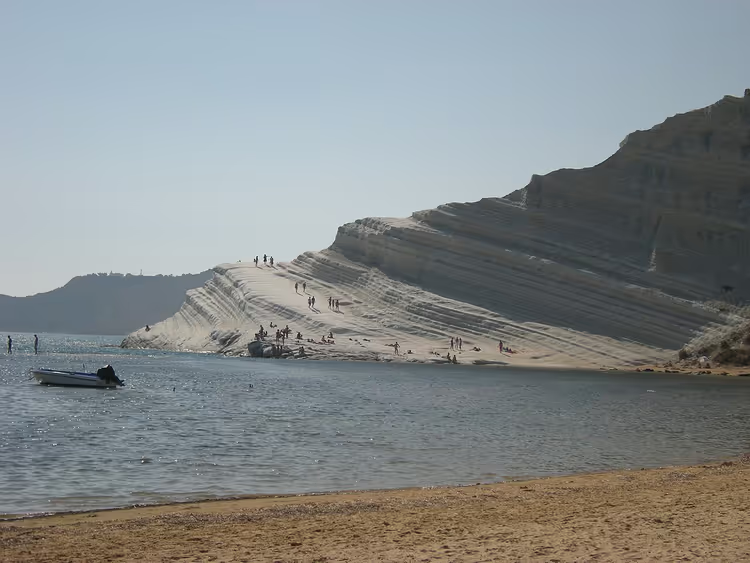
Scala dei Turchi is about ten kilometers from the Valley of the Temples, near Porto Empedocle (on the map). There is paid parking here, and from there you walk about half a kilometer to the cliff. The cliff got its name from a legend about Turkish pirates who hid in the local caves.
White limestone descends to the sea in steps, and the contrast between the rock and the azure water looks especially striking. After several years of closure, access has reopened: entry is by timed slots and advance booking (as of 09/2026, municipality of Realmonte). Local kids jump off the ledges, but you should not try that trick. If you want to swim, head to one of the two equipped sandy beaches nearby.
 © Carnby · CC BYPhoto: Carnby, CC BY (https://creativecommons.org/licenses/by/3.0), Wikimedia Commons
Valley of the Temples
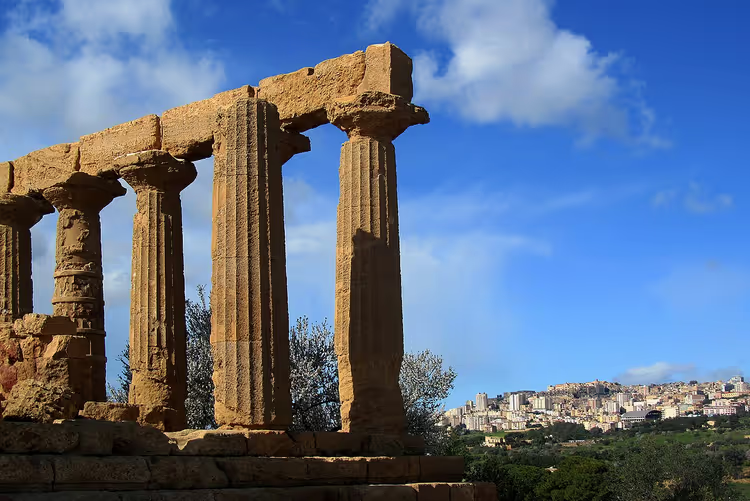
The Valley of the Temples is located in the southeastern part of Agrigento, and it is the main reason to stop here. Entry to the site is paid, and parking is also paid. A full ticket costs 14 €, a reduced ticket 7 €, and on the first Sunday of the month entry is free (as of 09/2026, official park website).
The complex is being gradually restored: several temples are the best preserved, while the remaining ruins look more archaeological than ceremonial. Verified on 09/03/2026 on the official website: in summer and September the Valley is open until 19:00. It gets very hot on the site, so bring sunscreen and a hat.
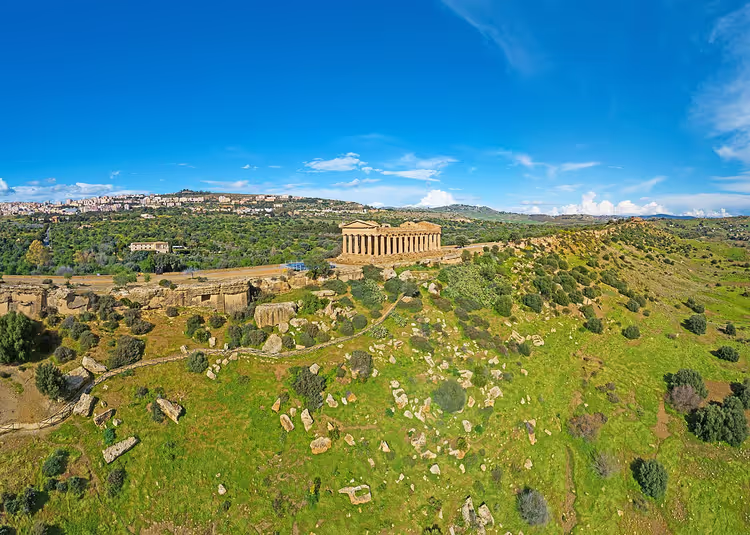 © Ludvig14 · CC BY-SAPhoto: Ludvig14, CC BY-SA (https://creativecommons.org/licenses/by-sa/4.0), Wikimedia Commons
Trapani
Trapani sits on the west side of the island and stretches into the sea as a narrow promontory. The city historically lived off trade and salt production, and salt is still harvested here the traditional way and considered the best in Sicily. Tourists buy it as a souvenir, and the historic center is called the nose of the city.
The center is packed with old buildings, cafes, souvenir shops, and boutiques. In high season it gets crowded, but there are no swimming beaches in the center: the entire coastal area is taken up by the port. For a beach you have to drive to the outskirts. The best option remains Lido Paradiso with fine sand, changing cabins, a toilet, and a shower. There is a free area nearby, but with no facilities.
Above the beach runs a promenade where people stroll in the morning and evening. If you drive a few kilometers from the center, you will reach the municipal beach of San Giuliano: a sandy shore with a gentle slope into the water and rentals for umbrellas and loungers. Nearby you can see the ruins of Tonnara San Giuliano. The windmills of Trapani stand elsewhere, by the salt pans.
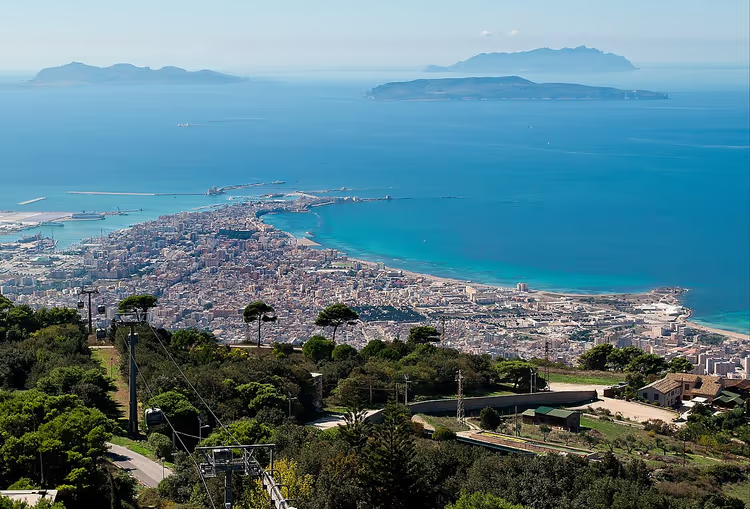 © Myke Bryan · CC BYPhoto: Myke Bryan, CC BY (https://creativecommons.org/licenses/by/2.0), Wikimedia Commons
Favignana Island
From Trapani it is worth hopping over to neighboring Favignana. A ferry runs here, and three operators offer up to 28 departures a day (as of 09/2026, Traghettilines). On the island itself you get around by bike or on foot: it is too small for a car.
The coastline is cut with coves, and swimming is pleasant in almost any of them. The spots popular with tourists are in the eastern part of the island, while those who do not want to walk far will be fine with the shallow sea by the pier. The main attraction is considered to be the tuna museum founded by the island's owner, Ignazio Florio.
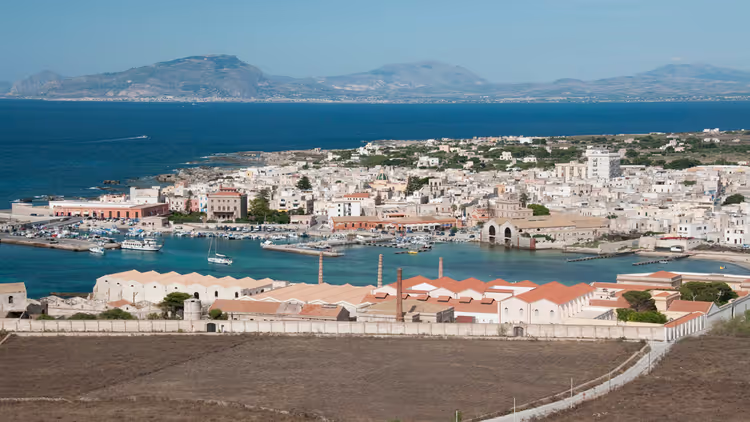 © roberto from italy · CC BYPhoto: roberto from italy, CC BY (https://creativecommons.org/licenses/by/2.0), Wikimedia Commons
Alcamo
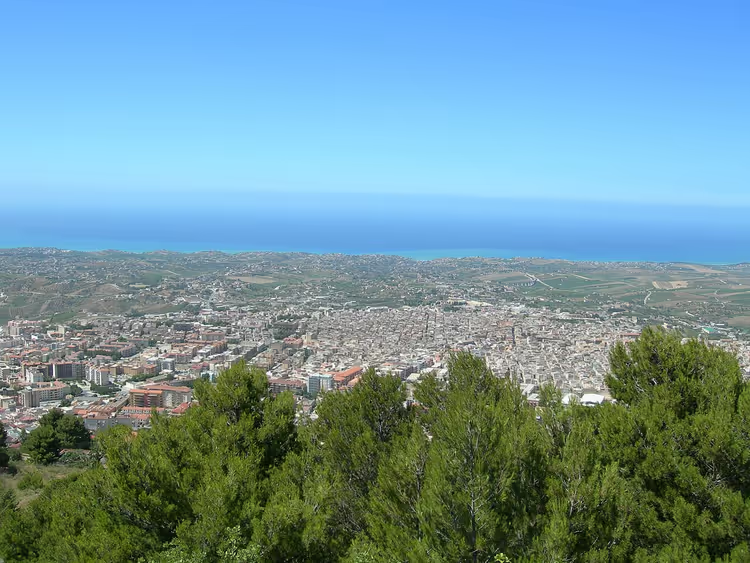
If you drive from Trapani toward Palermo along the coast, you won't miss Alcamo. The town sits on a hill, and from the top you get a panorama of the sea and terracotta rooftops. At different times it was ruled by Arabs, Normans, and Greeks, so the old center has preserved layers from different eras.
The medieval streets look most striking at sunset. People come here for a quiet cultural getaway, and the local fish market sells freshly caught fish and seafood.
Palermo
Palermo is Sicily's largest city, and you should allow two to three days to see it. Choose accommodation closer to the center: that way you save travel time, since all the main sights are concentrated there. You can conveniently compare hotels in Palermo on Trip.com.
The Palermo area is fairly wooded. Forests once covered the entire island, but they were cut down for centuries for shipbuilding and other needs. Remaining greenery survives in the northern part of Sicily, and the contrast with the southern coast is noticeable when driving from south to north.
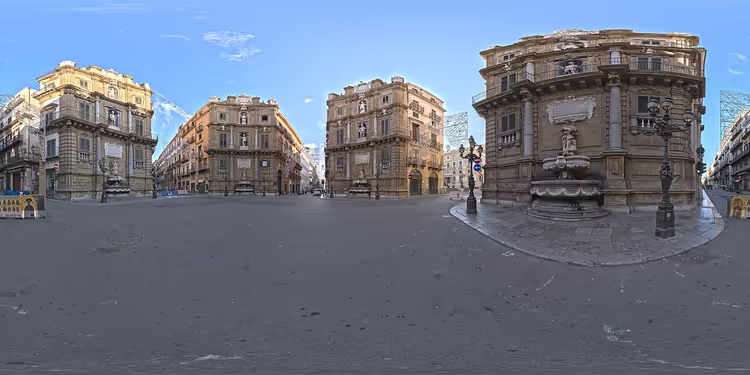
The city deserves a thoughtful visit: four cultures overlap here, and from the buildings of the historic center you can easily tell who built them and when.
Palermo has plenty of restaurants and cafes, you can find almost any cuisine, and the local wine is worth trying at least once. The best beaches lie outside the city limits: clean sand and a gentle entry into the Tyrrhenian Sea draw vacationers here. Those looking for a thrill should check out the Capuchin Catacombs: the underground galleries with mummies are open daily, in summer from 09:00 to 17:30, last entry at 17:10 (as of 09/2026, official website).
Cefalù
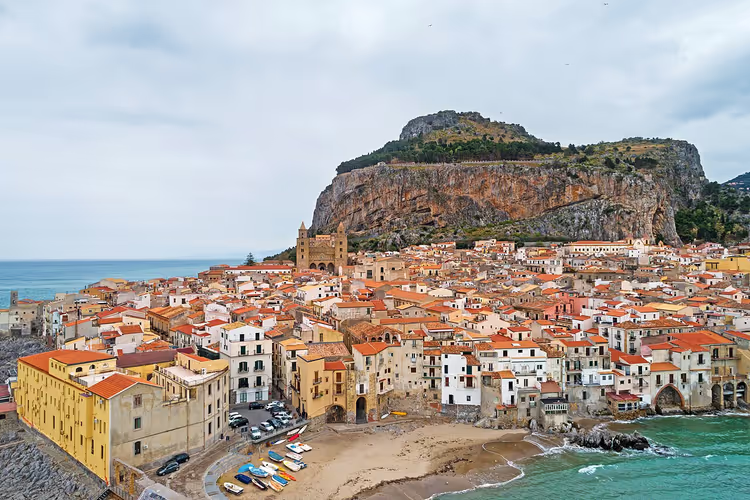
From Palermo to Cefalù is about 73 km east, and part of the highway is tolled because the road was cut through tunnels (per the map). The town is small, and a day is enough to see it. If you want to stay longer for Madonie National Park or the wide La Salinelle beach, book a hotel in the center.
Archaeologists believe the Siculi were the first to settle on the head-shaped rock: the site was inaccessible. The Greeks came next, rebuilt the settlement and named it Kephaloidion, fortified the town, and built a harbor. During the wars with the Arabs, the invaders had to work hard to breach the walls. Later Cefalù belonged to Byzantium, the Arabs, and the Normans, and the town's name goes back to the Greek Kephaloidion.
Among the sights, see the cathedral: its mosaics are unmatched in their state of preservation. If you get bored, stop by the Mandralisca art gallery. The town beach is clean and well kept but cramped, so locals head to La Salinelle for space: about eight kilometers of sandy coastline and a gentle entry almost everywhere.
 © Ludvig14 · CC BY-SAPhoto: Ludvig14, CC BY-SA (https://creativecommons.org/licenses/by-sa/4.0), Wikimedia Commons
Mistretta
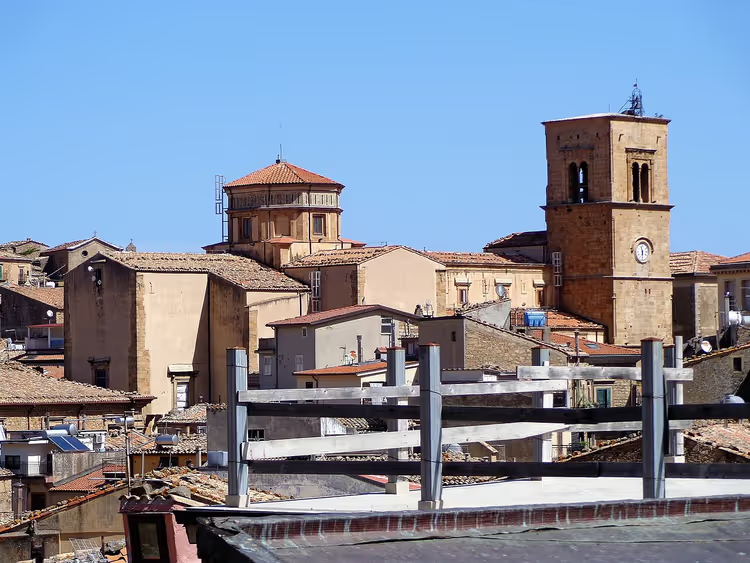
Mistretta is about 90 km east of Palermo, and from Cefalù it's about 32 km (as the crow flies; by road it's longer). It's a small municipality in the province of Messina, and a day is enough to see it. The town works well for a secluded getaway: there are few tourists here, and the food in local restaurants is simple and home-style.
 © Effems · CC BY-SAPhoto: Effems, CC BY-SA (https://creativecommons.org/licenses/by-sa/4.0), Wikimedia Commons
Nicosia
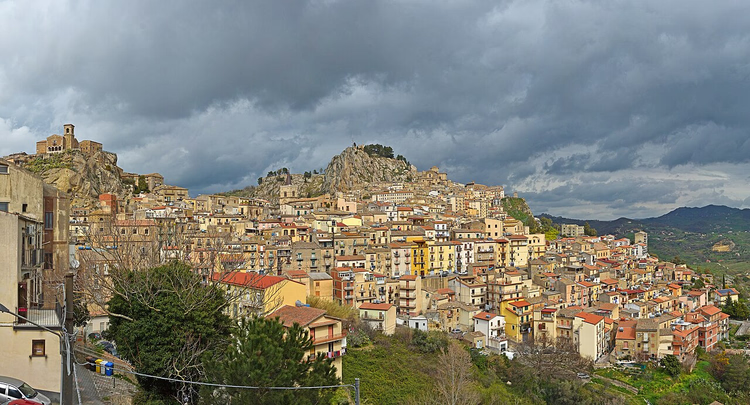
Nicosia sits in the island's interior, and the decision to come here is a personal one. By car you'll see a non-resort Sicily, but be prepared that there are fewer entertainment options and restaurants here. The town stands in the center of the island, so it once played an important strategic role: it was fortified better than its neighbors. The name Nicosia is translated as city of victory.
The first settlers here came from Lombardy and Piedmont. Monarchs did not overlook the town: at one time it was a royal residence, and Emperor Charles V once visited. A strong earthquake almost completely destroyed Nicosia. The buildings were partially restored, but the town lost its former grandeur: today mostly elderly people live here, while the young leave in search of work.
Among the sights, see the Cathedral of St. Nicholas, the city's patron saint. Inside is an ancient wooden crucifix. If you climb to the upper part of Nicosia, you'll see the castle ruins. Local wine is inexpensive, and pair it with fruit and the soft sheep's milk cheese made by local farmers.
 © Ludvig14 · CC BY-SAPhoto: Ludvig14, CC BY-SA (https://creativecommons.org/licenses/by-sa/4.0), Wikimedia Commons
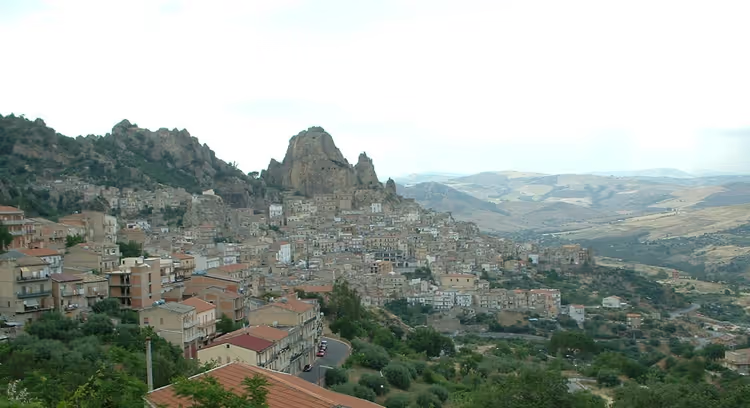
Gagliano Castelferrato
Gagliano Castelferrato is the final point of the circular route. The town sits in the island's interior, far from tourist trails, and looks just as sparsely populated as Nicosia. The streets are empty, and tourists are almost nowhere to be seen.
The town's main assets: wine and soft cheese made from goat's and sheep's milk. The cheese has a distinctive taste, an acquired one, but it pairs perfectly with wine.
You can stay here for a couple of days and visit Nebrodi National Park, 29 km from the town (per the map). After that you return to Catania and drop off the car: the vehicle inspection takes about five minutes if there's no damage. An hour and a half later you're on your flight home.
 © Azotoliquido · CC BY-SAPhoto: Azotoliquido, CC BY-SA (http://creativecommons.org/licenses/by-sa/3.0/), Wikimedia Commons
Sicily driving route on the map
The entire circular route from Catania back to Catania is assembled on the map below. You can drag the points and plan overnight stops: allow a day between Syracuse and Agrigento, and another between Trapani and Palermo.
Leg | Distance (per the map) |
|---|---|
Catania - Syracuse | 65 km |
Ragusa - Agrigento | over 100 km |
Agrigento - Scala dei Turchi | about 10 km |
Palermo - Cefalù | 73 km |
Cefalù - Mistretta | 32 km as the crow flies |
Gagliano Castelferrato - Nebrodi Park | 29 km |
Road trip route around Sicily
Places on the map
- 1Catania Start of the route, Piazza del Duomo, Etna ascent nearby
- 2Siracusa Ortigia island, Piazza Archimede, the Neapolis park
- 3Castello Maniace Fortress at the tip of Ortigia, built on the order of Frederick II
- 4Ragusa Two parts of a UNESCO city, linked by three bridges
- 5Agrigento Small town, famous for its surroundings and beaches
- 6Scala dei Turchi White limestone cliff descending to the sea in steps
- 7Valley of the Temples Archaeological complex of Greek temples in Agrigento
- 8Trapani Town on a headland, salt, ruins of a tuna plant and windmills
- 9Favignana Island Island by ferry from Trapani, coves and a tuna museum
- 10Alcamo Hilltop town with sea views and traces of different eras
- 11Palermo Sicily's largest city, the Capuchin catacombs
- 12Cefalù Small town by a cliff with a cathedral and La Salinelle beach
- 13Mistretta Small commune in the province of Messina, few tourists
- 14Nicosia Inland town with St Nicholas's cathedral and castle ruins
- 15Gagliano Castelferrato Final point of the loop, the Nebrodi park nearby
It's better to book a car for the whole route in advance: in high season, rental agencies in Catania raise prices. Below you can pick a car for your travel dates.
Find hotels
Compare prices across booking sites and filter for rooms with free cancellation.
Compare prices on Discover CarsThe widget loads once you give your consent.
⁉️🤔 Frequently asked questions
How many days do you need for a circular route around Sicily?
A relaxed trip takes from a week to ten days. In that time you cover Catania, Syracuse, Ragusa, Agrigento, Trapani, Palermo, and Cefalù, and also head inland. If you are short on time, cut the west or the inland towns, but do not try to cover everything in three days.
Can you drive around Sicily in a week?
Yes, but you will have to choose. In seven days it is realistic to cover the east and south coasts with short stops. It is better to stay in one or two towns for two days each, otherwise you spend half the day behind the wheel and see very little. Leave the west of the island for next time.
How much do tickets to the Valley of the Temples and the Neapolis park cost?
Both tickets cost 14 €, reduced tickets 7 € (as of 09/2026, official park websites). Children and teenagers often qualify for the reduced rate, so it is worth bringing documents with you.
Where to stay in Sicily if you are traveling by car?
Look for a hotel with parking or a nearby garage. On the coast, choose accommodation closer to the edge of town so you do not sit in traffic in the morning.
Is parking difficult in Catania and Palermo?
In the historic centers parking is paid and almost always full, especially during the day. Leave the car at a park-and-ride lot or at the hotel and walk from there. In Catania spaces free up faster in the evening than in Palermo.
In short: what is worth booking
If you have a week for everything: pick up a car at Catania airport and build a loop through Syracuse, Ragusa, and Agrigento. If you want both beaches and cities: add Trapani and Favignana, and book your nights on the coast. If you are traveling for culture: allow two days for Palermo and a day each for Cefalù and Nicosia.
A convenient way to compare rental companies is DiscoverCars: choose a car with full insurance and return it at Catania airport.

A small editorial team writing guides for independent travel. We travel ourselves, but we haven’t been everywhere, so we check prices, opening hours and how to get there against official sources.