
















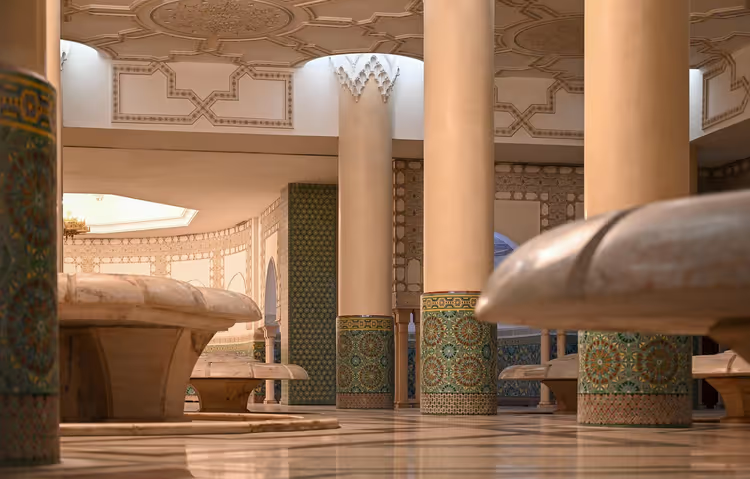
Casablanca in two days: Hassan II Mosque, Medina and the ocean
Casablanca greets you with the noise of the port and the wind from the Atlantic.
Many travelers pass through the city in transit on their way to Marrakech. And that's a mistake. There's a mosque right over the ocean, art deco neighborhoods have been preserved, and one of the country's most businesslike medinas lives here. Casablanca is the largest city in Morocco and its economic capital. People come here to work, not just to relax.
We put together a short guide to the city: what to see in the center and nearby, when to go, whether you need a visa, how to get from the airport, and where to eat. We checked all prices and opening hours against official websites in September 2026.
Ad: this article contains affiliate links, we earn a commission if you book through them, at no extra cost to you.
What to see in Casablanca
💡 In short:
- The Hassan II Mosque is open to non-Muslims; you can only go inside with a guided tour (as of 09/2026, official website of the Hassan II Mosque Foundation).
- The city center is compact, and the main sights can realistically be covered on foot in one day.
- Choose the medina to your taste: the New Medina is calmer for tourists, the Old Medina is more interesting for hunters of rare finds.
Hassan II Mosque
 © Milamber's portfolio · CC BYPhoto: Milamber's portfolio, CC BY (https://creativecommons.org/licenses/by/2.0), Wikimedia Commons
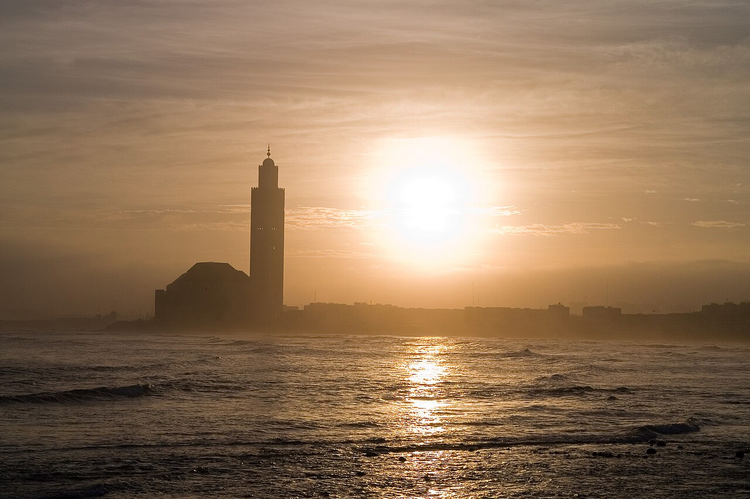
The Hassan II Mosque opened in 1993 right on the ocean shore. It is one of the largest mosques in Africa: the prayer hall covers two hectares, and the minaret rises 200 meters (as of 09/2026, official website of the Mosque Foundation). The floor in the main hall is made of glass, so worshippers can see the ocean water beneath them.
Non-Muslims are allowed in, which is rare for Morocco. Guided tours run Saturday through Thursday at 9, 10, 11, 12, 15, and 16 hours, and the Friday schedule is shorter (as of 09/2026, official website).
- Cost: 140 dirhams for adults, 70 for residents, children under four free (as of 09/2026, Hassan II Mosque Foundation).
- How to get there: the mosque stands on the waterfront (Boulevard de la Corniche); from the center it's easiest to take a taxi (see map).
- Who it's for: for those who want one strong highlight in the city.
- The catch: you can only get inside with a scheduled tour, and between sessions you'll have to wait at the entrance.
Casablanca Cathedral
 © Antony Stanley from Gloucester, UK · CC BY-SAPhoto: Antony Stanley from Gloucester, UK, CC BY-SA (https://creativecommons.org/licenses/by-sa/2.0), Wikimedia Commons
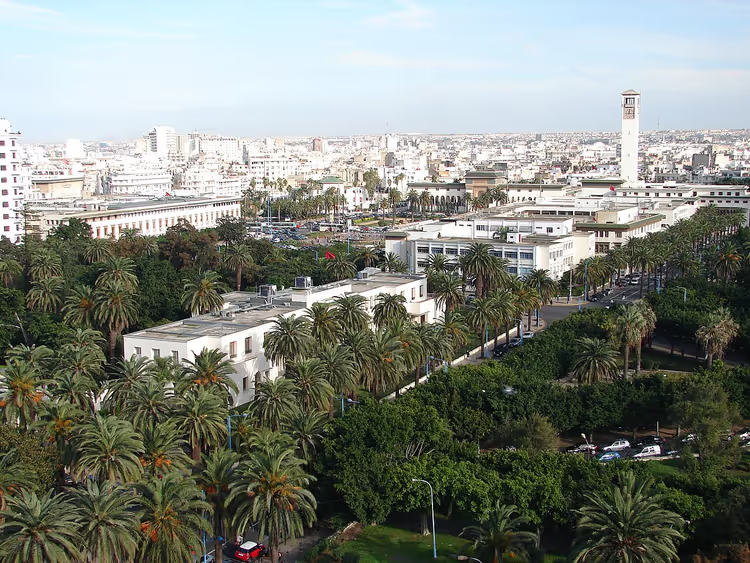
Casablanca Cathedral was built as a Catholic church. It's easy to recognize: neo-Gothic is mixed here with Moroccan decoration. The building has long needed repairs, which is exactly why art exhibitions are held inside from time to time.
On ordinary days, entry inside is not guaranteed. Sometimes you can arrange something with the caretaker, but there are no promises. The cathedral is interesting from the outside on its own: the facade is best photographed in the morning, when the light falls on the carvings.
- Who it's for: for those who love unusual architecture and facade photography.
- The catch: the building is under restoration, and you can't get inside every day.
Royal Palace
 © karel291 · CC BYPhoto: karel291, CC BY (https://creativecommons.org/licenses/by/3.0), Wikimedia Commons
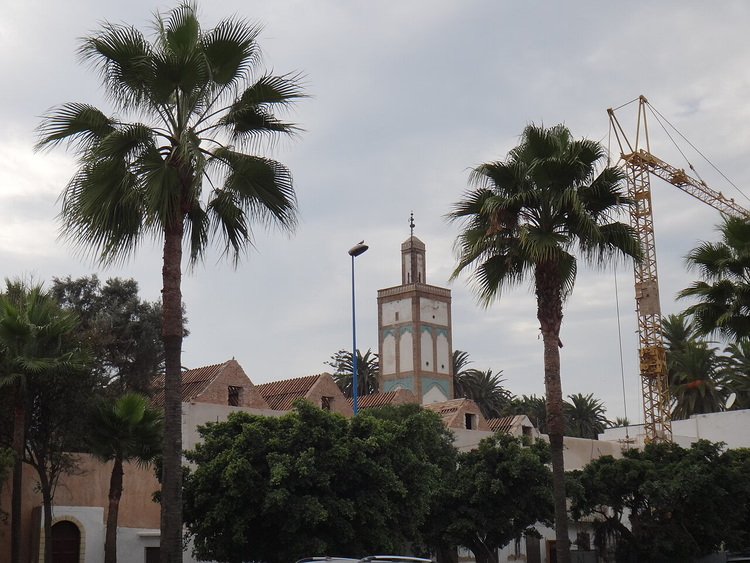
The Royal Palace in Casablanca remains one of the few active residences of the King of Morocco. High-profile guests have been received here, including Pope John Paul II. Tourists are not allowed inside, but from the outside you'll see classic Arab gates and carved decoration.
- Who it's for: for those who want to see the city's official architecture without a ticket.
- The catch: you can't go inside; you can only view it from the outside.
Museum of Moroccan Judaism
 © dlisbona · CC BYPhoto: dlisbona, CC BY (https://creativecommons.org/licenses/by/2.0), Wikimedia Commons
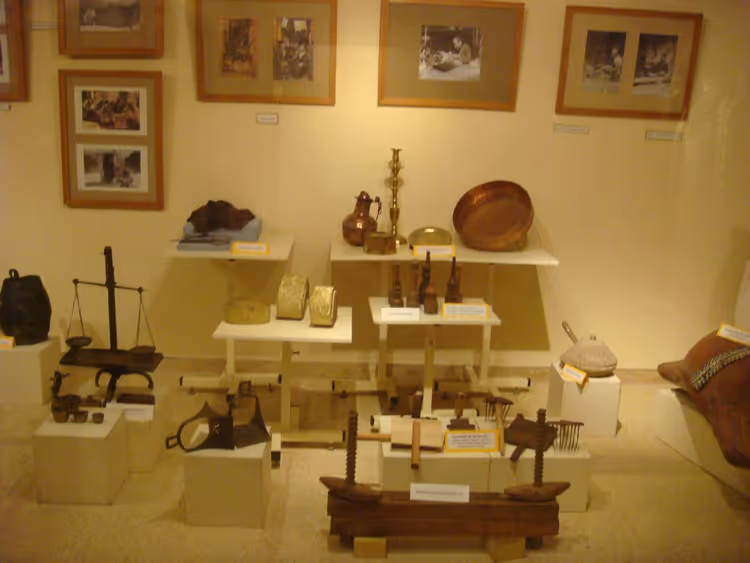
The Museum of Moroccan Judaism occupies a former villa that once served as a shelter for the Jewish community. Today it houses an exhibition: traditional costumes, photographs, dioramas, and religious objects of affluent Moroccan Jews. Nearby stands a synagogue that was moved here from the city of Larache.
The exhibition is small, but it tells a part of Moroccan history that few people know about. It's worth a visit if you're interested in religions and everyday life in the Mediterranean.
- Who it's for: for those interested in the history and religions of the region.
- The catch: the museum is small, and it doesn't take long to see.
Old and New Medina markets
 © Ideophagous · CC BY-SAPhoto: Ideophagous, CC BY-SA (https://creativecommons.org/licenses/by-sa/4.0), Wikimedia Commons
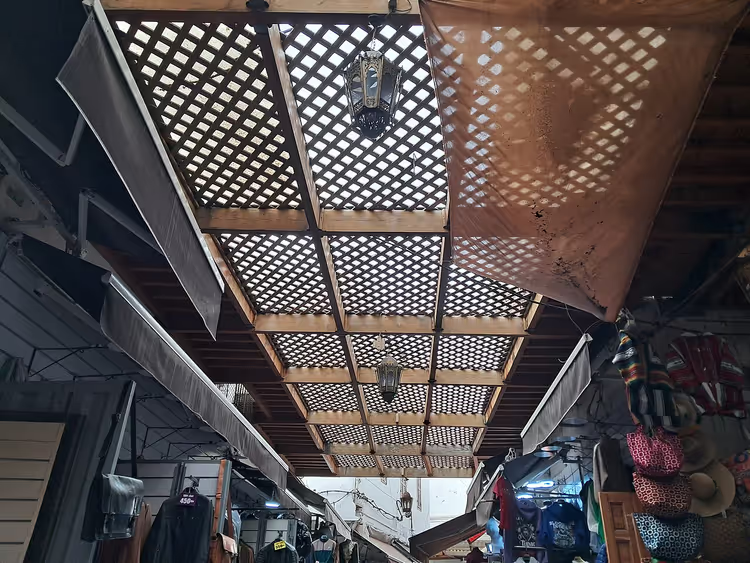
Casablanca's markets are divided into two parts, and choosing between them is worth doing deliberately. The New Medina is cleaner and more tourist-oriented: there are plenty of souvenirs, and the vendors are calmer. The Old Medina is more interesting for those looking for something unusual, as you'll find designer clothing and perfume shops here. For a snack, stop by the Bennis pastry shop in the Habous quarter of the New Medina.
The selection in both parts is similar: bright scarves and bedspreads, leather bags, metal lamps, hand-painted ceramics, and spices. You'll easily find gifts to take home here.
- Who it's for / Not for: for souvenir hunters; not for those who don't like to haggle.
- The catch: in the Old Medina, vendors are more aggressive and pushy.
Central art deco streets
 AIIllustrative image: AI-generated
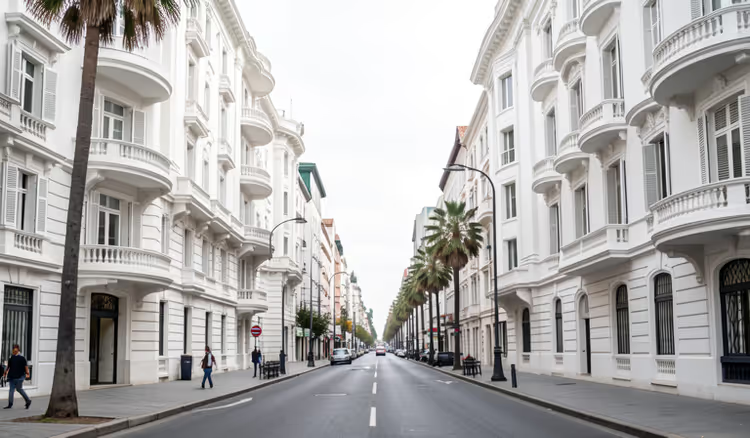
In the 20th century, the city was actively developed in the Art Deco style, and the old center still retains that look. There are many buildings from the French colonial period here: some have fallen into disrepair, some have been restored. A convenient way to start your walk is from the boulevard (Boulevard Mohammed V) and head toward the large city square with shops and restaurants.
Look at the balconies, moldings, and facades: they are what make this part of the city so recognizable. You'll also see how Casablanca combines European urban planning with Moroccan decor.
- Who it's for: those who love urban architecture and leisurely walks.
- The catch: some buildings have fallen into disrepair, and there are vacant lots between them.
City sightseeing tour
 © Иерей Максим Массалитин from Rabat, Maroc · CC BY-SAPhoto: Иерей Максим Массалитин from Rabat, Maroc, CC BY-SA (https://creativecommons.org/licenses/by-sa/2.0), Wikimedia Commons
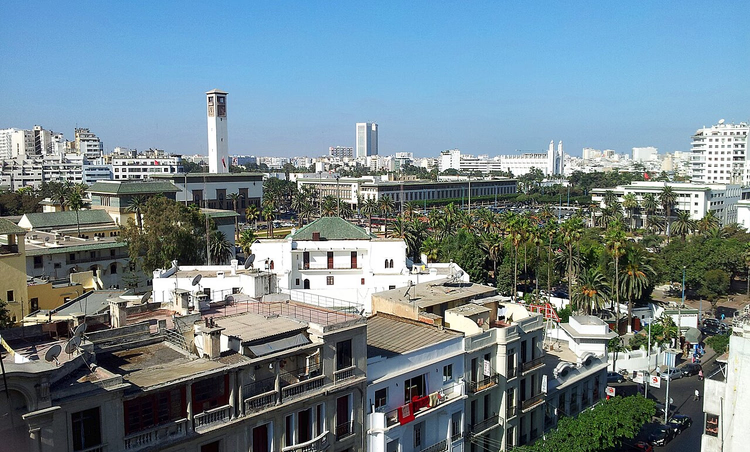
If you want to cover the whole city and not deal with transportation, take a sightseeing tour. It's usually half a day in an air-conditioned minibus, with stops at the mosque, the Medina, and the waterfront. A guide helps you understand the city's history and suggests where to eat.
This format is convenient on your first day: you quickly figure out where to go back to later. Below are options for group tours around the city and its surroundings.
Tours and tickets in Casablanca
Guided tours, skip-the-line tickets and activities — most offers can be cancelled free of charge.
See offers on GetYourGuideThe widget loads once you give your consent.
What to see around Casablanca
El Jadida Citadel
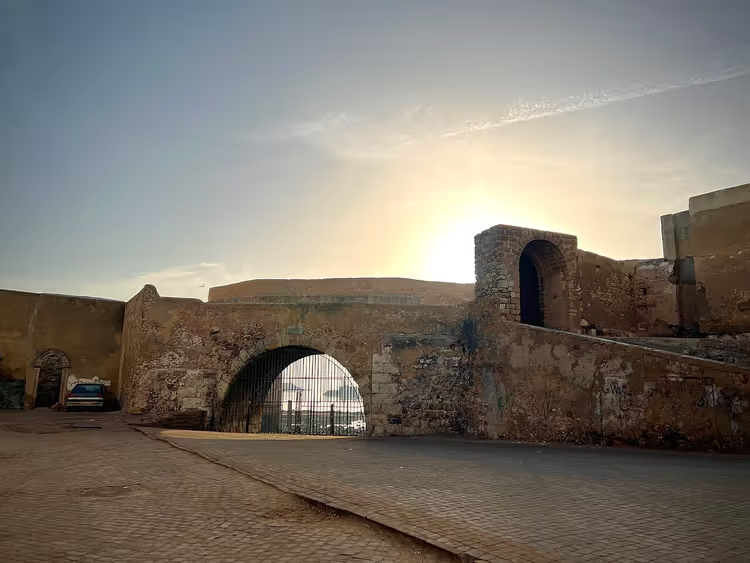 © Sharon Hahn Darlin · CC BYPhoto: Sharon Hahn Darlin, CC BY (https://creativecommons.org/licenses/by/2.0), Wikimedia Commons
A 16th-century Portuguese fortress stands 100 km from Casablanca (on the map). It's listed as a UNESCO World Heritage Site (according to the Morocco tourism office, 09/2026). From the walls, which you can climb, there's a view of the ocean.
Orson Welles filmed scenes from Othello in the Portuguese cistern of El Jadida. Set aside half a day for the trip and bring water: there's little shade on the walls.
- How to get there: by rental car or as part of a tour (on the map).
- Who it's for: for those who want to see Portuguese heritage by the ocean.
Azemmour
The town of Azemmour lies about 88 km south of Casablanca (on the map). The main attraction here is the 17th-century fortifications, with a mosque and the old medina nearby. It's a calm, uncrowded place, and strolling through it at a leisurely pace is a pleasure.
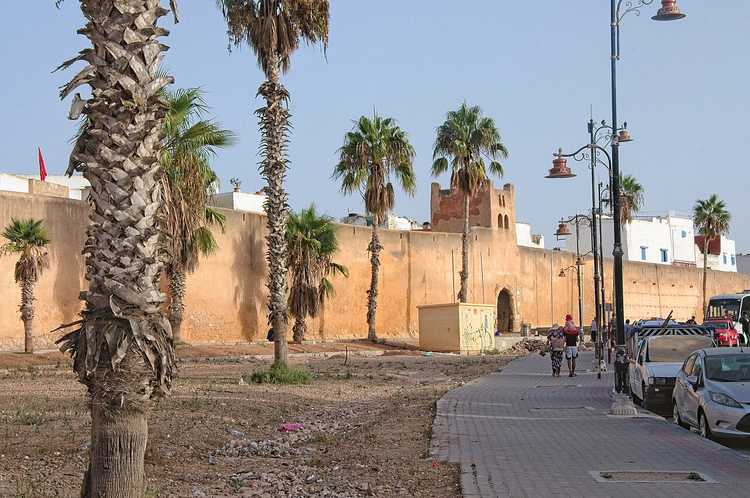 © Bertrand SOUBEYRAND · CC BY-SAPhoto: Bertrand SOUBEYRAND, CC BY-SA (https://creativecommons.org/licenses/by-sa/4.0), Wikimedia Commons
Nearby there's a wild beach with a beautiful coastline. If you want to be alone with the sea, this is your spot: there are almost no people here even in season.
- How to get there: by car on the highway or as part of a day trip (on the map).
- The catch: the trip takes almost the whole day.
Oualidia
For a break from city bustle and fresh seafood, head to Oualidia, about 180 km from Casablanca (on the map). There's a lagoon here where an island appears and disappears with the tide, and flamingos stand on the sandbanks.
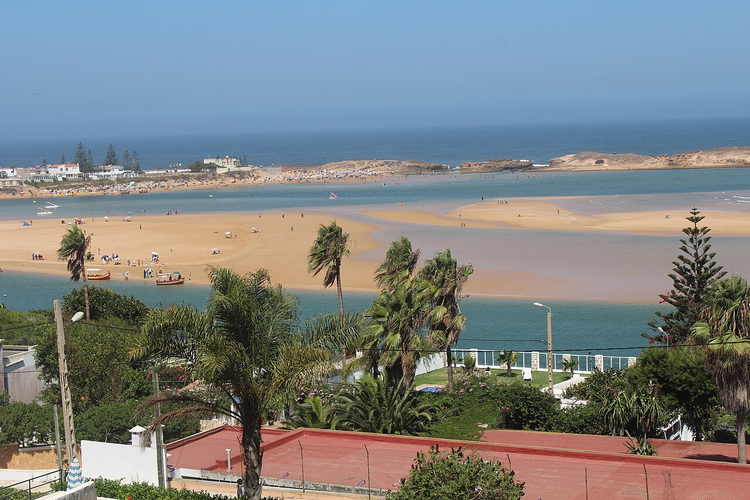 © Soufiane absri · CC BY-SAPhoto: Soufiane absri, CC BY-SA (https://creativecommons.org/licenses/by-sa/4.0), Wikimedia Commons
People come here specifically for the local farmed oysters. For exploring the surrounding area, it's more convenient to take a car: car rental in Casablanca on DiscoverCars covers this and other outings.
- Who it's for: for those who want to combine a relaxing getaway with good food.
- The catch: it's harder to get there without a car.
Camel trip in the Merzouga desert
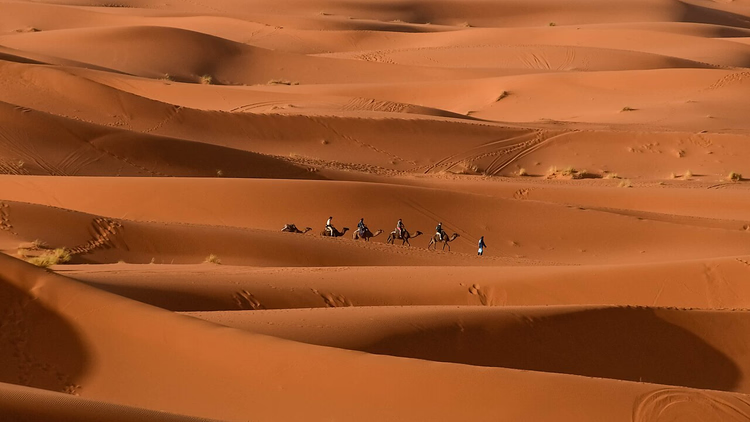 © Houssain tork · CC BY-SAPhoto: Houssain tork, CC BY-SA (https://creativecommons.org/licenses/by-sa/4.0), Wikimedia Commons
If a night in a tent camp in the middle of the desert and a full day on camels sounds like a good idea, plan a trip to the Erg Chebbi dunes. From Casablanca, tours to Merzouga are available with a return to the city or ending in Marrakech, which attracts digital nomads.
Along the way, see the Ait Ben Haddou kasbah: the clay fortress is also on the UNESCO list. You'll dedicate at least one full day to the desert itself.
- How to get there: only as part of an organized tour (on the map).
- The catch: the drive is long, and in summer the dunes are extremely hot.
Mohammedia beaches
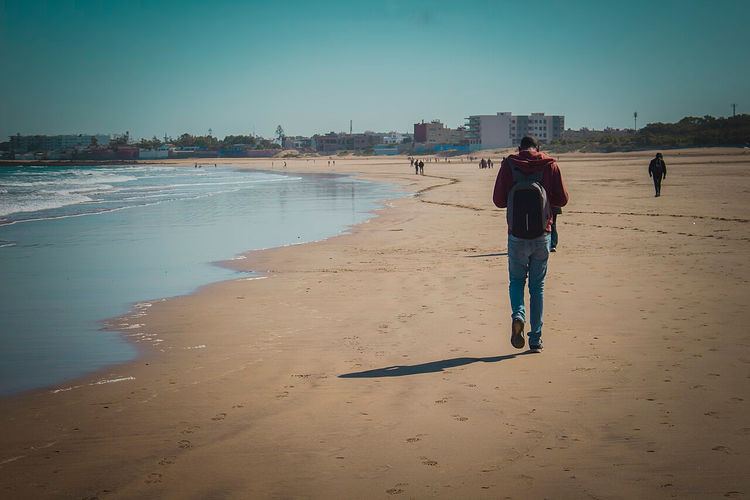 © Mounir Neddi · CC BY-SAPhoto: Mounir Neddi, CC BY-SA (https://creativecommons.org/licenses/by-sa/4.0), Wikimedia Commons
Very close, about 30 km from Casablanca (on the map), lies the town of Mohammedia with its long beaches. The atmosphere here is relaxed: restaurants, cafes, and palm-lined boulevards stretch along the waterfront.
This is the easiest way to get to the ocean for half a day and return to the city the same evening. Bring a swimsuit and come in the morning: on weekends the sand fills up with locals during the day.
- Who it's for: those who need a beach close to the city.
How to get to Casablanca
Mohammed V Airport, the largest in Morocco, is about 30 km south of the center (on the map). Flights connect it with cities in Europe, Africa, and the Middle East, and some destinations are served by direct flights.
From the airport you can reach the city by train, taxi, or rental car. The train is convenient because it avoids traffic, but it runs on a schedule, so check the travel time in advance. A taxi will take you to your hotel if you have a lot of luggage.
Check the train schedule from the airport in advance, especially if you arrive in the evening.
Tours and tickets in Casablanca
Guided tours, skip-the-line tickets and activities — most offers can be cancelled free of charge.
See offers on KiwitaxiThe widget loads once you give your consent.
Where to eat in Casablanca
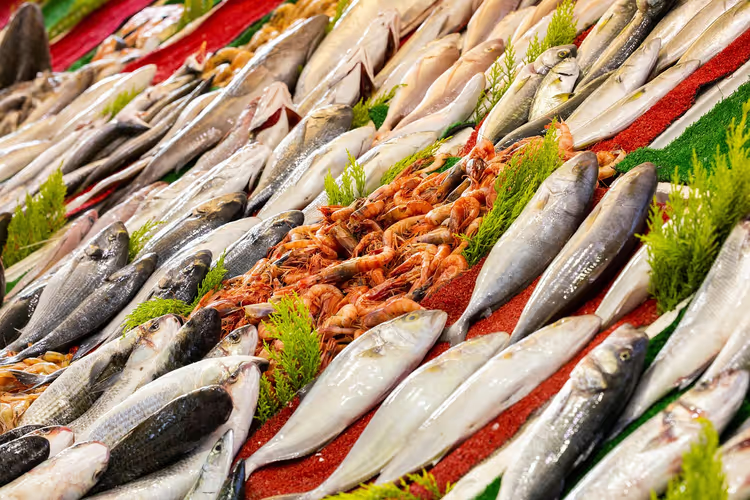
Moroccan cuisine is diverse, and the best way to try a lot at once is to take a food tour around the city. It usually includes tastings of juices, teas, and coffee, a market visit, and dinner: you choose the fish and seafood yourself, and it's cooked right in front of you.
For independent dining, check out Riad 21: Moroccan-style cuisine and an atmospheric dining room in an old house. Another city classic is Rick's Café, dedicated to the film "Casablanca": several floors, decor inspired by the movie, and piano music.
- Who it's for: those who want to try local cuisine without the risk.
- The catch: popular spots are crowded in the evening, so it's better to book a table.
Where to stay in Casablanca
There are many hotels in the city, and the price depends on the area and the view. Budget options with breakfast are found in the center; near the sea it's more expensive because of the ocean view and proximity to the waterfront. Choose the area based on your plans: near the Medina it's convenient for walking, near the waterfront it's pleasant to relax by the water.
If you're going for a couple of days, take a hotel in the center: you can walk to the main sights. For a beach holiday, look at areas closer to the ocean.
⁉️🤔 Frequently asked questions
What language is spoken in Morocco?
The official language here is Classical Arabic, but in everyday life you'll hear its local dialect. Many residents speak French fluently, and in the north of the country people understand Spanish. In hotels, restaurants, and tourist areas of Casablanca, English is also useful, so basic English will be enough.
When is the best time to visit Casablanca?
The climate in the city is mild thanks to the Atlantic, and that's the main plus. In summer it's warm and dry here, and the ocean breeze softens the heat, so swimming is comfortable. In winter it's cool and often cloudy, but the weather is fine for walking. The best time depends on your goal: the beach in summer, sightseeing in spring and autumn.
Do I need a visa to travel to Morocco?
It all depends on your citizenship. Citizens of EU countries and Switzerland do not need a visa for a short tourist trip; everyone else must arrange one in advance at a consulate. In some cases an electronic visa is available, but it requires valid visas from other countries. Check the conditions on the tourism office website before buying tickets.
How do I get around the city?
The most convenient way is by tram: the lines are modern and comfortable, and the cars arrive on schedule. Buses are cheaper, but travel time is hard to predict. For short trips around the center, take a taxi. You can easily walk through part of the central streets and the Medina without spending money on transport.
Is Casablanca safe?
The crime rate here is low, and tourist areas are patrolled by a special police force. You should be more careful in markets and crowded places: pickpockets operate there. Keep your phone and wallet in an inside pocket, and hold your bag close to you in a crowd.
In short: what to book
Casablanca fits well into a one- or two-day itinerary: the Hassan II Mosque, the Medina, and the art deco quarters. If you're short on time, take a sightseeing tour. Outside the city, pick one thing: the fortress of El Jadida, the Oualidia lagoon, or the beaches of Mohammedia.
- If you have half a day: take a sightseeing tour of the city.
- If you're going to relax by the water: choose the beaches of Mohammedia near Casablanca.
- If you want to see the ocean up close: go to the Hassan II Mosque.
It's better to book your hotel in advance: in high season, the center fills up quickly. Find a hotel in Casablanca on Trip.com right now.

A small editorial team writing guides for independent travel. We travel ourselves, but we haven’t been everywhere, so we check prices, opening hours and how to get there against official sources.