
















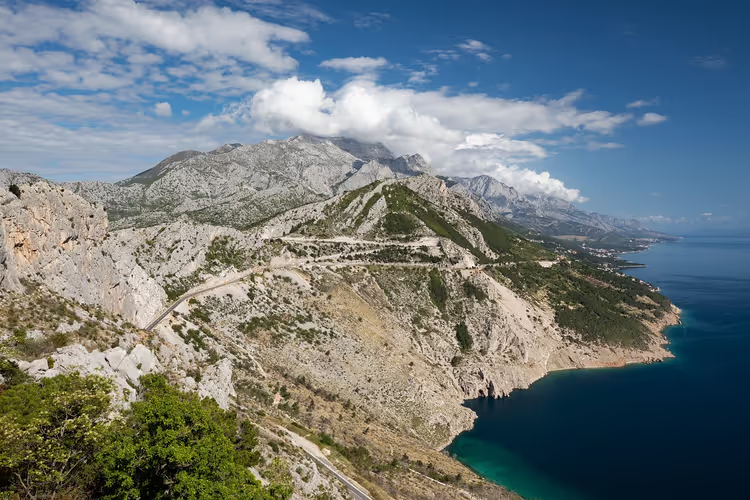
Croatia in August: toll roads, ferries and how to avoid the crowds
The road to the Adriatic in August takes longer than the map suggests. Border traffic jams, vignettes, tolls, and ferry tickets need to be planned for in advance. A full trip on the A1 motorway from Zagreb to Split costs about €26 (as of 09/2026, Hrvatske autoceste (HAC) tariffs). In high season, you also have to deal with crowded beaches, occupied parking lots, and a shortage of available rooms.
Below are price, toll, and coastal congestion benchmarks. They will help you plan your route and avoid losing time on the road.
Ad: this article contains affiliate links, we earn a commission if you book through them, at no extra cost to you.
What to consider before traveling to Croatia
💡 In short:
- Budget for Croatian motorway tolls and Austrian and Slovenian vignettes.
- Book your ferry ticket with a car before the trip; summer sailings fill up.
- Plan beaches and the old town for the morning; in the afternoon, head inland.
Driving to Croatia: where cars get stuck
From Germany to Croatia, you drive through Austria and Slovenia. For Istria, the route through Austria and Italy is sometimes more convenient. During peak vacation season, travel time increases noticeably. Border crossings, the Karawanks Tunnel, and congested motorway sections take up the most time.
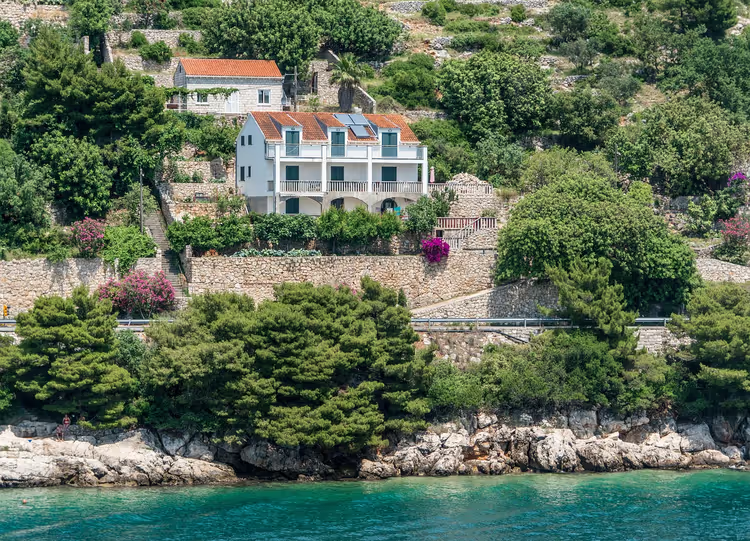
The route depends on your destination. For Istria from southern Germany, people often go via Trieste; for Dalmatia, they drive via Salzburg and Ljubljana. Both routes use toll roads, so get your vignettes before you leave. The Slovenian vignette is purchased online and linked to your license plate, so check its validity date in advance.
The simplest way to save hours: leave early and on a weekday. In July and August, avoid starting on Saturday; that day has the most cars at the border, and the queue at the Karawanks Tunnel stretches for several kilometers. This way you will get through the difficult section before the main flow of traffic.
If you are flying and renting a car locally, compare rentals in advance: compare car rental prices.
Toll roads: tolls, vignettes, and tunnels
Croatian motorways are tolled along almost their entire length. The fee depends on the distance traveled: you take a ticket on entry and pay based on it on exit, or pay at the toll booth. Cash and cards are accepted. A benchmark for a class I passenger car: about €8 per 100 km. The Zagreb-Split trip on the A1 costs €26.40 (as of 09/2026, official Hrvatske autoceste (HAC) tariffs).
Foreign vignettes add to the Croatian tolls. Austrian motorways require a vignette: a ten-day one for a passenger car costs €12.80, a one-day one €9.60 (as of 09/2026, official ASFINAG). In Slovenia, an electronic vignette is mandatory for vehicles up to 3.5 t on DARS motorways (as of 09/2026, DARS). Some tunnels, such as the Karawanks, and Italian motorways on the route through Italy are paid separately.
From autumn 2026, Croatia is gradually switching to digital tolls without barriers, but in summer 2026 everything still works as before: a ticket on entry and payment on exit (as of 09/2026, toll overview).
For an exact calculation for your route, use the ADAC calculator. It shows tolls for specific sections and helps you compare route options.
Ferries and islands: book in advance
Along the Croatian coast, according to the Croatian National Tourist Board, there are 1,244 islands and rocks. Some of them are connected by ferries. The main line is operated by Jadrolinija, while private operators' catamarans run on their own schedules. In July and August, popular sailings are full, and car spaces run out first (as of 09/2026, ferry schedules and prices).
Car ferries and passenger catamarans are different. The former carry vehicles and travel more slowly; the latter take only people and run more frequently. If you are traveling with a car, check schedules well before your trip and book a spot where possible. Arrive at the terminal early: in summer, the line of cars stretches out and you risk missing your chosen sailing.
Overcrowded cities in August: how to avoid the crowds
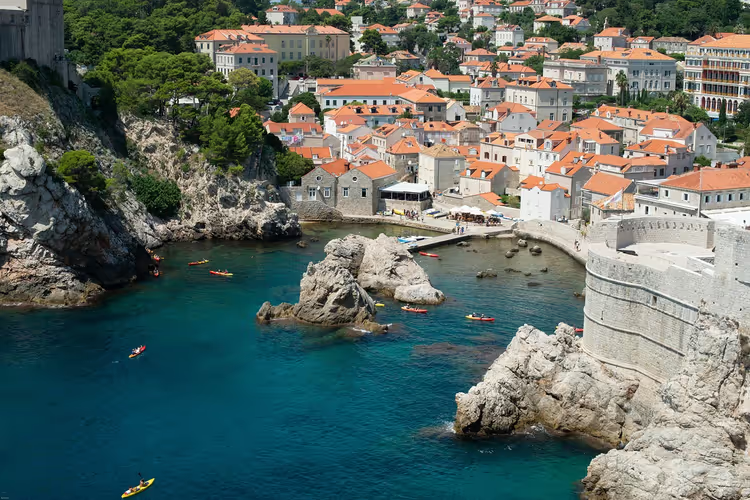
August overwhelms the coast. Near Dubrovnik and Split, beaches fill up before noon, parking spots go quickly, and finding available rooms is difficult and expensive. A spontaneous trip in high season almost always ends in overpaying.
Smaller coastal towns like Nin or Fažana are calmer. Another option: head away from the shore into the Dalmatian hinterland. The areas beyond Split and Šibenik are noticeably freer in summer and richer in natural landscapes. Krka National Park with its seven waterfalls welcomes visitors in the river valley. Get tickets here online in advance during high season (as of 09/2026, Krka National Park).
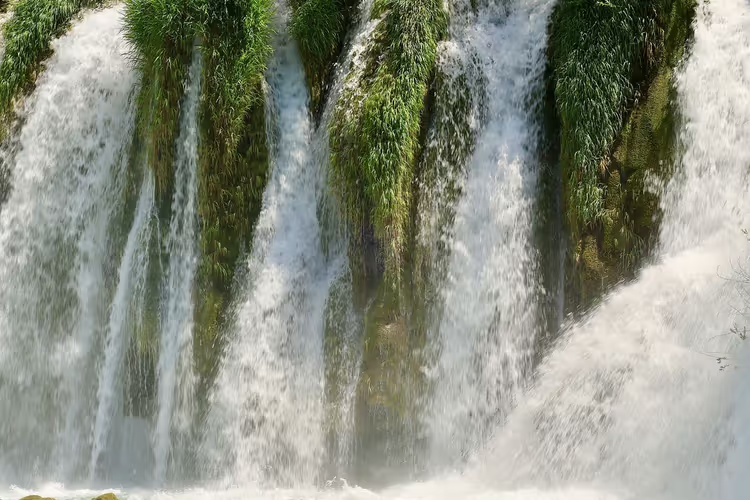
Plan your day by the clock. Early in the morning, beaches and sights are calmest, and after lunch you can head to the waterfalls or the mountains. Even one day can be conveniently split into three parts: sea in the morning, hinterland in the afternoon, dinner in a small town in the evening. This way you avoid peak heat and queues, and return to the water by evening.
Book accommodation in Dubrovnik and Split in advance: available rooms on Trip.com.
⁉️🤔 Frequently asked questions
How much does driving to Croatia cost?
Tolls on Croatian motorways depend on the distance. Add Austrian and Slovenian vignettes. The ADAC calculator gives an exact calculation.
When are there fewer cars at the border?
Early morning on a weekday, such as Tuesday or Wednesday, is calmest. If your schedule allows, leave before the vacation rush begins.
Do I need to book the ferry in advance?
Yes, especially with a car. Without a car it is easier: catamarans take only passengers and run more frequently.
Where are there fewer tourists on the coast?
In the Dalmatian hinterland beyond Split and Šibenik, there are noticeably fewer people than in Dubrovnik and Split. Krka National Park is located there.
What to see if you are tired of the beaches?
Head away from the shore into the hinterland. Krka National Park offers a different view of Dalmatia, and the areas beyond Šibenik are known for their natural landscapes. Plan your visit for the morning, before it gets hot and crowded.
In short: what to book
A high-season trip comes down to three things: a budget for tolls, an early departure, and advance booking.
- If you are driving your own car: budget for tolls and vignettes, start early on a weekday morning.
- If you are taking a car on a ferry: book your Jadrolinija sailing before the trip.
- If you are flying and renting a car locally: compare rental prices in advance and find accommodation.
Tours and tickets in Dubrovnik and at the Krka waterfalls are best purchased in advance: tickets and tours on GetYourGuide.

A small editorial team writing guides for independent travel. We travel ourselves, but we haven’t been everywhere, so we check prices, opening hours and how to get there against official sources.