
















Souvenirs from Mexico: 30 ideas and what to check before buying
Packing a suitcase full of souvenirs in Mexico is easier than it seems. Markets, shops, and supermarkets offer hundreds of small items, and some things are more cost-effective to bring straight from the country of origin. Below are 30 gift ideas, from palm panama hats from Campeche to tequila and mezcal in handcrafted bottles. For each item, we've noted where to find it, how it differs from similar products, and what to check before buying. Expensive items like blue amber require attention to authenticity. The farther you get from tourist centers, the lower the price for the same quality.
1. Becal panama hat
 © Comisión Mexicana de Filmaciones from México D. F., México · CC BY-SAPhoto: Comisión Mexicana de Filmaciones from México D. F., México, CC BY-SA (https://creativecommons.org/licenses/by-sa/2.0), Wikimedia Commons
💡 In short:
- Core gifts: hats, textiles, ceramics, and masks from Oaxaca, Puebla, and Campeche.
- Edible items go separately: tequila and mezcal, vanilla, coffee, amaranth oil, sweets.
- Authenticity: tequila is labeled "100% de agave," blue amber comes with a certificate, ceramics should have a workshop stamp.
- Tequila and mezcal authenticity: 09/2026, verified on the official Consejo Regulador del Tequila website.
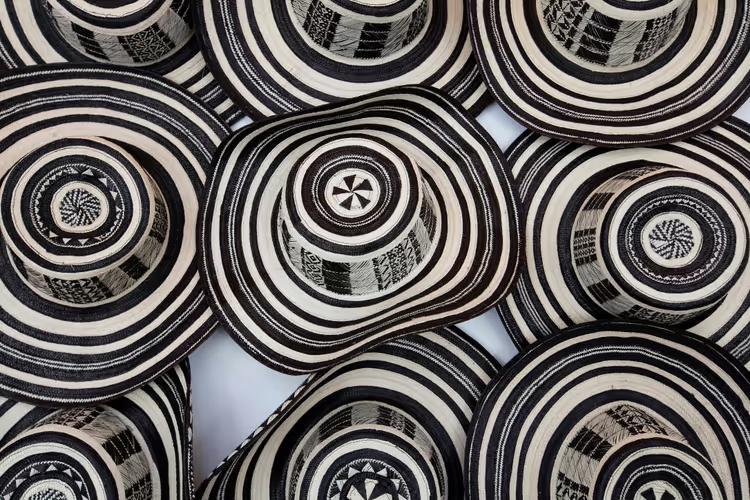
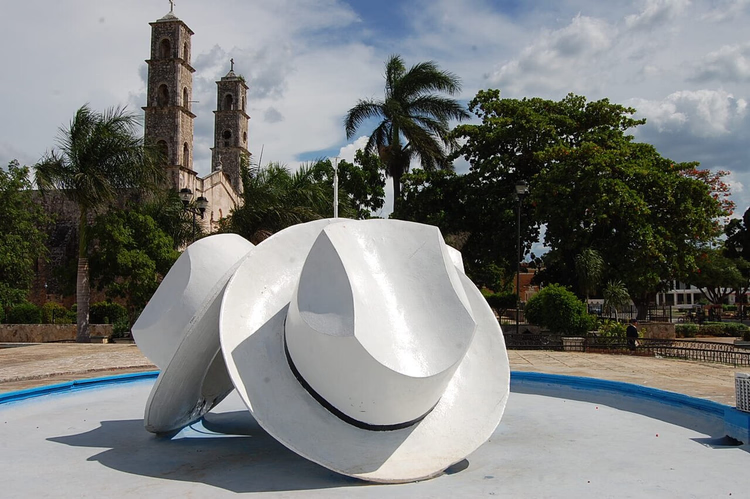
Instead of the familiar sombrero, Mexicans more often wear a compact panama hat made from palm leaves. It's woven in the town of Becal in the state of Campeche, and the town's central square features a monument shaped like two hats. The material resists water, doesn't grow mold, and holds its shape even after you roll it up in a backpack. This hat shades your face from the sun and doesn't get in the way in a crowd.
Price depends on where you buy: at outlying markets, panama hats cost less than in the center and in tourist shops, and bargaining is almost always appropriate. The weave can be tight or loose, so run your fingers along the brim and compare two hats side by side. Buy a size with a couple of centimeters to spare, because the fiber shrinks slightly in humid climates. Check that the crown doesn't bulge after a light squeeze.
- Where to find: markets and workshops in Becal, Mérida, and Campeche.
- Who it's for: a practical everyday gift.
- Not for: cold seasons and rainy autumns, this hat won't work.
- What to check: weave density, even brim, no creases.
2. Cosmetics
There are no world-class standalone Mexican cosmetic brands here, but natural oils from jojoba, avocado, coconut, and cactus are sold in nearly every pharmacy and market. In supermarkets and duty-free shops in Cancún or Mexico City, you'll find European and North American brands, but their prices aren't always better than in Europe. It's more cost-effective to buy products made locally from local ingredients.
Natural soap is a gift for a scent collector. It's made with fruit pieces and spices, and the fragrances can be unexpected: orange with cinnamon, aloe vera, sometimes even fried potato. Two centuries ago, soap in this country was so expensive that it served as currency. Today, bars are sold at every market, and packaging with pleasant contents makes a great small present.
- What to buy: jojoba, avocado, coconut, and cactus oils, handmade bar soap.
- Where to find: markets, pharmacies, supermarkets in major cities.
- Not for: if you need a specific skincare brand and formulation for sensitive skin.
- What to check: expiration date, ingredients on the packaging, bottle seal integrity.
3. Sombrero
 © Jamain · CC BY-SAPhoto: Jamain, CC BY-SA (https://creativecommons.org/licenses/by-sa/3.0), Wikimedia Commons
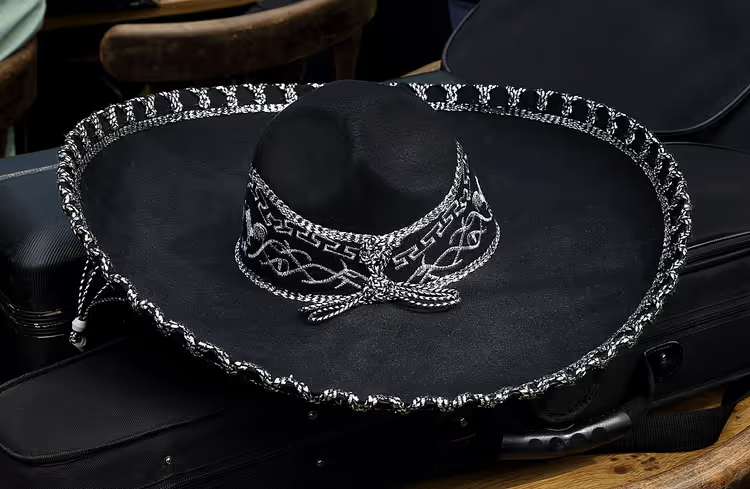
The word "sombrero" is related to the Spanish "sombra," meaning shade. The wide brim shades the face and shoulders from the midday sun, and markets are full of thousands of these hats. Originally made for cattle drivers from rabbit hide, they later switched to wool and straw. Festive models are decorated with gold and silver cords and hand embroidery.
Expensive versions are made from velvet and leather and decorated with stones, so the price depends heavily on build quality. Choose by fit and weight: a heavy hat presses on your neck after an hour, while cheap straw gets creased in your suitcase. Ask the seller what occasion the model was made for, since some pieces are made only for carnival. Bargaining at the market is appropriate, especially if you're buying two hats at once.
- Where to find: markets in Mexico City, Guanajuato, Oaxaca, and tourist towns.
- What to check: hand embroidery, crown quality, even brim, no glue.
- Not for: everyday wear outside Mexico, this hat is rarely useful.
- The catch: on a plane, a sombrero takes up a lot of space and gets crushed in luggage.
4. Skulls
 © Andrea Villela · CC BY-SAPhoto: Andrea Villela, CC BY-SA (https://creativecommons.org/licenses/by-sa/4.0), Wikimedia Commons
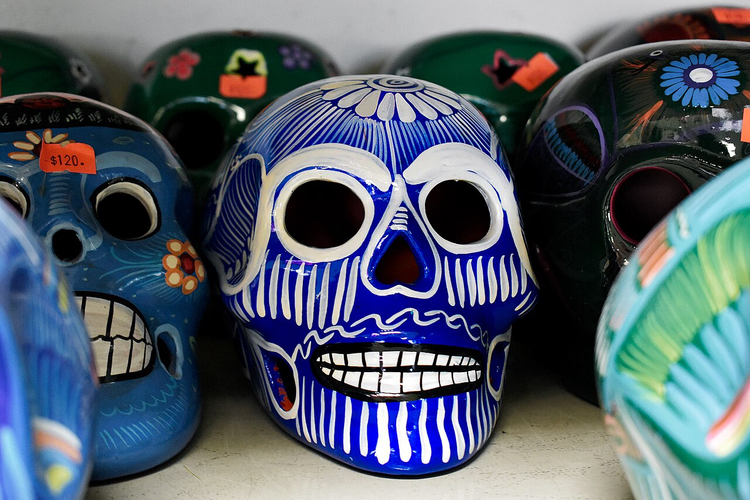
A ceramic calavera with flowers and patterns evokes the cult of ancestors and the Day of the Dead, celebrated on November 1 and 2. Figurines are made by local artisans, and sugar skulls are sold at markets on those same dates. The symbolism appears in shop windows year-round, so you'll find this souvenir even in summer.
The holiday's main character, a skeleton in a woman's dress and hat, is known as Catrina. These figurines come in ceramic, wood, and sugar versions. Sugar ones crumble quickly, so people buy them as a small gift to enjoy on the spot or eat the same evening. Before buying, check the painting: handcrafted work is visible in uneven brushstrokes, with no stickers or decals.
- Where to find: markets in Mexico City, Oaxaca, and Puebla, museum shops.
- Material: ceramic, wood, papier-mâché, sugar.
- Who it's for: collectors and themed interior decor.
- Not for: if there are small children at home, fragile figurines won't last long.
5. Masks
 © NoteaLiar · CC BY-SAPhoto: NoteaLiar, CC BY-SA (https://creativecommons.org/licenses/by-sa/4.0), Wikimedia Commons
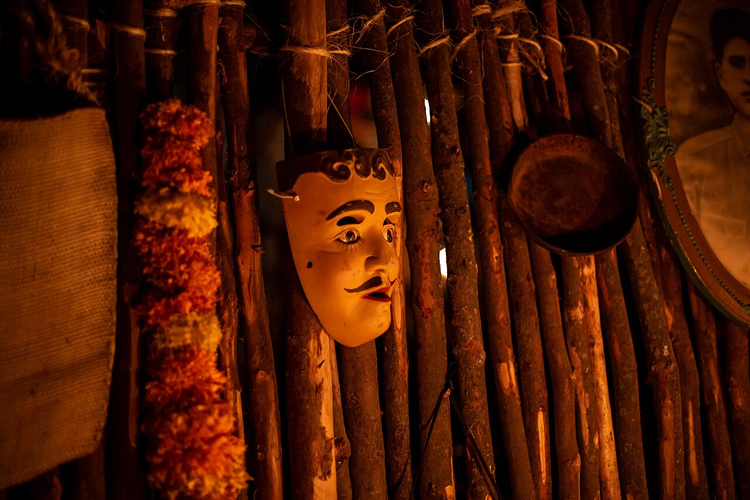
Masks have long been part of the culture and remain the main element of costumes for ceremonial dances at holidays and festivals. Totemic and ritual pieces are made by hand from natural wool, hair, animal teeth and hide, sometimes using majolica techniques. Simpler versions are carved from wood or shaped from clay, papier-mache or fabric.
Expensive works feature jade, turquoise and mother-of-pearl, with corn kernels, horsehair and horns used as decoration. The figures depict famous people, animals, supernatural beings and abstract concepts. Before buying, check the intended purpose of a particular piece: some items were made for rituals, not for hanging on a wall. A good mask is heavier than a souvenir one because it is carved from a single block.
- Where to look: markets in Oaxaca, Chiapas, Guanajuato, artisan shops.
- What to check: symmetry, traces of hand carving, paint durability.
- Who it's for: for collections and ethnic-style interiors.
- The catch: many masks smell of leather, varnish and hair, and the smell lingers in a closed suitcase.
6. Amulets
 © Koffermejia · CC BY-SAPhoto: Koffermejia, CC BY-SA (https://creativecommons.org/licenses/by-sa/4.0), Wikimedia Commons
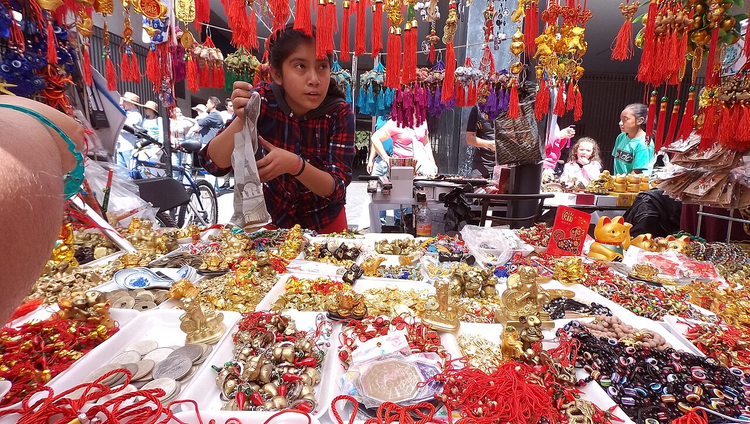
The rarest items are sold at the Sonora witchcraft market in Mexico City. It is an unusual place where simply walking between the stalls is interesting. Tourists most often notice amulets and charms to which folk artisans attribute magical properties. The cheapest versions look like herbal pouches or pieces of leather with inscriptions.
More expensive pieces resemble miniature copies of animal skulls, knucklebones or dried rabbit feet. Real ritual items are made from natural objects, including animal remains, dried snakes and bats. Locals take such things in stride, but an impressionable tourist can be taken aback. Ask the seller what a particular item is for, and do not buy blindly.
- Where to look: Mercado Sonora in Mexico City, other markets in Mexico City and Oaxaca.
- Who it's for: for folklore collections and unusual gifts.
- Not for: if neutral aesthetics matter in a gift.
- The catch: some amulets look frightening and have a heavy smell.
7. Alebrijes
 © Carl Campbell from Santiago de Querétaro, México · CC BYPhoto: Carl Campbell from Santiago de Querétaro, México, CC BY (https://creativecommons.org/licenses/by/2.0), Wikimedia Commons
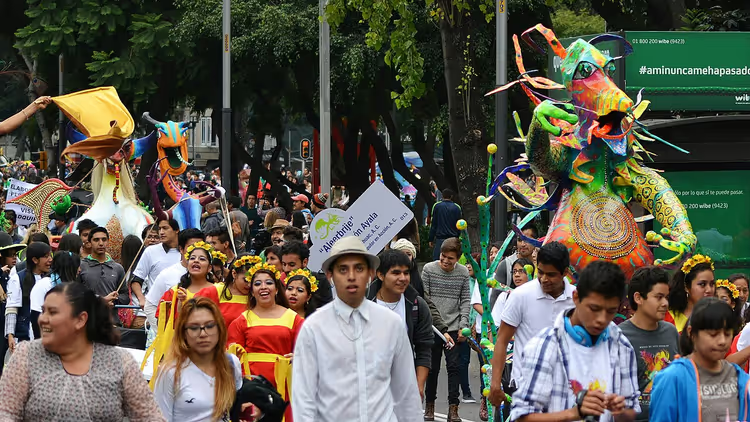
Alebrijes are bright toys depicting fantastic beasts with horns, wings, and fangs. The craft emerged in the early twentieth century, when artisan Pedro Linares began sculpting such creatures from papier-mâché. In the eighties, the figures started being carved from wood, which gave the craft a new direction. The state of Oaxaca is considered the birthplace of the trade.
These toys are in demand among collectors, so the price difference between an original piece and a mass-produced one is enormous. Designer figures are expensive, while simple items sell for a token amount. Each creature embodies fear, horror, or another human state, so it's best to ask the seller about the meaning of a specific figure. Choose a piece with even painting and no bubbles in the primer.
- Where to look: Oaxaca, Mexico City markets, folk art galleries.
- What to check: hand painting, figure stability, even papier-mâché seams.
- Who it's for: collectors and fans of bright decor.
- Not for: if you're looking for an inexpensive souvenir for bulk gifting.
8. Maracas
 © Jesus Robles Aboytes · CC BY-SAPhoto: Jesus Robles Aboytes, CC BY-SA (https://creativecommons.org/licenses/by-sa/4.0), Wikimedia Commons
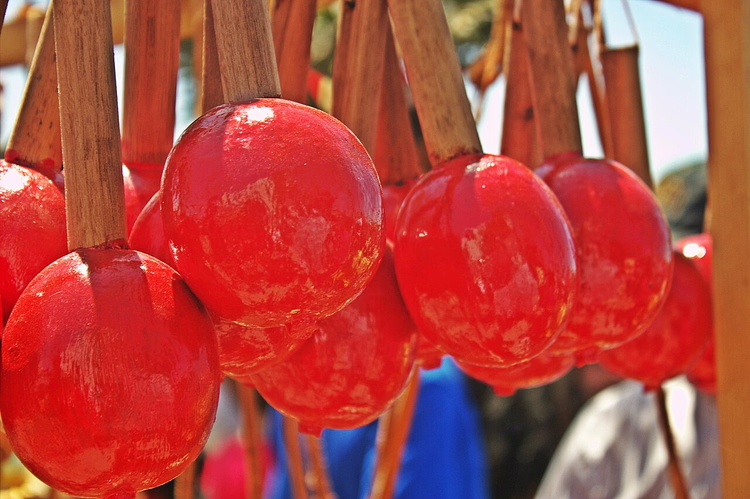
After the sombrero, maracas rank second in popularity among visitors. These are ancient percussion instruments that indigenous people used during rituals, and shamans identified illnesses by their sound. Today, these hand rattles have become a symbol of Latin American music and are readily bought for children.
Modern pieces vary in design but are almost always sold in pairs. They are made from the fruit of the higuero tree, coconuts, leather, and plastic, with crushed pebbles, dried peas, or beads placed inside. Check the sound on the spot: the two maracas in a pair should sound identical, otherwise the rhythm falls apart. Folk-motif painting is more common than solid-color finishing.
- Where to look: markets and music shops in Mexico City, Oaxaca, Veracruz.
- What to check: identical sound in the pair, sturdy handle, no cracks.
- Who it's for: children and anyone who wants to bring home a sounding souvenir.
- Not for: if your home needs quiet.
9. Poncho
A poncho is sewn from a piece of hand-woven and hand-dyed fabric or from soft wool with folk patterns. The warm wrap lasts for years: it's worn over the shoulder, taken outdoors, or hung on the wall instead of a rug. The word "poncho" translates as "lazy," which accurately describes the cut, since it's simply a piece of fabric with a hole for the head.
Historians believe similar wraps were worn as far back as the Inca Empire, and later they were also used by soldiers in North America. Over the centuries, the garment has gone through many variations: materials, length, and color schemes have all changed. It's worth buying a poncho in the region where it's made, because at traveling markets factory acrylic is often sold as handmade work. Ask about the composition and look at the inside: a genuine poncho has neat seams and dense fibers.
- Where to look: markets in Oaxaca, Chiapas, Puebla, workshops in mountain regions.
- Who it's for: for cool evenings, trips, and a gift with character.
- Not for: if wool isn't worn year-round in your climate.
- What to check: composition on the label, fabric density, even edging.
10. Ceramics
 © Inakiherrasti · CC BY-SAPhoto: Inakiherrasti, CC BY-SA (https://creativecommons.org/licenses/by-sa/3.0), Wikimedia Commons
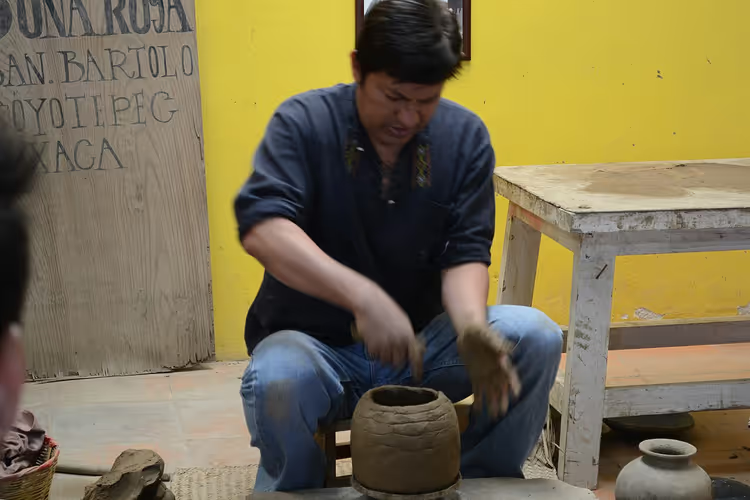
Pottery has become the emblem of the state of Oaxaca, and not by chance. About a hundred years ago, Doña Rosa's workshop appeared, producing pots, pitchers, and other household utensils. Over time, the technology changed, and black clay ceramics gained not only a mirror-like shine but also a clear, ringing sound when tapped. Such a piece looks great on a shelf, even when it stands silent.
Plates, mugs, tea sets, and other home items make good gifts. The best pieces are painted with Maya ornaments, national or botanical motifs, and scenes from mythology. A separate tradition is Talavera from Puebla and Tlaxcala, which was added to UNESCO's intangible heritage list in 2019 (UNESCO). Pack your purchase yourself; at the airport, boxes get wrapped worse.
- Where to look: Oaxaca, Puebla, workshops at museums.
- What to check: clear sound when tapped, even shine, workshop stamp.
- Who it's for: for the home and as a gift for a hostess.
- Not for: if you're flying with only a carry-on and no protection for fragile items.
11. Leather goods
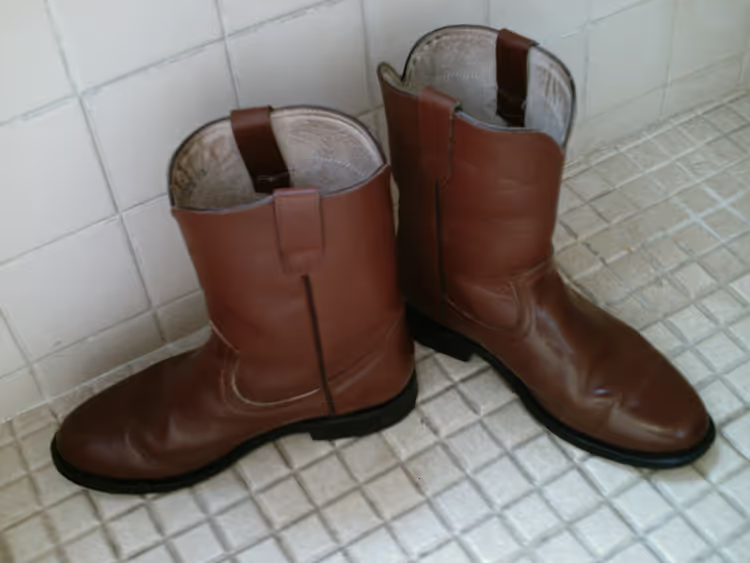
Mexican leather goods are valued for their tanning, and the best ones are made in Guanajuato. The main leather production historically developed here, supplying clothing to almost all of Latin America. If you don't make it to this city, don't worry: markets in other regions also offer a good selection of sandals, boots, belts, jackets, bags, and wallets.
Artisans make not only clothing but also small accessories: cases for glasses, knives, and other tools. These items are practical and last for many years. Check the stitching and the smell: well-tanned leather has no sharp chemical odor, and the stitching is even, with no skipped stitches. Ask the seller to show the inside of a belt; there you can see whether it's a single piece or glued layers.
- Where to look: Guanajuato, markets in León, Mexico City, Oaxaca.
- Who it's for: for a practical gift for a man or a woman.
- Not for: if the country you're bringing the gift to has a ban on products made from rare animal leathers.
- What to check: even stitching, no glued layers, natural smell.
12. Piñata
 © Diógenes ;) · CC BYPhoto: Diógenes ;), CC BY (https://creativecommons.org/licenses/by/2.0), Wikimedia Commons
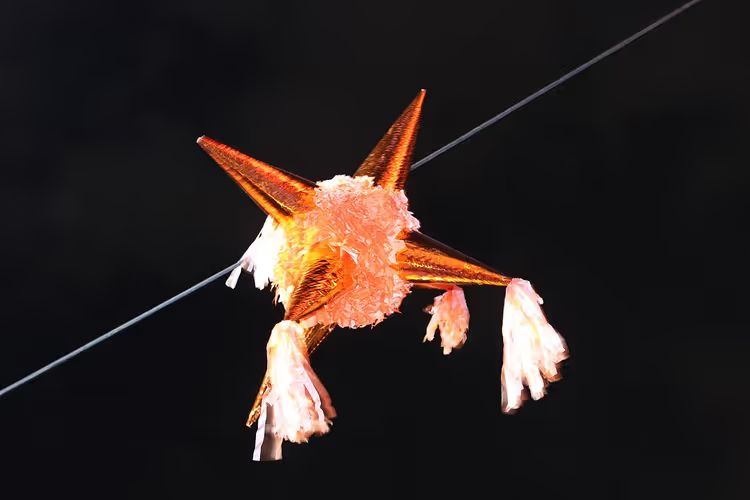
A piñata serves as a surprise for children and a party decoration. Traditionally, it's made from paper using the papier-mâché technique and shaped like an animal, a fairy-tale character, or a figure. The toy is filled with candy and then broken with sticks. The rules are simple, so children and adults quickly get into it.
No birthday, wedding, or New Year's carnival in Mexico goes without a piñata. The game is played outdoors or indoors, so size matters: a large figure simply won't fit in an apartment. The pieces are sold empty or filled, and the most popular shapes come from cartoons. Before flying, ask the seller how to transport the figure: papier-mâché doesn't handle pressure in the baggage hold well.
- Where to look: markets in Mexico City, Puebla, Oaxaca, party supply shops.
- Who it's for: for a children's party and a family gathering.
- Not for: if you're flying with only a carry-on.
- What to check: wall thickness, secure loop attachment, even paint.
13. Indigenous crafts
 © AlejandroLinaresGarcia · CC BY-SAPhoto: AlejandroLinaresGarcia, CC BY-SA (https://creativecommons.org/licenses/by-sa/4.0), Wikimedia Commons
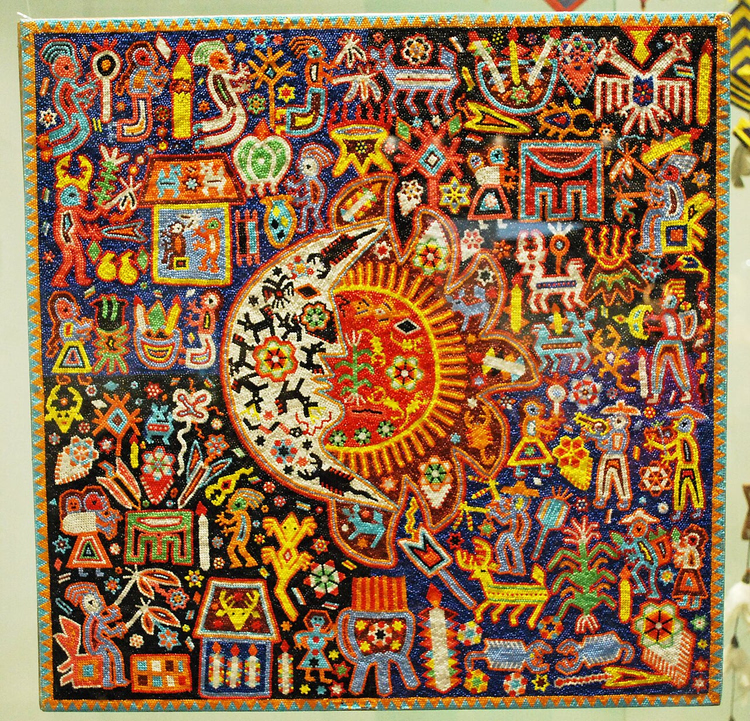
Mexican markets are packed with souvenirs of all kinds, including handmade items from the Maya and Huichol peoples. The crafts include wood carving, hand embroidery, unusual jewelry, and yarn paintings. The secrets of the craft are passed down from generation to generation, so the pieces haven't lost their character even after centuries.
Indigenous artisans' work reflects the national traits of their people: these aren't just souvenirs but yarn paintings, wooden figures, epic masks, and household items made from white or black clay. Small figurines and medallions remain affordable gifts. Ask which community the artisan is from: the Huichol have their own recognizable style with bright yarn, while the Maya use a different palette and themes.
- Where to look: markets in Oaxaca, San Cristóbal, Mexico City, Puebla.
- Who it's for: for those who appreciate handmade work and folk art.
- Not for: if you need a predictable mass-produced souvenir.
- What to check: hand embroidery, wood quality, paint durability.
14. Obsidian
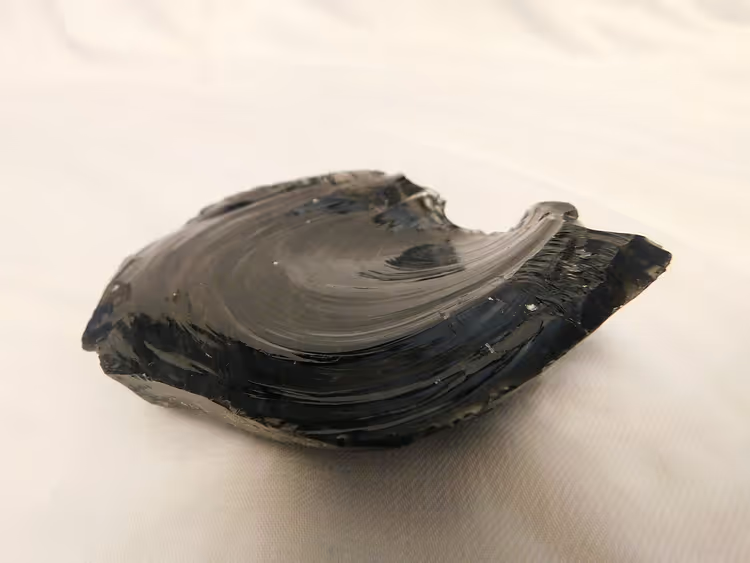
An Aztec knife makes an interesting gift for anyone who loves edged weapons. The blade is made from volcanic glass formed when lava cools quickly. Obsidian is close to steel in hardness, so it cuts almost anything, and the handle is often carved in the shape of an eagle's head from bone or wood. The sheath is sewn from rawhide.
The country is rich in obsidian ore deposits, so pieces of the rock are sold right near volcanoes and at nearby markets. Artifacts found by archaeologists are polished to a shine, even though indigenous tribes had no lathes. Today obsidian is used as a base for jewelry, figurines, and knives. Check the edge for chips: a thin blade is easy to damage in transit, so ask for rigid packaging.
- Where to look: markets in Mexico City and Puebla, shops near volcanic areas.
- Who it's for: mineral collectors and craft enthusiasts.
- Not for: if you're bringing a gift into a country with strict rules on importing edged weapons.
- What to check: no chips, handle quality, presence of a sheath.
15. Textiles
 © Juan Carlos Fonseca Mata · CC BY-SAPhoto: Juan Carlos Fonseca Mata, CC BY-SA (https://creativecommons.org/licenses/by-sa/4.0), Wikimedia Commons
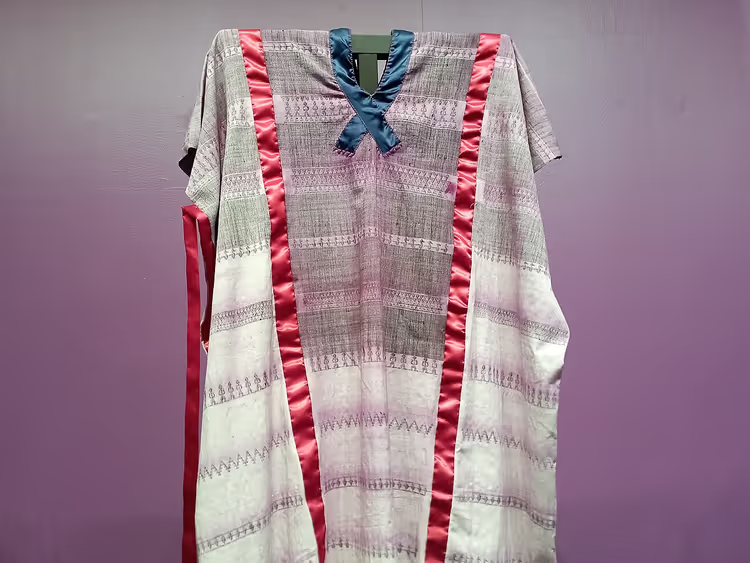
The state of Oaxaca has long been known for high-quality textiles: embroidery, weaving, and rugs. The work is strikingly beautiful, and prices at markets remain affordable. Stalls in larger cities are covered with woven blankets, hammocks, and home knitwear with interesting patterns. Some pieces are one of a kind because the artisan invents the design herself.
The most intricate patterns are found on traditional dresses. If the work is handmade, the item costs noticeably more than a factory-made tunic or sundress. Highly valued are huipil tunics made of white fabric with multicolored embroidery and rebozo shawls that local women wear over their shoulders. Natural dyes such as indigo and cochineal are often used for coloring. Wash these items by hand in cold water.
- Where to look: Oaxaca, Chiapas, markets in San Cristobal and Mexico City.
- What to check: weave density, colorfastness, evenness of embroidery.
- Who it's for: a gift for people who wear things with character.
- Not for: if you need a practical gift that requires no special care.
16. Blue amber
 © AlejandroLinaresGarcia · CC BY-SAPhoto: AlejandroLinaresGarcia, CC BY-SA (https://creativecommons.org/licenses/by-sa/4.0), Wikimedia Commons
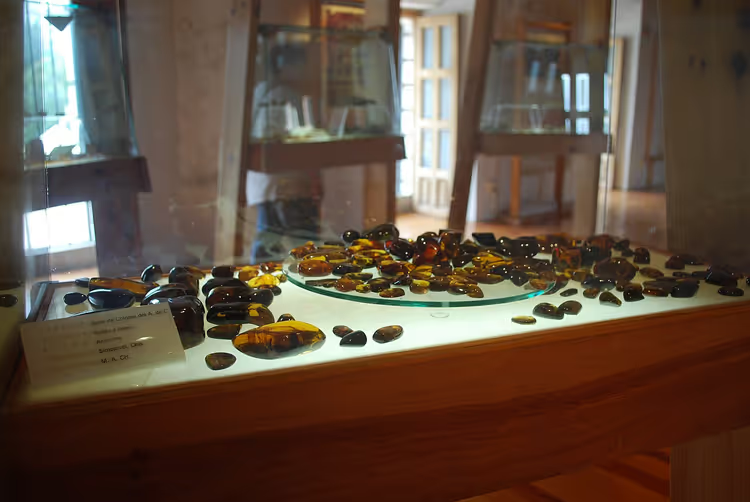
Blue amber jewelry is considered a rare gift because this stone is not found in Europe. It is found in Chiapas, where mining is done by hand in tunnels on mountain slopes, and the stone's color ranges from transparent and white to yellow, red, and black (Museo del Ámbar de Chiapas). The first mention of the mineral dates back to the time of Columbus, when his crew received the stone as a gift.
For a long time the color was attributed to volcanic activity and blue clay, but later scientists explained it as the result of carbon impurities. The same element allows the stone to phosphoresce and preserve biological material: insects, lizards, and frogs are found in the resin. Inclusions are rare and expensive. Buy jewelry in workshops and museums where you get a receipt and a description of the stone, not from street vendors.
- Where to look: San Cristobal de las Casas, workshops in Chiapas.
- What to check: certificate or stone description, receipt, no bubbles in the resin.
- Who it's for: a gift for stone connoisseurs.
- Not for: if you want to buy a gift blind and cheap.
17. Paintings
If you love art, it's worth stopping by local galleries and craft markets. Mexican painting from the colonial period is modest in its achievements and close to Spanish motifs, but religious and portrait painting is well represented in churches and museums. The older generation of artists is known for work done for Catholic churches.
Among modern names, Diego Rivera and Frida Kahlo are the ones most often mentioned. Their reproductions, posters, and authorized copies based on their work are sold in museum shops, and they are not cheap. Small mini-copies or magnets work for people who are not into art but want a nice picture. Buy at museum shops: pricing is fairer and the work's provenance is clearer.
- Where to look: museum shops, galleries in Mexico City, craft markets.
- Who it's for: a gift for people who collect art.
- Not for: if you're looking for a functional item for the home.
- What to check: artist's signature, print quality, rigid tube packaging.
18. Hammock
 © Bruno Rijsman · CC BY-SAPhoto: Bruno Rijsman, CC BY-SA (https://creativecommons.org/licenses/by-sa/2.0), Wikimedia Commons
A hammock comes in handy in the garden, on a camping trip, or just on the balcony. Mexican models are recognizable by the absence of a spreader bar: the fabric is more stable, and you can lie in it lengthwise or crosswise if the size allows. Handmade items from pure cotton are considered the best because they don't cut into your skin and hold weight well.
The Spanish word "hamaca" translates as a piece of fabric. Hammocks are bought in Merida and other cities of the Yucatan, where the craft is most developed. Check the weave and the suspension: knots should be tight and threads even, with no gaps. Ask the seller about the maximum load and don't take a thin decorative model for regular use. Rocking is calming, so the gift often stays in plain sight for the recipient.
- Where to look: Merida, markets in the Yucatan, Oaxaca, Quintana Roo.
- Who it's for: home, garden, and outdoor trips.
- Not for: if there's no space for two anchor points.
- What to check: knot density, thread composition, suspension quality.
19. Chili
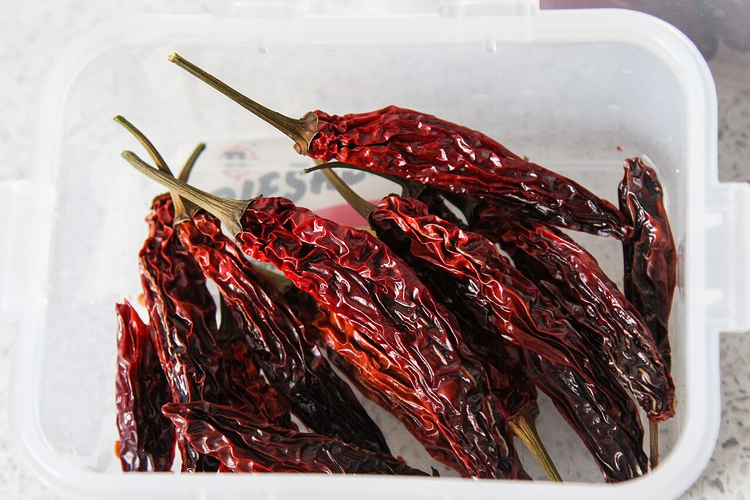 © Maja Dumat from Deutschland (Germany) · CC BYPhoto: Maja Dumat from Deutschland (Germany), CC BY (https://creativecommons.org/licenses/by/2.0), Wikimedia Commons
Mexican cuisine differs from European cuisine precisely in its heat: hot spices are added to almost every dish. The country grows dozens of cultivated chili varieties, and each delivers its own level of heat. The pepper is so popular that even with dried fruit on the street, the vendor will offer to add a pinch of hot powder.
Chili is bought fresh or dried, and before tasting you should ask the seller about the variety. Scientists believe that capsaicin from hot peppers improves circulation and affects the composition of gut flora. If you want to surprise friends, bring chili-based sauces: they survive a flight better than fresh pods. Store dried peppers in a sealed jar, otherwise they'll give their aroma to the entire suitcase.
- Where to look: markets in Oaxaca, Puebla, Mexico City, supermarkets.
- What to buy: dried varieties, pastes, and sauces in sealed packaging.
- Who it's for: people who cook spicy food.
- Not for: if there are small children in the family or a sensitive stomach.
20. Vanilla
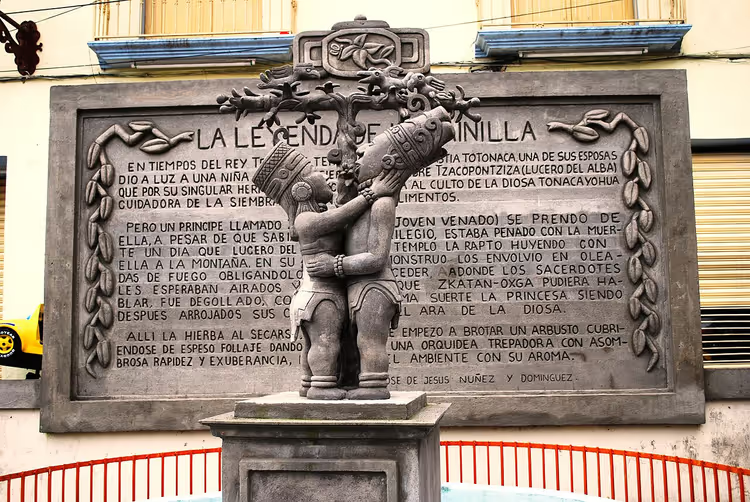 © AlejandroLinaresGarcia · CC BY-SAPhoto: AlejandroLinaresGarcia, CC BY-SA (https://creativecommons.org/licenses/by-sa/4.0), Wikimedia Commons
Cortes is considered the first European to try vanilla. The spice was highly valued among indigenous peoples and even served as currency. Because of the long and labor-intensive processing, vanilla remains one of the most expensive spices in the world, and cheap vanillin does not replicate its lasting aroma. Mexico is one of the main suppliers, so it's worth stocking up locally.
Vanilla is grown primarily in Veracruz, so it's more economical to buy it there or at markets in larger cities. The spice is sold as pods or in liquid form, and the best product is considered to be one with crystals on the surface. A good pod should be dark, flexible, and oily to the touch. Store vanilla in a sealed container away from strong-smelling spices.
- Where to look: markets in Veracruz, Papantla, Mexico City, specialty shops.
- What to check: dark color, pod flexibility, crystals, sealed packaging.
- Who it's for: a gift for people who make desserts.
- Not for: if you're looking for a cheap substitute for baking.
21. Fruit
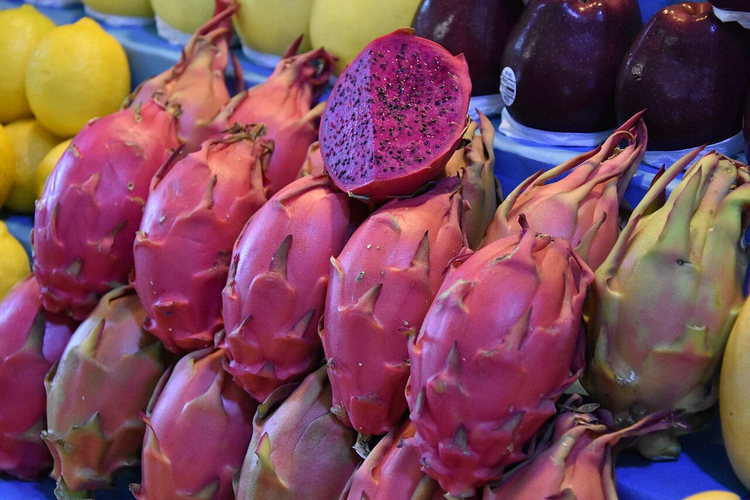 © Phyrexian · CC BY-SAPhoto: Phyrexian, CC BY-SA (https://creativecommons.org/licenses/by-sa/4.0), Wikimedia Commons
Fruit grown under the Mexican sun is different from what you find in European supermarkets. Oranges here can be green but still taste great, mandarins are full of seeds, and watermelons are sometimes oblong and nearly seedless. It's all worth trying on the spot, because fresh produce won't make it home with you.
The region's most surprising fruit is the cherimoya, which looks like a green sugar apple. Its seeds are poisonous, and the juice irritates the eyes if it gets in them, so it's best to peel it carefully and away from children. Black sapote resembles persimmon but has a different texture and aroma; it's used as a dessert filling and added to ice cream. Hygiene is essential: unwashed fruit easily becomes a source of infection.
For the plane, take unripe fruit such as guava, mango, papaya, or pitaya, which tastes like kiwi. As an alternative, bring candied figs, pears, pineapples, and pumpkin. Fresh fruit isn't allowed into every destination, so check import rules with your carrier in advance. At markets, exotic fruit is cheap, and that makes sense: Mexico is the native home of many of these fruits.
- Where to look: markets in Mexico City, Oaxaca, Mérida, coastal towns.
- What to buy: candied fruit, dried fruit, unripe fruit for carry-on.
- Not for: anyone hoping to bring fresh produce home.
- The catch: ripe tropical fruit gets bruised and spoils within a day in transit.
22. Cactus sweets
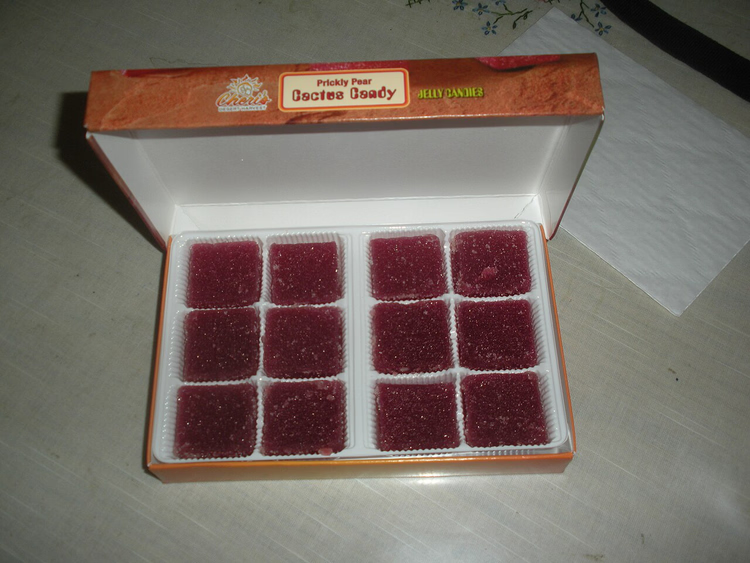 © Ixfd64 · CC BY-SAPhoto: Ixfd64, CC BY-SA (https://creativecommons.org/licenses/by-sa/4.0), Wikimedia Commons
Sweet souvenirs take up little luggage space and convey the mood better than a fridge magnet. Candied fruit and fruit preserves are made here from almost anything, but the most unusual are candies made from succulents. Specifically, the prickly pear cactus, which appears on the country's flag. Indigenous people value it for its hardiness: the plant fears neither heat nor cold and spreads quickly.
Prickly pieces are sold on every corner, and they're used in many dishes: boiled as a side, sliced into salads, dried and ground into a drink. Prickly pear candies and candied pieces travel well if the packaging is airtight. Try the product on the spot, because the taste is unusual and not everyone likes it. If you buy preserves, check the lid: sweet jars leak more often than anything else.
- Where to look: markets in Mexico City, Oaxaca, Puebla, supermarkets.
- What to buy: candied pieces, candies, preserves in glass with a tight lid.
- Who it's for: gifts for kids and coworkers.
- The catch: fresh cactus pieces won't survive a flight, so bringing them home is pointless.
23. Dulce de leche
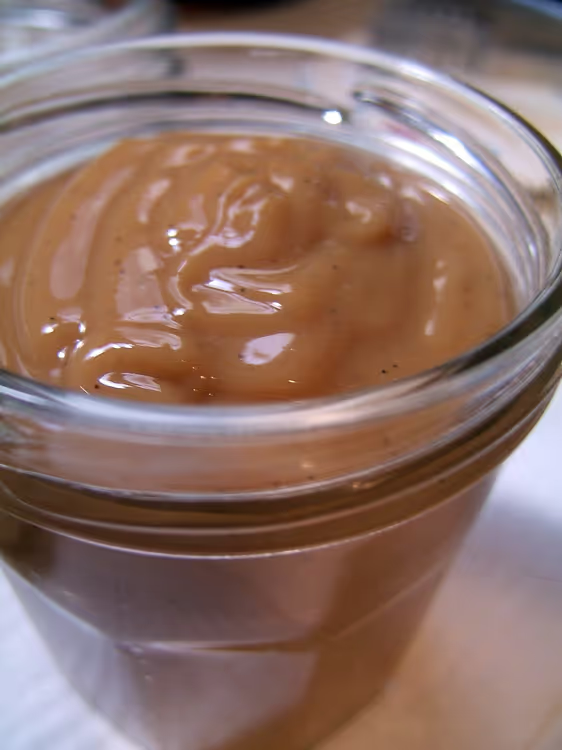 © audinou from Paris, France · CC BYPhoto: audinou from Paris, France, CC BY (https://creativecommons.org/licenses/by/2.0), Wikimedia Commons
Legend has it this dessert came about by accident: a cook left milk and sugar on the stove and came back to a burnt but delicious brown mass. Dulce de leche is used as a sauce, a spread, and a filling for baked goods. The recipe is simple: goat's milk and sugar are simmered over very low heat, stirred constantly.
Dulce de leche is served in every café as an ice cream topping and sold by weight and in jars. Candies are made from it as well. Bringing a jar or two home is easy if you pack them in a separate bag and put them in checked luggage. Check the expiration date and lid seal, because an opened jar spoils quickly in warm conditions.
- Where to look: supermarkets, markets, pastry shops, airports.
- What to buy: jars with tight lids, factory-packaged candies.
- Who it's for: gifts for anyone with a sweet tooth.
- Not for: if low sugar matters in a gift.
24. Cañas asadas
Mexican cuisine blends indigenous and European traditions, and after a hearty meal it's customary to serve sweet fruit or roasted sugarcane. Sugarcane is sweet even raw, but roasting brings out a different side of it. You can try the dish in cafés and street food stalls: it's popular with locals and inexpensive.
Growing sugarcane takes time: the crop matures in 12 to 16 months. Until recently, fields were set on fire before harvest, and the flames removed the leaves that interfered with pressing the juice. Today such burning is used less often, but the method increases sugar yield from the stalk. Sugarcane isn't brought home: it doesn't keep as a souvenir, and its place is on the menu, not on a shelf.
- Where to look: street food stalls, markets in Veracruz, Morelos, Oaxaca.
- Who it's for: those who want to try a local dish on the spot.
- Not for: if you're looking for a souvenir to take home.
- What to check: stalk freshness, clean surface, no mold.
25. Chocolate
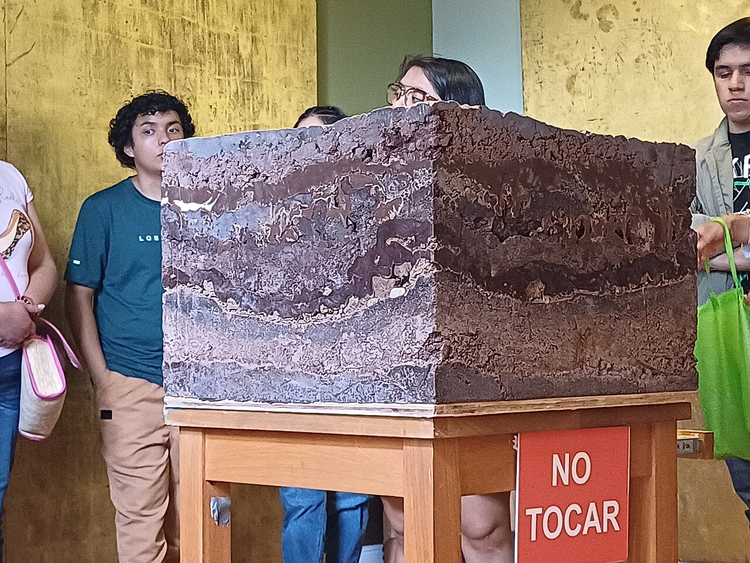 © José Luiz · CC BY-SAPhoto: José Luiz, CC BY-SA (https://creativecommons.org/licenses/by-sa/4.0), Wikimedia Commons
Indigenous peoples gave the world cacao, and the word "Xocolatl" translates as "bitter water." Cacao beans were roasted and mixed with chili, and the drink itself was considered magical and used in religious ceremonies. When cacao reached Europe, the recipe changed: the cool, spicy drink became hot and sweet.
In Mexico, bitter varieties are more prized, so not every tourist will appreciate a local bar. But the combinations can surprise: dark chocolate with chili, almonds, or cinnamon. Mexican chocolate usually means either a hot drink or solid bars with fillings. Buy it sealed in foil and store it in a cool place so it doesn't develop a gray film in transit.
- Where to look: markets in Oaxaca, Puebla, Mexico City, factory shops.
- What to buy: bars with chili, almonds, cinnamon, cacao butter.
- Who it's for: gifts for a host and lovers of dark chocolate.
- Not for: if you want the familiar milk chocolate taste.
26. Amaranth oil
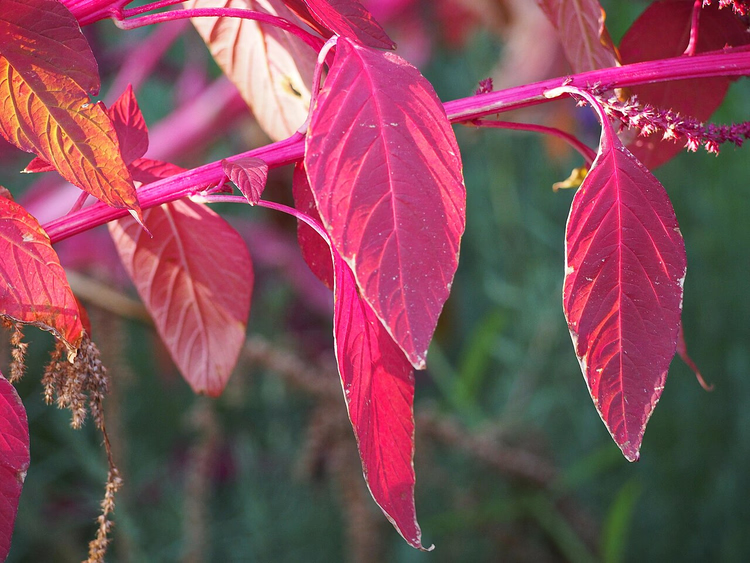 © Agnieszka Kwiecień, Nova · CC BY-SAPhoto: Agnieszka Kwiecień, Nova, CC BY-SA (https://creativecommons.org/licenses/by-sa/4.0), Wikimedia Commons
The Aztecs called amaranth "the golden grain of God" and used it in food and rituals. The plant has more than a hundred varieties, and its purple seed heads stand out in the fields. The seeds are cold-pressed into oil, like other quality natural oils. It has a pleasant nutty taste and a high content of biologically active compounds.
The oil is sold in glass and plastic containers in stores and markets, and it costs less than in Europe. It works well cold on salads, but don't fry with it: heating destroys its beneficial properties. Check the bottling date and color, because old product turns bitter. Put the bottle in a separate bag in your suitcase so the oil doesn't stain your clothes.
- Where to look: markets in Mexico City, Puebla, health food stores.
- What to check: bottling date, dark glass, intact lid.
- Who it's for: gifts for people who watch what they eat.
- Not for: if the recipient doesn't like nutty flavors.
27. Non-alcoholic drinks
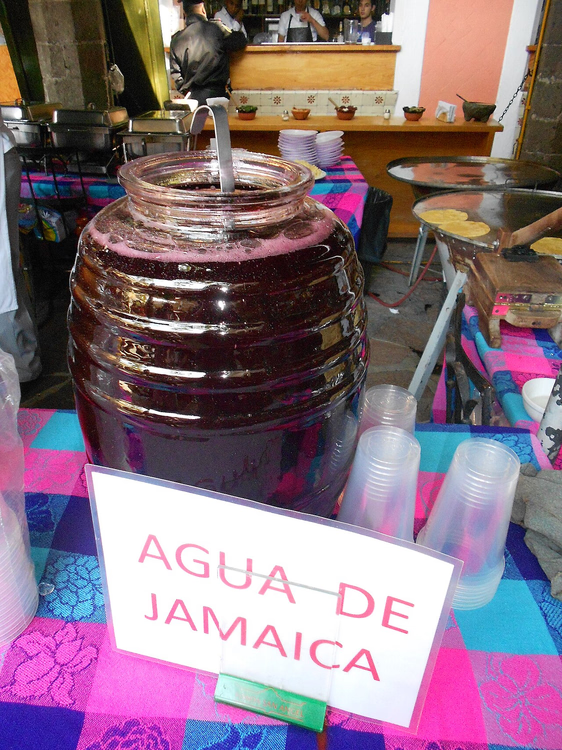 © marycarmenm · CC BYPhoto: marycarmenm, CC BY (https://creativecommons.org/licenses/by/2.0), Wikimedia Commons
A sip of milky-white horchata is wonderfully refreshing in the heat and, according to reviews, aids digestion. The drink has nothing to do with dairy: it's made from rice flour, ground almonds, sesame, barley, or tiger nut tubers. Horchata is Spanish in origin but truly took root in Mexico. It's sold on tap and in bottles or cartons in large supermarkets.
Cold hibiscus tea, known as agua de jamaica, is also popular. The drink has a deep scarlet color and an aroma with notes of rose and cranberry. It's indispensable in hot weather, especially over crushed ice, but it's rarely brought home because dried hibiscus is sold on every continent. Both drinks contain vitamins and minerals, and they're often chosen by people watching their weight.
- Where to look: supermarkets, markets, cafés, street stalls.
- What to buy: concentrate and dried hibiscus in sealed packaging.
- Who it's for: those who drink non-alcoholic beverages and watch their diet.
- Not for: if you're looking for a long-lasting souvenir without packaging.
28. Coffee
 © Bluerasberry · CC BY-SAPhoto: Bluerasberry, CC BY-SA (https://creativecommons.org/licenses/by-sa/4.0), Wikimedia Commons
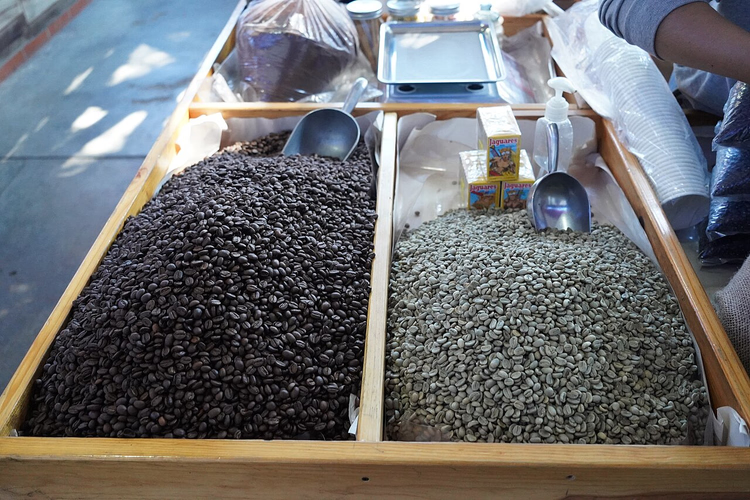
Coffee in Mexico is grown without excessive restrictions: you can even transport loose product without identifying marks. The country was not the tree's homeland, but over two centuries it became a notable exporter. According to USDA estimates, the 2024/2025 season harvest was about 3.89 million 60 kg bags (USDA Foreign Agricultural Service). The flavor varies from region to region, and connoisseurs distinguish nutty, caramel, and vanilla notes.
Arabica was chosen for cultivation: it has a pleasant acidity and a light citrus aftertaste. Coffee from mountain areas is considered the most valuable, though recommending a single variety is difficult because each is good in its own way. The bean is used not only for the beverage but also as an ingredient in dishes. Buy whole beans if you want to preserve the aroma, and ground if the gift needs to be a sure thing.
- Where to find: Veracruz, Chiapas, Oaxaca, markets and roasting workshops.
- What to check: roast date, intact packaging, region on the label.
- Who it's for: a gift for colleagues and friends who brew coffee at home.
- Not for: if the recipient only buys ground coffee from the supermarket.
29. Tequila
 © Juan Carlos Fonseca Mata · CC BY-SAPhoto: Juan Carlos Fonseca Mata, CC BY-SA (https://creativecommons.org/licenses/by-sa/4.0), Wikimedia Commons
Almost every tourist buys tequila, and there really are plenty of varieties here. By unofficial counts there are more than three hundred varieties, but officially four categories are recognized. The drink is made only from blue agave, Agave tequilana Weber, and the alcohol content by standard ranges from 35 to 55% (Consejo Regulador del Tequila). Agave, by the way, is not a cactus but a plant in the asparagus family.
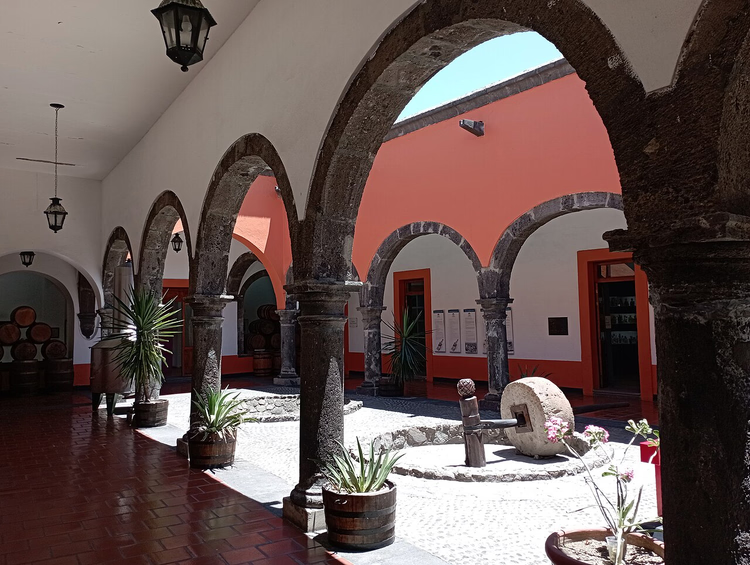
Aging varies, from two months and longer. The extra añejo category is aged for three years or more. The color and character of the drink depend on the aging. A quality product is marked with "100% de agave" or "100% blue agave" (verified on the tequila producers' website), and that is exactly the tequila locals themselves drink. It is produced primarily in Jalisco, and that is where you should go if you want to see the processing stages and a tasting. Supermarkets usually have lower prices than tourist shops and the airport.
- Where to find: supermarkets, licensed stores, Jalisco distilleries.
- What to check: "de agave" on the label, NOM number, intact seal.
- Who it's for: a gift for adults and for a home collection.
- Not for: if the recipient doesn't drink hard liquor.
30. Mezcal
 © The original uploader was Jcmaco at English Wikipedia . · CC BY-SAPhoto: The original uploader was Jcmaco at English Wikipedia ., CC BY-SA (https://creativecommons.org/licenses/by-sa/2.5), Wikimedia Commons
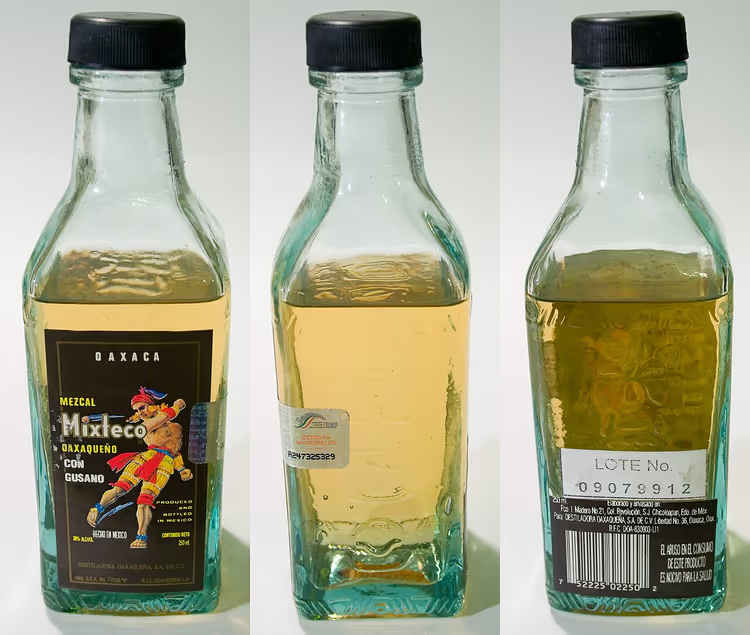
There is so much alcohol in Mexican stores that it's easy to get overwhelmed at the shelf. Mezcal is the name for all drinks made from agave juice, and tequila belongs to this family as a drink made from one specific type of agave. Among the recognizable brands of agave distillates on the shelves are Don Julio, Corralejo, and Herradura. Sometimes a worm is placed in the bottle, but that is more of a packaging feature than a sign of quality.
In Mexico City there is a museum dedicated to tequila and mezcal: during the tour, drinks are offered for tasting, and the tasting is paid. You can buy a bottle you like and take it with you. Artisans have long made bottles by hand and decorated them to their own taste, so mezcal often costs less than the container it's poured into. Collectible packaging is not found with all producers, so a rare bottle is sought in specialty stores.
- Where to find: specialty stores, Oaxaca markets, museums and tasting rooms.
- What to check: category on the label, aging year, intact cork.
- Who it's for: a gift for those who know their hard liquor.
- Not for: if the recipient expects a smooth taste without smoky notes.
⁉️🤔 Frequently asked questions
How many souvenirs can you realistically bring in one suitcase?
Go by the weight and volume of your carry-on, not the number of gifts. Textiles, soap, and candied fruit take up little space, while ceramics, a hammock, and glass jars are heavier than they seem. Alcohol and liquids are easier to check in. Make your shopping list in advance and leave a couple of kilograms of buffer.
What should you bring for colleagues and distant acquaintances?
For bulk gifts, go with handmade soap, whole-bean coffee, candied fruit, cactus candy, and small figurines. These things are inexpensive, don't break, and don't take up much space. Save alcohol, amber, and ceramics for close friends. That way you won't blow your budget or carry extra weight.
How do you avoid buying fake tequila?
Look at the label and check for "100% de agave" or "100% blue agave". The NOM number confirms that the producer operates under the official standard, and you can verify the distillery in the Consejo Regulador registry. Buy at a supermarket or licensed store and check the cork's integrity before paying.
Where is it cheaper to buy souvenirs?
The farther from the tourist center, the lower the price for the same quality. Outlying markets, local shops, and workshops offer the best prices, while the airport and hotel stores are the most expensive. Bargaining is appropriate at markets, but not in museum shops. Compare two or three stalls before buying.
What can't you take out of Mexico?
Genuine archaeological objects are prohibited from export, and this applies to found artifacts made of clay, stone, and metal. Fakes made to look ancient are sold at markets, but they also require caution. Check the rules with the seller and don't buy items without provenance documents.
If you want to see the markets and workshops with your own eyes, check out the overview below.
In short: what's worth booking
If you're on a limited budget, go with handmade soap, coffee, and candied cactus fruit. If you need a gift with character, choose an alebrije from Oaxaca, embroidered textiles, or skulls. For the home, consider ceramics and a hammock, and for close friends who know their drinks, tequila labeled "100% de agave" and mezcal in a handmade bottle. Shop at markets away from tourist streets: it's cheaper and the selection is wider. The list of certified tequila producers will help you verify a bottle before paying.

A small editorial team writing guides for independent travel. We travel ourselves, but we haven’t been everywhere, so we check prices, opening hours and how to get there against official sources.