













Día de los Muertos 2026: where in Mexico they celebrate brightest
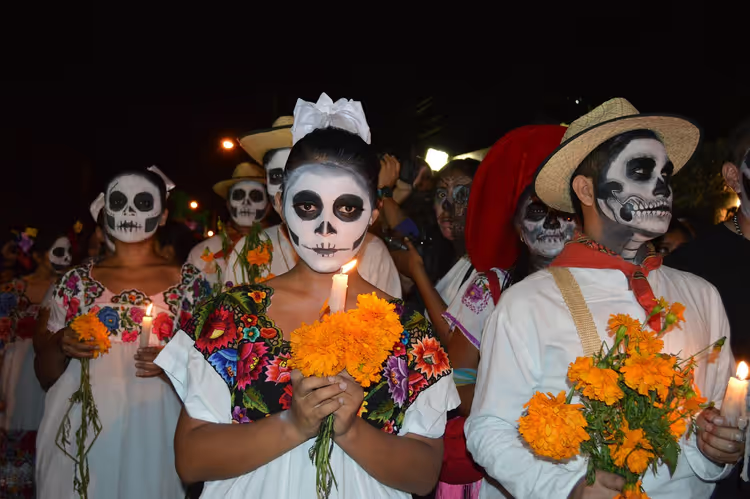
In Mexico, during the first days of November, cemeteries glow orange. Catrinas walk the streets, street bands play, and homes set up altars for those who are no longer around.
The holiday is called Día de los Muertos, Day of the Dead. It runs from October 31 through November 2 (as of 09/2026, Mexico City events calendar) and has almost nothing in common with Halloween spookiness. Nobody scares anyone here. The dead are welcomed as guests: families cook their favorite dishes, set out cigarettes and tequila, sing and dance at graves until dawn.
The challenge lies elsewhere. Mexico is big, and in some states the holiday has long become a show for tourists, while in others it remains a family ritual at a village cemetery. We've gathered seven places where the tradition is alive, and added practical details: dates, travel, and lodging.
For planning, this means one thing: choose a specific spot, not the country as a whole. Near Mexico City in Mixquic, the cemetery is decorated until morning; in Oaxaca, night processions move through the streets; and on Lake Pátzcuaro, fishermen sail to the island of Janitzio with candles at the bows of their boats. If time is short, one city and two nights will be enough.
One more thing. Hotels, tours, and tickets for the holiday dates sell out in advance. In Oaxaca and Pátzcuaro, there are almost no available rooms during these days, so book your lodging before you buy plane tickets.
Ad: this article contains affiliate links, we earn a commission if you book through them, at no extra cost to you.
Día de los Muertos: the essentials
💡 In short:
- The holiday runs from October 31 through November 2: the first night is dedicated to deceased children, the second to adults.
- Classic locations: Mexico City with altars at the Zócalo and the Gran Desfile, Mixquic, Oaxaca, Pátzcuaro with Janitzio Island, and Pomuch in Campeche.
- Main symbols: the ofrenda (home altar), Cempasúchil, Pan de Muerto, sugar skulls, and catrina makeup.
- Dates and programs: as of 09/2026, verified on the official Xcaret festival website and in the Oaxaca holiday guide.
History: why death is celebrated here
Día de los Muertos refers to both a single day and several days around the beginning of November. The meaning is simple: death here is seen not as an end, but as the start of a new stretch of the journey. Once a year, the dead return home to their families, and this reunion should be celebrated the way the person enjoyed life.
The tradition predates the Spanish conquest. It was kept by the Maya and the Aztecs, which is why the holiday is most deeply rooted in southern Mexico, while in the north of the country it looks more modest. Later, the rituals overlapped with the Catholic calendar: November 1 marks All Saints' Day, November 2 marks All Souls' Day.
Each night is dedicated to its own departed. On the night of October 31 to November 1, children arrive; they are called angelitos, little angels. The following night, deceased adults visit the living. That's why you'll see toys and sweets next to glasses of mezcal at cemeteries.
What matters for us is something else. The holiday is not about mourning at all: families prepare for it for weeks, buy candles and flowers, clean graves, and arrange for musicians. That is the main reason Día de los Muertos is worth seeing at least once.
The ritual looks different from state to state, but the logic is the same: the grave or altar is made beautiful, and the guest is "received." Next, we'll cover food, decor, and makeup, and then show seven places worth traveling to for this.
Traditions and customs: what you'll see
Below is what you'll find in practically every home and every cemetery during these days. Some details vary from state to state, but the overall set of symbols is the same, and that's what creates the holiday's distinctive atmosphere.
 AIIllustrative image: AI-generated
Food during the Days of the Dead
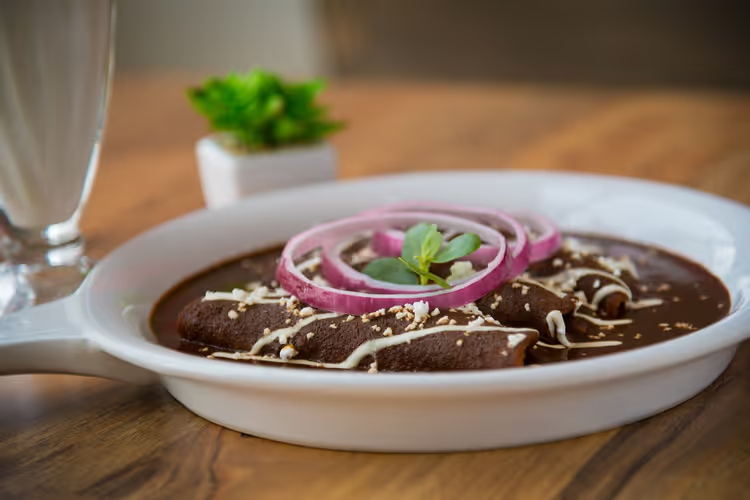
The menu varies from family to family: relatives cook what the deceased loved in life. Most often you'll see Mole, Tamales, and Pozole on the table, but your neighbors will have a different spread. Some treats only appear in stores during Día de los Muertos season, and you won't find them outside the holiday weeks.
You should try everything you're offered. Markets sell small portions during these days, so you can put together a full tasting in one evening.
Pan de Muerto: bread baked before the holiday
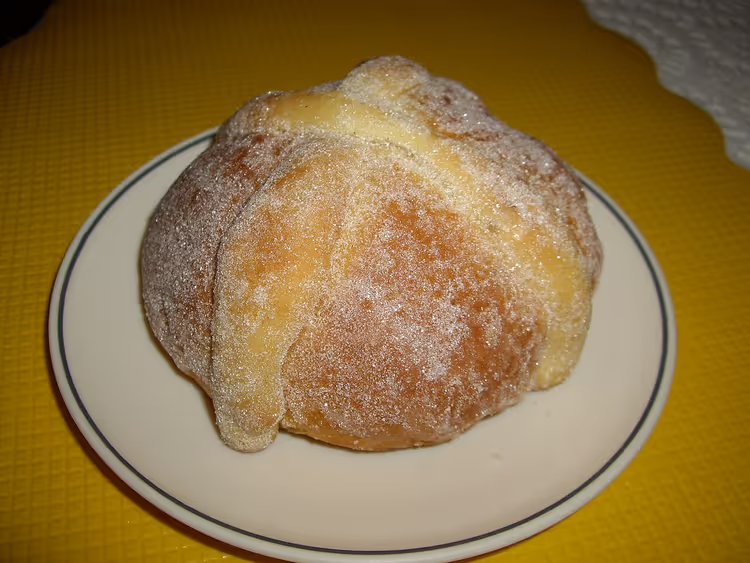
The most recognizable symbol of the holiday, Pan de Muerto, is a soft sweet pastry. It's decorated on top with "bones" made from the same dough, and fillings are becoming increasingly common inside. The shapes and fillings have diversified enormously in recent years.
It appears in bakeries well before the holiday, so you can try the bread without rushing or waiting in line. In the Roma neighborhood of Mexico City, a small food festival centered on Pan de Muerto usually takes place before the holiday at Huerto Roma Verde. If you're in the capital during these weeks, stop by for fresh pastries and coffee.
Sugar skulls
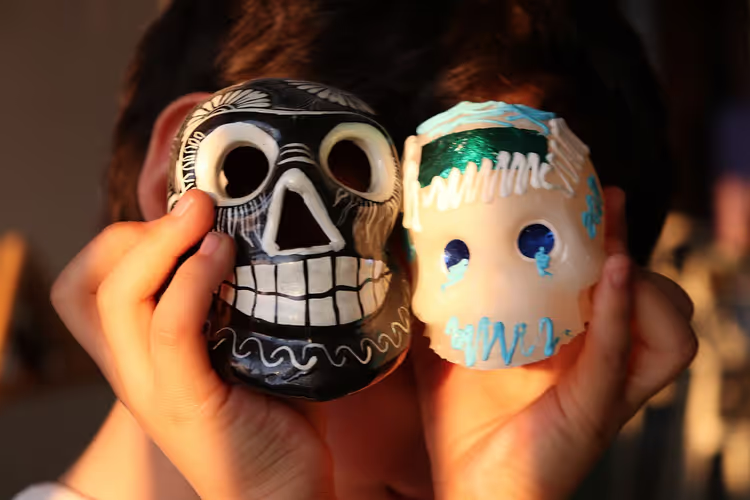
Sugar skulls, calaveras de azúcar, are brightly painted and appear on almost every altar. They're decor, not dessert: the sugar is hard, the taste is mediocre, and nobody's in a hurry to eat them. It's better to buy them at a market, where the selection is larger and the painting is more detailed.
 © Ehécatl Cabrera · CC BY-SAPhoto: Ehécatl Cabrera, CC BY-SA (https://creativecommons.org/licenses/by-sa/4.0), Wikimedia Commons
Cempasúchil: the orange flower of the dead
Cempasúchil, an orange marigold, is literally everywhere during these days: on altars, in the hands of passersby, in cemeteries. It's what gives the holiday its signature color, recognizable from afar.
 © ProtoplasmaKid · CC BY-SAPhoto: ProtoplasmaKid, CC BY-SA (https://creativecommons.org/licenses/by-sa/4.0), Wikimedia Commons
A touching legend is tied to this flower. Xochitl and Huitzilin were friends since childhood, and when they grew up, they fell in love. They would climb a mountain and bring flowers to the sun god Tonatiuh, who answered them with warm rays. On that same mountain they swore eternal love to each other.
Then Huitzilin went to war and died. Upon hearing this, Xochitl climbed back up to Tonatiuh and asked him to reunite her with her beloved. The god was moved by their love and turned her into a flower of the same bright color as the sun's rays. A hummingbird flew to the flower, and in it they recognized the reborn Huitzilin. The flower opened twenty petals and released a strong fragrance. Since then the lovers have been together, as long as there are hummingbirds and Cempasúchil on earth.
Today altars and cemeteries are decorated with this very flower. During the holiday weeks it's even used in desserts, such as Cempasúchil ice cream in Cholula.
Papel Picado: paper garlands
Papel Picado is garlands made of cut colored paper. For the holiday, skulls and "skeletons" are cut into them, and these garlands decorate streets, homes, and ofrendas. Papel Picado is easy to bring home as a souvenir; you can buy it at any market for little money.
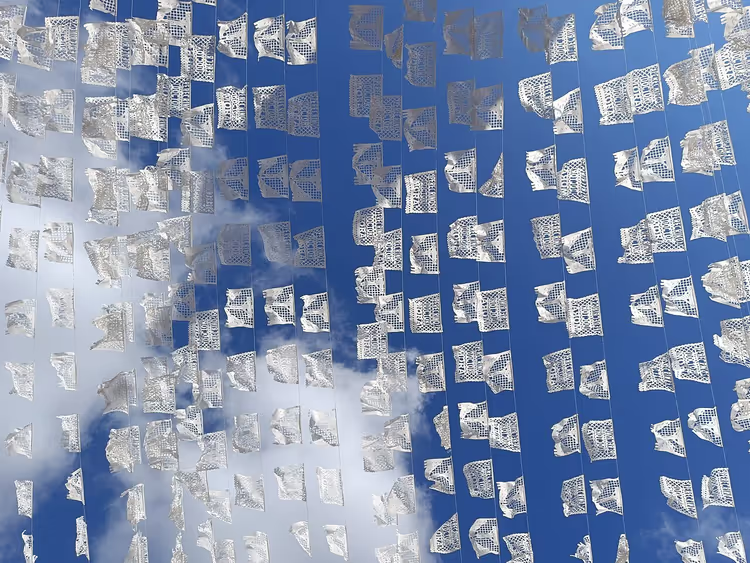 © Juan Carlos Fonseca Mata · CC BY-SAPhoto: Juan Carlos Fonseca Mata, CC BY-SA (https://creativecommons.org/licenses/by-sa/4.0), Wikimedia Commons
The designs on different garlands vary, so grab several at once to assemble a long strand.
Ofrenda: a three-level altar
Ofrenda translates roughly as "offering." It's the main home element of the holiday: families build altars in memory of their deceased and leave them up for several days.
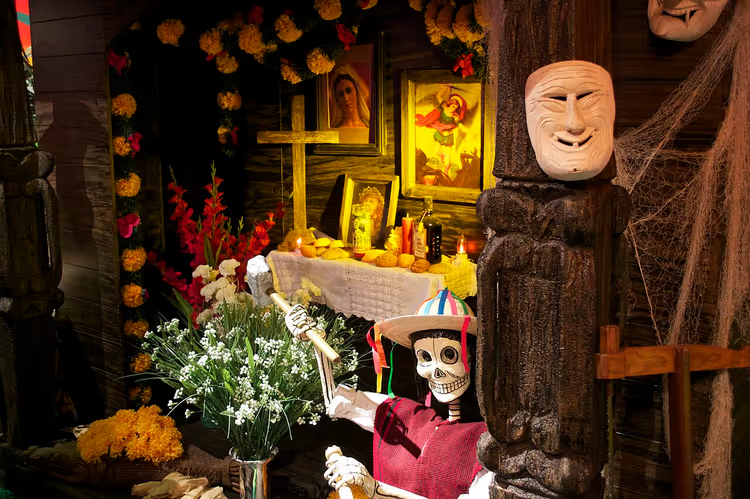 © Luisroj96 · CC BY-SAPhoto: Luisroj96, CC BY-SA (https://creativecommons.org/licenses/by-sa/3.0), Wikimedia Commons
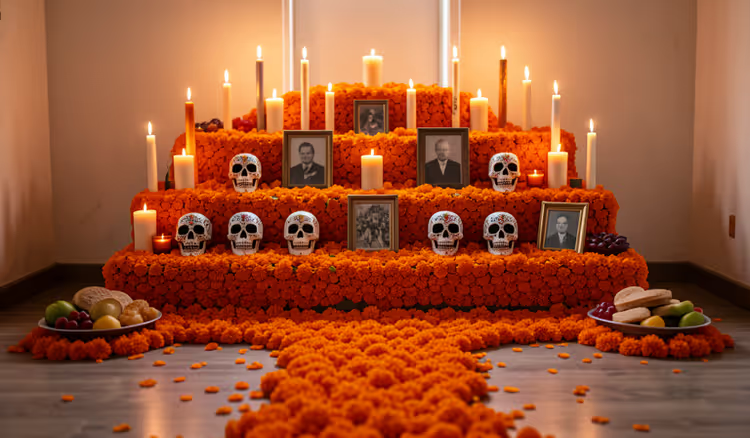
A classic ofrenda is built in three levels. At the top is a photograph of the person the altar is made for. Figures of saints, such as the Virgin of Guadalupe, are often added nearby.
On the middle level, people place what the person loved. Usually it's food; for children it's toys, and for adults there might be shots of tequila and cigarettes. The bottom level holds candles and a bowl of water so the guest from the other world can wash up after the journey.
The altar usually represents all four elements, such as water in the bowl and fire from the candles. Cempasúchil, Pan de Muerto, and sugar skulls are the essential set for any ofrenda.
Ofrendas aren't built only at home. Huge altars appear in plazas and university courtyards to honor the country's notable figures.
Catrina makeup
The classic holiday makeup is the catrina, not the "sugar skull" from Halloween stores. Faces are painted brightly, with rhinestones and flowers added, and you can get it done in any city: there are plenty of artists during these days.
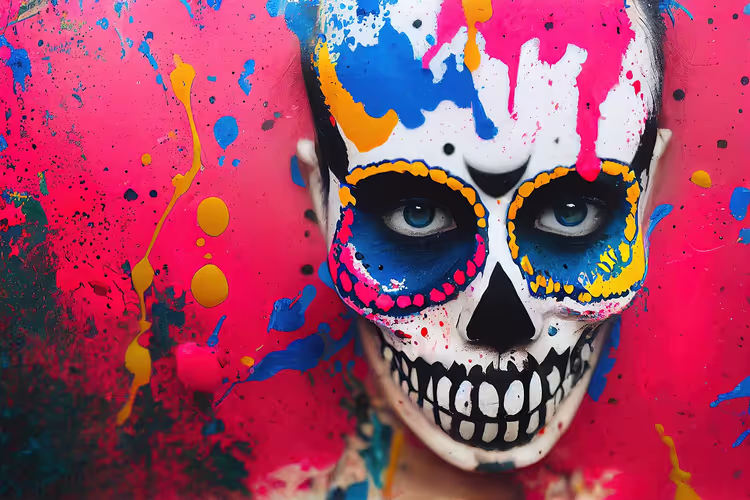
La Calavera Catrina was created by artist José Guadalupe Posada. At the beginning of the last century, he drew a dapperly dressed skeleton as a caricature of the Mexican upper class, which imitated European fashion and thereby set itself apart from everyone else. The word catrina in Spanish referred to the wealthy.
During the national revolution, the image took hold as a symbol of the Mexican people, and since then the catrina at the holiday means a simple thing: in death, everyone is equal. That's why the makeup is cheerful rather than scary.
The price depends on the complexity of the design and the location. In Mexico City, a quick and affordable option can be found in Chapultepec Park. If you want elaborate painting, book in advance: during the holiday days, good artists are booked by the hour.
Santa Muerte: a cult, not a holiday
Santa Muerte is a separate cult that's often confused with Día de los Muertos. The figure is depicted as a skeleton with a scythe, crown, and robe, and believers say she brings luck, health, and love. People turn to her when they need to recover what was lost, including the dead.
The holiday and the cult are only loosely connected: it's more of an interesting slice of Mexican culture than part of the tradition. Appeals to La Muerte are called black magic, and she's mostly found in criminal circles rather than on family altars. She shouldn't be lumped together with an ofrenda.
Cash and cards during the holiday
In cities, cards are accepted almost everywhere, but at markets, in villages, and at cemeteries, keep cash on hand. During the holiday days, ATMs run out quickly, and taxis and street artists work only for cash. Small bills will come in handy for entry fees, parking, and purchases at stalls.

What else to know
Many symbols that abroad are attributed to Halloween actually belong to Día de los Muertos in Mexico. The catrina, sugar skulls, orange flowers, and garlands appeared long before the holiday became a tourist attraction.
For shopping, go to markets rather than souvenir shops in the center. There you'll find flowers, candles, paper, and pastries, all cheaper. Vendors will gladly explain what each item on the altar is for.
Cempasúchil blooms in autumn, so you'll only see this quantity of flowers during these weeks. The rest of the year, altars are decorated with other plants.
Face-painting workshops in the catrina style are held right in plazas and at fairs.
Among the dishes, pay attention to Mole: a thick sauce that's cooked in large pots during these days.
On someone else's altar, the food is meant for the dead, so don't take it or touch other people's things. Ask permission if you want to photograph an altar in someone's home.
You can even set up an altar in a hotel. Candles, a photograph, and flowers are enough, and many hotels in Mexico City and Oaxaca put up small ofrendas in the lobby themselves.
And a note about photos. Photographing decorations isn't forbidden, but you shouldn't photograph people at graves without permission. Mexicans celebrate openly and don't mind attention when it's respectful.
Now, about places. Below are seven destinations that offer different experiences: a capital-city show, a village velación, an urban street festival, and a family ritual at the cemetery.
 AIIllustrative image: AI-generated
Mexico City: altars on the Zocalo and the big parade
The capital offers the most convenient option for a first introduction to the holiday. Events run for more than one day and are spread across different neighborhoods. A separate plus is logistics: hotels, the metro, and taxis are available around the clock.
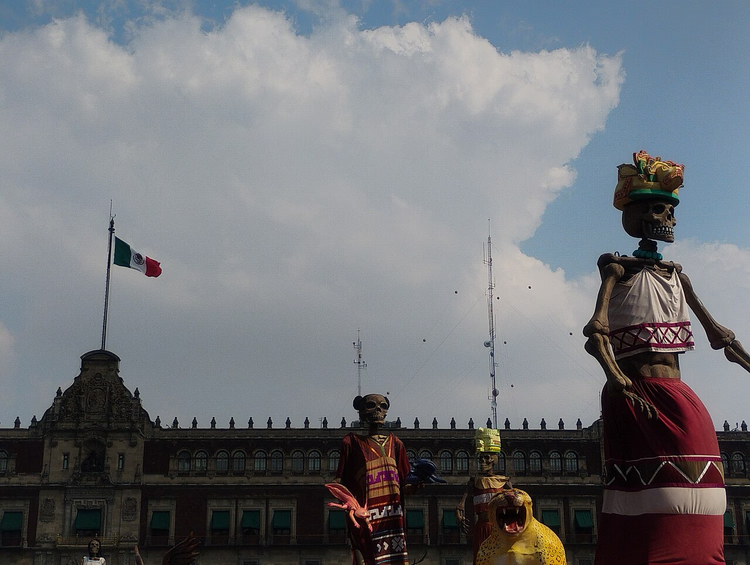 © Ferfive · CC BYPhoto: Ferfive, CC BY (https://creativecommons.org/licenses/by/4.0), Wikimedia Commons
Ofrendas on the Zocalo
Every year, enormous ofrendas are built on the city's main square, the Zocalo. The theme changes, but the scale remains: the altars take up a significant part of the square and work as an open-air exhibition. Admission is free, and in the evening, when the lighting comes on, they look completely different than during the day. Bring a warm jacket: November in the capital is chilly.
 © Luisalvaz · CC BY-SAPhoto: Luisalvaz, CC BY-SA (https://creativecommons.org/licenses/by-sa/4.0), Wikimedia Commons
The mega-ofrendas start being assembled in advance and are left standing for several days after the official dates. Come at opening time or closer to evening; midday has the densest crowd here.
Gran Desfile along Reforma
The parade in the capital is young by Mexican standards. The first costumed procession took place in 2015 for the filming of a James Bond movie, and since 2016 it has been held annually (as of 08/2026, parade roundup). Locals call the procession Mega Desfile, and it is one of the largest street productions in Latin America. Check the exact parade date for 2026 before your trip (as of 08/2026, Informador).
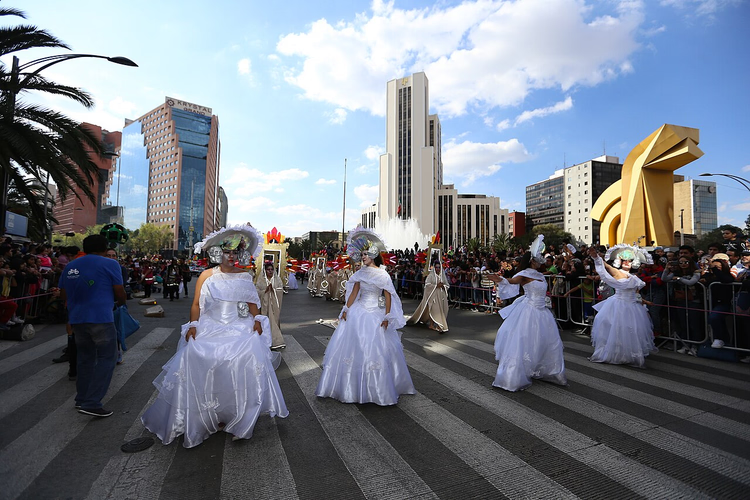
The route runs along Reforma Avenue to the Zocalo. Arrive at least two hours early, otherwise you will end up behind people's backs: from deep in the crowd, the costumes and platforms are almost impossible to see. If you handle crowds poorly, it is better to choose the smaller parade in Coyoacan.
UNAM mega-ofrendas
The country's main university also builds its own mega-ofrendas, and each year they are dedicated to a famous person. The location changes from year to year, and campus access on these days is organized more smoothly than before. Check the university's event calendar: dates and starting points are announced separately.
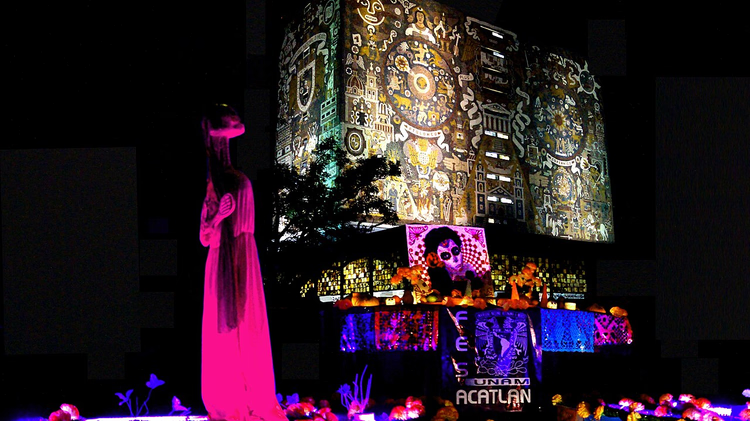 © Luzangelica453 · CC BY-SAPhoto: Luzangelica453, CC BY-SA (https://creativecommons.org/licenses/by-sa/3.0), Wikimedia Commons
Coyoacan: Casa de Emilio Indio Fernandez
If the center is too crowded, head to Coyoacan. The main attraction here is La Casa de Emilio Indio Fernandez: the entire house is decorated so densely that it turns into one big ofrenda. It also stays open for several days after the holiday, so latecomers can still make it.
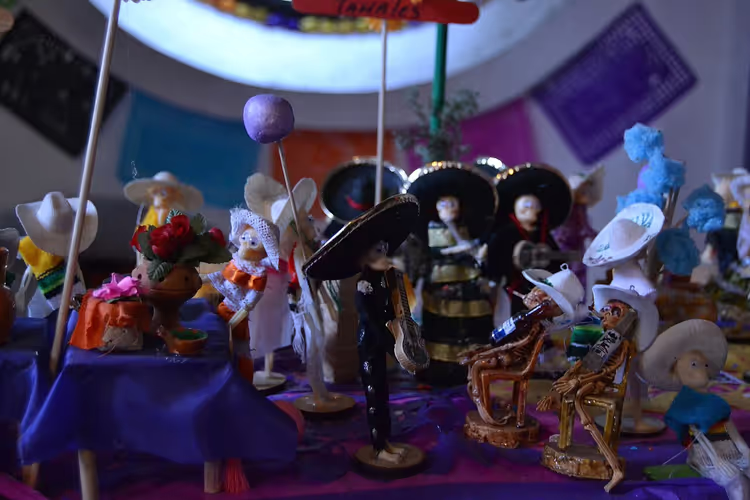 © Lmdrgl · CC BY-SAPhoto: Lmdrgl, CC BY-SA (https://creativecommons.org/licenses/by-sa/4.0), Wikimedia Commons
Coyoacan also hosts its own small catrina parade. It is noticeably calmer than the central procession, and you can take your time looking at the costumes.
The neighborhood is also convenient because markets with colorful stalls are nearby. You can also try seasonal baked goods at prices lower than in the center.
For trip planning, compare options in advance: in the capital, it is convenient to take a short tour of the holiday spots so you don't waste time on transfers.
Tours and tickets in Mexico City
Guided tours, skip-the-line tickets and activities — most offers can be cancelled free of charge.
See offers on GetYourGuideThe widget loads once you give your consent.
Mixquic: the village with the most beautiful velacion
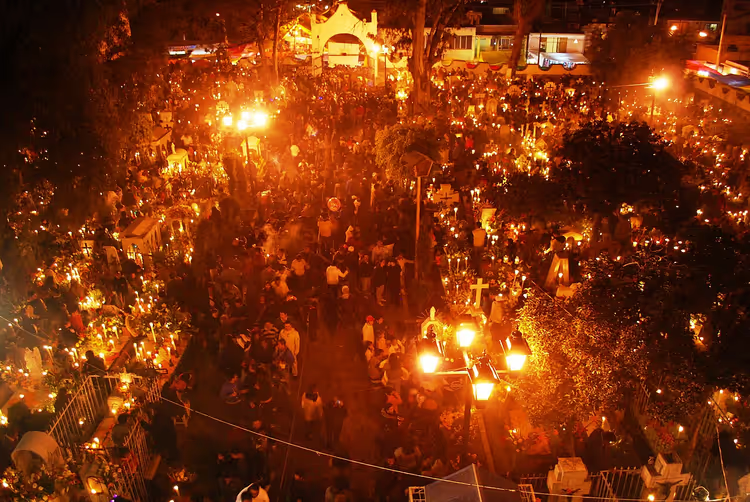 © Thelmadatter · CC BY-SAPhoto: Thelmadatter, CC BY-SA (https://creativecommons.org/licenses/by-sa/3.0), Wikimedia Commons
South of the capital lies San Andres Mixquic, a former island settlement that Mexico City gradually absorbed. People once farmed small plots between canals, and that layout left behind narrow streets and blocks that feel like a village.
The holiday in Mixquic is known far beyond the district. It all comes down to the cemetery, which is decorated with particular care, and the nighttime velacion, when graves are lit with candles.
Getting here takes longer than traveling around the city center, but the atmosphere is worth it. You will see not an exhibition for tourists, but a real village ritual.
How the velacion works in Mixquic
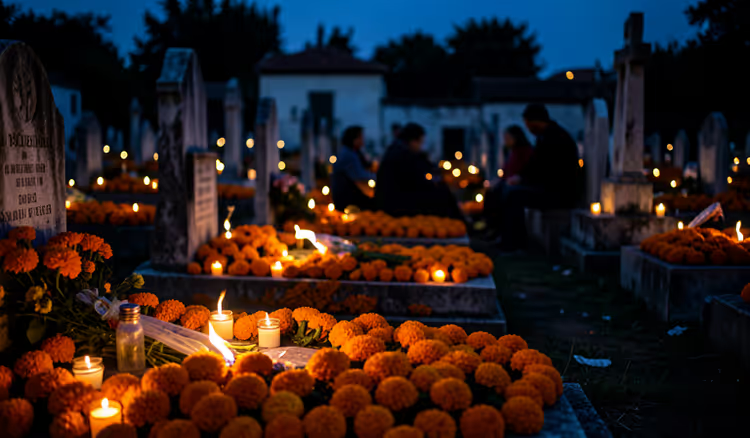
The velacion is a nighttime vigil at the graves. The cemetery turns into a sea of orange flowers and candles, music plays between the rows, and small ensembles perform on the nearby streets. The whole village is flooded with light in the same color as the Cempasuchil.
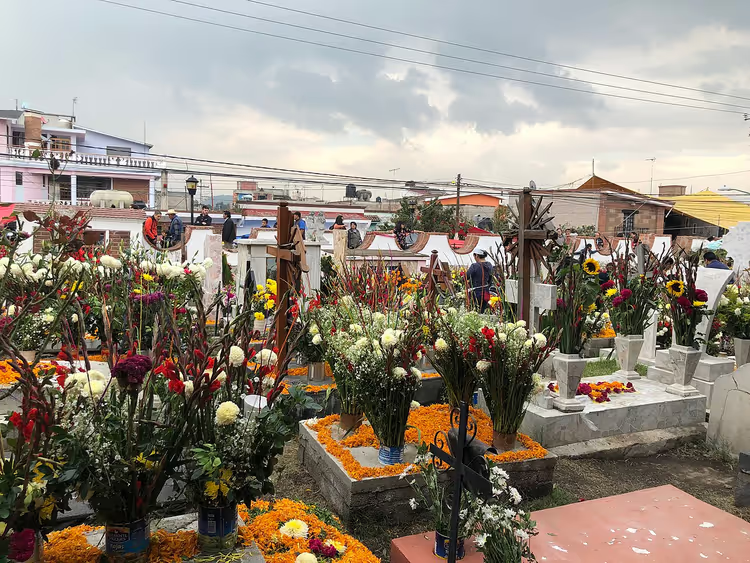 © Bobbyrath · CC BY-SAPhoto: Bobbyrath, CC BY-SA (https://creativecommons.org/licenses/by-sa/4.0), Wikimedia Commons
In the center stands the church and former abbey of San Andres Apostol. The bell tower offers a view of the cemetery, and the courtyard displays archaeological finds, including a Chac Mool and a Miquiztli sculpture.
- The catch: there are a lot of people, and you will stand in line for over an hour to climb the bell tower.
- Who it's for: those who want to see the ritual in a real cemetery, not a stage for tourists.
- Not for: those who are not ready for crowds and a late return to the city.
Keep safety in mind: this is a low-income area, so at night stay on the main streets and avoid empty alleys. On well-lit roads, there are usually no problems.
How to get there from Mexico City
By public transit the route is this: metro line 12 (Linea dorada) to Tláhuac station, then transfer to a bus to Plutarco Elías Calles, and from there another bus or taxi to the center of Mixquic. In total the trip takes about two and a half hours (as of 09/2026, El Universal).
By taxi or Uber the trip is noticeably faster, but on holidays fares go up, and the return trip costs more than the outbound one. Share a car with fellow travelers: with two or three people the cost becomes reasonable. Finding a car back is harder, so be ready to walk part of the way along the main road.
If you don't want to deal with transfers, look for lodging nearby and arrive during the day so you can get your bearings before dark: hotels near Mixquic on Trip.com.
Besides the cemetery, the village has things to see during the day. Walk through the center, stop by the market, and head up to the church: the same streets lead there as to the graves, but the crowd here is noticeably thinner.
Oaxaca: sand carpets and nighttime processions
Oaxaca de Juárez, the capital of the state of Oaxaca, celebrates louder and more traditionally than most cities in the country. Comparsas, meaning noisy processions with music and dancing, move through the streets, and houses are decorated so much that the neighborhood looks like a movie set. The celebration here lasts not two days, but almost a week.
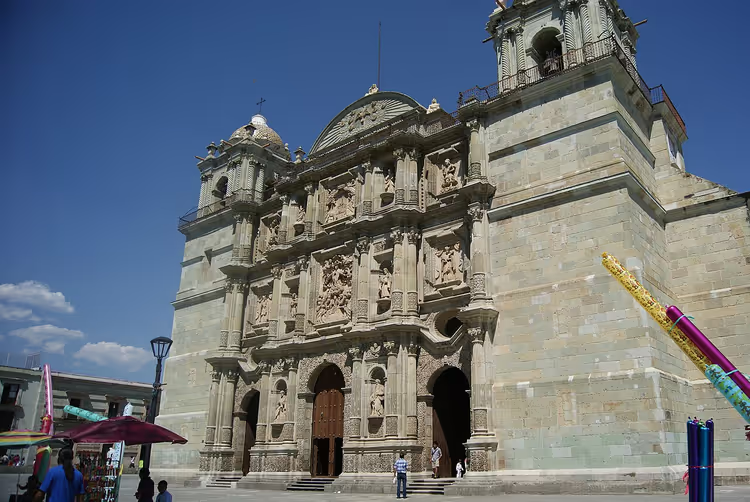 © Luisalvaz · CC BY-SAPhoto: Luisalvaz, CC BY-SA (https://creativecommons.org/licenses/by-sa/4.0), Wikimedia Commons
The starting point is Panteón General, the city's main cemetery. Just follow the orange flowers to the altars and look around: sand carpets and compositions appear right on the streets.
Tapetes de arena: sand carpets
Tapetes de arena are sand carpets with colorful pictures. The largest one is usually laid out in the courtyard of Palacio de Gobierno, the state government building. Sand compositions for the holiday are prepared in different towns around Oaxaca, and the route to see them is published closer to the dates (as of 09/2026, Oaxaca events roundup).
Xoxocotlán: cemeteries among family
In the suburb of Oaxaca, in the village of Xoxocotlán, there are two cemeteries: Panteón Viejo and Panteón Nuevo. Here nobody performs for spectators: families sit by the graves, drink, talk, and dance until morning. The biggest night falls on the transition from October 31 to November 1 (as of 09/2026, Oaxaca guide).
Remember that this is private territory and the grief of real people. Don't photograph faces without permission and don't approach other people's altars without an invitation.
Etla and Muerteada
Another place in the city's surroundings is Etla (San Agustín Etla). Here the celebration takes the form of Muerteada: a theatrical procession, parade, and party that goes on until morning. You can get there by taxi, and the trip takes about half an hour.
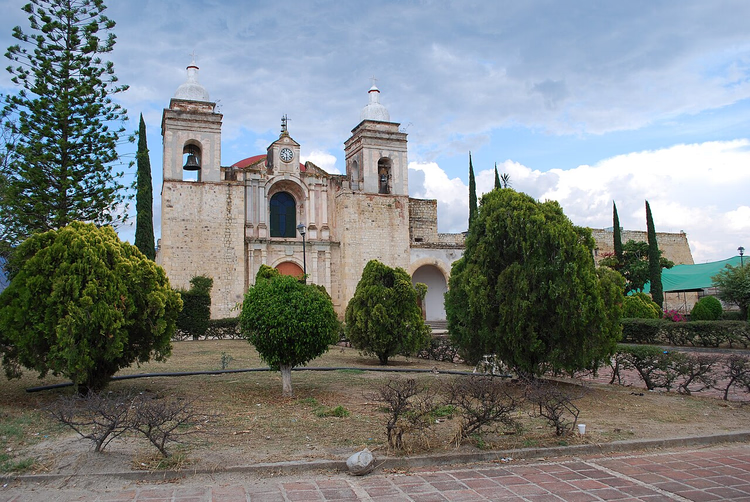 © Thelmadatter · CC BY-SAPhoto: Thelmadatter, CC BY-SA (https://creativecommons.org/licenses/by-sa/3.0), Wikimedia Commons
If you're going on your own, sort out the return trip in advance. Late at night it's hard to find a car, so either arrange a time with the driver or stay overnight in Etla. The village has Hotel El Rincón, which serves breakfast the next morning.
Where to stay in Oaxaca
For holiday dates, lodging in the city gets booked up first, so reserve early. Options for different budgets look like this: Oaxaca hotels on Trip.com.
- Andaina Youth Hostel: a lively hostel where it's easy to meet people. The main plus is the rooftop terrace, and the rooms are simple and cleaned well. The catch: the area is noisy at night.
- Hotel Casona Oaxaca: Mexican interiors and the atmosphere of an old house.
- Hotel con Corazón: a small hotel near the cathedral, with proceeds going to educational projects.
Aguascalientes: birthplace of La Catrina
Aguascalientes in central Mexico is the hometown of José Guadalupe Posada, the creator of La Catrina. No surprise that the holiday is celebrated here on a grand scale: during the Days of the Dead the city hosts the Festival de Calaveras, whose main event is the city parade.
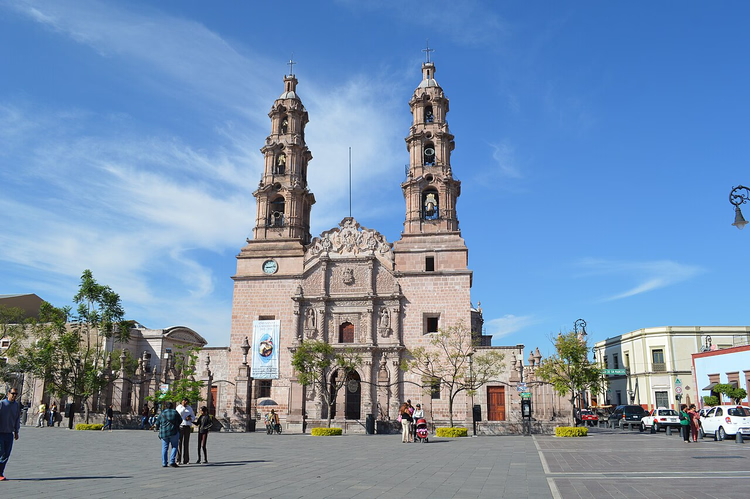 © Thelmadatter · CC BY-SAPhoto: Thelmadatter, CC BY-SA (https://creativecommons.org/licenses/by-sa/4.0), Wikimedia Commons
The city works well as a stopover between major tourist routes, and evenings here are calmer than in Oaxaca or Patzcuaro. If you want the holiday without a crowd of thousands, this is a solid option.
The parade moves through the center, with schools, bands, and dance troupes from the city taking part. Watch it from the front rows: the procession moves slowly, so you'll have time to take in the costumes.
Plan for a full day: the city is compact, and you can cover the parade, the main square, and the decorated streets in one go. The festival schedule changes from year to year, so check the parade date closer to the holiday.
Patzcuaro and Janitzio Island
According to local surveys, the most beautiful celebration takes place in Patzcuaro. Lake Pátzcuaro lies in the state of Michoacan, and one of the local traditions goes like this: fishermen place a candle on the bow of their boat and row to Janitzio Island (Isla de Janitzio) to honor their dead at the cemetery there. The velación nights fall on November 1 and 2 (as of 09/2026, official program).
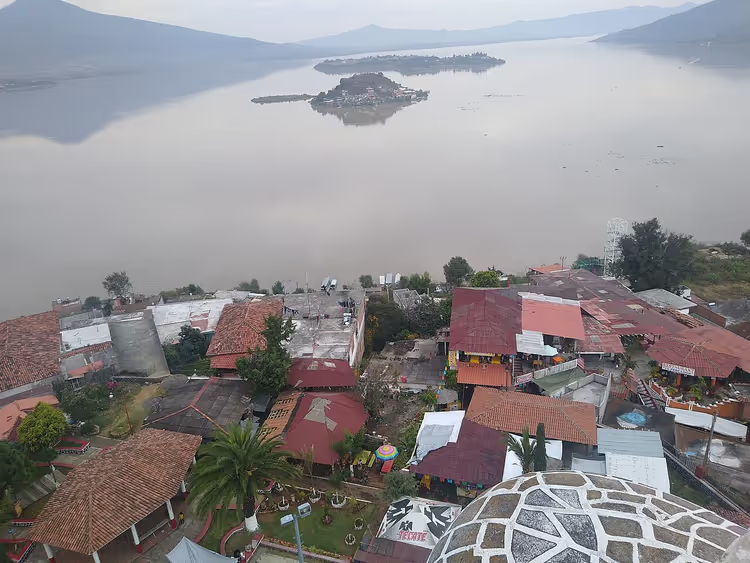 © Isaacvp · CC BY-SAPhoto: Isaacvp, CC BY-SA (https://creativecommons.org/licenses/by-sa/4.0), Wikimedia Commons
The name Patzcuaro means little to tourists from Europe, but during the holiday there really are a lot of people here. Boats to the island run in queues, and by evening the island itself is packed.
- The catch: mass tourism, a line for the boat, and high accommodation prices on these days.
- Who it's for: those willing to plan the trip months ahead and wanting to see Michoacan's most famous ritual.
If you want something quieter, choose other villages on the lake, such as Tzintzuntzan. The celebration there is just as good, with noticeably fewer people. For accommodation in the region, look here: Patzcuaro hotels on Trip.com.
Pomuch: the bone-cleaning ritual
Pomuch lies in the state of Campeche on the Yucatan Peninsula, and it hosts one of the country's most unusual rituals. Locals call the holiday Hanal Pixan, and its central element is caring for the remains of the deceased in a small cemetery.
 © Jesus Antonio Moo Yam · CC BY-SAPhoto: Jesus Antonio Moo Yam, CC BY-SA (https://creativecommons.org/licenses/by-sa/4.0), Wikimedia Commons
Every year families clean the bones with brushes and cloths. The tradition goes back to the Maya, so the ritual looks nothing like the colorful shows in downtown Mexico City.
Patience and respect for someone else's tradition are essential here. Families come to the cemetery with tools and cloths, work in silence, and don't like being filmed. Keep your distance and don't enter the enclosure without an invitation.
A trip here is worth combining with visits to other towns in Campeche: the drive is long, and Pomuch alone won't fill a day.
- Not for: those expecting a big parade and a stage: everything here happens quietly and in a family way.
- Who it's for: those who want to see a living Maya tradition without the tourist packaging.
The most convenient way to get here is to stay in Campeche: hotels in Campeche on Trip.com.
Playa del Carmen and Cancun
Honestly, these aren't the most traditional places for the holiday. If you find yourself on the Yucatan on these dates, it makes more sense to drive to Pomuch or fly to Oaxaca. The coast lives its resort life, and there are almost no authentic village rituals here.
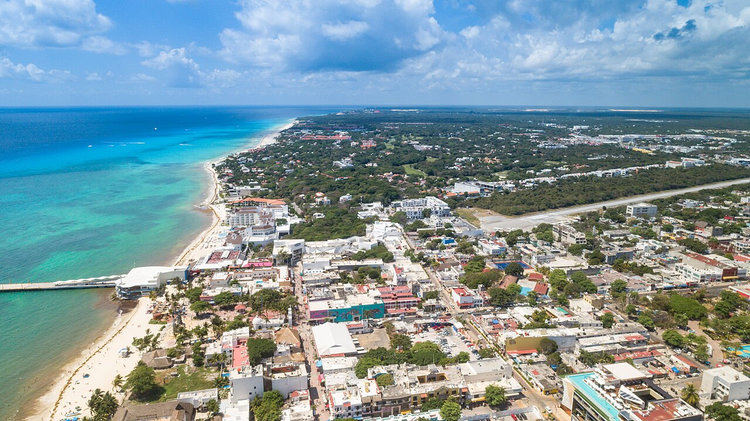 © dronepicr · CC BYPhoto: dronepicr, CC BY (https://creativecommons.org/licenses/by/2.0), Wikimedia Commons
The one compromise is Xcaret Park between Playa del Carmen and Cancun. The park runs the Festival de Vida y Muerte with a parade and altars; in 2026 it runs from October 30 to November 2 (as of 09/2026, official Xcaret website). The program includes theater, music, workshops, and a gala concert.
- The catch: park admission is expensive, and part of the program is geared toward families with children.
Buy a ticket for a specific day and arrive in the morning, otherwise you won't have time to cover the venues. The festival program spans several days, and the schedule varies by date.
- Who it's for: those vacationing on the coast who don't want to travel inland for just two nights.
It's convenient to check tickets and tours in advance: Xcaret tours and tickets on GetYourGuide.
Is it worth planning a trip around the holiday
The holiday in Mexico is loud and colorful, but the main thing about it is different: it's the only time of year when the country shows its culture without intermediaries. You'll see how families prepare, how they decorate graves, how they welcome guests at the cemetery.
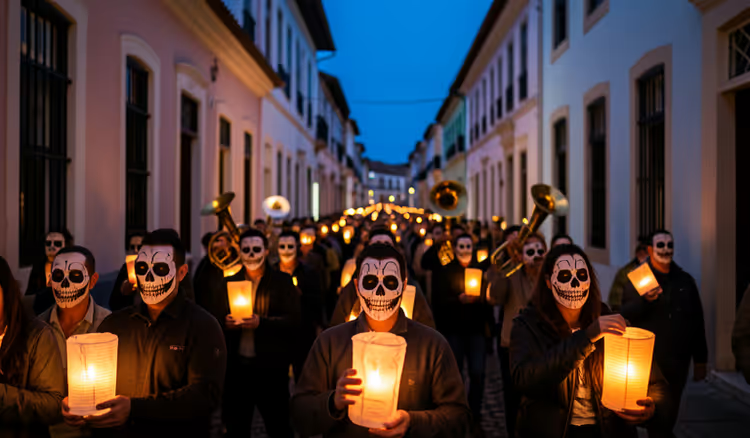 AIIllustrative image: AI-generated
Even if you arrive a couple of days late or leave early, you'll still catch part of the program.
Our advice is simple: plan your travel dates around one strong region rather than trying to cover the whole country. The south celebrates more traditionally than the north, so it makes more sense to choose Oaxaca, Michoacán, or Mexico City with its surroundings and spend three or four days there (as of 09/2026, guide to the holiday in Oaxaca).
Consider the weather and timing. Nights in central Mexico are cool, and you will spend several hours at the cemetery without a break. Bring a jacket, warm shoes, and a small flashlight: some paths are unlit.
The holiday is not for people who struggle with crowds and expect quiet. In Mixquic and Pátzcuaro, the night of the vigil is very crowded, and getting out of the flow of people can be difficult. If that sounds like you, choose the small parade in Coyoacán or quiet villages on the lake.
Book in this order: first accommodation, then tickets for long-distance travel, and only then tours. That way you keep the freedom to change cities if the weather or parade schedule shifts.
More ideas for a trip to Mexico
If you have days left after the holiday, the country will easily fill them all. Here is what to add to your itinerary.
Mexico City is a huge capital with museums, markets, and neighborhoods that differ greatly from one another. You will spend at least two days in the city, and that is without trips beyond its limits.
Coyoacán and Xochimilco are especially good during the holiday, but at other times they are also pleasant spots for a walk: one area offers colonial streets and artists' homes, the other is known for its canals and boats.
Oaxaca is the best base for diving into traditions, and after the holiday it is easy to reach the coast from there. Puerto Escondido and Mazunte offer beaches for every taste, from surf spots to quiet bays.
If you are in the Yucatán, plan your route around the peninsula's cities and do not forget the Caribbean coast: Cancún remains the region's most popular destination. Buses are a convenient way to travel between colonial cities; the roads here are good.
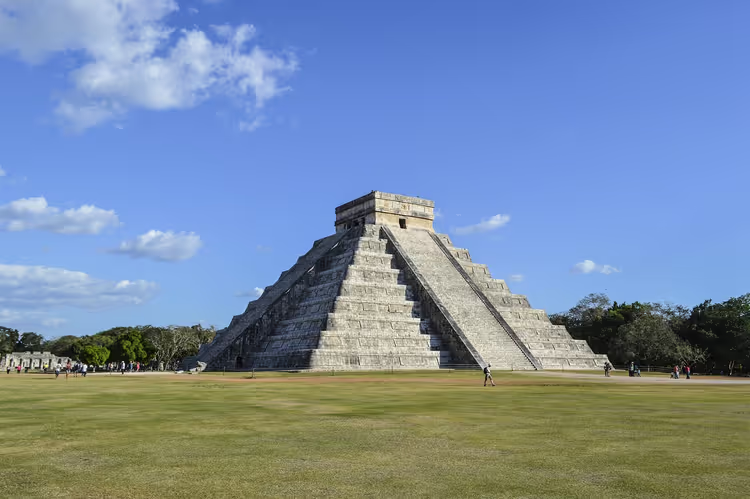
History lovers should add one or more Maya pyramids, such as Chichén Itzá. Arrive at opening time: by midday the site gets hot and crowded. Wear closed shoes; the stones get extremely hot.
The logic of getting around Mexico is simple. Domestic flights connect major cities, comfortable buses run between neighboring regions, and short stretches are easier to cover in a rental car. For the holiday, it is better to build your route around one region rather than stretching the country over five days.
Cancún is convenient as a base for the peninsula: from there it is easy to reach both colonial cities and cenotes. Rent a car if you want to see cenotes without a tour, but keep toll roads in mind.
Below we have gathered answers to frequently asked questions about the holiday, and at the end we give a short list of what is worth booking in advance.
⁉️🤔 Frequently asked questions
Why does the holiday have several names?
The name Día de los Muertos translates literally as Day of the Dead. The first day of the holiday is dedicated to deceased children, who are called angelitos. In Pomuch, where it is customary to clean the bones of the deceased, the holiday is called Hanal Pixan. In other regions you will simply hear Día de Muertos.
Why do people not cry at cemeteries, but celebrate?
The holiday is set up as a reunion, not as mourning. Families set tables, put up altars, wear costumes, and play music. It is believed that the deceased return home to their relatives, and they are meant to be welcomed joyfully. That is why the velación at graves turns into a night vigil with songs and food.
When exactly does the holiday take place?
The festive days run from October 31 to November 2. On the first night, deceased children arrive; on the second, adults arrive. At cemeteries during this time you can see toys, sweets, and next to them glasses of mezcal and cigarettes. Some events start earlier and end later than these dates.
What should I do if I arrive outside the main dates?
Don't worry: the large ofrendas in Mexico City are built in advance and left up for several days after the holiday. The house La Casa de Emilio Indio Fernández in Coyoacán also operates after the official dates. In Oaxaca and Pátzcuaro, some of the city decorations remain up for another week.
In short: what to book
If you only have two days and you are flying into the capital, get a hotel in the center: a taxi to the Zócalo and Coyoacán will cost less than moving between neighborhoods. Look for accommodation in Mexico City on Trip.com.
If you want to see the cemetery ritual, plan a night in Mixquic or two nights in Oaxaca. For Oaxaca, book accommodation first, and look for short tours of the holiday sites on GetYourGuide.
If you are going to the Yucatán, add Pomuch and the Xcaret park to your itinerary. Park tickets and hotels on the coast sell out in advance, so start with those.

A small editorial team writing guides for independent travel. We travel ourselves, but we haven’t been everywhere, so we check prices, opening hours and how to get there against official sources.