
















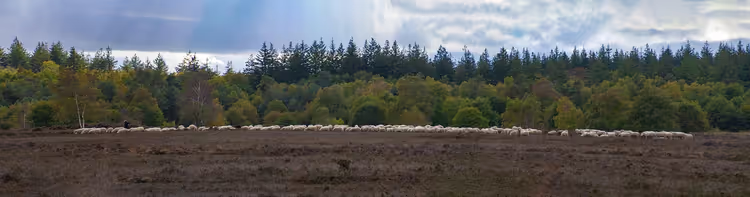
De Hoge Veluwe: deer, heathlands and camping in the park
Heather on the Veluwe blooms for two weeks in August. That is when the heathlands of De Hoge Veluwe National Park turn purple, and photographers with telephoto lenses line up along the roads. The park is private, admission is paid, and almost everything here depends on the time of day.
The park receives no government subsidies and lives off its visitors (as of 09/2026, official park website). The ticket, parking, and a night at the campsite are charged separately, so the trip budget depends on the order of payments.
Below we have put together practical information about this place: how much admission costs, how the campsite inside the park works, where to watch deer, and where to look for rare birds. Plus the Posbank hills nearby and the island of Texel.
Ad: this article contains affiliate links, we earn a commission if you book through them, at no extra cost to you.
Forests, heather, and sands of De Hoge Veluwe
💡 In short:
- The park covers about 55 square kilometers between Apeldoorn and Arnhem (as of 09/2026, official park website).
- You take the white bicycles at the entrances for free.
- Peak heather bloom usually falls on August 15-25 (as of 08/2026, Visit Gelderland).
 © Deb Collins · CC BYPhoto: Deb Collins, CC BY (https://creativecommons.org/licenses/by/2.0), Wikimedia Commons
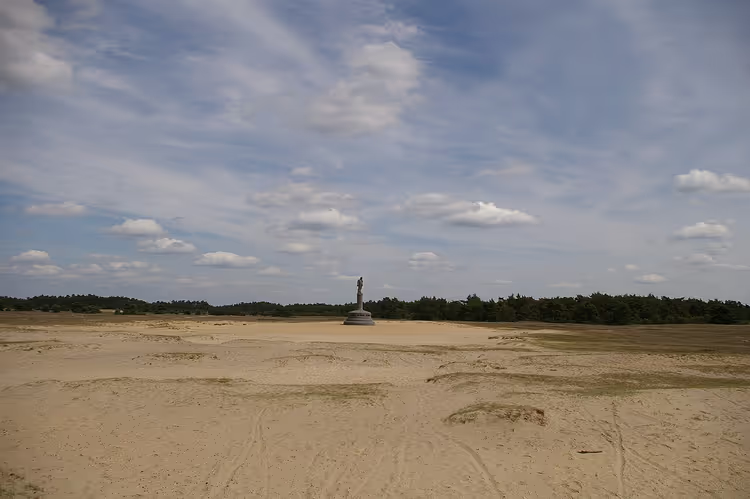
The park lies on the sandy hills of the Veluwe, and the landscape changes every couple of kilometers. Pine and oak forests give way to heathlands, and beyond the open sands come marshes and small lakes. Birch, oak, and heather grow on poor soil, so the forest looks light and sparse.
This diversity feeds a rich fauna. Red deer, mouflons, roe deer, and wild boar live here. You will come across rare insects, grass snakes, and frogs that turn blue in spring. Buzzards circle over the heathlands, and woodpeckers hammer in the old oak groves.
You can see all of this by car, by bicycle, or on foot. The park has its own routes for each way of getting around, and paved roads are separated from bicycle and walking paths. Along the routes there are parking areas with benches, and inside the park there is a restaurant, a tea house, and the underground Museonder museum. The Jachthuis Sint Hubertus hunting lodge stands at the northern entrance.
Admission, hours, and getting around the park
The park is open year-round, but the schedule changes by season (as of 09/2026, seasonal schedule). In summer the gates stay open late, in winter they close earlier. Check the website the day before.
Fee | How it works |
|---|---|
Admission ticket | paid for everyone, price depends on the season (as of 09/2026, official park website) |
Car into the park | separate entry ticket |
Bicycle | free, white bicycles are available at the entrances |
Campsite spot | separate fee plus admission tickets |
The park has three entrances: Otterlo, Hoenderloo, and Schaarsbergen (as of 09/2026, official website). There is a convenient way to get to know the area. You leave your car at the entrance, take a white bicycle, and ride along the paved paths: this way you can cover the whole territory in a day. If you arrive without a car, keep in mind that there is no public transport inside the park.
Tours and tickets
Guided tours, skip-the-line tickets and activities — most offers can be cancelled free of charge.
See offers on GetYourGuideThe widget loads once you give your consent.
Overnight at the campsite at the Hoenderloo entrance
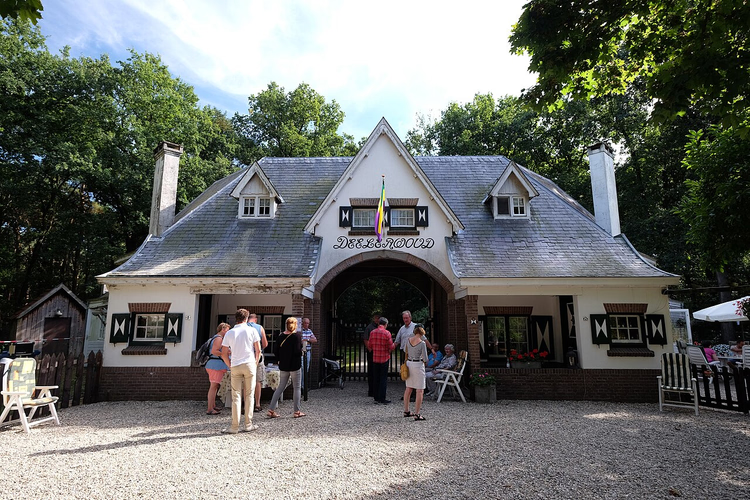
The park has a small nature campsite at the Hoenderloo entrance in the northeast. Staying overnight here gives you a rare chance to be out on the heath early in the morning, before the main flow of visitors.
 © Ben Bender · CC BY-SAPhoto: Ben Bender, CC BY-SA (https://creativecommons.org/licenses/by-sa/3.0), Wikimedia Commons
There is a restriction too. You can only leave the grounds and return during the park opening hours (as of 09/2026, park opening hours). Plan your sunrise outings with this rule in mind.
The cost has three parts: entry tickets for each day, parking, and the night itself. A 24-hour stay with an overnight comes to about 30 € (as of 09/2026, official park website). Don't book the campsite for the first night of your trip, but for the middle, when you need an early start.
Where to look for deer and rare birds
Animals are found throughout the park, but photographers have their regular spots. Experienced observers recommend different times: morning for birds, evening for hoofed animals. Five locations are mentioned most often, with coordinates shown on the map.
Sometimes a bearded vulture circles over the heaths, a rare scavenging bird with a wingspan of about three meters (as of 05/2026, NOS). Sightings are rare, but it is exactly what people keep watch for here at dawn.
Spot | When to go | Coordinates |
|---|---|---|
Heathland by the marshes | morning, this is where people look for the bearded vulture | |
Deadwood in the old pine forest | morning, this is where people look for the nightjar and wryneck | |
Southwest heathland | evening, deer come out to the west from here | |
Road along the heathland | autumn, this is where people watch the deer rut | |
Highway at the park boundary | morning, there is a chance to see a short-toed snake eagle |
Don't count on guaranteed sightings. In the heat the park goes quiet, and over half a day you may hear only a woodpecker tapping and a buzzard calling. In that case, come back to the spot on another day and at another time.
Dawn starts early here, and the first two hours are the quietest. Bring binoculars and a warm jacket: even in August it is cold on the heathland before sunrise.
Kröller-Müller Museum and the Van Gogh collection
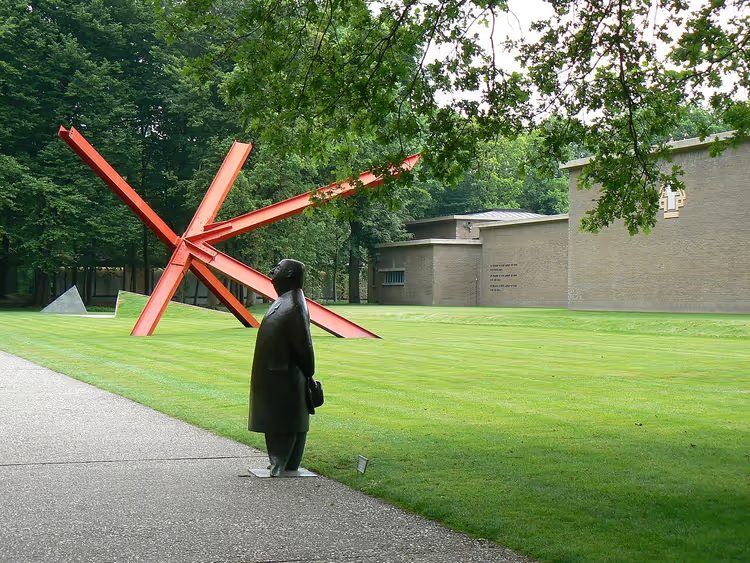
The Kröller-Müller Museum stands in the center of the park, and many people come here specifically for it. It houses the second-largest Van Gogh collection in the world.
The museum is open Tuesday through Sunday and on public holidays from 10:00 to 17:00, closed on January 1 (as of 09/2026, official museum website). In summer, from July 6 to August 24, the doors are open every day during the same hours. The museum ticket is paid separately from park entry, and it is another expense in the trip budget.
A sculpture garden is laid out around the building. Allow at least three hours for the museum and garden: the collection is large, and in season there can be lines at the entrance.
Wolves in the park: what researchers know
The park is enclosed by a high fence, but a group of wolves has recently been living here. How the animals got inside is not reliably known, and the appearance of predators in an enclosed area is being discussed by both biologists and local residents.
Since October 2025, Wageningen University & Research has been studying the relationships between wolves, people, and ungulates here (as of 02/2026, WUR). Some of the animals wear collars with sensors, and visitors are asked to voluntarily carry a GPS tracker. For you, this means that an encounter with a wolf is possible, but remains a rare coincidence.
Deer rut: beautiful, but crowded
In late September and October the deer rut begins, and the park turns into a stage for hundreds of photographers. During the day, cars and campers line the roads, and people with spotting scopes stand watch on the heathland. The heather fades by early September (as of 08/2026, Visit Gelderland), and then comes the time of roaring.
The approach is simple. Come in the morning, because by midday there are no free spots left at the best viewing points. In the fog you can hear a deer long before you see it, so follow the sound. The spectacle itself is closer to a show than to wild nature.
20 Kilometers away: the Posbank heathland hills
About 20 kilometers to the east lie the Posbank hills in Veluwezoom National Park (as of 08/2026, Visit Gelderland data). The terrain here is different: climbs, valleys, and wide heather slopes that people photograph at dawn.
 © Michielverbeek · CC BY-SAPhoto: Michielverbeek, CC BY-SA (https://creativecommons.org/licenses/by-sa/4.0), Wikimedia Commons
The restaurant at the top has a large parking lot. Early in the morning, fog lies in the low areas, and that is the best time for panoramic shots. On an ordinary midday, you risk getting gray skies and rain, as often happens here in July.
Texel Island: birds all year round
Texel Island is known among birdwatchers all year round. People come here for birds in any season, and the island has dozens of observation hides set up for that purpose.
 © Txllxt TxllxT · CC BY-SAPhoto: Txllxt TxllxT, CC BY-SA (https://creativecommons.org/licenses/by-sa/4.0), Wikimedia Commons
The main starting point for a beginner is the bird information center in De Cocksdorp (as of 09/2026, Vogelinformatiecentrum). They sell optics, point you to good spots, and run guided tours. In the hides you will find addresses and coordinates, so you can put together a route around the island without any preparation.
Two more tools will help on Texel and on the Veluwe alike. The website vogelkijkhut.nl shows almost all hides in the country on a single map (as of 09/2026, vogelkijkhut.nl), and waarneming.nl shows recent bird and animal sightings near you (as of 09/2026, waarneming.nl). No registration required.
⁉️🤔 Frequently asked questions
Can you see the park in one day?
Yes, if you have a car or a bicycle. The area is very large, so on foot you will only cover part of it. The most convenient scenario is this: enter in the morning, grab a bicycle at the entrance, visit the museum after lunch, and make a short trip to the heathland around sunset.
Is it worth coming here in July?
July is not the best month for watching wildlife. The heat and the middle of the day make the park quiet, and you can barely hear any birds. If you come in summer, plan your outings at dawn and keep in mind that the deer rut only starts in autumn.
Where can you stay overnight inside the park?
At the nature campsite near the Hoenderloo entrance. The overnight stay is paid separately from the entrance tickets, but you get to be on the heathland before dawn. Remember that you cannot leave the grounds outside park opening hours.
What else is there to see besides the heather?
The Kröller-Müller Museum with the second-largest Van Gogh collection in the world, the underground Museonder museum, and the Jachthuis Sint Hubertus hunting lodge. Each place deserves its own time, so it is best to set aside a full day for the park.
How do you get to the park without a car?
It is harder than with a car. Buses run to the Otterlo and Hoenderloo entrances. Another option is a taxi from Apeldoorn or Arnhem. There is no public transport inside the grounds, so the easiest way to get around the park is on a white bicycle from the entrance.
In short: what to book
De Hoge Veluwe takes a full day, not two hours. Entry is paid, bicycles are free, and the museum requires a separate ticket.
If you have one free day, go for an early entry, a bicycle, and the museum after lunch. If you are coming for photography, add the evening heathland and a second night at the campsite. For a family trip, a route with a car and stops at the benches works well.
For guided tours of the park and museum, see GetYourGuide.

A small editorial team writing guides for independent travel. We travel ourselves, but we haven’t been everywhere, so we check prices, opening hours and how to get there against official sources.