

















Croatia by ferry: routes, prices and taking your car
Croatia is best explored from the water. Dozens of ferries and catamarans run between the mainland and the islands every day, and you can realistically cover several islands in a single trip.
The main hub of the system is in Split. From here, the catamaran to Hvar takes under an hour, and the car ferry to Supetar on Brač takes about 50 minutes (as of 09/2026, hvar.com). It's worth figuring out the routes before buying a ticket, because there are three operators and each has its own rules for carrying cars, luggage, and pets.
Below you'll find routes with travel times, prices, the best season, and the mistakes people most often make when booking a crossing.
Ad: this article contains affiliate links: we earn a commission if you book through them, at no extra cost to you.
Croatia's ferry system: how it works
💡 In short:
- A catamaran works for passengers: Split to Hvar takes about 50 minutes (as of 09/2026, hvar.com).
- A car ferry is what you need if you're traveling with a vehicle: the Split to Supetar route takes about 50 minutes.
- The season runs from May to October, but some routes operate year-round.
- Schedules and prices: as of 09/2026, according to Ferryhopper.
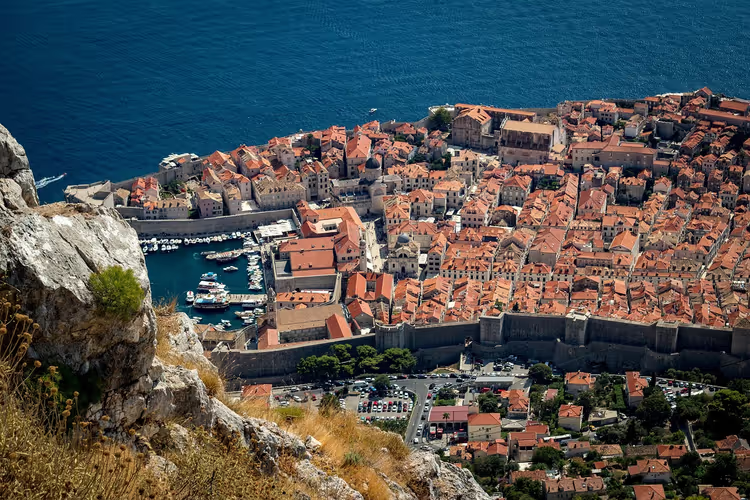
Ferries in Croatia come in two types, and you shouldn't confuse them. Catamarans carry only passengers and bicycles, are fast, but cost more. Car ferries take vehicles and foot passengers too, so you can find a spot even at the height of July.
Most routes depart from Split, Zadar, and Dubrovnik. The further north you go, the thinner the schedule: around Rijeka there are noticeably fewer sailings. International crossings go to Italy, and from Split, Zadar, and Dubrovnik you can reach Ancona and Bari.
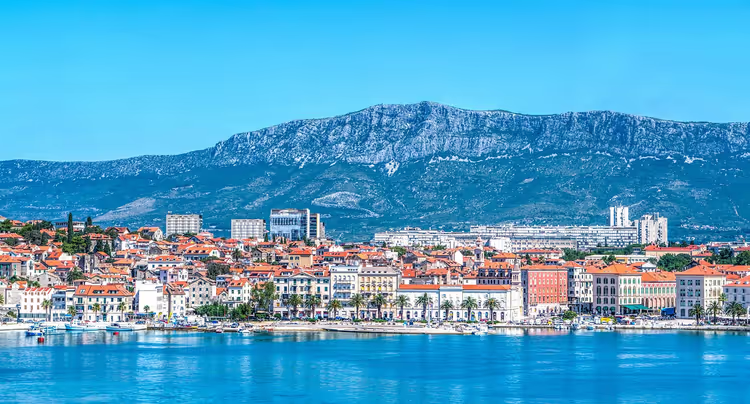
Routes and travel times
Below are the main routes people start with when exploring the islands. Travel time depends on the type of vessel, so the numbers vary slightly between different schedules.
Route | Vessel | Travel time | Schedule |
|---|---|---|---|
Split-Hvar (town) | catamaran | about 50 minutes | |
Split-Supetar (Brač) | car ferry | about 50 minutes | |
Split-Stari Grad (Hvar) | car ferry | about 2 hours | |
Split-Vis | ferry and catamaran | about 2.5 hours | |
Zadar-Ancona (Italy) | car ferry | about 4 hours |
A passenger ticket on the Split-Supetar car ferry costs €6.50 (as of 09/2026, allferriescroatia). The car price is calculated separately and depends on the length of the vehicle, so always check the exact fare in the carrier's calendar.
Keep a few more routes in mind when planning. From Split, boats go to Korčula, from Dubrovnik to Mljet, from Zadar to Dugi Otok, and from Šibenik to the islands of Kaprije and Žirje. The long coastal route Rijeka-Dubrovnik, often mentioned in old guidebooks, is no longer operated, and you travel between these cities by bus or with a transfer in Split.
Ferry companies and tickets
Three major carriers operate in Croatia, and your choice affects both the price and the crossing time.
- Jadrolinija has the largest schedule, carries vehicles across the country, and operates international routes to Italy.
- Krilo (Kapetan Luka) runs fast catamarans between resorts and is convenient for island hopping.
- TP Line operates in southern Dalmatia and connects small islands with each other.
Tickets are sold online, at the ticket office by the pier, and in the carrier's app. To add an island excursion to your crossing, the selection below shows options on Hvar, Brač, and in Dubrovnik.
Tours and tickets in Split
Guided tours, skip-the-line tickets and activities — most offers can be cancelled free of charge.
See offers on GetYourGuideThe widget loads once you give your consent.
How to book a crossing online
Booking takes a couple of minutes if you clarify three things in advance. Choose the route and date on the carrier's website or an aggregator. Indicate whether you are traveling on foot or with a car, because this determines the type of vessel. Pay by card and save the PDF ticket, which you show at the pier.
Foot passengers get their tickets fastest, but for a car you should allow extra time.
On board: what's available on the ferry and catamaran
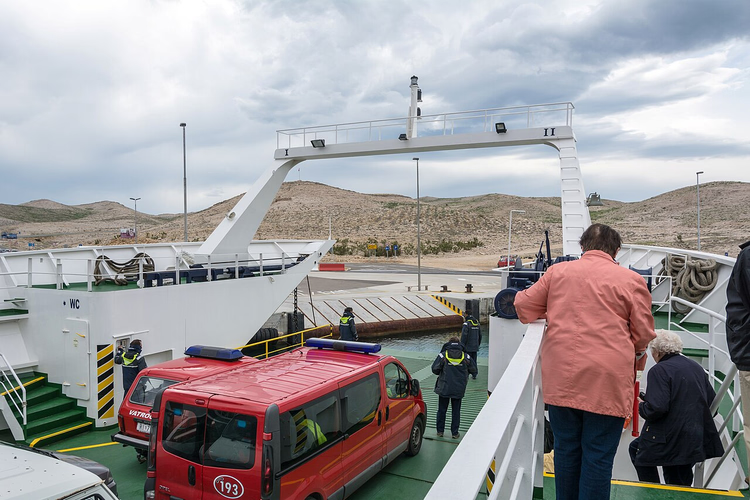
Comfort depends on the type of vessel and the length of the route. Jadrolinija car ferries usually have indoor and outdoor seating areas, a cafe with drinks and snacks, a sun deck, and toilets. Wi-Fi is not available everywhere, so it's better to download an island map in advance.
Krilo and TP Line catamarans have less space, with only seats and shelves for hand luggage. But these vessels are faster, and they are more convenient for a day trip without a car.
 © Isiwal · CC BY-SAPhoto: Isiwal, CC BY-SA (https://creativecommons.org/licenses/by-sa/3.0), Wikimedia Commons
With a car, motorcycle, or bicycle
Vehicle transport is available on most routes, especially with Jadrolinija. A car is useful for a road trip along island roads, and a camper lets you stay overnight right by the sea. A motorcycle is great on the winding roads of Brač and Hvar, while a bicycle is convenient on flat islands like Dugi Otok.
For a bicycle on catamarans, a separate ticket is often required, and it is purchased at the time of booking. A foot passenger usually gets ahead of cars in the queue and pays less, but without a car, reaching remote beaches on some islands can be inconvenient.
Accessibility and traveling with pets
Most vessels are designed for passengers with reduced mobility. The piers have ramps and level boarding, and on long international routes like Zadar-Ancona, there are cabins adapted for wheelchairs.
Pets are allowed on board, but the conditions vary. On catamarans, dogs are usually required to travel in a carrier, while on car ferries they can be kept on the open deck on a leash. Pet transport should be arranged in advance, especially on international and overnight sailings.
Best season to travel
- May and June: fewer people, mild weather, routes run on the regular schedule.
- July and August: the most departures, but long lines at the pier, and car spaces are booked in advance.
- September and October: warm sea, fewer tourists, good for nature trips.
- Winter: reduced schedule, but some routes run year-round.
Practical tips at the pier and on board
In practice, this means the following. Arrive at the pier early: 30-60 minutes ahead on foot, and ideally 90 minutes ahead with a car. On long crossings, book a cabin or a reclining seat. Check the schedule on the day of travel, because wind on the Adriatic changes sailings without warning.
Keep your ticket handy on your phone and as a printout. On busy routes like Split-Hvar, it is easier to board at the start of embarkation, so you can get a window seat or a spot on the open deck.
Why take the ferry
- Island hopping becomes simple: you can cover two or three islands in a day.
- You can bring your car and avoid looking for a rental on every island.
- The deck offers views of the Adriatic that you cannot see from land.
- On short routes, the crossing is often cheaper than a bus or taxi.
⁉️🤔 Frequently asked questions
Do I need to book the ferry in advance?
In July and August, yes, especially if you are bringing a car. Spaces on car ferries sell out several days ahead, and on popular routes the queue can spill over to the next sailing. In May, June, and September, you can usually buy a ticket on the spot, but booking early still saves time and stress.
How much does the Split-Hvar crossing cost?
An adult catamaran ticket starts from €8.50 (as of 09/2026, hvar.com). The price depends on the operator and the date, and it is higher in high season. For a car, you need a separate fare on a car ferry, because fast catamarans carry almost no vehicles.
Can I take a car on a catamaran?
Usually not. Catamarans carry passengers and bicycles, while cars are transported on Jadrolinija car ferries. For a car, choose the Split-Supetar, Split-Stari Grad, or Zadar-Ancona routes.
What if my sailing is canceled due to weather?
The operator moves you to the next available sailing or refunds the ticket price. Strong wind and waves on the Adriatic happen even in summer, so leave a one-day buffer before your flight and keep the operator's app handy to track the status.
Are dogs allowed on the ferry?
Yes, but the conditions depend on the type of vessel and the operator. On international and overnight sailings, your pet may need a separate space.
In short: what to book
For a short hop between islands, take a catamaran, and for a trip with a car, choose a car ferry and a spot on it.
If you have a car, plan your route through Split. If you're traveling on foot, start with the Split-Hvar line and add neighboring islands along the way. For overnight stays on the coast, hotels on Hvar and Brač on Trip.com will help you compare prices and areas. Book the ferry crossing on the carrier's website.

A small editorial team writing guides for independent travel. We travel ourselves, but we haven’t been everywhere, so we check prices, opening hours and how to get there against official sources.