
















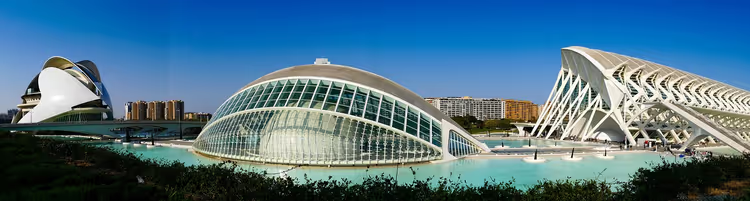
Las Fallas in Valencia: what is burned on March 19 and how to see it
Every year on March 19, Valencia sets its streets on fire. Not figuratively: at night, more than 700 sculptures made of papier-mâché and foam go up in flames on the streets (as of 02/2026, Central Fallas Board program). This is how Las Fallas, the main spring festival of Spain, comes to an end.
Since 2016, the festival has been inscribed on the UNESCO Intangible Cultural Heritage list (UNESCO). The program stretches over nearly three weeks, with the most spectacular rituals concentrated in the final five days.
Making sense of the schedule is not easy: one show lasts five minutes, another takes up an entire evening. Below you will find a breakdown of the main rituals and practical logistics for getting around the city.
Ad: this article contains affiliate links. We earn a commission if you book through them, at no extra cost to you.
Las Fallas in two minutes
💡 In short:
- The festival runs for nearly three weeks, with the main rituals concentrated in the final five days.
- Every day at 2:00 PM, the pyrotechnic mascletà thunders in Plaza del Ayuntamiento.
- On the final evening, the fallas are burned in sequence: first the children's ones, then the adult ones and the main one.
- Prices and opening hours: 09/2026, verified on the official website.
Most events are free and take place right on the streets. You only need to pay for admission to the Museo Fallero and for certain grandstands near the main square.
What a ninot and a falla are
The tradition grew out of a craft ritual. On Saint Joseph's Day, carpenters would carry old wooden lamps out to their workshop doors and set them on fire along with the sawdust. Later, arms and faces were attached to the stands.
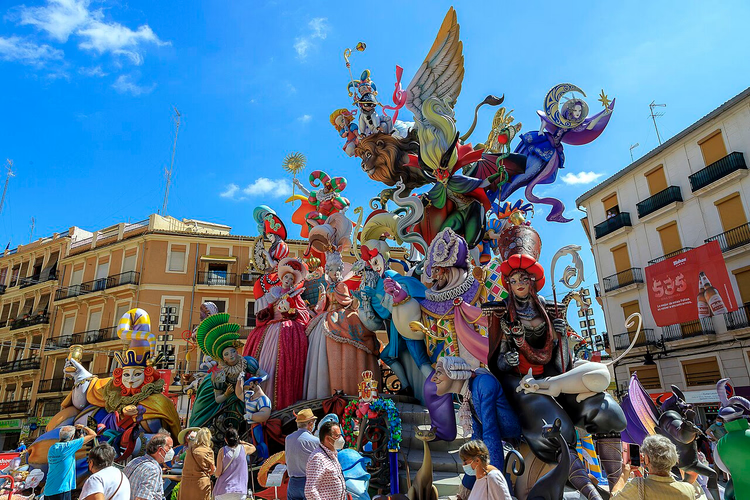
That is how ninots came to be, figures made of papier-mâché, wood and wax. From individual figures, artisans began assembling large satirical scenes, the fallas. Each scene mocks politicians, passing fads or the events of the year.
 © ANGEL-ROS-DIE · CC BY-SAPhoto: ANGEL-ROS-DIE, CC BY-SA (https://creativecommons.org/licenses/by-sa/4.0), Wikimedia Commons
Modern artisans have switched to plastic and foam. The material is cheaper, but the smoke from such bonfires is thicker and more acrid. Sculptures are made in two sizes: the adult falla is placed in the center of an intersection, with a children's version, the falla infantil, always set up nearby.
Teams from entire neighborhoods compete for the win. An artist draws the sketch, a sculptor builds the frame, seamstresses prepare the costumes. Within each team, members choose the fallero or fallera of the year, and even a child can receive the title.
One figure is saved by public vote. The ninot indultat is not burned but transferred to the Museo Fallero. Another competition is dedicated to street decorations: after dark, entire blocks turn into light tunnels, and you can walk through them.
Mascletà: a daily show of gunpowder
From the beginning of March, mascletà, daytime pyrotechnic shows, thunder in Plaza del Ayuntamiento. The five-minute volleys build in intensity and end with a dense series of explosions that make shop windows vibrate.
Organizers advise keeping your mouth slightly open to protect your ears. Arrive at least an hour early: the center of the square is closed off, and the best spots near the balconies of neighboring buildings are claimed first. The tourist office publishes the daily schedule on the program page.
La Plantà: how the figures take to the streets
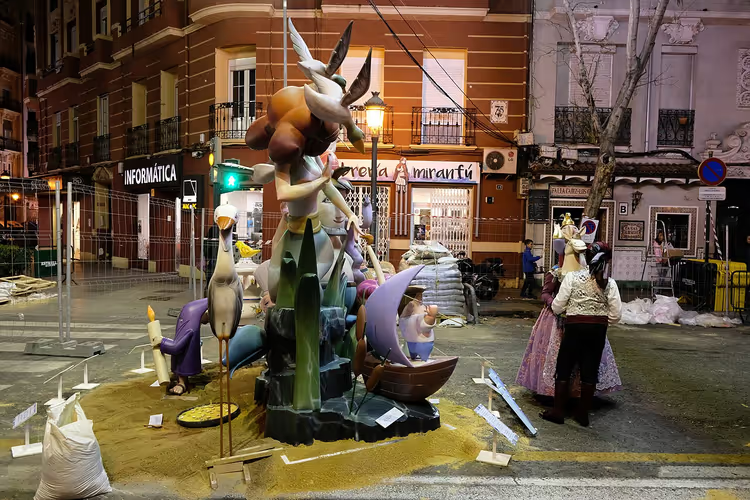
The children's figures are set up first, followed by the adult ones. This stage is called La Plantà, the installation. In the morning, the city looks like a huge construction site of plywood and frames.
For walking around and taking photos, this is the best time: you will find the sculptures already standing, while the crowds have not yet gathered. Teams have only a few hours for assembly, and each one hurries to finish before the jury's competition tour.
 © Rafa Esteve · CC BY-SAPhoto: Rafa Esteve, CC BY-SA (https://creativecommons.org/licenses/by-sa/4.0), Wikimedia Commons
Ofrenda de Flores: two days of flowers
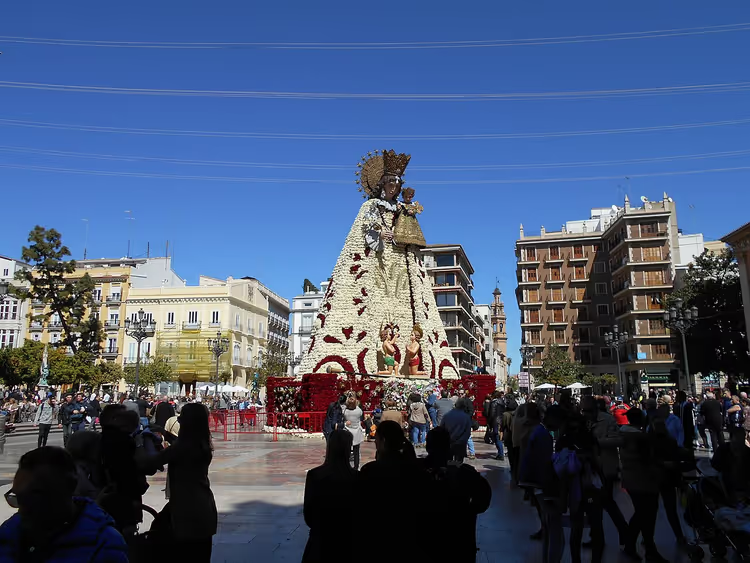
For two days, processions in traditional costumes move through the city. Participants carry carnations to the statue of the Virgin Mary in Plaza de la Virgen, while artisans arrange the flowers into a huge wooden figure as tall as a house.
The figure is considered complete only when it is fully hidden under fresh flowers. Head to Plaza de la Virgen in the evening: the flow of participants is denser, and you will see the tapestry of carnations grow before your eyes.
 © Simon Burchell · CC BY-SAPhoto: Simon Burchell, CC BY-SA (https://creativecommons.org/licenses/by-sa/4.0), Wikimedia Commons
Nit del Foc: the night of the great fireworks
The Night of Fire, Nit del Foc, closes the second-to-last day of the festival. The most powerful fireworks display of the season blooms over the city, synchronized with music, and the glow is visible from neighboring districts. You can watch it comfortably from any open spot in the city, but it is better to head out early and choose a place with no trees overhead.
 © Rafa Esteve · CC BY-SAPhoto: Rafa Esteve, CC BY-SA (https://creativecommons.org/licenses/by-sa/4.0), Wikimedia Commons
La Cremà: the final burning
The final day begins with a solemn mass in the cathedral and the last mascletà. In the evening, a fire parade moves through the center, after which the city starts burning its sculptures.
The order is strictly by size: first the children's fallas burn, then the adult ones, and only closer to midnight is the main city sculpture set on fire in Plaza del Ayuntamiento. Firefighters watch over every bonfire and keep neighboring buildings under control.
Fire here is not chaos but a performance. Every burning is accompanied by drums and applause, and the ashes are cleaned up by morning.
Museo Fallero: tickets and opening hours
Saved figures are kept at the Museo Fallero on Plaza Monteolivet, 4. Admission is €2 (as of 09/2026, official website), free on Sundays and holidays, and an audio guide costs another €1.
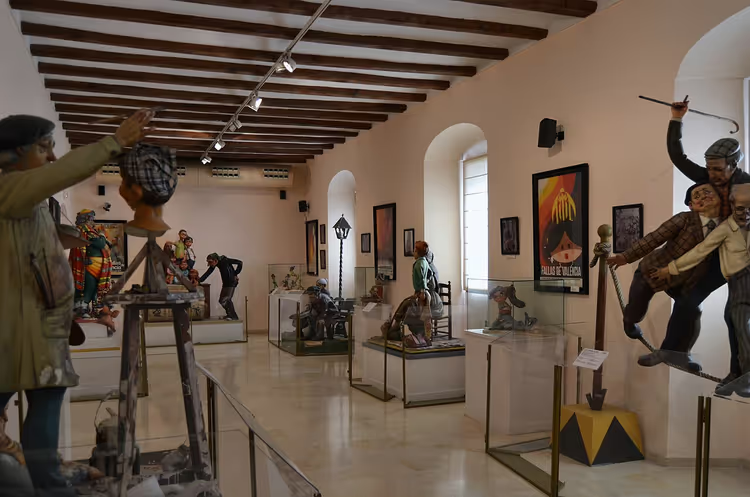 © Joanbanjo · CC BY-SAPhoto: Joanbanjo, CC BY-SA (https://creativecommons.org/licenses/by-sa/3.0), Wikimedia Commons
The museum is open Tuesday through Saturday from 10:00 to 18:00, and on Sunday only from 10:00 to 13:00. It is easy to get there: take the metro (line 2, stop near the El Saler shopping center) or buses 6, 13, 14, 15, 18, 24, 25, and 95.
After the festival, new ninots are brought here. Every year the museum receives one saved figure from the adult teams and one from the children's teams.
How to get there and where to stay
During the festival, the center of Valencia is restricted for cars. It is more convenient to leave your car on the outskirts and switch to the metro: that way you won't spend an hour looking for parking. The main spots are the square near the city hall for the mascletà and Plaza de la Virgen for the Ofrenda.
Arrive at the square early: crowds build up on the narrow streets around it.
Choose accommodation in the center: see hotels in Valencia on Trip.com. From there you can walk to the main events. If you want to add a sightseeing tour to your trip, check out Valencia tours on GetYourGuide.
Tours and tickets in Valencia
Guided tours, skip-the-line tickets and activities — most offers can be cancelled free of charge.
See offers on GetYourGuideThe widget loads once you give your consent.
⁉️🤔 Frequently asked questions
When does Las Fallas take place?
The festival runs from March 1 to 19, but the main rituals take place on March 15-19 (2026 calendar). During these days the city installs sculptures, carries flowers to the Virgin, and burns the figures. Arriving earlier makes little sense if you want to see the rituals themselves. But you can come at the beginning of the month for the pyrotechnics.
How much does it cost to see the festival?
Most events are free, and the streets are open to everyone. You need to pay for the Museo Fallero, and admission is free on Sundays. Separate grandstands near the main square are sold by ticket, and seats sell out in advance.
Where can I see the mascletà?
The daytime show takes place at Plaza del Ayuntamiento every day at 14:00 (as of 09/2026, tourist office page). The square is closed off, so arrive early. If you want to avoid the crush, listen to the explosions from neighboring streets: the roar can be heard throughout the center, although visibility is worse.
What is a ninot indultat?
It is a figure that residents save from the fire by voting. First it is chosen at the exhibition in the Science Museum, and after the festival it is transferred to the Museo Fallero.
Can I see all the figures burn in one night?
Not entirely: figures burn across the city almost simultaneously. Children's fallas are burned early in the evening, adult ones later, and the main sculpture is set on fire closer to midnight. Pick two spots close to each other in the center so you can catch both stages of La Cremà.
In short: what to book
The main rituals of Las Fallas take up five packed days, and logistics are best planned in advance. A hotel in the center and tickets for the events you want matter more than the itinerary.
- If you want fire: plan your trip for the day the figures are burned.
- If flowers and costumes matter: come for the two days of Ofrenda de Flores.
- If you are traveling with children: choose La Plantà, when the fallas are just being set up on the streets.
Book your accommodation and tour in advance, so during the festival days all you have to do is walk around: find a hotel in Valencia on Trip.com and a city tour on GetYourGuide.

A small editorial team writing guides for independent travel. We travel ourselves, but we haven’t been everywhere, so we check prices, opening hours and how to get there against official sources.