

















20 Excursions in Alicante: what to choose and how to get there
The seaside city of Alicante sits right on the water, but the most interesting things begin in the mountains around it. In a single day you can take a trip from here to Guadalest, Bocairent, or Valencia and be back by evening.
We picked twenty tours in the city and the province: walking, cycling, driving, and wine tours. For each one you'll find the duration, format, and who it suits, so you can choose based on your own day rather than someone else's review.
💡 In short:
- Most trips around the province start in central Alicante and take from three to seven hours.
- Book private walks in advance: during high season, open dates get taken several days ahead.
Ad: this article contains affiliate links, we earn a commission if you book through them, at no extra cost to you.
Our picks: which tours to start with
Format | Who it suits |
|---|---|
Walking tour of the old town | if it's your first time in Alicante |
Four-hour overview tour | if you want the castle, the market, and the promenade in one go |
Alicante by night | for those who like illuminated views |
Guadalest and Altea | for fans of mountains, viewpoints, and white villages |
Calpe and Altea | if you want to combine the beach with a coastal trip |
1. Three-hour walking tour of the old town
 © Falk2 · CC BY-SAPhoto: Falk2, CC BY-SA (https://creativecommons.org/licenses/by-sa/4.0), Wikimedia Commons
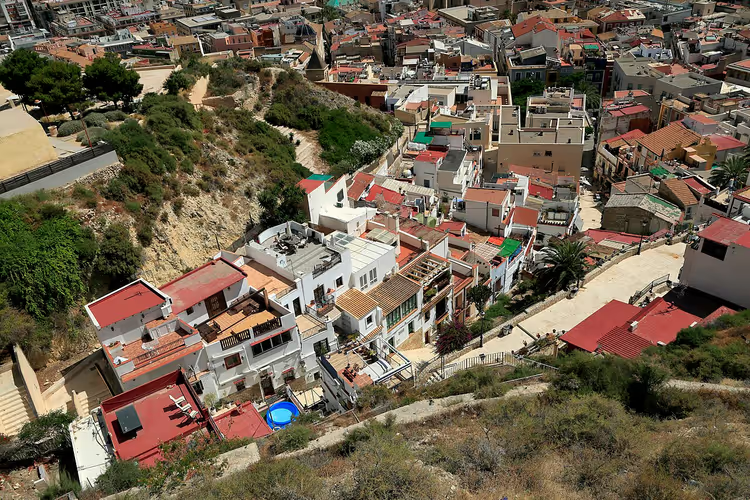
The route goes through the Santa Cruz quarter at the foot of Mount Benacantil. Narrow winding streets, low houses with colorful facades, and potted flowers create the atmosphere of an old Mediterranean town.
The guide shows you the Cathedral of Saint Nicholas, the Basilica of Saint Mary, and the Town Hall Square. The walk takes about three hours and suits any age.
- Getting there: starts at Town Hall Square, in the city center.
- Who it's for: first-time visitors to Alicante who want to understand the city's layout.
- Not for: if the castle is your main priority, take the four-hour overview tour instead.
- The catch: Santa Cruz has a lot of stair climbs, so it will be difficult with a stroller.
2. Cycling tour through the Costa Blanca outskirts
 © Diego Delso · CC BY-SAPhoto: Diego Delso, CC BY-SA (https://creativecommons.org/licenses/by-sa/3.0), Wikimedia Commons
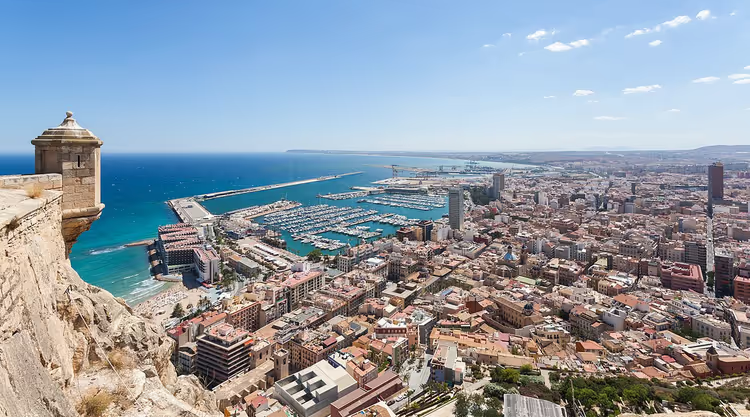
The route passes through the province's fruit orchards and vineyards, between old watchtowers. They once protected the fields from corsair raids.
The road leads to the Monastery of the Holy Face and San Juan Beach, which stretches along a palm-lined promenade. The total distance is about twelve kilometers, and it stays away from car traffic.
- Who it's for: if you're confident on a bike and want to combine exercise with scenery.
- Not for: if you don't ride well, this route won't suit you.
- Cost: check bike rental and guide fees with the operator.
- The catch: in summer the open sections get hot, so set off before midday.
3. Four-hour overview tour
 © H.Helmlechner · CC BY-SAPhoto: H.Helmlechner, CC BY-SA (https://creativecommons.org/licenses/by-sa/4.0), Wikimedia Commons
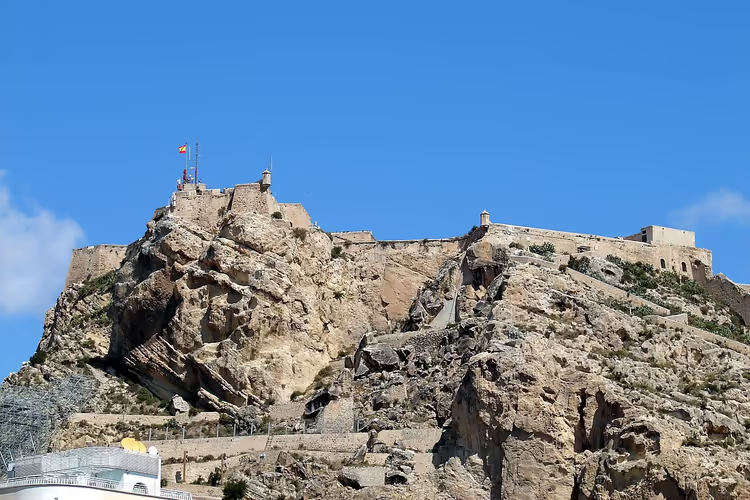
The four-hour route starts in the Santa Cruz quarter, then a high-speed elevator takes the group up Mount Benacantil. At the top stands Santa Barbara Castle, spread across three levels, each belonging to a different era.
The castle sits 166 meters above the sea (as of 09/2026, Alicante tourist office website). The group then descends to the Central Market, walks along the Explanada promenade with its wave-pattern mosaic, and returns to Town Hall Square. If you want to see the whole city without long climbs, check out Alicante tours on GetYourGuide.
- Getting there: starts in the center; the elevator to the castle is paid.
- Who it's for: if you want the castle, the market, and the promenade in one go.
- The catch: there can be a line for the castle elevator in high season.
4. Driving trip to Guadalest and Altea
 © Francesc Fort · CC BY-SAPhoto: Francesc Fort, CC BY-SA (https://creativecommons.org/licenses/by-sa/4.0), Wikimedia Commons
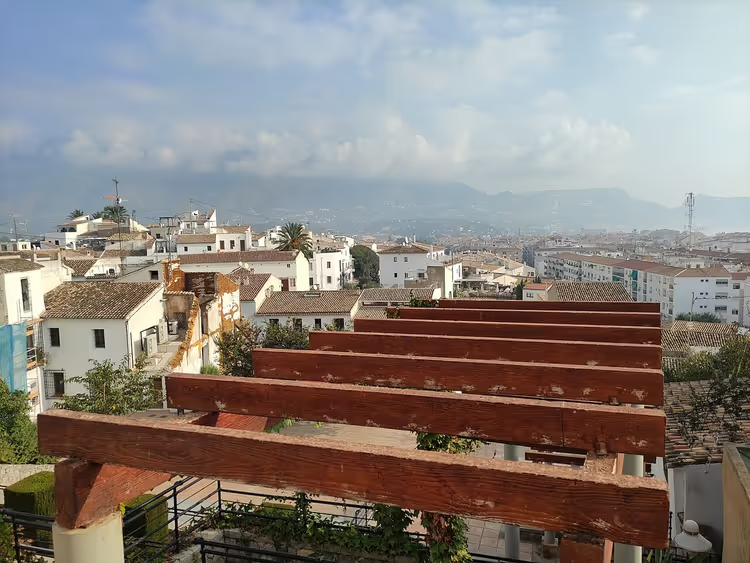
This car trip covers two of the province's most recognizable towns in a single outing. The first stop is Altea, a former fishing village on a hill with white houses and the dome of the Church of Our Lady of Consolation covered in sky-blue tiles. Cobbled streets and stairways lead to viewpoints over the sea.
Second stop: Guadalest in a green valley surrounded by mountains and pine forests.
If you want to do this route on your own, rent a car in advance and allow time for parking near the viewpoints.
- Who it's for: if you want to see the white villages without moving between hotels.
- Getting there: with a guide by car or on your own along mountain roads.
- The catch: Guadalest has narrow streets and lots of tourists, so you'll have to leave the car at the bottom.
5. Alicante by night in lights
 © PiotrMig · CC BY-SAPhoto: PiotrMig, CC BY-SA (https://creativecommons.org/licenses/by-sa/4.0), Wikimedia Commons
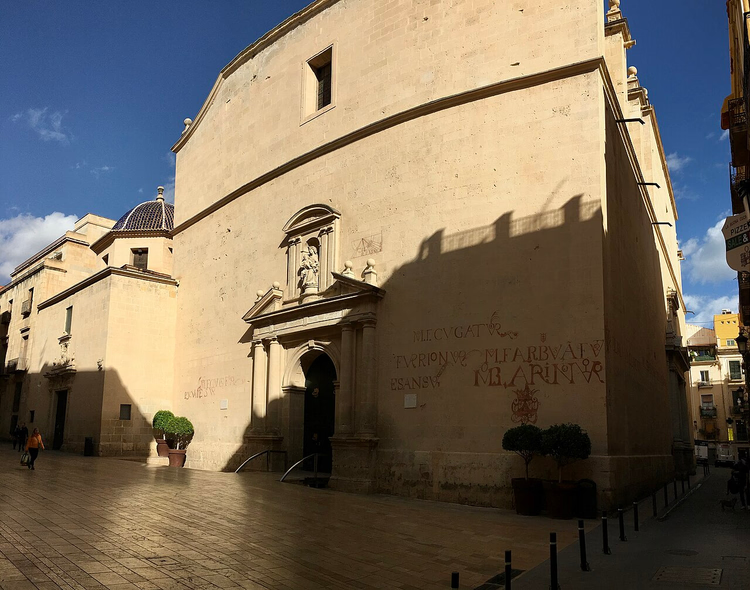
When darkness falls, the city lights come on and the heat eases. A guide leads the group through iconic spots under the night lights: the lift to Santa Bárbara Castle, the Explanada boulevard, the Santa Cruz quarter, the Church of St. Nicholas, and Santa María Church.
A separate stop: El Palmeral Park with its centuries-old trees. The walk ends at a bar, where you should try tapas with a local drink.
- Who it's for: those who want to see the city lit up and without the daytime heat.
- How to get there: starts in the city center, near the waterfront.
- Not for: if you get up early and have dinner at home, the evening pace won't suit you.
6. Guadalest, waterfalls, or the dinosaur park
 © Diego Delso · CC BY-SAPhoto: Diego Delso, CC BY-SA (https://creativecommons.org/licenses/by-sa/4.0), Wikimedia Commons
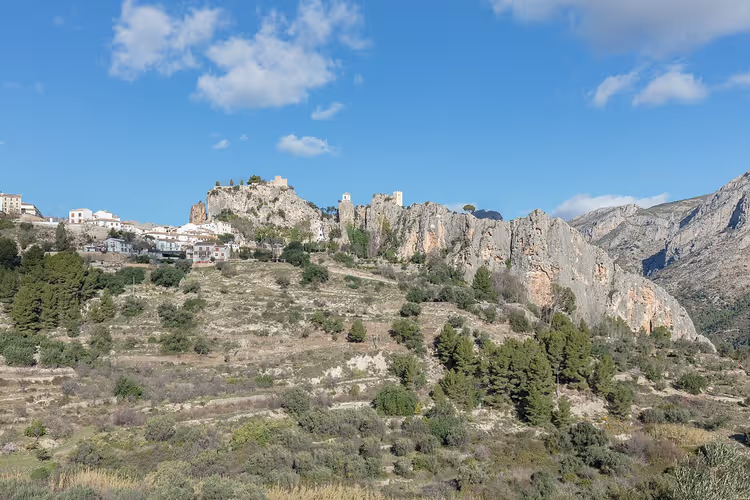
This is the longest trip in the selection: about seven hours by car with a guide. The main part of the program is the village of Guadalest, perched on a rock in a mountain valley. Guadalest is considered one of the most visited places in Spain.
The surrounding slopes are covered with pine forest, olive and citrus groves, and a turquoise reservoir shimmers above the valley.
After Guadalest, the group chooses between two options: waterfalls with well-maintained paths or a park with moving dinosaur models. Both options suit families with children. The drive from Alicante takes about an hour each way, so leave in the morning and bring water.
- Who it's for: if you want to combine a village, nature, and entertainment for kids in one day.
- Not for: if you're not up for a long drive and frequent stops.
- The catch: the program runs all day, and the pace can be tiring for small children.
7. The fortress town of Guadalest on the rock
 © Huguette Dion · CC BY-SAPhoto: Huguette Dion, CC BY-SA (https://creativecommons.org/licenses/by-sa/3.0/es/deed.en), Wikimedia Commons
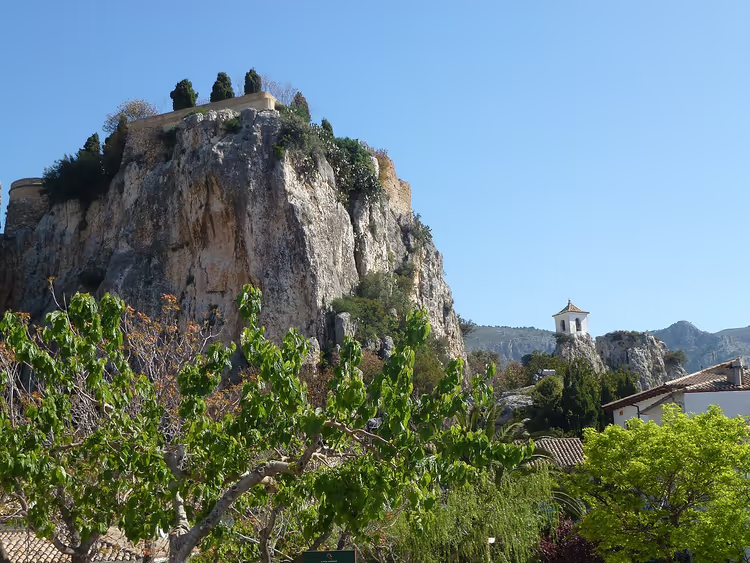
You enter Guadalest through a ten-meter tunnel cut into the rock. From there, tourists walk along the fortress wall and peek into craft shops.
The town holds the title of the most "museum-dense" in Spain by number of residents. There are roughly eight museums for about 280 people (as of 2024, overview with census data). Collections include vintage cars, torture instruments, miniatures, and pepper. The Governor's House shows the daily life of the upper class in the 18th and 19th centuries.
- Who it's for: if you like small villages and private museums.
- Not for: if you only want views, the lookout points will be enough.
- The catch: in summer the narrow streets are crowded with tourists, so come in the morning.
8. Symbols of the Costa Blanca coast
This route brings together the main symbols of the coast in one trip. First stop: Altea with its white houses, wrought-iron balconies, and the Church of Nuestra Señora del Consuelo with its white-and-blue dome.
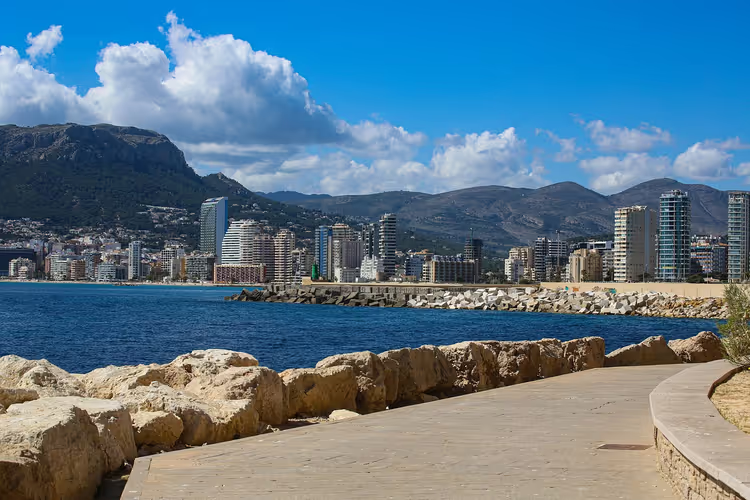
Second stop: Calpe with the Peñón de Ifach rock. It rises 332 meters out of the sea (as of 09/2026, official Calpe website). Nearby lies a salt lake where pink flamingos come to visit.
- Who it's for: if you want to see the two most photographed spots on the coast in one day.
- How to get there: with a guide by car or on your own via the toll road.
- Not for: if you don't like long transfers and just want the beach.
9. Aitana safari park for the whole family
 © Emilio J. Rodríguez Posada · CC BY-SAPhoto: Emilio J. Rodríguez Posada, CC BY-SA (https://creativecommons.org/licenses/by-sa/4.0), Wikimedia Commons
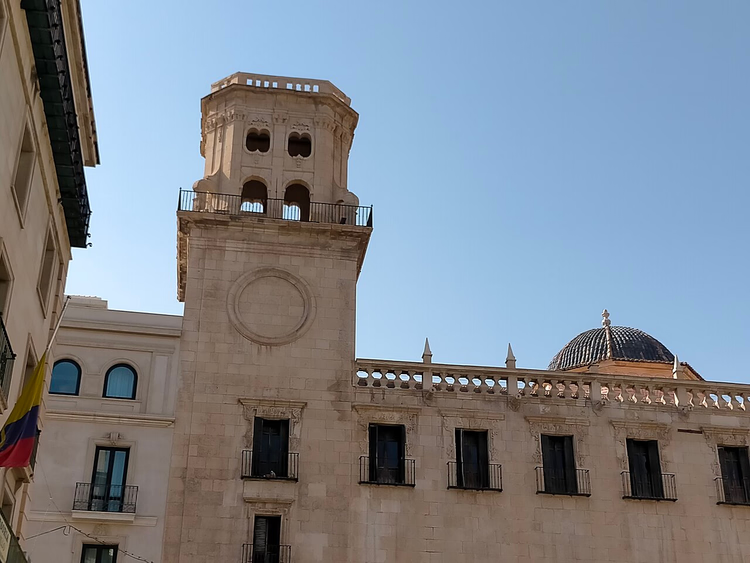
The park covers a large area where herbivores and predators from five continents live. You drive part of the route along forests, ponds and rocks, and walk part of it.
During the drive you can see hippos, giraffes, tigers, antelopes, lions, zebras and ostriches. At stops, a staff member talks about the animals and answers questions about their diet and behavior. In the predator zone, you cannot open car windows or doors.
Part of the park is set aside for walking paths where you can get closer to friendly animals. The animals live in conditions close to their natural habitat: forests, ponds and rocks. On weekends and in July, cars line up at the entrance, so get your ticket in advance.
- Who it's for: families with children and anyone who wants to see animals up close.
- Not for: if you expect a classic zoo with enclosures in the city center.
- The catch: the drive through the park takes several hours, leaving little time for other plans.
- Cost: see park tickets on GetYourGuide.
10. Walk from Port Square to the castle
 © kallerna · CC BY-SAPhoto: kallerna, CC BY-SA (https://creativecommons.org/licenses/by-sa/4.0), Wikimedia Commons
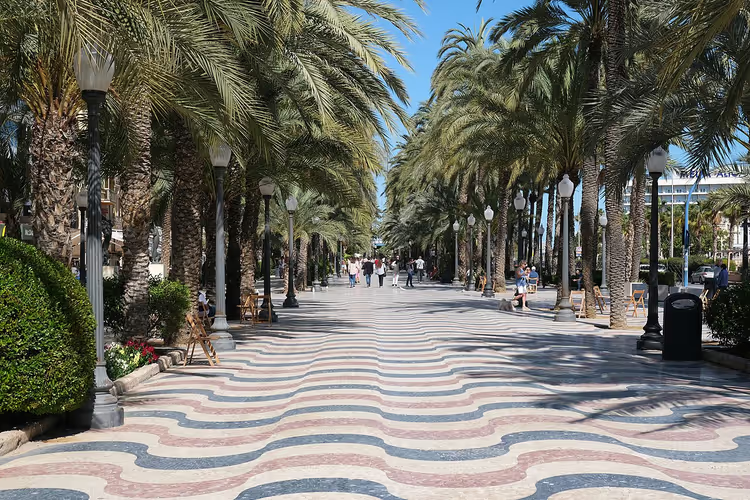
This four-hour walk starts at Port Square. From there, a promenade with white yachts and boats stretches along the water, and then the route continues along a seaside boulevard with marble mosaics and through Miro Park with its centuries-old trees.
Along the way you will see the Cathedral of Saint Nicholas, the Basilica of Saint Mary, the city hall building and the Central Market. The finale: Santa Barbara Castle on a rock above the city. An elevator takes you up to it, and the descent leads to the Santa Cruz quarter.
- Who it's for: if you want to see the city's highlights in one long walk.
- How to get there: the start is at Port Square, served by a city bus.
- The catch: in season there is a line for the elevator, so arrive at opening time.
11. Day trip to Valencia
 © Elemaki , modifications by Alvaro qc · CC BY-SAPhoto: Elemaki , modifications by Alvaro qc, CC BY-SA (https://creativecommons.org/licenses/by-sa/3.0), Wikimedia Commons
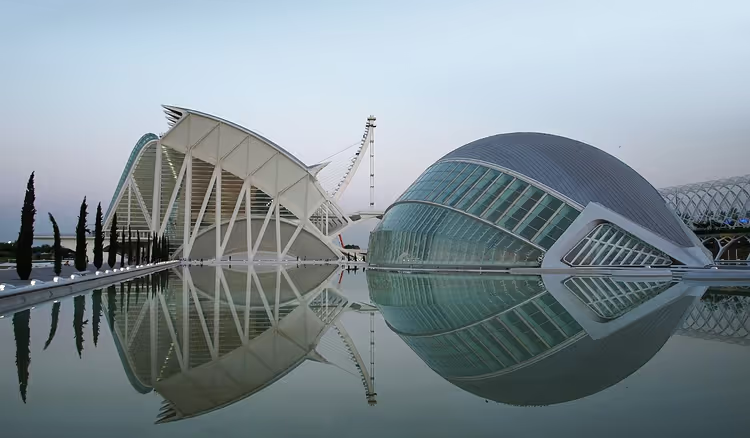
Valencia is a convenient full-day trip: it is the closest major city in the region. The main attraction here is the City of Arts and Sciences complex, which opened in 1998 (as of Wikipedia). It includes a theater, planetarium, oceanarium, science museum and gallery.
The walking part of the route goes through the historic center with its Gothic cathedral, Baroque basilica, palace of the marquises and medieval gates. In the evening, it is pleasant to have dinner at a cafe on the waterfront. If you want to go with a guide, see day tours to Valencia.
- Who it's for: if you want to combine modern architecture and the old town.
- Not for: if you are not ready for a long drive and a lot of walking.
- The catch: you cannot cover Valencia in one day, so you will have to pick a district.
12. Rural Spain and a winery near Novelda
 © Emilio J. Rodríguez Posada · CC BY-SAPhoto: Emilio J. Rodríguez Posada, CC BY-SA (https://creativecommons.org/licenses/by-sa/4.0), Wikimedia Commons
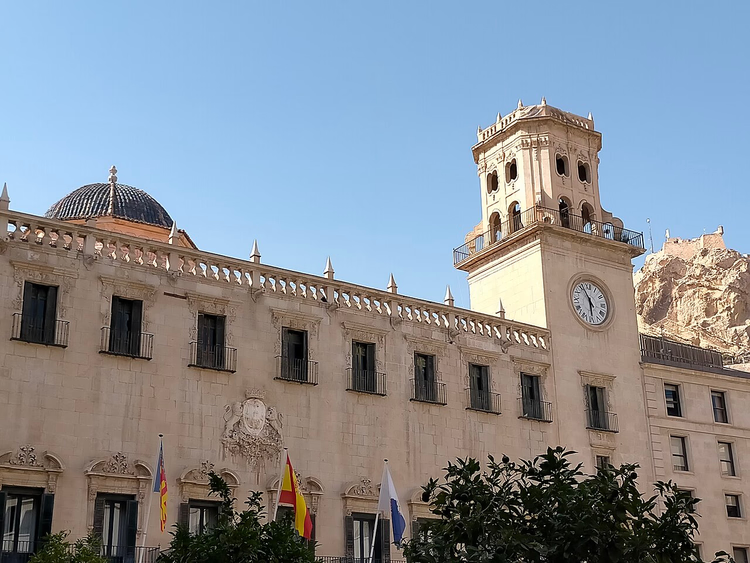
For those who want to get away from mass-market routes, there is a trip to Novelda. This is an agricultural center of the province: grapes and spices are grown here.
On one of the hills, towers of a 12th-century fortress remain. At the end of the program, travelers visit a winery surrounded by hills.
- Who it's for: if you want quiet, fields and wine instead of tourist crowds.
- Not for: if you are only coming for the sea and the beach.
- The catch: wine tasting is part of the program, so you cannot drive afterward.
13. Novelda and a Gaudi-style church
 © cesar.ruiz · CC BY-SAPhoto: cesar.ruiz, CC BY-SA (https://creativecommons.org/licenses/by-sa/3.0), Wikimedia Commons
The second option for a trip to Novelda focuses on architecture. Novelda is known for a special variety of yellow grapes and a large number of monuments in a small area.
First you will see the Church of Saint Mary Magdalene on a hilltop. It was built by architect J. Sala, a student of Antoni Gaudi: two slender towers, intricate brickwork and ceramic panels. The route then continues through a district of late 19th-century mansions. Among them, the three-story Casa Modernista stands out with its carved panels, frescoes and stained glass.
- Who it's for: if you love Art Nouveau and unusual churches.
- How to get there: with a guide by car from Alicante.
- The catch: the church stands on a hill, and the walk up in the heat is tough.
14. Photo walk with a photographer around the city
 © Emilio J. Rodríguez Posada · CC BY-SAPhoto: Emilio J. Rodríguez Posada, CC BY-SA (https://creativecommons.org/licenses/by-sa/4.0), Wikimedia Commons
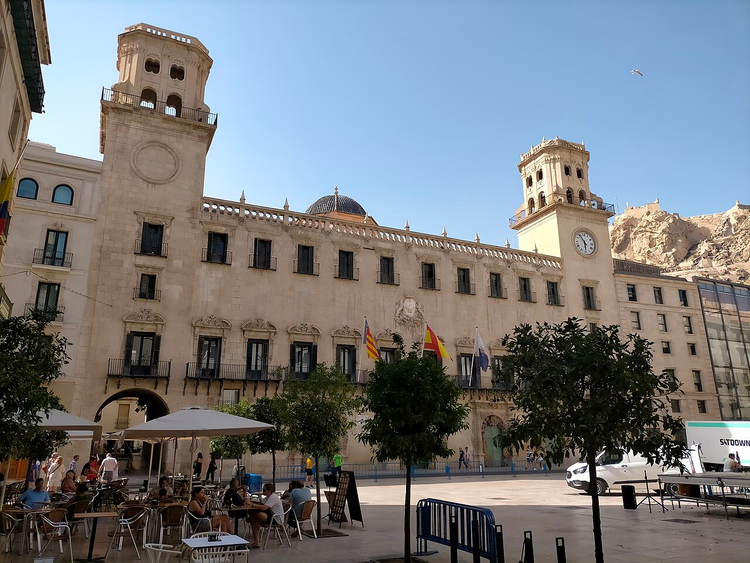
This is not a historical tour but a session with a photographer. You go to the most picturesque spots in the city: rocky shores, panoramas, old quarters and sunny courtyards.
The photographer shoots you against the backdrop of the sea and architecture, while a guide shares stories about the city along the way. The finished photos are sent about a week later, sometimes a little longer. If you have already gone home, the files are uploaded to the cloud.
- Who it's for: couples and anyone who wants professional photos from their trip.
- Not for: if you need a historical tour, there is almost none of that here.
- The catch: the photos do not arrive right away, so book the shoot at the start of your vacation.
15. One day in Murcia
Murcia was founded by the Moors in the 9th century, and today it is one of the most history-rich cities in the region. Because of its fertile lands with gardens and plantations, it is called "Spain's vegetable garden."
The main attraction: the Cathedral of the Blessed Virgin Mary, whose appearance blends Baroque, Gothic, Renaissance and Neoclassical styles. Nearby stand the Bishop's Palace with frescoes on its facade, the town hall and the Romeo Theater. A walk along the Segura River leads to an old wooden bridge.
- Who it's for: if you love cathedrals and want to see a city without sea and beaches.
- Not for: if you are coming for a beach vacation, there is no sea in Murcia.
- The catch: the trip takes a whole day, which is a lot for a short stay.
16. Medieval Bocairent and the Moorish caves
 © Superchilum · CC BY-SAPhoto: Superchilum, CC BY-SA (https://creativecommons.org/licenses/by-sa/4.0), Wikimedia Commons
Bocairent sits high in the mountains of the province's interior. It's a small town of stone houses on narrow cobbled streets with steep staircases carved into the rock.
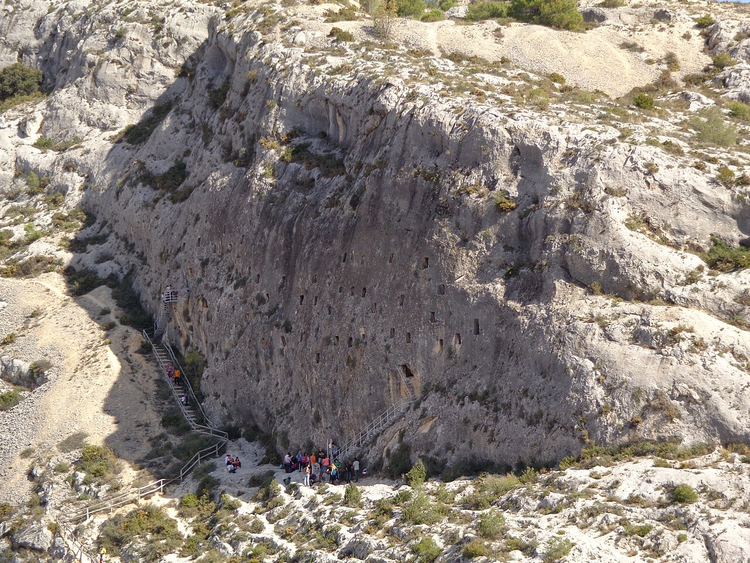
A bell tower rises above the central square, and the archaeological museum holds a collection of finds covering the town's history. A few hundred meters from the center are the Covetes dels Moros caves, cut into the rock face (according to the Bocairent tourist office). Below them is the oldest bullring in Valencia, carved directly into the terrain. The caves served as grain stores, burial chambers, and ritual spaces, with daylight entering through openings in the rock face. Exploring them requires comfortable shoes and care on the steps. Bocairent is on Valencia's list of historic-artistic ensembles, so the old buildings have survived almost entirely intact.
- Who it's for: if you love medieval architecture and caves.
- How to get there: by car, with a guide, or on your own.
- The catch: lots of steep stairs and climbs, so bring comfortable shoes.
17. A visit to a family winery

This trip introduces you to Spanish winemaking traditions through the example of one family estate. The owners welcome guests and show how techniques are passed down from generation to generation.
You'll see the vineyards and learn about vine care and hand harvesting. The group then descends into cellars with oak barrels where fermentation takes place. The visit ends with an outdoor tasting accompanied by homemade snacks.
- Who it's for: if you want to try local wines and see production from the inside.
- Not for: if you're traveling with children and looking for entertainment, the focus here is on wine.
- The catch: you can't drive after the tasting, so arrange a designated driver in advance.
18. Alicante wineries: red and white
 © MGWines Group · CC BY-SAPhoto: MGWines Group, CC BY-SA (https://creativecommons.org/licenses/by-sa/4.0), Wikimedia Commons
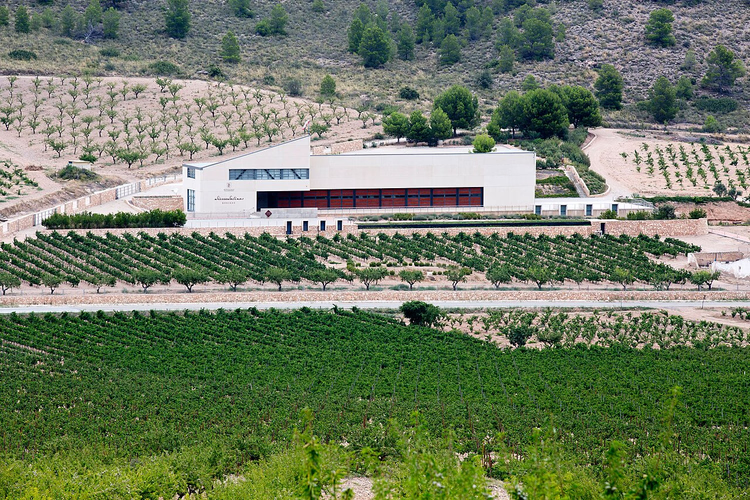
This trip takes you about fifty kilometers from the coast, inland to a winery set among the hills. The climate and soil are different here, so the wines differ noticeably from those made near the coast.
You'll walk through the gardens and rows of vines, then descend into cellars with large wooden barrels. The estate shows the full cycle: from machine harvesting to aging and bottling. The finale: a tasting of several varieties with cured meat delicacies.
- Who it's for: if you want to understand how Alicante wines differ from the rest of Spain.
- Not for: if you don't drink wine, the program will hold little interest.
- The catch: the drive takes about an hour each way, so half a day goes just to the outing.
19. Old town quest walk
This is a walk in game format. The guide gives you riddles and puzzles, and you look for the answers right on the city streets and in the Santa Barbara fortress.
During the quest you use a compass, talk to locals, and search for a secret character. One of the tasks is climbing to the highest point with a panoramic view of the city. At the end you can try some wine and discuss the game.
The tasks lead you through the most striking spots: the oldest square, an unusual little street, and the central promenade. Along the route the guide tells city legends that rarely make it into regular tours. The quest works for both adults and teenagers: the riddles test your wits, not your speed. Confirm the language of the tasks in advance.
- Who it's for: families with kids and groups who want an active format.
- Not for: anyone who wants a classic historical tour with dates.
- The catch: part of the time goes to searching for answers rather than seeing the sights.
20. Calpe and Altea in one day
 © Werner Wilmes · CC BYPhoto: Werner Wilmes, CC BY (https://creativecommons.org/licenses/by/2.0), Wikimedia Commons
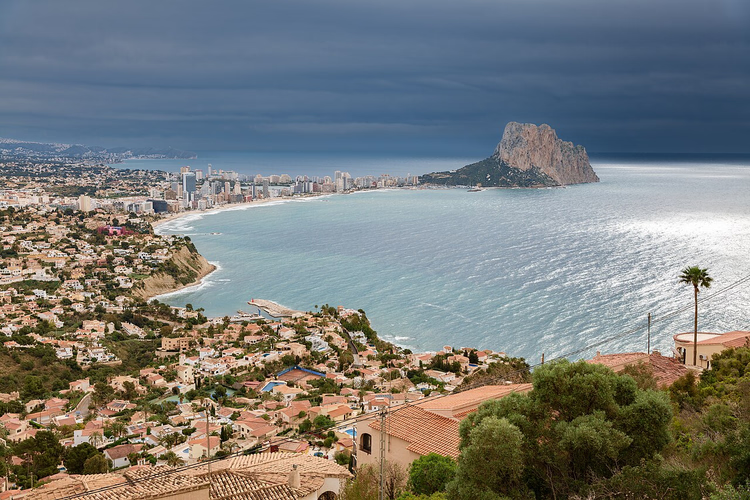
This seven-hour tour covers two colorful coastal towns in a single outing. First Calpe with the Peñón de Ifach rock. A comfortable trail runs around it through the nature reserve.
Toward evening you move on to Altea. On the outskirts there is an Orthodox church: a wooden tower-style building with golden domes among palm trees. Check out Calpe and Altea tours on GetYourGuide.
- Who it's for: if you want the sea, views, and two towns without staying overnight in each.
- How to get there: with a guide by car, the drive takes about an hour.
- The catch: the schedule is packed, so there is little time left for the beach.
It's easier to pick a specific tour by dates and reviews, not just by the description.
Tours and tickets in Alicante
Guided tours, skip-the-line tickets and activities — most offers can be cancelled free of charge.
See offers on GetYourGuideThe widget loads once you give your consent.
⁉️🤔 Frequently asked questions
How much does a tour of Alicante cost?
The price depends on the format and group size. Private walks cost more than group tours, while car and wine tours include transport, tickets, and tastings. Check specific prices with operators on the booking page: they change during the season.
What language are the tours in?
Group tours usually run in English or Spanish. If you need a guide in German or English, confirm the language when booking. Book a private walk in your preferred language in advance.
How do you get to Guadalest without a car?
There is almost no direct public transport to Guadalest, so it's easier to go with a guide or in a rental car. The drive takes about an hour from the coast. If you don't want to drive yourself, look for day tours from Alicante and Altea.
When is the best time to take tours?
Mild weather comes in May and June, as well as September and October: warm, but without peak heat and with noticeably fewer people. In July and August, head out in the morning, and plan long trips to the mountains and wineries for the first half of the day.
Are the tours suitable for kids?
The safari park, dinosaur park, waterfalls, and quest walk are designed for families with kids and don't require lengthy preparation. Wine tours and long sightseeing walks are usually boring for children because of the content and length of the route.
For independent trips around the province, it's convenient to compare rental cars in advance: that way you can see available models and prices for your dates.
Find hotels
Compare prices across booking sites and filter for rooms with free cancellation.
Compare prices on Discover CarsThe widget loads once you give your consent.
In short: what's worth booking
- If you have one day: a four-hour sightseeing walk.
- If you want the sea and views: Calpe and Altea in one day.
- If you're traveling with kids: the Aitana safari park or the dinosaur park.
- If you want peace and quiet: a trip to a winery inland.
Book your tour in advance, available dates run out quickly in season. An Alicante airport transfer is easy to arrange through transfer search, and you can browse specific tours in the GetYourGuide catalog.

A small editorial team writing guides for independent travel. We travel ourselves, but we haven’t been everywhere, so we check prices, opening hours and how to get there against official sources.