
















Exotic fruits of Thailand: what to try and how to choose ripe ones
Thai markets are packed with fruits whose names tourists see for the first time. A short guide helps you figure out what to try and in which month.
According to the Thailand Department of Agriculture (DOAE), durian is sold year-round, with the peak from April to August.
Below are seven fruits that tourists praise most often: from sweet lychee to the notorious durian. For each one you will find the season, taste, and health benefits.
How to pick a ripe fruit
💡 In short:
- Most fruits are in season from April to August, when durian and rambutan are cheapest.
- Choose a ripe fruit by smell and weight: heavy and fragrant is almost always better.
- Seasons and characteristics: 09/2026, verified on the official DOAE website.
Fruit | Season | Taste | Health benefits |
|---|---|---|---|
Dragon fruit | year-round | bland, like beetroot with kiwi | diet food |
Lychee | April-June | sweet, with a wine note | for sore throat and cough |
Jackfruit | year-round | cloyingly sweet, like melon with fruit jelly | potassium and vitamin A |
Noni | year-round | slightly bitter | vitamins C, A, E and B group |
Durian | year-round, peak April-August | creamy, unlike anything else | proteins, fats and vitamin C |
Rambutan | April-August | juicy and sweet | vitamin C, potassium, fiber |
Star fruit | May-August | like pineapple with apple and kiwi | vitamin C in sour fruits |
At the market, vendors will help you pick a fruit in the evening, when they are more willing to offer samples. Keep a simple rule in mind: buy unfamiliar fruit one at a time, not by the kilogram.
Dragon fruit
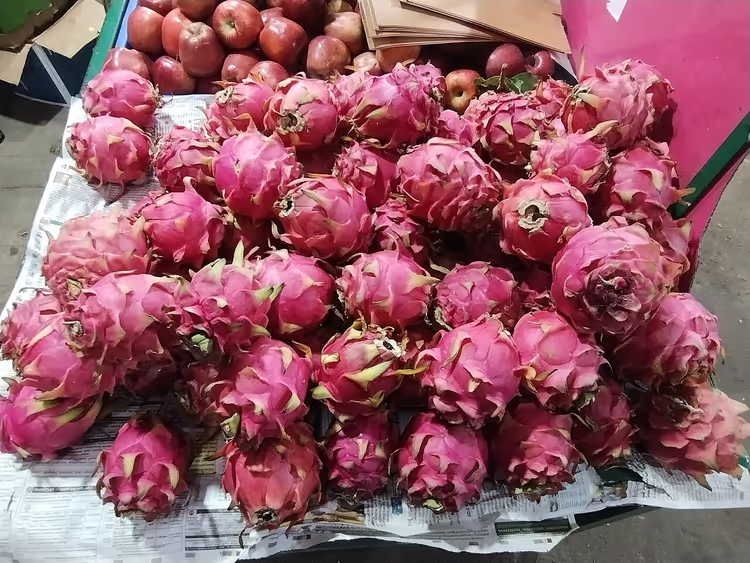
Dragon fruit, or pitaya, grows on a cactus and looks like a large apple in a scaly skin. The flesh ranges from creamy white to purple, with small black seeds inside, like kiwi. The plant blooms year-round, but only at night.
 © Gpkp · CC BY-SAPhoto: Gpkp, CC BY-SA (https://creativecommons.org/licenses/by-sa/4.0), Wikimedia Commons
- Season: year-round.
- Taste: a mix of boiled beetroot and kiwi, with almost no sweetness.
- Benefits: a diet fruit, included in meal plans for diabetes and digestive issues.
- The catch: the taste is rather bland, with no strong aroma.
This fruit is worth buying if you care about low calories. For bold flavor, it is less suitable than lychee.
Lychee
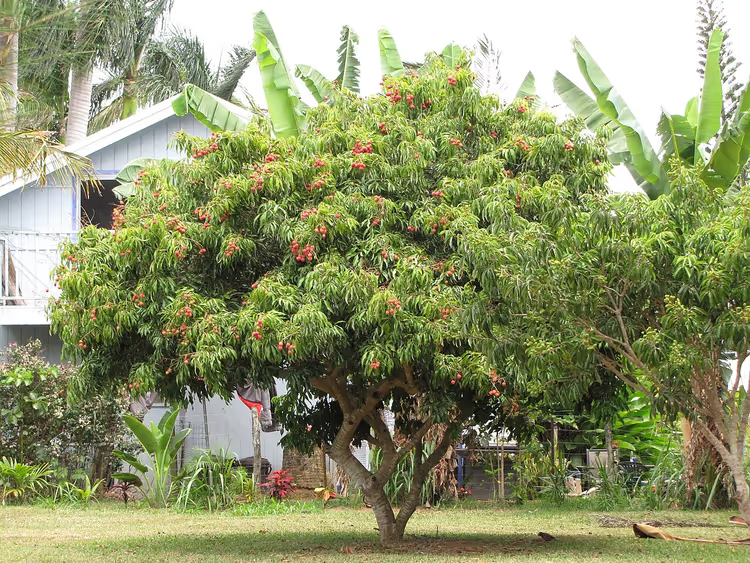
Lychee is the size of a small walnut, but its aroma is strawberry-like. Under the dense bright red skin hides a jelly-like creamy flesh, similar to a grape. Inside there is a large pit shaped like an acorn.
 © Forest and Kim Starr · CC BYPhoto: Forest and Kim Starr, CC BY (https://creativecommons.org/licenses/by/3.0/us/deed.en), Wikimedia Commons
- Season: April-June.
- Taste: sweet, slightly astringent, with a light wine note.
- Benefits: helps with sore throat, stomach pain, and cough.
- The catch: the pit is large, so there is little flesh in each fruit.
A ripe lychee is easy to peel by hand. If the skin is wrinkled, the fruit is overripe and the taste is no longer the same.
Jackfruit
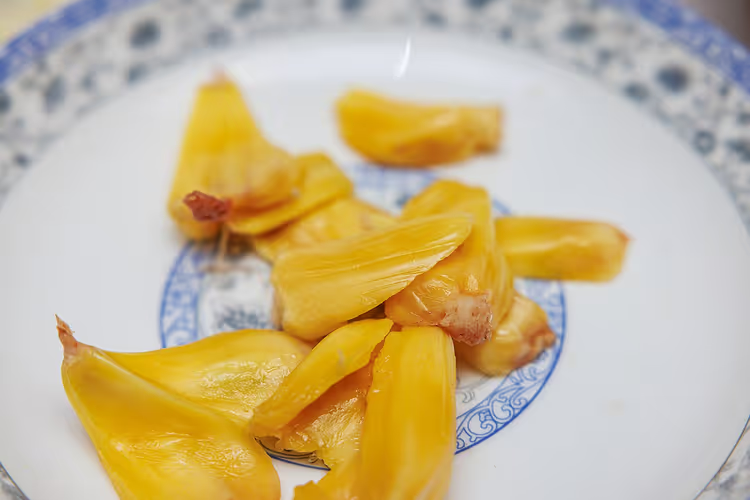
Jackfruit is considered the largest fruit that grows on a tree. The yellow-green spiky skin hides individual pieces the size of a bell pepper. The flesh is dense and yellow, and it is usually sold already separated into segments.
 © Dinkun Chen · CC BY-SAPhoto: Dinkun Chen, CC BY-SA (https://creativecommons.org/licenses/by-sa/4.0), Wikimedia Commons
- Season: year-round.
- Taste: cloyingly sweet, like a mix of melon, fruit jelly, and bubble gum.
- Benefits: filling, rich in potassium and vitamin A.
- The catch: the fruit is not juicy, and the very sweet taste quickly becomes too much.
You are unlikely to need a whole jackfruit. Buy pre-packaged segments: that way you can try the fruit without throwing half of it away.
Noni
Noni is called one of the most controversial Thai fruits. Its other names sound unappetizing: "cheese fruit" and "vomit fruit." At market stalls it is more often found as juice, and it is also used to make teas and cosmetics. A ripe fruit has yellow, almost white skin.
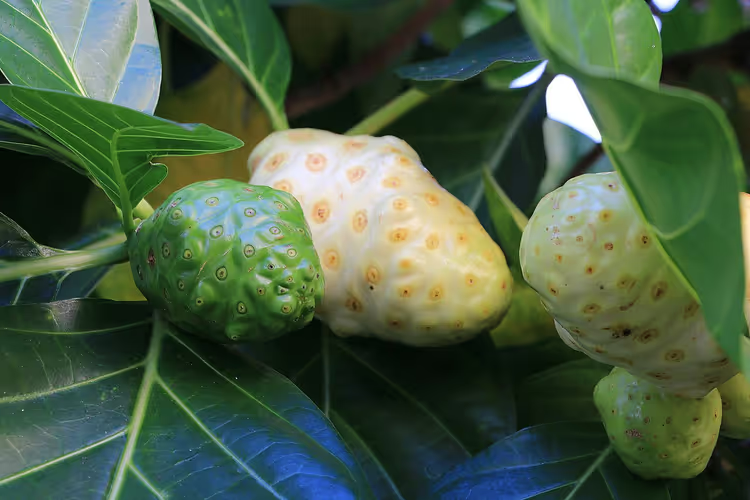 © ImagePerson · CC BY-SAPhoto: ImagePerson, CC BY-SA (https://creativecommons.org/licenses/by-sa/4.0), Wikimedia Commons
- Season: year-round.
- Taste: bitter and not very pleasant.
- Benefits: contains vitamins C, A, E and B group vitamins, as well as folic acid.
- The catch: the taste is bitter, and scientists view the health claims with skepticism.
Durian
Durian is called the king of fruits, and it leaves no one indifferent. Its smell is so pungent that hotels and transport in Thailand display signs banning it. You cannot bring it on a plane either.
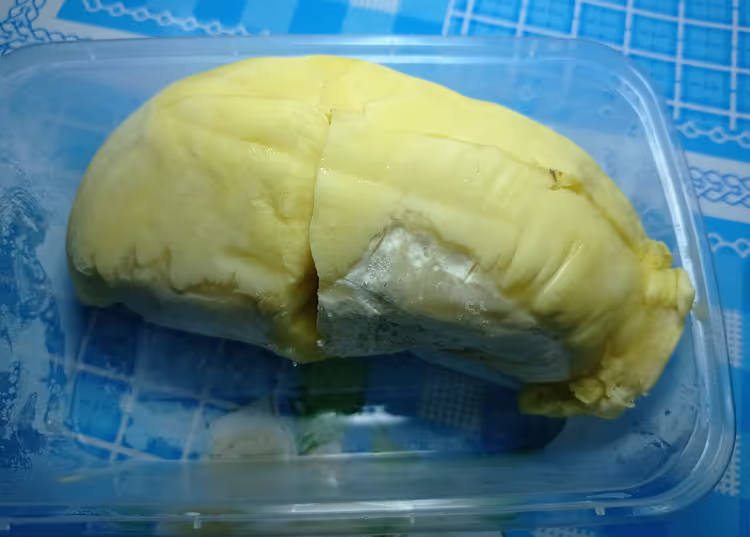 © SarKaLay စာကလေး · CC BY-SAPhoto: SarKaLay စာကလေး, CC BY-SA (https://creativecommons.org/licenses/by-sa/4.0), Wikimedia Commons
The fruit itself is the size of a soccer ball, with a spiky and hard skin. According to DOAE, individual varieties weigh 2-5 kg depending on the type. The flesh has a texture like butter, with several large seeds inside.
- Season: available year-round, peak from April to August.
- Taste: creamy and rich, with no equivalent, everyone has their own associations.
- Benefits: high in B group vitamins; rich in proteins, fats and carbohydrates.
- The catch: the pungent smell, which is why the fruit is banned in public places.
If you freeze durian, the smell almost disappears while the taste remains. It is better to eat it without alcohol and to buy it pre-packaged.
Rambutan
From Malay, the name rambutan translates as "hair." This small bright pink fruit is covered with soft hairs with greenish tips, and its shape resembles a flower. The flesh is white, translucent and dense, with a large pit inside. There are two types: round and egg-shaped.
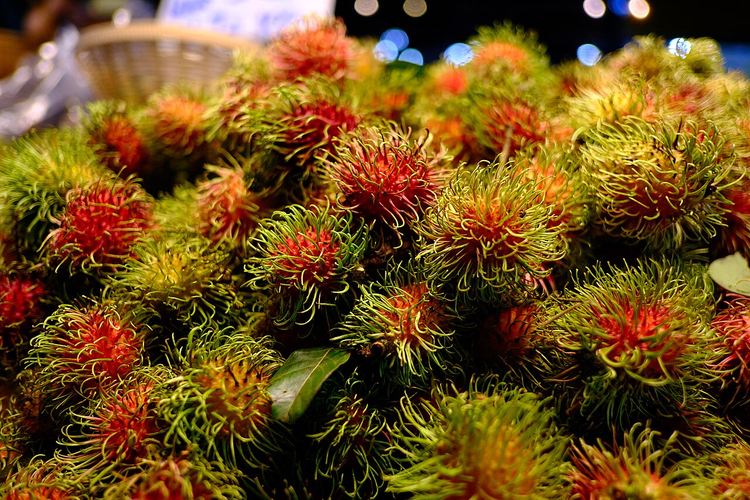 © PattayaPatrol · CC BY-SAPhoto: PattayaPatrol, CC BY-SA (https://creativecommons.org/licenses/by-sa/4.0), Wikimedia Commons
- Season: April-August; according to some sources, fruits are available until October.
- Taste: juicy; the round fruit is sweeter, the egg-shaped one less sweet.
- Benefits: recommended during illness when the body is weakened; rich in vitamins, niacin, calcium and phosphorus.
- The catch: there is little flesh, the large pit takes up almost the entire fruit.
According to DOAE, one bunch of rambutan weighs about 450 g. Buy a whole bunch: that way you can see that the hairs are fresh, not dry.
Star fruit
Star fruit is called the star fruit because a cross-section makes a perfect star. The color is golden yellow or green, and the fruit looks like a bell pepper and is the size of a large pear. You do not need to peel it, just wash and slice.
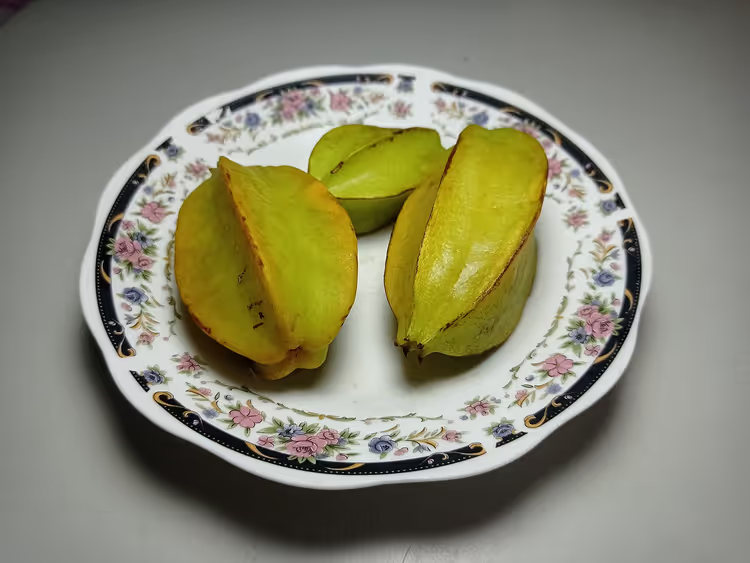 © SarKaLay စာကလေး · CC BY-SAPhoto: SarKaLay စာကလေး, CC BY-SA (https://creativecommons.org/licenses/by-sa/4.0), Wikimedia Commons
- Season: May-August.
- Taste: like pineapple with apple and kiwi, not very sweet.
- Benefits: sour fruits contain a lot of vitamin C.
- The catch: not suitable for people with digestive system and kidney conditions.
If the fruit is sour, it is simply unripe. For eating, choose firm yellow specimens without dark spots.
⁉️🤔 Frequently asked questions
Which Thai fruit should I try first?
Start with lychee and rambutan: they are sweet, pleasant in taste, and almost everyone likes them. If you want a bold experience, buy pre-packaged durian. You can buy pitaya in any season, it is sold year-round. For a beginner, this set gives a safe start.
When should I go to Thailand for fruit?
The best period is April-August: that is when durian, rambutan, lychee and star fruit ripen. According to the Thailand Department of Agriculture, these months are the peak season for rambutan and durian. In winter the selection is smaller, but pitaya and jackfruit remain in markets year-round.
Why is durian banned from hotels?
There is one reason: a very pungent smell that soaks into fabrics and furniture. Hotels, transport and airports in Thailand display signs banning it. The taste of the fruit, however, is creamy and sweet, the smell and taste do not match at all. Many people try durian precisely out of curiosity.
Can you eat the skin and seeds?
The seeds of lychee, rambutan and durian are inedible, they are always removed. The skin is peeled from all fruits except star fruit: it just needs to be washed and sliced. With jackfruit, only the flesh is eaten, which is sold as separated segments. Pitaya and noni are also peeled before eating.
In short: what to try
If you are in Thailand for the first time, put together a short list. Buy lychee and rambutan for sweet taste, pitaya for a light snack, durian for a bold experience. In winter, you can safely count on pitaya and jackfruit.
- If you like sweets: buy lychee, rambutan and jackfruit.
- If you want a light snack: pitaya and star fruit work well.
- If you want an experiment: try durian and noni, but in small amounts.
Make your list before the trip and try one fruit a day. That way you will definitely not miss what you like.

A small editorial team writing guides for independent travel. We travel ourselves, but we haven’t been everywhere, so we check prices, opening hours and how to get there against official sources.