
















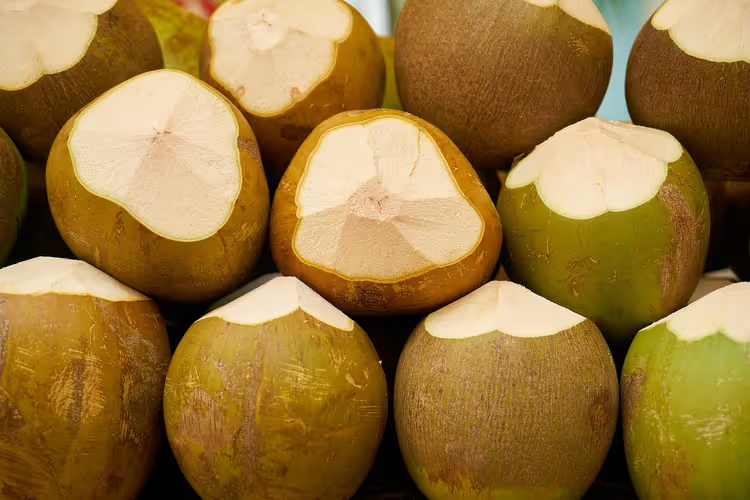
Fruits of Vietnam: season, how to choose a ripe fruit and how much it costs
A morning market in Vietnam is overwhelming. Rows of stalls are piled high with fruit whose names you don't know yet. Vietnam is one of the world's largest suppliers of exotic fruit, so the selection here is wider than in neighboring countries.
We've rounded up the most popular local fruits. For each one, you'll find its appearance, taste, season, how to pick a ripe fruit, and typical market prices.
The short answer for quick decisions: buy mangoes and lychees in spring, longan and salak in summer, sapodilla and citron in fall, and you can look for dragon fruit and guava all year round.
Seasons and how to pick ripe fruit
💡 In short:
- Buy fruit at the morning market: by lunchtime, the best fruit is gone.
- Judge ripeness by smell, weight, and firmness, not by the price tag.
- Seasons and fruit selection rules: verified on 13.09.2026 on the official Vietnam tourism portal
Vietnam stretches from north to south, so the season for the same fruit starts at different times in different regions. In the south, in the Mekong Delta, fruit ripens earlier than in the north and stays on the shelves longer. If you arrive in Hanoi in spring, look for mangoes and lychees; in Ho Chi Minh City, these fruits are sold as early as late winter.
The general rule is simple: the stronger a fruit smells, the riper it is. A heavy fruit is usually juicier than a light one, and skin without dents or cracks means the fruit made it to the market without damage. Prices depend on the harvest season, so at peak harvest the same fruit costs noticeably less.
You can and should haggle at the market, especially if you're buying a whole box. Sellers often offer a taste before you buy. Take them up on it, because the ripeness of many tropical fruits can't be determined by appearance alone.
Mango: taste, season, and selection
 © Ivar Leidus · CC BY-SAPhoto: Ivar Leidus, CC BY-SA (https://creativecommons.org/licenses/by-sa/4.0), Wikimedia Commons
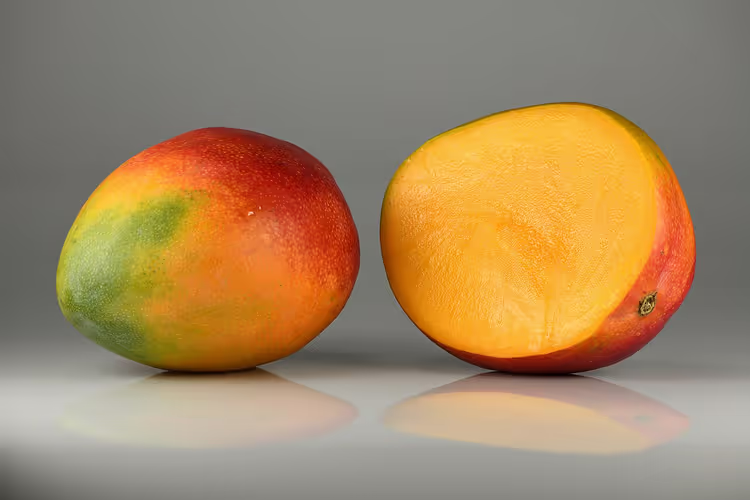
Vietnamese mango differs from Thai, Indonesian, and Filipino mango. Its flesh is sweeter and denser, almost creamy. The season runs from February to May, and in the southern provinces the fruit appears earlier.
A ripe mango smells strong and sweet. The color can be deep yellow, but fruits with red and green patches are also common. Press the fruit lightly: a ripe one will give slightly under your finger. If you want to bring mangoes home without ruining them in transit, buy slightly underripe fruit and keep it at room temperature until you leave.
Mango is rich in vitamins, minerals, and enzymes that aid digestion. In traditional medicine, it's used for brain function, blood clotting, and the heart. In Hoi An, mango goes into almost every dish at the Mango Rooms restaurant.
- Who it's for: people who like sweet, dense fruit without tartness.
- Not for: anyone prone to allergy to urushiol.
- The catch: in large quantities, mango has a laxative effect and doesn't pair well with alcohol.
Longan, or dragon's eye
 © Bùi Thụy Đào Nguyên · CC BY-SAPhoto: Bùi Thụy Đào Nguyên, CC BY-SA (https://creativecommons.org/licenses/by-sa/3.0), Wikimedia Commons
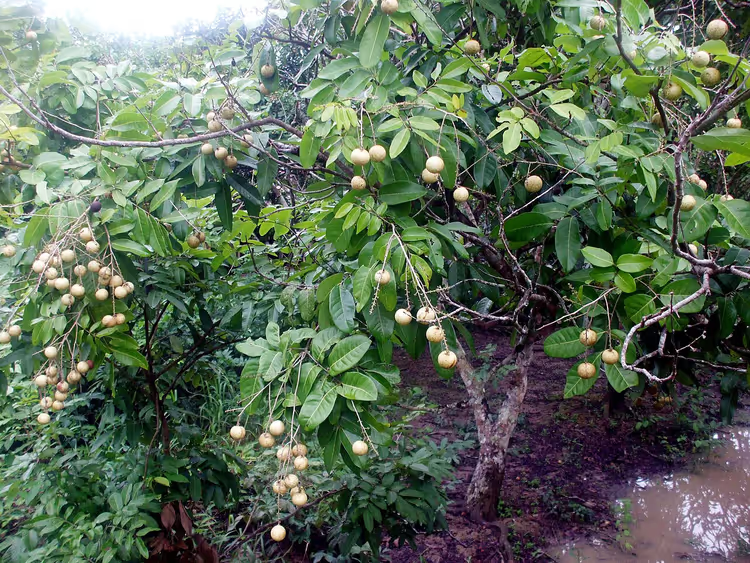
Longan grows in clusters of small, round, light brown fruits. Under the skin hides translucent, juicy flesh, and the pit is inedible and separates easily. The taste is reminiscent of both grape and melon. Depending on the variety, the skin can be yellow, red, or brown.
Longan season runs from June to August. Ripeness is almost impossible to determine by appearance, so taste the fruit: a sweet longan is ripe, a tart one isn't yet. The shell should be firm and undamaged. Longan doesn't ripen after picking, so buy fruit that's already sweet. It will keep longer in the refrigerator.
Longan is low in calories, so even people who watch their weight and count calories can enjoy it without worry.
- Who it's for: people who want a sweet fruit without extra calories.
- The catch: ripeness can't be determined by appearance, so you have to taste it.
Lychee: sweeter than longan
 © Forest and Kim Starr · CC BYPhoto: Forest and Kim Starr, CC BY (https://creativecommons.org/licenses/by/3.0/us/deed.en), Wikimedia Commons
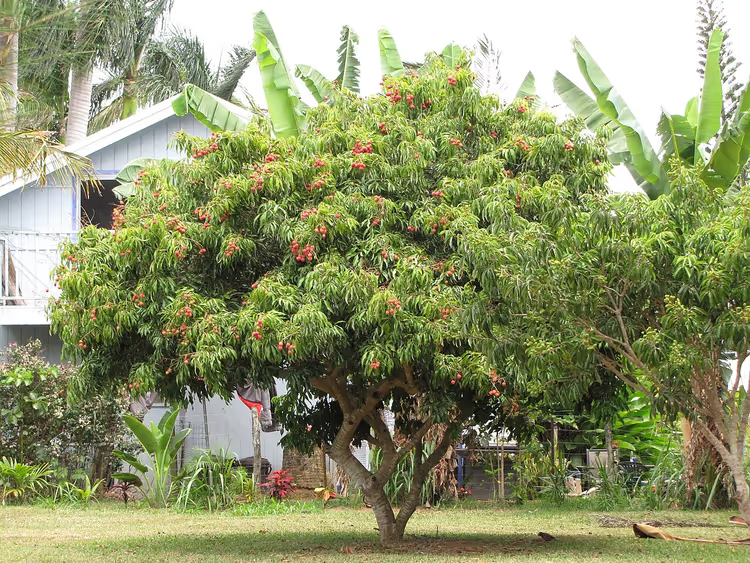
Lychee is similar to longan in size and taste, but sweeter. Its skin is bright red and slightly rough. The season is short, from May to July, so lychee doesn't stay on the market for long.
Lychee is healthy, but don't overdo it. In excess, it causes allergies and irritation of the mouth lining. Moderate consumption, on the other hand, helps with chronic constipation and intestinal disorders, because lychee has a mild laxative effect. Its beneficial properties are preserved in both dried and canned fruit.
Choose fruit with intact, deep red skin, but not dark. Shake the lychee: a ripe one makes a sound, while a dull one is best left behind. An overly cloying aroma means it's overripe.
- Who it's for: people watching their figure: lychee barely harms a low-calorie diet.
- The catch: too many lychees at once irritate the mouth lining.
Durian: taste versus smell
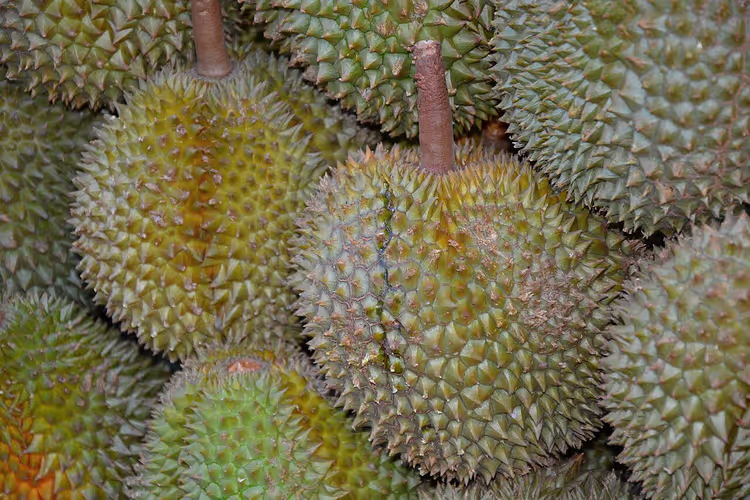 © G.Mannaerts · CC BY-SAPhoto: G.Mannaerts, CC BY-SA (https://creativecommons.org/licenses/by-sa/4.0), Wikimedia Commons
Durian is known for its pungent smell. Because of it, the fruit is banned on airplanes, and many cafes in Asia hang a sign on the door with a crossed-out durian. The smell comes from volatile sulfur compounds, so the flesh is eaten immediately, before the fruit becomes more pungent. Its taste resembles fruit-and-berry yogurt.
Durian season stretches from May to November. Ripeness is checked in two ways. First: smell the stem end; the stronger the smell, the riper the fruit. Second: tap the skin; a gurgling sound means ripeness, while a dull, hollow sound comes from an unripe fruit.
Durian is highly nutritious and helps remove harmful substances from the body. In folk medicine, it's used for high fever and jaundice.
- Not for: people with hypertension, because durian raises blood pressure.
- The catch: the smell is so strong that hotels and transport won't allow the fruit inside.
Sapodilla: the taste of ripe persimmon
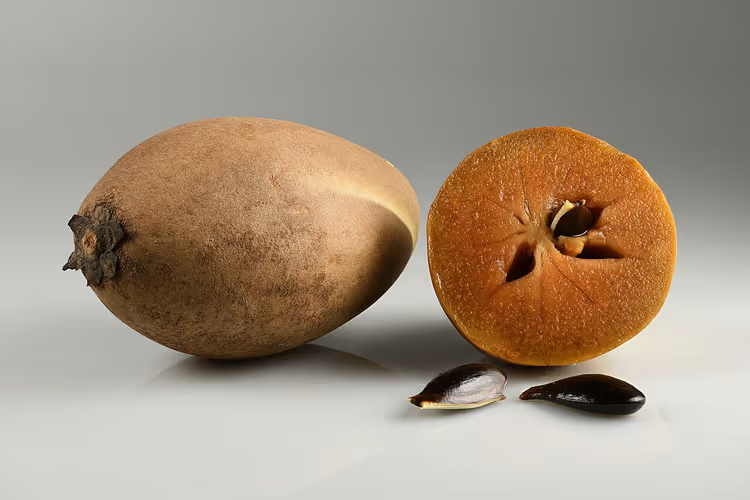 © Ivar Leidus · CC BY-SAPhoto: Ivar Leidus, CC BY-SA (https://creativecommons.org/licenses/by-sa/4.0), Wikimedia Commons
Sapodilla grows on an evergreen tree and looks like a small, round, light brown fruit. Inside hides sweet yellow flesh with hard black seeds. Sapodilla tastes like persimmon. Don't eat unripe fruit: the flesh still contains latex, which gives an unpleasant aftertaste.
Ripeness is determined by soft skin. Sapodilla season runs from September to December, and it's grown mainly in the south of the country.
Sapodilla is rich in carbohydrates and fiber, and contains vitamins A and C, plant proteins, iron, and potassium. It's used to make face masks, oils, and cosmetic hair blends.
- Who it's for: people who like soft, sweet fruit without tartness.
- The catch: unripe fruit with latex is inedible, so ripeness matters more than anything here.
Custard apple: season and selection
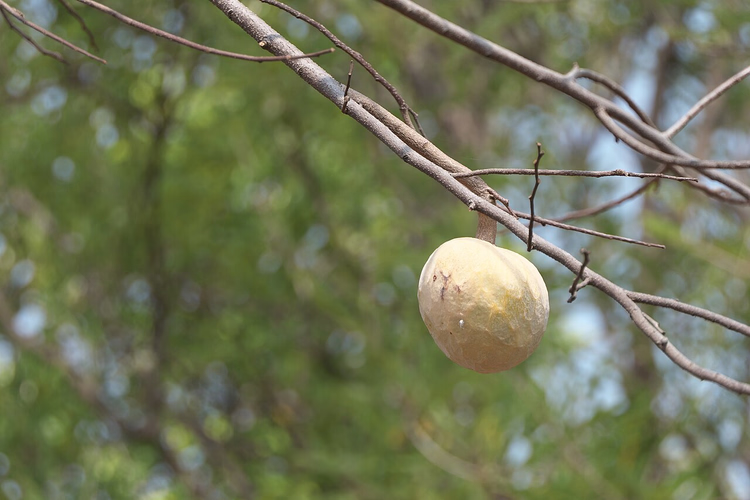 © Dinesh Valke from Thane, India · CC BY-SAPhoto: Dinesh Valke from Thane, India, CC BY-SA (https://creativecommons.org/licenses/by-sa/2.0), Wikimedia Commons
Cream apple ripens by July on low trees. The fruit is heart-shaped and covered with a tough rind that has a netted pattern and a brownish-red hue. Under the rind lies fibrous creamy flesh with black and brown seeds that are not edible.
A ripe fruit is chosen by its dark-red skin and firmness. Soft and darkened skin means it is overripe, and you will not like such a fruit.
Cream apple contains vitamins and trace elements, is high in calories, but has no saturated acids or cholesterol. Fiber and vitamin B have a positive effect on vision and brain activity, and the fruit itself helps relieve headaches.
- Who it's for: for those who want a filling and nutritious fruit.
- The catch: the seeds and rind are inedible, you will have to take the fruit apart by hand.
Pitahaya, or dragon's heart
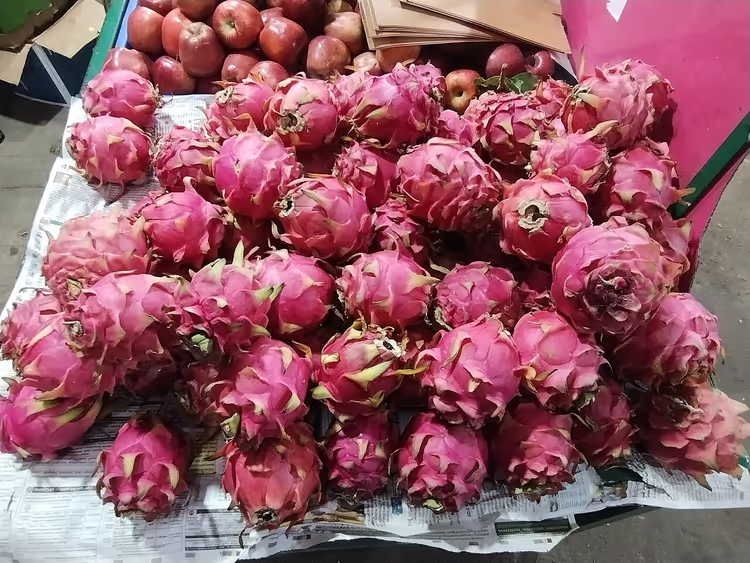 © Gpkp · CC BY-SAPhoto: Gpkp, CC BY-SA (https://creativecommons.org/licenses/by-sa/4.0), Wikimedia Commons
Pitahaya grows on a cactus and is dressed in a bright scale-like skin. Its shape resembles an elongated apple, and its color ranges from pink to deep red with green tips. A cross-section reveals creamy, lilac, or reddish flesh dotted with black seeds, like a kiwi.
According to a local legend, the fruit fell from a dragon's throat when it lost the ability to breathe fire. Pitahaya bears fruit year-round, so it almost never disappears from store shelves.
A ripe fruit is firm, undamaged, and bright red. Pitahaya tastes like boiled beet with a hint of kiwi or strawberry. The flesh supports stomach and intestinal function, strengthens the endocrine system, and is suitable for people with diabetes.
- Not for: those prone to allergies, because overeating pitahaya triggers them.
- The catch: the taste is an acquired one, many find it bland.
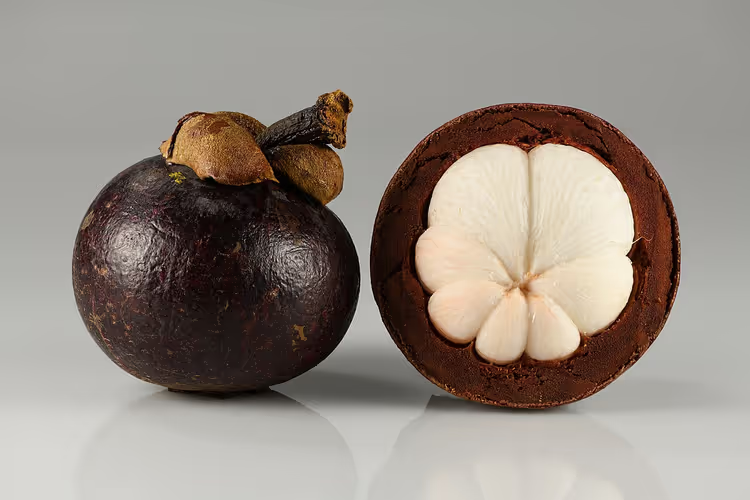
Mangosteen: how to pick a ripe one
 © Ivar Leidus · CC BY-SAPhoto: Ivar Leidus, CC BY-SA (https://creativecommons.org/licenses/by-sa/4.0), Wikimedia Commons
Mangosteen appears on the tree only many years after planting, so the fruit is considered rare. A ripe fruit is about the size of a small mandarin and covered with a thick burgundy rind. Inside are segments of flesh, and when cut open, a mangosteen resembles garlic. The rind is not eaten, although it contains most of the beneficial compounds: it is used to make juices.
Mangosteen season is short, from May to June. A ripe fruit springs back slightly when pressed. Choose large fruits, they have more flesh, and cracks in the rind indicate overripeness.
Mangosteen contains proteins, fats, fiber, iron, potassium, and vitamins B1 and C. It is used as an antioxidant, for anti-aging and heart health. Tea made from the rind helps with diarrhea and for treating wounds.
- Who it's for: for those ready to try a rare and sweet tropical fruit.
- The catch: the season is short, and outside it the fruit is expensive and hard to find.
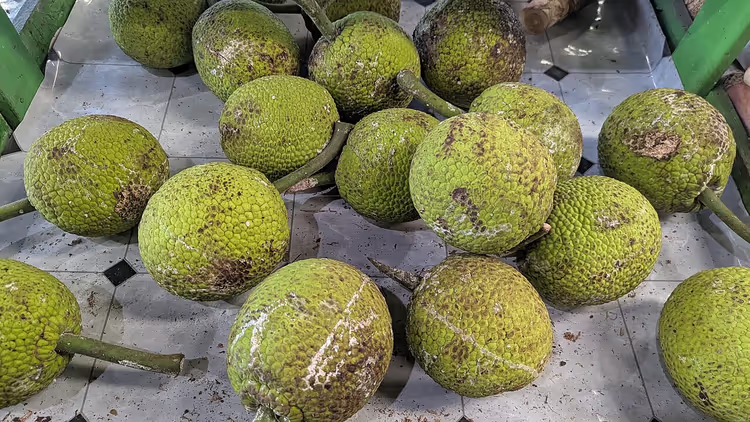
Breadfruit
 © Zykasaa · CC BY-SAPhoto: Zykasaa, CC BY-SA (https://creativecommons.org/licenses/by-sa/4.0), Wikimedia Commons
Breadfruit is one of the most unusual fruit trees. Unripe fruits are used as vegetables, while ripe ones are eaten as fruit. They grow huge, weighing tens of kilograms, and look like durian, except the rind is densely covered with spines. Inside, the flesh is divided into segments with large seeds. The taste resembles a mix of melon, pineapple, and banana.
The season runs from January to May. Ripeness is determined by the color of the rind and the smell: the brighter the yellow shade, the riper the fruit, and the aroma is reminiscent of onion or garlic.
The flesh is rich in vitamins, calcium, and minerals. It is good for the skin and nervous system, and the high vitamin C content gives the fruit antiviral properties.
- Who it's for: for those who want to try an unusual fruit with a taste close to banana.
- The catch: the fruit is huge, you cannot eat it in one sitting.
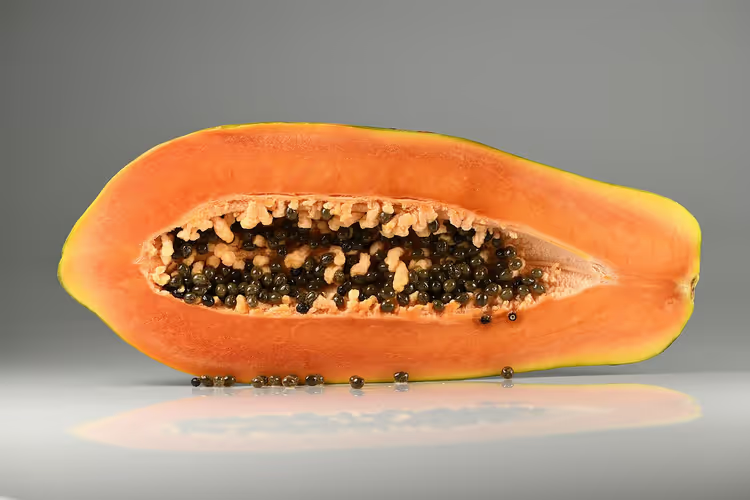
Papaya all year round
 © Ivar Leidus · CC BY-SAPhoto: Ivar Leidus, CC BY-SA (https://creativecommons.org/licenses/by-sa/4.0), Wikimedia Commons
Papaya can be bought at any time of year. It is grown throughout the country, although in the southern provinces the fruits ripen faster. The taste of papaya is similar to the familiar melon, only the flesh is softer.
It is best to eat papaya fresh to preserve all its properties. A ripe fruit is chosen by its orange or deep yellow color. The skin should be free of cuts and cracks and yield slightly when pressed.
Papaya is good for digestion, cleanses and tones the body. It is used in treating spinal osteochondrosis, to strengthen the immune system, and for viral infections.
- Who it's for: for those looking for a soft, non-sour fruit at any time during their trip.
- The catch: overripe papaya spoils quickly and loses its flavor.
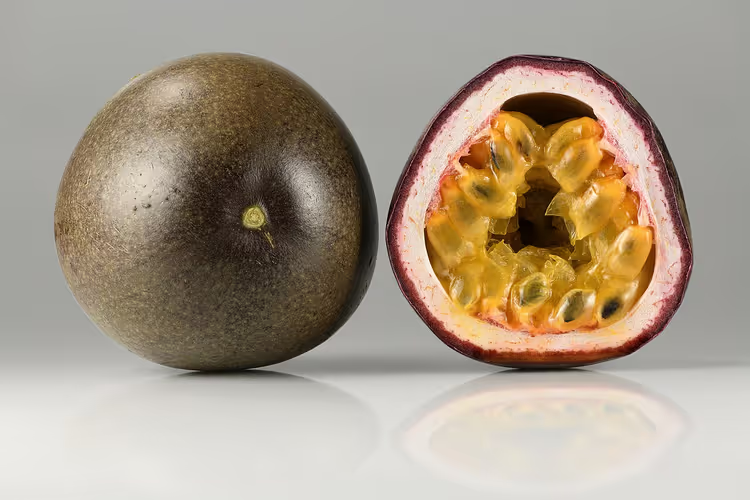
Passion fruit: tangy and aromatic
 © Ivar Leidus · CC BY-SAPhoto: Ivar Leidus, CC BY-SA (https://creativecommons.org/licenses/by-sa/4.0), Wikimedia Commons
Passion fruit has a delicate tangy taste reminiscent of gooseberry and currant. The aroma is strong and lemon-like. The season runs from January to April.
Ripe fruits are heavier than unripe ones, and the skin should be free of damage and dents. It is better to avoid a light and dry fruit.
Passion fruit contains calcium, sodium, and other trace elements, as well as a full complex of vitamins. It aids digestion and removes uric acid from the body. The fruit works as a fever reducer and quenches thirst well. The seeds are edible but have a mild sedative effect.
- The catch: the seeds can make you drowsy, so do not eat passion fruit before driving.
Salak, or snake fruit
 © Joergens.mi · CC BY-SAPhoto: Joergens.mi, CC BY-SA (https://creativecommons.org/licenses/by-sa/3.0), Wikimedia Commons
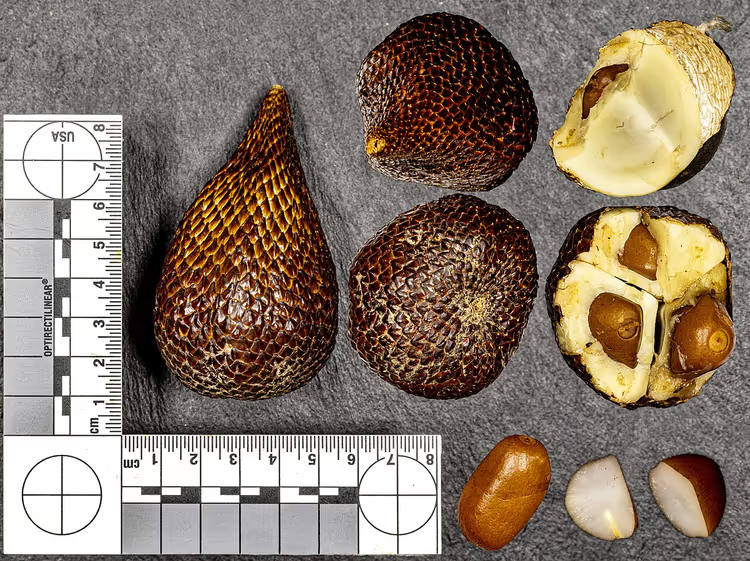
Salak grows on low palms and has an egg-like shape. The fruit is small and light, and under its brown scaly skin hides beige flesh made up of several segments. Salak tastes like a mix of banana and pineapple and is refreshing. The dark seed is inedible.
Salak season runs from June to August. A ripe fruit is chosen by its completely dry, undamaged skin. Despite its size, a ripe salak is fairly heavy, and dark spots indicate it is no longer fresh.
Moderate consumption of salak helps remove toxins from the body thanks to its high tannin content. The fruit is used to prevent hemorrhoids, for diarrhea, and to restore blood flow.
- Who it's for: for those who want a refreshing fruit with an unusual texture.
- The catch: the fruit is awkward to peel, the scaly skin is prickly.
Citron, or Buddha's hand
 © claralieu · CC BYPhoto: claralieu, CC BY (https://creativecommons.org/licenses/by/2.0), Wikimedia Commons
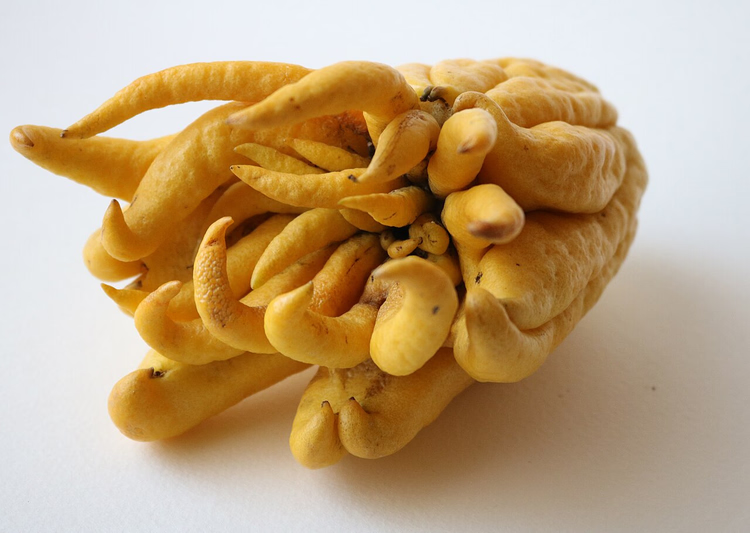
Citron is one of the rarest citrus fruits and grows on low, spreading trees. The fruit resembles a hand with fingers, which is why it has a second name, Buddha's hand. Several elongated bright yellow segments contain no seeds. The taste is sweet and sour with a slight bitterness.
Citron is harvested in November. The fresh flesh is rarely eaten; more often it is used in confectionery.
Vitamins A, C, and B, fiber, and minerals give citron antiviral and antiseptic properties. It is used for laryngitis, tonsillitis, and bronchitis, and the fruit itself improves appetite.
- The catch: the fruit is rarely eaten fresh; more often it goes into desserts.
Guava: orange inside
 © Forest & Kim Starr · CC BYPhoto: Forest & Kim Starr, CC BY (https://creativecommons.org/licenses/by/3.0), Wikimedia Commons
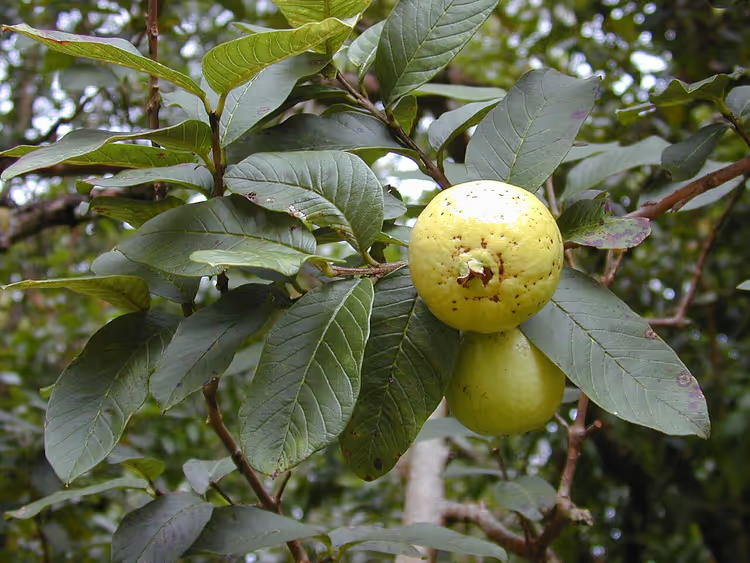
Guava ripens all year round on evergreen trees up to four meters tall. In shape and color, the fruit resembles a green pear, but inside the flesh is bright orange, like pumpkin. The taste is sweetish and delicate, and the calorie content is low, so you cannot gain weight from guava.
A ripe fruit has a rich skin color and firmness. Such guava has a very pleasant and strong aroma, and you can easily tell a ripe fruit from an unripe one by it.
Guava contains vitamins and trace elements, is good for the lymph nodes, and raises overall tone. It restores energy, strengthens the immune system, and stimulates heart function.
- The catch: unripe guava has an astringent taste, so choose soft fruits.
Tamarind, or Indian date
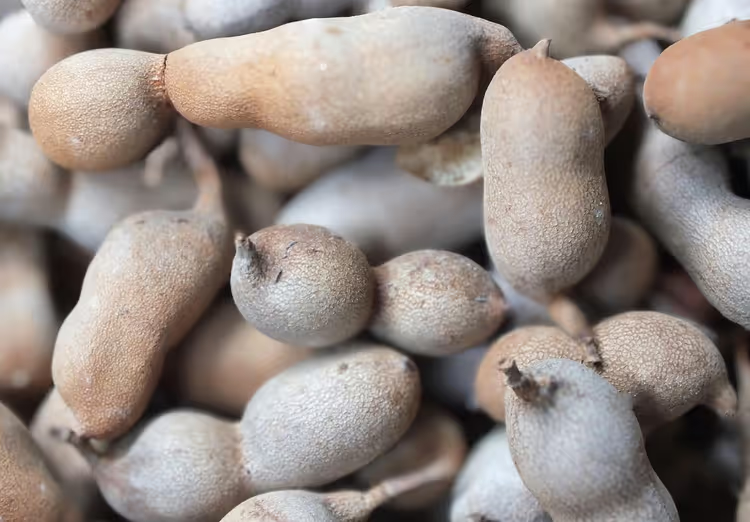
Tamarind belongs to the legume family. It grows on huge trees that resemble acacia and reach twenty meters in height. The fruit's skin is brown, and its shape is slightly curved. The sweetish reddish flesh contains several hard seeds.
Tamarind is harvested in May and June, and ripeness is determined by the color of the skin.
Tamarind is rich in potassium, phosphorus, magnesium, and sodium. It is very high in calories. Moderate consumption normalizes digestion, helps with nervous disorders, and strengthens the musculoskeletal system.
- The catch: very high in calories, not suitable for a strict diet.
Citrus fruits: pomelo and mandarins
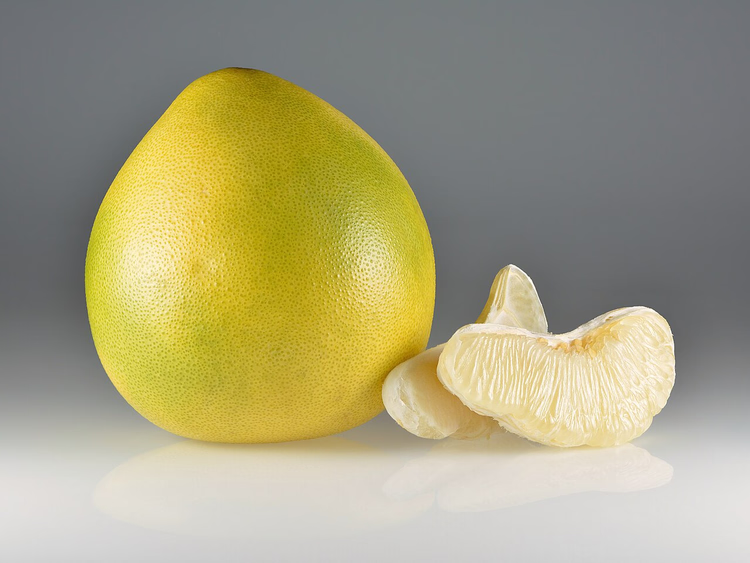 © Ivar Leidus · CC BY-SAPhoto: Ivar Leidus, CC BY-SA (https://creativecommons.org/licenses/by-sa/4.0), Wikimedia Commons
Vietnamese citrus fruits are known for their sweetness. The country grows mandarins and tangerines, oranges, tropical oranges, grapefruits, pomelos, limes, and lemons. The fruits here are small but juicy and sweet. This taste comes from the warm climate with plenty of sun.
The citrus season varies by region, so pomelo and mandarins are found at the market almost all year. When buying, choose heavy fruits with firm skin: they are juicier.
Local citrus fruits are noticeably sweeter than European varieties.
- The catch: the fruits are smaller than what you may be used to, but their taste makes up for it.
How much fruit costs in Vietnam
At the market, the price depends on the season and region. At peak harvest, a kilogram of mango, longan, or lychee costs a few tens of thousands of dong. Right after the season, sellers raise the price noticeably, sometimes by a third or more. So check the price on the spot rather than relying on last year's articles.
Durian and mangosteen are the most expensive. Durian is sold as whole large fruits. Dragon fruit and breadfruit stay in the mid-range. Papaya, guava, and salak are among the most affordable.
One pomelo lasts for several days, and the rind can be saved for tea.
The easiest option is to buy at the morning markets in Ho Chi Minh City, Hanoi, and Hoi An. There, sellers offer a taste of the fruit before you buy, so you can check ripeness on the spot. Souvenir shops near tourist streets keep prices one and a half to two times higher than market prices, and bargaining there is almost pointless.
Many fruits are sold already cut, in cups. This is convenient for trying, but such fruit must be eaten the same day, otherwise it will dry out.
If you want to bring fruit home, first check the rules of your destination country. In the EU, importing fresh fruit such as mango and lychee without a phytosanitary certificate is prohibited.
⁉️🤔 Frequently asked questions
Which Vietnamese fruit should I try first?
Start with mango and lychee: they have a familiar sweet taste and a short season. If you want something exotic, go for dragon fruit or salak. Leave durian for last, because its smell is far from universally liked.
When is mango and lychee season in Vietnam?
Mango ripens from February through May, lychee from May through July. In the southern provinces, fruit appears earlier than in the north.
Why is durian banned on planes and in hotels?
It all comes down to the smell. Durian releases volatile sulfur compounds, which is why it is prohibited on board, and many cafes and hotels put up a sign with a crossed-out fruit.
How can you tell if a fruit is ripe?
Smell the fruit: a strong aroma indicates ripeness. Press the skin lightly; a ripe fruit will give slightly. A heavy fruit is usually juicier than a light one, and dents and cracks mean the fruit was transported for a long time.
Can I bring Vietnamese fruit home with me?
It depends on the country of arrival. In the EU, importing fresh fruit, including mango and lychee, without a phytosanitary certificate is prohibited. Check the rules of other countries before you fly.
In short: which fruits to try
If you are short on time, start with mango, lychee, and longan. After that, choose based on your taste:
- If you want something exotic: try durian, salak, and dragon fruit.
- If you are visiting in the fall: look for sapodilla, citron, and guava.
- If you are watching your figure: choose longan, guava, and papaya.
You will find most of these fruits at the morning market in any major city. Buy one fruit at a time to sample, and once you find one you like, buy it by the kilogram. Before your trip, check the Vietnam tourism office website to confirm the season for the fruit you want.

A small editorial team writing guides for independent travel. We travel ourselves, but we haven’t been everywhere, so we check prices, opening hours and how to get there against official sources.