
















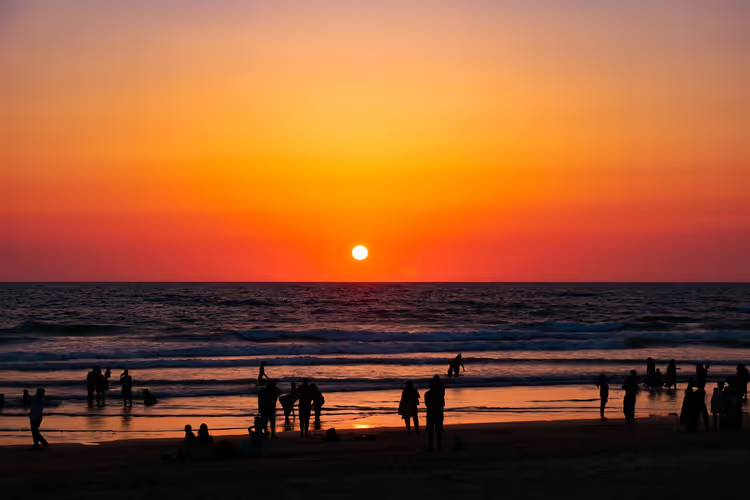
Goa: north for parties, south for silence
Goa is divided into two parts, and your entire vacation depends on the choice. The north parties until dawn, while the south goes quiet by ten in the evening. If you are visiting for the first time, a mistake is costly: book a hotel in quiet Majorda and you will be bored, or end up in the center of trance parties and never actually rest.
This guide separates north and south by vacation style. You will understand where to catch sunsets and street markets, where to see turtles and a waterfall, and where to place your hotel based on your type of vacation. The season on the coast opens in November and lasts through February (as of 09/2026, Travel Market News).
Ad: this article contains affiliate links, we earn a commission if you book through them, at no extra cost to you.
North Goa: beaches and parties
💡 In short:
- The north stretches as one coastal strip from Arambol to Anjuna.
- Here you will find parties until dawn, a Wednesday market, and the loudest sunsets.
- We verified the season, market hours, and beach access in 09/2026 using data from the official Goa tourism website.
Arambol
Arambol holds its status as the center of the youth scene and the main sunset spot in the north. During the day, people do yoga and learn kitesurfing on the beach, while parties run every evening in the bars along the shore. As soon as dusk falls, the beach fills with people and the streets empty out. Here you will easily meet street musicians, fortune tellers, and jugglers from all over the world.
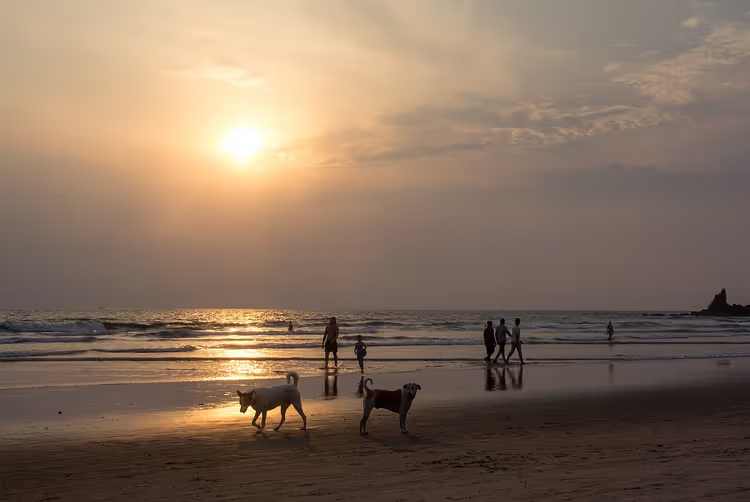 © Alexey Komarov · CC BYPhoto: Alexey Komarov, CC BY (https://creativecommons.org/licenses/by/3.0), Wikimedia Commons
Vagator
Vagator is considered the most secluded beach in the north. Nature lovers, meditation enthusiasts, and those seeking complete silence come here. Rocks divide the shore into small coves, so it is rarely crowded. If you need peace after noisy Anjuna, choose Vagator.
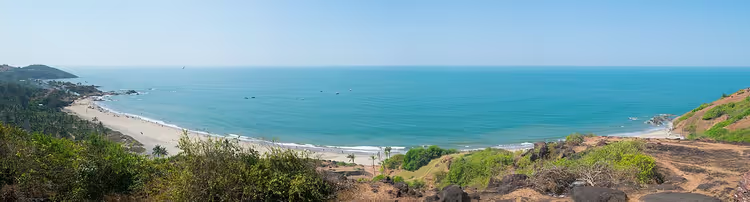 © Nikhilb239 · CC BY-SAPhoto: Nikhilb239, CC BY-SA (https://creativecommons.org/licenses/by-sa/4.0), Wikimedia Commons
Anjuna
Anjuna began as a center of club parties. In the seventies, Goa trance played here, and trance parties drew thousands of people. Today, large-scale trance parties are banned, but parties continue in small clubs and bars. During the day, the beach is almost empty.
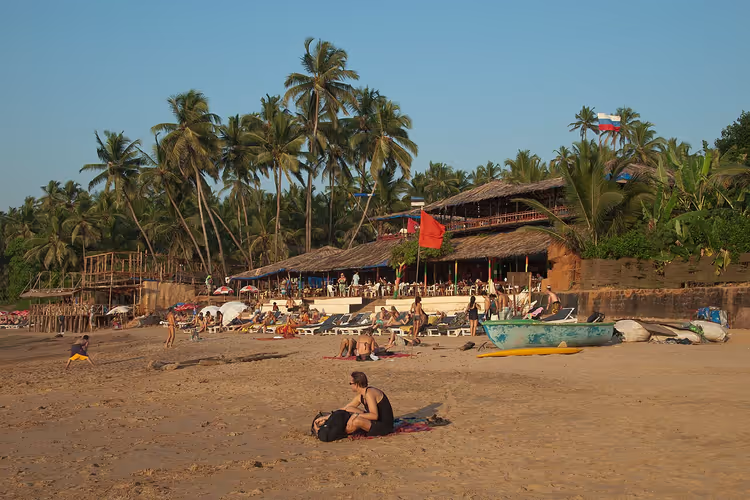 © Vyacheslav Argenberg · CC BYPhoto: Vyacheslav Argenberg, CC BY (https://creativecommons.org/licenses/by/4.0), Wikimedia Commons
What you should definitely do in the north
Get on a board in Arambol or Morjim. The waves in Goa are low, so serious surfing is almost nonexistent here. But for a beginner, it is easy to catch your first wave. For kitesurfing, steady winds arrive in February and March. January suits those who are just learning to kite.
Watch the sunset in Arambol. Sunsets in India are good everywhere, but the sunset in Arambol draws the largest crowds in the north.
Visit the market in Anjuna. It runs on Wednesdays, from morning until sunset, during the season from November to April (as of 09/2026, Goa Tourism). Vendors sell Indian clothing, jewelry, spices, and home decor. Prices are high and quality varies, but it is worth going for the atmosphere. Entry is free.
Kite lessons and tours in the north are best booked in advance: check out tours and activities on GetYourGuide.
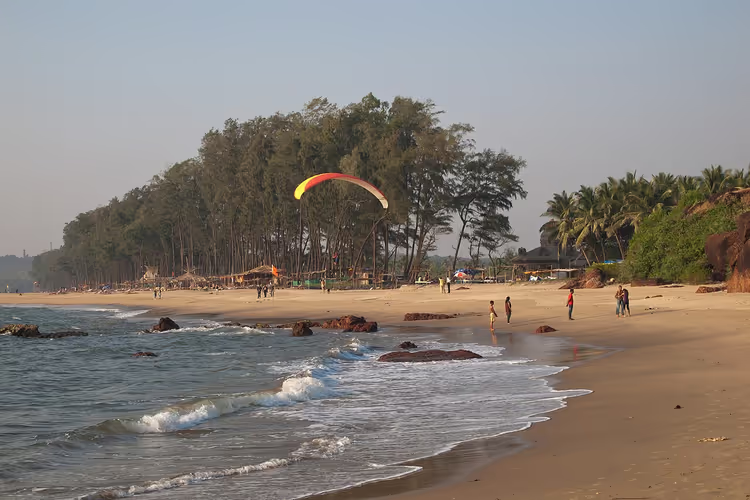 © Vyacheslav Argenberg · CC BYPhoto: Vyacheslav Argenberg, CC BY (https://creativecommons.org/licenses/by/4.0), Wikimedia Commons
South Goa: quiet and family vacations
South Goa is chosen for a calm, upscale vacation. Families, older travelers, and fans of classic tourism come here. There is almost no club scene, and the beaches are quiet in the evening.
Majorda
Majorda is considered a family resort. Parents with young children vacation here. The older generation appreciates the comfort of local hotels and the small number of neighbors.
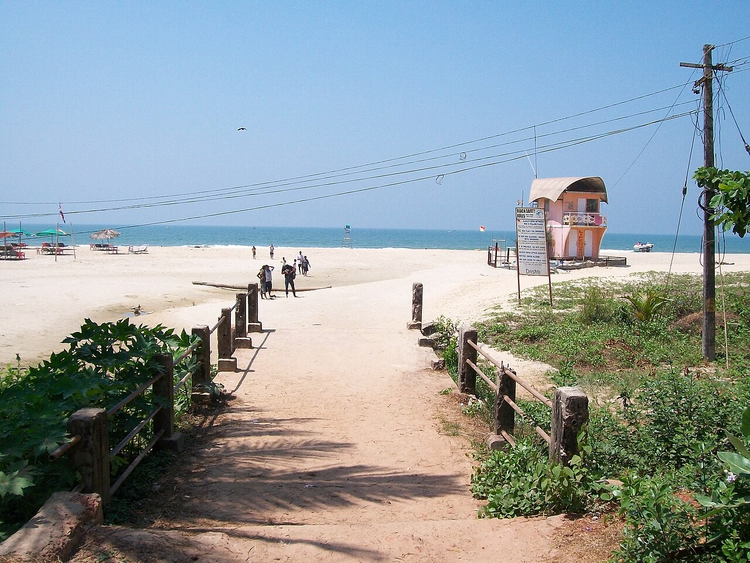 © Deepak Patil · CC BY-SAPhoto: Deepak Patil, CC BY-SA (https://creativecommons.org/licenses/by-sa/3.0), Wikimedia Commons
Agonda, Palolem and Patnem
Agonda, Palolem and Patnem hold the reputation of being the quietest beaches in the south. Here even the discos are "silent," and there is no club scene at all. A couple of hours is enough to feel the difference from the north.
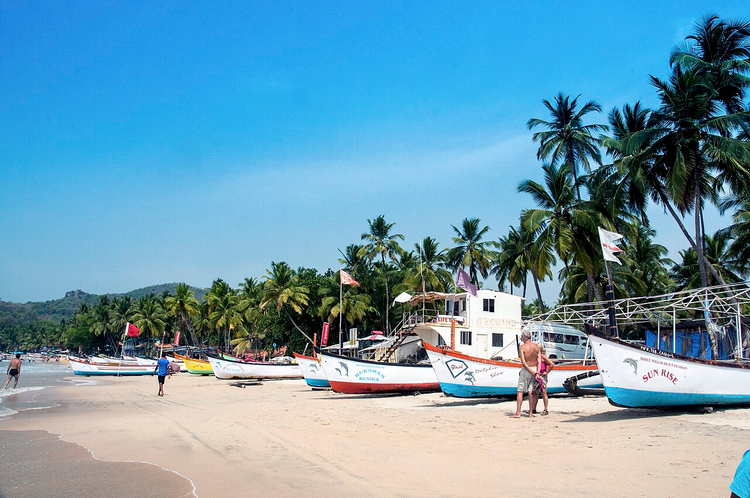 © Biswajit Majumdar · CC BY-SAPhoto: Biswajit Majumdar, CC BY-SA (https://creativecommons.org/licenses/by-sa/3.0), Wikimedia Commons
Cavelossim and Mobor
Cavelossim and Mobor are favored by tourists from Europe who stay in expensive hotels. These are resorts for those who choose a private shoreline and large full-service hotels.
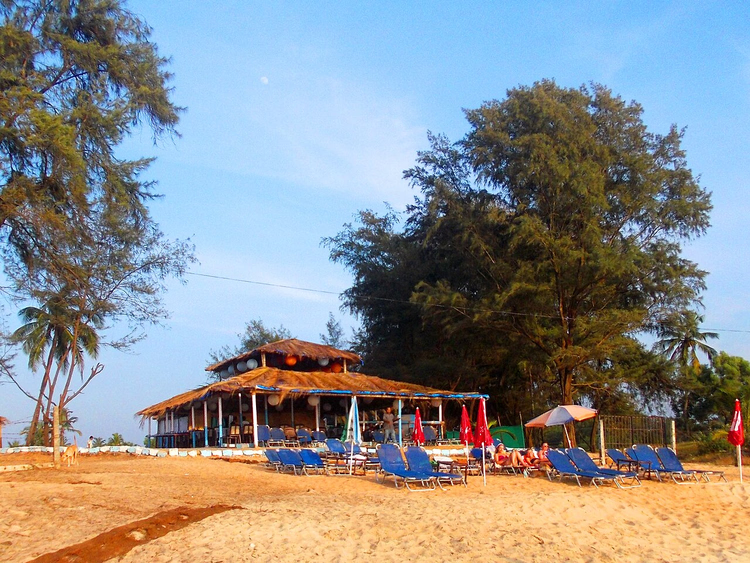 © vita50501 · CC BYPhoto: vita50501, CC BY (https://creativecommons.org/licenses/by/3.0), Wikimedia Commons
Criterion | North | South |
|---|---|---|
Atmosphere | parties and music until morning | quiet and family vacations |
Main beaches | Arambol, Vagator, Anjuna | Majorda, Agonda, Palolem |
Best for | young people and party lovers | families and couples |
What to make sure you do in the south
Go to a "silent" disco in Palolem. These parties are held right on the beach in Palolem. At the entrance you get headphones with several channels, choose your music, and dance until morning. The sound is barely audible to neighbors, and nobody turns off the sound of the sea (as of 09/2026, Tripadvisor).
Watch olive ridley turtles. Once Goa's beaches belonged to turtles; now only a few places remain, and Agonda is one of them. Nightlife and bright lights are banned here so as not to disturb the nesting season. Turtles come ashore from November to April, and incubation takes 40-50 days (as of 09/2026, Rove.me). In 2024, 181 nests were recorded at Agonda (as of RoundGlass Sustain).
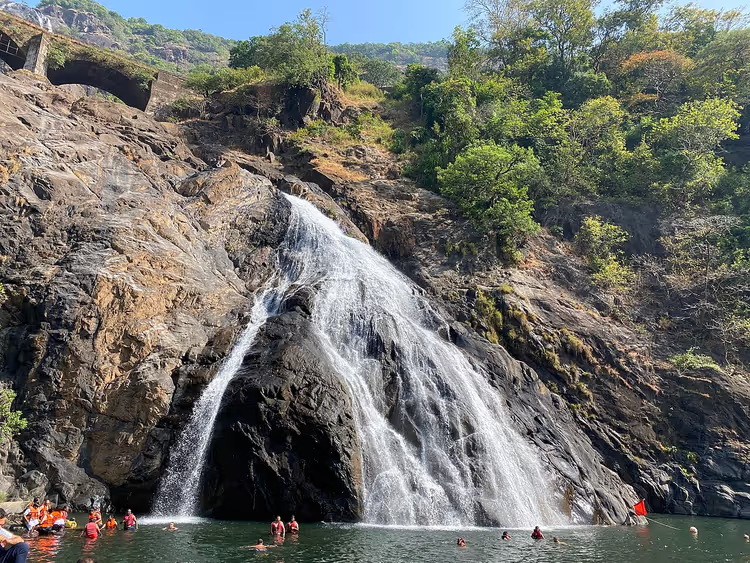
Drive through the wildlife sanctuaries. The state's largest protected area, Bhagwan Mahavir, lies in the southern part. It is a vast territory together with Mollem National Park, home to elephants, tigers, leopards, and many birds. Nearby is Dudhsagar Falls: four cascades drop from a height of 310 m (as of Wikipedia).
Book tours to Dudhsagar Waterfall and the wildlife sanctuary in advance: Goa tours on GetYourGuide.
 © Vinayaraj · CC BY-SAPhoto: Vinayaraj, CC BY-SA (https://creativecommons.org/licenses/by-sa/4.0), Wikimedia Commons
Panaji: the capital of Goa
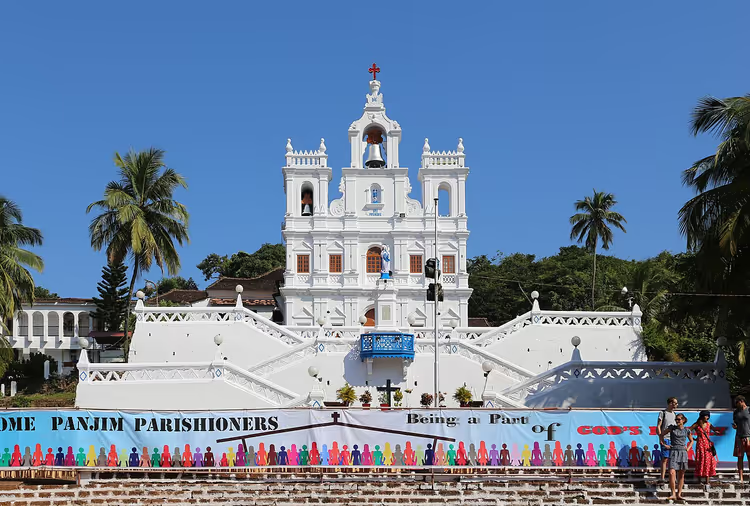
Panaji, the state capital, sits on the Mandovi River. The heart of the city is the square with the Church of the Immaculate Conception, built by the Portuguese in the 16th century. Other sights worth seeing in the capital include the lively main street, the shopping district, Mala Square, Miramar Beach, and Kala Academy. The latter operates as a cultural center hosting exhibitions and concerts.
 © Sailko · CC BYPhoto: Sailko, CC BY (https://creativecommons.org/licenses/by/3.0), Wikimedia Commons
Bondla Zoo
About an hour's drive from Panaji is Bondla Zoo. It's a favorite with hikers and families with children. Kids can enjoy a playground and a mini-train ride. In the "wild" part of the sanctuary, you may spot a leopard or an elephant, and you can also explore the ruins of an ancient temple built hundreds of years ago.
 © Amolpro · CC BY-SAPhoto: Amolpro, CC BY-SA (https://creativecommons.org/licenses/by-sa/4.0), Wikimedia Commons
Tours and tickets in Goa
Guided tours, skip-the-line tickets and activities — most offers can be cancelled free of charge.
See offers on GetYourGuideThe widget loads once you give your consent.
⁉️🤔 Frequently asked questions
When is the best time to visit Goa?
The best time to go is during the beach season, when the weather is dry and warm. October and March work as buffer months: the weather is almost the same, but prices and crowds are lower. The rainy season from June to September brings discounts, but some beaches and tours are closed.
North or South Goa: which should you choose?
The north suits those who want parties, sunsets, and markets: life buzzes in Arambol and Anjuna. The south is chosen by families and couples for its quiet, calm beaches, and the waterfall. If you're traveling with a group and love music, go north. If you're with kids or want peace, the south is your option.
Where are the best sunsets in Goa?
The most crowded sunset spot is in the north, at Arambol Beach. Arrive an hour before sunset to grab a spot by the water, and stay for dinner at a beachfront bar. In the south, sunsets are quieter but no less beautiful.
Can you see olive ridley turtles in Goa?
Yes, in season, and not only in the south: nests also appear in the north, in Morjim. They're most often seen in Agonda and Galgibaga. Don't touch the turtles or shine lights on them: it harms the nests.
How do you get to Dudhsagar Waterfall?
You reach the waterfall from Mollem by jeep or by train to the nearest station near the sanctuary. Independent access is restricted, so it's easier to take a tour. The water is at its highest in the season after the rains. Check in advance whether access is open: entry is often closed.
In short: what to book
Goa works for both partygoers and families, if you choose the right part of the state. Pick the north for parties, sunsets, and markets, the south for quiet, turtles, and the waterfall. The capital and Bondla Zoo work as a day-trip program from anywhere. Here's a simple selection matrix.
- If you're going for parties: stay in Arambol or Anjuna.
- If you're with kids or seeking peace: choose Majorda, Palolem, or Agonda.
- If the waterfall and turtles matter to you: base yourself in the south, around Canacona.
You can book a hotel in Goa in advance on Trip.com, and tours on GetYourGuide.

A small editorial team writing guides for independent travel. We travel ourselves, but we haven’t been everywhere, so we check prices, opening hours and how to get there against official sources.