
















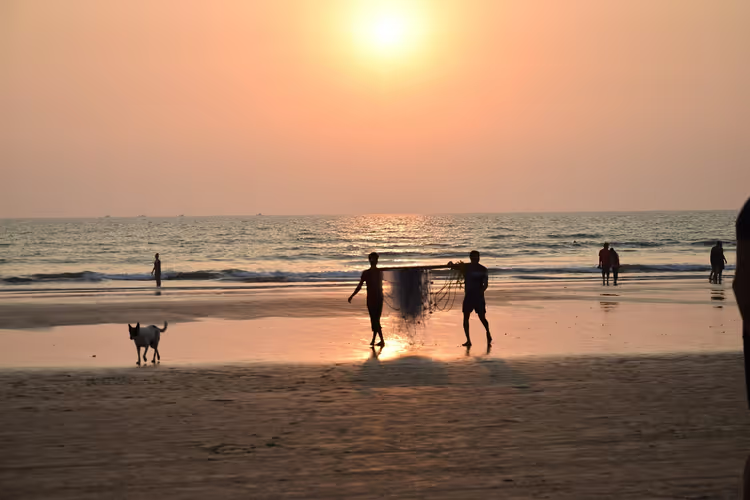
Goa: what to see, which beach to choose and where to bargain at markets
Goa is called India's smallest state and the country's most heavily promoted resort. People fly here for the warm Arabian Sea, wide beaches, and gentle Indian exoticism. Vacationing here is easier than in the rest of India: infrastructure, hotels, and service have long been geared toward tourists.
But the state itself is split into two halves. North Goa lives loudly, while South Goa keeps a calm and expensive pace. Your whole trip depends on this choice: who you'll travel with, how much you'll spend, and what you'll do in the evening. Below you'll find what to see in Goa, how the beaches of the North and South differ, and where to buy souvenirs at fair prices.
North and South Goa: what's the difference
💡 In short:
- Choose your half of the state in advance: North Goa for parties and markets, South Goa for quiet and large hotels.
- Start your introduction with Old Goa: the Basilica of Bom Jesus and Se Cathedral stand right next to each other.
- Hours and admission: 09/2026, verified on the Goa tourism website.
North Goa stretches from Fort Aguada to Arambol. This is where the clubs, beach shacks right on the sand, markets, and budget accommodation are concentrated. The crowd is young, with many Brits, Israelis, and travelers from all over Europe. The main spots in the North: Calangute, Baga, Anjuna, Vagator, Morjim, Ashwem, and Arambol.
South Goa begins south of Dabolim Airport. It's a strip of calm beaches with large hotels and protected areas. Here you'll find quiet, wide sand, and a minimum of parties. Families and couples who value peace rather than nightlife come here. South Goa has less noise, higher prices, and bigger hotels, so it suits a relaxed vacation for two.
Dabolim Airport lies between the two halves of the state. From the terminal to Calangute or Baga takes about an hour, and in high season add time for traffic jams near Panaji. Getting to Palolem in the south takes noticeably longer. The state's second airport, Mopa, is in the North.
The sea on the Arabian coast is almost always rough. The waves delight surfers but not swimmers. Calm water is found only at certain southern beaches near lagoons. This is worth considering if you're traveling with small children.
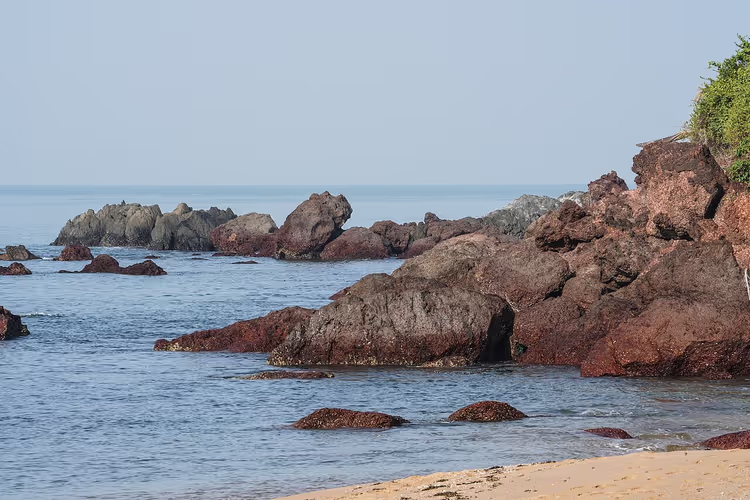 © This Photo was taken by Timothy A. Gonsalves . Feel free to use my photos, but please mention me as the author. I would · CC BY-SAPhoto: This Photo was taken by Timothy A. Gonsalves . Feel free to use my photos, but please mention me as the author. I would, CC BY-SA (https://creativecommons.org/licenses/by-sa/4.0), Wikimedia Commons
Next, we'll go through Goa's attractions in order: first the colonial heritage and nature, then the beaches and markets.
Old Goa: Basilica of Bom Jesus and Se Cathedral
Old Goa lies at the mouth of the Mandovi River, about 10 km from Panaji (as of 09/2026, Goa tourism website). It's the former capital of Portuguese India and a World Heritage Site. People come here for history, architecture, and the calm atmosphere of the old quarters.
 © Sailko · CC BYPhoto: Sailko, CC BY (https://creativecommons.org/licenses/by/3.0), Wikimedia Commons
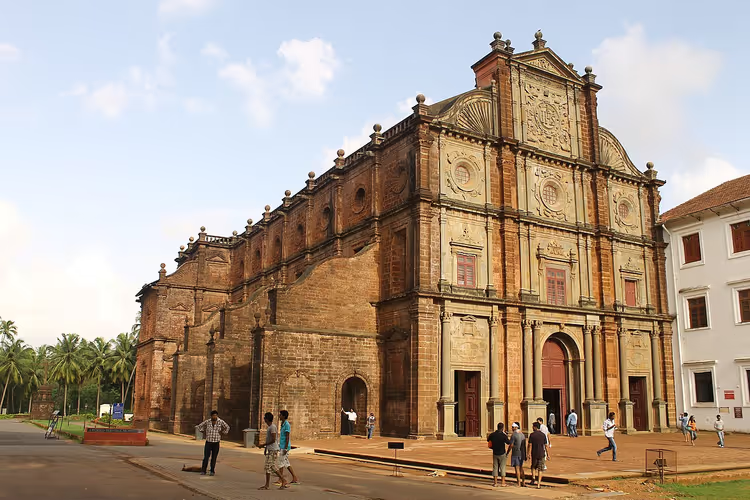
The Basilica of Bom Jesus was built by the Jesuits. It's the only church in Goa without plaster on its facade. Inside lies the tomb of St. Francis Xavier, the missionary who arrived here to preach in the 16th century. Admission is free, open from 9:00 to 17:00, on Sundays from 11:00 to 17:00 (as of 09/2026, source).
 © Sandeepsea · CC BY-SAPhoto: Sandeepsea, CC BY-SA (https://creativecommons.org/licenses/by-sa/3.0), Wikimedia Commons
Se Cathedral stands next to the basilica. It's the largest Catholic cathedral in Asia, built over several decades. Inside there are many altars and chapels. Nearby is the Church and Convent of St. Francis of Assisi, which round out the Old Goa route. Seeing the buildings takes about two hours, and you'll have time to cover everything at a relaxed pace.
Old Goa occupies an entire district of monasteries and churches; it's a separate archaeological reserve. Set aside half a day for a leisurely visit. The catch with Old Goa: it's hot during the day and there's little shade. You have to walk between the churches across an open square, so bring water and arrive at opening time.
Panaji and the Fontainhas quarter
Panaji is the state capital and a port city. It combines Indian character with European facades and tiled roofs. In the center stands the Church of the Immaculate Conception of the Virgin Mary, further on the Adil Shah Palace and the Chapel of St. Sebastian. The Adil Shah Palace was originally a sultan's palace, but the Portuguese rebuilt it into a European building with a tiled roof.
 © iMahesh · CC BY-SAPhoto: iMahesh, CC BY-SA (https://creativecommons.org/licenses/by-sa/4.0), Wikimedia Commons
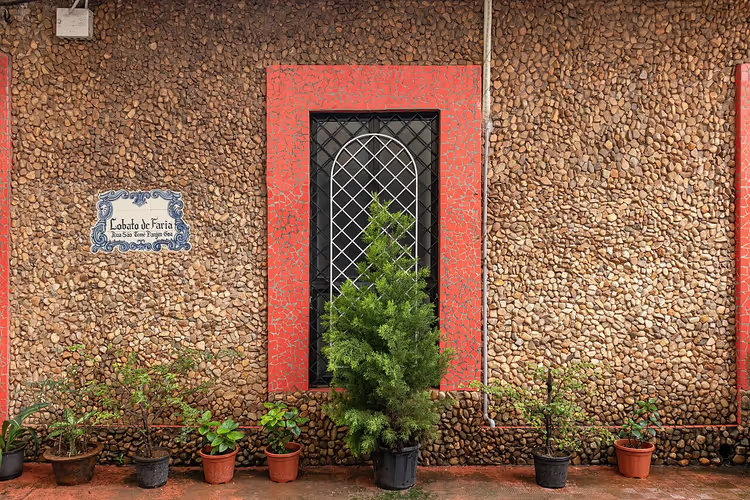
Another reason to come to Panaji: the Fontainhas quarter. Narrow streets, pastel-colored houses, Portuguese balconies, and colorful doors. The restaurant Venite operates here, with a distinctive interior and a menu of local, Mediterranean, and Italian cuisine. By Indian standards it's expensive, but the atmosphere is worth it.
On the Mandovi River near Panaji, casino boats are moored. Goa also has casinos on land, so you can gamble not only on the water.
The catch with Panaji: the city is a working city, not a resort. The tourist part covers a few blocks, and beyond that begins the usual Indian bustle.
Spice plantations near Ponda
Spice plantations are considered the state's calling card. Pepper, cardamom, cinnamon, and vanilla have been grown here for centuries, and some farms are open to tourists. The most popular one, Sahakari, is located near Ponda. During the visit you'll walk through the beds, see how spices grow, and understand where the spices in local markets come from.
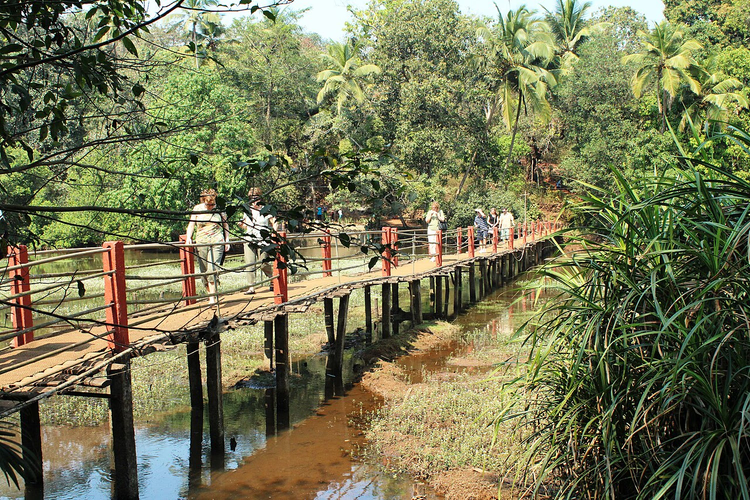 © Jennifer Rose Stankowski · CC BY-SAPhoto: Jennifer Rose Stankowski, CC BY-SA (https://creativecommons.org/licenses/by-sa/3.0), Wikimedia Commons
The catch: this is worth stopping at on the way to the waterfall or Old Goa. A separate trip just for the plantation would take too much time.
Dudhsagar falls and aguada fort
Dudhsagar Falls lies in Bhagwan Mahavir National Park on the border with Karnataka. You can't drive right up to the water: the last stretch is covered by jeep through the reserve. Book the trip in advance, because spots on site sell out fast. You usually get an hour and a half at the falls for swimming and photos, and you can hear the spray and roar from the road. On the way through the reserve you'll see buffalo and bison, and a train sometimes passes over the gorge. From North Goa you can head into neighboring Karnataka: the Hampi complex with the active Virupaksha Temple is a UNESCO World Heritage site, but it needs two days.
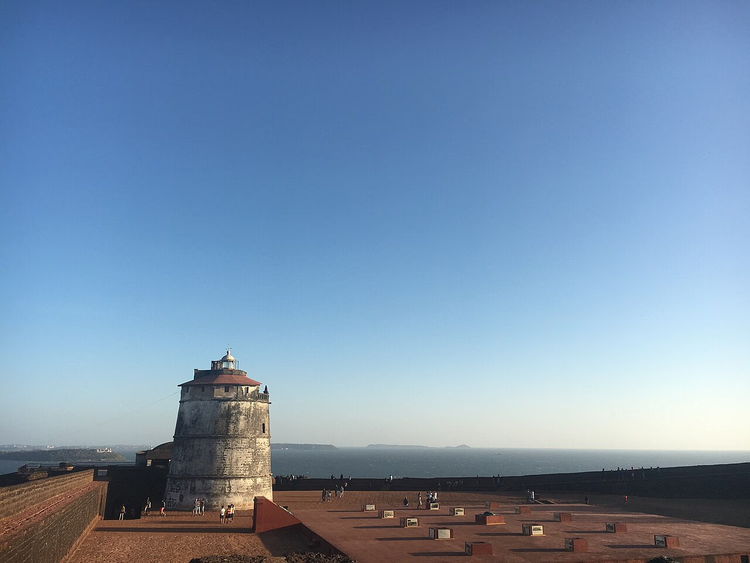 © Vatsalbhawsinka · CC BY-SAPhoto: Vatsalbhawsinka, CC BY-SA (https://creativecommons.org/licenses/by-sa/4.0), Wikimedia Commons
Aguada Fort was built by the Portuguese in 1609-1612 on the shore of the Arabian Sea (as of 09/2026, Goa tourism website). It is the largest surviving fort in the state. The walls, arches and bastions have held up well, and an old lighthouse still operates nearby.
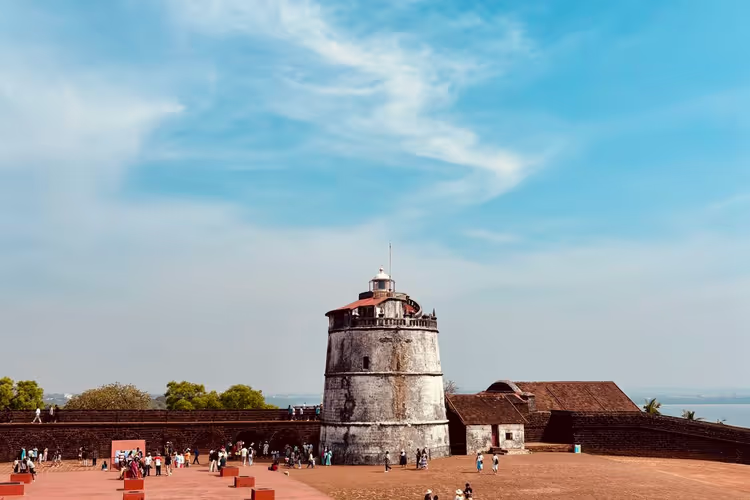
The catch with the fort: there is little open shade, and in summer the stone gets scorching hot. Come at opening time or closer to sunset. Climbing the lighthouse is paid for foreign visitors, while the fort grounds themselves are open for free.
Goa's beaches: how the North and South differ
Beaches remain the main reason to go to Goa. The coast stretches for dozens of kilometers along the Arabian Sea, and each half has its own character. The North means noise, shacks and young crowds; the South means quiet and well-kept beaches by the hotels. The calmest stretches are in the south, while the best surfing is in the north, near Vagator and Arambol. Pick a beach by its character: busy Calangute or a quiet southern shore.
Below we'll break down the most popular beaches of the North and South separately, with their features and honest drawbacks.
Palolem Beach
Palolem lies at the very south of the state. It's a scenic lagoon, calm sea and almost complete seclusion. During the day people swim here, and in the evening they watch the sunset from shacks right on the sand.
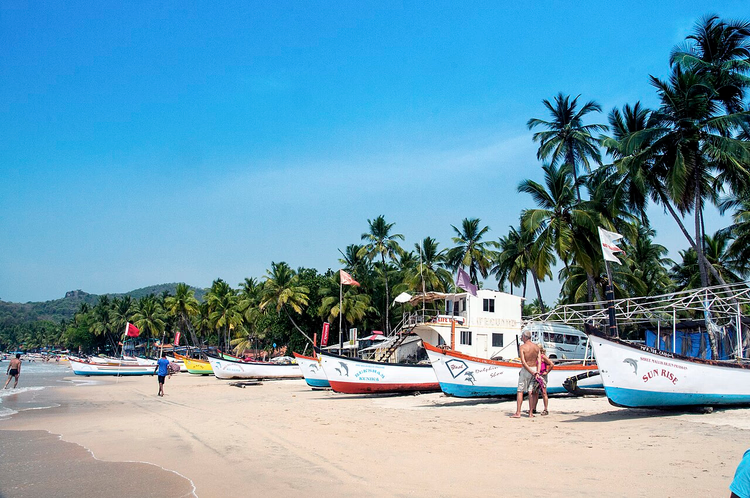 © Biswajit Majumdar · CC BY-SAPhoto: Biswajit Majumdar, CC BY-SA (https://creativecommons.org/licenses/by-sa/3.0), Wikimedia Commons
Palolem is known for its wide arc of sand, with bungalows and shacks lining both ends. Couples and families often choose Palolem: the sea near the shore is calm, and palm trees grow along the beach. The catch: in high season accommodation here is pricier than in the North, and available bungalows get booked up in advance.
Arambol Beach
Arambol lies in North Goa, with only Kerim Beach further north. The beach's calling card is a rock that juts into the sea and is completely covered in tropical jungle. Israeli families used to come here, which is why Hebrew signs and places serving Jewish cuisine remain.
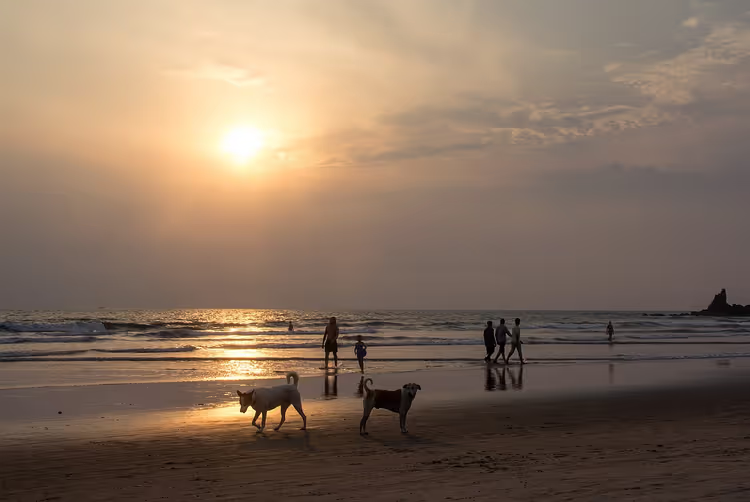 © Alexey Komarov · CC BYPhoto: Alexey Komarov, CC BY (https://creativecommons.org/licenses/by/3.0), Wikimedia Commons
There are no expensive hotels in Arambol: accommodation here is limited to bungalows and guesthouses. On the plus side, the shopping is excellent, with a market street wrapping around the beach and even the rock. Who it's for: those who want cheap lodging, a bazaar and evening music. Not for: those looking for quiet and high-end service.
Kalacha and Kerim wild beaches
Kalacha and Kerim are two wild beaches just past the Arambol cliff. There is almost no infrastructure, only a couple of restaurants, and everything else here is limited to the sea and nature. You can get here on foot from Arambol by going around the cliff. The beaches are connected by trails, so it's easy to walk here from neighboring villages.
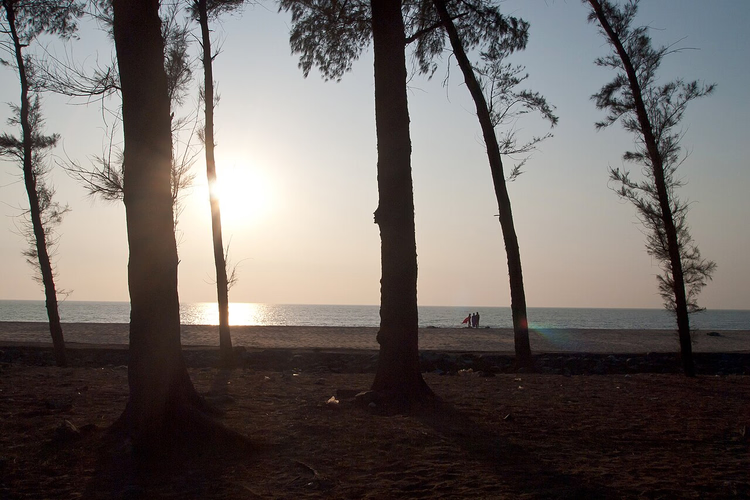 © Vyacheslav Argenberg · CC BYPhoto: Vyacheslav Argenberg, CC BY (https://creativecommons.org/licenses/by/4.0), Wikimedia Commons
The catch: you can't get here by car, and there are no sunbeds or umbrellas at all. If you need seclusion, this is an ideal option. The place is not suitable for families with small children.
Morjim, Ashwem and Mandrem beaches
These three beaches lie south of Arambol and stretch almost one after another. People like to winter here: they rent apartments with kitchens for a month or longer. Housing is more expensive than in Arambol, and individual villas in gated communities are rented to wealthy guests.
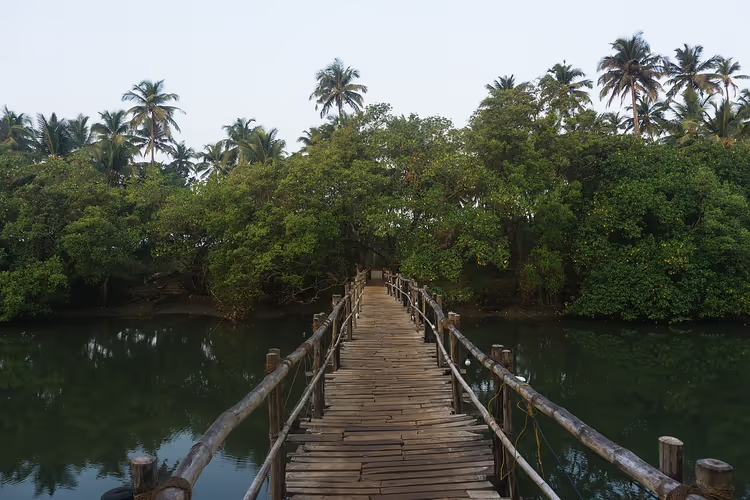 © Alexey Komarov · CC BY-SAPhoto: Alexey Komarov, CC BY-SA (https://creativecommons.org/licenses/by-sa/4.0), Wikimedia Commons
The catch: the beaches are wide and convenient, but the infrastructure between them is scattered. You can walk to the neighboring village along the sand or get there by bike.
Vagator beach
Vagator starts south of the Chapora River. The beach is loved by both foreign tourists and locals. Indian families come here on weekends.
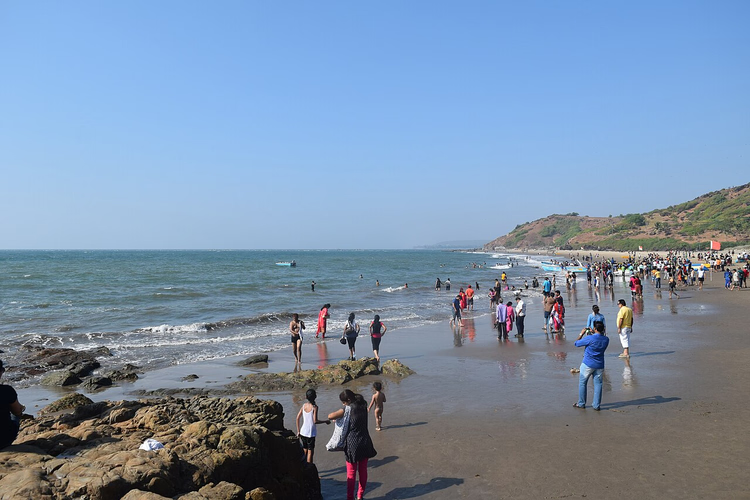 © Nikhilb239 · CC BYPhoto: Nikhilb239, CC BY (https://creativecommons.org/licenses/by/3.0), Wikimedia Commons
The catch with Vagator: infrastructure is weak, and you should look for sunbeds and cafes in advance. But the cliffs and viewpoints above the beach offer beautiful views of the entire coast.
Anjuna beach
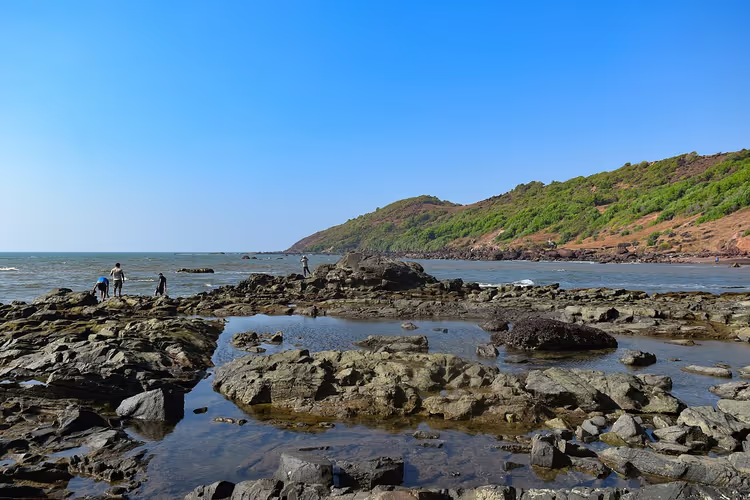
Anjuna is located in the village of the same name in North Goa. It's a partygoer's domain: trance music plays here, and yoga centers, tattoo parlors and bars operate. There are many young Brits.
 © Nikhilb239 · CC BYPhoto: Nikhilb239, CC BY (https://creativecommons.org/licenses/by/3.0), Wikimedia Commons
It's in Anjuna that the main Goa markets take place, so people come here not only for the sea. The catch: in season the beach is crowded and noisy, and calm swimming is almost impossible due to the waves.
Shopping in North Goa
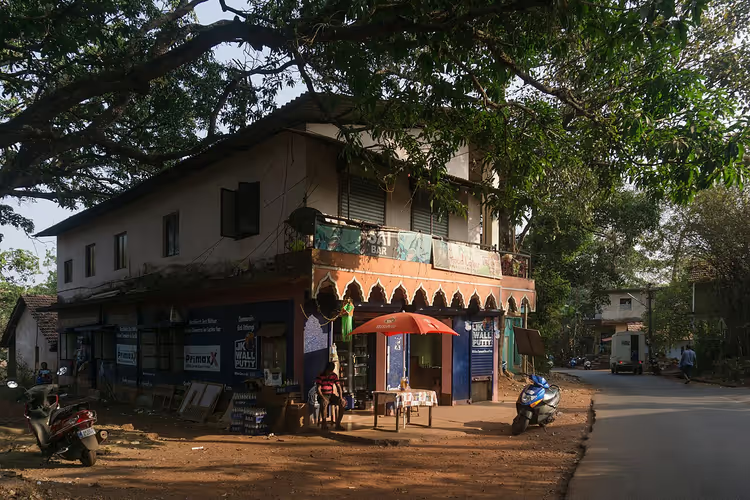
Shopping in Goa is done in two ways. The first way: shops and malls, where quality is higher, but so are prices. The second way: markets and bazaars, where it's cheaper and there's more choice, so most tourists head there.
The most popular markets: Arambol, Anjuna, Calangute and Panaji. In Anjuna, a daytime market operates every Wednesday. In Arpora, a night market opens on Saturdays, where people shop, listen to music and watch shows.
 © Alexey Komarov · CC BY-SAPhoto: Alexey Komarov, CC BY-SA (https://creativecommons.org/licenses/by-sa/4.0), Wikimedia Commons
People bring back tea, spices, silk, cashmere, woolen shawls, drums and carpets from Goa. Indian ethnic clothing is popular. Bone, shell and bamboo items are also bought separately, as well as wood and stone carvings. In malls people more often buy clothing, electronics and cosmetics, while at markets they haggle for souvenirs and textiles.
Prices at markets are reasonable, but a lot depends on bargaining. A good T-shirt, wooden figurine or drum costs little, and you negotiate the discount right at the stall. Bargain calmly: you can often cut the price in half.
Goa markets: daytime in Anjuna and night in Arpora
The daytime market takes place on Wednesdays. Only local Indians sell here, and the area covers several hectares. It takes at least three hours to see it all. Choose jewelry, watches, national clothing, souvenirs and spices. Bargaining is not only allowed, it's expected.
 © Ashwin Kumar · CC BY-SAPhoto: Ashwin Kumar, CC BY-SA (https://creativecommons.org/licenses/by-sa/2.0/), Flickr
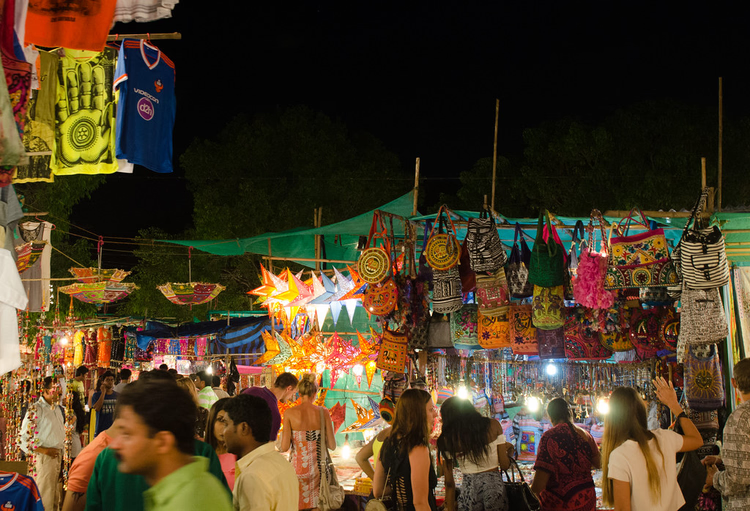
The night market in Arpora opens on Saturdays. European sellers have made it their favorite. The space is divided into three zones with stalls, shops, restaurants and bars.
Besides clothing and jewelry, people buy local products here: spicy sausages, pickles and fruit liqueur. The catch with the night market: prices are higher than at the daytime one, and discounts are rarely given.
⁉️🤔 Frequently asked questions
When is the best time to go to Goa?
High season lasts from October to May. During this time it's dry and warm, and the sea is calmer. From June to August monsoon rains fall, and the waves near the shore are strong. If you're going for the beaches, plan for the dry period and book accommodation in advance.
What to choose, North or South Goa?
North Goa suits those who want parties, markets and inexpensive housing. South Goa is chosen by families and couples who need quiet and large hotels. Dabolim Airport lies between the two halves, and the state's second airport, Mopa, is in the North.
How much does a vacation on the beaches of Goa cost?
Entry to all beaches is free. You pay for housing and sunbeds, and prices depend on the half of the state. In Arambol and Anjuna people live cheaper, in Morjim, Ashwem and in the south it's more expensive. Book bungalows in advance, in season places go fast.
How do you get to Dudhsagar Falls?
A car only takes you to the parking lot near the reserve. From there you ride a jeep through the territory of Bhagwan Mahavir Park. Book the trip in advance, because spots on site sell out quickly. At the water itself you usually get an hour and a half for swimming and photos.
When do the Goa markets operate?
The daytime market in Anjuna operates on Wednesdays, admission is free. The night market in Arpora opens on Saturdays and runs until morning. In other villages there are markets almost every day. Bargaining at the bazaar is normal, and a discount is almost always given.
In short: what's worth booking
Goa is a state of two characters. Take North Goa for parties, markets and cheap housing, South Goa for quiet and large hotels. For history go to Old Goa and Panaji, for nature to Dudhsagar Falls and spice plantations, for souvenirs to the markets of Anjuna and Arpora.
If you have a short trip, stay in the North and see Old Goa and one southern beach. If you're traveling with family, choose South Goa. If you're a surfer or partygoer, Arambol, Anjuna and Vagator will suit you. Plan your trip for the dry season and book accommodation in advance.

A small editorial team writing guides for independent travel. We travel ourselves, but we haven’t been everywhere, so we check prices, opening hours and how to get there against official sources.