
















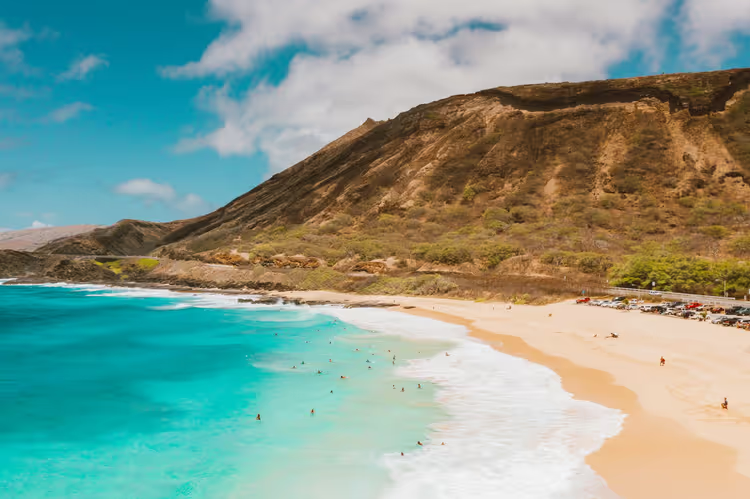
Hanauma Bay: how to get to the beach in a volcano crater on Oahu
Hanauma Bay Nature Preserve welcomes guests only five days a week. On Monday and Tuesday the bay is closed so the reefs can recover. Non-residents of Hawaii are admitted only with an online reservation, which opens two days before the visit.
The bay lies in a flooded volcanic crater on the southeast shore of Oahu, about 16 km from Waikiki (on the map). Clear water and a living coral reef have made it the most famous snorkeling spot in Hawaii. Fishing and feeding the marine life are prohibited here.
Below you'll find prices, reservation rules, how to get there without a car, and the best hours to visit. We checked prices and the schedule on 09/03/2026 on the preserve's official website.
Hanauma Bay in a volcanic crater
💡 In short:
- The preserve is open Wednesday through Sunday, entry runs from 6:45 AM to 1:30 PM, and visitors are asked to leave the bay by 4:00 PM (as of: 09/2026, preserve page).
- An adult ticket for non-residents of Hawaii costs $25, children under 13 enter free (as of: 09/2026, official Hanauma Bay website).
- Online entry reservations open two days before the visit at 7:00 AM Hawaii time (as of: 09/2026, Honolulu Department of Parks and Recreation).
- Prices and hours of operation: 09/2026, verified on the preserve's official website.
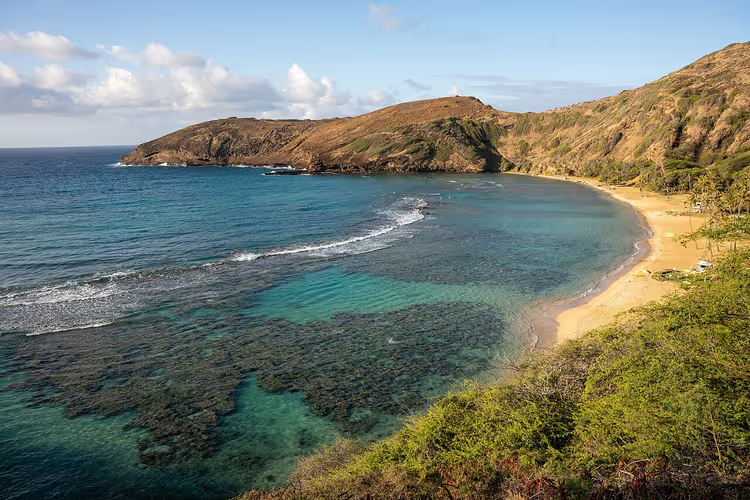
Hanauma Bay formed several thousand years ago. The ocean broke through the wall of a volcanic crater, waves flooded the bowl, and a coral reef grew on its floor. The Hawaiian name translates as "curved bay," and the shape of the shoreline confirms it.
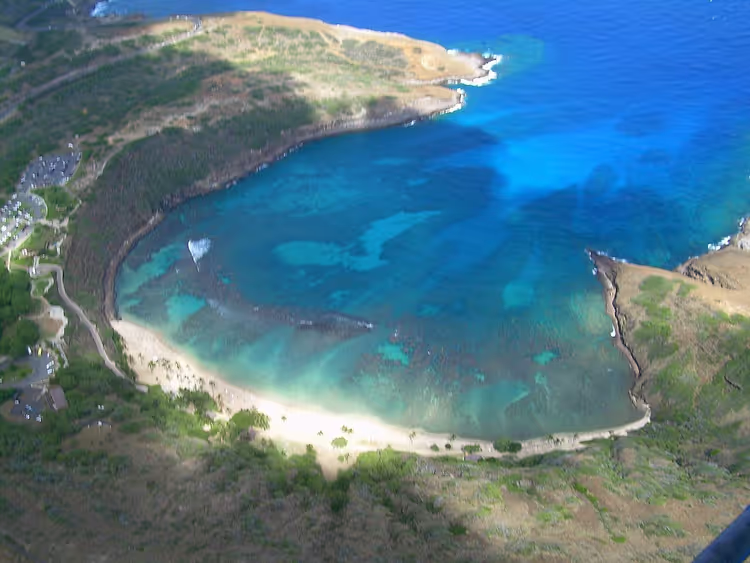
In 1967 the bay was declared Hawaii's first Marine Life Conservation District. Since then strict rules have been in force here: feeding fish is not allowed, and commercial fishing is prohibited (as of: 09/2026, preserve rules). The measures work, and the water in the bay remains among the clearest in the islands.
The bay used to draw far more visitors. In the 1970s and 1980s up to 10,000 people a day came here (as of: 09/2026, official statistics). In 2019 the preserve welcomed about 845,000 visitors, and today the flow has been cut almost in half. Reservations and short hours are meant to keep the reef from being trampled.
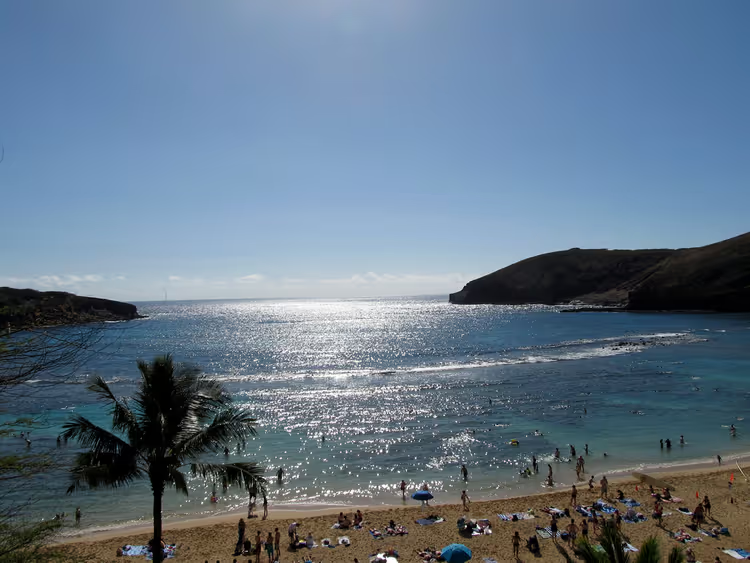
The shore is surrounded by dry tropical trees and shrubs. The sun shines here almost year-round, and the water stays warm in any season. Swimming is comfortable for both adults and children. The beach has repeatedly topped American rankings of the best shores.
A view from above opens up from the lookout near the entrance. From there you can see the entire crater bowl and the turquoise ring of the reef. No climbing is required, the lookout sits right on the path to the beach.
Underwater world and snorkeling
Hanauma Bay remains the top spot for snorkeling and diving on Oahu. The bay is home to more than 450 species of tropical fish (as of: 09/2026, to-hawaii.com). Roughly one in five species is found only in the Hawaiian Islands.
 © Jason Jacobs from Honolulu, USA · CC BYPhoto: Jason Jacobs from Honolulu, USA, CC BY (https://creativecommons.org/licenses/by/2.0), Wikimedia Commons
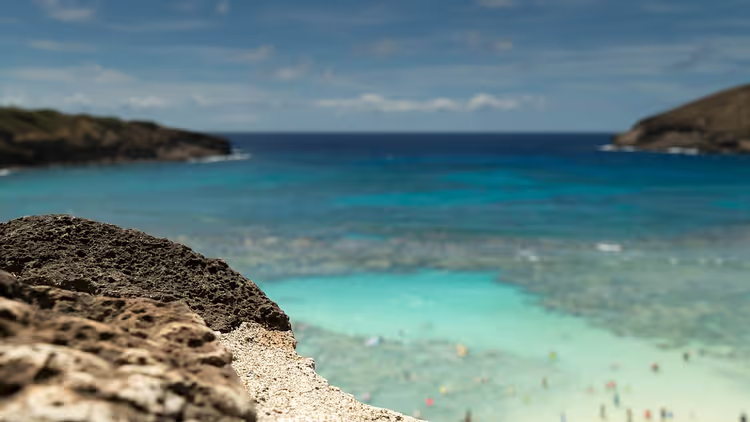
The reef rests on rocky ledges of the crater and on corals. You will swim in a protected lagoon with almost no waves or strong currents. That is why even beginners do their first dives here.
The bay's symbol, the reef triggerfish humuhumunukunukuapuaa, is considered the official state fish of Hawaii. This colorful fish has become the islands' calling card. Besides it, you will see green sea turtles, crabs, octopuses, and moray eels. Turtles are protected by a local program and barely react to people.
The corals in the bay are large and old, in places forming true labyrinths. Standing on the reef or touching it is prohibited. One careless step kills a polyp that has been growing for many years.
Hawaiian chiefs long considered these waters the richest fishing grounds on the island. Today all fishing in the bay is banned. The bay serves as a reserve for rare tropical species.
Rental stations operate near the shore. You get a mask, snorkel, and fins on site, and you can also take a lesson from an instructor there. Diving gear costs slightly more than on the mainland, but there are almost no alternatives nearby.
Booking and visiting rules
The bay operates on an online reservation system. Non-residents of Hawaii are not allowed onto the shore without a time slot. Entry reservations open exactly two days before the visit, at 7:00 a.m. Hawaii time (as of 09/2026, official website). Morning slots are gone within minutes.
What | Cost |
|---|---|
Entry, guest 13 and older (Hawaii non-resident) | $25 (as of 09/2026, reserve rates) |
Children under 13 | free |
Hawaii residents with ID | free |
Parking per vehicle | $3 (as of 09/2026, parking rates) |
 © daryl_mitchell · CC BY-SAPhoto: daryl_mitchell, CC BY-SA (https://creativecommons.org/licenses/by-sa/2.0/), Flickr
Reservations with shuttle service open earlier than regular ones, about a month in advance. This option is useful for those traveling without a car and not wanting to figure out the bus. Regular entry and entry with transportation are booked on different pages of the website.
Before heading down to the beach, all guests watch a short educational film. The rule applies on every visit, even if you have been here before. The film explains how to behave on the reef and why it is important not to touch anything.
Use sunscreen without chemical filters. Regular sunscreens harm corals, which is why Hawaii sells "reef-safe" formulas.
It is better to put on your swimsuit in advance; the changing rooms are small. There is little shade on the beach, so bring water and a hat. Water shoes will help on the rocky entry. Lifeguards are on duty during opening hours and watch over swimmers.
How to get there from Honolulu
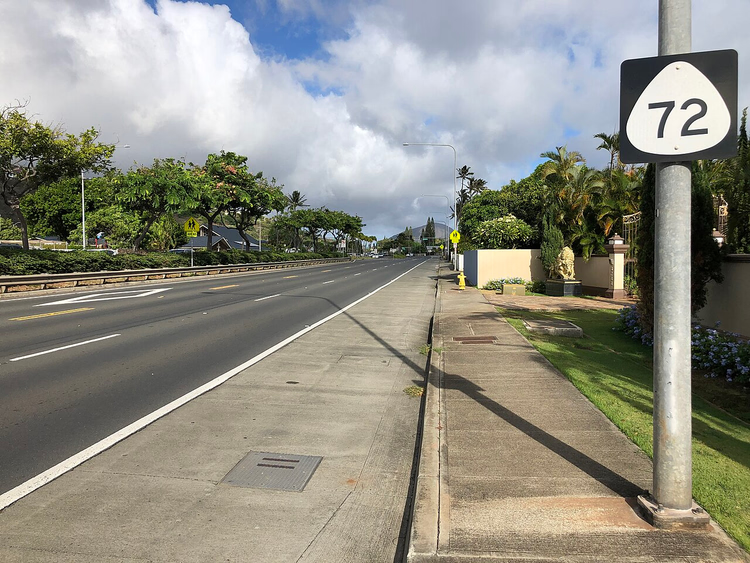
The nearest airport, Daniel K. Inouye in Honolulu (HNL), receives all international flights. From the terminal to Waikiki is about 15 km, and from Waikiki to the bay is roughly another 16 km (by map). By car, the drive takes 25-30 minutes without traffic.
 © Famartin · CC BY-SAPhoto: Famartin, CC BY-SA (https://creativecommons.org/licenses/by-sa/4.0), Wikimedia Commons
Bus route 22 stops on Kalanianaole Highway right above the bay (as of 09/2026, route 22 stop). The bus no longer goes directly to the beach. From the stop you walk down. A taxi or ride-hailing service costs more, but it will take you to the entrance.
If you drive, arrive by opening time. The parking lot is small and fills up early, and parking costs $3 per day. Many people stay in Waikiki or Honolulu hotels, from which the bay is about 16 km away.
From the gate to the water there is a paved downhill path. The walkway is comfortable, but you will have to climb back up on the way out. Older guests and families with children should keep this uphill walk in mind.
When to visit Hanauma Bay
The best time to visit is from May through early fall. During these months the water is warmest and there are almost no waves. In winter, high waves hit the north shore of Oahu, but Hanauma Bay lies on the southeast side and stays calm.
 © Raita Futo from Tokyo, Japan · CC BYPhoto: Raita Futo from Tokyo, Japan, CC BY (https://creativecommons.org/licenses/by/2.0), Wikimedia Commons
Come in the morning. At 6:45 there are still few people at the entrance, the water is clearer, and the sun is not scorching. By 10:00 the lagoon fills up, and finding a free lounger or a spot by the water becomes harder.
After midday the wind picks up. It stirs up sediment from the bottom, and visibility drops. If you want good photos, come in the first couple of hours after opening.
There are more visitors on weekends than on Wednesday or Thursday. If your dates are flexible, choose midweek.
Bring water, a hat, and a towel: there are no shops on the beach. The cafe at the entrance operates only on open days. Plan your visit in advance; reservations cannot be moved to another day.
Hanauma Bay on the map
Hanauma Bay lies 16 km east of Waikiki, on Kalanianaole Highway. Open the location in your navigation app before you leave and check the route against the map below.
⁉️🤔 Frequently asked questions
Do I need a reservation to get into Hanauma Bay?
Yes, non-residents of Hawaii are admitted only with an online reservation. General admission slots open two days before your visit, at 7:00 AM Hawaii time. Some slots with shuttle service are available about a month in advance.
How much do admission and parking cost?
An adult ticket for guests 13 and older costs $25, children under 13 enter free. Hawaii residents with ID enter free. Parking costs $3 per car. Payment is made online when booking your slot.
What days is the nature preserve closed?
Hanauma Bay is closed on Mondays and Tuesdays. The preserve is also closed on December 25 and January 1. On other days, entry runs from 6:45 AM to 1:30 PM, and you must leave the area by 4:00 PM. The schedule can change, so check it before your trip.
How do I get to the bay without a car?
Bus route 22 runs from Waikiki, with a stop on the highway above the bay. The bus does not go directly down to the beach, so you walk down from the stop. The alternative, a taxi or ride-hailing service, drops you right at the entrance.
Can I swim and snorkel with kids?
Yes, the lagoon is protected from waves, and the water near the shore is shallow. Bring a mask and a properly sized life vest, and water shoes will help on the rocky entry. Watch children near the reef: standing on coral is prohibited.
What should I bring to the beach?
Bring water, hats, towels, and reef-safe sunscreen. Changing rooms, showers, and restrooms are available on site, and the cafe is open on operating days. You can rent a mask, snorkel, and fins near the shore.
In short: is Hanauma Bay worth visiting
Hanauma Bay remains the most convenient place for a first introduction to Hawaii's underwater world. The reef is protected from waves, the water is clear, and the rules are straightforward. The main drawbacks are the reservation requirement and the Monday and Tuesday closures.
Choose the scenario that fits your trip:
- If you have one free day: grab the first morning slot and arrive by 6:45 AM.
- If you're traveling with kids: bring a mask and life vest, the lagoon is safe for beginners.
- If you don't have a car: plan your route on bus 22 or a taxi in advance.
- If you want peace and quiet: go on Wednesday or Thursday, weekends are more crowded.
Book your slot in advance on the Department of Parks and Recreation website while morning times are still available.

A small editorial team writing guides for independent travel. We travel ourselves, but we haven’t been everywhere, so we check prices, opening hours and how to get there against official sources.